

Situated close to the former Viking trading post of Hedeby, the Danevirke is a remarkable system of fortifications that stretches for more than 30 kilometers across the Cimbrian Peninsula in what is now northern Germany.
Known in Old Norse as Danavirki and commonly interpreted as "earthwork of the Danes," the fortifications are believed to have been built primarily to deter Saxon incursions from the south.
In recent years, there has been a concerted effort to resolve some of the enduring mysteries about the formation and evolution of the Danevirke. With help from Birte Anspach of the Schleswig-Holstein State Archeological Office (ALSH), The Viking Herald examines the latest findings.
The first line of defense
Legend has it that Thyra, the wife of Gorm the Old and the mother of Harald Bluetooth, ordered the initial construction of the Danevirke in the 10th century. Archeologists today, however, believe that an early version of the fortifications was in place by 650 CE, and possibly as early as 500 CE.
There is no doubt, however, that the Danevirke played a prominent role in the Viking Age and was also closely linked to the nearby Norse trading hub of Hedeby.
Built across a narrow isthmus and made largely of earthen embankments, supported in parts by wooden structures, the Danevirke was eventually extended to form a formidable barrier from Hedeby in the east to the marshlands by the western coast.
In this way, the Danevirke provided control over the Cimbrian Peninsula and the Norse trade routes to the Baltic and the North Sea. The fortifications also had a symbolic presence, helping to solidify the divide between the Saxons to the south and the Danes to the north.
Ironically, the Danevirke's final military use came during the Dano-Prussian War of 1864. When the Prussians eventually prevailed, they decided to annex the entire area, helping to secure it for the future state of Germany.
Today, the Danevirke is found in the region of Schleswig-Holstein in present-day Germany. Together with Hedeby (Haithabu in German), the Danevirke has been classified as a World Heritage Site by UNESCO for its historical significance.
Yet though we know much of the Danevirke's later history, the early years of construction remain something of an enigma.
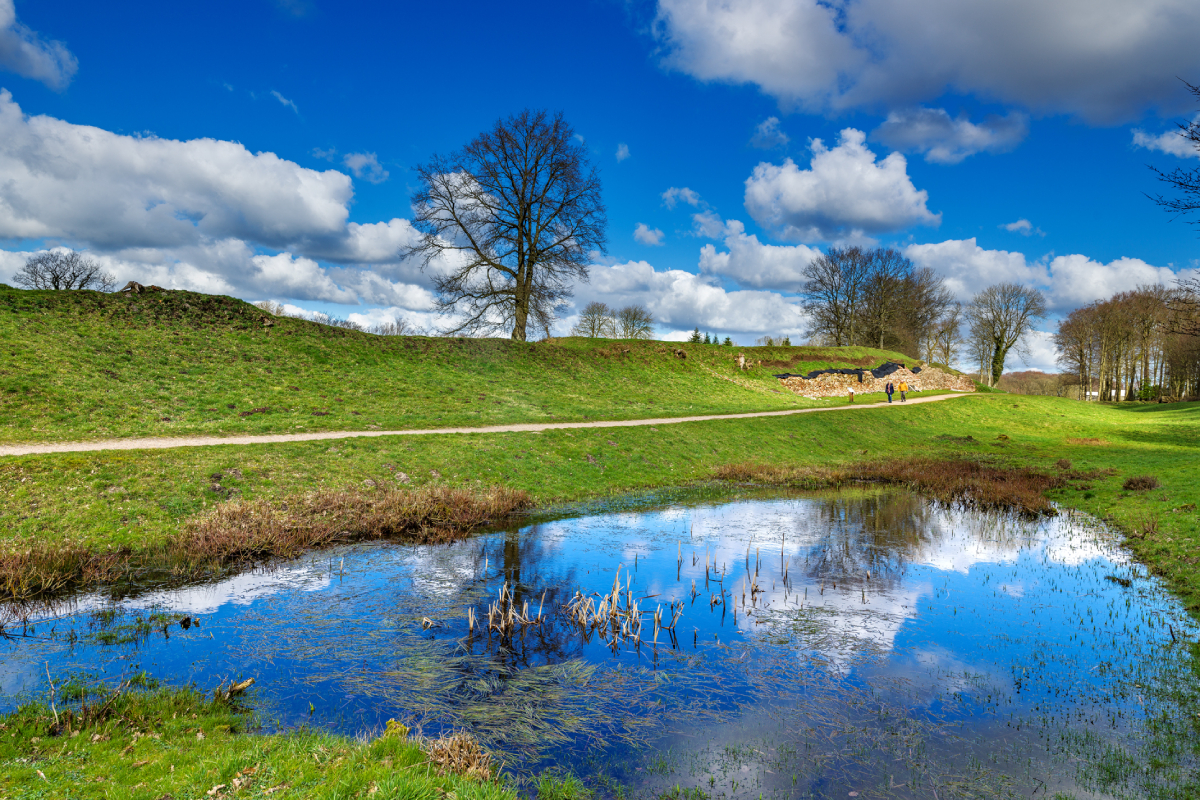
Danevirke Archeological Park near Schleswig, Germany, preserves part of the UNESCO-listed Viking Age fortifications. Photo: Tom Körber / ALSH
The Ox Road
As Birte Anspach informs The Viking Herald, extensive examinations over the past 15 years have begun to peel back some of the mystery.
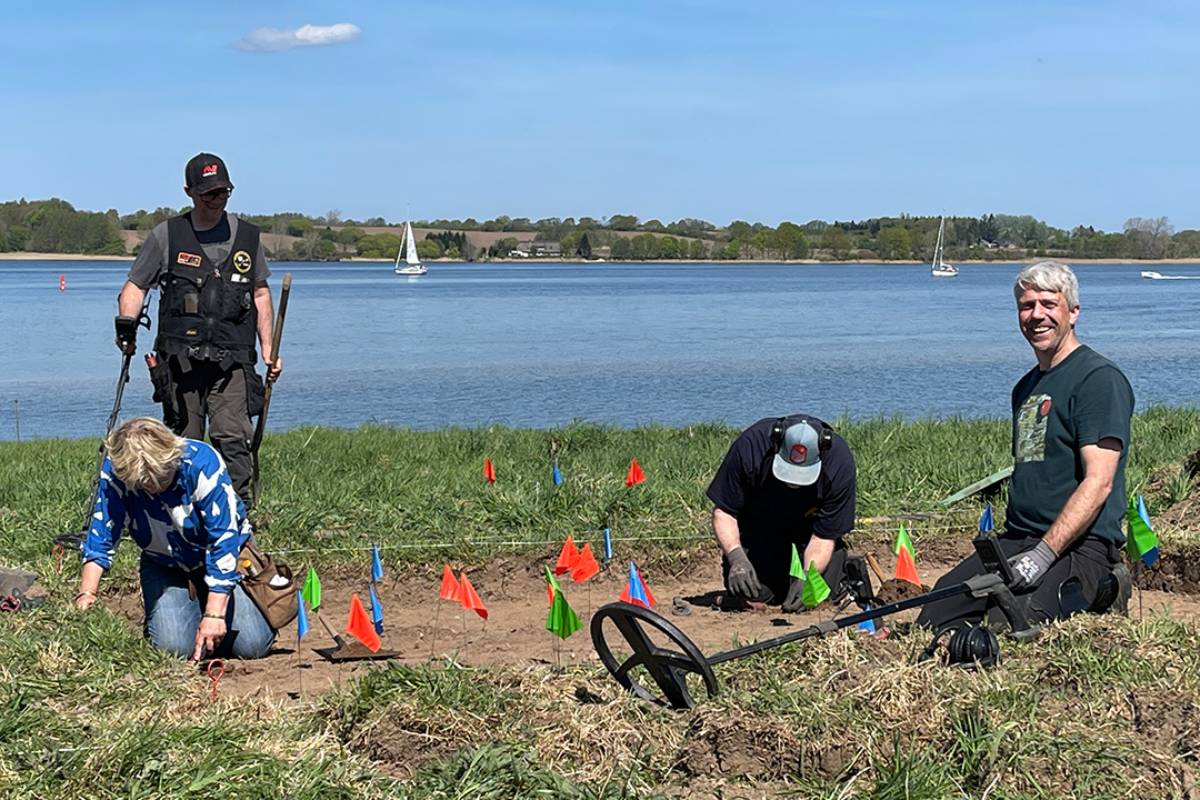
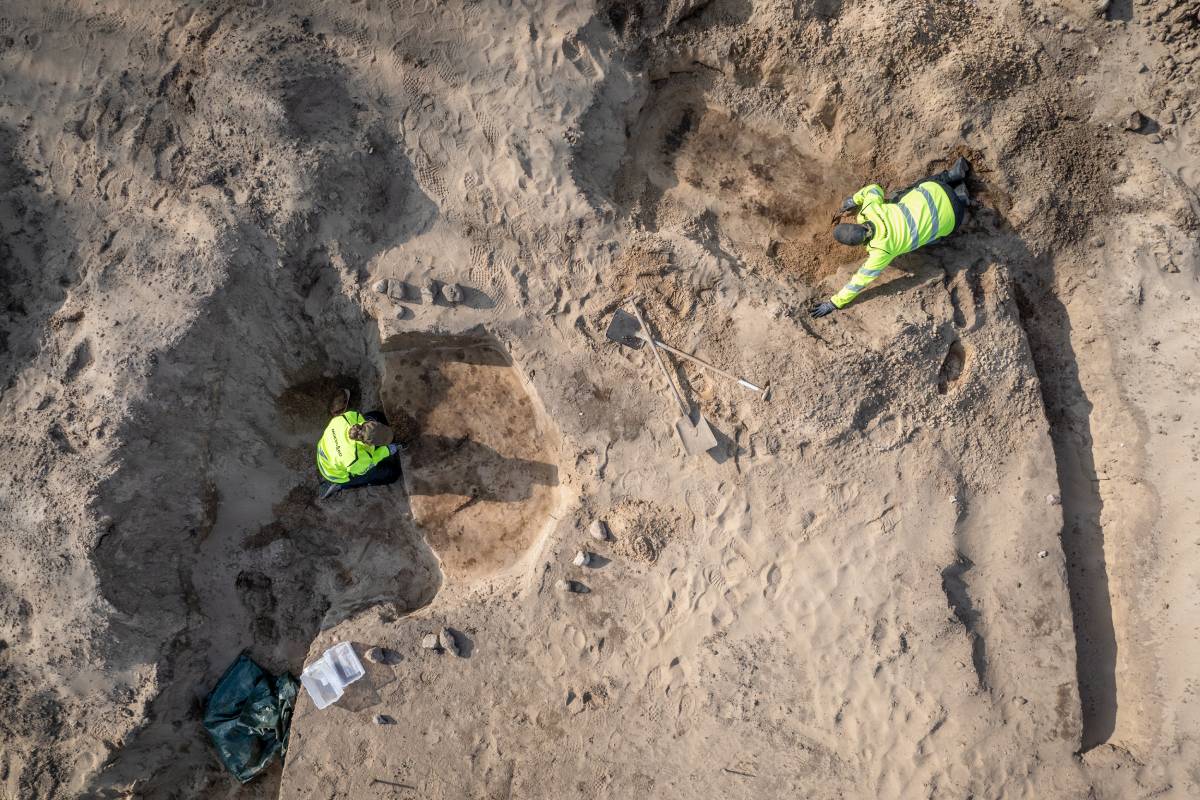
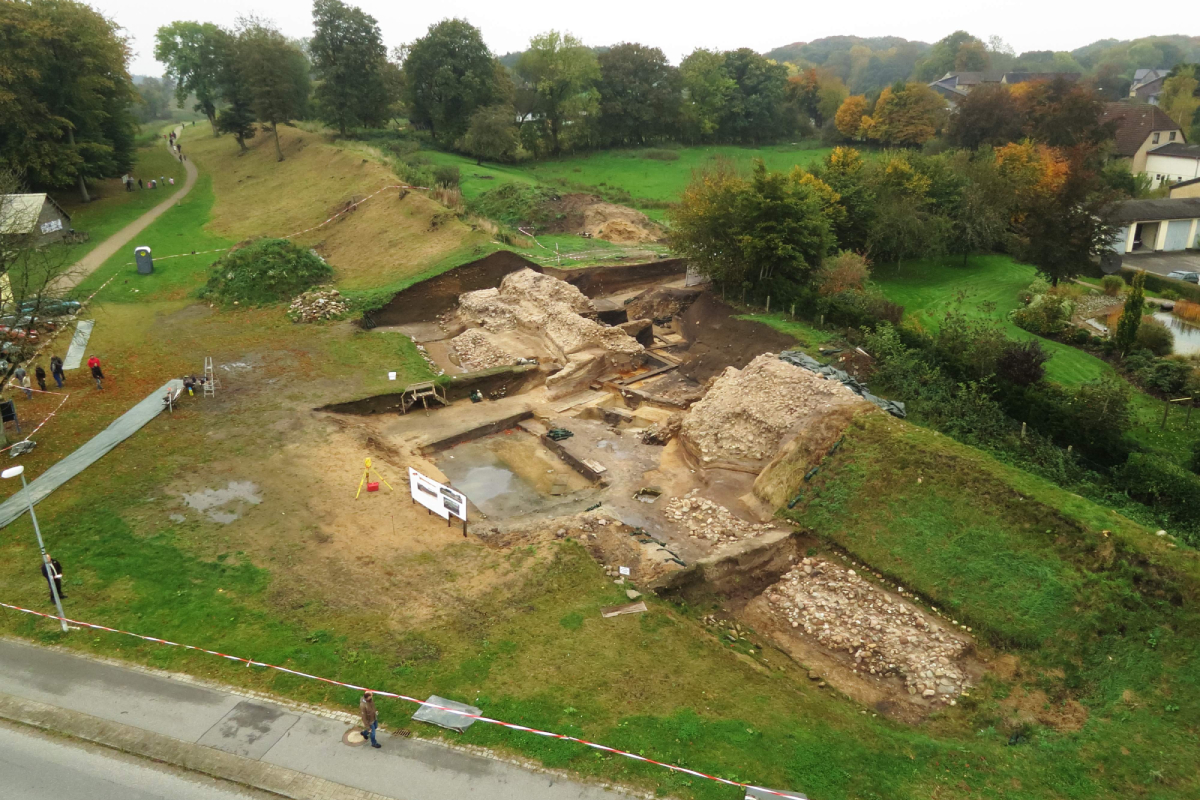
"From 2010 to 2014, an excavation was carried out at the only gated area in the Danevirke," Birte tells us. "Then in 2022, ALSH and Museum Sønderjylland carried out one of the largest excavations at Danevirke to date."
These investigations revealed previously untouched sections of an ancient pathway that has been in use for some 3,500 years: the Ox Road. "This was a particular stroke of luck," Birte admits to The Viking Herald.
"The Ox Road was a historic main transport route between Viborg in Denmark and Wedel near Hamburg. The tracks, including wagon ruts and a wide carriageway, were discovered beneath younger building foundations."
"In the summer of 2023, there was another excavation, this time at the current Danevirke Museum car park," Birte adds. "Surprisingly well-preserved remains of two medieval houses were discovered, likely from the 12th or 13th century."
"The buildings were located directly at the gateway to the Danevirke fortifications. The dig provided evidence of intensive use of the area at the intersection of the ramparts and the Ox Road."
These findings suggest that Danish rulers used the main gate of the Danevirke to control traffic that passed from the North Sea to the Baltic, and vice versa. In other words, both the Ox Road and the Danevirke were likely key to Danish international trade for many centuries.
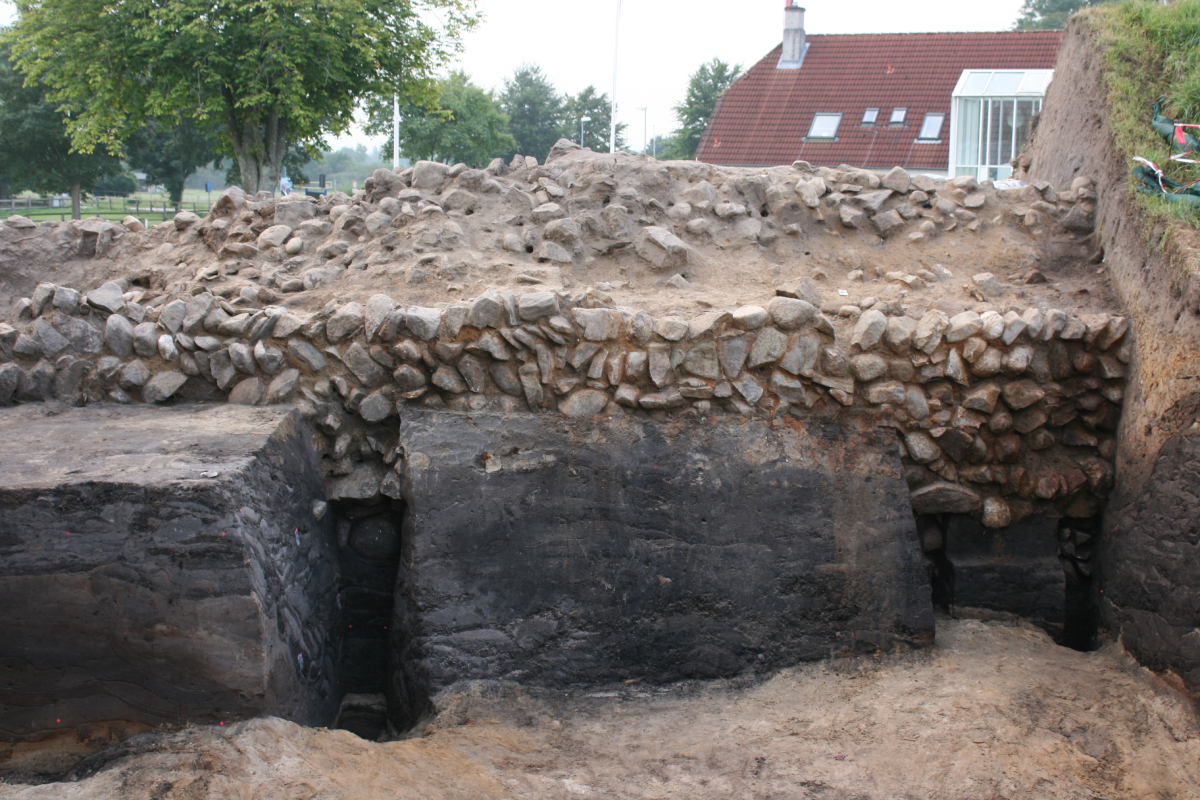
Excavated remains of a fieldstone wall at the Danevirke, dated to around 800 CE, with earlier layers of construction beneath. Photo: ALSH
Extending the narrative
The last 12 months have seen new excavations unearth further evidence.
"Since September 2024, preparatory archeological investigations have been carried out for the planned expansion of the Danevirke Archeological Park," Birte reports to The Viking Herald.
"One section revealed unexpectedly good preservation of the fieldstone wall that has been dated to approximately 800 CE. There was also an older stone structure under the wall, and a post construction that has been dated to the Bronze Age, before even the oldest documented ramparts."
There is also ongoing work in the surrounding area. "ALSH is accompanying the planned rewetting of the former Dannewerker lake through preliminary soil and monument preservation investigations," Birte adds.
"As the area is located in the vicinity of the Danevirke, there is a search for any archeologically relevant layers."
Again, there are more signs that this area was particularly rich in trade and industry. "The nearby moor is proving to be an extraordinary natural and cultural archive," Birte tells us.
"There are organic layers preserving deposits dating back to the end of the last ice age. The artifacts date from at least the Bronze Age to the early Middle Ages and document thousands of years of human activity in the region."
- READ MORE: The Viking history of Germany – A primer
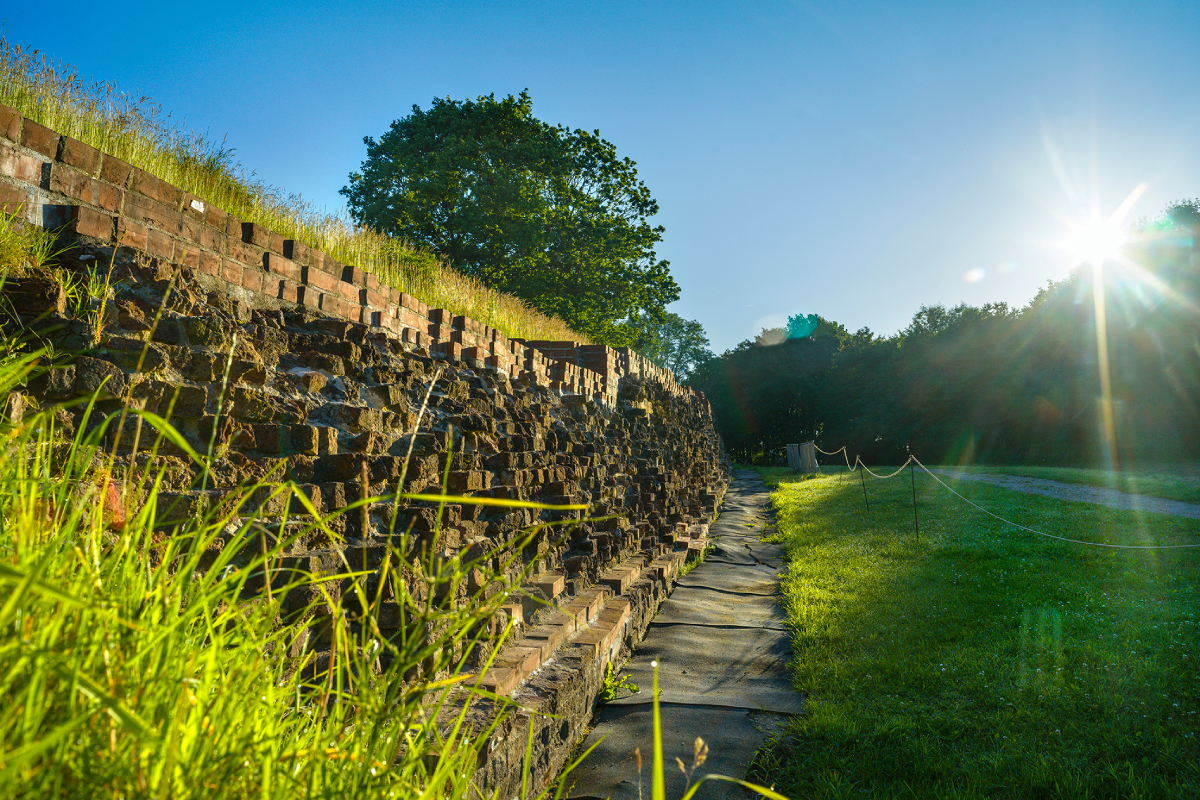
The fortifications at Danevirke were expanded and reinforced across many centuries, as seen in this multilayered wall. Photo: Tom Körber / ALSH
A fuller picture begins to form
Collectively, these investigations have enabled the archeologists to begin to form a deeper understanding of how the Danevirke system developed over the centuries.
As Birte notes, the fortifications served a strategic purpose for more than one thousand years.
"We can say that the Danevirke was a complex defense system," Birte states. "It comprised earthworks, ditches, palisades, brick and stone walls, and a kilometer-long barrage in the Schlei.
"The Danevirke served to control the narrow isthmus and separated Scandinavian and continental European areas of influence and, in the meantime, the Danish kingdom and the Frankish Empire."
"Recent finds show that the work was continuously expanded and technically developed over the centuries. In other words, the fortifications remained 'state of the art' in each era."
Even today, however, there remains plenty of scope for further research. "Danevirke is a complex, largely unexplored large-scale monument—only around 3% has been excavated," Birte admits.
"Haithabu also offers enormous scientific potential—approximately 95% of the settlement is still untouched. Archeological research remains a central element for the understanding, protection, and communication of the Haithabu and Danevirke World Heritage Sites."
We get to provide readers with original coverage thanks to our loyal supporters. Do you enjoy our work? You can become a PATRON here or via our Patreon page. You'll get access to exclusive content and early access.
Feel free to reach out to discuss potential stories that may be in the public interest. You can reach us via email at [email protected] with the understanding that the information you provide might be used in our reporting and stories.