

A 19th-century factory converted into a showcase for contemporary art is the setting for a unique exhibition open this summer in Øvre Eiker, west of Oslo, near Drammen.
Artist Morten Viskum bought the former industrial complex in 2001, taking two years to transform it into the Vestfossen Kunstlaboratorium.
Little did he know then that just north of Vestfossen towards Hokksund, hundreds of objects from the Iron Age to medieval times would later be found at nearby Sem Farm. The sheer volume of finds is down to the rise in activity by local metal detectorists.
This summer until September 24, the gallery is showing its first exhibition dedicated to historical research.
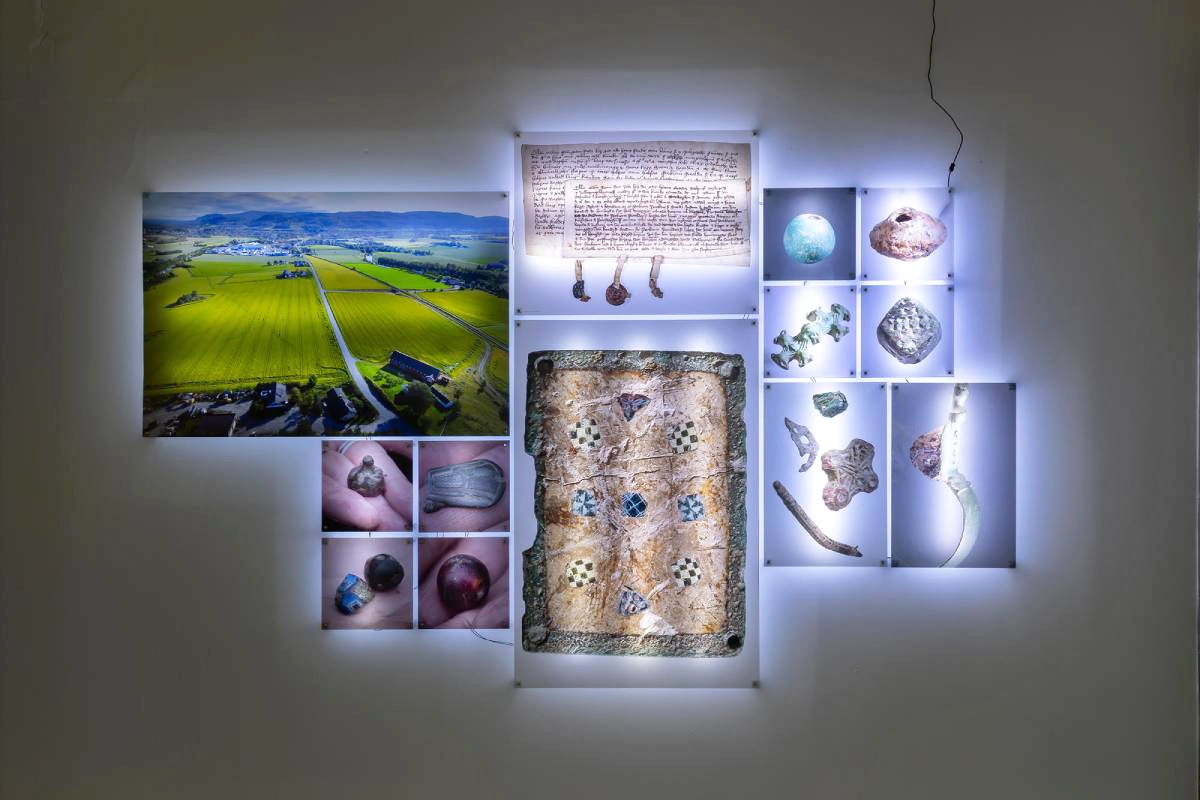
Archeology and Anarchy not only presents some of the most striking items dug up since the first discoveries in 2013 but celebrates the dedication of metal detectorists, who carry out their searches in an anarchic fashion without the limitations otherwise imposed on archeologists.
The Viking Herald speaks with its curator, Bernt-Egil Tafjord, who has overseen cultural heritage protection and community planning in Øvre Eiker municipality since 2016. One of his projects was located at Sem Farm.
Along with the Hoenskatten and the Solberg Vase, the only Roman cameo glass vase found outside the borders of the Roman Empire was also discovered here, a close relative of the Portland Vase.
The Viking Herald: Please tell us about Sem Farm, the findings there, and their significance.
Bernt-Egil Tafjord: Sem is a good example of how much a historically significant place can be forgotten, both in the prehistoric and historical periods. Historian Tord Pedersen rediscovered that there had been a Renaissance castle, The Kings House, at Sem in the 17th century.
There are generally few castles in Norway, but here was one that had been forgotten by both people and historians.
Coincidentally, Tord was the uncle of a famous Norwegian archaeologist, Håkon Shetelig, known for the excavation of the Oseberg ship.
But the history of Sem and the neighboring farm Berg is documented further back, and it is clear that this is both the courthouse (Ting), early church site, and administrative center dating back to the end of the Viking Age.
When private metal detectorists suddenly began uncovering weights, coins, and production waste from the Viking Age and the Middle Ages in 2013 and 2014, speculation arose about the significance of this location.
It might have been the central farm and trading post from the Iron Age.
This could account for older discoveries like the Hoenskatten and the Solbergvasen, as well as the numerous hillforts and weapon graves in Øvre Eiker.
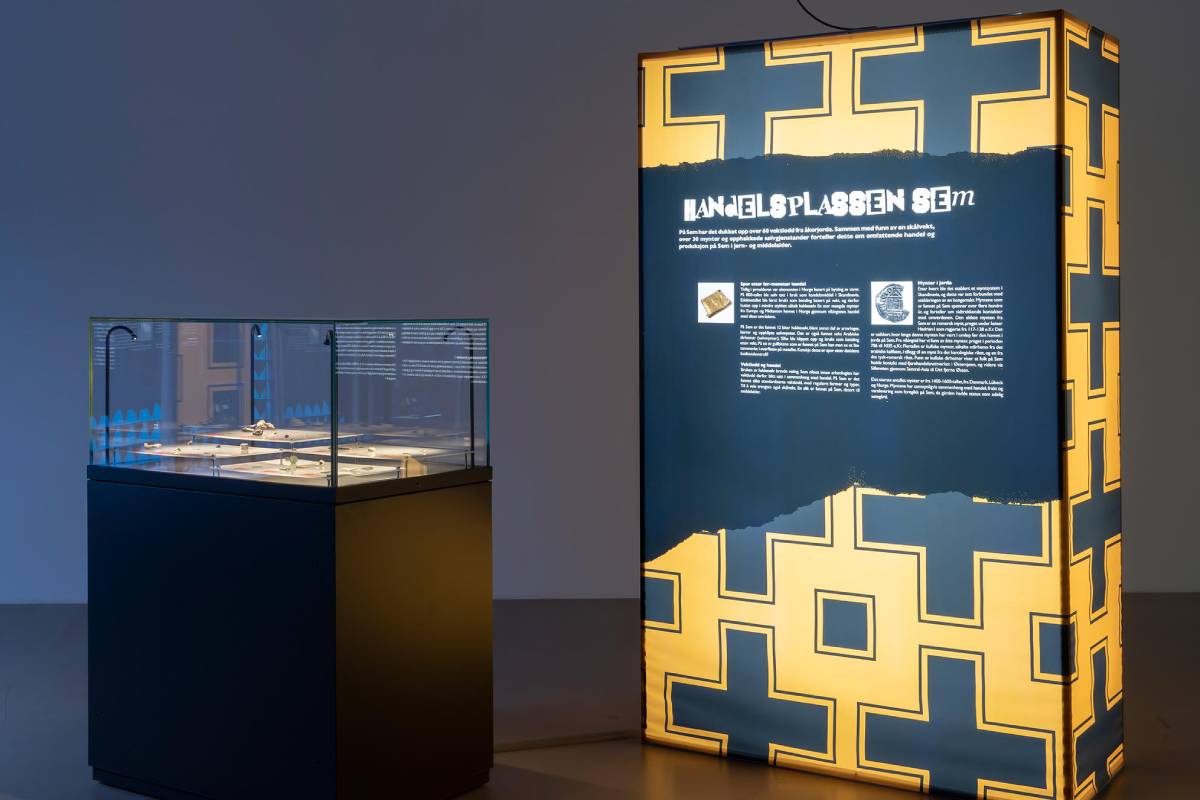
The exhibition at Vestfossen Kunstlaboratorium celebrates the anarchic efforts of metal detectorists, showcasing a range of artifacts unearthed from Sem Farm. Photo: Øystein Thorvaldsen
TVH: What prompted the decision to host this exhibition in a venue not typically used for such displays?
Bernt-Egil Tafjord: By 2020, over 700 objects and prehistoric structures were uncovered at Sem Farm. These discoveries were mainly through geophysical surveys and the efforts of private detectorists.
Interestingly, the findings at Sem Farm closely resemble central sites and farms in Sweden and Denmark more than those in Norway.
Sem boasts an extended history, evident from its prestige items and evidence of long-distance trading.
However, many of these artifacts were found fragmented in the plowsoil.
While these discoveries excited professionals, it became evident that this enthusiasm wasn't easily communicated to the general public.
As a result, the Øvre Eiker municipality decided to create an exhibition to convey the significance of these findings in a way that everyone could understand.
To illustrate the centrality and power of the place in the past, I chose to reconstruct the remains of two objects: A late gilded, double-edged magnificent sword from the Merovingian period and a house-shaped Irish reliquary.
This could illustrate the significance of the many hundreds of fragments and the stories they tell. And importantly, it can open many doors for outreach to children and young people, which has been a goal from the beginning.
Anarchy in Øvre Eiker
It occurred to us that we were now very free to design the exhibition exactly as we wanted, free from norms and fashions in the museum sector.
The fact that this place was discovered and searched by private metal detectorists at a time when individuals from the cultural heritage administration and the archaeological community in Norway wanted to restrict or ban private metal prospecting makes it quite a rebellious story.
For some, the growing metal-detecting community was seen as punks, as opposed to the established order. And that set the tone for the layout and design of the exhibition.
We met with contemporary artist Morten Viskum at the Vestfossen Kunstlaboratorium to pitch the idea of having such an exhibition in an arena for contemporary art.
Agreements were made, and suddenly, we were standing there with 300 empty square meters in an institution that sometimes conveys demanding and provocative contemporary art, which we were to fill with archeology and an atmosphere of rebellion.
For example, we provided a local high school that teaches design profiling with four examples of Iron Age costumes and allocated a third of the exhibition space to them.
Their mission: display these costumes in the most innovative and unique way possible. The result was fantastic, and we paid them with cake.
We dismissed the idea of the exhibition catalog and printed thousands of copies of an archaeological underground newspaper, which we give away for free.
In the exhibition design, we have tried to merge elements of insular style with punk aesthetics.
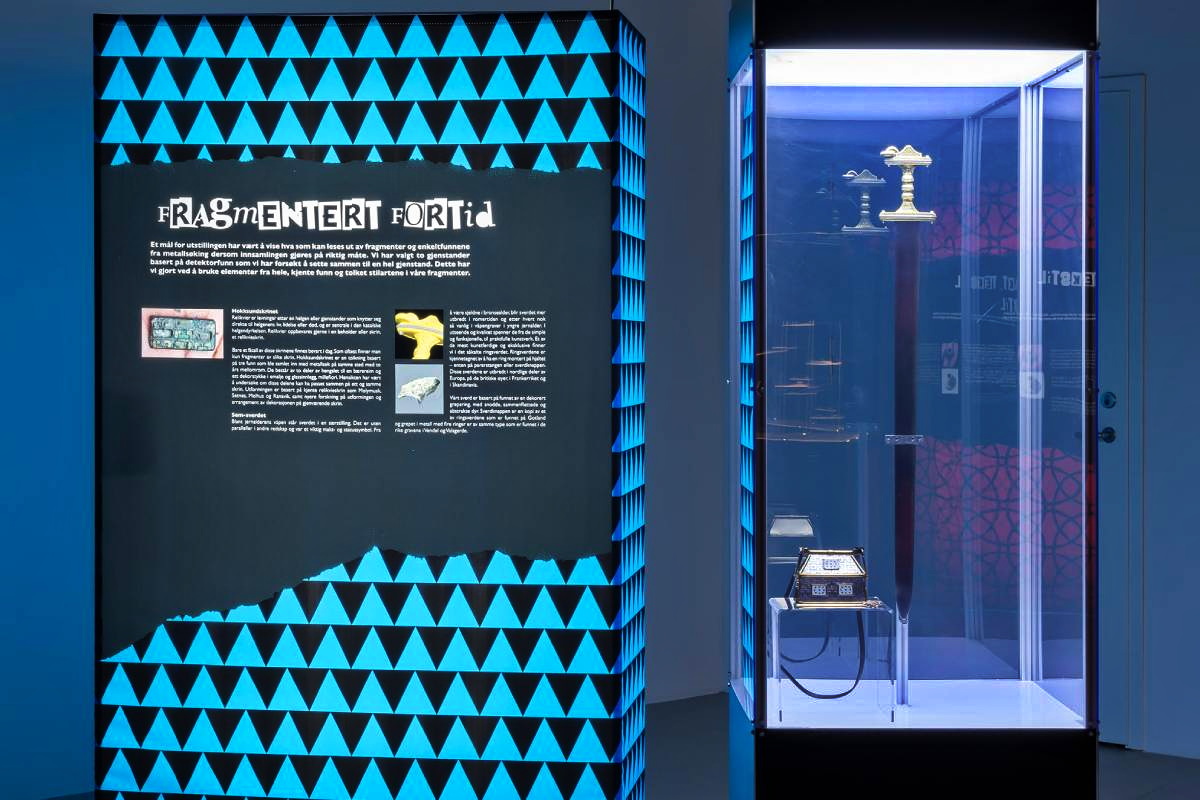
Visitors can admire a detailed replica of the Merovingian sword, a testament to the ancient treasures found at Sem Farm. Photo: Øystein Thorvaldsen
TVH: What are the particular highlights of the exhibition?
Bernt-Egil Tafjord: The exhibition's highlight is definitely the constructed sword and reliquary.
The Museum of Cultural History in Oslo will borrow them for a separate exhibition about Sem this winter.
With a limited budget, it was never possible to translate the texts into other languages, but the introductory text to the exhibition is in English and explains the main features.
In addition, there are guided tours.
TVH: How has the feedback and reaction been to the exhibition?
Bernt-Egil Tafjord: The exhibition has been very well received by everyone. It is almost a little disappointing that there has been no negative feedback, especially from the professional community.
I have spoken to audiences of all ages and have taken 250 elementary school students on tours.
Everyone seems happy and has learned something about the Iron Age, the Viking Age, and their local environment.
The feedback from the professional community hasn't been enormous, but what we've received has been positive. The fact that we mix contemporary art and archeology has not caused any reactions either.
The primary impression is that many people think the exhibition is beautiful and educational – perhaps hard to accept when you have made an effort to convey a mood of underdog rebellion!
Experience Archeology and Anarchy at Vestfossen Kunstlaboratorium, Fabrikkgata 11, 3320 Vestfossen, Norway. The exhibition continues until September 24, open from Tuesday to Sunday, 11 am to 6 pm. Admission: Nkr70, Nkr45 for under-16s, seniors, students. Guided tours available.
We get to provide readers with original coverage thanks to our loyal supporters. Do you enjoy our work? You can become a PATRON here or via our Patreon page. You'll get access to exclusive content and early access.
Feel free to reach out to discuss potential stories that may be in the public interest. You can reach us via email at [email protected] with the understanding that the information you provide might be used in our reporting and stories.