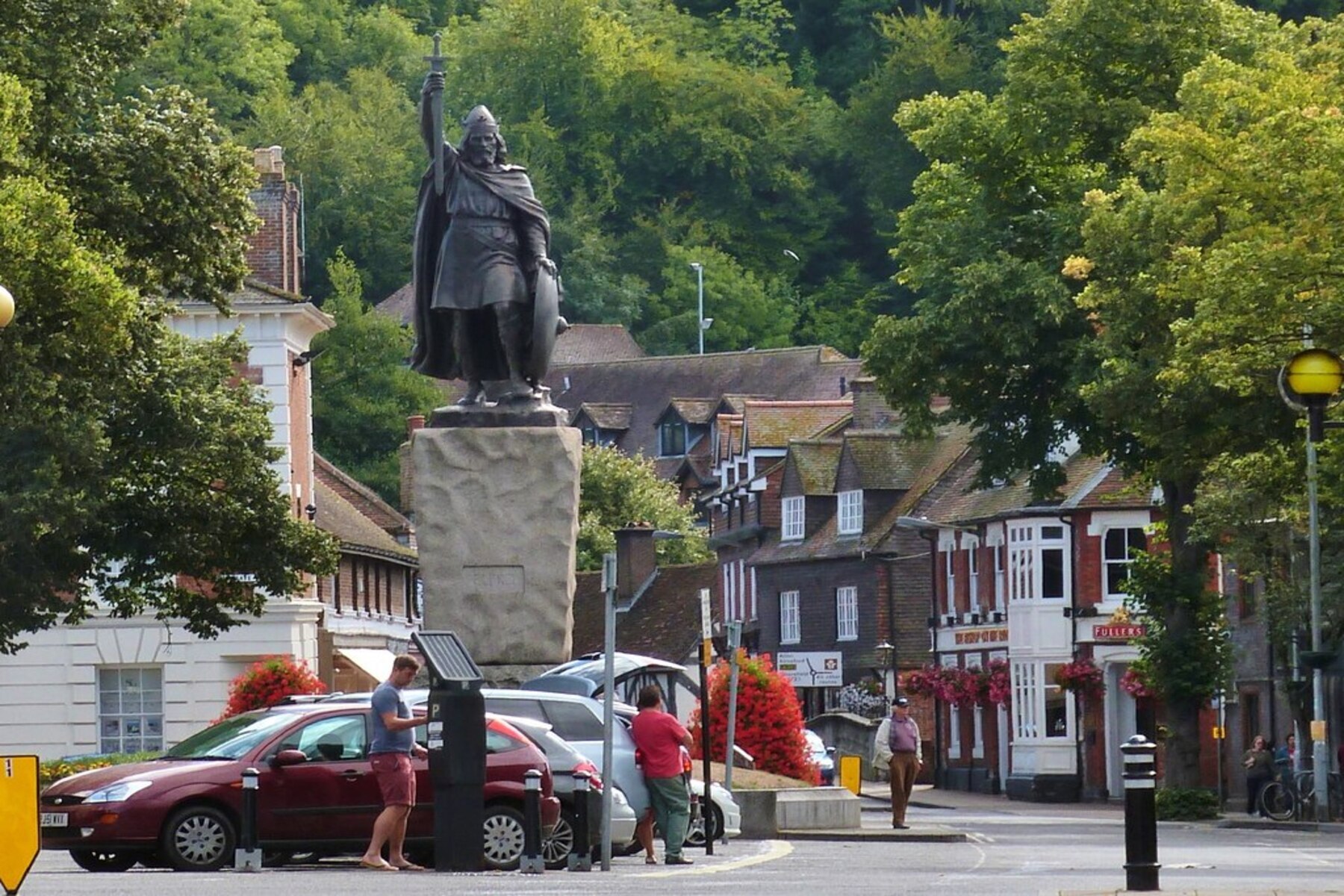


A British alternative historian has claimed to have identified the final resting place of Alfred the Great – in a car park in Hampshire. In a Blaze TV documentary, the author Graham Phillips explains how he tracked down the final resting place of the 9th-century Anglo-Saxon king who famously defended his lands against the Vikings.
In search of the final burial
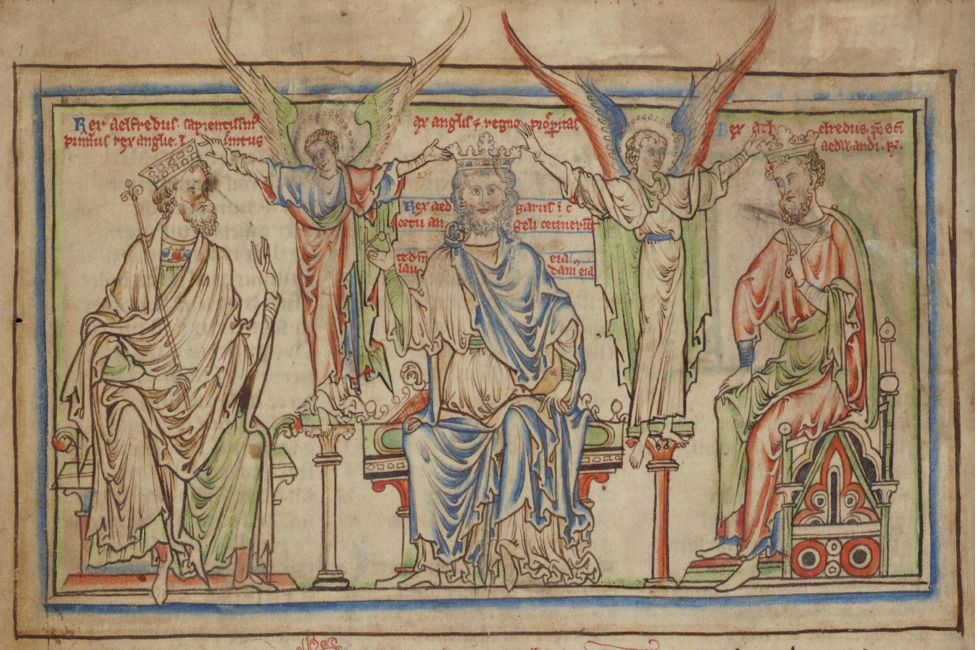
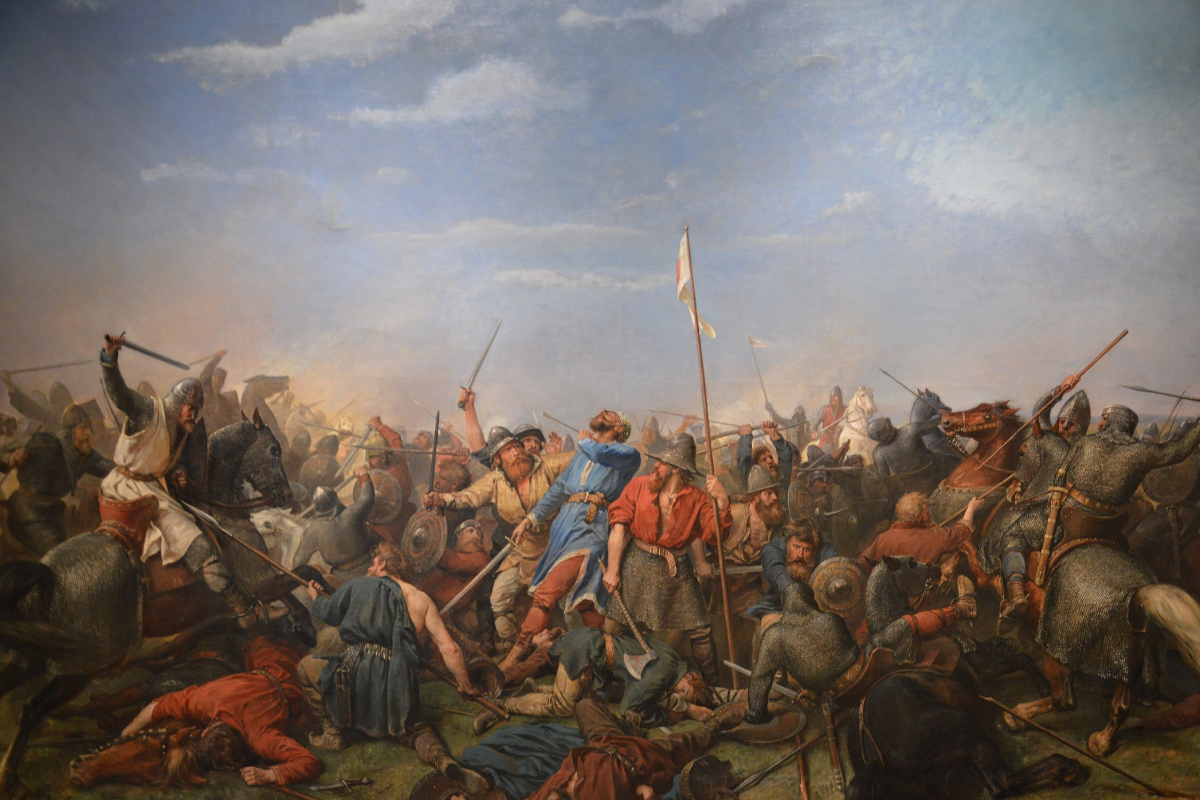
As one of the first leaders to begin to unite its various kingdoms, Alfred Great has a fine reputation in England. He is also known as the man who defeated the Vikings decisively at the Battle of Edington (though the subsequent treaty did not remove the Norse invaders from English lands entirely).
For many centuries since his death in 899 CE, however, Alfred’s final resting place has remained a subject of contention. Historical documents indicate that the king of the Anglo-Saxons was buried in Winchester Cathedral, before being moved to Hyde Abbey - also in Winchester, Hampshire – in 1100.
Unfortunately, uring the dissolution of the monasteries in 1539, the abbey was demolished during the dissolution of the monasteries in 1539 and left in ruins. When a workhouse was built on the same site in 1866, John Mellor, a local antiquarian, found what he believed to be Alfred’s bones and reburied them at the St. Bartholomew’s Church.
Yet when archeologists exhumed and carbon-dated the bones from the church in 2013, they were dated as 200 years after the death of the king. Graham Phillips – who has also claimed to have discovered the Holy Grail and King Arthur's grave – has been looking for the real resting site of the monarch ever since.
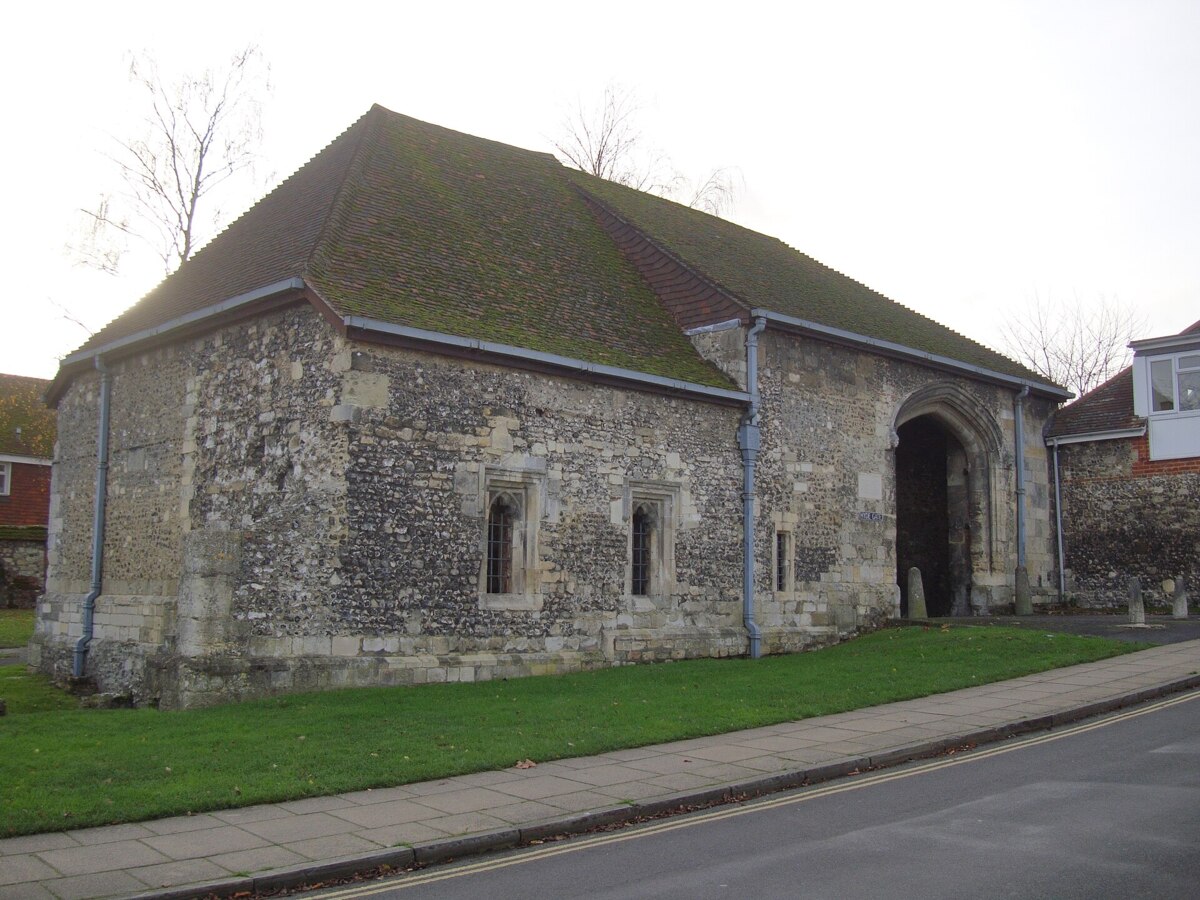
The gatehouse, one of the last remaining vestiges of Hyde Abbey. Source: John Armagh, own work, CC BY-SA 3.0
A lasting mystery
Phillips believes the graves were moved prior to the construction of the workhouse. He notes that in 1788, Winchester City Council built a prison on the Hyde Abbey site and turned the place where Alfred had supposedly been buried into a garden. The workers marked Alfred’s grave – together with that of his wife and son – with stone slabs.
Philips believes this is the key to the location of the king's remains. His theory was developed after discovering an account from the English historian Henry Howard, who had visited the warden, Richard Page, in the late 1700s.
"Howard had written an article about Hyde Abbey published in Volume 13 of Archaeologia, the journal of the London Society of Antiquaries, in 1800,” Phillips commented to the Hampshire Chronicle. "In it, he refers to prisoners employed to landscape the warden’s new garden, unearthing bones which were reburied nearby, even including a map.”
In other words, Phillips believes he has reliable documentary evidence that can pinpoint the exact location of King Alfred’s final resting place – a part of the garden marked on the map that is today under a municipal car park.
Still no closure
Unfortunately, Matt Everest of Dragonfly Films, which produces the TV series, has confirmed to The News in Portsmouth that the team has been unable to gain permission to dig at the site. Although they were in negotiations with the University of Winchester regarding a possible archaeological investigation, the idea was ultimately rejected.
The failed discussion is reminiscent of a similar incident in Leicester, where Philippa Langley had spent years investigating the possible resting place of another English king, Richard III – also a car park. Eventually, Langley was able to convince Leicester City Council to sponsor a dig which indeed revealed the remains of the monarch. Yet the University of Leicester was involved in the excavations, and Langley later complained of being sidelined.
Though many remain skeptical of Philipps' claims over the grave of Alfred the Great, especially given his past record of dramatic yet historically inconclusive discoveries, Everest believes they are faced with a major find.
"There are so many similarities with Richard III,” Everest commented to The News. “They are two of Britain's greatest kings and both are potentially under a car park. This has been lost to the passage of time. It was the same thing for a long time with the woman who fought to excavate the car park for Richard III. She was someone from outside mainstream academics. She and Graham are respected researchers in their communities – but they are not academics. That poor lady suffered a lot of ridicule until she was proven right. We don't want the country to make the same mistake here."
We get to provide readers with original coverage thanks to our loyal supporters. Do you enjoy our work? You can become a PATRON here or via our Patreon page. You'll get access to exclusive content and early access.
Feel free to reach out to discuss potential stories that may be in the public interest. You can reach us via email at [email protected] with the understanding that the information you provide might be used in our reporting and stories.