

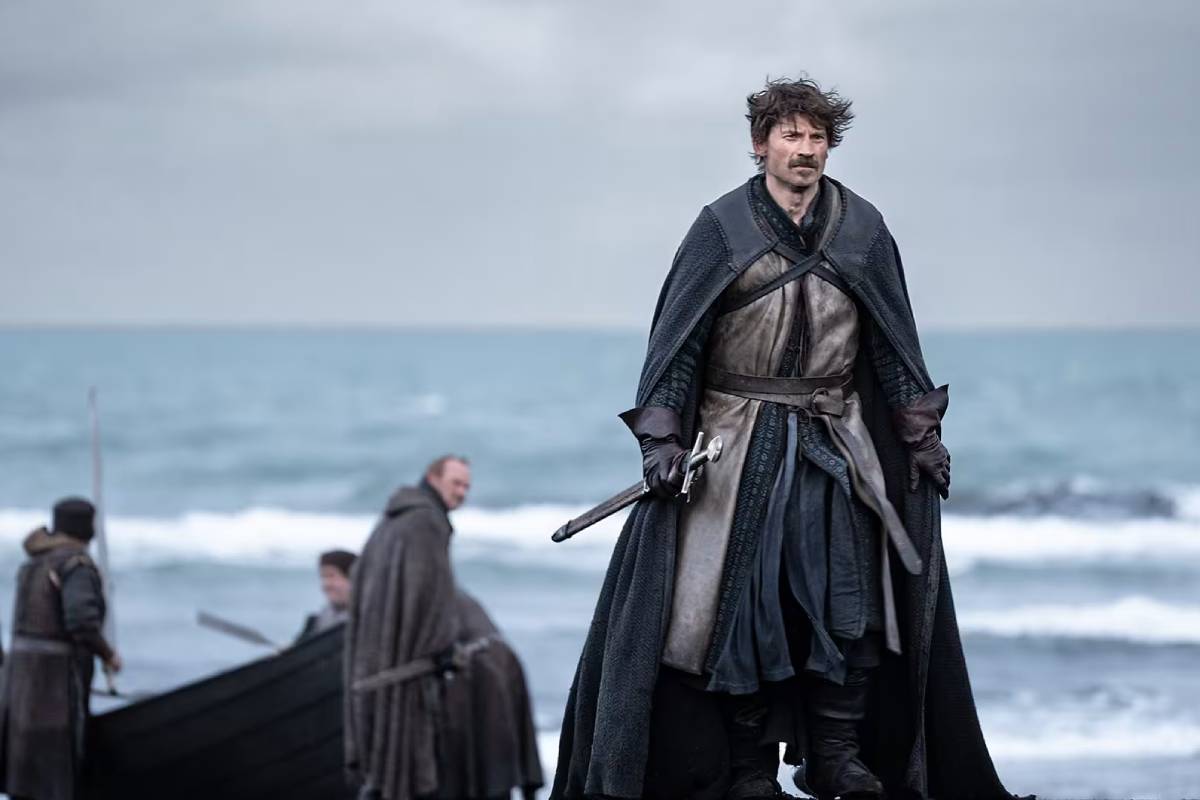
We turn now to the gorier aspects of the new series, King & Conqueror. A joint BBC and CBS production, this series looks at the characters, events, drama, and gore leading up to the Battle of Hastings in 1066 CE.
Previously, we looked at how well the series captures the era's foreboding mood.
This is achieved through its use of dreary sets and landscapes, as well as the relationship between the two main characters, William, Duke of Normandy, and Harold Godwinson.
Despite the complex relationship that the series depicts these two early medieval rulers as having, let's face it, as fans of this age of Vikings, we all love a good battle and brawl.
Whilst the series paints a modern view of the early medieval period, from court politics to the complex motives behind military alliances and plots, we all know that we have tuned in to see how the Battle of Hastings – one of Europe, if not the world's, most consequential battles – will be depicted.
This was, as Harriet Harvey Wood writes about in her 2012 book, The Battle of Hastings: The Fall of Anglo-Saxon England (available on Amazon here), "...one of the rare battles that have decided the fates of nations."
Before we ready our sword and shield and join the protagonists at Hastings, we look at the accuracy of the series' military portrayals.
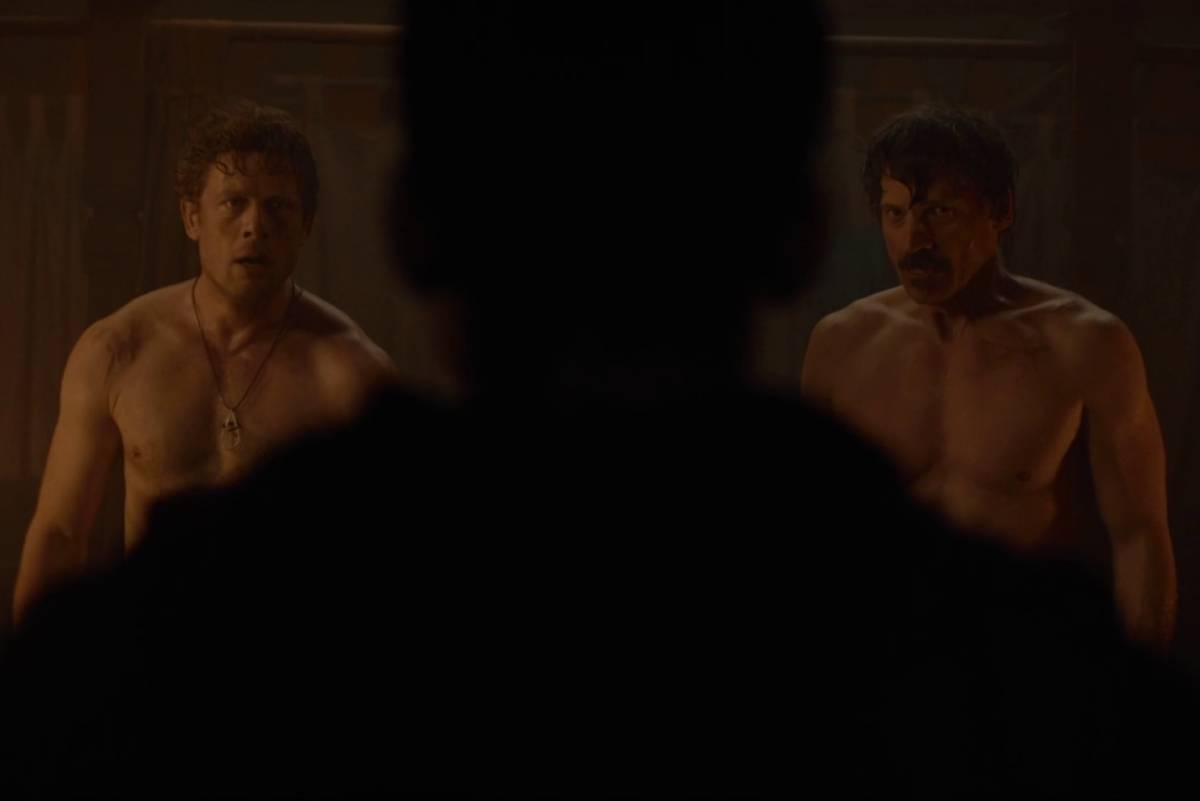
Harold Godwinson and William, Duke of Normandy, meet in a communal bathhouse in Flanders. Source: BBC, CBS Studios, screenshot (Copyright, fair use)
A mixed bag for war material
For those loving a bit of blood and gore as part of their daily viewing habits, King & Conqueror will leave you satisfied.
As to be expected from a series that depicts the most turbulent eras in English history, there is a steady stream of battles and brawls that punctuate the more cerebral scenes of the series.
It does appear that the costume designers have done their homework, as much of the material of war has some basis in historical reality.
Unlike other depictions of early medieval warfare, there are no knights in shining armor. The armor highlights the gritty, more historically accurate approach that the creators have taken.
It is widely believed that the warriors of late Anglo-Saxon England wore simple armor. Many of Godwinson's men wear the gambeson, which is little more than a padded jacket.
When more secure armor appears, such as helmets or chain mail, we see it only on the rich few, not the many.
The shields depicted in the series get a tick of historical approval. The English / Anglo-Saxon shields are depicted as they were – and as Tostig clings onto when sent to Northumbria – round and large enough to almost hide behind.
The Norman shields are depicted realistically too; more of a teardrop shape, these protected only a portion of one's torso and leg.
However, in certain scenes, the shields break far too easily – think Tostig's familial shield breaking under the weight of a single ax blow by Harald Hardrada – which simply would not have happened.
These were carefully crafted and meant to save one's life; they did not shatter so simply. It wasn't swords but shields that ultimately were instrumental in making it off the battlefield alive during early medieval warfare.
Finally, to the pointy end of things. The series's depiction of point-edge weapons is fairly accurate. Whilst other depictions in Hollywood fantasize about huge ax-wielding Vikings (ok, Harald Hardrada is depicted as a huge ax-wielding Viking... but old habits die hard!), much of the weaponry in the series centers on the spear.
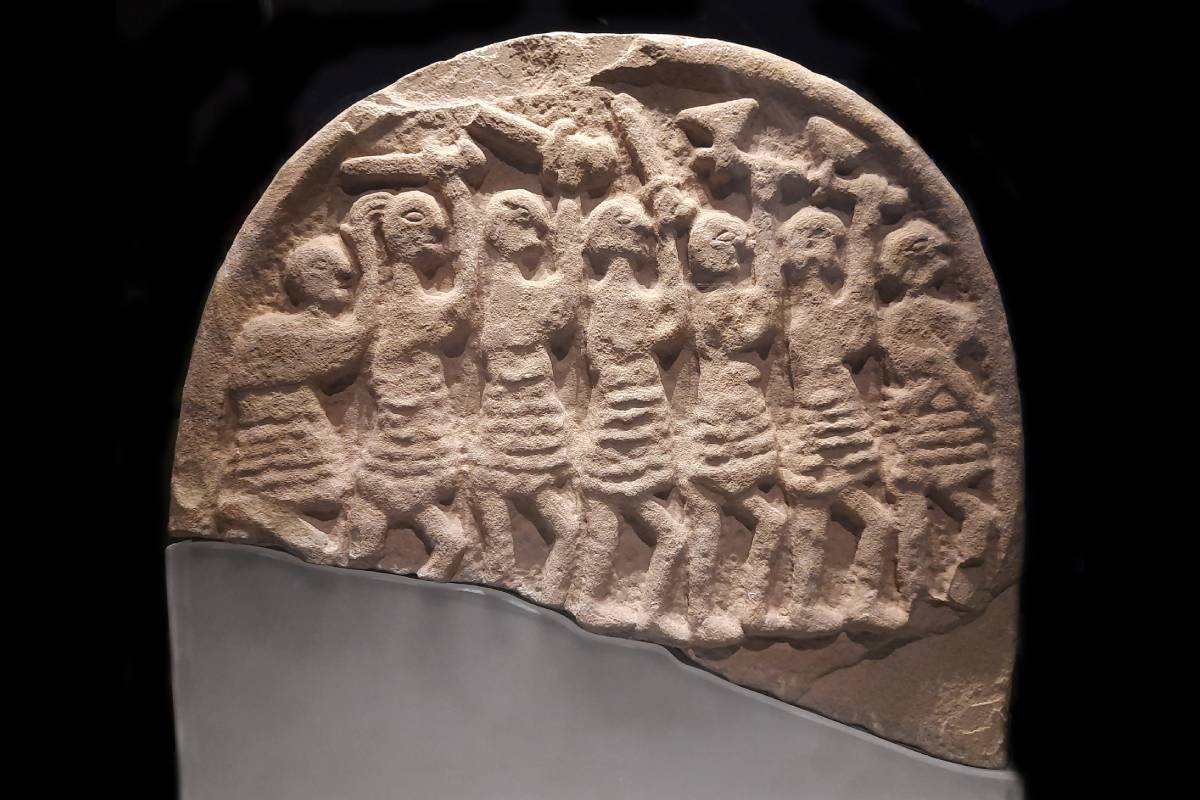
The claustrophobic shield walls of Godwinson's troops highlight the instrumental role that spears had in early medieval battle. It was these, and not swords, that were the important handheld weapons of war.
- READ MORE: A complete guide to Viking weaponry
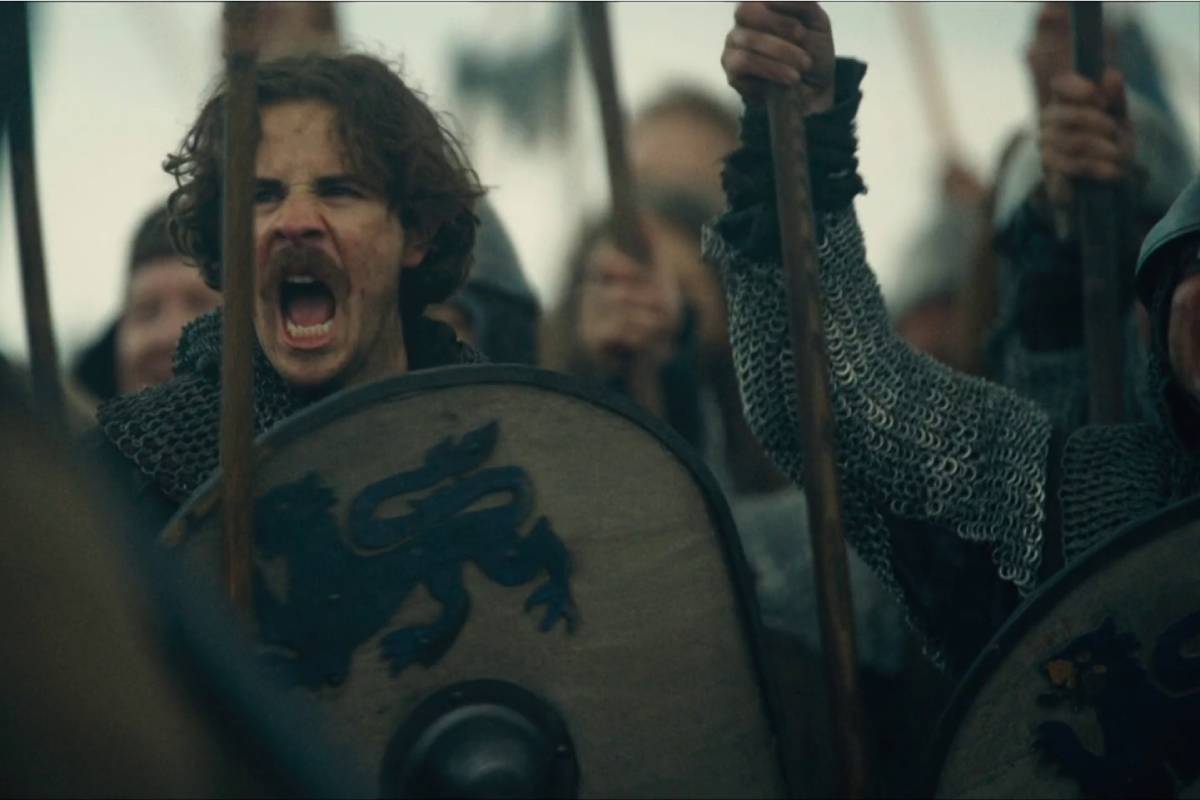
The series leans into the idea of Norman discipline and aggression slowly grinding down Harold's defenses. Source: BBC, CBS Studios, screenshot (Copyright, fair use)
Shield walls, duels, and the hand of God
Now to the climactic battle scene of the series, where we have the would-be usurper, Duke William of Normandy, finally able to take on Harold Godwinson's exhausted men in a field near Hastings.
As this series is a work of fiction, based on true events, we will be a little forgiving when we see the scale of the two armies. It had a very Peter Jackson Lord of the Rings vibe due to the large forces of both sides amassed.
We simply do not know the number that fought that day, as medieval records are notoriously sketchy. Perhaps William commanded around 10,000 and Harold slightly less, say 8,000, but never the great hordes we see from an eagle's vantage throughout the bloody battle scenes.
Much of the series' depiction of early medieval Europe's most famous battles focuses on the famous Anglo-Saxon shield wall. As Harold tells his number 2, Thane Thomas (Jason Forbes), so long as the shield wall holds, the Normans will surely tire of charging up the hill.
They can then hold on long enough for the Earl of Merica's (devilishly played by Elander Moore) reinforcements to save the day.
Turning to the historical record, the main engagements of the battle are depicted accurately.
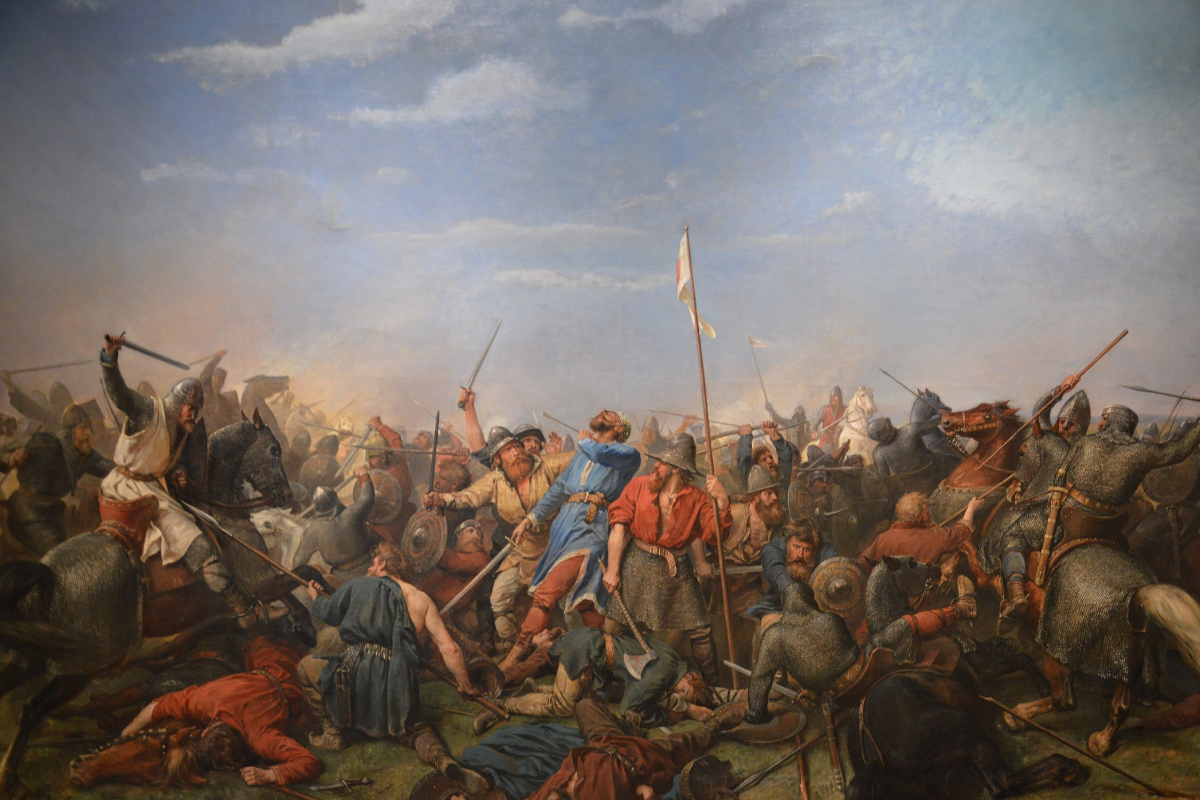
The Anglo-Saxon English held the higher ground and fought in a shield wall (a military tactic that harks back to their Roman ancestry as well as to their experience of fending off Vikings), and this formation only broke when they assumed that William, Duke of Normandy, had been killed and charged down the hill.
Historical nods of approval from us here all around.
Yet there is one fault; it lies with the dramatic, but very historically inaccurate, depiction of a personal duel between Harold and William.
Perhaps they did face off against one another in the heat of battle at Hastings, King versus (would-be) Conqueror, but we have no true historical record of this.
If they did, they would not have been left alone to slash at each other but would have been aided by their supporters, who would have tried to stab, hack, or kill the opposing leader.
Finally, we did like the series's clever twist on Harold's infamous "arrow in the eye."
Rather than a lucky shot from a Norman archer, William is shown as thrusting the arrow into the fallen King's eye after slaying him. This was, as William makes everyone attest, "the hand of God" that killed King Harold.
Again, the only historical depiction we have of Harold and the arrow is on the Bayeux Tapestry, so this clever twist, though dramatic, is more fiction than fact.
Having looked at some of the major characters and events depicted in the new series, King & Conqueror, we here at The Viking Herald judge it to be a fairly accurate historical retelling of the dying days of Anglo-Saxon England, albeit with a fair bit of artistic license, drama, and dueling thrown in for good measure and great entertainment.
For more information on the recent use of the Bayeux Tapestry to ease geopolitical tensions, visit AFR here, whilst King & Conqueror is available to stream on Amazon's Prime Video here.
We get to provide readers with original coverage thanks to our loyal supporters. Do you enjoy our work? You can become a PATRON here or via our Patreon page. You'll get access to exclusive content and early access.
Feel free to reach out to discuss potential stories that may be in the public interest. You can reach us via email at [email protected] with the understanding that the information you provide might be used in our reporting and stories.