

One of the key features of television in the 1990s was the simmering war between fans of the sitcom Friends and those of the (far superior) sitcom Seinfeld.
Both were runaway successes and just another addition to the long list of American television exports throughout this golden era of television comedy.
As we can all agree (at least we here at The Viking Herald... and by "we," I mean really only the present author), Seinfeld was by far the wittier, more complex, darker, and thus funnier of the two sitcoms.
So, when Jón Karl Helgason starts off his book Echoes of Valhalla: The Afterlife of the Eddas and Sagas by quoting a Friends episode, the current author had to hold his nose and try not to gag at the notion of a quote from a far inferior sitcom.
We will forgive Helgason this starting faux pas. Still, the quote serves as a primer to explain how two vastly different worlds – that of the early medieval period and Norse literature and that of late 20th-century American television – have been brought together thanks to the long afterlife of the Norse eddas and sagas.
Long after the last Viking ship ever sailed, or the last skald regaled an audience with a tale of derring-do, we find that the rich tapestry of Norse literature has inspired countless generations of artists down to the present age.
- READ MORE: What you need to know about Norse sagas

The Norse eddas and sagas, primarily recorded in 13th-century Iceland, form the foundation of Helgason's analysis. Source: Yevhenii Chulovskyi / Shutterstock
From medieval to Marvel and everything in between
Helgason frames the book with a searing question – how have the Norse eddas and sagas, products of people in Viking societies during the medieval period, been responsible for captivating the hearts and minds of vastly different cultures and people throughout history?
These eddas and sagas have been the source of inspiration and (re)interpretation and have helped shape popular culture and national identity down through the ages.
By examining several central figures and themes from Norse mythology – think Odin, Thor, Loki, as well as Ragnarök – Helgason brings an interdisciplinary approach focusing on history, literary criticism, and even sociology.
He traces the influence from their original medieval Icelandic milieu through the sweeping romantic nationalism of 19th-century Europe and through to the popcorn-soaked Hollywood culture of present times.
From American and Japanese comic books to German opera and French cinema, Helgason traces how the characters, themes, and stories in the eddas and the sagas have resonated with vastly different audiences through the ages.
Helgason gives a sweeping analysis of how these seemingly timeless stories have been reimagined, reinterpreted, and repurposed since they were first told over a millennium ago.
Yes, there is the usual mention of Tolkien and Wagner, but Helgason delivers broader examples of the cultural impact of these ancient tales.
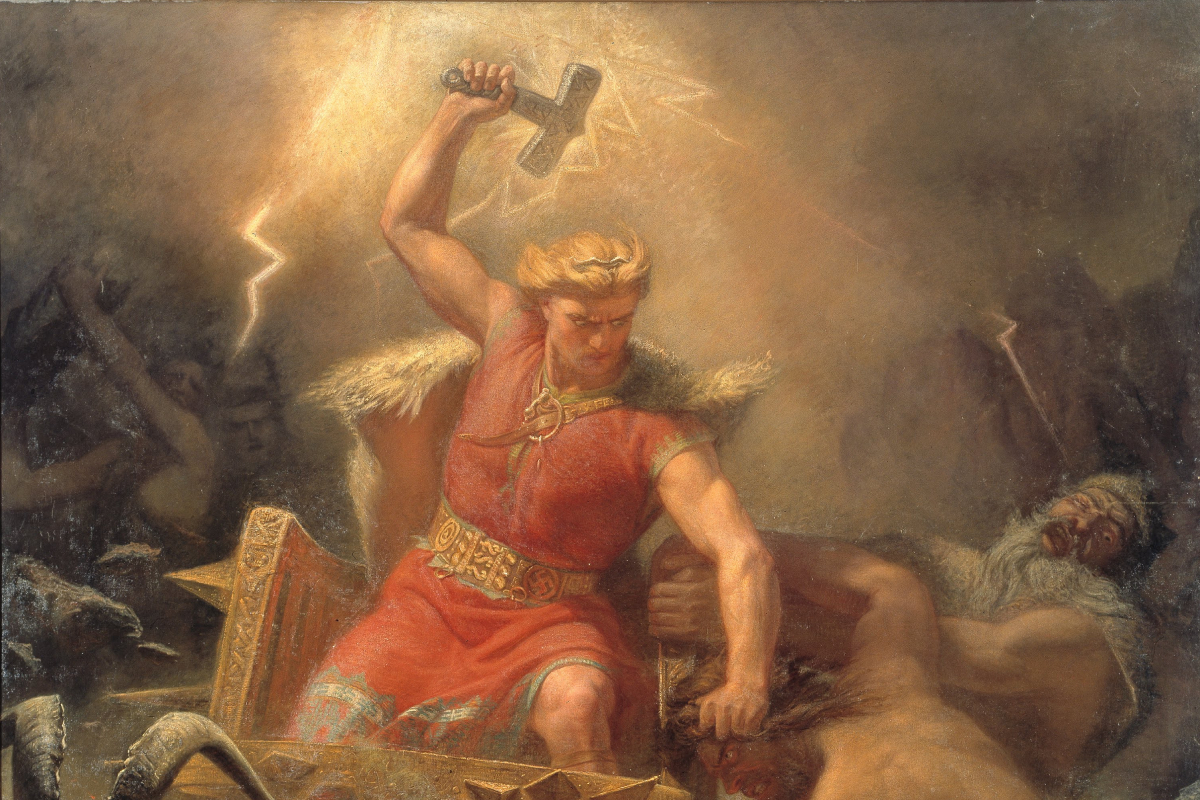
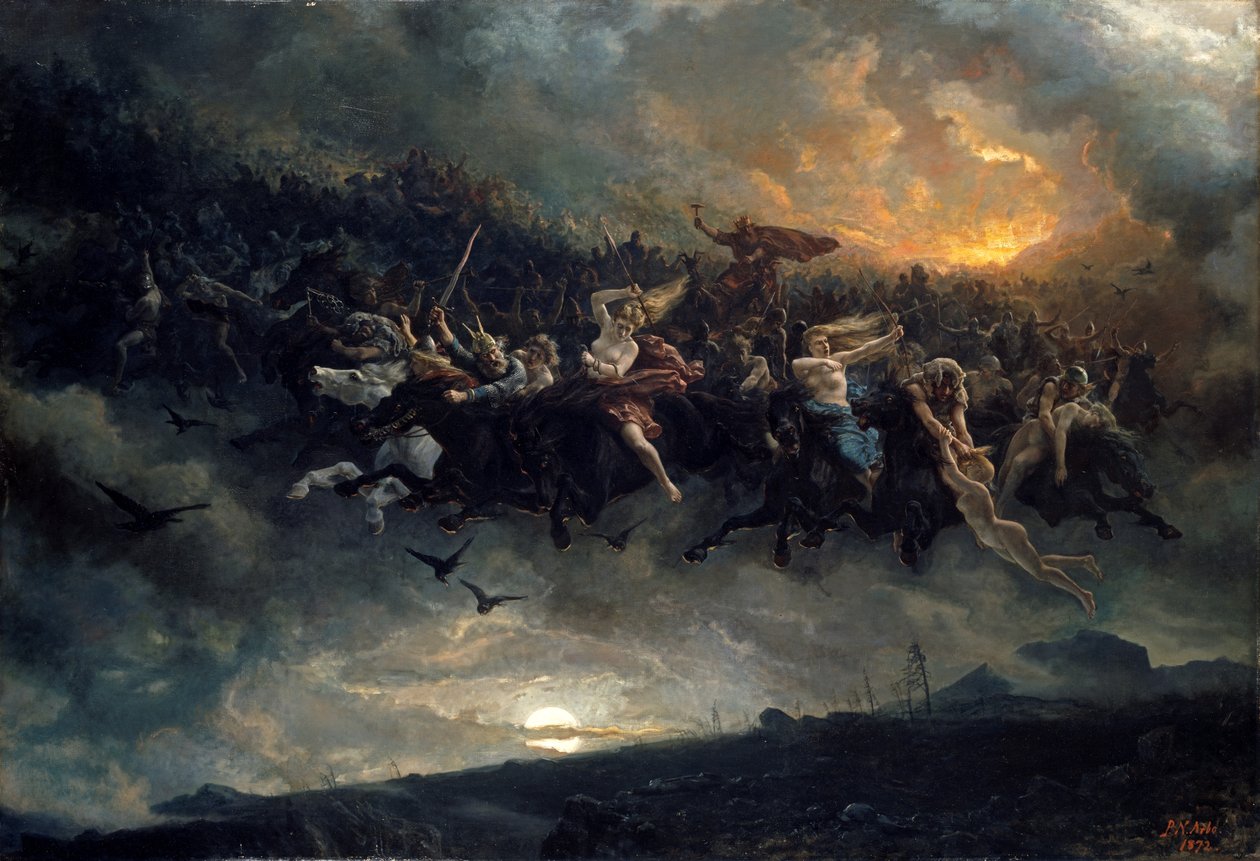
Tracing the Norse sagas from their medieval roots to modern culture, Helgason delivers an entertaining and insightful study. Source: Mårten Eskil Winge (1825–1896)
Casting one's net further adrift
Aside from Helgason's preference for Friends, one of the only flaws in this book is that there is a slight Western centrism to his analysis.
There is a brief mention of the sagas' impact on Japanese comic books, but there is no doubt that the Norse eddas and sagas have been celebrated throughout the world, and not just in Western countries.
Where are the African, Arab, or Latino artists who have been inspired by the Norse eddas?
Surely, Helgason could have cast his net further afield to include the rest of the world when musing on how timeless and inspirational these sagas have been.
Despite this small blemish, the book is a great analysis of the long journey (don't call it a saga!) that the rich tapestry of Norse eddas and sagas has taken since the early medieval period.
Helgason effortlessly delves into the early medieval period through to modern times and delivers a tome that is as entertaining and accessible as anything Snorri Sturluson compiled.
Which we at The Viking Herald like to think is the highest of praise indeed!
Echoes of Valhalla: The Afterlife of the Eddas and Sagas by Jón Karl Helgason is available for purchase on Amazon here.
We get to provide readers with original coverage thanks to our loyal supporters. Do you enjoy our work? You can become a PATRON here or via our Patreon page. You'll get access to exclusive content and early access.
Feel free to reach out to discuss potential stories that may be in the public interest. You can reach us via email at [email protected] with the understanding that the information you provide might be used in our reporting and stories.