


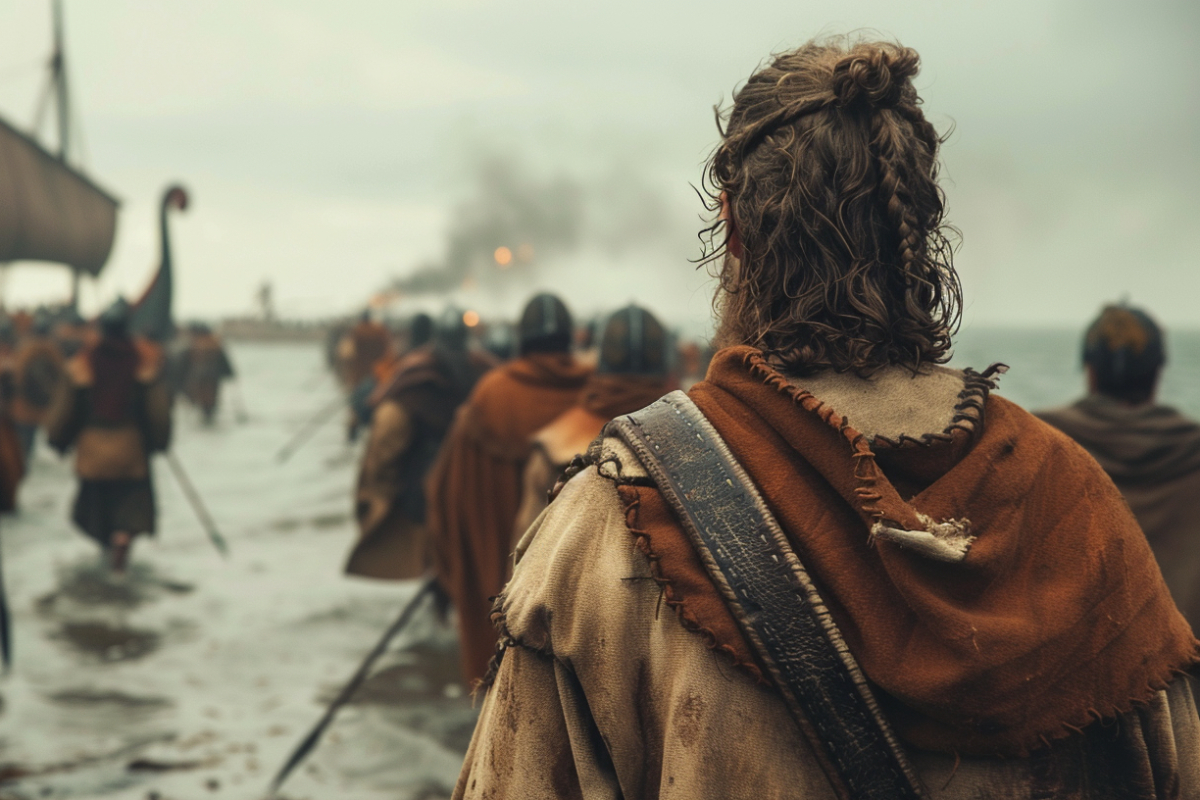
Published by Princeton University Press in 2014, The Age of the Vikings by Anders Winroth, a professor of medieval history at Oslo University and formerly of Yale, shrinks centuries of Norse advancement into ten chapters, including an epilogue.
From Nantes to Stamford Bridge
The 200 pages of main text feel anything but rushed, however.
Winroth gives himself plenty of scope to explore themes such as shipbuilding, religion, and trade. It's all backed up by facts, many of them little-known.
Getting to know a medieval Swedish woman who had two husbands but was fiercely independent, we learn that 12% of runestones around Scandinavia were erected by women acting alone.
Following the money, as does almost every writer who has produced their own Viking history over the last ten years since Winroth, to illustrate distant global trading links, the author gives the classic example of Arabic dirhams but also says:
"More than 51,000 English silver pennies dating from the period 990-1051 alone have been found in Scandinavia, many more than survive in England itself."
While Winroth accurately outlines Viking activity in and influence on the British Isles, as a professor of medieval history, he often opts to set the context around modern-day France, Germany, and the Benelux rather than East Anglia or the Orkneys.
To bring out the brutal violence with which many associate the Vikings, instead of using the oft-cited example of the raid on Lindisfarne in 793, Winroth describes the raid on Nantes half a century later.
This approach allows him to illustrate the swift and sudden nature of a Norse raid, facilitated by their fast longships and expert seamanship, as well as the variety of weapons they employed.
He also points out that the raid occurred on an auspicious date - 843, on St. John's Day, a significant day in the religious calendar when church coffers would have been full, suggesting this timing was no mere coincidence.
Today's filmmakers might place swords in every Viking warrior's hand to put the fear of God into rival forces on the battlefield, but the axe was the weapon of choice – so much so, as Winroth points out, it still features on Norway's national coat of arms to this day.
Swords were for those of higher status, the finest examples being of high carbon sourced from India, Persia, or Central Asia.
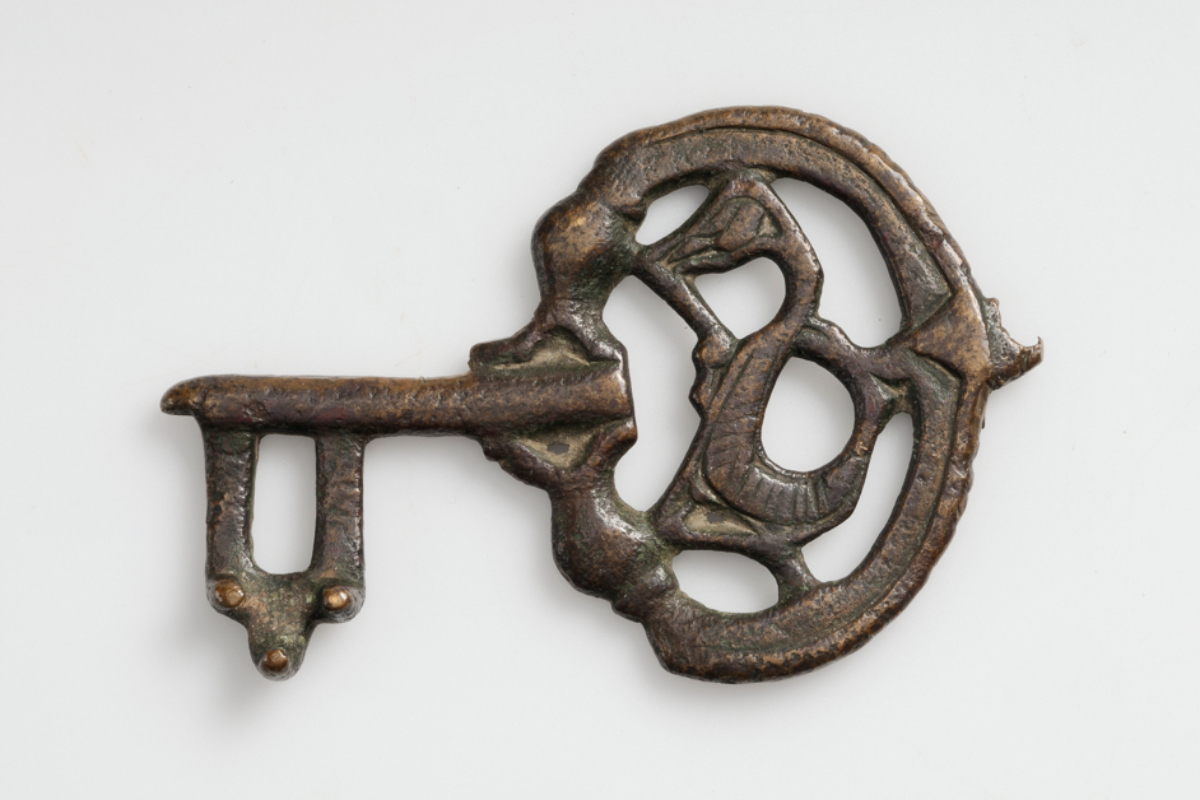
The custom of interring women with keys serves as a compelling insight into the division of labor and gender dynamics within Viking culture, underscoring the importance of women's roles in managing the farmstead. Photo: The Swedish History Museum (CC BY-SA 2.0)
Ships, keys, and runes
As the best historians do, Winroth likes to pick out seemingly random personalities to illustrate a much wider point in The Age of the Vikings.
To put the Vikings' medieval savagery in context, he cites the brutality of Charlemagne, who is today championed as a founding father of modern Europe.
He also introduces us to Rörik, a rare name in Sweden but one that belonged to two particular Norse adventurers.
One became an important leader in Holland, while the other gained high status in Russia. This again shows the spread of Viking influence across vast expanses of Europe.
Estrid, whose skeleton was discovered near Stockholm in the 1990s, lived as a farm-managing matriarch a millennium ago.
She is highlighted not only because one of her two husbands died on a Christian pilgrimage to Jerusalem but also because both her name and her husband's are recorded in the Book of Life at the Reichenau Monastery, located by Lake Constance on the border between Germany and Switzerland.
Additionally, Estrid was buried with a Swiss coin, underscoring her story's connection to broader European history.
We also discover that women were often buried with the huge keys they would carry as head of their farmstead, a custom that permits Winroth to discuss the division of labor in Viking society and the roles of men and women.
(Interestingly, the author notes a possible lower infant mortality rate during the Viking Age, albeit with limited evidence. In stark contrast, by the 1700s, a staggering 40% of Swedish children didn't survive past their fourth birthday.)
Ships are another main focus, "fast, flexible, and propelled by rowers," as Winroth puts it – until longer distances required masts and sails, not always the ideal solution in headwinds, we learn.
They also had relatively short lifespans, which is why they could be built and repaired almost anywhere.
The author finds evidence of such activity at Gnëzdovo, near Smolensk in Russia, which also indicates the Norse prowess at navigating Europe's river systems, a skill that they may have passed down to the Cossacks, it seems.
Influences flowed both ways, of course, and the reader is given a fascinating study of the runic alphabet, Futhark, and shown how close it is to the Latin one, a creation of the Mediterranean.

Recognized as a UNESCO World Heritage Site, Birka on Björkö Island serves as a key historical location that provides a comprehensive view of Viking civilization through its well-preserved urban planning, fortifications, and graves. Photo: Jan Norrman / Kulturmiljöbild, Riksantikvarieämbetet (CC BY-SA 2.5)
Culture and celebration
The Age of the Vikings starts with Winroth setting the scene, a Christmas drinking session in Birka, with demonstrations of skaldic poetry and sacrificial rites in a Viking chieftain's long hall amid richly carved furniture.
He ends his comprehensive history with this lovely paragraph: "Scandinavians had a sense of beauty and an ear for poetry, and they developed idiosyncratic styles of both art and literature without any close counterparts in the rest of Europe."
Dozens of black-and-white photographs and maps illustrate the text, along with a section of 14 color plates, although denser sections could probably do with sub-headings to give the reader more bite-sized chunks before moving on to the next part.
This is otherwise a scholarly and comprehensive work to stand alongside the many others published in more recent years.
The Age of the Vikings by Anders Winroth is available for purchase on Amazon via this link.
We get to provide readers with original coverage thanks to our loyal supporters. Do you enjoy our work? You can become a PATRON here or via our Patreon page. You'll get access to exclusive content and early access.
Feel free to reach out to discuss potential stories that may be in the public interest. You can reach us via email at [email protected] with the understanding that the information you provide might be used in our reporting and stories.




.jpg)
