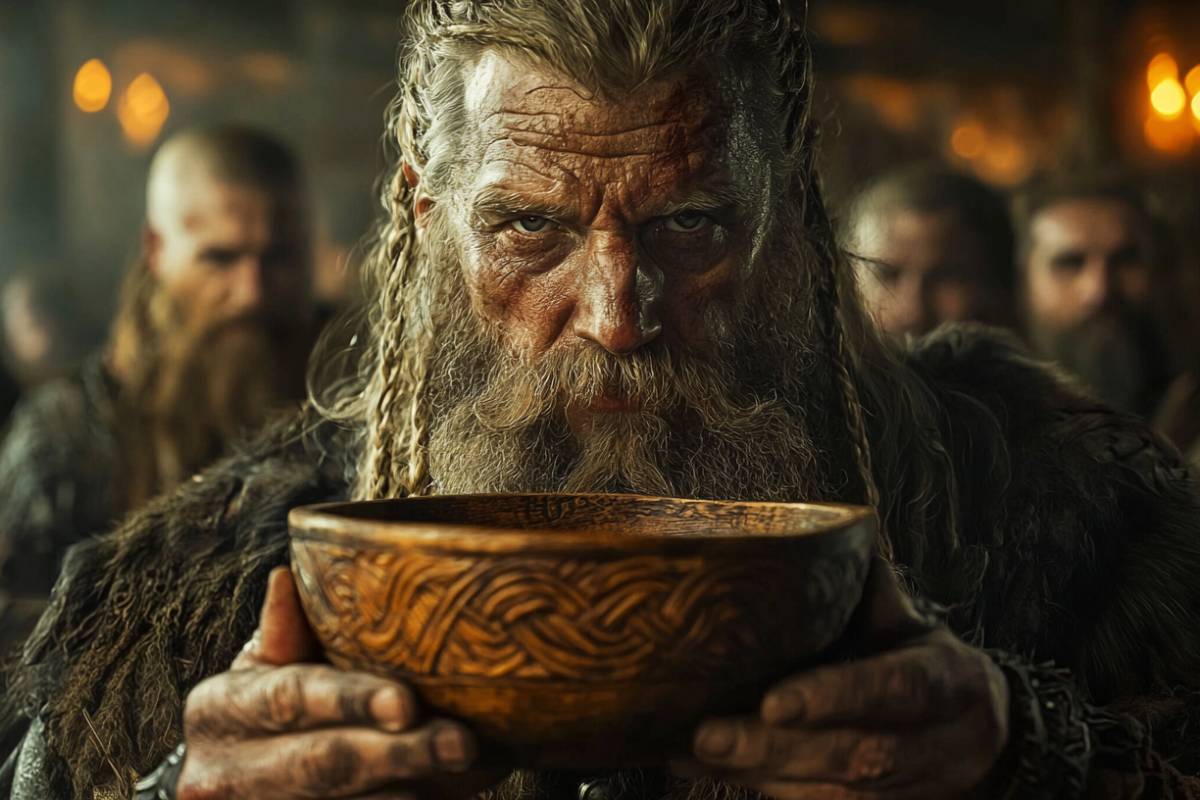


As we all know, New Year's Eve is today one of the biggest celebrations of the year, typically featuring overpriced parties in overpacked venues, plenty of revelry, and copious amounts of drinking.
But what about during the Viking Age? Did they mark the end of the calendar year, or was the focus solely on Yule and the winter solstice?
As we shall see, the answer is more complicated than you might think.
New Year's Eve? Never heard of it!
The simple answer to the above question, however, is no, the Vikings did not celebrate New Year's Eve, at least not during the early part of the Viking Age.
Why? Because unlike much of the rest of Europe, which had already been Romanized and Christianized, pagan Scandinavia did not use the Julian calendar.
In other words, for the Norse of this era, the end of December and the arrival of January simply did not exist, and there were no absolute dates.
However, this does not mean that the Vikings had no point of reference.
Written sources are scarce, but it is thought the Norse divided the year into moon phases and two seasons: summer and winter.
Instead of specific years, the Norse would have counted in winters, usually relative to a major event: "three winters since the great famine" or "seven winters since the birth of Harald."
Like many pagan cultures, the Vikings did celebrate the winter solstice – the point where the North Pole reaches its maximum tilt away from the Sun, and people in the Northern Hemisphere experience the shortest day and longest night of the year.
By watching the movement of stars and the Sun, skilled observers in Scandinavia were able to forecast the arrival of the longest night with an impressive degree of accuracy so that preparations could begin for the coming celebration.
The name of that celebration? Yule.
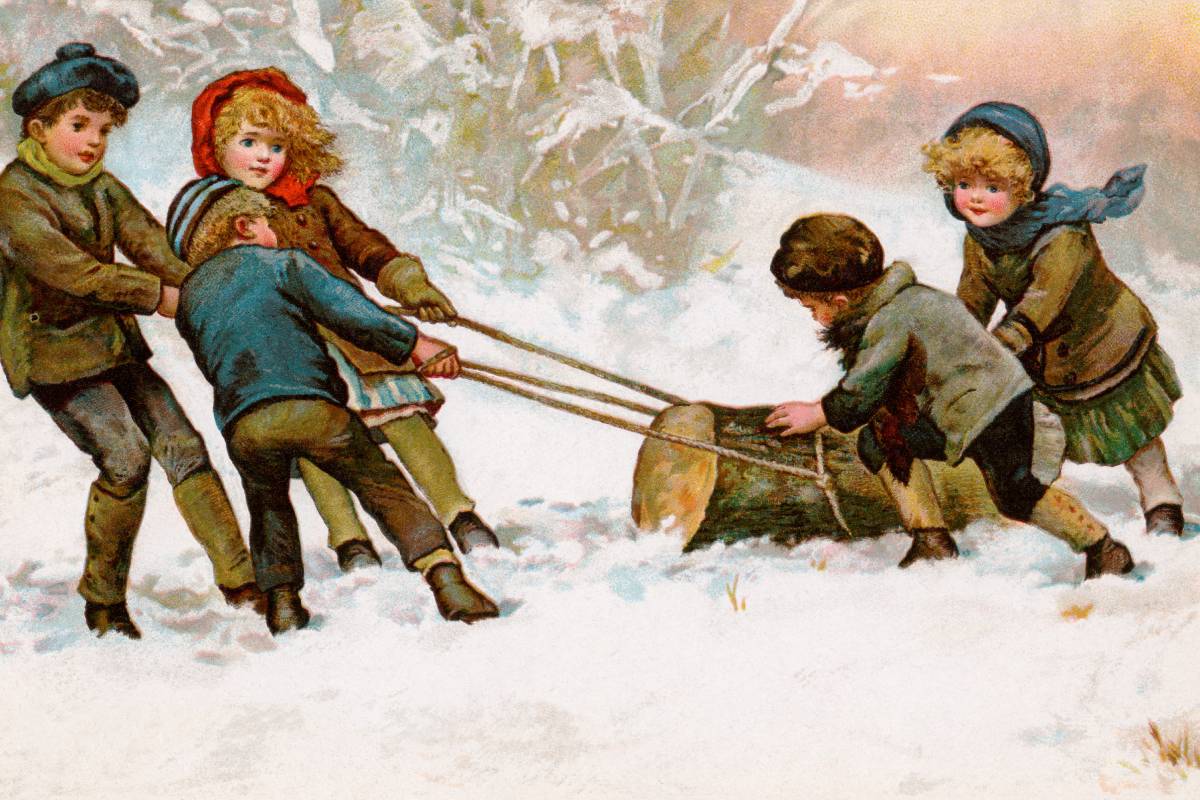
Viking Yule celebrations included sacrifices, feasting, and the burning of the Yule log, later absorbed into Christmas traditions. Source: Victorian Traditions / Shutterstock
A very merry Yule
Yule was a common winter feast celebration among all the Germanic peoples both during and prior to the Viking Age.
It was held on the winter solstice – 21 or 22 December – and, just like all winter solstice festivals, was a celebration of light, fire, and feasting.
Although our knowledge of Viking celebrations during this time is very limited, many historians believe animal sacrifice to gods or other supernatural beings would have been a popular practice.
There would also have been a tremendous feast, as the remaining cattle were slaughtered so they would not have to be fed during the winter.
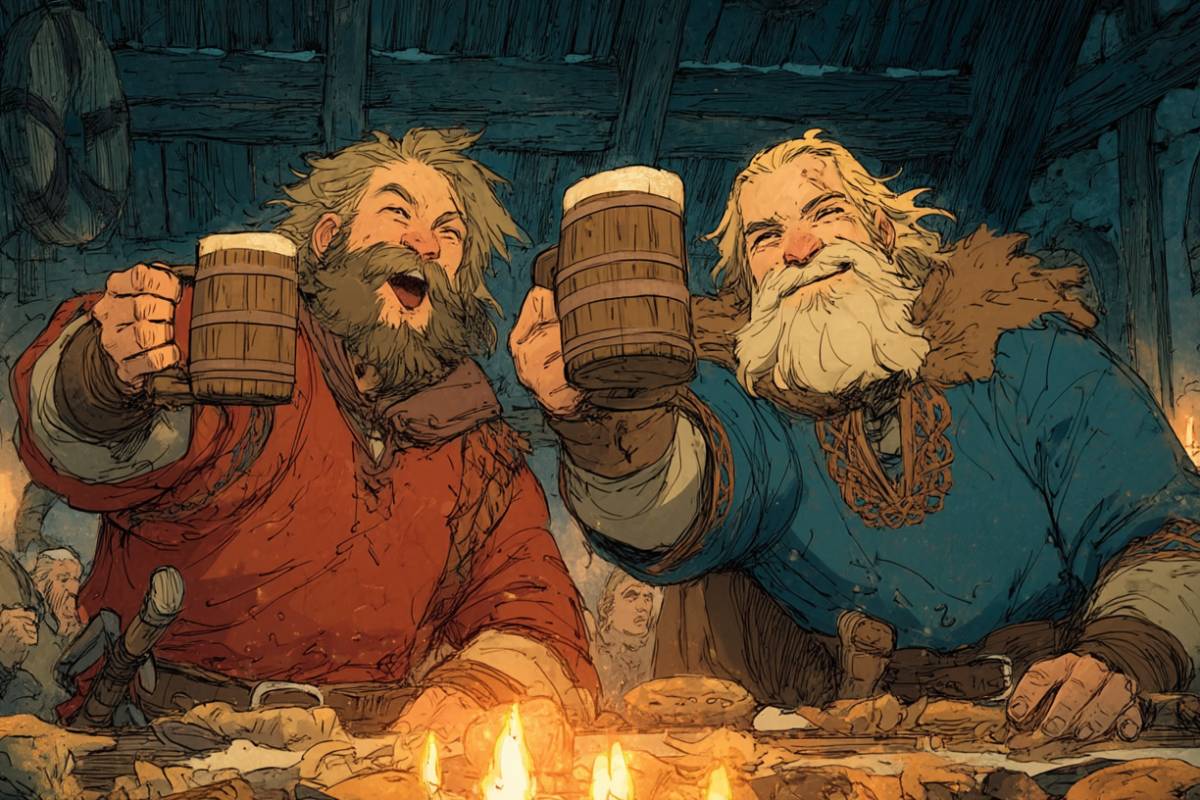
Mead and ale would surely have been passed around, and it is thought that wreaths and mistletoe were also popular.
According to the Saga of King Haakon Haraldsson, in the 10th century, Haakon ruled that the pagan Yule celebration should be merged with the Christian Christmas.
So it was that over the centuries, the traditions of Viking Yule were largely lost, with the Yule log one notable exception.
Yet Yule still survives across Scandinavia as the word for Christmas: jul in Norwegian, Swedish, and Danish, joulud in Estonian, joulu in Finnish, and jol in Icelandic.
But what of New Year's Eve?
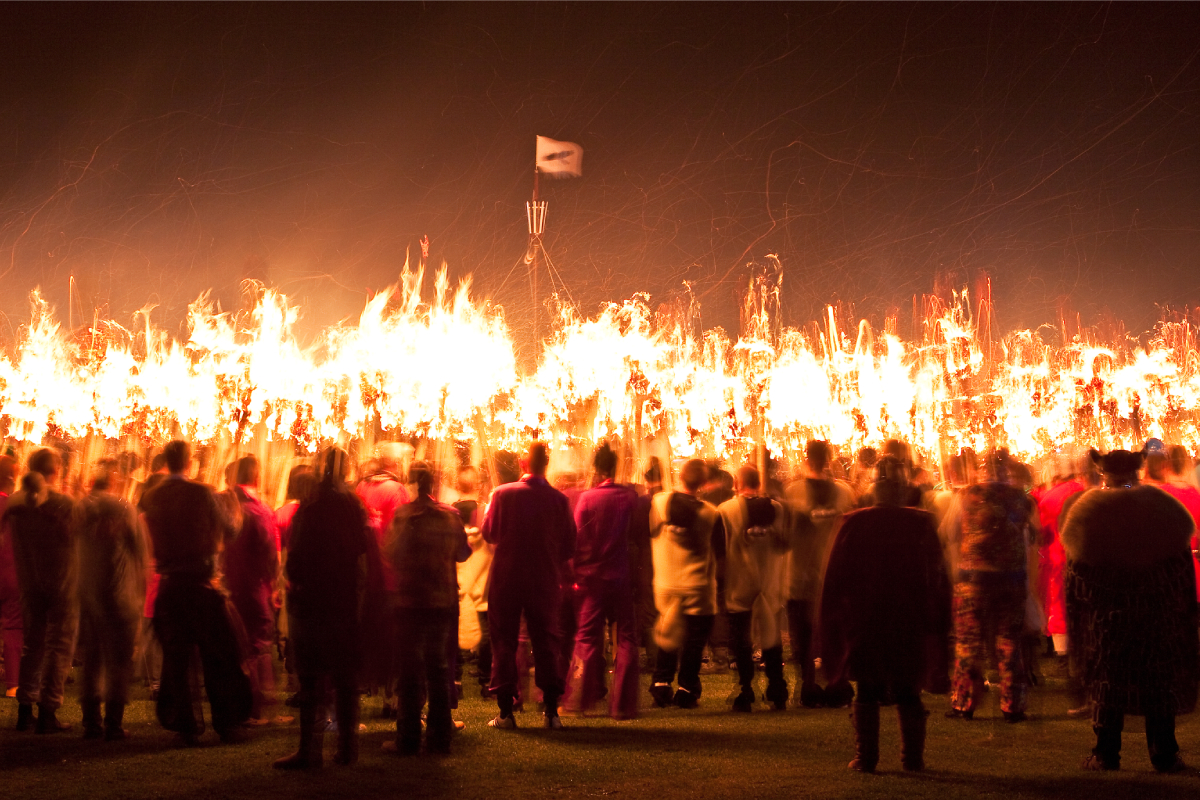
Scotland’s Hogmanay includes torchlit processions and traditions like first-footing and Auld Lang Syne. Source: Andrew J Shearer / Shutterstock
The Viking festival of Scotland: Hogmanay
We are happy to confirm that you can still celebrate the Viking traditions of the winter solstice on New Year's Eve in Scotland.
Hogmanay is one of the most well-known and longstanding New Year's Eve traditions in the world.
It is also famously Scottish, with traditional celebrations including the first-footing – where the first person to cross the threshold of the house of a friend or neighbor comes bearing gifts such as fruitcake and whiskey – and the singing of the stirring Robert Burns poem Auld Lang Syne at the strike of midnight.
Yet many believe the Hogmanay tradition actually dates back to the 8th or 9th century, when the local Scottish people began adopting the Viking celebration of Yule.
Just like in other countries, Yule was lost to Christmas, at least for a time.
Later, however, Protestant leaders decried Christmas as a Catholic festival, and it was, to all intents and purposes, banned in Scotland from the end of the 17th century to the 1950s.
As a result, many Scottish people continued working over Christmas before celebrating with full abandon on December 31 with parties and an exchange of presents.
This means that anyone on the lookout for a true throwback to the Viking Age for their New Year's Eve celebrations – outside of Scandinavia – should certainly consider Hogmanay in Scotland.
Our tip is the Shetland Isles, where you will experience plenty of torchlit processions and pagan-style festivities on December 31 as people celebrate what the locals often refer to as Yules.
Yes, here, too, the Old Norse name is still going strong.
We get to provide readers with original coverage thanks to our loyal supporters. Do you enjoy our work? You can become a PATRON here or via our Patreon page. You'll get access to exclusive content and early access.
Feel free to reach out to discuss potential stories that may be in the public interest. You can reach us via email at [email protected] with the understanding that the information you provide might be used in our reporting and stories.