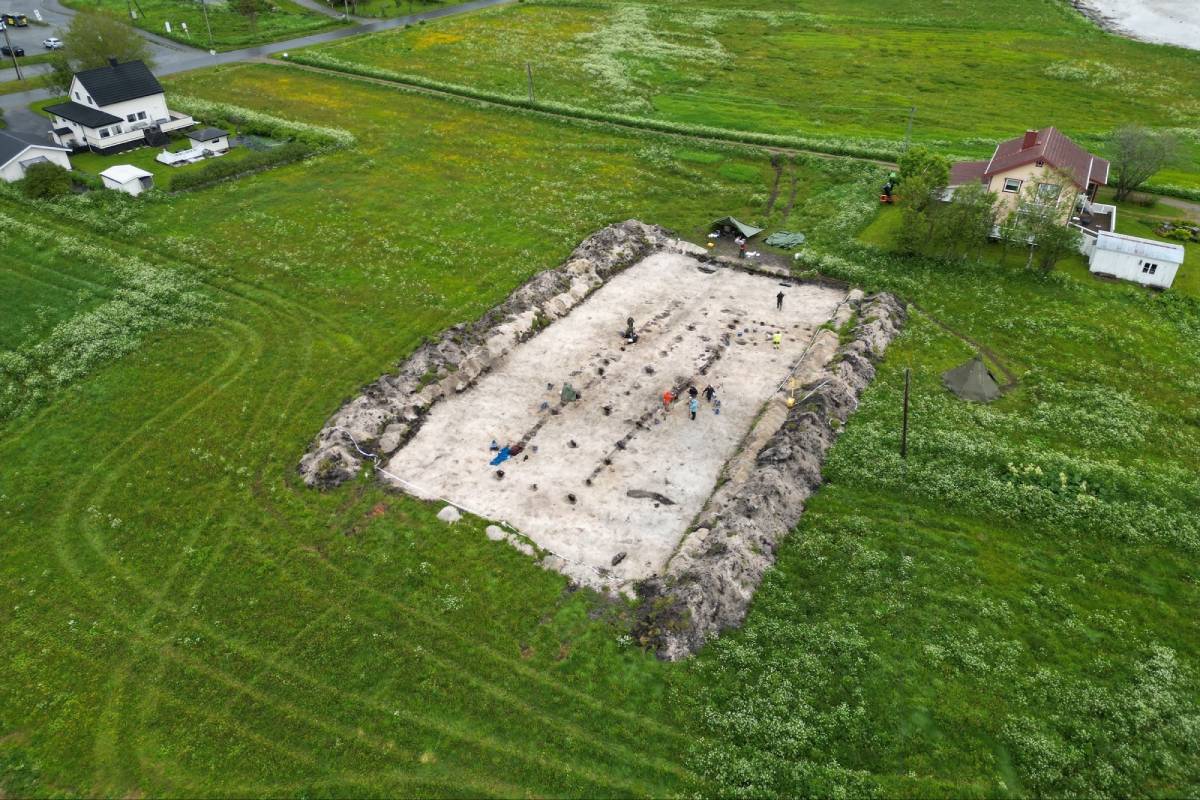


New excavations into a possible Viking settlement in Wolin, Poland, have unearthed evidence of a potential harbor area on the eastern side of the island.
Although further investigations are needed, there is some hope it could reveal the real-life location of Jomsborg, the legendary Viking Age stronghold.
The search for the harbor
Wolin, an island in the Baltic Sea in northwest Poland, has long been linked to Viking culture, with many Scandinavian artifacts found on the territory.
There have also long been suggestions that the island could be the location of a trading settlement or citadel connected to the Jomsvikings, a semi-legendary group of warriors who moved east to escape persecution by the Christians.
In medieval records, Jomsborg is said to contain a settlement, fortress, and harbor area.
Early this year, a partnership was announced between the Polish Academy of Sciences and Aarhus University to initiate a major three-year investigation of sites on the island with possible links to the Viking Age.
The team is particularly interested in trying to determine whether there was a Slavic-Scandinavian harbor on Wolin at this time.
As he informs The Viking Herald, project leader Dr. Wojciech Filipowiak of the Polish Academy of Sciences' Institute of Archeology and Ethnology and his team found some promising leads this summer.
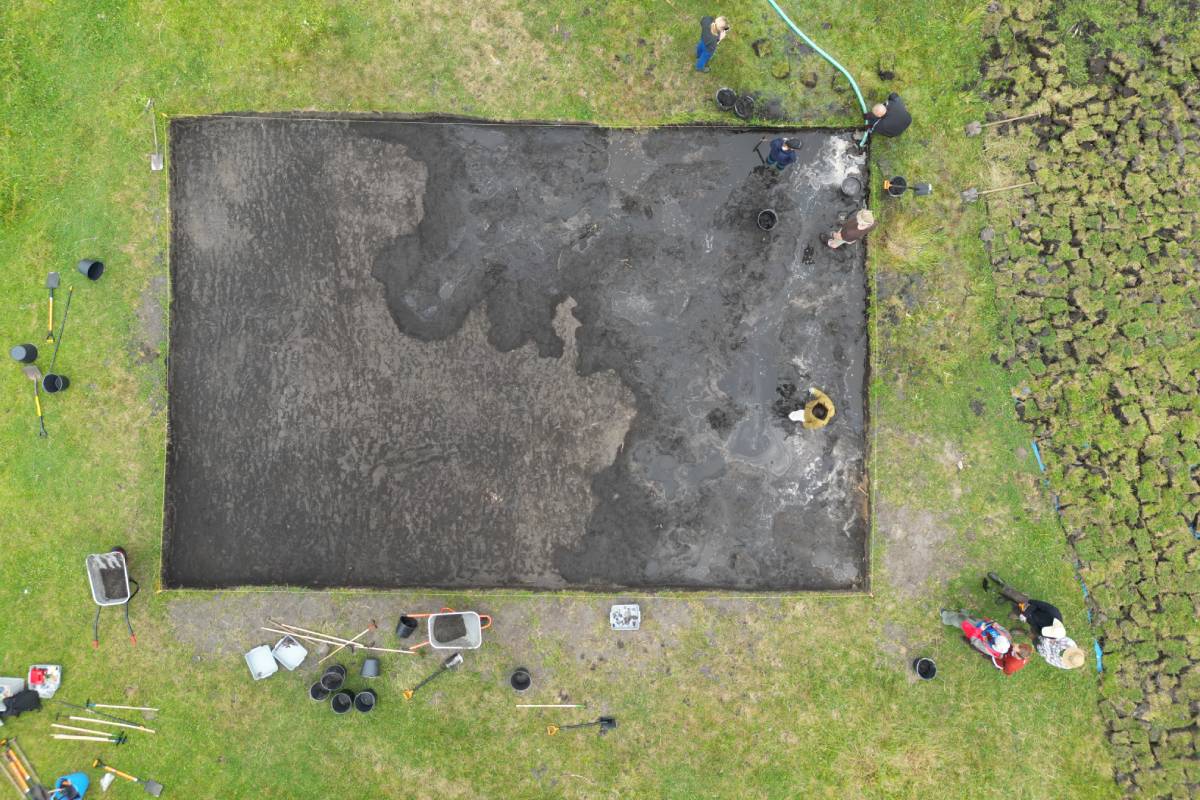
"We have excavated a trench in the port area of Silver Hill, which is the northern district of Viking Age Wolin," Wojciech explains.
"The dig was led by Dr. Karolina Kokora. We opened an 8x12 meters (approximately 26x39 ft) trench in a place where we believed the harbor should be. We have excavated around half of the deposits, and we will come back next year and reopen the trench."
"Nearby, we found four houses or platforms made of sand and clay, which were separated by ditches and strengthened with wood. One of the platforms or houses contained a hearth oven."
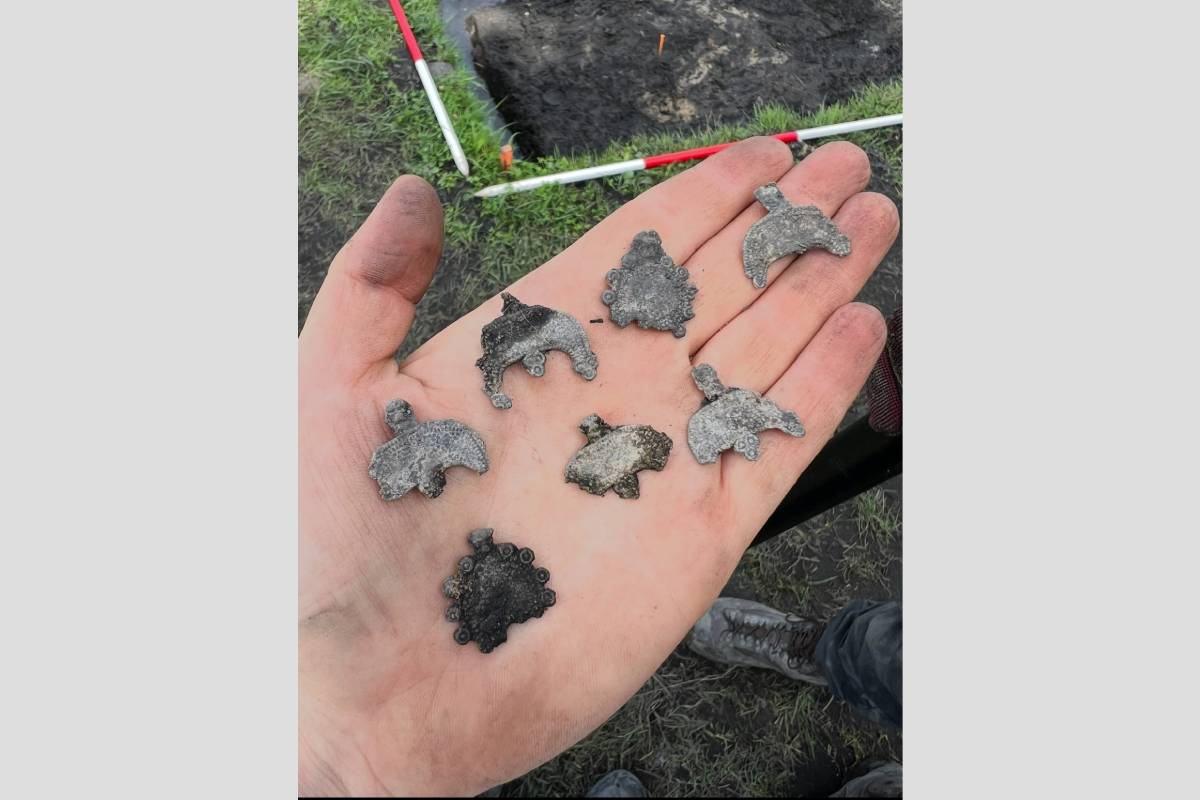
Seven copper-alloy lunula pendants, likely 10th–12th century, recovered at Silver Hill. Photo: Institute of Archeology and Ethnology, Polish Academy of Sciences
Signs of something
The working assumption is that there was a mixed Scandinavian and Polish settlement or culture on the island both during and possibly beyond the late Viking Age.
The Silver Hill site, which is just next to the water, would have been an excellent location for a harbor. Although there is still much work to be done, the unusual nature of the construction found here does appear to point toward a possible Slavic-Scandinavian settlement.
"Finding the houses and platforms is very significant," Wojciech reports. "This kind of construction has not been recorded before in Wolin, and some analogies could also be found in the Scandinavian Viking sites."
"This gives us an opportunity to formulate some new hypotheses about Slavic-Scandinavian relations in Wolin. I emphasize, however, that this is a working insight, almost straight from the trench, and we will have to wait at least a couple of months for the first conclusions."
Indeed, the team is waiting to confirm when these materials were placed at the site. "Dating is still hypothetical, though it seems these features are from the 10th to 12th centuries," Wojciech reports.
"We have also found thousands of pottery fragments and animal bones, and around 500 special artifacts. There are many everyday objects, but also some more elite items, including a seven-piece metal 'luluna,' a half-moon pendant."
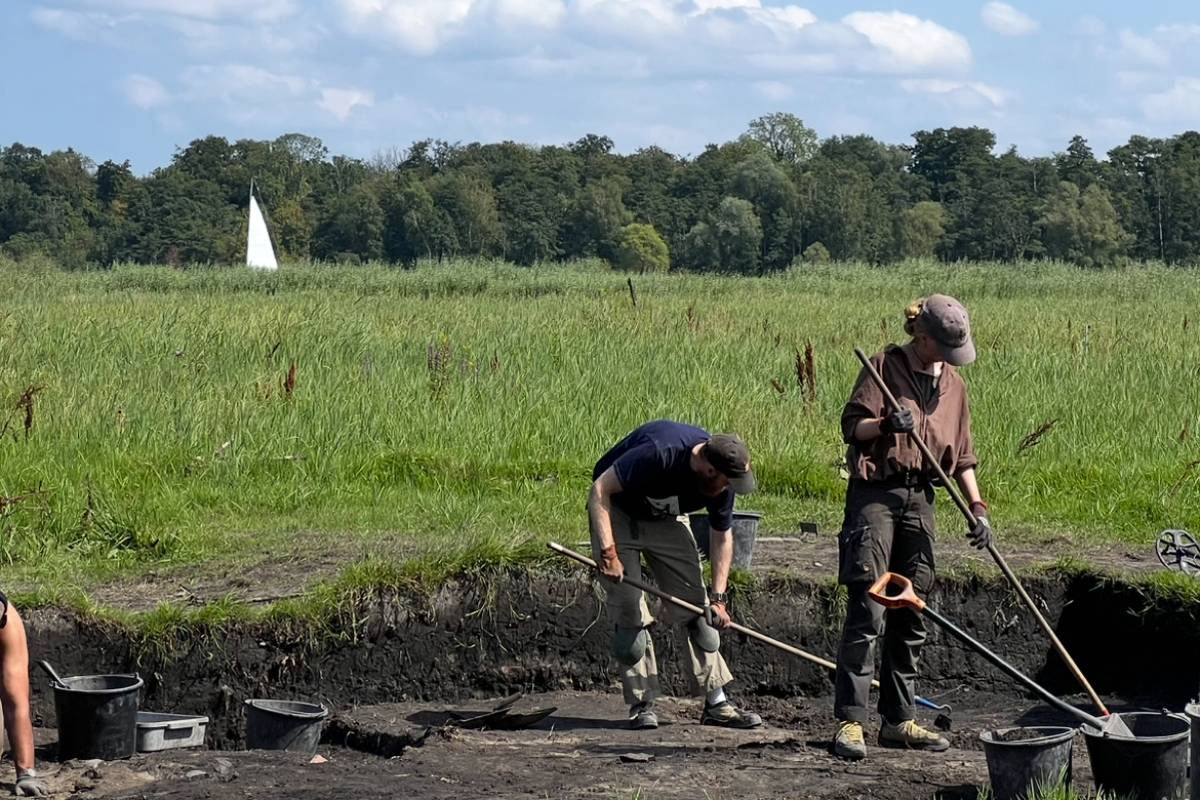
Field team at Silver Hill clears the trench to document layers that may relate to a Viking Age harbor. Photo: Institute of Archeology and Ethnology, Polish Academy of Sciences
The search continues
The current analysis includes efforts to date the trench dug at Silver Hill and also some of the surrounding area. It is hoped this will enable the archeologists to state the age of the site with some degree of certainty.
"We have carried out geoarcheological coring of Silver Hill with Dr. Gian Battista Marras and Professor Søren M. Christiansen of Aarhus University," Wojciech adds.
"We have also carried out coring on a small Northern Islet located on the Dziwna Strait, approximately 1 kilometer (0.62 miles) north of Silver Hill, as well as geophysical investigations with Robert Ryndziewicz of the Institute of Archeology and Ethnology. These are now being processed."
While the team awaits this analysis, there are additional plans for archeological investigations, with two years of the project still to go.
Among other things, there is hope it will later be possible to conclusively determine whether the site at Silver Hill was once a working Slavic-Scandinavian harbor.
"Thanks to coring and other excavations, we know that we still have at least 1.5 meters (approximately 4.9 ft) of peat deposit with organic preservation in the trench," Wojciech explains to The Viking Herald.
"We can also expect to find more wooden constructions, and hopefully confirm the construction of a harbor."
We get to provide readers with original coverage thanks to our loyal supporters. Do you enjoy our work? You can become a PATRON here or via our Patreon page. You'll get access to exclusive content and early access.
Feel free to reach out to discuss potential stories that may be in the public interest. You can reach us via email at [email protected] with the understanding that the information you provide might be used in our reporting and stories.