

Thanks to the brilliant series Vikings, the Kattegat – the sea that divides Denmark from Sweden – has seen its name recognition skyrocket (for non-Scandinavians).
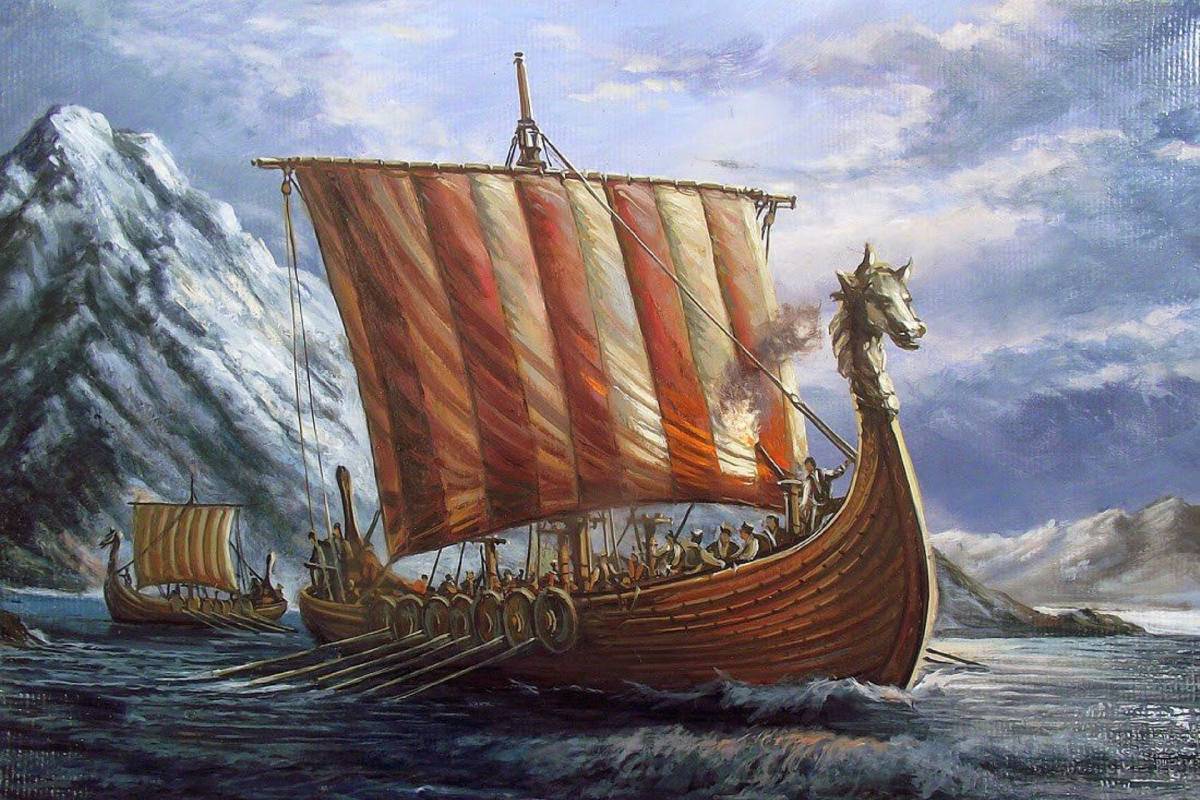
This stretch of sea has seen countless ships ply its waters since time immemorial, and during the early medieval period, it was practically a Viking highway ferrying goods and people (be they slaves or warriors) to and from the vast Viking world that stretched from the Baltic to the British Isles and the Black Sea.
One of the major cities that line the shores of the Kattegat is Denmark's second-largest city, Aarhus.
Despite being a commercial hub today, a center of shipping and trade as Denmark's main deepwater port, Aarhus has a long and storied history that can be traced back to its foundation more than a millennium ago, in the Viking Age (c. 750–1100).
Nestled at the foot of the Aarhus River, Aarhus is believed to be one of Denmark's oldest cities, having been founded in the 8th century.
Let us wind the clock back a millennium to see how this great city began.
Founded at the dawn of the Viking Age
Thanks to advances in archeology and scientific research, historians have only recently agreed upon an approximate date for Aarhus.
The current historical consensus is that a small settlement was founded at the foot of the Aarhus River, which flows into the Kattegat sometime in the latter half of the 8th century.
This would make Aarhus one of the oldest settlements in the Nordic world.
Its foundation coincided with the time when people from Viking societies were beginning their centuries-long outward expansion that was often violent, sometimes profitable, and most definitely historically important.
The name Aarhus derives from the Old Norse words for river (a) and mouth (oss). A settlement was established here at the strategic location where the Aarhus River flows into the great Kattegat.
From here, it was only a short distance eastward to the Baltic Sea and then onto Eastern Europe, or, heading northward, into the Skagerrak and what is now Sweden and Norway.
In 2002, Danish archeologists uncovered the remains of a late 8th-century shipyard, suggesting a level of trade and activity but nothing that matched the more impressive trading town of Hedeby.
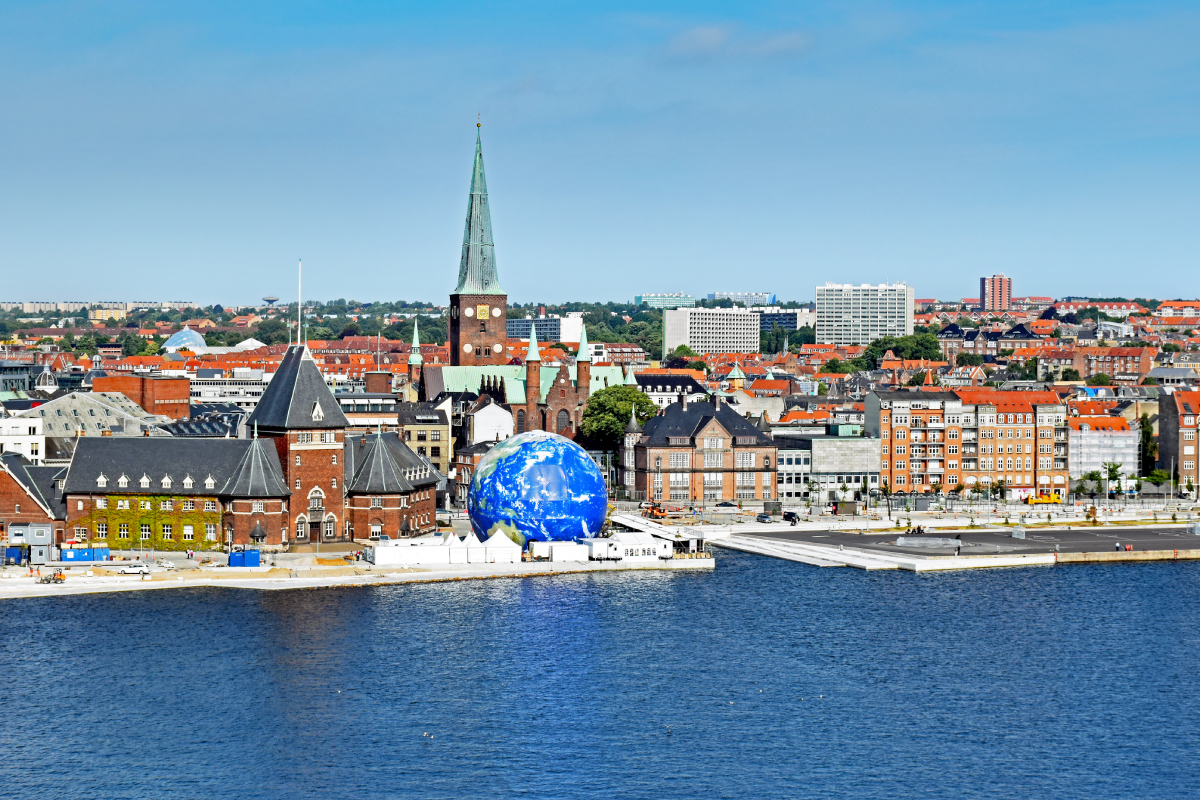
Aros was strategically established on the shores of the Kattegat, using its location to become a vital hub for Viking maritime activities. Photo: balipadma / Shutterstock
An archeologist's dream
The site of Aarhus has been a literal gold mine for archeologists for more than half a century.
During the 1960s, the remains of buildings and artifacts were uncovered from the 8th century and into the 9th century.
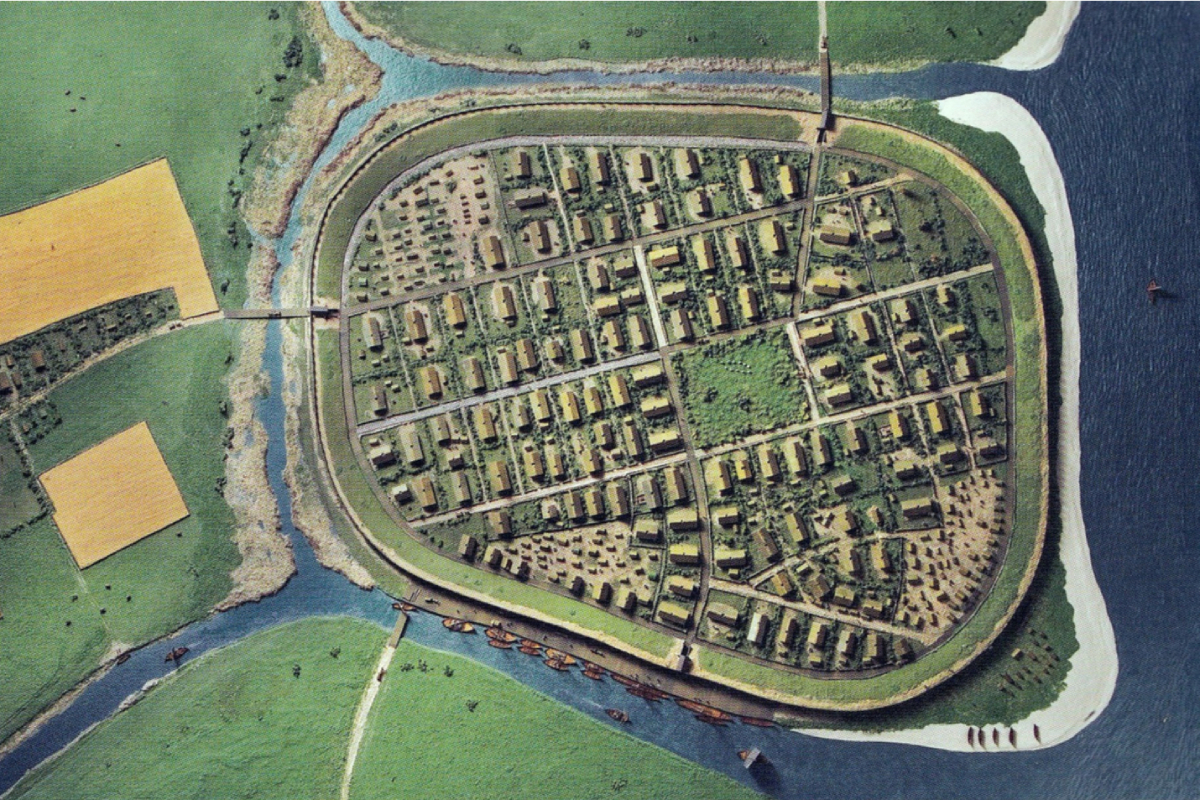
The remains of longhouses, fire pits, and workshops have been uncovered, along with artifacts, including combs and even glass pearls – an expensive luxury that points to trade with the wider world.
The town seems to have thrived and become a center of commercial work as more workshops were built during the 9th century.
Archeologists uncovered a wealth of artifacts, including many tools for shipbuilding and leatherwork, in the 1960s, as Irene Baug describes in her 2019 article in the Journal of Maritime Archaeology.
It was, however, during the 10th century that the small town became an important military hub. The town was fortified for the first time with rudimentary earthen works in 934.
Whilst we cannot be certain, it is believed that Gorm the Old, founder of the Danish monarchy, ordered the town's fortification – a sign that there was a serious amount of wealth and trade to be protected.
Furthermore, the fortifications were a sign that despite being inhabited by people from Viking society, the town was not immune to acts of raiding or attacks.
During the 10th century, however, Aarhus became a microcosm of the societal division throughout the Viking world with the rise of Christianity.
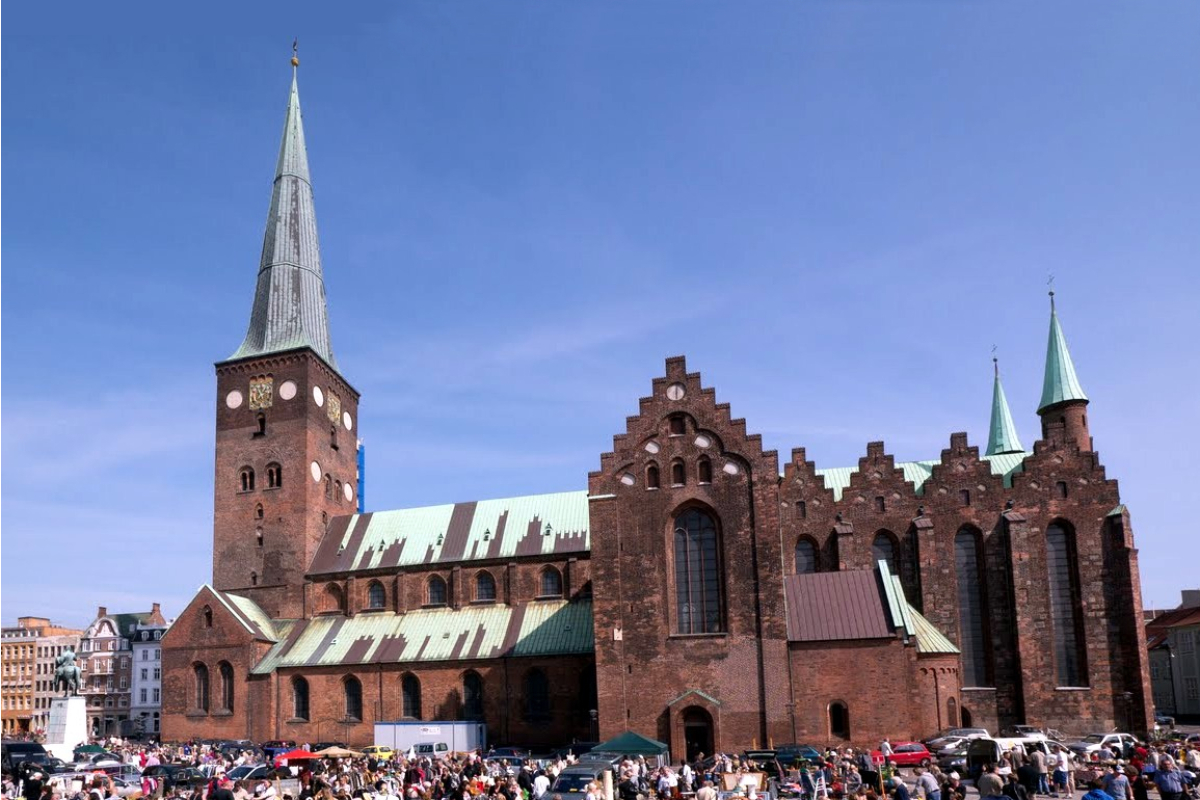
Construction of St. Nicholas' Cathedral in Aarhus began in 1060, replacing the earlier church destroyed by King Harald Hardrada. Photo: Martin Steggman (CC BY-SA 4.0)
A center of pagan and Christian worship
Running concurrently with the outward expansion of the Norse into Europe and surrounding regions was the inward creep of Christianity during the early medieval period.
Though Christianity had entered what is now Denmark from the 5th-6th centuries, by the 10th century, Christianity had established a grip on the political elite in the Viking world.
Willing to tap into broader Christian Europe, Viking rulers around Scandinavia often forced their subjects to convert through forceful persuasion.
Aarhus, as an important Viking trading town, was believed to have an important pagan burial site in its town center until the turn of the 10th century.
As Tracy Marie Legel wrote in her 2006 tome, The Introduction of Christianity into Scandinavia, Iceland and Finland, the town's first Christian church, named after the Holy Trinity, was constructed rather audaciously over the remains of this pagan burial site around the year 900.
The Christian community appears to have grown to such an extent that the town received a bishopric in 948, with Adam of Bremen reporting that the local bishop, Reginbrand, attended a church conference in Germany that year.
However, despite the growth of the Christian community in Scandinavia and its growing importance to the ruling elite, not everyone was a willing convert.
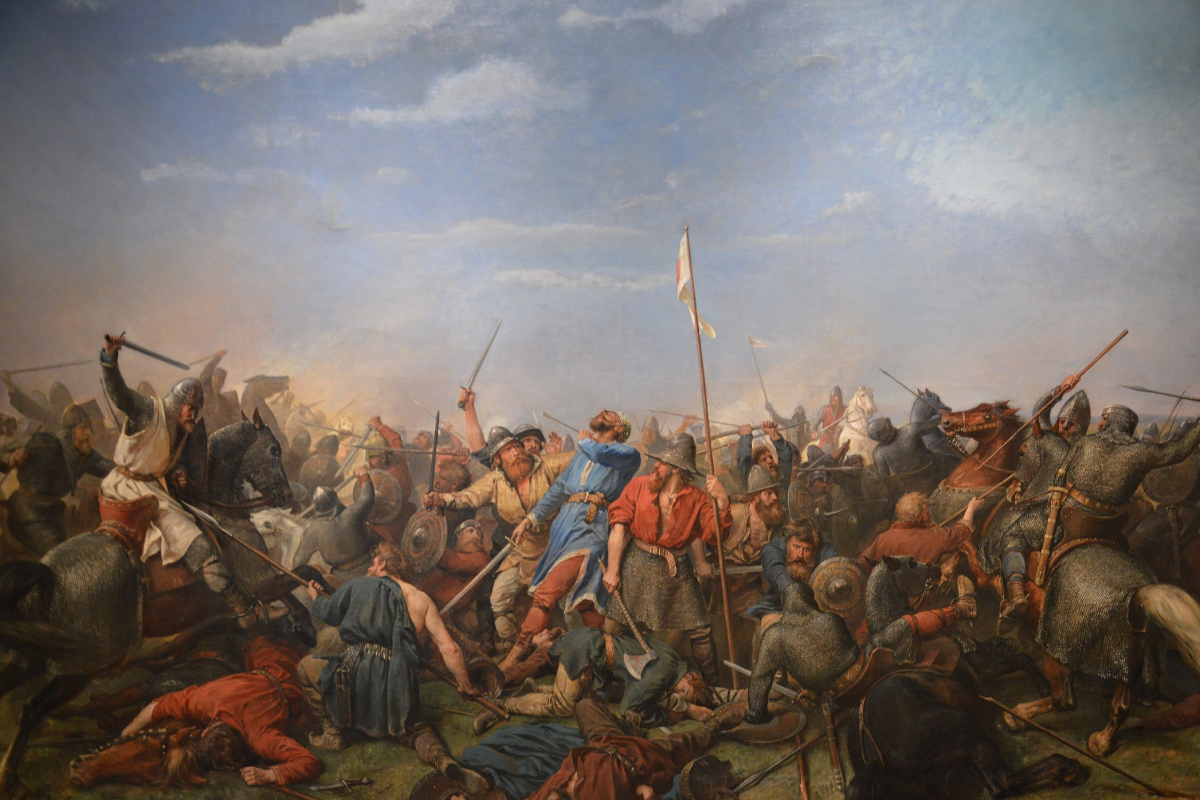
The town came under attack during the mid-11th century by famed warrior and King of Norway Harald Hardrada, who not only pillaged and plundered the town but also razed its church.
It would take a decade before the construction of a new Christian place of worship, St. Nicholas' Cathedral, began in 1060.
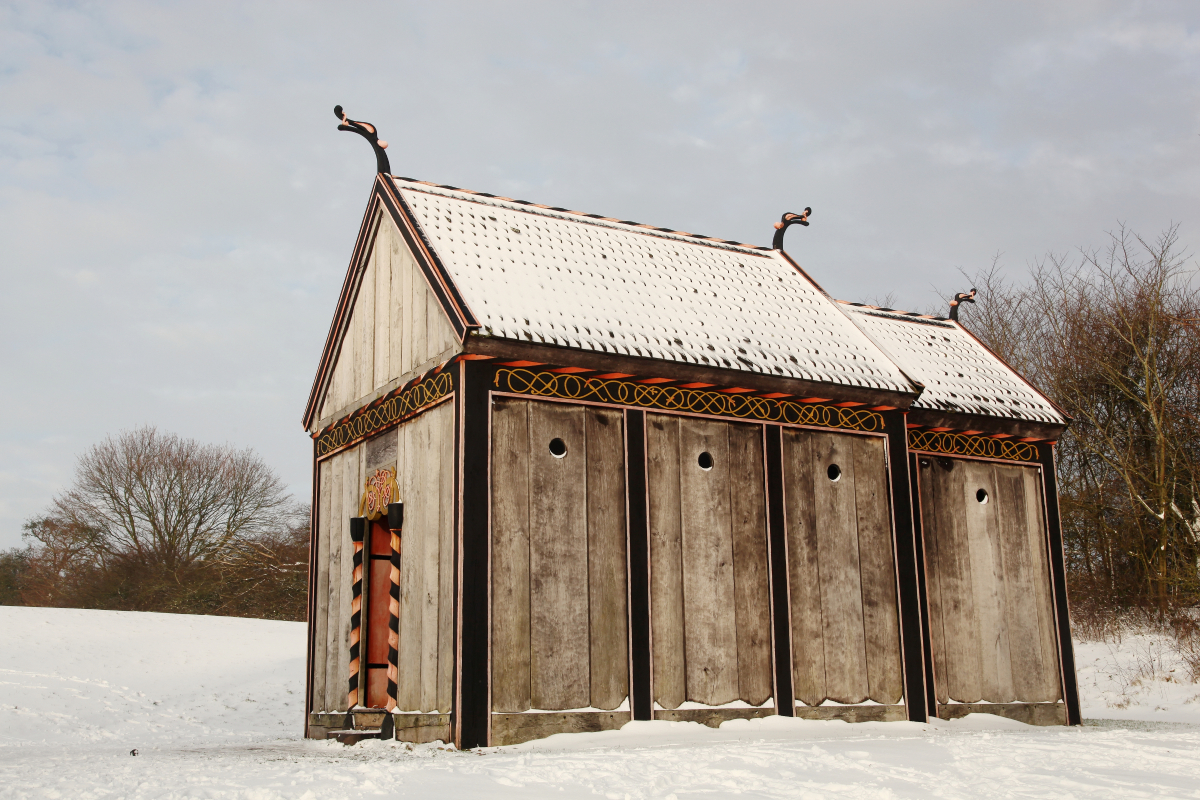
Just southeast of Aarhus, near the new museum building at Moesgaard, there is a reconstruction of Hørning Church, a Viking Age stave church originally located near Randers in Denmark. Photo: ricochet64 / Shutterstock
A change in name but still a center of commercial activity
Despite Hardrada's devastating attack on the town in the mid-11th century, its upward trajectory was already guaranteed thanks to its growing importance as a commercial and spiritual hub.
As the era of Vikings ended around the turn of the 12th century, the town's new Christian status was secured with a divisive break from the past: it would now be referred to as Aros, a Latinized version of the Old Norse name.
By the beginning of the early modern period, in the 16th century, the town had grown into one of Denmark's most prosperous and profitable areas thanks to the commercial trade fostered by the Hanseatic League.
From its humble Viking roots as a small settlement at the mouth of the Aarhus River, the now bustling city remains an important center of commercial and cultural activity in Denmark.
For more information on how Aarhus' proud Viking history is still part of the city's fabric today, visit Forbes here.
We get to provide readers with original coverage thanks to our loyal supporters. Do you enjoy our work? You can become a PATRON here or via our Patreon page. You'll get access to exclusive content and early access.
Feel free to reach out to discuss potential stories that may be in the public interest. You can reach us via email at [email protected] with the understanding that the information you provide might be used in our reporting and stories.