

For so long in the Anglosphere, the darling focus of Viking history has been centered on the Nordic countries of Denmark, Iceland, Norway, and Sweden. However, their far eastern neighbor, Finland, was a central stage where so much of Viking history took place.
As we know, the early medieval world was vastly different from ours, and the modern borders that neatly separate Norway and Sweden from Finland did not exist.
Whilst traditional histories, written largely in the Anglosphere during the 19th and 20th centuries, tended to focus on the westward adventures of people from Viking societies to northwestern Europe, recent times have seen an uptick in the focus on the eastern exploits.
From the eastern shores of what is now Sweden, people from Viking societies soon began to explore and later control much of the Baltic basin, including a large chunk of Finland.
Yet when they did explore, settle, and dominate much of Finland, they found a region where they were just the latest people to live there, with the Finns, Karelians, and Kvens already present.
We know nothing of the first contact between people from Viking societies and these Finnish locals, but it happened long before the first Viking ship ever sailed.
However, from the mid-8th century CE onwards, a pragmatic and somewhat fractious relationship developed between these early medieval peoples that was dominated by commerce, conflict, and cultural exchange.
To understand why, we must first turn our gaze to a map.
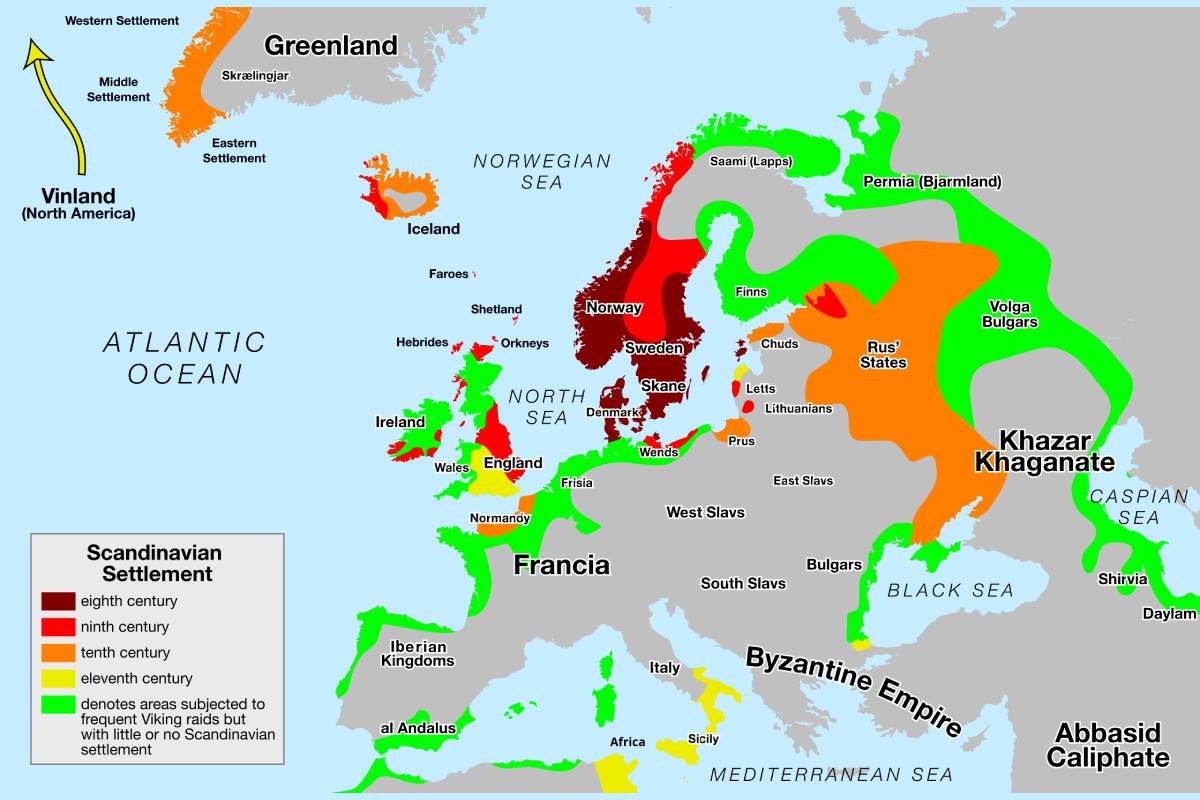
Viking expansion across Europe, with contacts extending into areas inhabited by Finns, Saami, and other groups. Source: Max Naylor
Contact
A significant portion of world history has been shaped by geography. No more is this evident than with the Viking history of Finland.
It lies, then as now, at the crossroads between east and west, between the Baltic trade route, which had been developed to link Scandinavia with larger and richer polities like Anglo-Saxon England, the Frankish realms, and even Al-Andalus, and the inland waterways that led deep into Eastern Europe and the borders of Central Asia.
Traveling down these rivers not only gave people from Viking societies access to the abundant land and natural resources but also to the markets and bazaars of the Byzantine Empire and Abbasid Caliphate.
Finland soon became a key strategic location for many people from Viking societies who set off eastward to find fame or fortune.
Control of Finland's Baltic coastline thus became integral for those merchants and traders who wanted to access the fur, slaves, and silver that could be found in the vast expanses of Eastern Europe and into Eurasia.
As Joonas Ahola, Frog, and Clive Tolley write in their chapter in the 2014 book Fibula, Fabula, Fact: The Viking Age in Finland, people from Viking societies, who were called Varangians,
"were Scandinavians who sailed to the east to trade with the Finnic-speaking and other Uralic peoples and the Slavs, and also perhaps others who participated in the trade networks extending as far south as the Middle East."
From the mid-8th century CE onwards, people from Viking societies came into contact with the local tribes living around settlements at river mouths or on the Baltic coast and were quick to realize the strategic importance that this region would play in commerce and trade.
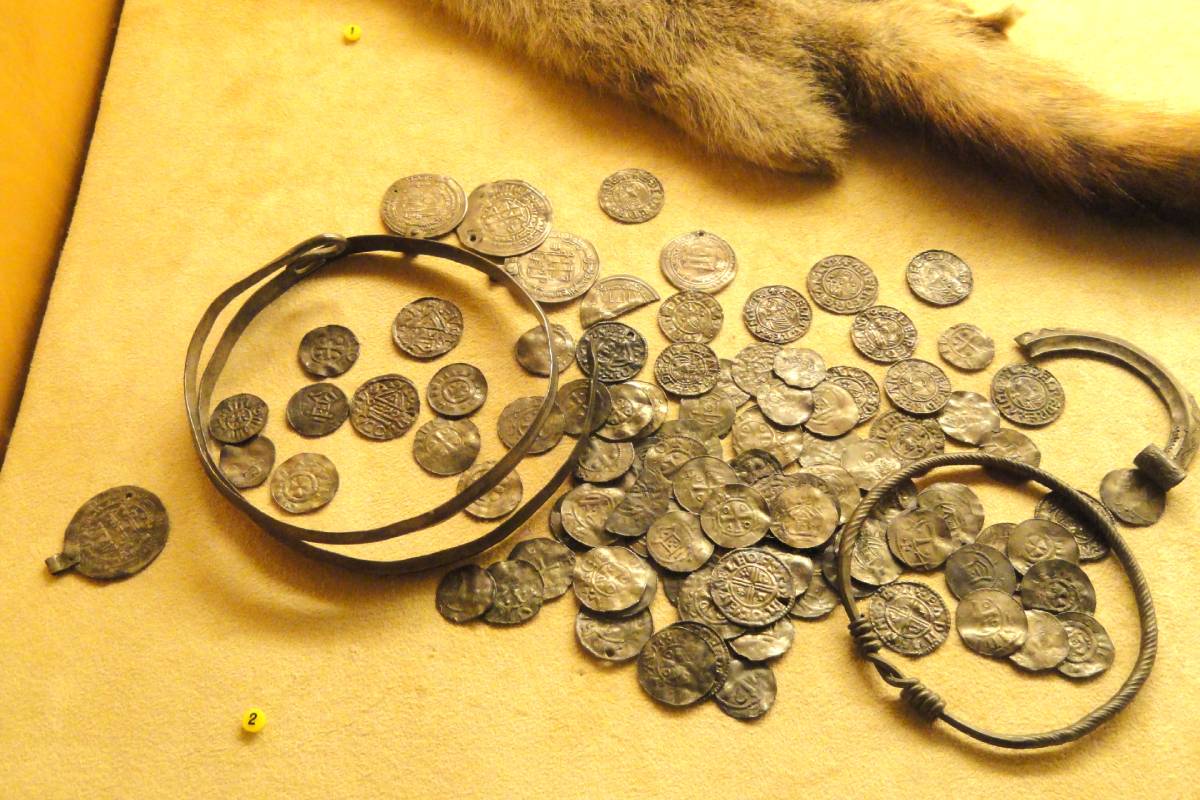
A Viking Age hoard from Sysmä, Finland, with Islamic, German, and English coins, buried sometime after 1006. Photo: Daderot
Commerce
Following these initial stages of "first contact" with Finland, people from Viking societies soon began to exploit Finland's geography for trade.
Finland, with its dense forests, offered some of the most prized resources for Viking merchants and traders, including furs (especially sable).
The many Finnic tribes and people also afforded a steady supply of slaves for Viking opportunists, and resources like these could be traded for a small fortune further south in Baghdad or Constantinople.
Like further west in Scandinavia or the British Isles, it was this budding commerce that led to the growth of seasonal markets and villages.
As Ville Laakso writes in their chapter in the 2014 book Fibula, Fabula, Fact: The Viking Age in Finland, the presence of many Viking-era market and trading towns has seen "Archeological research on the Viking Age...[become] reasonably lively" in Finland in recent years.
Digs have been undertaken at Hitis, Kyrksundet, Luistari, and Pörnullbacken and Varikonniemi, and have uncovered a wide range of artifacts, including "coins, weapons, and different types of ornaments."
Add to this that several cemeteries and burial grounds have also been uncovered at some of these sites, showing burial practices and artifacts associated with the Viking homeland further west, suggesting a degree of cultural adoption by local populations.
Buried deep in the ground, these are the physical examples of the growth of the Viking presence throughout Finland during the early medieval period.
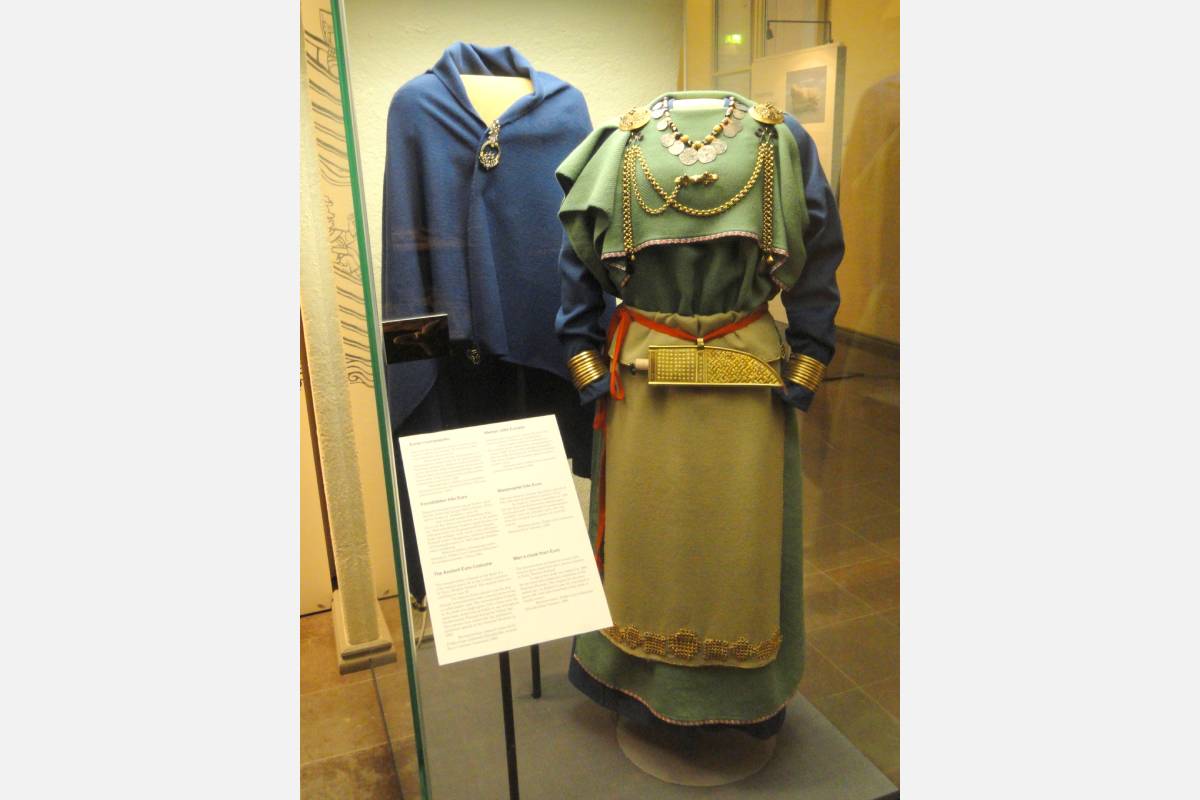
The Eura costume was reconstructed from a high-status woman's grave at Luistari, Finland's largest Viking Age burial ground. Photo: Daderot
Conflict and conversion
With the Viking presence firmly established in Finland, the final phase of Finland's Viking history was dominated by conflict.
The latter stages of the Viking Age (c. 750–1100 CE) resulted in the Christianization of Viking societies in Denmark, Norway, and Sweden, coinciding with the centralization of power that led to the creation of medieval states.
If we turn to the sagas, we have multiple references to battles, raids, and even holy wars launched by people from Viking societies against the local Finnish populations.
It began, as in other regions in Europe, with predatory raids and skirmishes. For example, in Egils saga, we have a vivid description of a Viking raid deep into Finnish territory. Using an online version of the 1893 English translation by W. C. Green, we find:
"...That winter, Thorolf went again to Finmark, taking with him about a hundred men. As before, he held a fair with the Finns and traveled far and wide over Finmark. But when he reached the far east, and his coming was heard of, then came to him some Kvens, saying that they were sent by Faravid, king of Kvenland..."
The burgeoning trade networks made military adventures into Finland more frequent by a number of polities, including Viking societies from the Kingdom of Norway, Sweden, and Novgorod.
Despite these incursions into Finnish territory, the local populations did fight back. We have references to raiding into the Swedish kingdom by the Kvens throughout the 9th and into the 10th century CE.
In 1008, for example, the Battle of Herdaler saw a Norwegian force led by King Olaf II (later Saint Olaf, Norway's patron saint) defeated by the Finns.
However, despite these military pushbacks by the local population, some sources claim that Viking societies extended their influence over parts of Finland by force, though the extent of this control is debated.
The semi-legendary king Eric Anundson was said to have conquered a huge swath of Finland during the 9th century CE, at least according to the Heimskringla. Whether or not such a large territory was brought under direct Swedish control may not be historically verifiable, but it speaks to a general historical trend.
This process intensified during the 11th and 12th centuries and into the later medieval period, when Viking societies had fully adopted Christianity.
A series of crusades during the 12th and 13th centuries saw the now Christian kingdoms of Denmark and Sweden attempt to force the Finns, Karelians, and other populations living in Finland to convert to Christianity from their indigenous beliefs, often at the bloody point of the sword.
Long after the Viking Age, Novgorod launched campaigns into southern Finland as part of the broader Swedish–Novgorodian conflicts of the later Middle Ages.
A rich Viking heritage and history
The Viking history of Finland has a rich and proud heritage. People from Viking societies came into contact with the people and tribes living in Finland from the mid-9th century CE onwards through commerce and conflict.
As the Viking Age progressed, trade networks grew and connected Finland to the wider Viking world. The lucrative natural resources of Finland, including its many tribes, saw trading towns and markets develop.
This, in turn, allowed further military expeditions and expansion that brought large areas of Finland under the direct control of Viking rulers and later monarchs.
Finally, the latter stages of the Viking Age were dominated by religious crusades, as Christian rulers from the medieval kingdoms of Denmark, Norway, and Sweden sought to squash the pre-Christian beliefs once practiced throughout the region.
For more information on a recent Viking-era archeological discovery in Finland, visit The Guardian here.
We get to provide readers with original coverage thanks to our loyal supporters. Do you enjoy our work? You can become a PATRON here or via our Patreon page. You'll get access to exclusive content and early access.
Feel free to reach out to discuss potential stories that may be in the public interest. You can reach us via email at [email protected] with the understanding that the information you provide might be used in our reporting and stories.