

This region was dominated by the Frisians, a Germanic-speaking maritime culture, whose relationship with people from Viking societies foreshadowed later European cultures' experience with Viking expansion.
The crossroads of the North Sea
During the early medieval period, people from Viking societies came across a vast array of different cultures and civilizations.
Whilst we have many records of their ferocity towards the people they encountered, we know that it wasn't just warriors that came from Viking societies. Alongside the ships that came to plunder and pillage, there was also a remarkable amount of commerce and cultural exchange.
People from Viking societies may get all the historical attention for their seafaring abilities and maritime culture, but there were other similar peoples farther south who were just as skilled in their seafaring abilities: the Frisians.
First entering the historical record thanks to Roman historians, the medieval Frisians are generally associated with the earlier Germanic tribe known as the Frisii.
Like their northern counterparts in Scandinavian Viking societies, the Frisians too spoke a Germanic-based language and, due to their coastal habitats, developed a deeply sophisticated maritime culture. Like people from Viking societies, boating was instrumental to the life and livelihood of many Frisians.
Given the Frisians' proximity to Scandinavia, it was only a matter of time before these two maritime cultures encountered one another more directly.
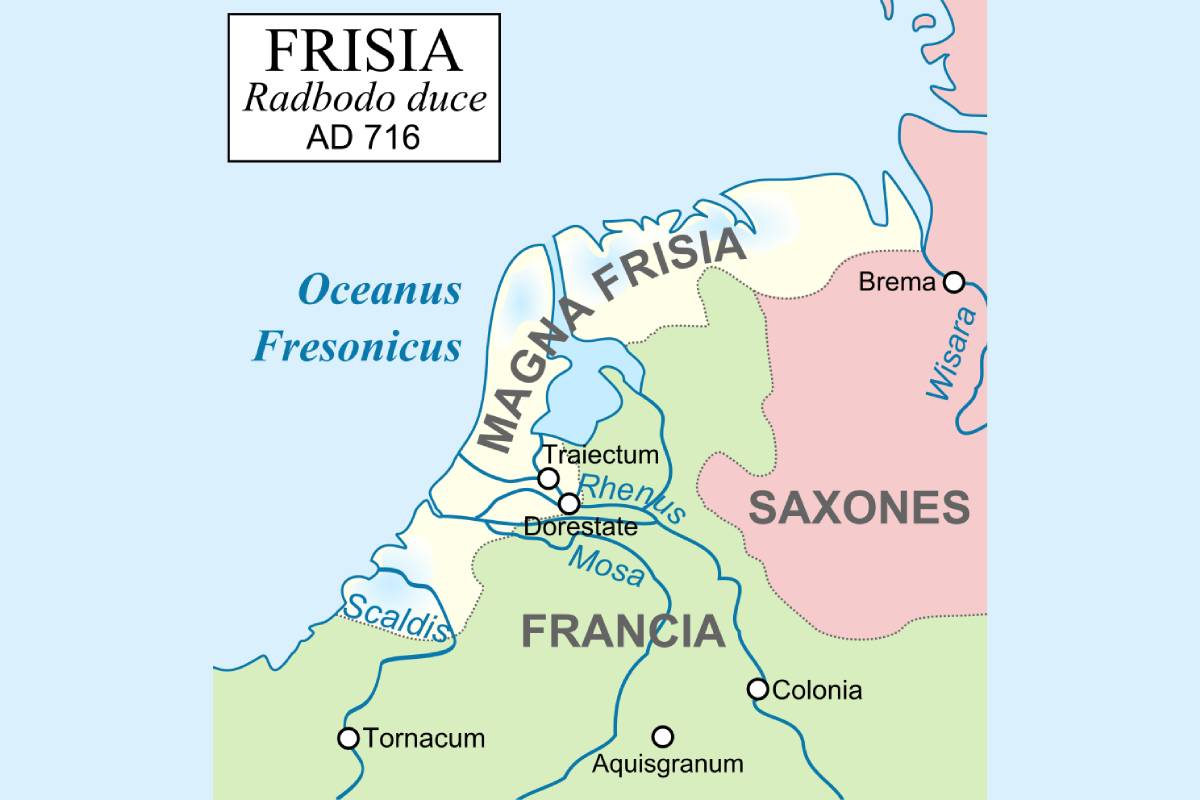
A Latin map of Frisia around 716, with Dorestad marked on Rhine routes that linked the North Sea coast with inland towns. Source: Sémhur, Eric.dane (CC BY-SA 3.0)
A busy mercantile relationship
We do not know exactly when people from Viking societies encountered Frisians.
Given the Frisians' presence in parts of the southern Danish area, there were likely numerous encounters, both profitable and not so peaceful, between the two cultures long before the Viking Age. However, as people from Viking societies expanded outward from the mid-8th century, the Frisians were among the first to feel their force.
We know that there was an important trading relationship between the two societies. Frisian merchants had grown rich through trade, including goods such as cloth and wool textiles, glassware and pottery, and Frankish luxury items, like wine.
These goods had flown northward, whilst furs, amber, ivory, and a steady stream of enslaved people flowed southward from Scandinavia and the wider northern world. The trade networks established between Frisia and the wider European continent were instrumental in bringing Scandinavia into early medieval Europe's economy.
The region's strategic location in the coastal zone of what would become the Frankish realms during the early medieval period saw it grow rich, with trading towns like Dorestad soon blossoming.
As Nelleke L. IJssennagger writes in her 2013 article in the journal Vikings and Medieval Scandinavia, Frisia became rich due to its booming trade, thanks to becoming "...an intermediary between Frankish and Viking spheres."
It was, however, this burgeoning wealth that would attract the warriors of Viking societies to come make their fortunes, but by raiding rather than trading.
- READ MORE: Dorestad and the Viking raids on the Rhine
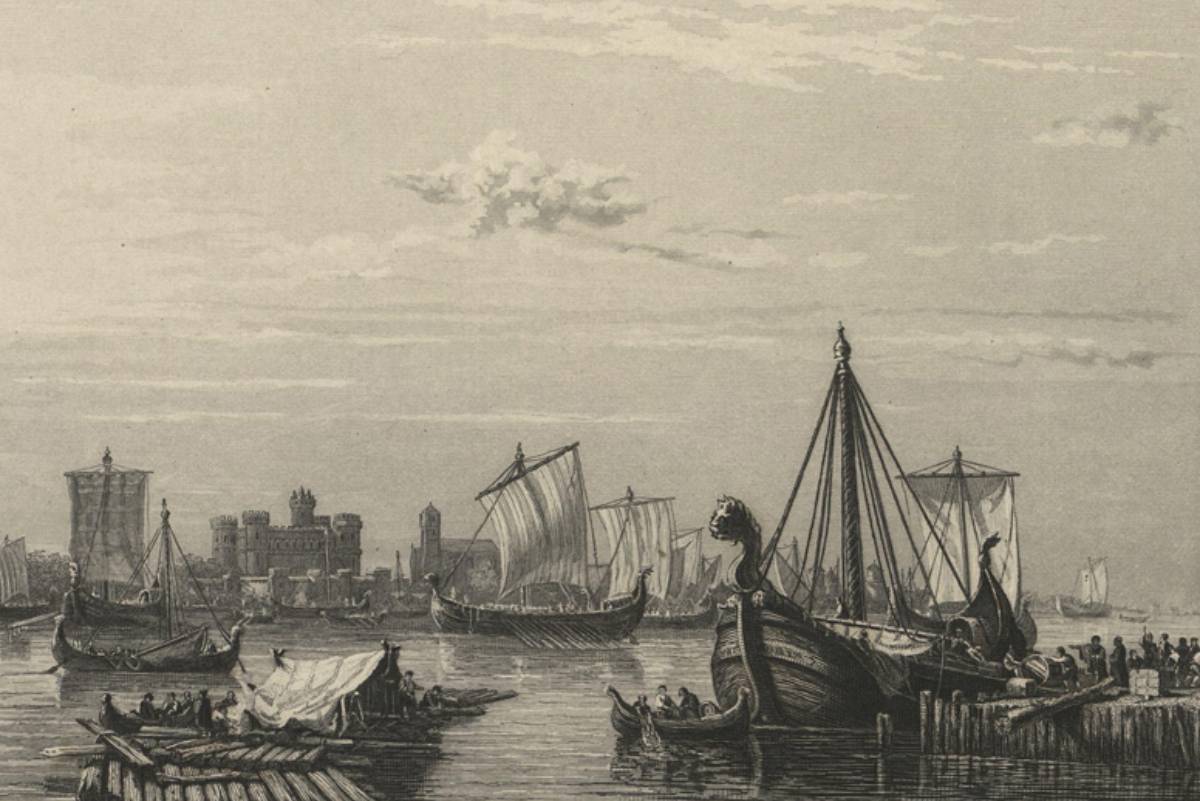
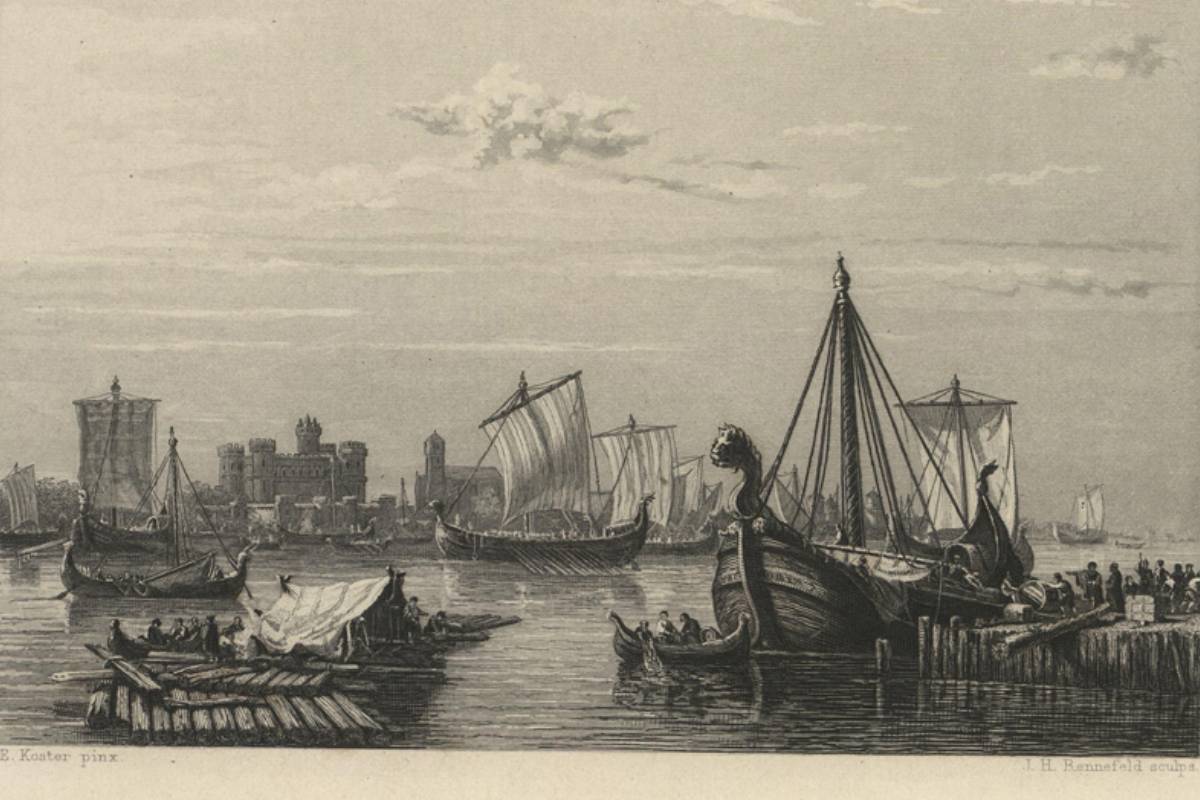
An 1870 engraving of Dorestad in the 8th century, a river emporium that linked inland routes with North Sea travel. Source: Public domain
Trading towns and terrorizing raids
Despite the wealth being made and the burgeoning trade networks being forged and established by Frisian and Viking merchants and traders, violence would soon follow.
In fact, it was precisely because of this wealth that Frisia soon became a target for large-scale raiding. Wedged between the North Sea and the burgeoning Frankish realms, Frisia soon became a soft target in a world of sea wolves.
Raiding throughout Frisia intensified in the mid-830s. Before then, the military strength of Charlemagne and his successors helped shield the region from large-scale Viking attacks. Coastal defenses were shored up as best they could be.
Frisia was, it should be remembered, still a society in flux, as it had only really been brought into the Frankish realms towards the beginning of the age. As such, this border region was no doubt on edge and used to marauding armies trampling on its territory.
Nothing, though, could prepare Frisia for the existential shock of the 830s, when Vikings raided and sacked their shiny emporium, Dorestad. Successive Viking raids from 834–837 appear to have shattered the wealth, and perhaps the morale, of this rich region and sapped the Frisians of much blood and treasure.
Frisia suffered heavily during these raids, and whatever coastal defenses had been put in place by the Frankish rulers appear to have had little impact on stopping Viking raids.
Can't beat 'em? Cede and delegate
In a pattern similar to much of Europe during this period, following Viking raids came conquest. From the mid-9th century onward, raids snowballed into a more permanent Viking presence in Frisia.
Establishing bases on the coast, the Vikings soon used these to further harass locals. As far back as 810, the Danish king Godfred was said to have led some 200 ships against Frisia and exacted tribute.
Following the sacking of Dorestad in the 830s, and following in the footsteps of Godfred, Rorik came to control a large swathe of Frisia, including Dorestad. Lothair I recognized Rorik's position within the Carolingian political order rather than trying to remove him by force.
This strategy foreshadowed the later policy of Frankish ruler Charles the Simple, who ceded territory between the Loire and Seine rivers, farther south, which had been ravaged by Viking raids, to the Viking leader Rollo. The new ruler would pledge nominal allegiance to the Frankish king whilst fending off further Viking incursions.
Rorik, along with his brother, would go on to rule over a large swathe of Frisia until 872, but historians are divided about how much control and influence the Viking ruler truly had over much of the region he was said to rule.
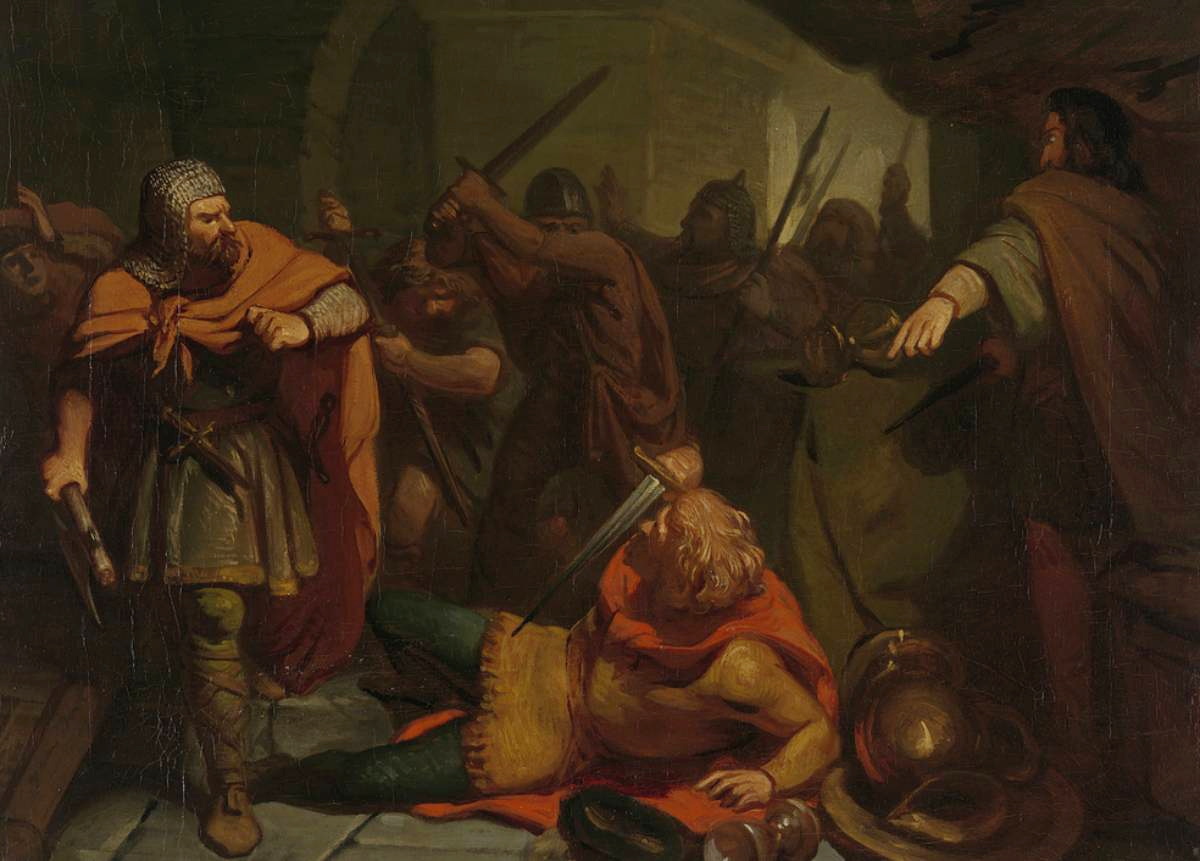
A 19th-century painting of the murder of Godfrid, the later Viking ruler of Frisia, in 885. Author: Jacobus van Dijck (1817–1896)
Backlash and battle
We close our story of the relationship between the Frisians and Vikings on a sour note. Following the raids and conquest of some of the region by Vikings, by the latter part of the 9th century, many Frisians had had enough of their Viking overlords.
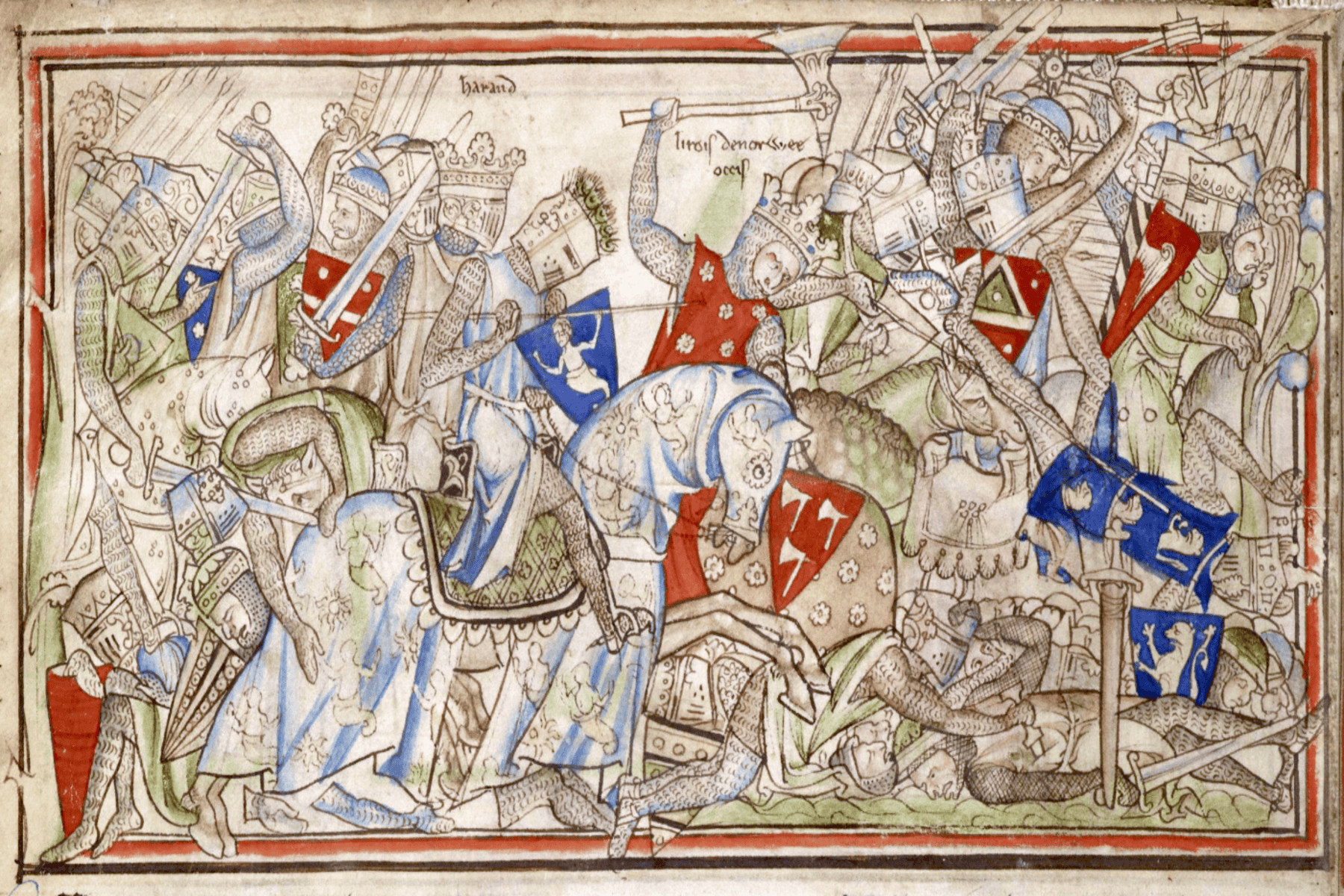
A Frisian army was led by Archbishop Rimbert of Bremen-Hamburg to try and expel some of the Vikings from the region, particularly around what is now Norden in northwestern Germany.
The archbishop may be familiar to some of our loyal fans, as he was also responsible for proselytizing throughout Viking societies further north. Swapping an archbishop's miter for a sword, his army fought a Viking force, which was labeled by later German historian Adam of Bremen as the "Battle of Norditi."
Details are notoriously murky when it comes to early medieval battles, but the archbishop's force seemed to have won the day, resulting in the Vikings leaving the region.
Whether over 10,000 Vikings lay dead after the battle, as Adam of Bremen claimed, is questionable, but the battle later became linked to Frisian autonomy and the idea of "Frisian Freedom," even if the exact political consequences remain debated.
The relationship between the Frisians and people from Viking societies was, like most human interactions, deeply complex and multifaceted. Ranging from peaceful and profitable commerce and cultural exchange to moments of violent hostility, it encompassed the full range of the human experience.
Given their proximity to Scandinavia, the Frisians often experienced the full force of Viking expansion despite their similar cultural traits.
For more information on the discovery of Viking artifacts in the Dutch region of Frisia, visit Heritage Daily here.
We get to provide readers with original coverage thanks to our loyal supporters. Do you enjoy our work? You can become a PATRON here or via our Patreon page. You'll get access to exclusive content and early access.
Feel free to reach out to discuss potential stories that may be in the public interest. You can reach us via email at [email protected] with the understanding that the information you provide might be used in our reporting and stories.