

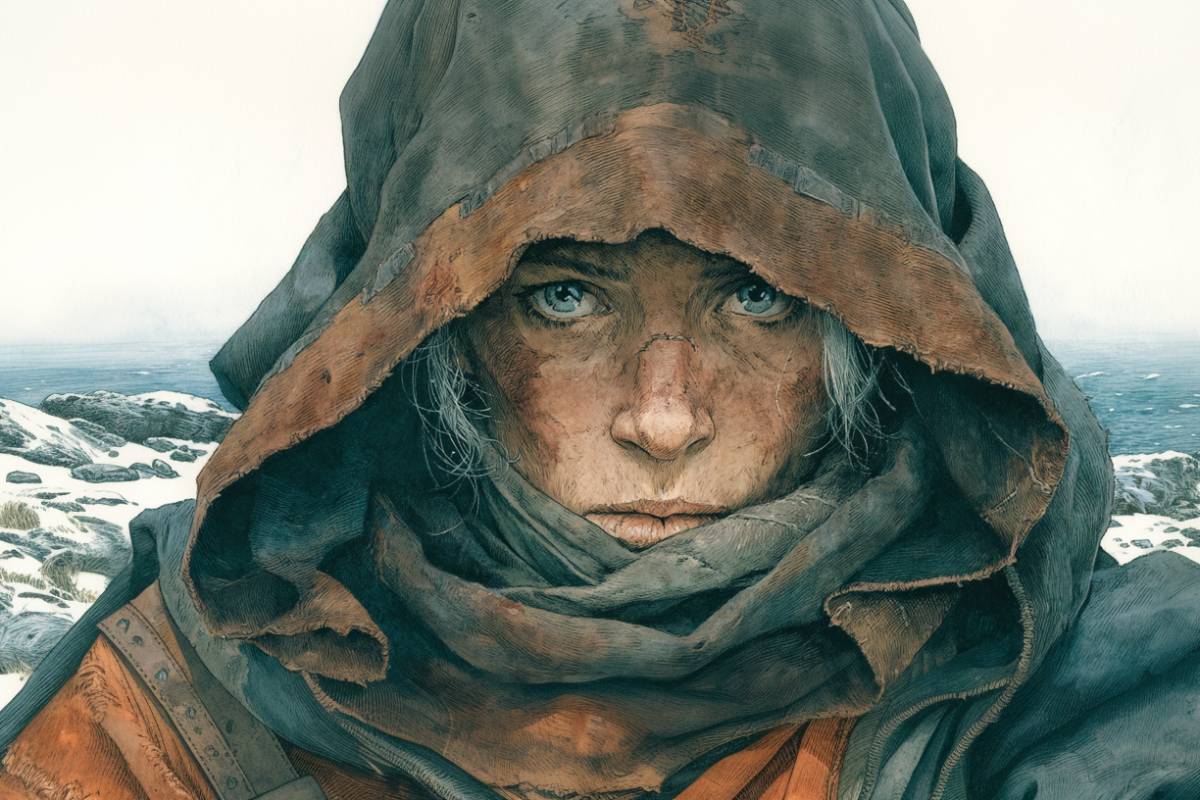
More than just a frequent trekker, she was said to have led an expedition to North America, possessed mercantile nous, helped the spread of Christianity in Iceland, and may have even secured an audience with Pope Sylvester II.
The world is watching
On April 30, 1939, some 150 years after the inauguration of the first American president, George Washington, then-President Franklin D. Roosevelt officially opened the 1939 World's Fair in New York.
More than 45 million people took in this festival of culture, including exhibitions, films, food, and fairground fun put on by 62 nations, 35 U.S. states, and some 1,400 corporations.
Iceland, though one of the demographically smaller exhibitors, took part and wanted to show the world its long and rich cultural heritage and history.
Part of this display was a statue elaborately carved by famed Icelandic artist Ásmundur Sveinsson and showed a mother, with a babe on her shoulder, sailing resolutely in a boat. Engraved underneath was an inscription reading "the first white mother in America."
With this statue, Iceland had decided to deliberately highlight the medieval connections it had with North America, personified by a woman whose life story is the stuff of legend and lore, literally fit for a saga.
The woman on the boat was Gudrid Thorbjarnardóttir, surely one of the most remarkable women of the entire medieval period.
A key character in the Greenland sagas
Like so many figures from the Viking Age (c. 750–1100 CE), we know of Gudrid Thorbjarnardóttir's exploits and life only through the Norse sagas.
Two of the sagas, Saga of the Greenlanders and Saga of Erik the Red (collectively part of the "Vinland sagas" detailing the Norse exploration and later temporary colonization of a small sliver of North America), not only provide much detail about Gudrid Thorbjarnardóttir but also portray her as a true Viking heroine.
Turning to the sagas, we find that Gudrid Thorbjarnardóttir was born in the late 10th century CE, sometime around 980 CE, probably on a farm near Laugerbrekka in Iceland.
The island nation had only been settled about a century before her birth by, if we are to trust the sagas, malcontents from Norway fleeing the heavy hand of Harald Fairhair's taxation. These were the first, but certainly not the last, Norwegian tax exiles.
Growing up in the late 10th century CE, Iceland was no doubt challenging, let alone for a young girl in a deeply (by our modern standards) misogynistic and sexist society.
This ingrained inequality was marked by a marriage proposal that led to Gudrid's family fleeing Iceland to Greenland, accompanying none other than Erik the Red, famed explorer and medieval real estate spruiker.
Gudrid seems to have a Zelig-esque ability to meet the famous people of the age, and she pops up as a literal damsel in distress, shipwrecked on an island somewhere off Iceland, along with fifteen others, before their rescue by the luckiest man in the Norse sagas (albeit largely self-proclaimed), Leif Erikson.
They wintered at Eriksson's large estate, but it is here that the sagas say her husband died. Suddenly, she was widowed. Yet she did not remain single long.
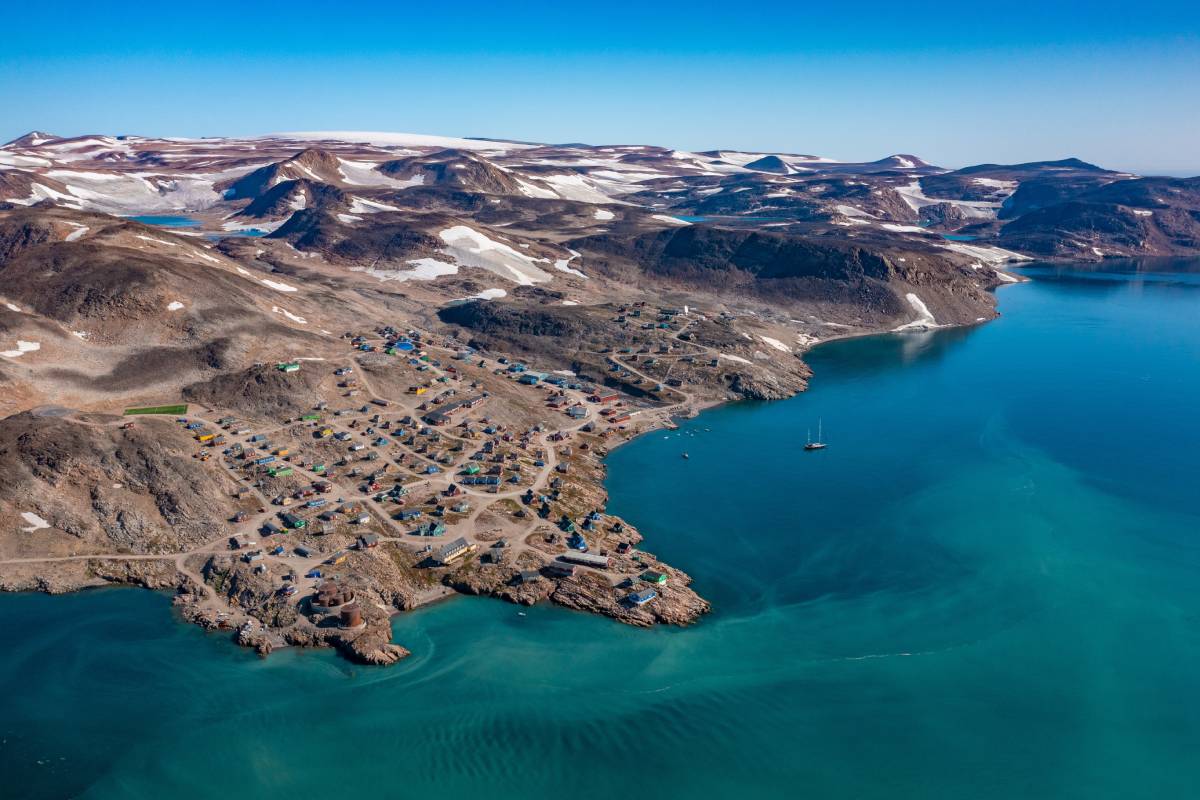
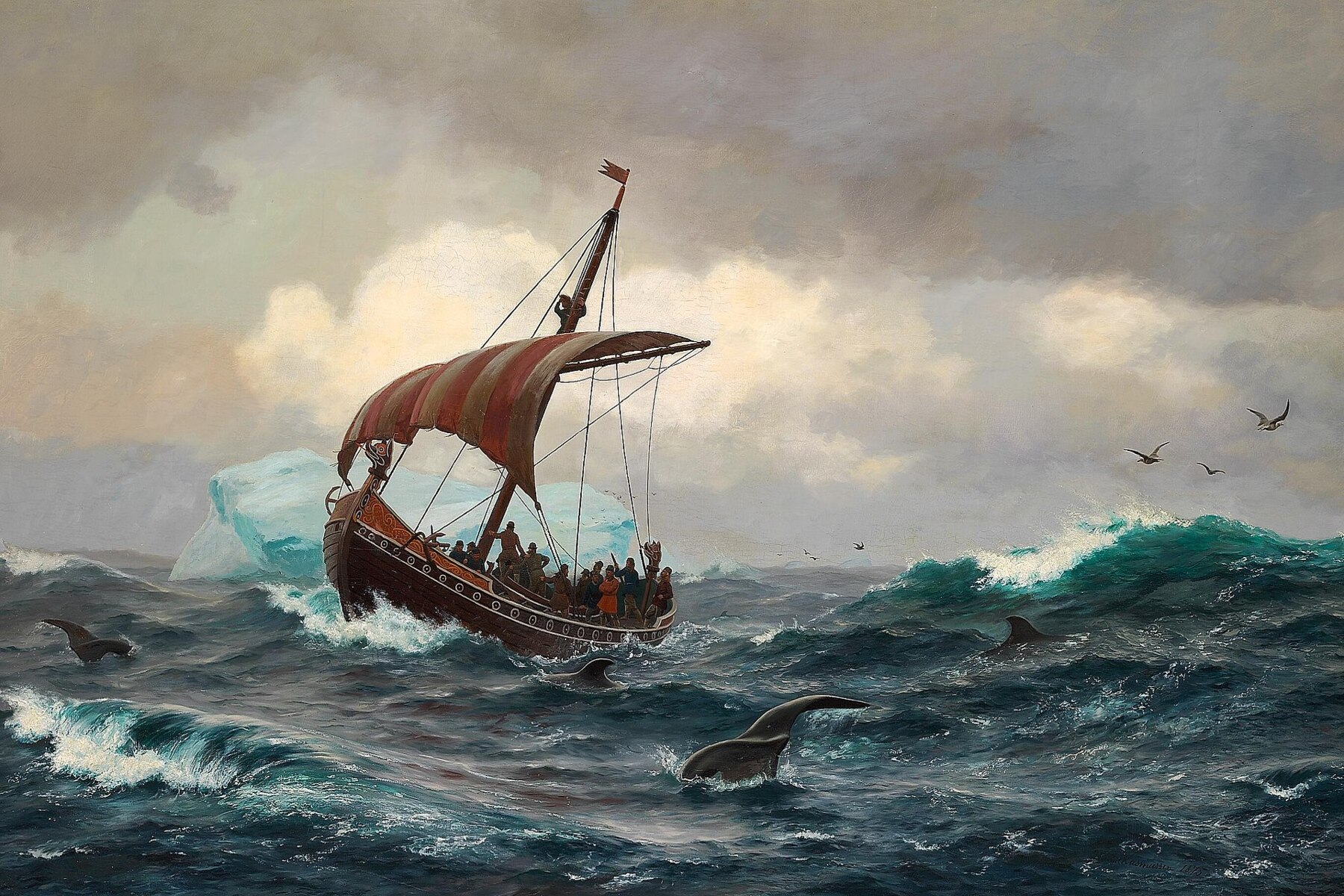
Gudrid Thorbjarnardóttir's move from Iceland to Greenland is tied in the sagas to a marriage proposal and Erik the Red's voyage. Photo: jyrgen / Shutterstock
Mercantile nous
Both the sagas in which she features as a character state that, following the death of her first husband, she married the brother of Leif Erikson, Thorstein (they may have met at Leif's estate when she and her husband had stayed there).
The two newlyweds then set out on a voyage to Vinland with a rather gruesome objective: to bring home the body of Thorstein's brother, who had been killed there by what people from Viking societies dubbed the skrælings.
In the Saga of Erik the Red, however, it is only Thorstein who sets out to Vinland, and upon his return, they marry. Regardless of whether she accompanied Thorstein or not, it appears that Thorstein quickly died, and yet again, Gudrid was left widowed.
Like the death of her first husband, the dust did not settle quickly before she had eloped with a new man, the merchant Thorfinn Karlsefni. Her third husband was described in the Saga of Erik the Red (we use an online version based upon the 1880 English translation by J. Sephton) as engaged in:
"...trading journeys, and seemed a goodly, bold, and gallant traveller". During a trading voyage with her husband to Greenland, we find that Gudrid was "...invited... to take such of the merchandise as she wished." [Chapter 7]
She was then said to have made a tidy profit from the sale of this merchandise.
Here we have evidence – albeit from the sagas and thus should be viewed with a healthy amount of skepticism (these are stories that contain much history but should not necessarily be viewed as historically accurate) – that Gudrid engaged in mercantile activities.

An aerial view of reconstructed Norse buildings at L'Anse aux Meadows in Newfoundland, Canada. Photo: Russ Heinl / Shutterstock
Vinland and motherhood
Much of the historical fanfare surrounding our Thorbjarnardóttir, including that which Sveinsson wanted to tap into for the World's Fair, comes from her long and storied association with what people from Viking societies dubbed "Vinland".
Vinland was an area of coastal North America that saw heavy Viking exploration and a small settlement during the early medieval period.
It is to North America that we turn next. We now find Gudrid in her third act, that of brave leader and expedition organizer.
She was said to have helped organize an expedition of more than 60 people from Viking societies to sail across the seas, from Iceland, to start a new life in Vinland. She must have been made of heady stuff, as she was only one of 5 women who joined the expedition!
It is here, in the Viking settlement on Vinland, that Thorbjarnardóttir is said to have given birth to the first European child born in North America, a son named Snorri. We know, thanks in part to current affairs, that Greenland is geographically a part of North America.
This means that Sveinsson's engraving and a certain amount of Thorbjarnardóttir's fame are only partially true, as babies had been born in the Norse settlement on Greenland before she gave birth to Snorri.
Regardless of this geographic nitpicking, she is often presented as the first mother of European origin to give birth in what is now Canada.
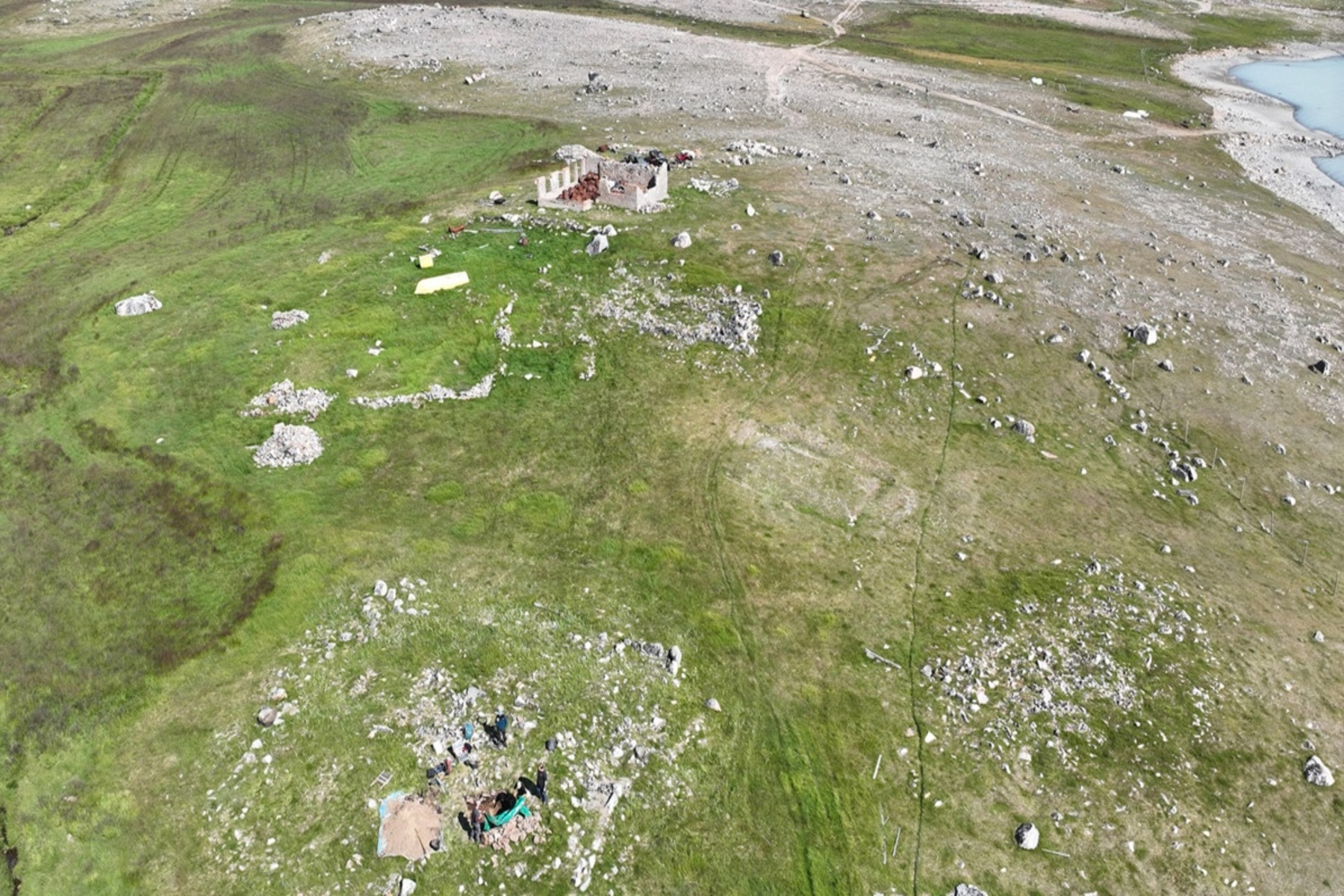
For centuries, the tales of Vinland were dismissed as mere fiction until archeological proof was discovered in the 1960s at L'Anse aux Meadows on the Canadian island of Newfoundland.
Recent scientific work places Norse activity at the site in the early 11th century, and the evidence does not require a continuous settlement across the full c. 1000–1050 CE range.
This would mean that it is likely that Thorbjarnardóttir gave birth here, as her son, Snorri, was said to be born in Vinland in 1016 CE, at least according to the sagas.

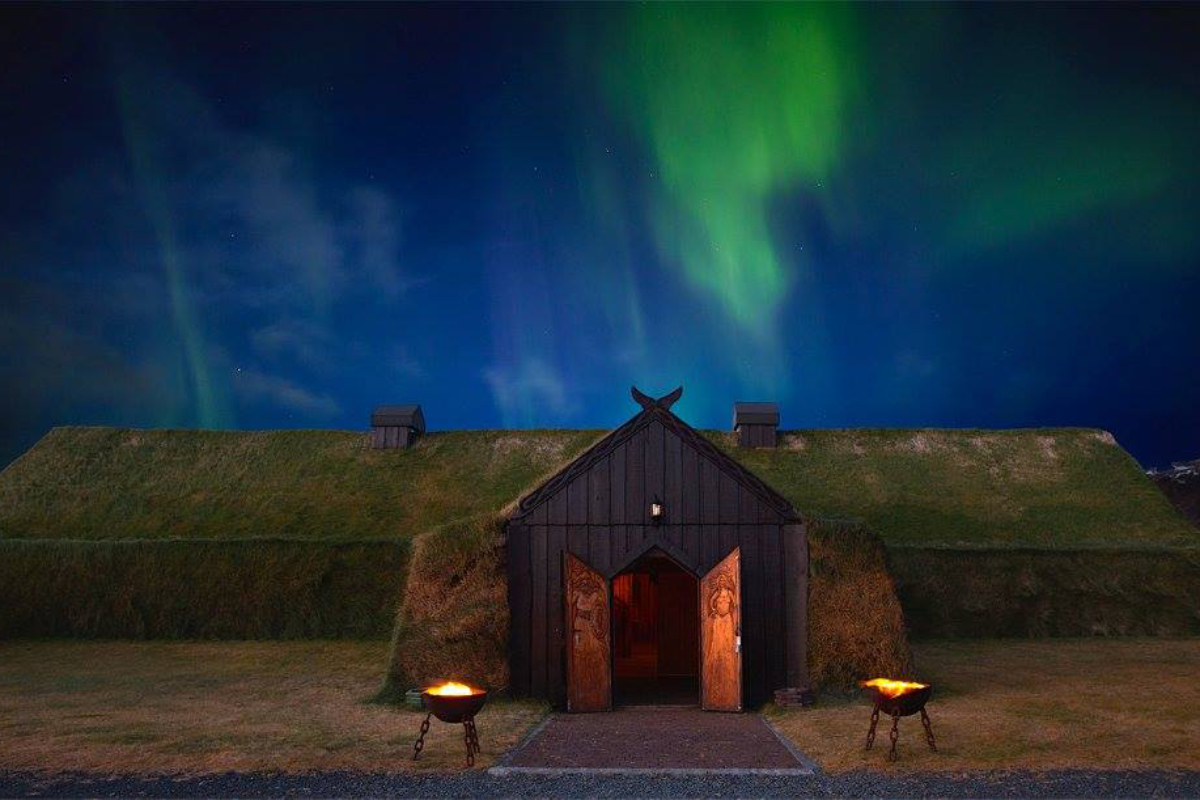
The saga tradition places Gudrid Thorbjarnardóttir back in Iceland at the end of her life, living on her farm. Photo: Nick Fox / Shutterstock
I am a Christian woman...
The final chapter in Thorbjarnardóttir's remarkable life involves religion.
Her character, in the sagas, is the personification of the great societal changes occurring in the Viking world during the early medieval period as Christianity spread.
We have various accounts in the sagas of her strong faith, but conflicting reports on exactly when she converted to Christianity. One of the most powerful anecdotes in the Saga of Erik the Red is a situation where she refuses to engage with the chanting by a seeress by exclaiming:
"That lore and the ceremony are of such a kind that I purpose to be of no assistance therein, because I am a Christian woman." [Chapter 4]
Despite her protestation, she somewhat confusingly does take part in the religious ritual but seems not to damage her Christian identity.
Like Thorbjarnardóttir, there was a great deal of religious synthesis between Christianity and the older Norse religions throughout the early medieval period before Christianity gained supremacy by the end of the Viking Age.
Finally, to add to her great travels, she was said to have gone on a pilgrimage to Rome, the spiritual epicenter of the European medieval world. Reigning in Rome at the time was Pope Sylvester II, and if we are to believe the sagas, she may have secured an audience with him.
She would travel back to Iceland and remain on her farm until she died sometime around 1050 CE.
By the time of her death, Christianity had secured a grip on the inhabitants of Iceland, and she is credited with helping to spread the appeal of Christianity so much that a church was constructed on her farm.
In 2008, historian Jenny Jochens published a French-language article, "Gudrid Thorbjarnardottir: Une globe-trotteuse de l’an mil", in Clio. Histoire, femmes et sociétés.
Jochens presents Gudrid as a cultural mediator, set between older Norse religion and Christianity, and tied to the way her world carried memory and history across distance.
Not silenced anymore
An uplifting spiritual ending to the life of Gudrid Thorbjarnardóttir, who crisscrossed the Atlantic Ocean for settlement and trade and travelled much further than many of her contemporaries.
Her remarkable life reminds us that women, who are so often marginalized or silenced in medieval sources, played an important role in the economic and cultural life of Viking societies and could be instrumental in exploration and settlement, too.
Whilst she was memorialized as a mother, she should be remembered as a woman whose life was shaped by cultural exchange, trade, travel, and religion.
For more information on Gudrid's travels, visit Smithsonian Magazine's website here.
We get to provide readers with original coverage thanks to our loyal supporters. Do you enjoy our work? You can become a PATRON here or via our Patreon page. You'll get access to exclusive content and early access.
Feel free to reach out to discuss potential stories that may be in the public interest. You can reach us via email at [email protected] with the understanding that the information you provide might be used in our reporting and stories.