

This is part 2 of our look at Haakon Sigurdsson. Part 1 can be found here.
Asserting his independence
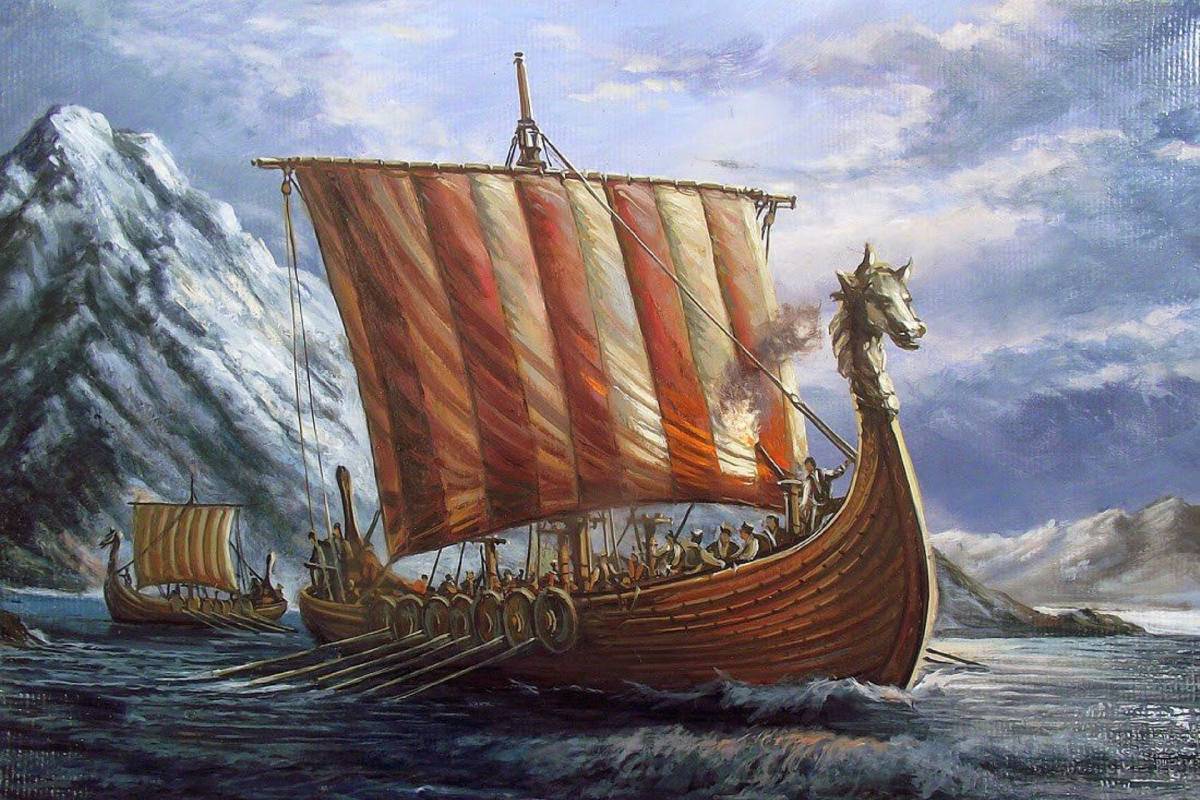
By 975 CE, Haakon Sigurdsson, Haakon Jarl, was the de facto ruler of the relatively new nation of Norway.
Despite a monarchy that could trace its origins back a century to Harald Fairhair, in Haakon Jarl, we have a powerful ruler who could unite this mainly southern-focused monarchy with the power and influence of the Jarls of Lade.
His benefactor across the Skagerrak, Harald Bluetooth, was strategically boxed in by the Holy Roman Emperor.
Following a defeat, not only had Bluetooth's ambition been tempered, but he had been converted and baptized as a Christian. Some later accounts add Otto II as his sponsor or godfather, but medieval sources differ on how, and under what pressure, Bluetooth's conversion took place.
Whilst Sigurdsson was also said to have been baptized as part of the political fallout following his alliance with Harald Bluetooth against Otto II, we can safely assume that this was but lip service.
We can never truly know what lay deep within his heart, but judging Sigurdsson by his actions, he certainly held firm in the belief of the Old Norse Gods.
Knowing that Bluetooth was now very much in the Christian fold of nations and that his military options were limited, this may have caused Sigurdsson to assert a more independent streak in his ruling of Norway. Part of this independence was accepting and being accepted by rulers throughout Europe.
Soon, a ruler from across the Baltic would come to Sigurdsson in desperation.
- READ MORE: A Viking history of Norway (part 1)
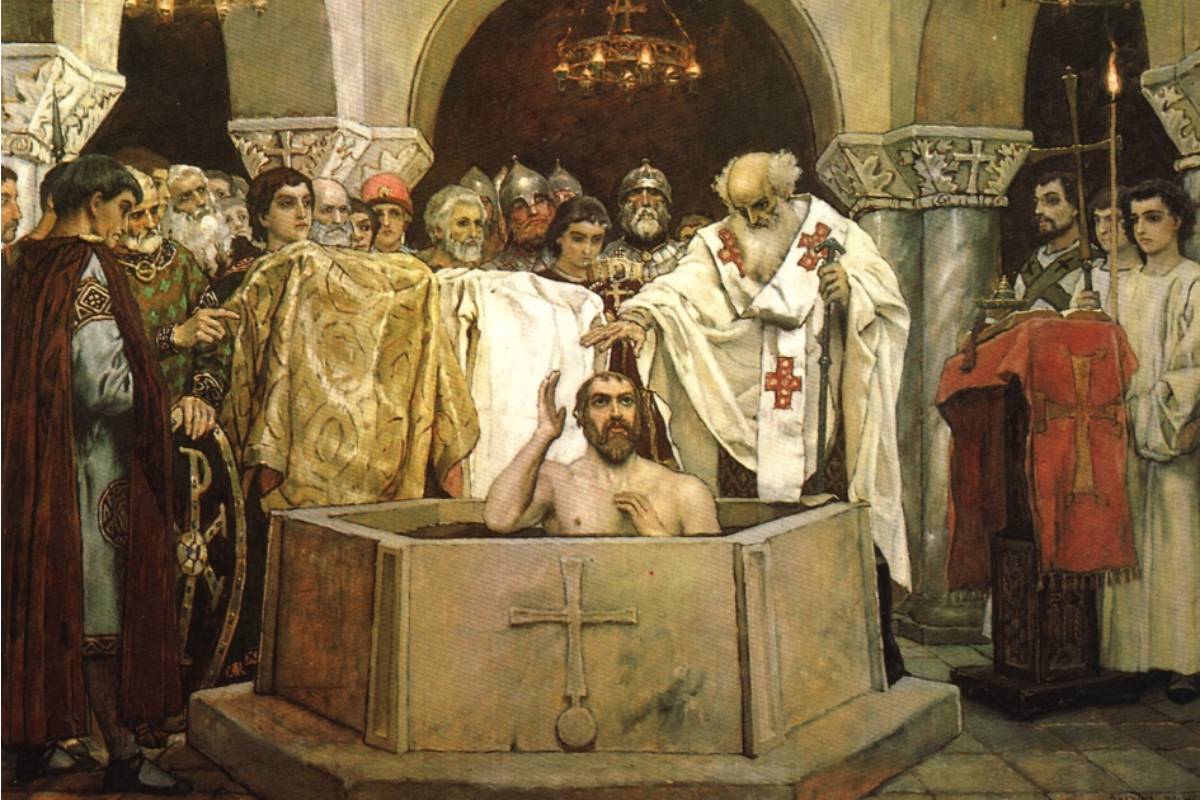
A detail from "Baptism of Saint Prince Vladimir" (1890), a fresco sketch for Saint Volodymyr's Cathedral in Kyiv, Ukraine. Author: Viktor Vasnetsov (1848–1926)
From a refugee to a benefactor
We here at The Viking Herald take great delight in telling the "other story" of the Vikings, that is their eastern adventures and exploits.
For too long, the history of people in Viking societies had been focused on Western Europe and especially the British Isles. Yet the Vikings' adventures eastward were just as entertaining, exciting, and incredible as anything westward.
Later narrative sources state that in 977 CE, the Prince of Novgorod, Vladimir, journeyed to the court of Sigurdsson to take refuge.
Novgorod, a city in what is now Russia, began life as a town founded in the 9th century CE by Norse adventurers, explorers, and settlers who headed eastward from their Scandinavian homeland.
Vladimir had sought refuge following the death of his father and a struggle for power with his half-brother, who ruled what was then Kiev, now Kyiv. No doubt remembering his time as a refugee on the run, Sigurdsson welcomed this Eastern Prince with open arms.
Sigurdsson's decision to welcome Vladimir was not just an altruistic one. He felt that hosting the Grand Prince could be strategically important, since it gave him an ally just across the Baltic.
He supplied Vladimir with troops and men, and with this assistance Vladimir would later become the Grand Prince of Kiev, the ruler of all the Kievan Rus. The troops that Sigurdsson had supplied, Viking warriors, were instrumental in Vladimir's military victories that secured total power, at least as later sources present the story.
Sigurdsson had come a long way from being a refugee on the run to being a military benefactor.
Denmark and the Jomsvikings
To think, however, that the Danish crown would just let Sigurdsson throw his weight around politically would be wrong.
Despite the weakened position of the Danish crown, Bluetooth did not forget that essentially Sigurdsson was still ruling in his name.
Traditionally, by the mid-980s CE, the Danish crown had devised a naval scheme to subdue Sigurdsson. An invasion force was assembled under the control and direction of the dreaded Jomsvikings.
Turning to the sagas again, we learn of a great naval engagement at Hjǫrungavágr off the coast of northern Norway, though the details and even the scale of the event differ across accounts and remain debated. It is in the Jomsviking saga that we learn of Haakon Sigurdsson's diehard pagan beliefs.
We find an English translation of this saga in the 2004 book The Jómsviking Battle: Where was the battle site? by Johan Ottesen. In this book, Ottesen presents a modern English translation based on a 16th-century Danish translation of the Old Norse saga, which adds another layer between the medieval text and the modern reader.
Turning now to the saga, we find ourselves deep in the battle as Haakon sacrifices one of his sons to the Old Norse Gods, including Thor, to try and win favor. We dive into the action after this sacrificial act when:
"...Hákon now goes back to his ship and mobilizes his army to attack the Jómsvikings. "Now I know for sure," he said, "that we will win since I have sacrificed to Þorgerðr and Irpa. And they won't let me down like before." [Page 16]
The sacrifice seems to have stirred the Old Norse Gods, particularly Thor, into action as:
"After a while the blackest storm cloud moved up in the north. It comes right over the Jómsvikings. From the cloud came the coldest weather and the biggest hail anyone had ever experienced..." [Page 16]
In the saga, it is this direct intervention by the Gods that secures Sigurdsson's victory on that day. For those less religious, we must remember that the Jomsvikings were hired hands, had a small naval force, and that Sigurdsson was defending his territory.
Yet the sagas do paint a picture of Sigurdsson as an adherent of the Old Norse religion, a bastion of the old ways who tried to fend off what he saw as the nefarious reach of Christianity from the south.
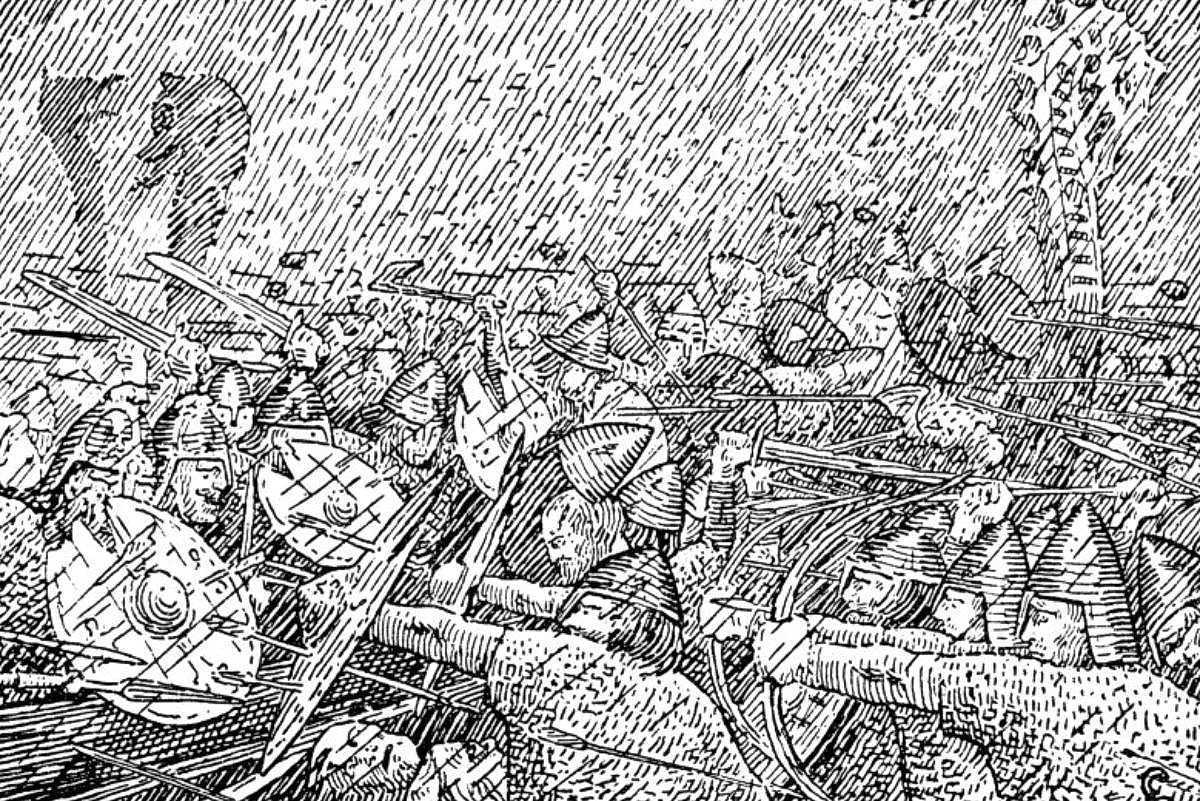
An illustration shows hail crashing down during a sea battle, a saga account of Haakon Jarl's win over the Jómsvikings. Author: Halfdan Egedius (1877–1899)
A sad, ignominious death
After this naval engagement, which saga-based tradition often places around 986 CE, Sigurdsson's power and influence reached a new level.
For the next nine years of his rule, he would see no other challenges to his rule. In 995 CE, however, a challenger appeared. Olaf Tryggvason, a descendant of Harald Fairhair, was keen to gain control of what he saw as his birthright, the throne of Norway.
Despite Sigurdsson's grip on power for almost two decades, he suffered an insurrection. The center could not hold, and Tryggvason exploited this. He landed a force of men, joined the rebels, and as is often the case with authoritarian figures, his regime crumbled almost instantly.
Saga tradition adds the final humiliation. Sigurdsson fled for his life with a thrall (often rendered as "slave") and hid in a pigsty.
After a restless night there, the thrall, named Kark, decapitated his master and brought Tryggvason his head. Rather than rewarding him, Tryggvason saw to it that Kark received the same punishment he had doled out to Sigurdsson. Ouch!
A fascinating historical character
In the end, despite deftly navigating the treacherous diplomatic waters of 10th-century Northern Europe, Haakon Sigurdsson, Haakon Jarl, ran out of luck.
Could his stubborn religious beliefs have cost him his life? Perhaps if he had truly accepted Christianity and fostered it like his one-time benefactor was said to have done further south, there would be one less thing for some of his domestic opponents to grumble about and later revolt against.
Despite his noble status and privileges, there was desperation and paranoia in Sigurdsson. His forced flight abroad following the murder of his father must have left a heavy stain on his soul and psyche.
Rising to become a king in all but name in Norway, the story of Haakon Sigurdsson is one of the most remarkable in Norwegian history.
His strong religious beliefs led him to go against societal and cultural trends that were underway throughout the region, and this tendency of thought and action is what makes the man who would be king a fascinating historical character.
For more information on how the legacy of the Old Norse religion has shaped modern Norway, visit Science Norway here.
We get to provide readers with original coverage thanks to our loyal supporters. Do you enjoy our work? You can become a PATRON here or via our Patreon page. You'll get access to exclusive content and early access.
Feel free to reach out to discuss potential stories that may be in the public interest. You can reach us via email at [email protected] with the understanding that the information you provide might be used in our reporting and stories.