

So chillingly starts the entry for the year 1016 CE in the Anglo-Saxon Chronicle:
"This year came King Knute with a marine force of one hundred and sixty ships... during the middle of the winter, and plundered therein, and burned, and slew all they met..."
Whilst the years 1066, 1701, 1940, or even 2016 might be better known as historically consequential dates in English history, there is no doubt that the invasion of England by Cnut the Great, from late 1015 and into 1016 CE, was an event of overlooked historical importance and consequence for the history of England.
Cnut (or Canute) was the son of Sweyn Forkbeard, who had seized the thrones of Denmark, England, and Norway and had briefly, albeit for five weeks, ruled all three, creating a trifecta of kingdoms that would later be dubbed the North Sea Empire.
Tragically, having seized the throne of England and forced the former Anglo-Saxon king Æthelred into exile, Forkbeard collapsed and died only a few months after this acquisition of unheralded power in early 1014 CE.
His young son, Cnut, was then left stranded in a hostile country that had only recently been subdued by his father. Though he was proclaimed king by a large swathe of those living in the Danelaw, they were a minority in 11th-century England.
Whilst he was accepted as his father's successor in the Danish kingdom, the old Anglo-Saxon nobles dismissed this childish upstart by recalling Æthelred from exile to rule England a second time.
By the end of that year, Æthelred had expelled much of Forkbeard's powerful elites and was trying to reassert his rule over this rich kingdom. Yet one does not earn the epithet "the Great" by simply accepting one's fate.
Cnut may have been forced back into exile in his ancestral homeland of Denmark, but he quickly formed alliances and planned an invasion to seize back the kingdom of England and rebuild his father's empire.
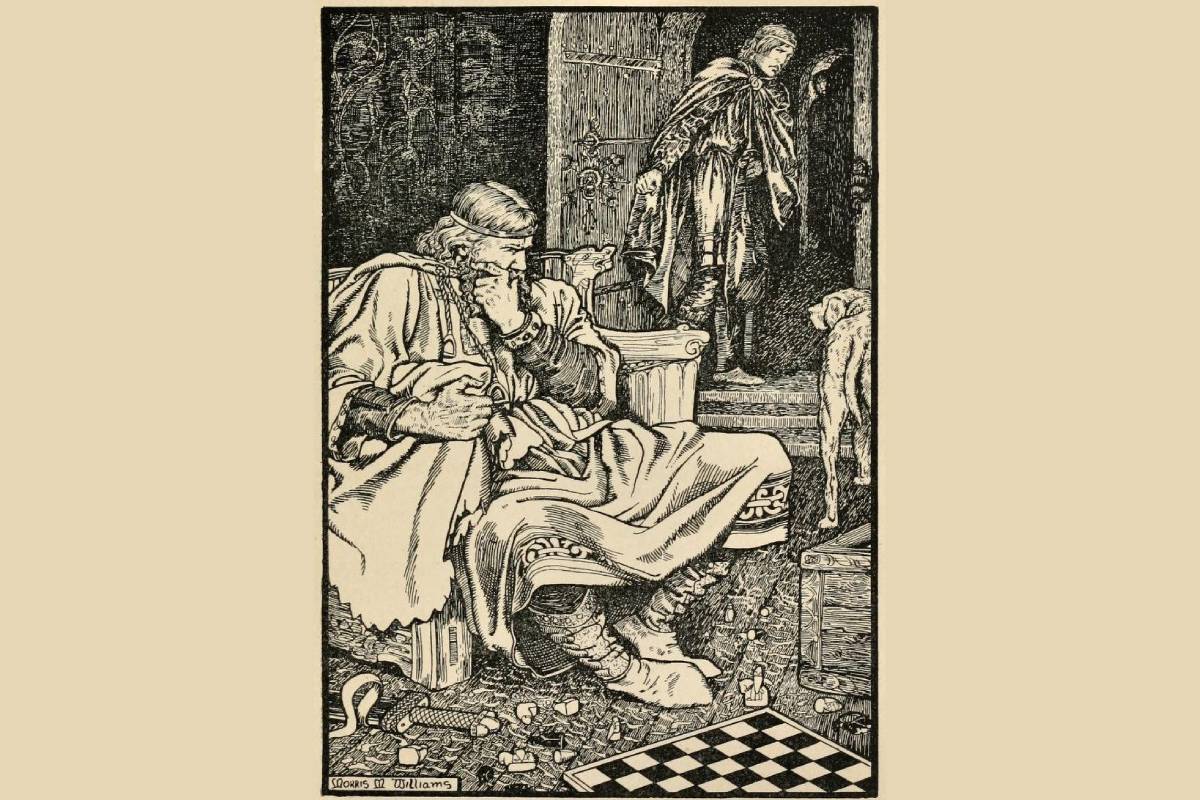
An illustration of King Cnut from a 1913 history of the Northmen in Britain. Author: Morris Meredith Williams (1881–1973)
Time in exile was seldom wasted
It is not often in history, let alone that period of early medieval European history we call the Viking Age (c. 750–1100 CE), that deposed kings or rulers get a second chance.
However, the origins of Cnut's successful invasion of England lie with King Æthelred being recalled from exile.
So much of what we know about this period comes from the Anglo-Saxon Chronicle, a historically important source, albeit one laden with a pro-Anglo-Saxon bias.
Using an online version, based upon the 1823 English translation by the Reverend James Ingram, we find that following Forkbeard's demise, in 1014, the Chronicle relates how:
"...all the counsellors of England, clergy and laity...should send after King Ethelred; saying, that no sovereign was dearer to them than their natural lord, if he would govern them better than he did before."
So, whilst Æthelred went about kicking out many of what he saw as a fifth column, those who came either directly from Viking societies across the North Sea or those who had ancestry or affiliation to those societies, Cnut was biding his time in Denmark.
He quickly set about securing alliances and troops that would help him launch an invasion, but also help secure a kingdom.
A Polish duke, Bolesław the Brave (later to become King of Poland), lent him some troops—historians have debated whether some of these may have been the famed Jomsborg Vikings.
He also shored up support and soldiers from both Denmark and Sweden, where his father, according to the sagas, had married Sigrid the Haughty.
Across the border in Norway, the powerful Jarl of Lade, Eric of Norway, was regent of Norway since it had been brought under Danish control following the Battle of Svolder in 999.
Finally, Thorkell the Tall, a brilliantly named Viking, pledged allegiance to Cnut despite having aided the English against Cnut's father in 1013.
As Timothy Bolton discusses in his 2017 book Cnut the Great, whilst monarchs hiring mercenaries was nothing new, the fact that Thorkell had pledged his allegiance gave him access to "vast... revenues" which made him more than just "an ordinary raider."
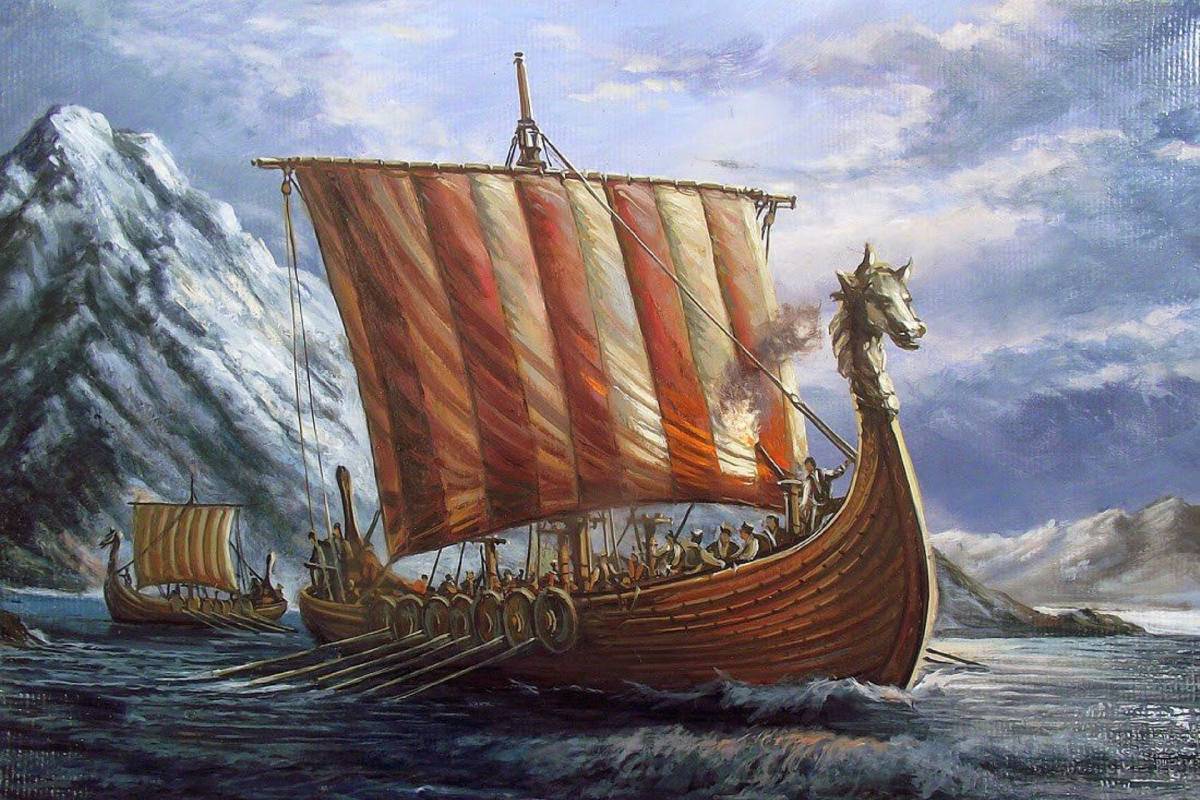
With these powerful friends and a horde of troops, Cnut set sail in 1015.
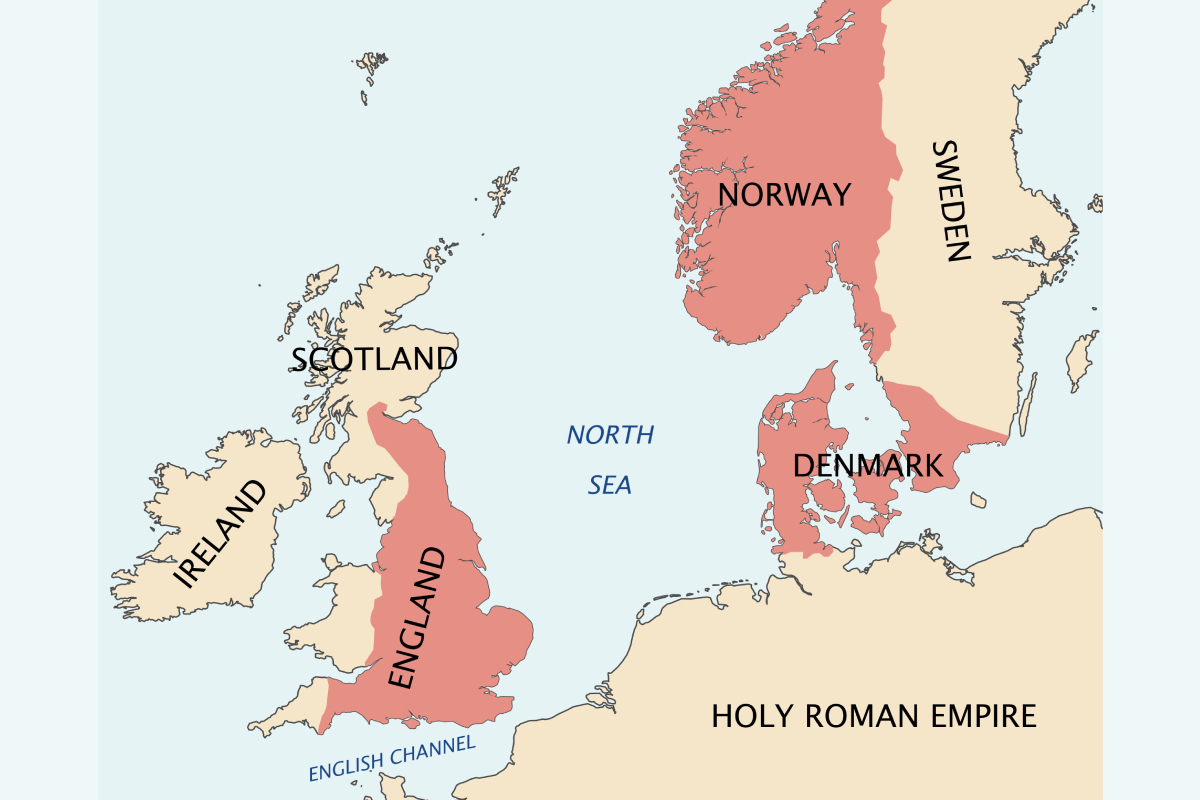
Between 1016 and 1035, Cnut the Great ruled England, Denmark, Norway, and parts of Sweden as a united North Sea Empire. Source: Hel-hama (CC BY-SA 3.0)
The invasion begins
Sometime in the warmer months of 1015, most likely around September, Cnut and his Scandinavian force sailed to England. Turning to the entry for 1015 in the Chronicle, we find that, at first, Cnut was happy to merely raid and harass as:
"At the same time came King Knute to Sandwich, and went soon all about Kent into Wessex, until he came to the mouth of the Frome; and then plundered in Dorset, and in Wiltshire, and in Somerset. King Ethelred, meanwhile, lay sick at Corsham..."
Now, none of us has much experience defending a kingdom during the early medieval period, but lying in your sickbed with a Viking force harrying the southern end of your kingdom does not bode well for a long and successful reign.
Much has been made about Æthelred's nickname "the Unready." It does not mean he was unprepared for the Viking force, but rather that he was ill-advised, which, judging by his policy toward the Vikings, is certainly true.
In fact, as Theodore M. Andersson writes in his 1987 article in the journal Scandinavian Studies, his policy toward the Vikings "...paved the way for Danish [Viking] rule during a period of twenty-six years and burdened Ethelred with his spiteful nickname."
That is not to say that the Anglo-Saxons did not fight back. Forces were sent to deal with the Viking threat, led by Anglo-Saxon nobles including Æthelred's son Edmund Ironside. However, treachery was afoot as a key ally, Eadric Streona defected with more than 40 ships to side with Cnut.
By 1016, things were looking even worse. Over the course of the first few months, Cnut's Viking force waged war against the Anglo-Saxons and battled them at Penselwood, Sherston, Brentford, Otford, and even outside the walls of London.
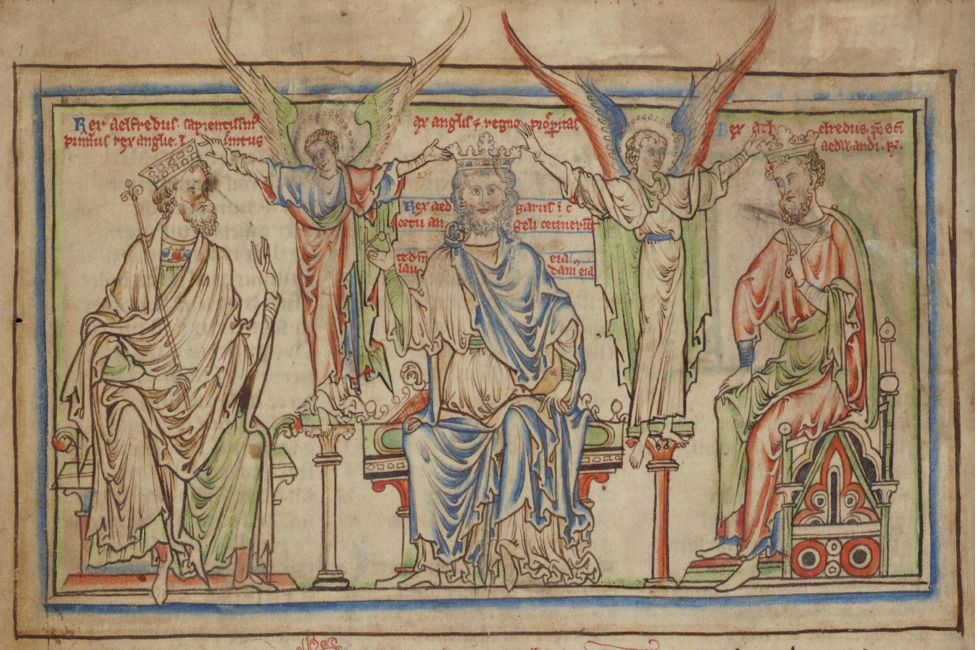
As the Anglo-Saxon forces bravely fought and even managed to win some battles, their leader fell as King Æthelred died in late April of that year. As the entry for 1016 CE relates:
"... [Æthelred] ended his days on St. George's day; having held his kingdom in much tribulation and difficulty as long as his life continued."
The chroniclers here are keen to draw parallels between Æthelred and England's patron saint, George. Like Saint George battling the dragon, Æthelred's reign was full of deadly violence and struggle.
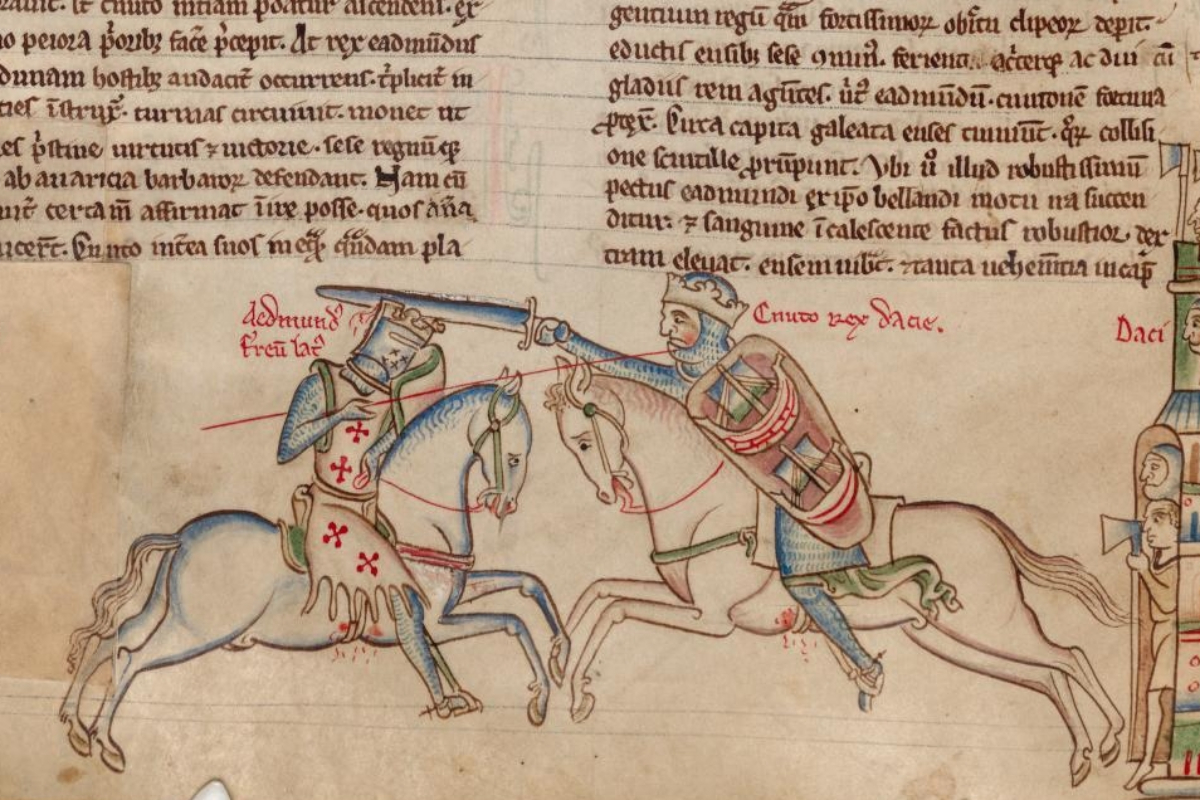
Yet, unlike St. George, Æthelred would not live to see victory over the Vikings. That was left to his son, Edmund, who was dubbed Ironside.
For more information on Cnut the Great, visit BBC History Extra here.
We get to provide readers with original coverage thanks to our loyal supporters. Do you enjoy our work? You can become a PATRON here or via our Patreon page. You'll get access to exclusive content and early access.
Feel free to reach out to discuss potential stories that may be in the public interest. You can reach us via email at [email protected] with the understanding that the information you provide might be used in our reporting and stories.