

Though archaeology itself has a long history, stretching back to the Akkadian Empire in Ancient Mesopotamia, forensic archaeology dates back to the "New Archaeology" boom in the 1960s, where scientific methods became increasingly important to analyze, understand, and make meaning of what lies beneath.
From Viking graves in England to Viking longships in Sweden, forensic archaeology continues to uncover the secrets of the Vikings.
What is forensic archaeology?
We all know at least one archaeologist. He is famous, American, and carries a whip. Yes, we are talking about Hollywood's favorite Professor of Archaeology, Dr. Henry Walton "Indiana" Jones, Junior, aka Indiana Jones.
Yet the real archaeologist may not have quite the same adventurous life but has a fascinating job nonetheless. Archaeology is the scientific study of human activity by gathering and analyzing material culture. It includes a wide collection of artifacts as well as the examination of human and natural environments.
Forensic archaeology uses archaeological skills to assist with the recovery and location of human remains or evidence. Aside from working in a historical context, forensic archaeology can also be used in the criminal justice system or in civil lawsuits.
It often involves skeletal analysis and techniques to establish a biological and/or cultural profile of an individual. Forensic archaeologists use a wide range of cutting scientific methods and techniques, from fingerprint matching, DNA testing, chemical residue analysis, radiocarbon dating, and isotope analysis to help fill historical gaps.
Did forensic archaeology help uncover Viking shield maidens?
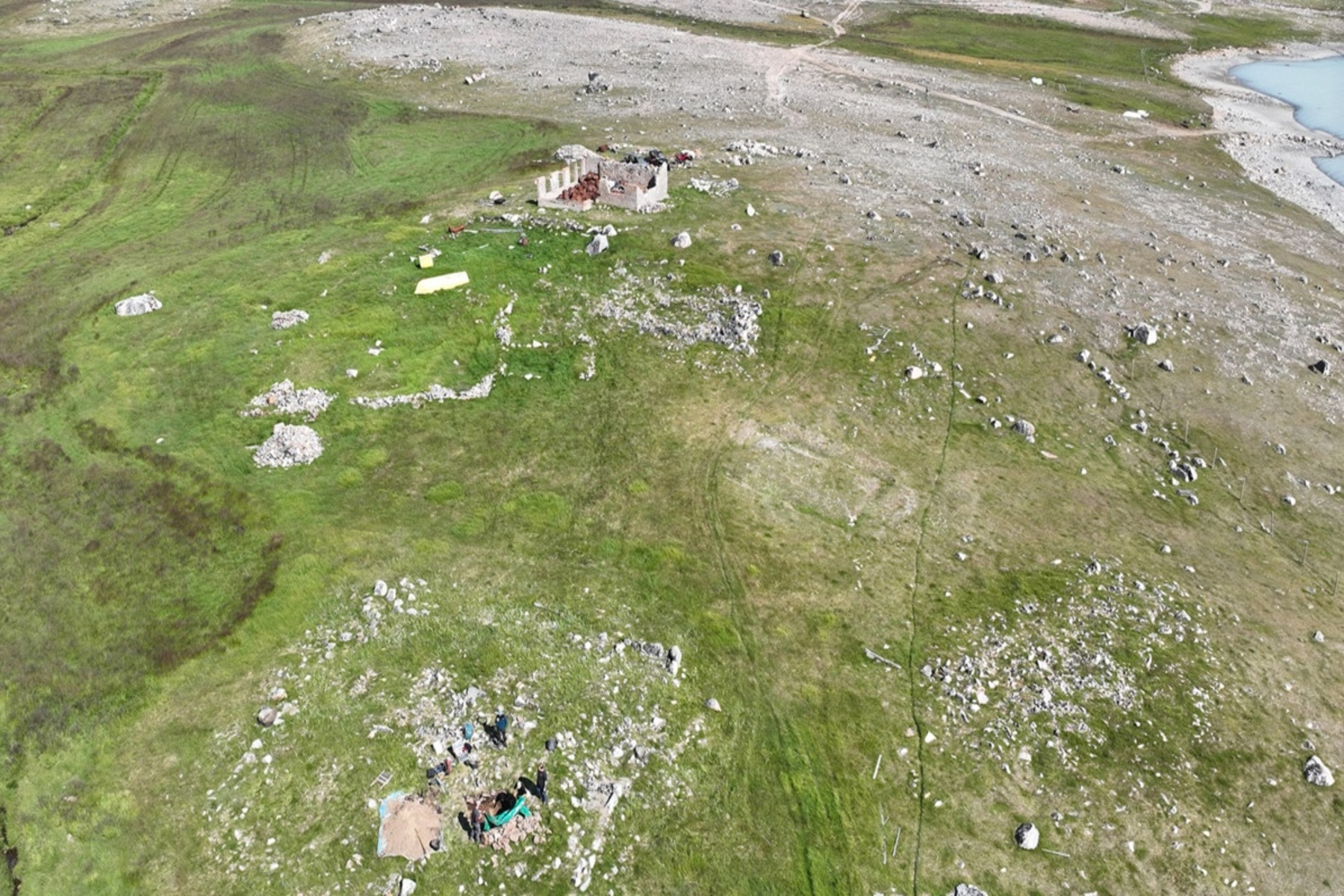
The science behind forensic archaeology can aid in the study of the so-called "Viking Age" (c. 793 – 1066 CE). One of the more interesting applications of forensic archaeology, in recent times, was used by a team of researchers from the University of Western Australia.
This team, led by Shane McLeod, felt that previous researchers had not been specific enough when analyzing graves dating back to the Viking invasions of England in the 10th century CE.
The general academic consensus was that it was a majority of men that came across in Viking invasions, with a very small minority of women accompanying these Viking warriors. This consensus had been reached by archaeologists simply determining the sex of the skeleton by the artifacts or goods discovered in their grave.
For example, previous researchers had assumed that if a brooch was uncovered next to a skeleton, this must be a female. This method (or lack thereof) of "sexing" skeletal remains remained in use up to only a few years ago.
The use of forensic archaeology by the UWA team helped disprove this once-common historical assumption. The team went back to conduct a full examination of the skeletal remains. Using osteological methods – especially the analysis of the pelvis and skull – which are common markers to determine the sex of a skeleton, the team's analysis of 14 skeletons saw an equal split between male and female.
This meant that 50% of the Viking warriors buried with weapons – who had been assumed to be male – were, in fact, female!
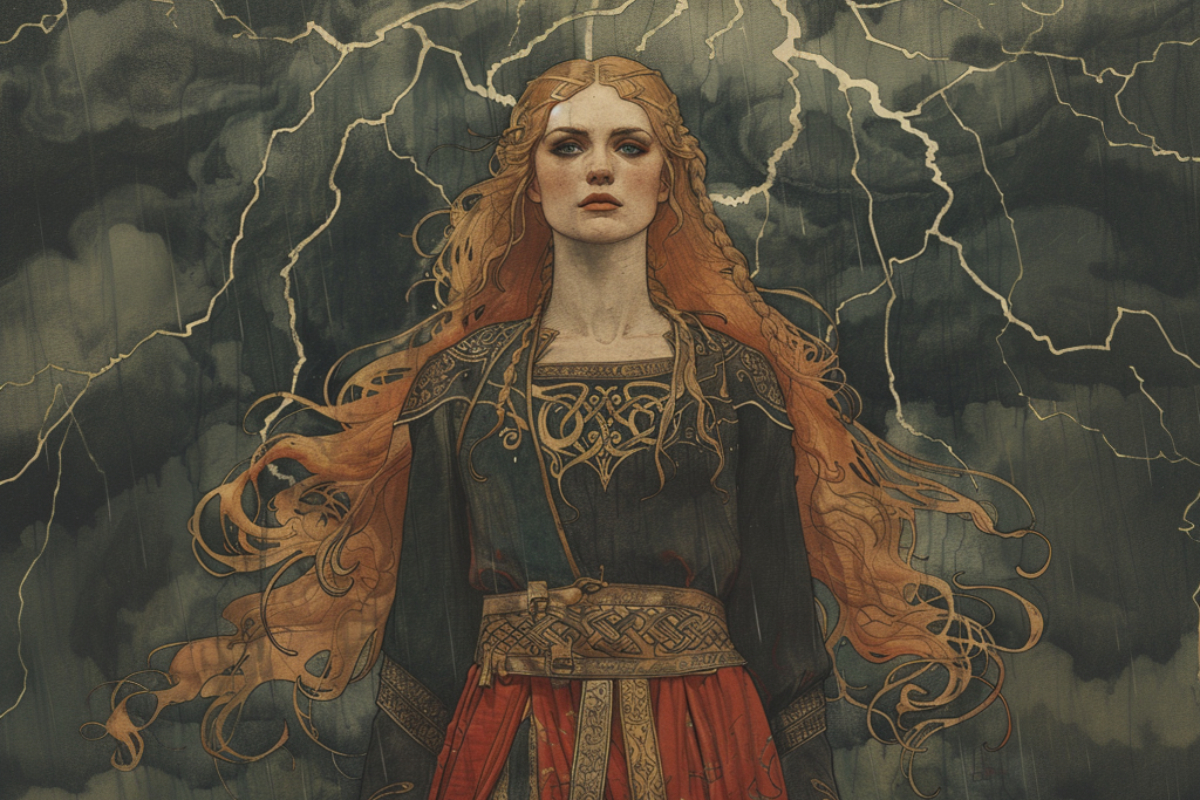
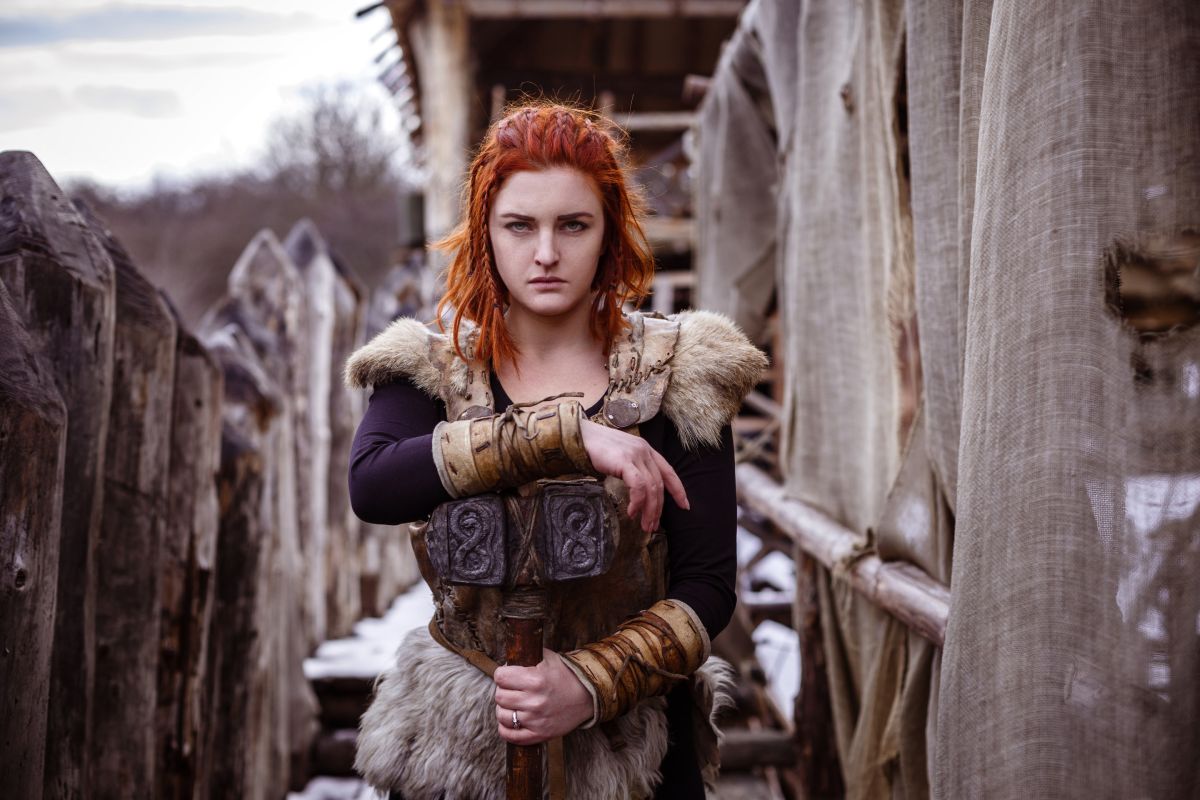
Many academics were quick to point out that this was further proof of the existence of so-called "shield maidens" – women warriors who fought alongside their Viking male brethren.
READ MORE: Who were the Viking shield-maidens, legendary female warriors?
Now, this use of forensic archaeology doesn't necessarily prove – conclusively – that shield maidens did indeed exist. Still, it shows how new knowledge of ancient history can be discovered using the latest scientific methods.

Forensic archaeology is illuminating just how interesting the world of the Vikings really was. Photo: Sendo Serra / Shutterstock
Ain't that the tooth - what teeth can tell us about how violent Vikings were?
In recent years, there has been a historical hypothesis that Vikings were not quite as barbaric and violent as they have been assumed to be for the preceding millennium and a half.
One of the academics pushing this new line of thought is forensic anthropologist dr. Emily Peschel. Her analysis of skeletal remains – buried in an ancient Viking burial ground at Ridanäs, Gotland, Sweden – were originally uncovered during an 18-year period from 1986.
Peschel studied 61 bodies from the Viking graves at Ridanäs. Over the centuries, there had been some damage to the skeletons, either from overzealous farmers and their plows or from small amounts of acidity naturally present in the soil.
Assessing the age and sex of the skeletons, she assessed that there was a majority of females. She could also estimate the ages of death by examining the teeth – the older a person is, the more wear and tear, especially in the pre-dentistry days of early medieval Europe. Most had died in mid-adulthood.
Analysis of the strontium isotope
Further analysis of the teeth included an analysis of the strontium isotope. Strontium (Sr) is an element that exists in the bedrock of Earth, and thus when humans drink water, they ingest small amounts of Sr.
Rocks and soil – depending on their location – have particular percentages of Sr. Peschel's research found that the majority of these Vikings were – in a bit of an anti-climax – from the island of Gotland nearby. Though Vikings had a reputation for traveling all over Europe, the Russian steppes, and even made it to North America, some more or less stayed put.
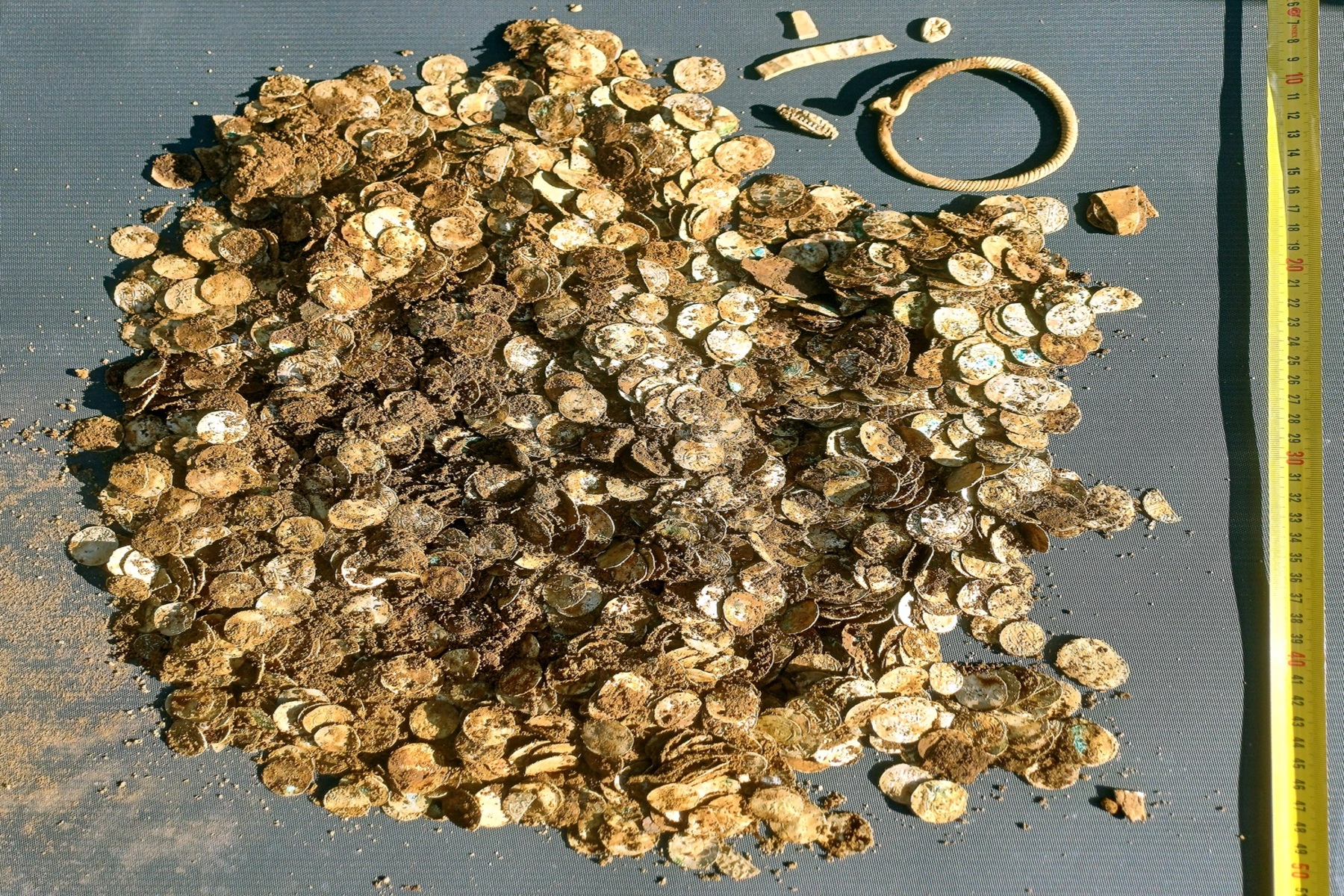
The fact that most of the remains were of "local" Vikings again challenged the commonly held assumption that most of these Vikings had come from abroad. Along with the skeletal remains, a treasure trove of grave goods was unearthed in the original excavation.
These included artifacts ranging from walrus ivory from the North Sea to silver dirhams from the Islamic world – goods and manufactures very much not local. Thanks to the work of dr. Peschel and her forensic archaeology, new information, knowledge, and wisdom are constantly being rediscovered.
Forensic archaeology is just one way in which we can tap into new methods of discovery to illuminate just how interesting the world of the Vikings really was.
For more information on dr. Emily Peschel's work, visit an article about it on Boston University's website here.
We get to provide readers with original coverage thanks to our loyal supporters. Do you enjoy our work? You can become a PATRON here or via our Patreon page. You'll get access to exclusive content and early access.
Feel free to reach out to discuss potential stories that may be in the public interest. You can reach us via email at [email protected] with the understanding that the information you provide might be used in our reporting and stories.