

The Bayeux Tapestry is undoubtedly the most famous piece of embroidery in the world.
It is an incredible 69 meters long and narrates the epic story of William the Conqueror and his invasion of England in immense detail through a series of intricate pictures and descriptive writing.
Perhaps the tapestry's most iconic image is the depiction of Harold Godwinson with an arrow through his eye.
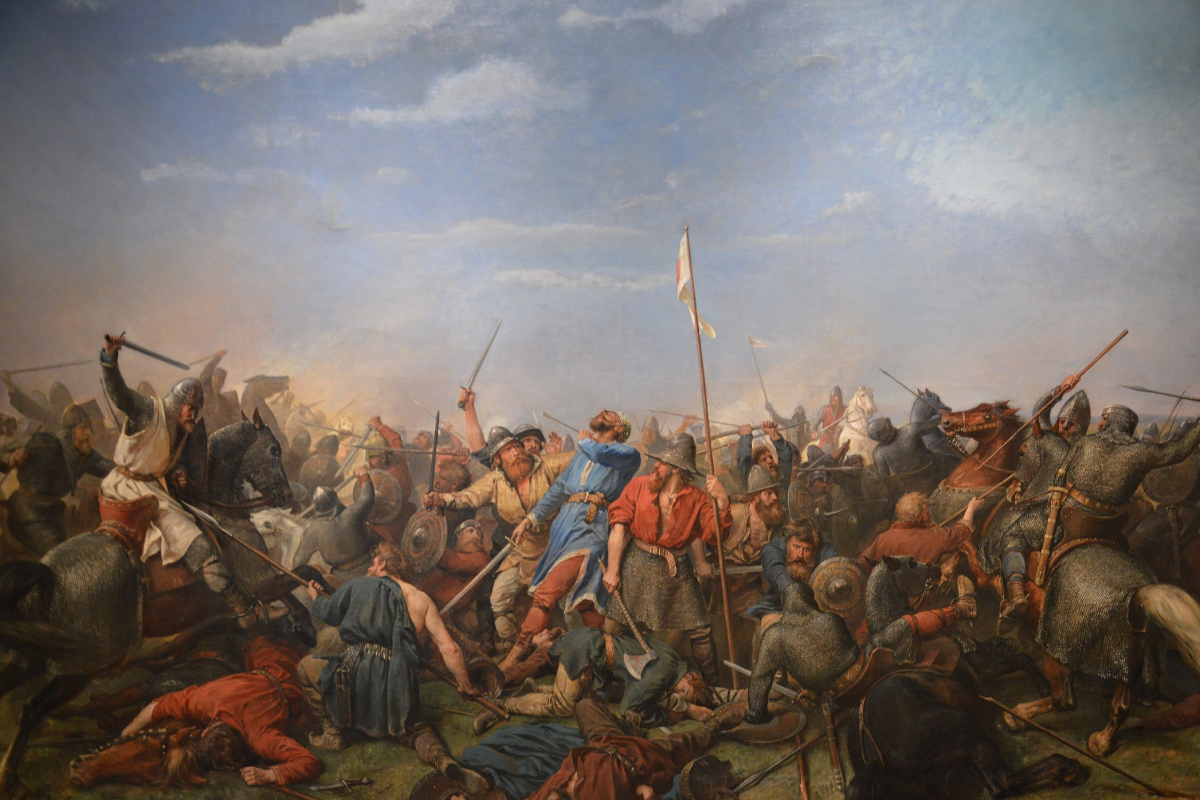
Ironically, however, it was Godwinson's glorious victory just a few weeks earlier over Harald Hardrada at the Battle of Stamford Bridge that, for many historians, signaled the end of the Viking Age.
What exactly is it?
The Bayeux Tapestry contains 58 detailed scenes that portray the events leading up to the Battle of Hastings in 1066, as well as the battle itself.
Today, the tapestry is housed at a museum in the small town of Bayeux in Normandy, France.
In addition to the tapestry, you can also view the permanent exhibition that provides historical context and information about how it was made.
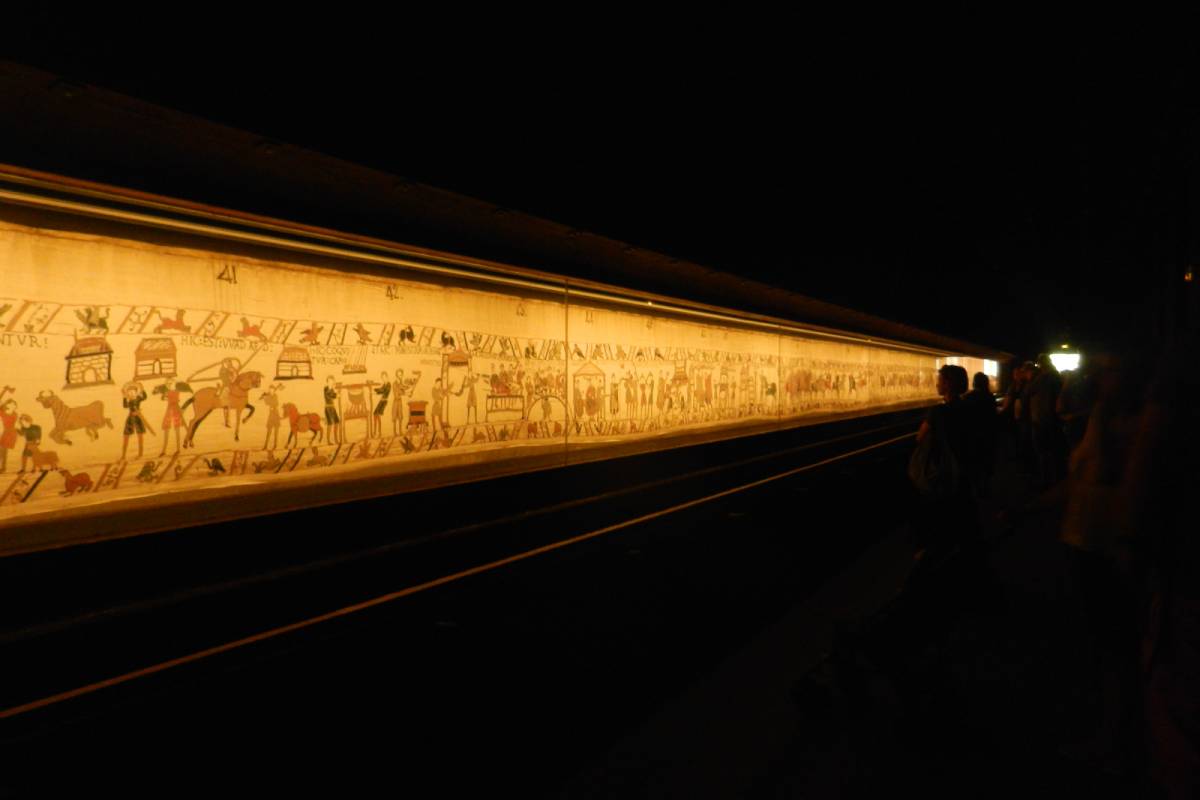
The Bayeux Tapestry, a 69-meter-long wool embroidery on linen, is believed to have been commissioned by Bishop Odo, William the Conqueror's half-brother, in the 11th century. Photo: Beat Ruest / Wikimedia Commons (CC BY-SA 4.0)
What can you tell us about its history?
Most historians today agree that the Bayeux Tapestry – technically an embroidery, not a tapestry – was actually made not in Normandy but in England by Anglo-Saxon artisans.
It is thought to have been commissioned by Bishop Odo, who was both Bishop of Bayeux and Earl of Kent, as well as William the Conqueror's brother and his primary administrator in England.
The tapestry depicts the key events in the two years leading up to William's successful invasion of England and his subsequent victory over the Anglo-Saxons.
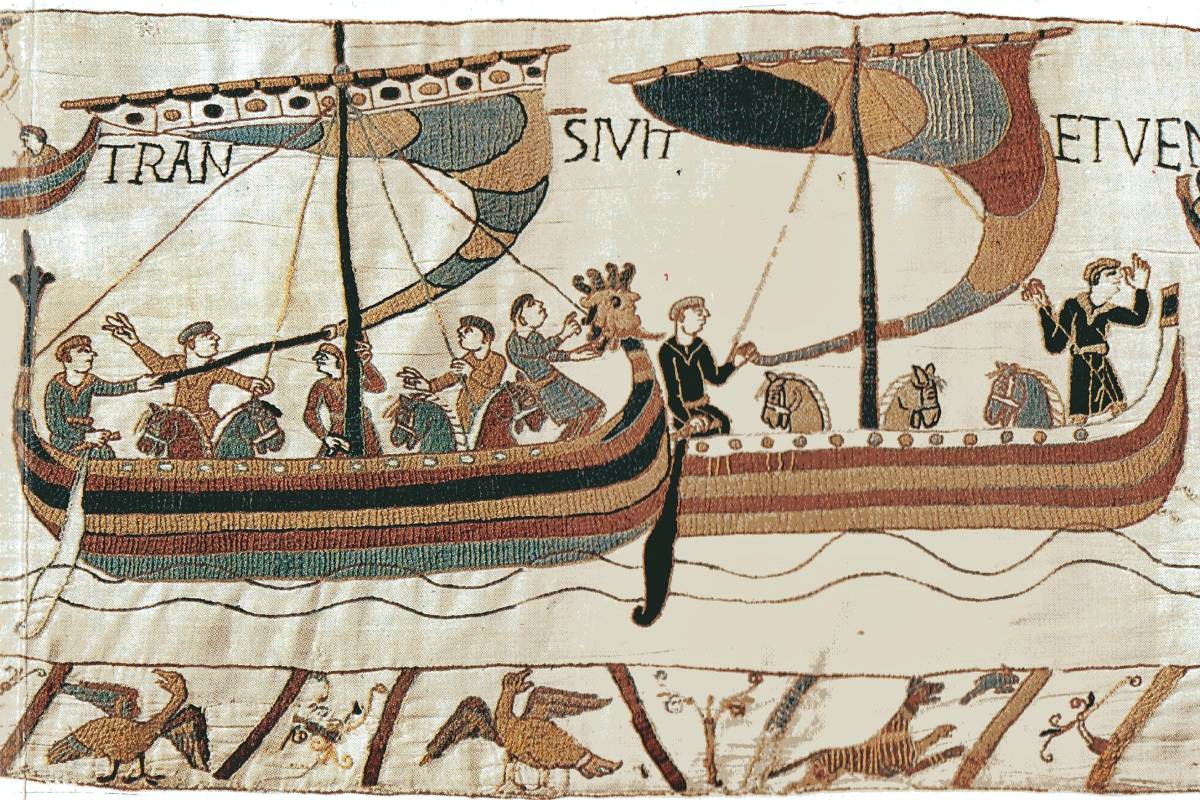
William, Duke of Normandy, traveled to England by ship after the death of King Edward the Confessor to seize what he believed was his rightful throne.
William claimed that he had been promised the kingdom by the late English monarch.
His rivals were Harold Godwinson, who had seized the crown in his absence, and Harald Hardrada, a Viking king who invaded from the north in his own attempt to gain control of the kingdom.
The tapestry depicts a major historical turning point: first, King Harold's forces defeated the Vikings led by Harald Hardrada at the Battle of Stamford Bridge, and then King Harold and his weary army were defeated by William and his Norman forces at the Battle of Hastings.
The United Kingdom has never been successfully invaded since.
Thus, the Anglo-Saxons shifted from their Germanic (and Norse) roots towards a French and Latin-infused influence that still persists in their language and culture today. C'est la vie.
You can read the full story of the Bayeux Tapestry here.
What will I find here?
The tapestry is presented behind long, curved glass with only minimal lighting to ensure long-term preservation.
The quality of the handiwork is simply outstanding.
Visitors can savor the imaginative and intricate depictions of Viking ships, Norman soldiers, Anglo-Saxon archers, and a whole host of other delights.
This includes a plethora of animals, death scenes, heated discussions, ornately crafted buildings, and, of course, spectacular battles.
In addition to the tapestry, there is a permanent exhibition that examines the creation process and the historical context.
Lastly, a 16-minute film presents the story of the Bayeux Tapestry, including reconstructed scenes from the Battle of Hastings.
Nearby, the Memorial Museum of the Battle of Normandy, which depicts the history of D-Day and the bitter conflict that followed, is also well worth a visit.
A third museum run by the same company, the Museum of Art and History Baron Gérard, has an impressive collection of exhibits ranging from prehistoric times to the 20th century.
The picturesque town is also home to a striking cathedral and enchanting public gardens.
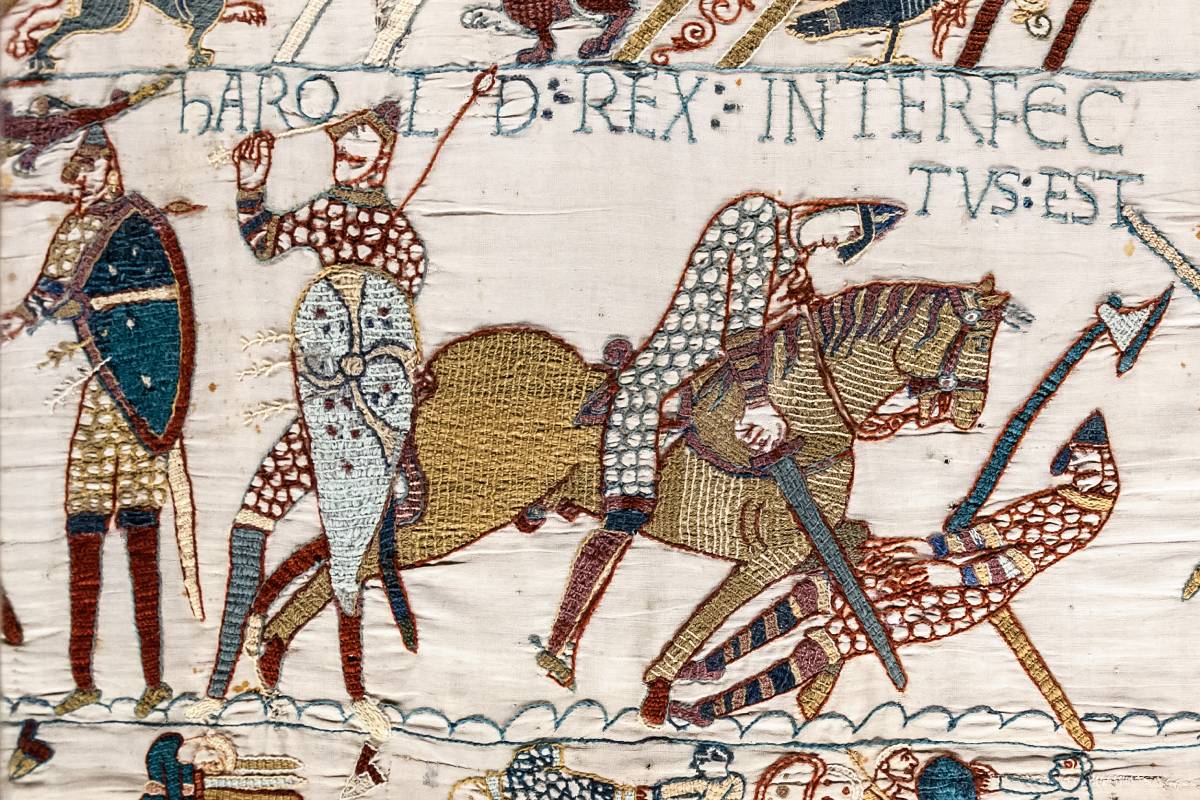
Scene 57 of the Bayeux Tapestry depicts the moment of King Harold's death during the Battle of Hastings, as indicated by the Latin inscription "HIC HAROLD REX INTERFECTUS EST" (Here King Harold is slain). Photo: Myrabella / Wikimedia Commons (Public domain)
Tell me one thing I can find here and nowhere else in the world
The Bayeux Tapestry itself is truly a unique document.
It provides a living testament to events that were crucial to the history of three distinct but wholly intertwined cultures: the Anglo-Saxons, the Normans, and the Norse.
Although the museum offers an excellent online viewing option that we highly recommend, there's nothing quite like seeing it in person.
How much does it cost and how do I get there?
Address: The Museum of the Bayeux Tapestry, 13B Rue de Nesmond, 14400 Bayeux, France
Cost: 12 EUR (16 EUR for all three Bayeux museums), 7.50 EUR for seniors, 5 EUR for children and students, and free for those under 10.
Opening times: From Mar 1 to Oct 31, it's open daily from 9 am to 6.30 pm. From Nov 1 to Feb 28, it's open daily from 9.30 am to 12.30 pm and from 2 pm to 6 pm.
Access: The museum is a ten-minute walk from Bayeux Station. By car, it's less than half an hour from Caen and just over three hours from Paris.
We get to provide readers with original coverage thanks to our loyal supporters. Do you enjoy our work? You can become a PATRON here or via our Patreon page. You'll get access to exclusive content and early access.
Feel free to reach out to discuss potential stories that may be in the public interest. You can reach us via email at [email protected] with the understanding that the information you provide might be used in our reporting and stories.