


For those who think this craze for all things Viking, sparked in part by Hollywood movies and TV shows, is very much a 21st-century thing, you'd be wrong.
In fact, the Viking grip on popular culture and imagination goes back two centuries to the staid and stuffy airs of the 19th century.
This was a century of great change, sweeping nationalism, new possibilities, and technologies.
It was during the latter period of what famed historian Eric Hobsbawm dubbed the long 19th century that this era of change swept into the study of history.
Whilst some may want to treat the study of history as a cold science – neutral and aloof – history often reflects the present as much as it does the past.
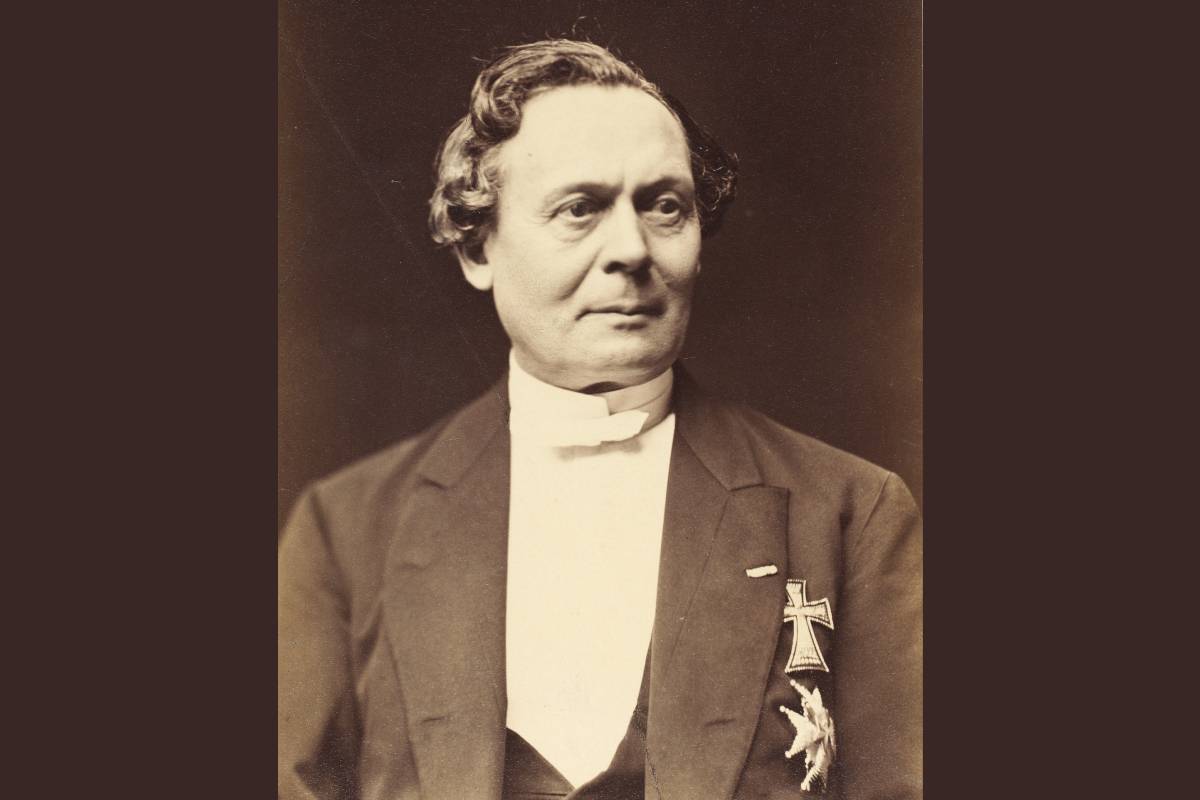
Until the late 19th century, the study of history had been the reserve of armchair amateurs, but men like Jens Jacob Asmussen Worsaae helped bring fresh ideas and new ways of thinking.
Born in Vejle, Denmark, in 1821, Worsaae came from a rather obscure part of the country. Sorry to all its inhabitants – no doubt it is a lovely town, but it doesn't quite have the buzz of New York, Paris, or Tokyo.
He was the middle child, the fifth of eleven. Despite his humble origins (and middle-child curse), he would go on to fundamentally reshape how we view the history of early medieval Scandinavia.
Indeed, he is sometimes wrongly credited (as this Facebook post highlights) with having "invented" the concept of the Viking Age (c. 750–1100 CE).
Who was this Danish archeologist, curator, and historian, and what role did he play in giving birth to the Viking Age?
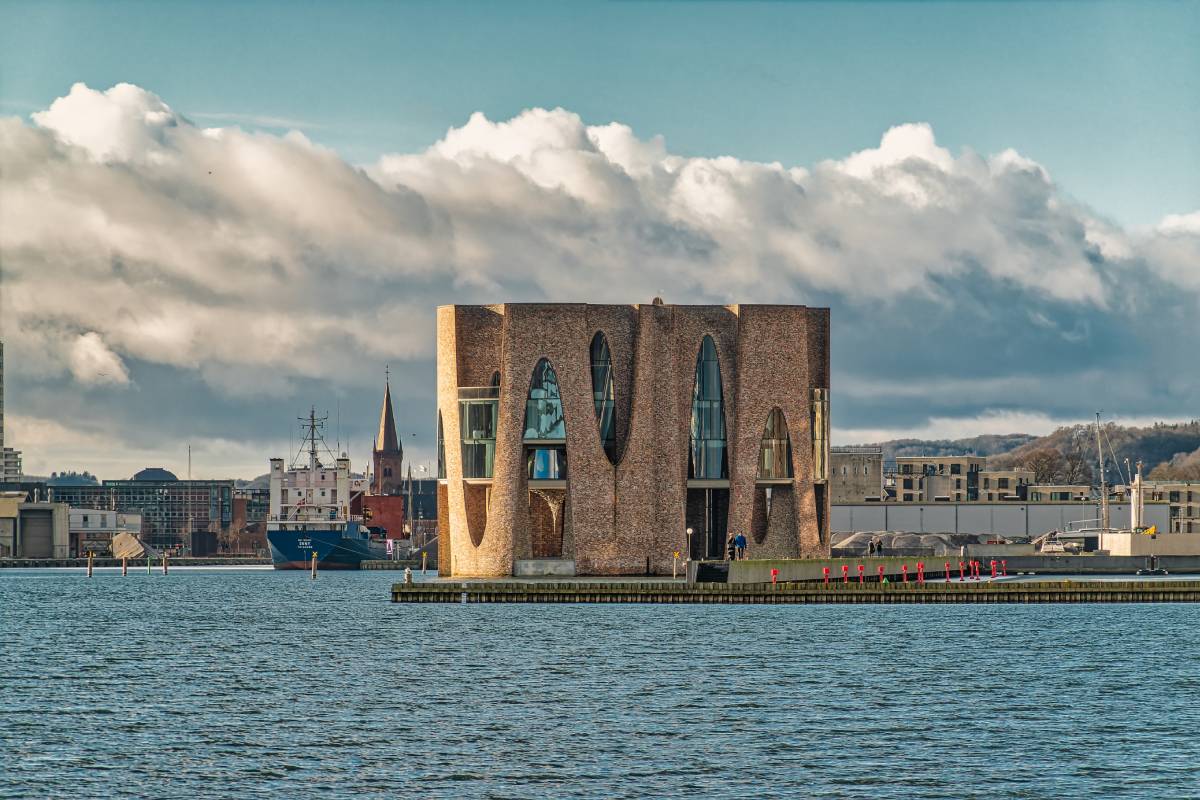
The future pioneer of Danish archeology, Jens Jacob Asmussen Worsaae, was born in Vejle, Denmark, in 1821, where his love of history began. Photo: Frank Bach
An early interest in the study of the past and academic career
Without becoming too Freudian, we can probably assume that Worsaae's love of archeology and history was fostered at an early age.
Two stone axes – one found on his father's property and another supposedly found when the local harbor in Vejle was dredged – appear to have instilled a lifelong love of studying the past.
He is said to have participated in a (by our modern standards) primitive archeological excavation as a teenager, including near the former royal seat of Viking power, Jelling.
This early fascination with what lay beneath seems to have inspired him to study further, and he was soon sent to the big smoke to study at the University of Copenhagen.
It was in Copenhagen that this interest in the past took a new direction, as he went to volunteer with Christian Jürgensen Thomsen, the first director of the National Museum of Denmark.
We know little of the day-to-day personal relationship between the two men, but we can assume that their relationship was something akin to that of mentor and protégé.
Thomsen was instrumental in the development of a more scientific approach to archeology and history. He had developed a "three-age system" (the Stone Age, the Bronze Age, and the Iron Age) and organized the museum's antiquities in this chronological order.
With the National Museum of Denmark only established a generation before, in 1807, Worsaae was there at the very beginning of a renewed interest in Denmark's past.
Working closely with such a learned mentor, Worsaae absorbed much of Thomsen's ideas, postulations, and theories.
It would not be long before he used these ideas to publish a book that would forever change the perception of early medieval Europe's favorite warriors – the Vikings.
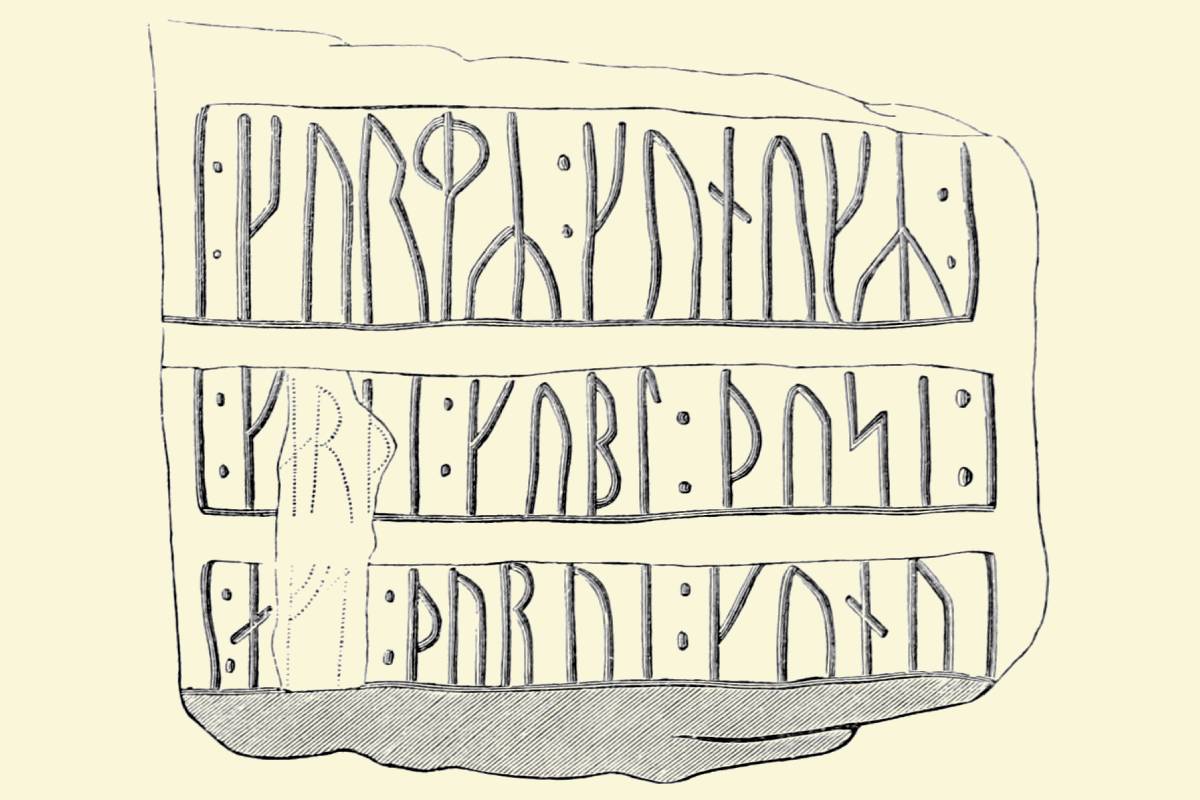
From The Primeval Antiquities of Denmark, this illustration depicts Gorm's runestone, which was raised in memory of Thyra. Source: Jens Jacob Asmussen Worsaae
A groundbreaking work that was also popular
The 1840s were a time of great change across Europe. In 1843, Worsaae completed his magnum opus, the seminal work Danmarks Oldtid oplyst ved Oldsager og Gravhøie (The Primeval Antiquities of Denmark).
Don't let the rather cumbersome title fool you – this was a revolutionary book.
Standing on the shoulders of giants (aka his mentor, Thomsen), he used this book to push back against the academic norm in Denmark's study of the early medieval period.
The status quo at the time was to use the legendary Norse sagas as historical records and try to glean information from them.
Whilst there is more than a smattering of historical truth in the Norse sagas, we know now that they should not be treated as historical records.
Worsaae stressed the need to get out of the armchair and get one's hands dirty – only by analyzing ancient artifacts could one glean knowledge about Denmark's ancient past.
Whilst much of the book deals with earlier periods, there is a detailed overview of what we now call the "Viking Age." According to Worsaae:
"...about the year 700... the Northmen were now so powerful that they made huge settlements in the West... and in the East; which made Scandinavia, during several centuries, the central point for an extensive commerce between the East and the northern parts of Europe. Both by Viking expeditions, and by commerce, a higher civilization was brought from the West to the North..." (p. 148)
In that short passage, Worsaae gives a broad overview of the entire history of early medieval Scandinavia in an easy-to-understand language.
This combination of detailed historical analysis coupled with an ease of writing helped to popularize not only Worsaae's appeal for a more scientific study of archeology and history but also helped the Danish public rethink their attitudes about their early medieval past.
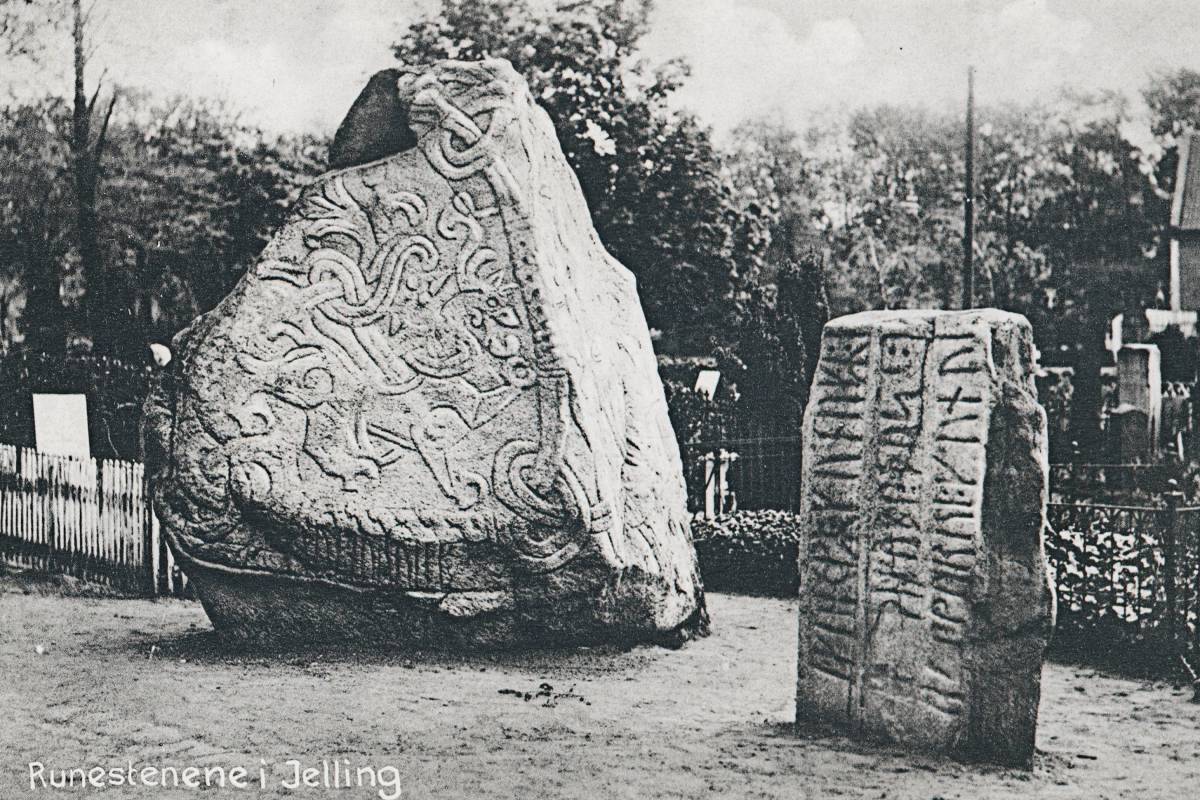
Worsaae’s work fueled Danish nationalism by redefining Viking history as a source of pride. Photo: National Museum of Denmark
1848, nationalism, and his later works
Worsaae was, like all of us, a product of his time and place. Despite the overwhelming success of his book, which was quickly translated and published in English by 1849, Worsaae was living in a dangerous time.
Within a few years of the publication of his book, he witnessed firsthand the events of 1848, the so-called "Year of Revolutions."
It was a year that saw a series of democratic and liberal revolutions sweep across Europe, including in France, Ireland, what was then the German Confederation, Hungary, Poland, and parts of what is now Romania.
These movements sought to smash the old order, the ancien régime, and establish the concept of a "nation-state."
This revolutionary fervor spread as far north as Denmark, which saw the establishment of a constitutional monarchy following a popular march on the royal palace at Christiansborg.
This ended centuries of the so-called King's Law, which amounted to little more than absolute power vested in the monarch.
As Anne Engelst Nørgaard writes in her 2019 article in the journal Contributions to the History of Concepts, democracy "was a key term in this battle in 1848 Denmark."
This radical idea of democracy was one of the new forces sweeping across Danish society.
It was in this milieu of radical thinking and great societal change that Worsaae set about writing his next tome, Danmarks Befolkning i Oldtiden (An Account of the Danes and Norwegians in England, Scotland, and Ireland, published in Danish in 1849).
This book would go on to help shatter centuries-old prejudices portraying people in Viking societies as mere barbarians and raiders, emphasizing their roles as settlers and traders as well.
We here at The Viking Herald like to think we are taking up the cause that Worsaae so passionately laid out in this book – to educate the (online) world that, though all Vikings were people from Viking societies, not all people from Viking societies were Vikings.
Both books were published during a time of great nationalist sentiment in Denmark, fueled in part by the 1848 revolutions and ongoing border disputes (and a war) with Prussia.
This was seen as a great tonic for the Danish people, allowing them to look back with pride at their past. Their ancestors – people in Viking societies – had once dominated the European stage.
In an era where Danish society had faced political and societal insecurity since the Napoleonic Wars, Worsaae's analysis of the exploits of people in Viking societies became widely popular among a public yearning for symbols of strength and independence.
The fact that their ancestors had left such an indelible cultural, economic, and political imprint across a huge swathe of Europe was like opium to the fervent nationalism sweeping Denmark during the latter 19th century.
As M. Hilson, B. Poulsen, and T.B. Olesen write in their 2023 book, A History of Denmark from the Viking Age to the 21st Century, "...history writing... played a significant role in the consolidation of the... Danish national identity... during the nineteenth-century era of nation-building..."
Worsaae's books were instrumental in shaping this budding national identity.
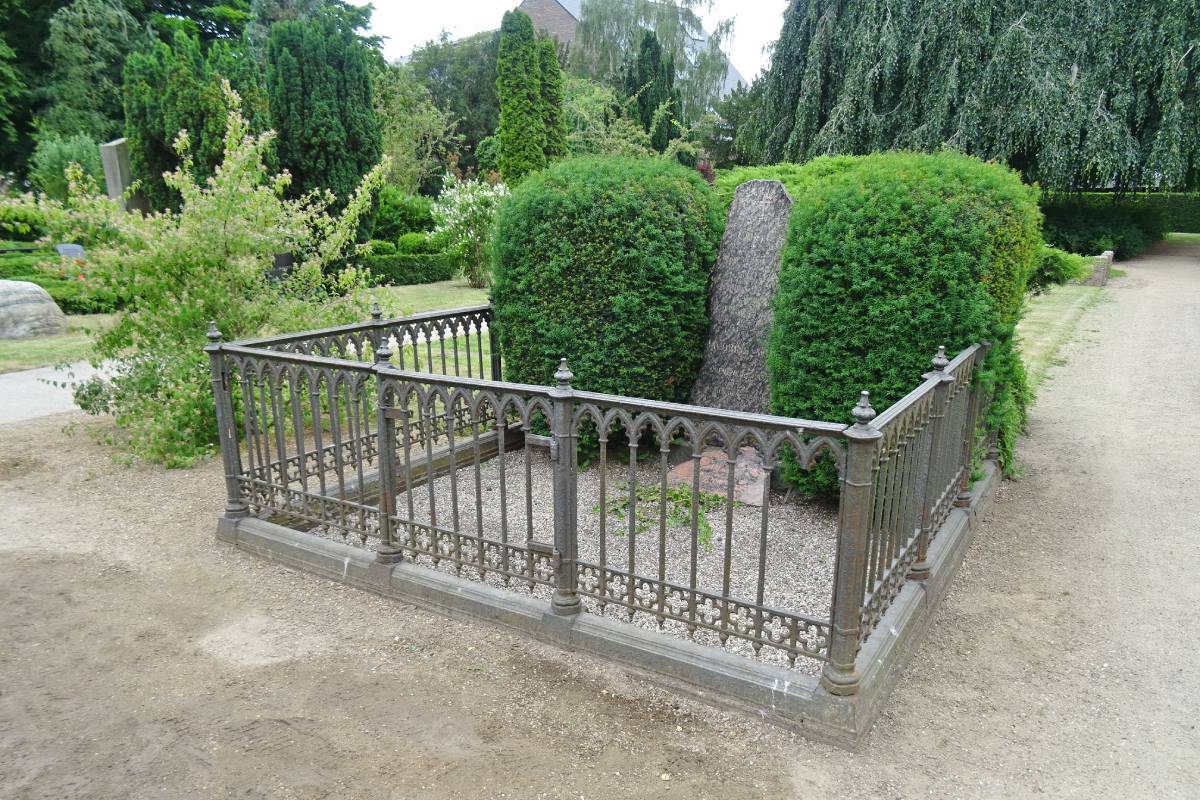
Worsaae passed away in 1885 and was laid to rest at Holmens Cemetery in Copenhagen’s Østerbro district. Photo: Leif Jørgensen (CC BY-SA 4.0)
Did he invent the term Viking Age?
There is a widespread misconception about the legacy of Worsaae. As this Facebook post points out (passionately, yes, but not accurately, I'm afraid), he is sometimes credited with coining the term "Viking Age."
He did not coin this term but rather helped popularize it.
Before him, the early medieval history of Scandinavia, and particularly Denmark, was seen as something to be ashamed of, as it was little more than the tales of pagan pirates and warriors.
His written works, as well as his later role as the director of the National Museum of Denmark, allowed, for the first time, a serious analysis and discussion of the complex and nuanced history of people from Viking societies during the early medieval period.
He was instrumental in promoting a more scientific approach to archeology and history, in which evidence (i.e., artifacts) played a greater role in understanding the past rather than relying on the tall tales of Norse literature.
He certainly did not invent the term Viking Age to describe the period of early medieval Europe when Vikings roamed, but he did help popularize a renewed interest in and appreciation of this period in Scandinavian (and particularly Danish) history.
He should be celebrated today as fundamental in the attempt to shift the perception of people in Viking societies from a mere bunch of brawling marauders to a complex and sophisticated people who dominated European events for centuries and thus became a source of immense (Danish) national pride.
For that, Jens Jacob Asmussen Worsaae has our eternal gratitude.
For more information on the latest Viking-related offerings of the National Museum of Denmark, visit their website here.
We get to provide readers with original coverage thanks to our loyal supporters. Do you enjoy our work? You can become a PATRON here or via our Patreon page. You'll get access to exclusive content and early access.
Feel free to reach out to discuss potential stories that may be in the public interest. You can reach us via email at [email protected] with the understanding that the information you provide might be used in our reporting and stories.



.jpg)
