

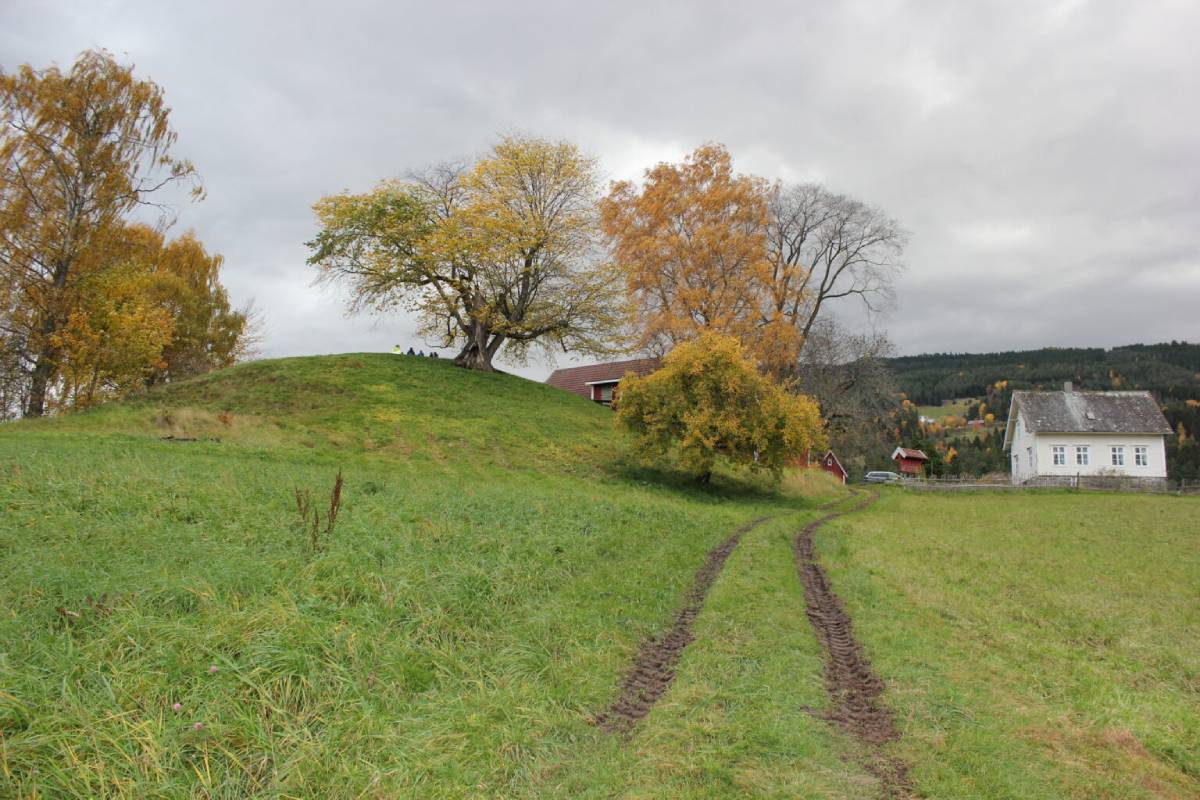
As reported in The Viking Herald, Karnilshaugen was recently confirmed as the largest burial mound in Western Norway.
But what prompted the investigation in the first place, what have we learned about the mound so far, and why will we probably never know its true contents?
To find out, we talk to Morten Ramstad, the archeologist who had the idea to examine Karnilshaugen – with a little help from the geoarcheologists of the University of Stavanger.
In the wake of Myklebust
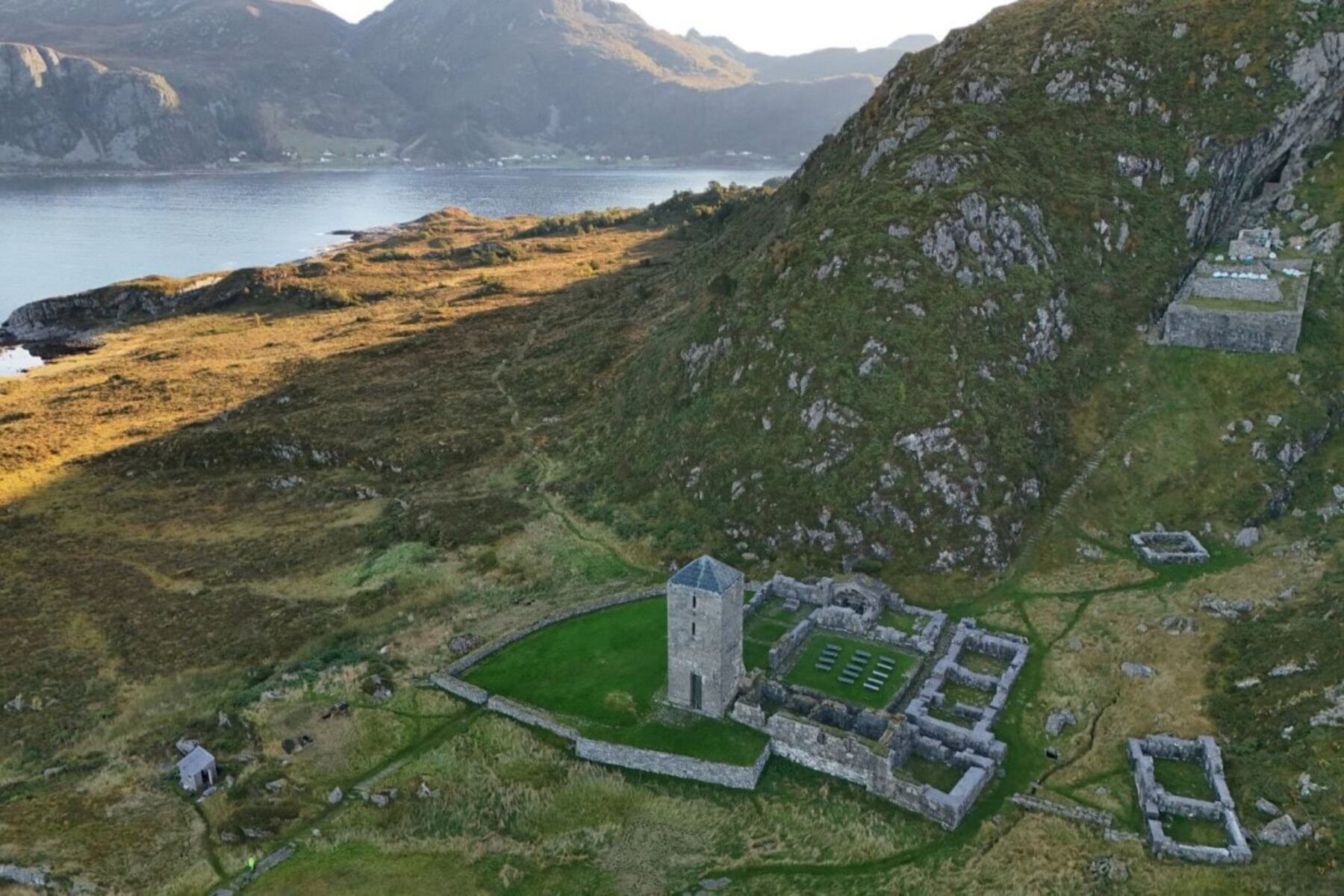
The Myklebust Viking ship burial was discovered in the municipality of Nordfjordeid in 1874.
The gravesite contained the charred remains of the largest Viking ship ever found in Norway. It is also the only example of a cremated ship burial in the country.
The opportunity to examine Karnilshaugen came last year during a follow-up excavation for the Myklebust site.
The team was returning to Myklebust more than a century after the original dig as part of the work to support Norway's ongoing application for recognition from UNESCO for its ship burial sites.
"It's all related to Myklebust," explains Morten, who works for the Department of Cultural Heritage of the University of Bergen.
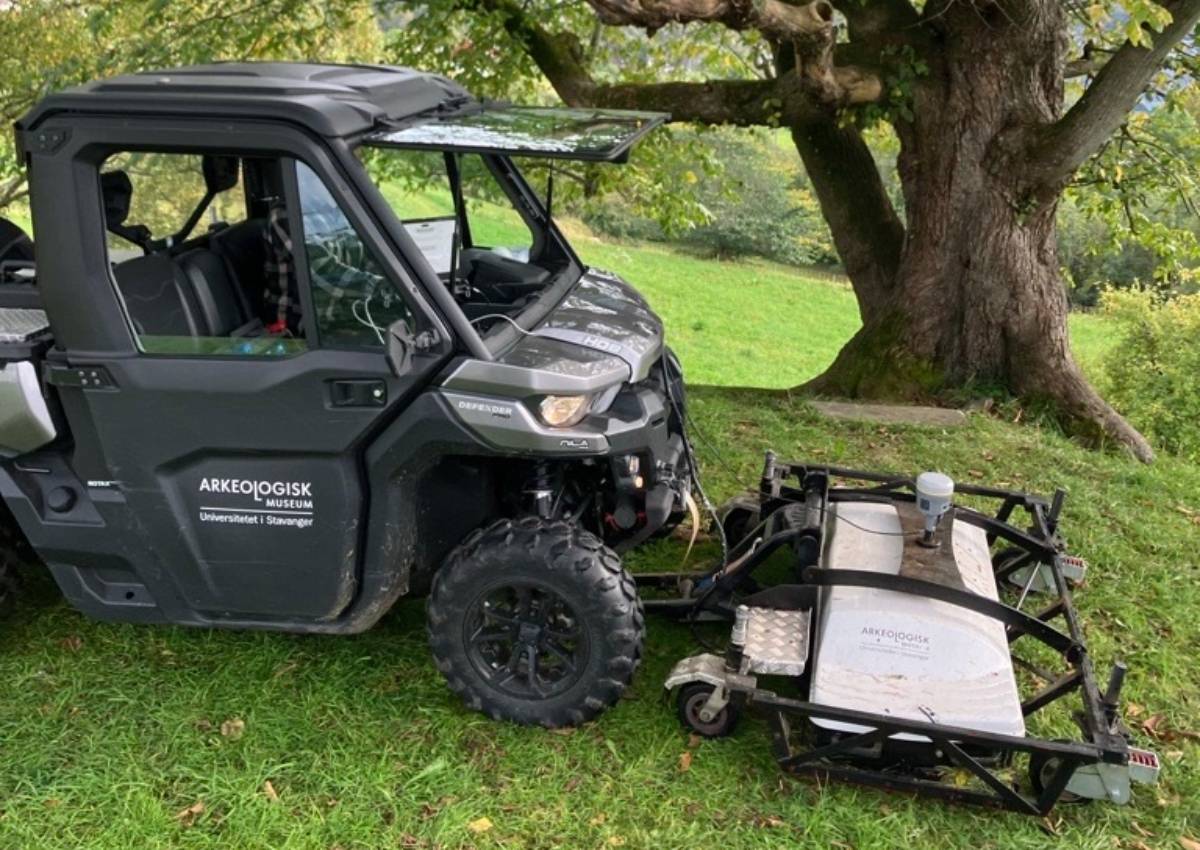
"We had a small research project there to go into the mound. We also formed a collaboration with the University of Stavanger to carry out georadar investigations."
"They helped us locate the Myklebust trench so we could reopen the mound."
"People had also been wondering about Karnilshaugen, which is just across the fjord from Myklebust, in the municipality of Gloppen," Morten tells The Viking Herald.
"There was a discussion about whether it was a burial mound or naturally formed. In the 1990s, some basic georadar analysis had indicated it might be a natural feature."
"But for various reasons, I never believed that story. We already had the georadar at Myklebust. On the other hand, Stavanger, where the equipment came from, is a ten-hour drive away."
"So I just said, 'Hey, why don't we take a look at Karnilshaugen?' And we kind of just sneaked over for a day there, too."
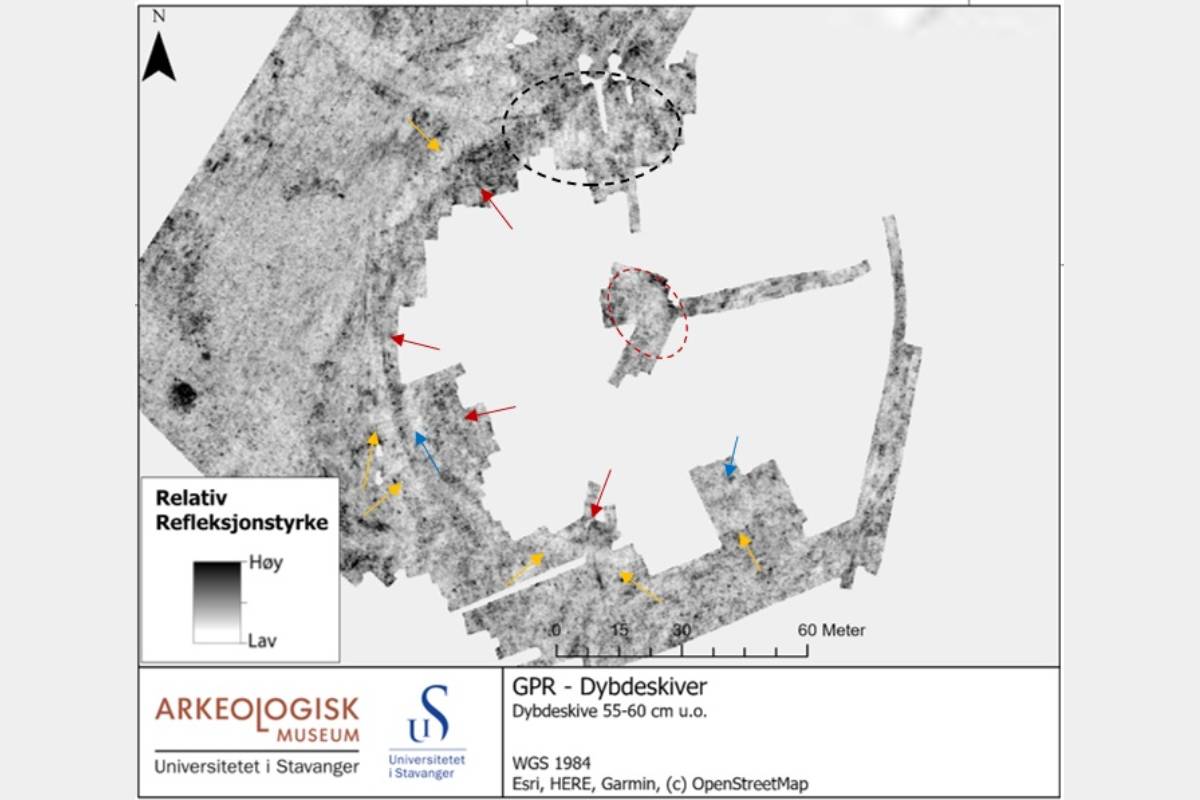
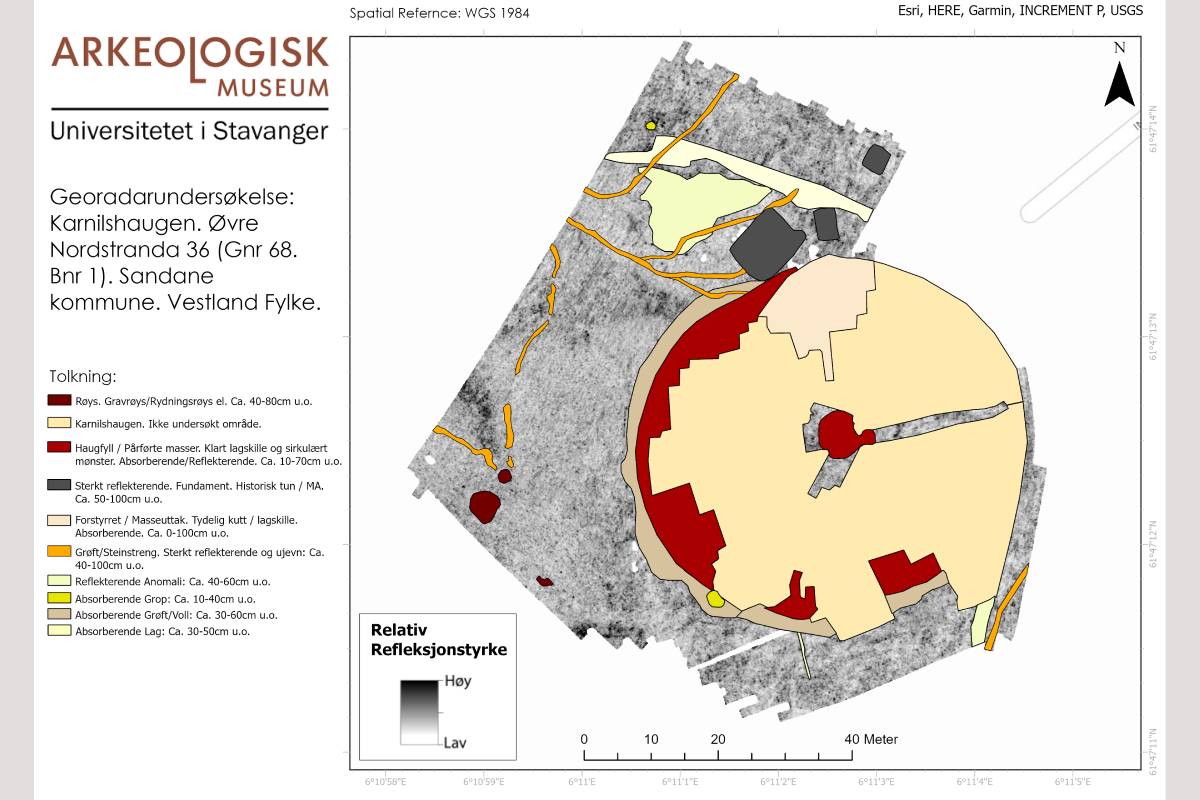
Georadar analysis confirms that Karnilshaugen is a man-made burial mound over 60 meters wide and 10 meters high. Source: University of Stavanger
Man-made, and enormous
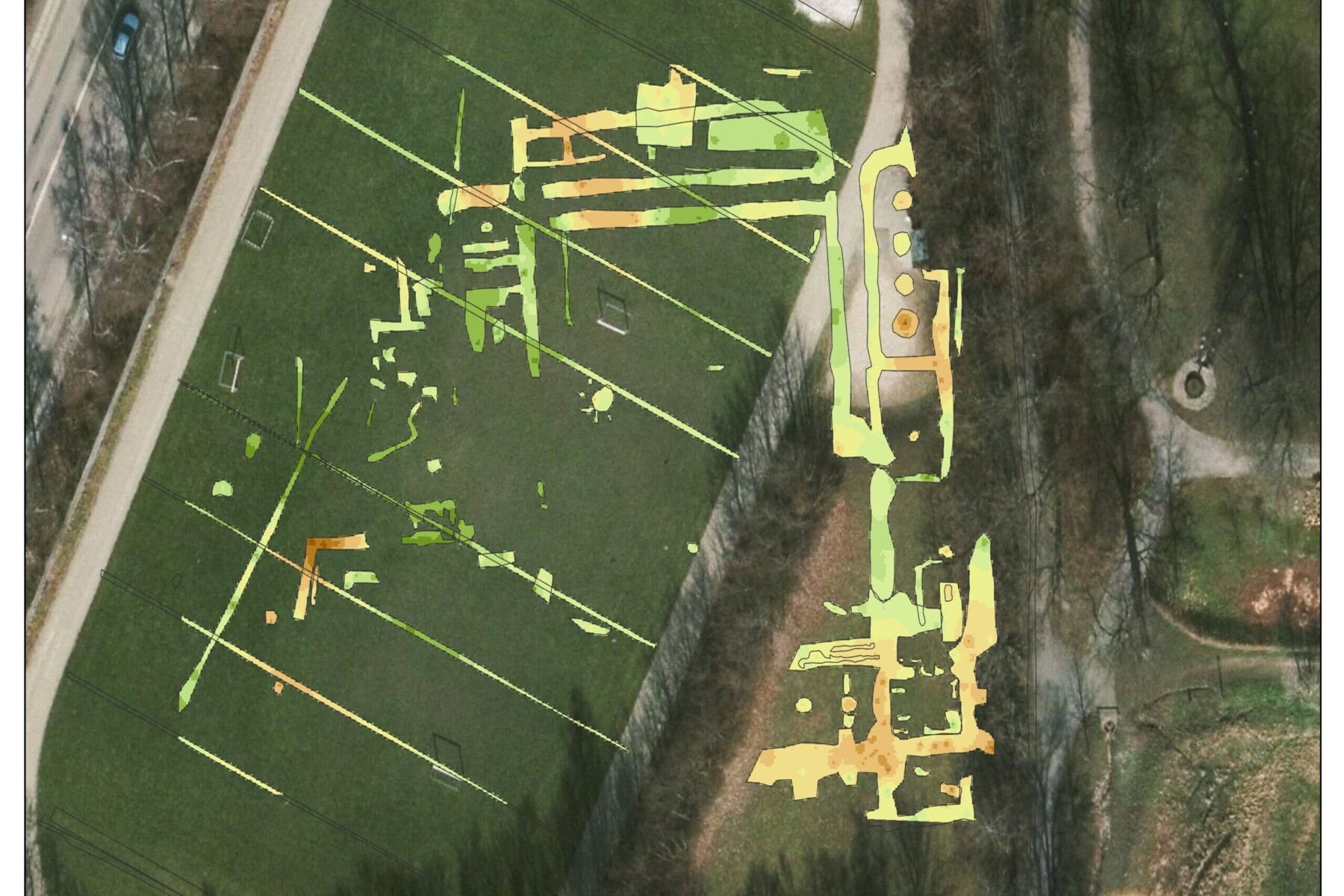
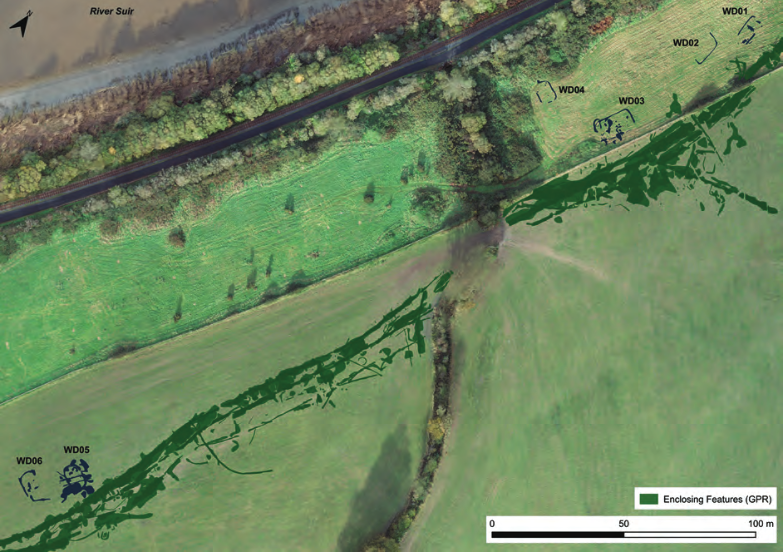
Ground-penetrating radar – also referred to as georadar – works by sending radar pulses into the ground to produce images of the soil below the surface.
After using ground-penetrating radar to analyze the Myklebust mound, the team applied the same techniques at Karnilshaugen.
"Quite early on, our colleagues saw that the signals they were retrieving at Karnilshaugen were the same as those at Myklebust," Morten tells us.
"We now know for sure that Karnilshaugen is a man-made monument. We also saw a ditch of the same character as the one surrounding the mound at Myklebust. This enabled us to define the size of the mound with greater accuracy."
"We were able to see that the mound is more than 60 meters in diameter and probably around 10 meters high. This makes it the biggest grave mound in Western Norway and one of the largest in Scandinavia."
"But it has never been excavated. That is the really special thing about this mound and what makes it so intriguing."
The burial mound has an estimated volume of over 7,000 cubic meters, requiring around 100 workers to construct in a year. Source: University of Stavanger
Shifting power structures
The Karnilshaugen burial mound is thought to date to the Migration Period (300 to 600 CE), and its sheer size indicates a powerful local presence.
"This area is also really rich in settlement sites and burial mounds, especially in the Migration Period," Morten informs The Viking Herald.
"We don't know what the Karnilshaugen graves contain, but the external dimensions indicate we are probably speaking of 7,000 cubic meters – or maybe even more."
"That means that if the mound was built over one year, it would probably have taken around 100 men to complete the work. The effort to build it says something about the power there and the relations of the local chiefs inside this fjord area."
"It seems that later, in the Viking Age, the power center shifted a bit further across the fjord to Myklebust. There is a link between these two sites, but you have to cross the fjord."
"We think this mound is of enormous importance and symbolizes the power of local families and dynasties in the early Iron Age."
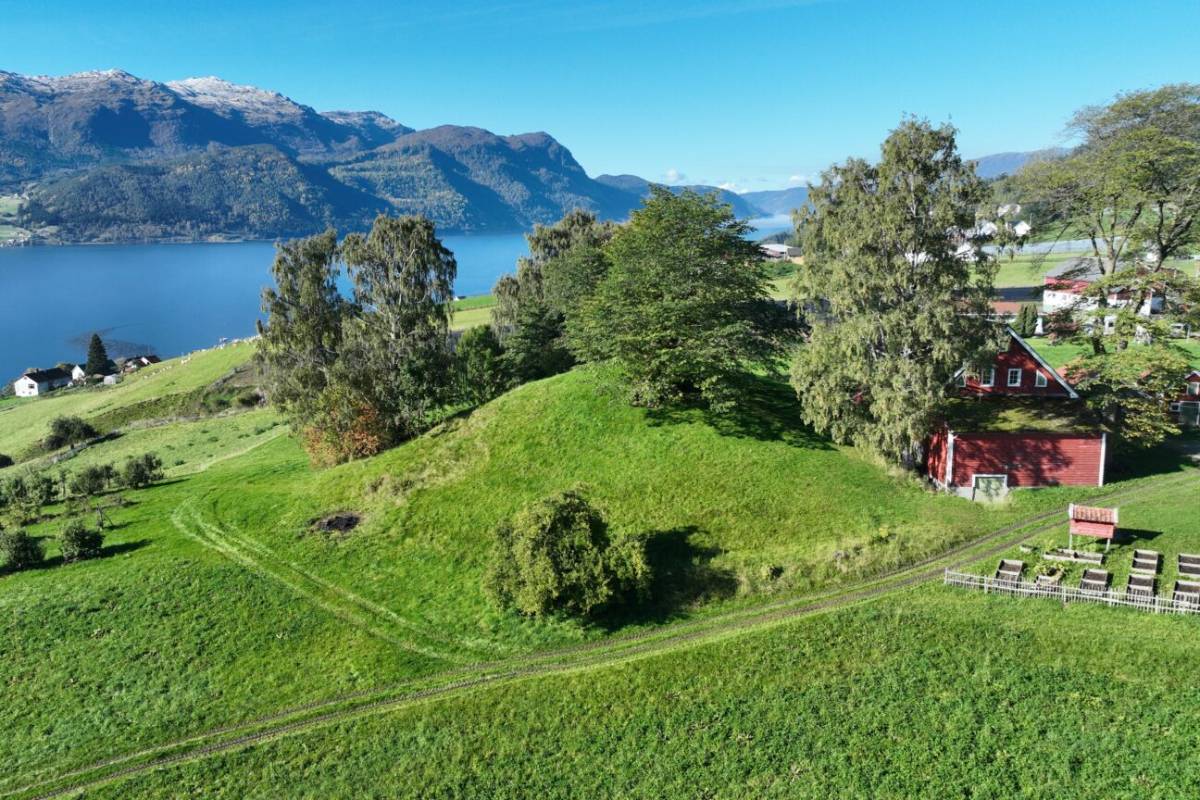
Local lore suggests the burial mound was positioned to align with the sun during the winter and summer solstices. Source: University of Stavanger
A glimpse inside the mound
While the contents of Karnilshaugen remain untouched, Morten and the team have still been able to build a picture of its possible contents using both their own investigations and knowledge of comparable sites around Norway.
"As I said, the georadar reflections remind us of Myklebust, which was built up with layers of turf and soil. So I think you would have continuous layers of the two, with the turf used to stabilize the soil," Morten explains.
"In the middle of the mound, there could be a small natural rock outcrop or something else that helps make it bigger – that's quite common. Then somewhere close to the middle of it, there would be a grave with a stone chamber."
"This could be three to four meters long and up to two meters wide. It would likely contain a single individual, probably with some textiles and some rare artifacts."
"There would also probably be some secondary graves close to the primary grave. These would likely be from the Migration Period but also perhaps all the way up to the Viking Age."
A central grave with a stone chamber, likely holding a high-status individual, may be hidden inside the mound. Source: University of Bergen
A solstice site and place of assembly?
Morten also tells us that even today, there is great awareness among local residents of the importance of the mound.
"There are a lot of local myths about Karnilshaugen," he says. "According to local lore, it was used during the winter and summer solstices. At this time, the sun shines directly through a gap in the mountain on the other side of the fjord."
"In midwinter, the mound is the last part of the whole fjord area to receive direct sunlight. For about eight to ten minutes, the mound stands alone in the sun, while the surrounding landscape remains in darkness."
"This is probably the reason why the mound was placed precisely where it is."
An alternative name for the site, Tinghaugen ("Thing-mound"), also suggests that it may have been used as a "Ting," or place of assembly. "This name was first recorded in the early 19th century," Morten tells us.
"The name is quite often used in connection with assemblies throughout Scandinavia but was not that common in Western Norway."
"So it could have been an assumption about the mound, or the name could have been part of local folklore, which would indicate that Karnilshaugen functioned as a meeting place."
Left in peace
Morten confirms, however, that these mysteries are likely to remain unresolved, at least for now.
"For the people of Gloppen, Karnilshaugen has always been an important monument. If it is from the Migration Period, this means it is about 1,500 years old."
"It's fantastic to think that you have a monument like this that is intact and undisturbed. In itself, it is so fascinating and has been an important part of the landscape for 1,500 years."
"I think this is a good mystery for the local people and also for us – it's nice to keep that mystery."
"We do want to carry out some more analysis, but with non-destructive methods. We have some plans to do a little more research to see if we can penetrate further into the mound and conduct broad-spectrum investigations."
"They should reveal if there are anomalies such as grave chambers inside the mound. But I think, ethically speaking, it's also nice to leave something for the next generation."
"Who knows, they might have new technologies by then so they can find out even more without destroying the mound itself."
We get to provide readers with original coverage thanks to our loyal supporters. Do you enjoy our work? You can become a PATRON here or via our Patreon page. You'll get access to exclusive content and early access.
Feel free to reach out to discuss potential stories that may be in the public interest. You can reach us via email at [email protected] with the understanding that the information you provide might be used in our reporting and stories.