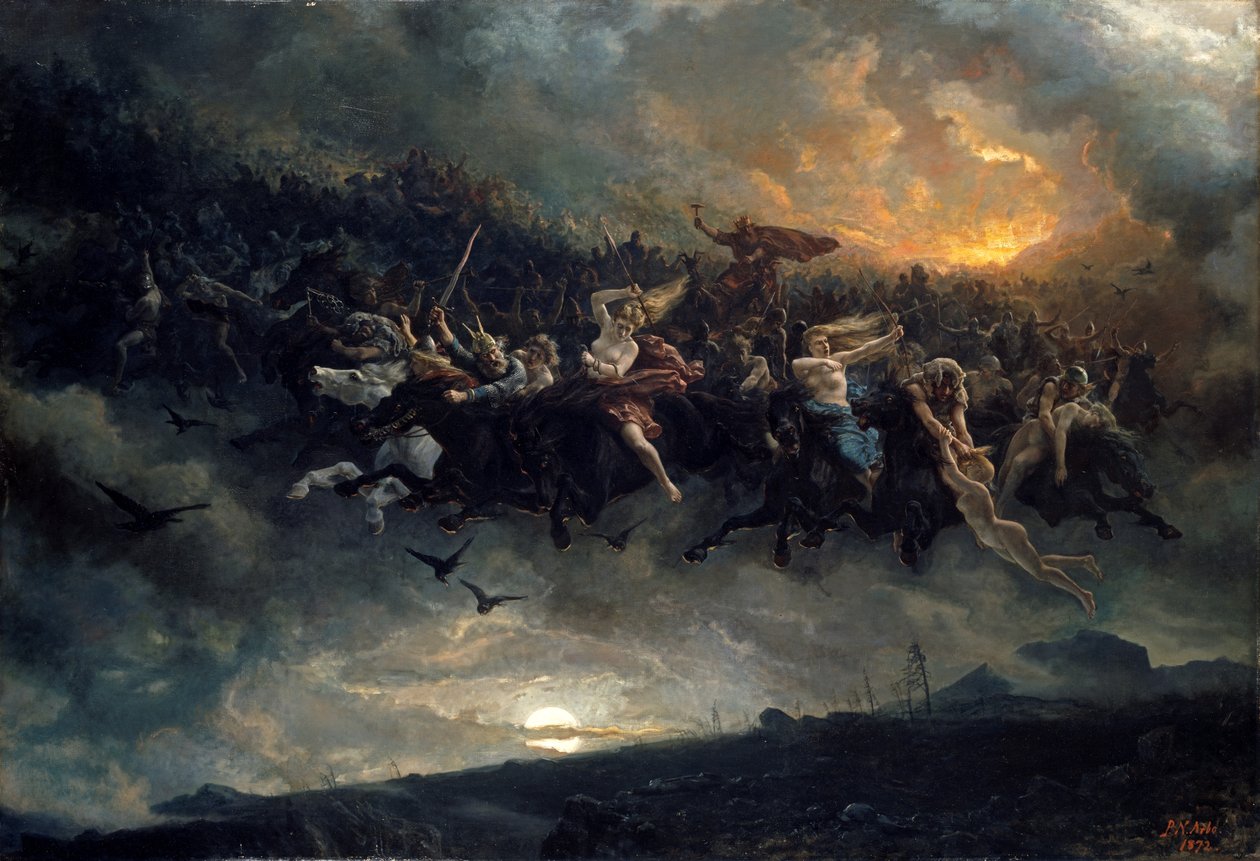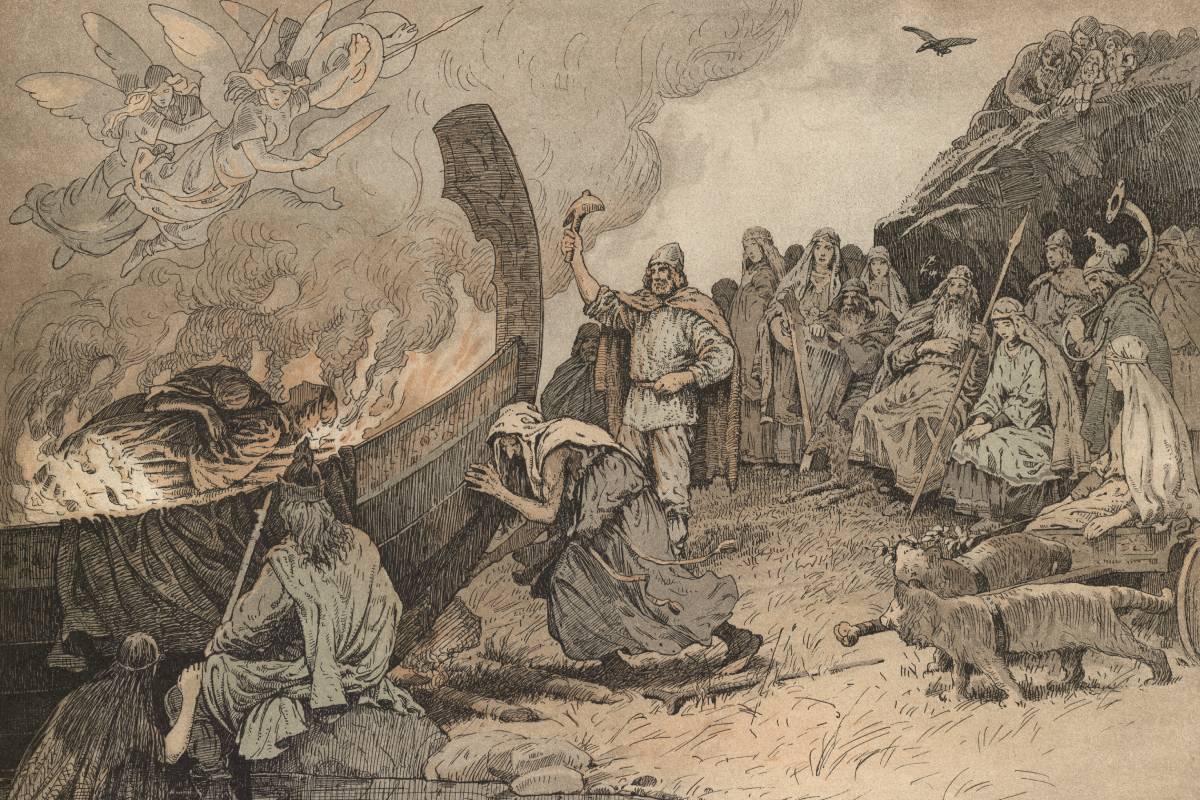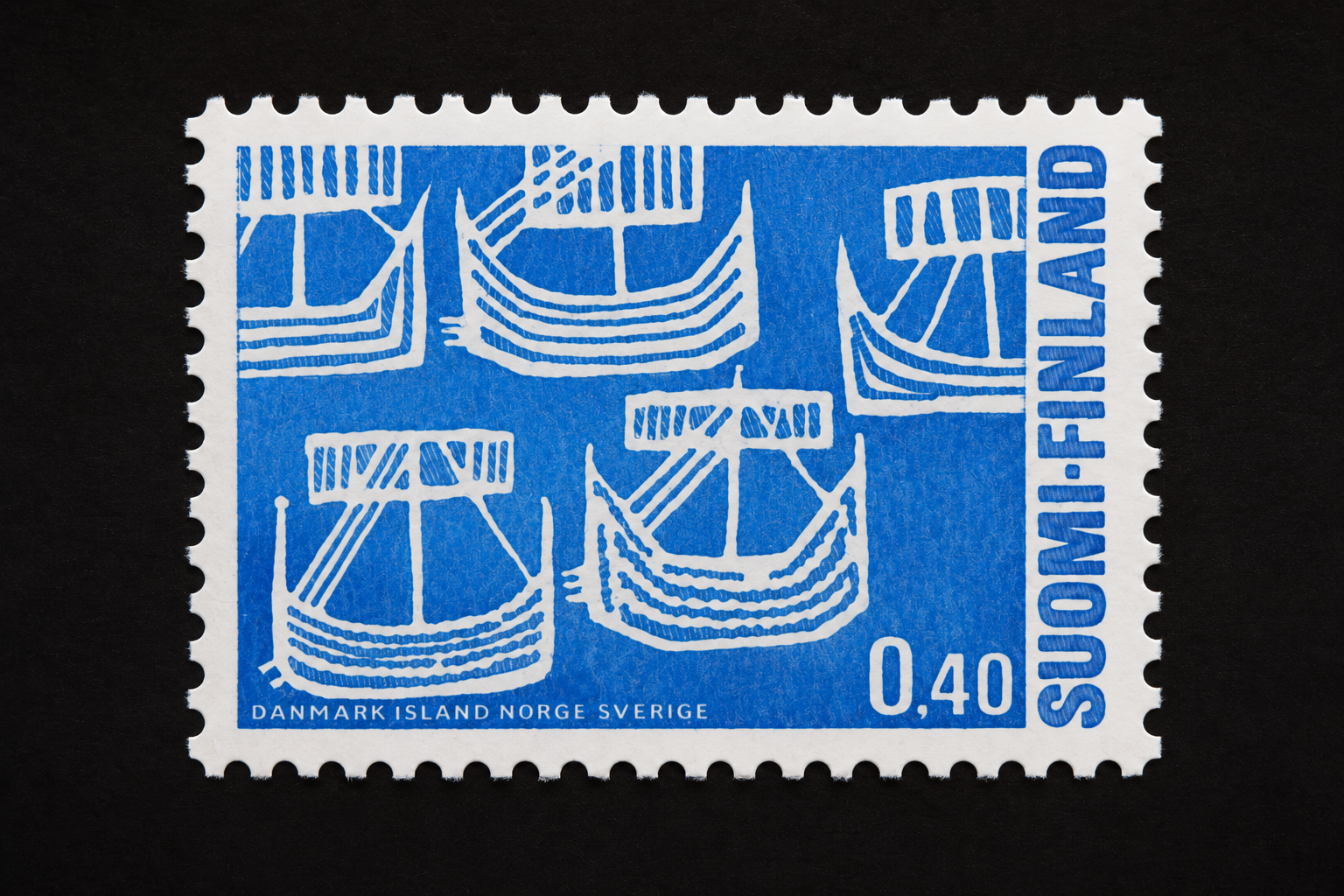


Flick open any page of the rich tapestry of Norse sagas, and you will encounter mythical and fantastical beasts and creatures – from eight-legged horses to giant wolves, from cats that can draw chariots in the sky to knowledge-seeking ravens.
However, it is one creature that lurks in the water that may be the most memorable.
The giant world serpent, Jörmungandr, is a colossal sea serpent that is said to encircle the world.
It is so large that it holds its tail in its mouth, and it creates a boundary around the world that humans were said to inhabit in Norse mythology: Midgard.
This giant serpent appears in many sagas and is often the bane of the Norse god of thunder, Thor.
A memorable story involves everyone's favorite Mjölnir wielder going on a fishing trip and accidentally hooking his line onto the great world serpent.
Needless to say, Jörmungandr was less than pleased at the prospect of being Thor's deadliest catch.
Jörmungandr is such a memorable and fantastical creature that it lay deep in the Scandinavian psyche, according to Kathryn Hume in her 1980 article in the journal Studies in Philology.
Centuries after the last Viking ship sailed, a giant sea creature would reappear in tall tales, stories, and legends in the form of the Kraken, a giant squid-like creature.
First appearance centuries after the last Viking ship ever sailed
The Kraken was said to be a giant octopus-like creature that plied the waters between the western coast of Norway and Iceland, deep in the wild North Atlantic Ocean.
However, our first reference to this giant creature arrives centuries after the Viking Age (c. 750–1100) by an Italian priest who traveled in Scandinavia during the early 18th century.
Half a century later, we have our first description of the Kraken by the Bishop of Bergen, Pontoppidan, who described this sea monster in detail in 1753.
He posits that this giant sea creature, living somewhere deep in the Norwegian Sea, may be a giant octopus.
He also gives the creature its name, Kraken – meaning something akin to a crooked tree, with the giant creature's tentacles said to resemble the roots of an upturned tree.
Pontoppidan's description of the Kraken became so famous that he became a world-leading expert on it and other sea creatures.
Just why he was focusing so much on (mythical) sea creatures and not tending to the spiritual matters of his flock is beyond us at The Viking Herald, but even holy bishops need a hobby.
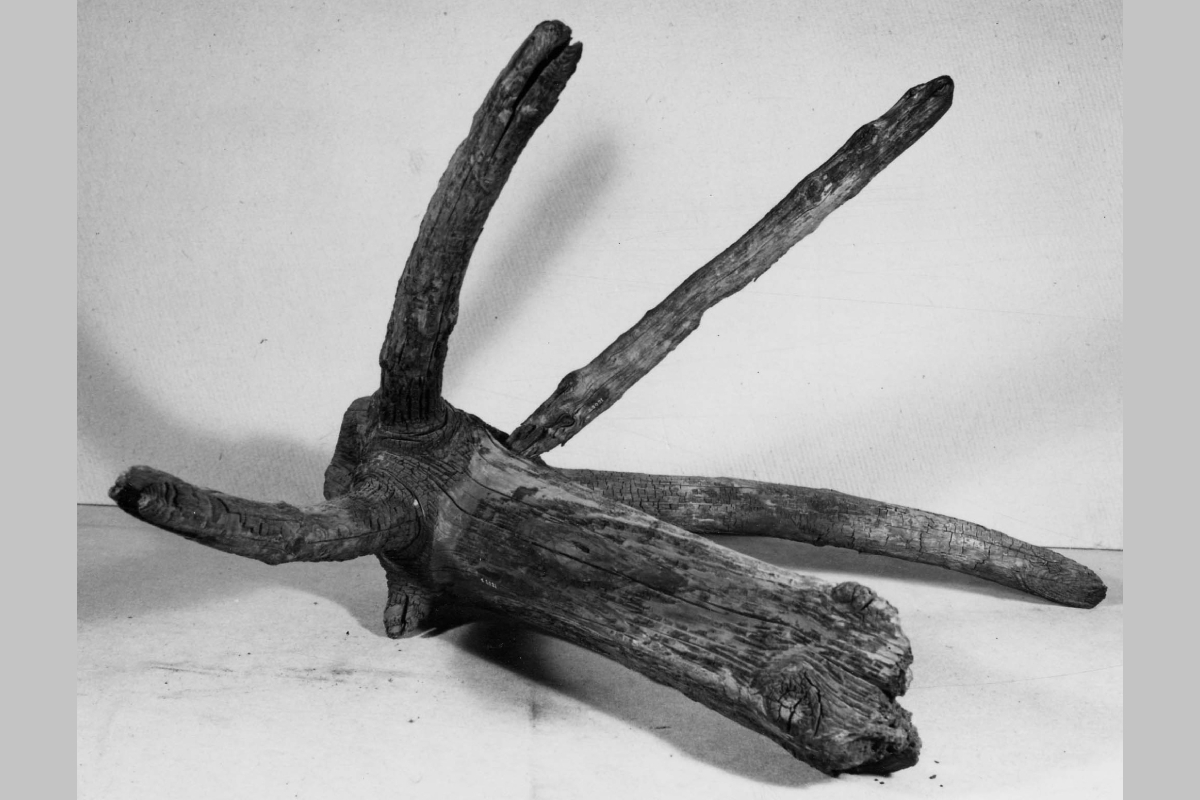
Historically, the name Kraken likely comes from a Scandinavian grapnel anchor known as krake or krabbe, which was crafted from the top of a tree. Source: Sjöhistoriska museet (CC BY-SA 4.0)
A sailor's doom
From the mid-18th century onwards, the Kraken became a widespread phenomenon.
From the safety and perspective of the 21st century, we now know that such a creature does not exist – but that is beside the point. For many sailors during the early modern period, the belief in such a creature was real.
Imagine the existential angst of boarding a ship with goods – say, from Bergen – to head to Iceland, knowing that you would be plying the same waters as this giant creature capable of literally attacking and dragging your ship into the depths below.
The Kraken was said to inhabit the coastal waters off the western coast of Norway.
The first sign of its presence would be a sea of fish swimming away, followed by what appears to be a series of small islands rising from the horizon in the distance.
Seeking refuge from a storm or simply wanting to stretch their legs on dry land, many ships were said to attempt to moor on these islands – only to realize, too late, that this was, in fact, the Kraken slowly rising to the surface.
The tentacles would then appear, which, to the naked eye and from a distance, might even look like the masts of a ship.
Finally, if no unlucky ships were passing by, the Kraken would disappear back below the waves.
However, a giant whirlpool would surround the submerging beast, and sailors were warned to steer clear lest they be sucked into the watery depths to their doom.
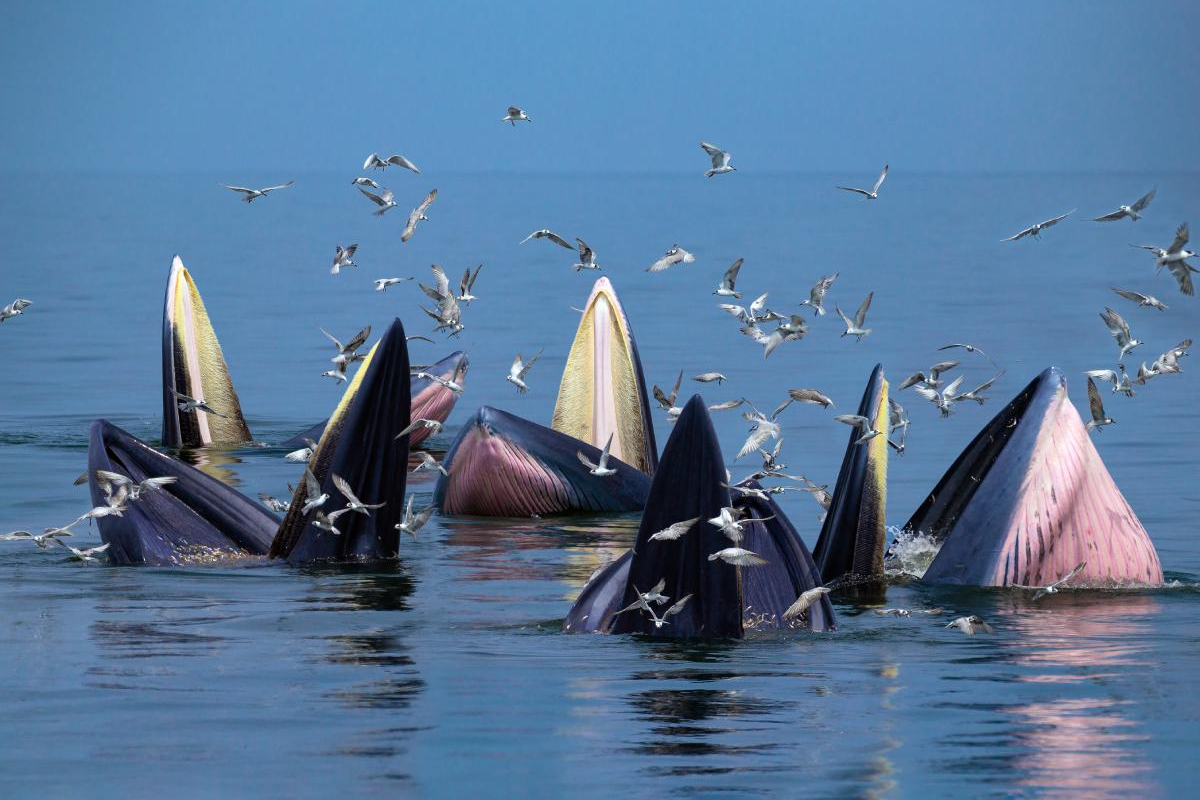
Findings that whales use similar feeding techniques to the Hafgufa’s legendary behavior provide a scientific basis for the Kraken myth, linking it to real-life marine animals. Source: Visual Storyteller / Shutterstock
Recent scientific discovery?
As Tim William Machan writes about in his 2020 book Northern Memories and the English Middle Ages, there is some scholarly debate ongoing about whether the Kraken is inspired by an earlier medieval Icelandic creature, the Hafgufa.
Whilst this creature is not described in any of the Norse sagas associated with the Viking Age, it does appear in the later medieval period in Iceland, a society deeply immersed in Viking lore and legend.
In a mid-13th century text – remarkably focused on politics – this creature is described as a "sea mist" that resembles either a giant whale or a many-tentacled being. Like the Kraken, it could attack and submerge passing ships.
Only last year, this legend was found to have some scientific basis and was proven somewhat true.
Scientists recorded whales in the waters of the Gulf of Thailand that used a technique called "tread water feeding."
They would lie with their mouths open and chew up fish to entice other fish to swim nearby, which matched similar descriptions in the earlier medieval texts.
We know that the Kraken is a mythical creature, but could it have been inspired by the real-life giant squid?
Only in the 21st century have we finally found evidence of what was once thought to be a mythical creature.
Like the Kraken, the giant squid has long tentacles and resides (we believe) in the deepest parts of the ocean.
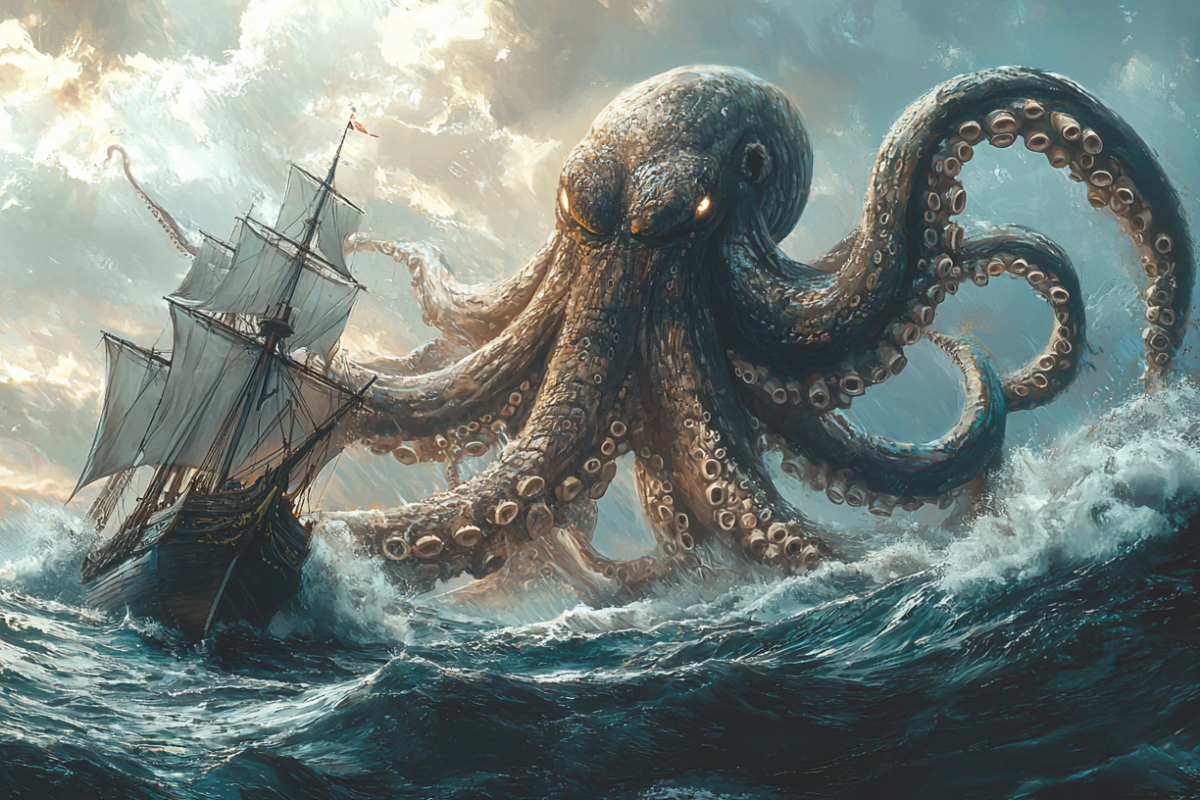
From classic maritime literature to modern films and brands, the Kraken remains a powerful symbol of mythical sea creatures. Source: The Viking Herald
Later cultural and literary depictions
The Kraken did not only captivate the imagination of early modern Europeans.
Over the centuries, various cultural depictions of the Kraken have shaped our understanding of this giant sea creature.
The creature is mentioned in two seminal 19th-century maritime works – Herman Melville's Moby Dick (1851) and Jules Verne's 20,000 Leagues Under the Sea (1870).
Fast-forwarding to our time, Liam Neeson utters the immortal words, "Release the Kraken," in the mythology-themed movie Clash of the Titans, where it is a minor character.
The most notable cultural reference to this sea monster is arguably the name of a popular brand of spiced rum. Drink in moderation, of course – otherwise, you might end up unleashing your own inner (sea) monster!
Whilst the Kraken's origins may very well be in the early medieval period, part of the rich tapestry of the Norse sagas, it has continued to inspire and fascinate people through the centuries.
This is yet another example of the rich cultural legacy that people in Viking societies have bequeathed to us.
For more information on the recent discovery of an ancient sea creature similar to the giant world serpent in Norse mythology, visit The New York Times here.
We get to provide readers with original coverage thanks to our loyal supporters. Do you enjoy our work? You can become a PATRON here or via our Patreon page. You'll get access to exclusive content and early access.
Feel free to reach out to discuss potential stories that may be in the public interest. You can reach us via email at [email protected] with the understanding that the information you provide might be used in our reporting and stories.