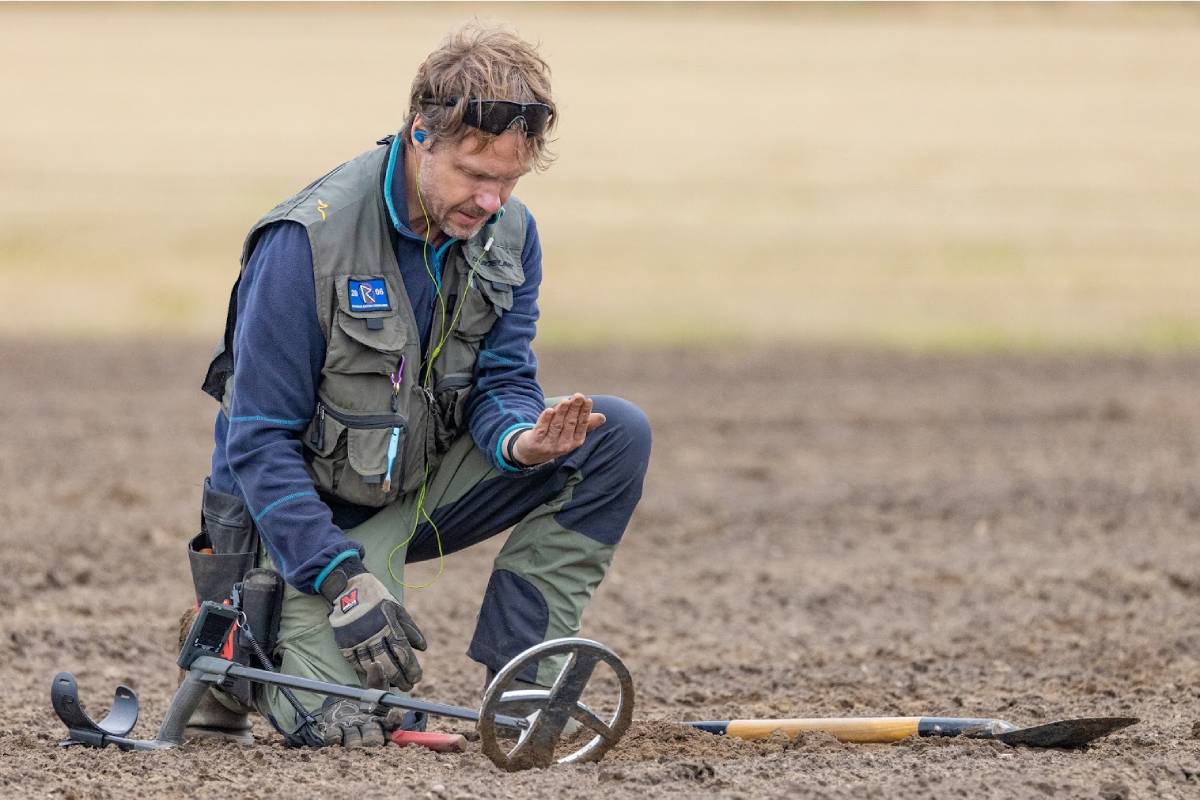


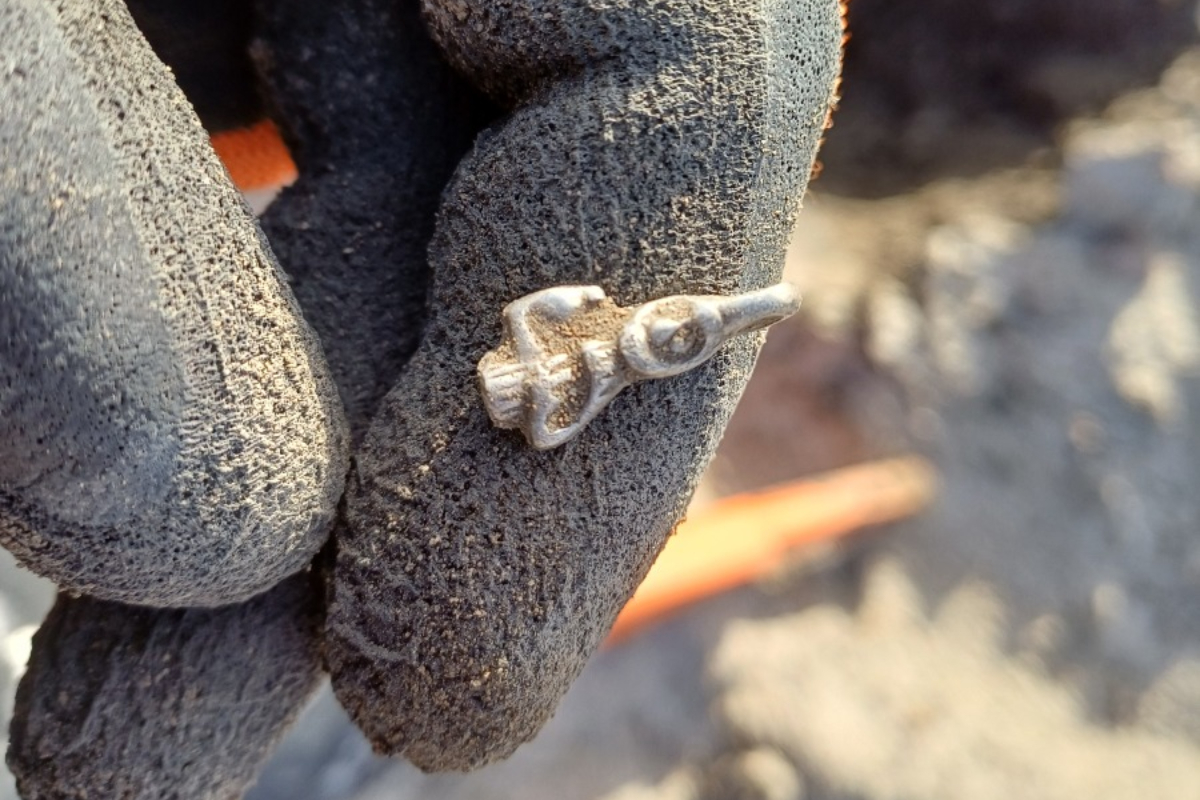
When amateur archeologist and metal detectorist Flemming Willum Petersen began investigating a field on the Danish island of Lolland, he was hoping to find further evidence of a Viking presence in the local area.
What he did not expect, however, was to unearth an incredibly rare artifact that may date to the pre-Viking Age and could have belonged to a powerful local chieftain.
"Something very special"
Metal detecting is, on the whole, a slow, painstaking process, often with little tangible reward. Yet when Flemming began exploring a promising site situated a few miles from Nakskov Fjord earlier this year, he immediately realized it was no ordinary field.
"I found a coin from the 1200s after 15 minutes," he tells us. "By the end of the first day, I had a brooch from the Roman Iron Age and several other coins – it was crazy!"
Naturally, Flemming soon returned to the area to continue his search. "I had been searching the field for a total of around 30 hours when I found the figurine," he says.
"With metal detecting, I'm always digging up trash, like melted aluminum, and the figurine had that kind of color, like a piece of a beer can.
"It was also very small, so at first, I just thought it was a piece of aluminum. But then, as I cleaned it off, I could see that it was something very special, and well, my heart skipped a beat."
"That's how it is! I immediately took some pictures and sent them to a detectorist pal – I just had to tell someone about it!"
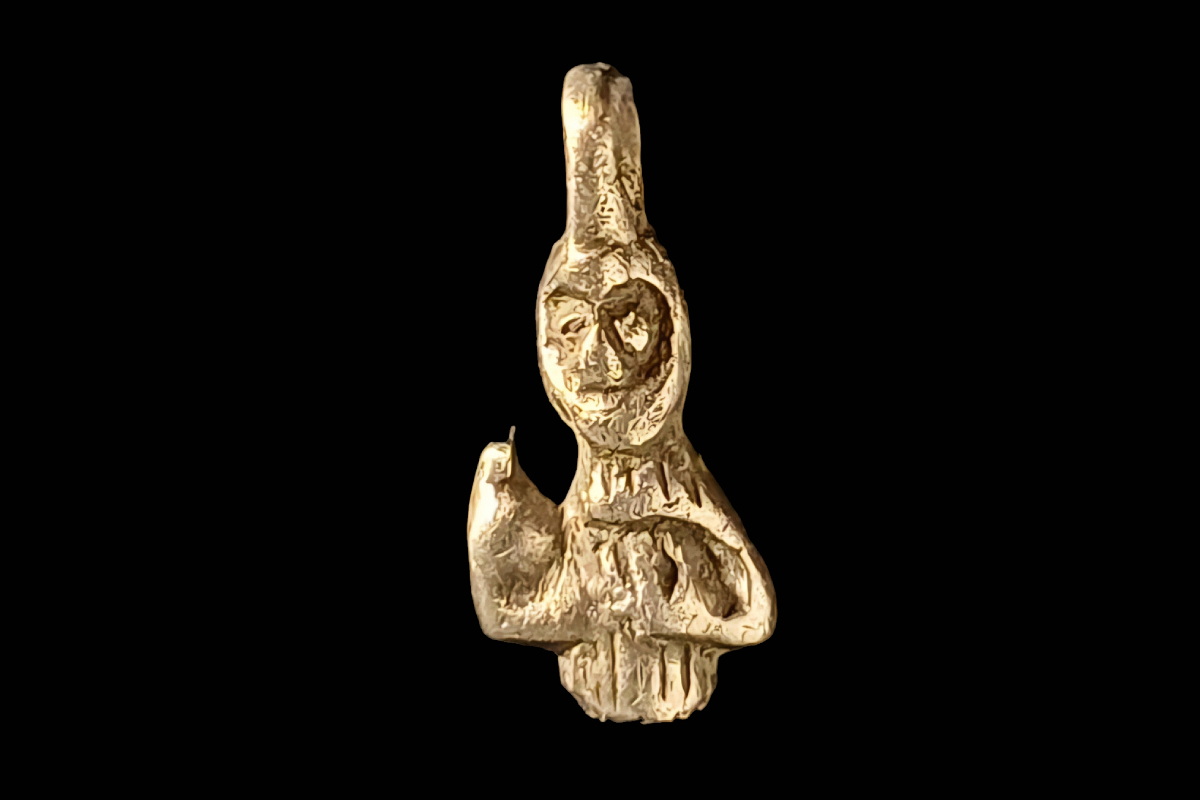
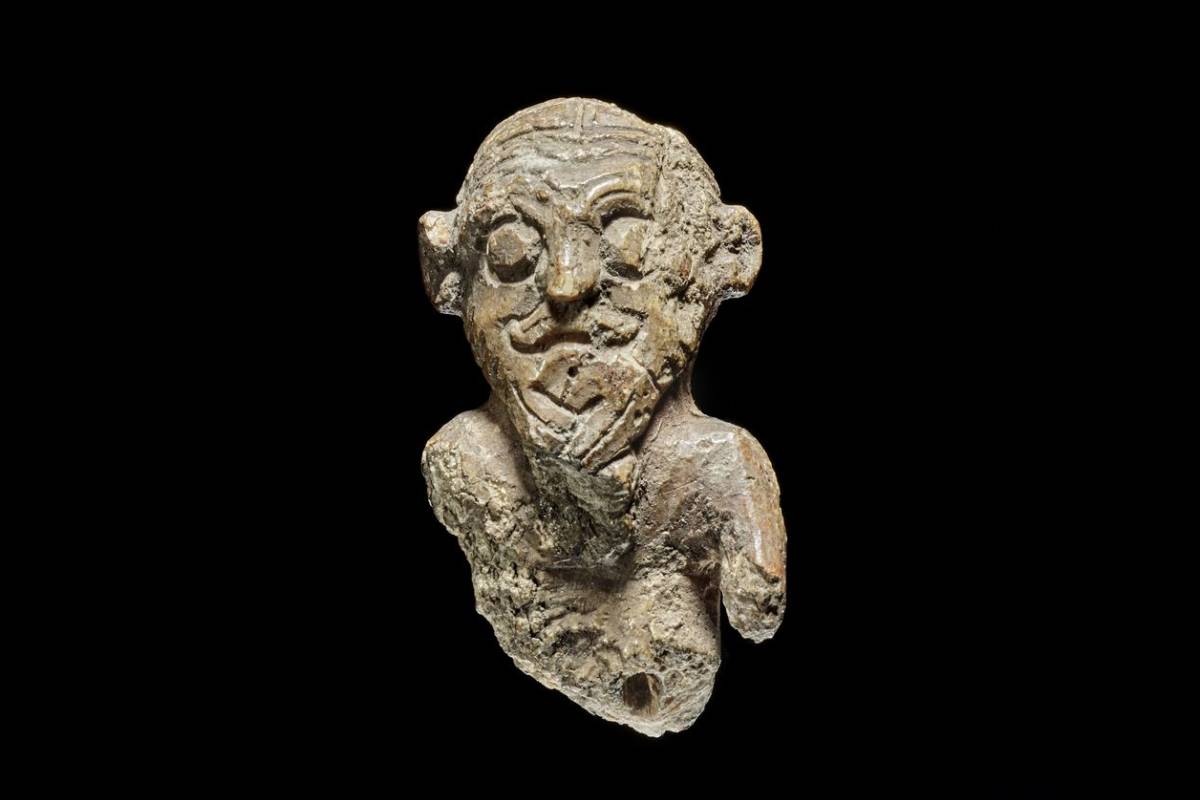
The figurine, dating back to around 700 CE, is believed to be a Norse depiction of a valkyrie or an early pagan deity. Source: Flemming Willum Petersen
Passion and preparation
This was no lucky find, however. Flemming's discovery was the result of years of passionate study, painstaking analysis, and thousands of hours spent exploring the Danish countryside.
"I've been a detectorist for seven years," Flemming tells us. "In 2015, my grandfather bought an old metal detector, and we started playing around with it together."
"We knew someone who had two or three fields where we could try it out, and we had a couple of weekends out there. We found a lot of old crap, but I was hooked!"
"At first, it was just for fun, but I actually studied archeology for a couple of years and am really interested in local history, too, so it gradually became more professional."
"I've done a lot of research in my local area to find the best sites. I base it on things like old settlements, local history, and old maps."
"I drive around a lot for my work. I look at the landscape and try to spot places that would be good for a settlement. I also look at population density and the presence of nobility."
"When all those factors are combined, I ask for permission to search the area. It's time-demanding work, but it pays off."
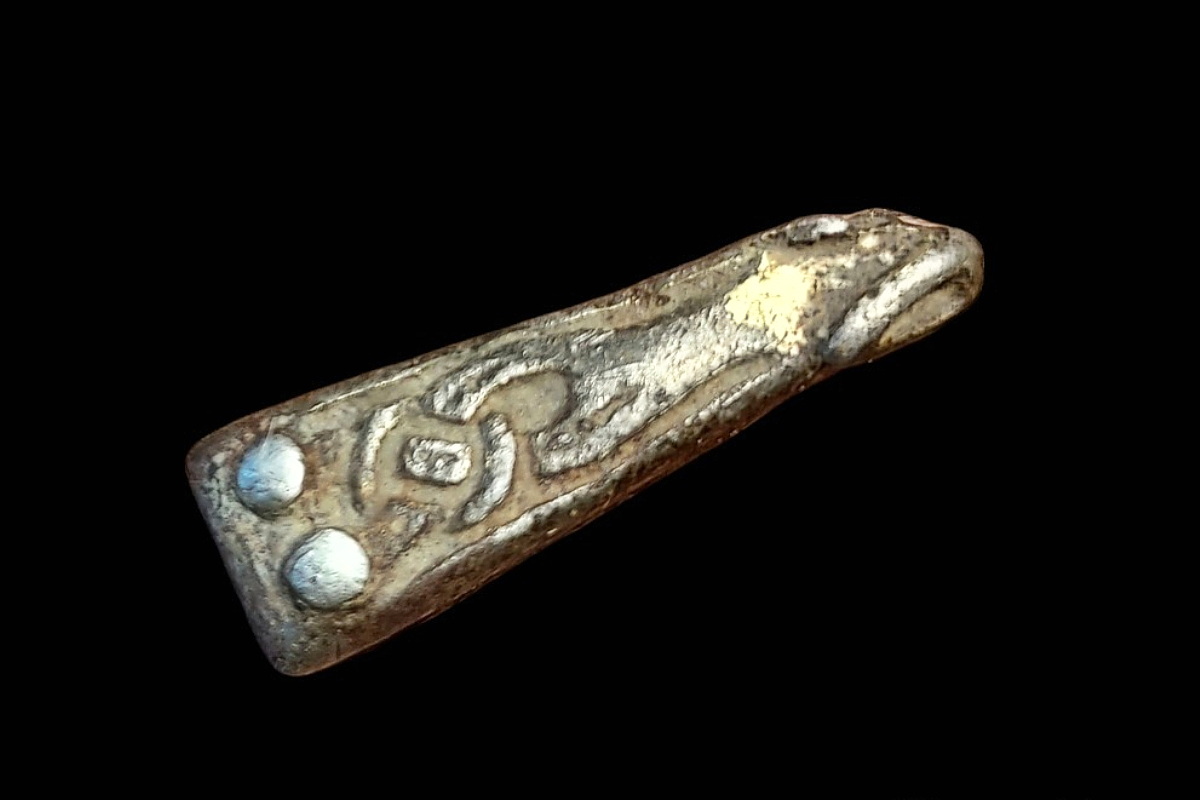
Flemming's discoveries include a silver strap end with runes on the backside found near the trading post. Source: Flemming Willum Petersen
Following the scent
Flemming had already investigated a similar site just a couple of miles down the road, which yielded several finds from the Viking Age, indicating the area may have been some kind of trading post.
After surveying the land further, he was intrigued to check out the second location.
"I live approximately an hour away, but I was born nearby, so the history here interests me because of that personal connection."
"There is an old water passage that used to be part of the fjord, but it's been dry for a couple of hundred years. I found a small spot where there is specifically good soil."
"It is rated on a scale of 1–24, and this one had 23, almost the best quality soil you can have. This was odd, as it was in the middle of nowhere. I drove out there and noticed a small hill, and the soil was darker than the surrounding area."
"I don't want to mention the name, as I prefer to keep it confidential, but the darker soil suggested there may have been some kind of activity there. And this is where I found the figurine."
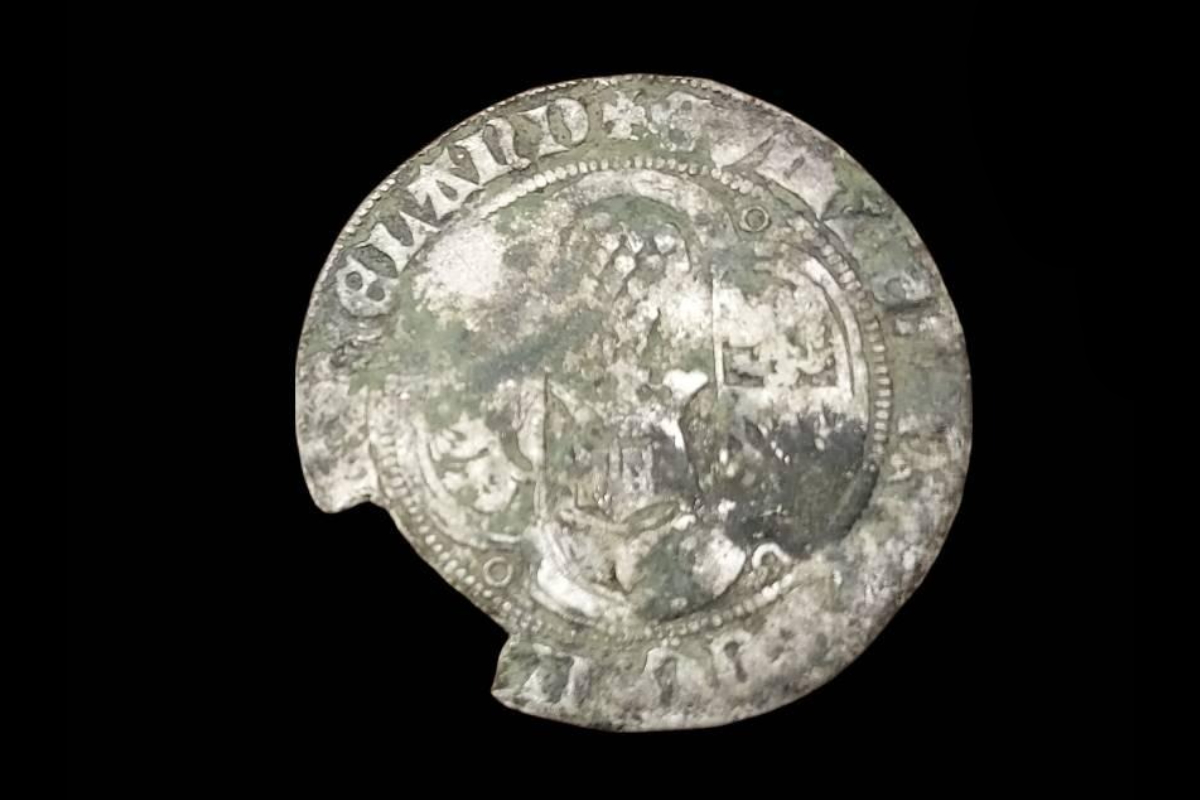
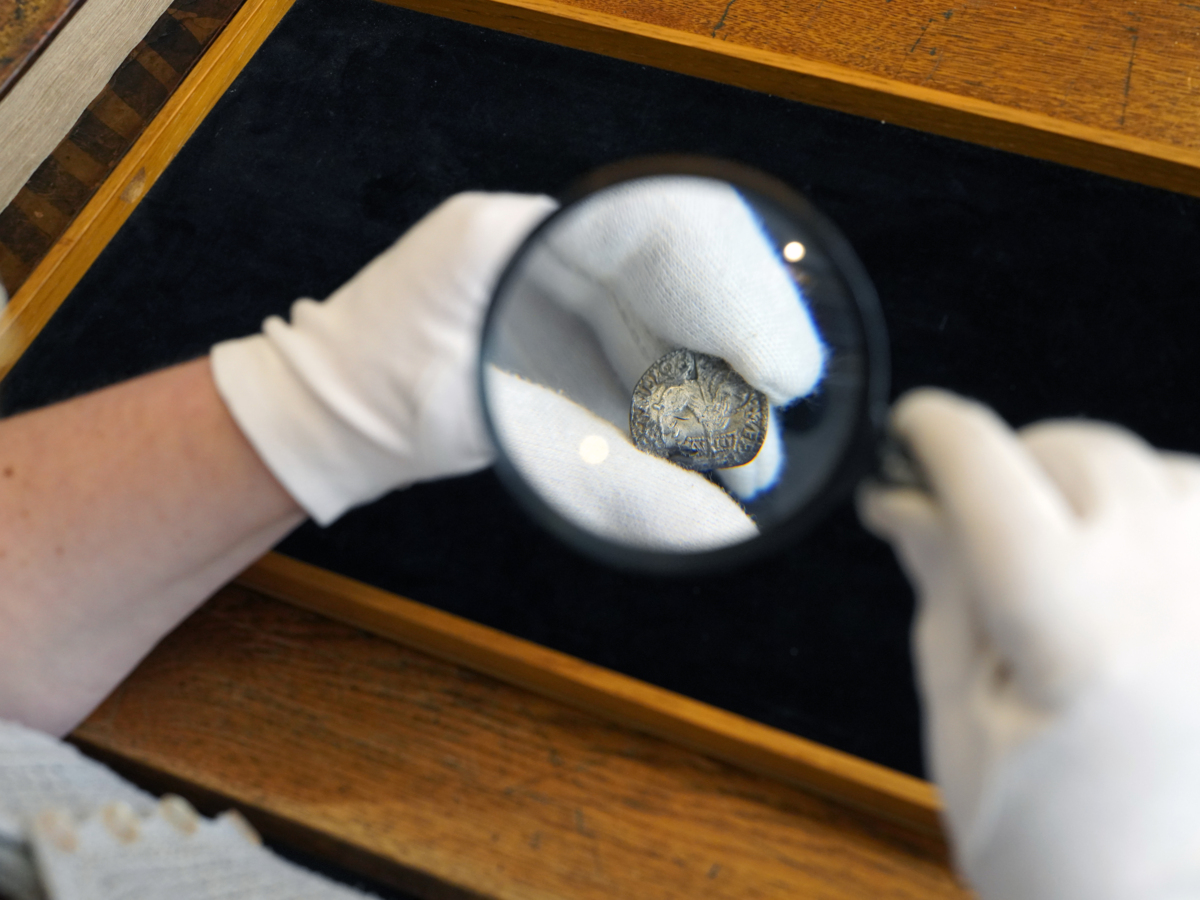
Among Flemming's finds, a Dutch Groot from Nijmegen is notably the only one known to be discovered in Denmark. Source: Flemming Willum Petersen
Theories abound
While some people have suggested the figurine – likely a kind of pendant – depicts Odin, Flemming initially believed it could be an early Christian artifact.
"I could see it might be a depiction of Christ. The face resembles some of the early Christ figures from the year 1000. But when I studied it further, I couldn't decide if it was Christian or an earlier pagan figure."
Flemming submitted the figurine to the Museum Lolland-Falster. There, the archeologist Marie Brinch leaned toward the latter theory.
"She was pretty sure it was 300 years older, from around 700 CE, which would make it a pure Norse figurine."
"This is partly due to the facial features but also because the lower part is in some way similar to the valkyrie figure found in Thune, which dates from around this time."
"Other detectorists I've spoken to believe that it could actually be a valkyrie," Flemming continues.
"The hole where the string would have been passed through is worn at the bottom like it has been worn upside down, and this was also the case with the valkyrie from Thune."
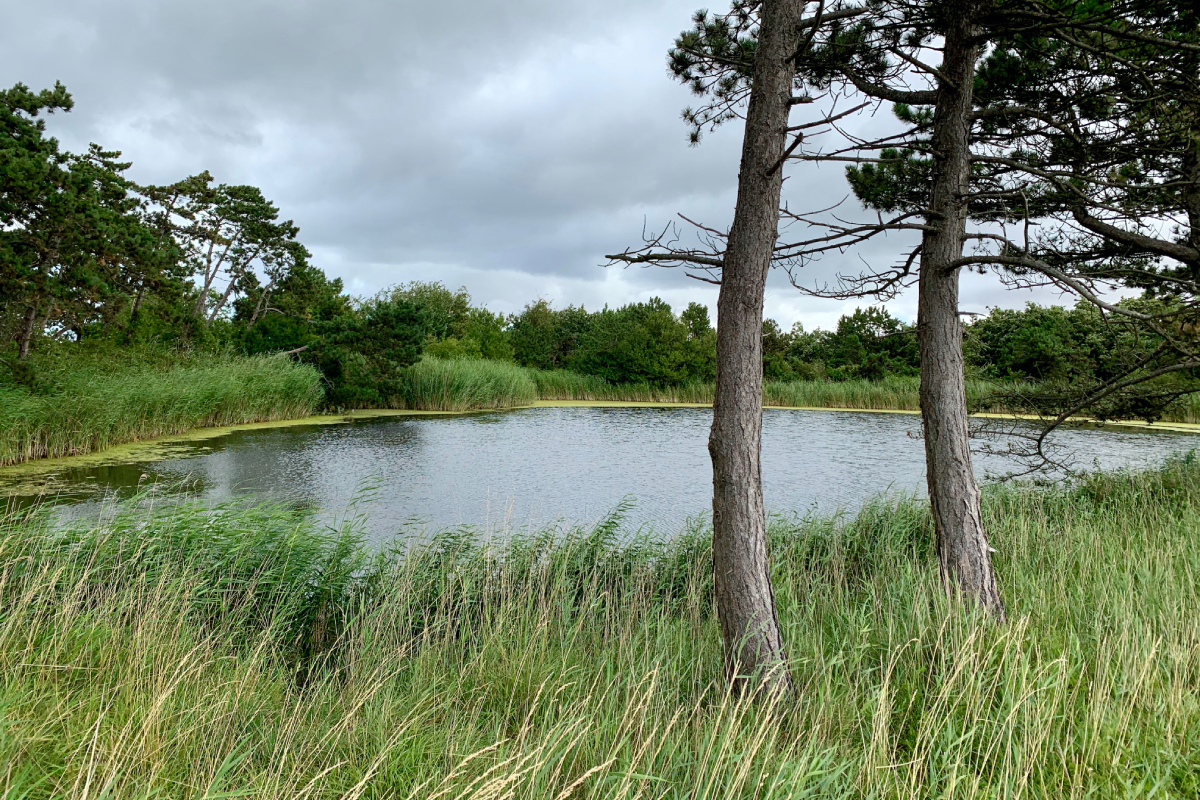
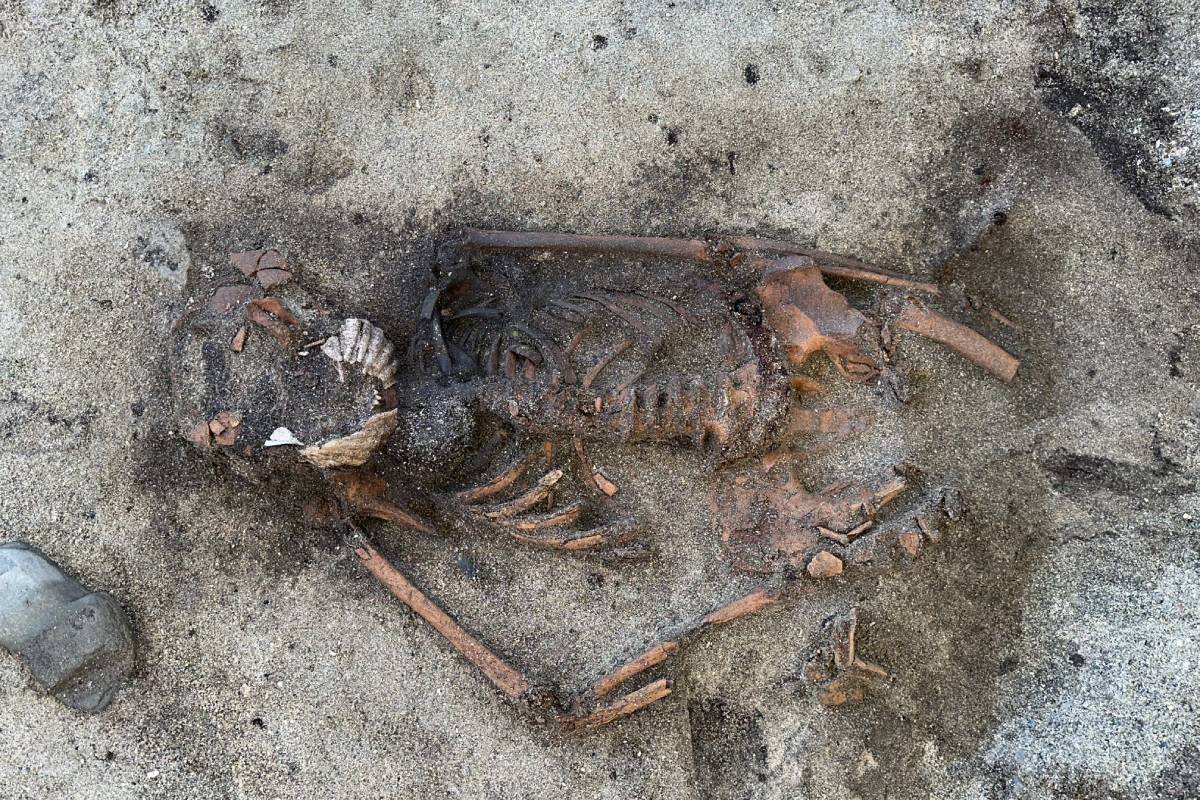
The field on Lolland Island where Flemming discovered the figurine may have been a Norse trading post, based on surrounding settlement evidence. Source: Orf3us
Traces of a settlement emerge
Later this year, the Museum Lolland-Falster will send the figurine to the National Museum of Denmark for further analysis.
"I hope to have some kind of qualified answer from someone who is an expert in this era. But it's hard to be sure," Flemming admits. "This group of finds is so small. There are maybe five figurines in total that have been found."
Flemming believes the figurine could have been in the possession of an important local leader. "It might belong to a chieftain or some kind of nobility," he says.
"My personal theory is that the person in power was living here, or maybe closer to the trading area, the marketplace. They could have controlled the trading post, and there is also a suggestion of a military shipping area."
"To get to the chieftain's residence or village, you would have to sail further into the fjord from the trading post. You would have to moor your ship to get to the chieftain's residence at the narrowest section of the waterway."
"Traces of bricks from a building – possibly a tower – have also been found on the other side of the narrowest spot."
"This would make it impossible to pass through the strait or moor your ship at the chieftain's house without the people in the village knowing about it."
More investigations are on the way
Flemming plans to continue his work on the site in the coming months. "I think the location of Lolland is really interesting," he says.
"It's right in the middle of all the trading routes from the Kievan Rus, the Netherlands, and Germany, with Norway to the north. So it's in the exact area where everybody was sailing in those times."
"There have been lots of interesting finds in this area. I have only been searching the trading post site for two years and found 200 coins from the medieval era and earlier."
"This includes a Dutch Groot coin from Nijmegen, a type that has never been found in Denmark before, as far as I know. I've also found small weights and pieces of silver," Flemming continues.
"The museum said they are 100% sure it's some kind of trading station. But if this is true, then there had to have been a central power that controlled the area. I hope that is what I am about to find."
We get to provide readers with original coverage thanks to our loyal supporters. Do you enjoy our work? You can become a PATRON here or via our Patreon page. You'll get access to exclusive content and early access.
Feel free to reach out to discuss potential stories that may be in the public interest. You can reach us via email at [email protected] with the understanding that the information you provide might be used in our reporting and stories.