

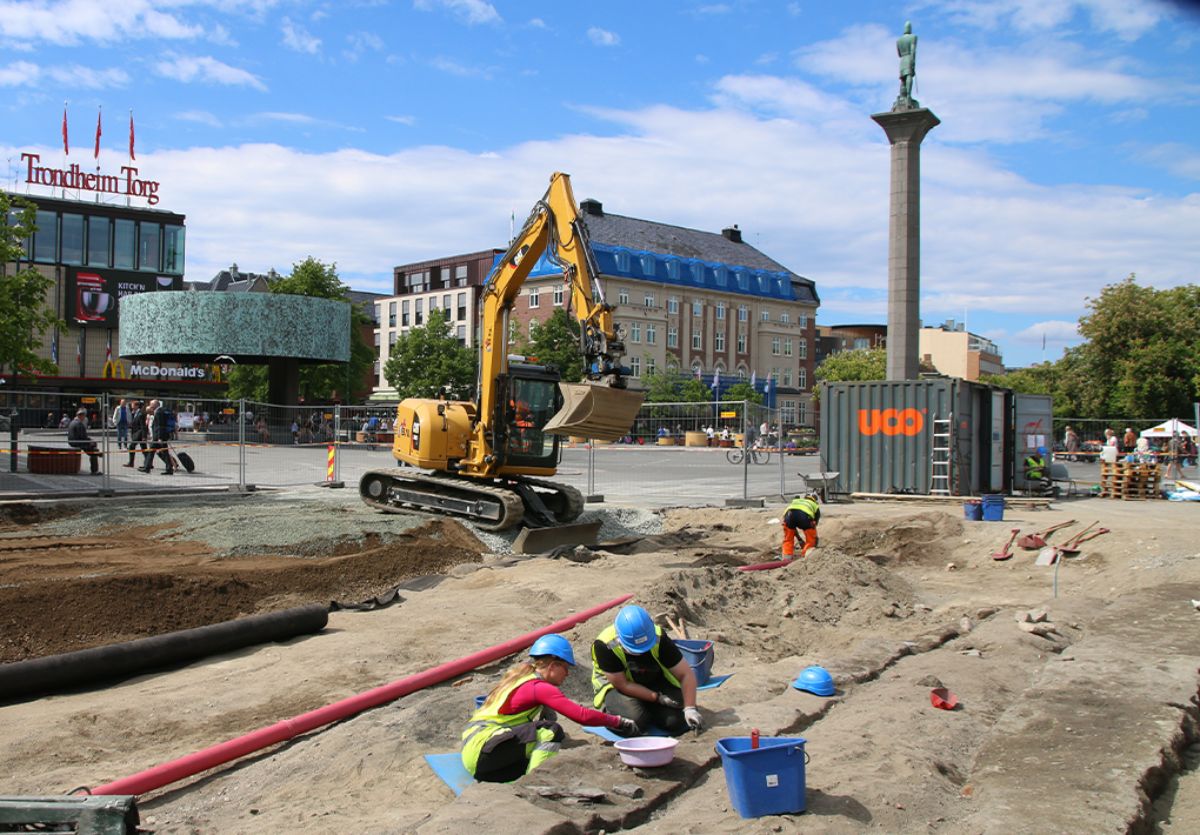
The square in Trondheim was built in 1681, but the area close to it has been in use since settlement began in the early Iron Age.
Therefore, the archaeological finds from the city center – made during the excavations and investigations between 2014 and 2020 – serve as a type of cross-section of Trondheim's long history, according to the Norwegian Institute for Cultural Heritage Research (NIKU).
In order to find out more about the book in which the findings are collected and put into the proper historical context, named Torvet i Trondheim, The Viking Herald reached out to Julian P. Cadamarteri, one of its editors.
Together with Ian Reed, Cadamarteri led the excavations at Torvet (Trondheim's central square) on behalf of the Norwegian National Archives and Trondheim Municipality.
TVH: In your expert opinion, why is the book important?
JPC: The book is important as it highlights different aspects of the history of Trondheim by looking at a site that has been in use from the time the area became dry land until today, thus showing a complete timeline through the history of Trondheim from the early Iron Age till today.
TVH: What are the most interesting findings of the excavation and analysis carried out in the Trondheim city center between 2014 and 2020?
JPC: The two most important finds from the excavations are ditches showing the portioning of the cultivated areas outside of the Viking Age and medieval settlement providing new information on the organization of the infield in the close vicinity of the medieval city.
Also, the investigation of the 17th-century city square, which was an important part of the new town plan following the fire in 1681 but (as the archaeological excavation shows) didn't develop into a proper part of the city until the late part of the 18th century.
It was used as a dumping ground for waste material in the earliest period.
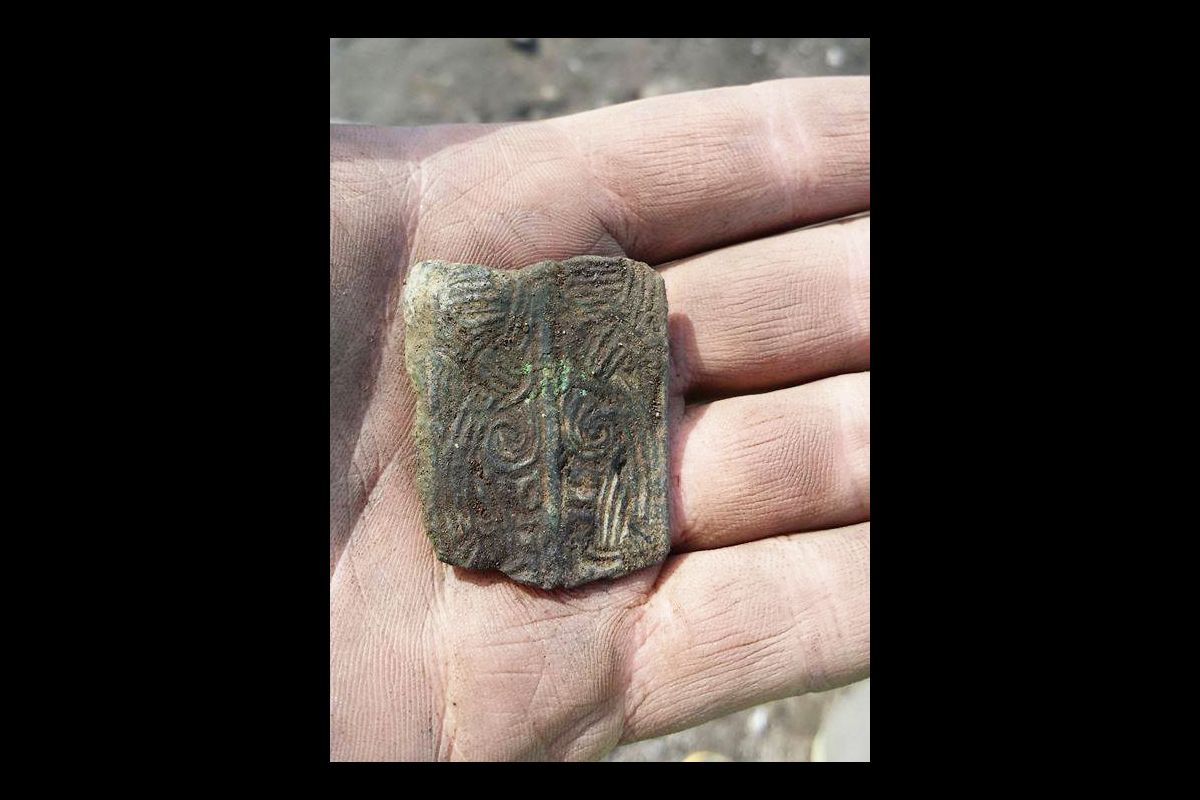
Part of a 9th or 10th-century brooch discovered on the site. Photo: NIKU
TVH: What are the oldest findings made in the 2014-2020 period?
JPC: The oldest finds from the excavation date to the period which is called the early Iron Age in Norwegian archaeology.
More precisely, they are cooking pits dated to the first centuries AD.
TVH: Where can people purchase the book?
JPC: The book can be ordered from the publisher here or purchased in Norwegian bookstores.
We get to provide readers with original coverage thanks to our loyal supporters. Do you enjoy our work? You can become a PATRON here or via our Patreon page. You'll get access to exclusive content and early access.
Feel free to reach out to discuss potential stories that may be in the public interest. You can reach us via email at [email protected] with the understanding that the information you provide might be used in our reporting and stories.