

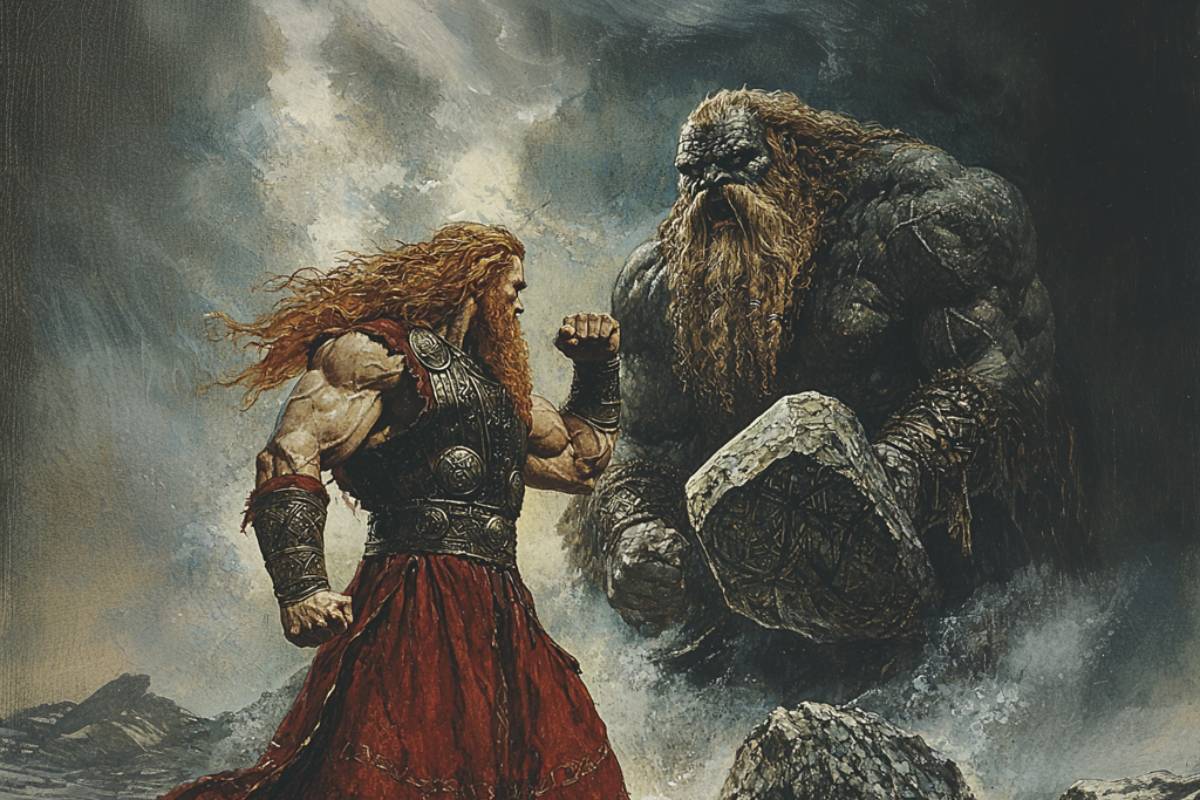
Surely one of the most iconic symbols of the Viking Age, or the stories that people who lived in this age told one another, is the mighty and magical hammer of Thor.
Yes, the Norse God of Thunder was renowned for his martial skill, but he certainly was no peacemaker. He loved a good old-fashioned Viking-style brawl and bust-up, endearing him to countless hordes of Vikings (and people in Viking societies), and even those with Viking spirit in the modern age.
And what good Viking deity would be complete without a magical weapon that can smite enemies from here to eternity?
Thor, renowned for his strength as much as his feistiness, has surely the most badass accessory in the form of the magical hammer, Mjöllnir.
Said to be fashioned by dwarves and able to return to Thor's hand no matter how hard or far he threw it, the hammer became synonymous with the Norse God of Thunder himself.
It also left a huge impression on people in Viking societies who worshipped Thor, as we have countless discoveries of small hammer-shaped pendants uncovered in archeological digs.
These pendants, archeologists believe, were used as a sort of celestial insurance policy to ensure that Thor protected them.
As Graeme Davis discusses in his 2013 book, Thor: Viking God of Thunder (available on Amazon here), while nowadays these tales of the Norse gods are relegated to "rural customs and folklore," they were, in the Viking Age, part of a diverse set of spiritual and religious beliefs.
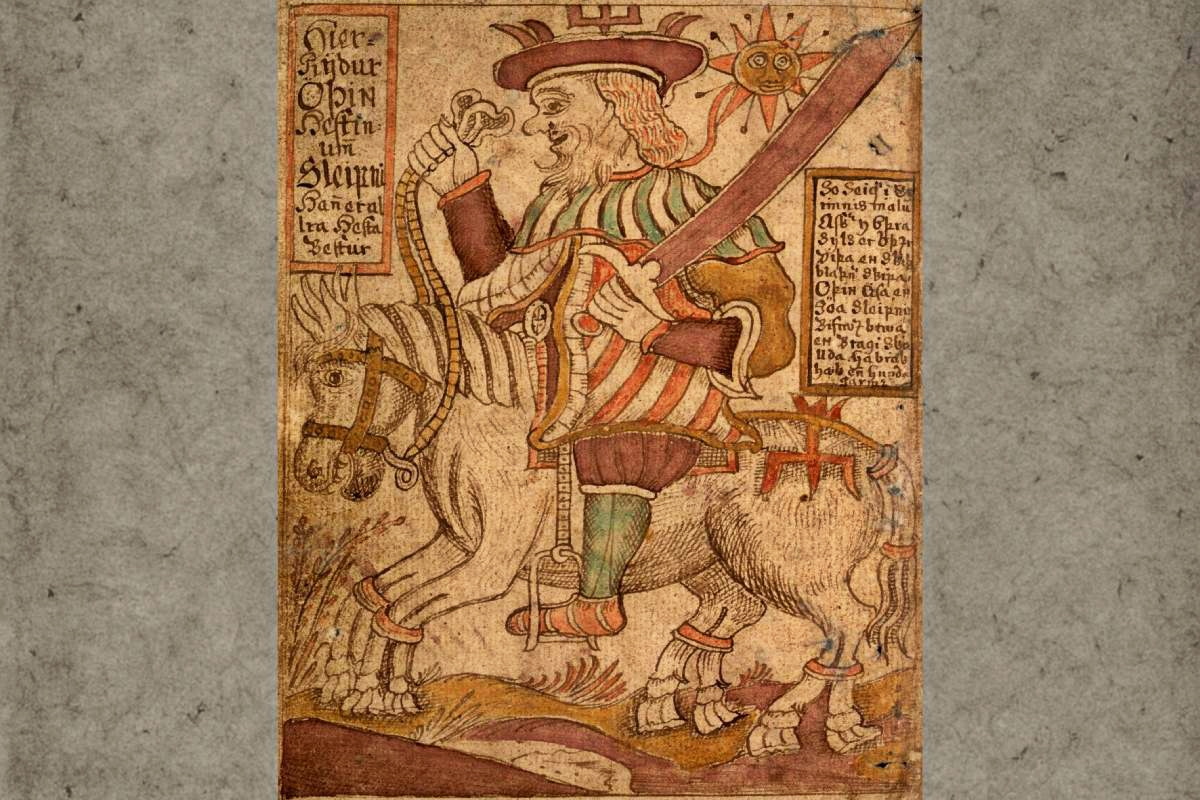
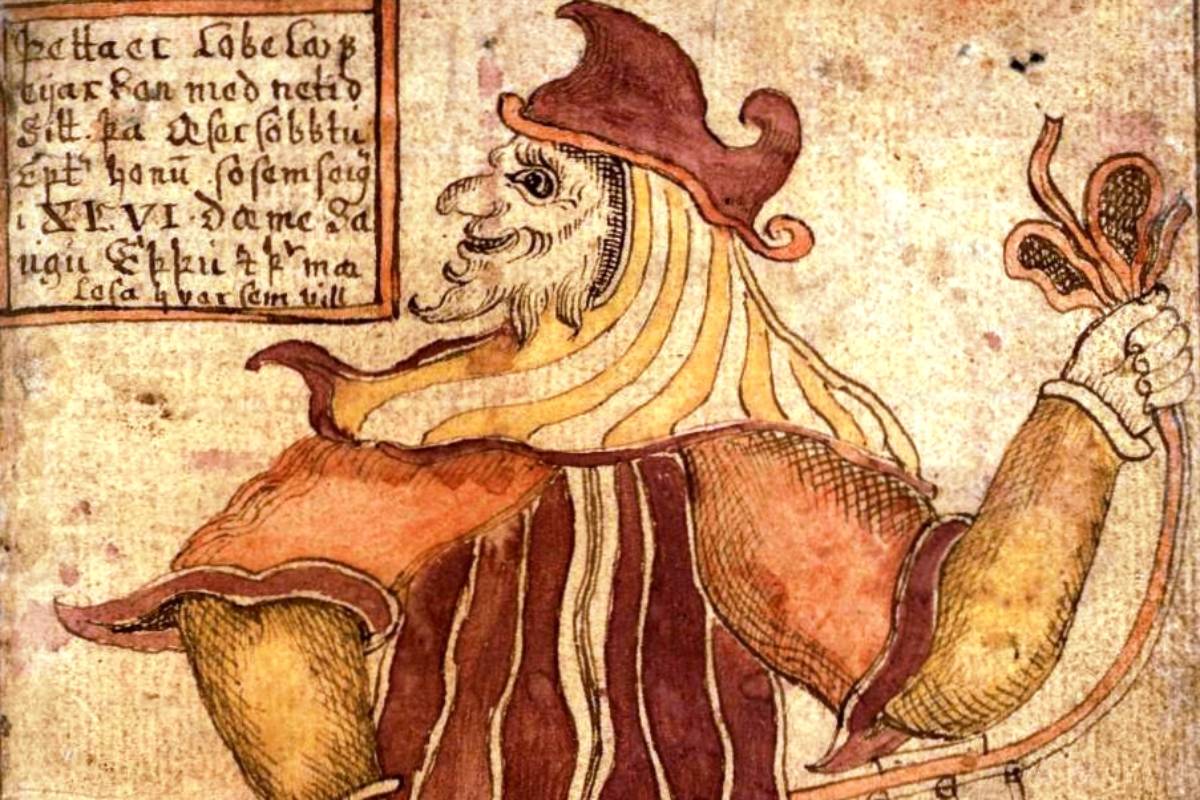
This 18th-century Icelandic manuscript shows Odin riding Sleipnir as he travels to Jötunheim where he meets the giant Hrungnir. Illustration: Public domain
Sagas
Yet it is not just in the ground that we see the importance of Thor, but also in the memories of people in Viking societies.
The Norse sagas—which were once oral tales transcribed in the later medieval period, long after the last Viking ship sailed—feature countless stories of Thor battling and brawling against every type of magical and mythical creature and deity.
One of the most enthralling is his encounter with a jötunn named Hrungnir, whose name ominously translates into English as "The Brawler."
We turn to the second half of the Prose Edda, compiled by 13th-century CE poet and politician Snorri Sturluson. Using an online version based on a 1916 English translation by Arthur Gilchrist Brodeur, we find a dialogue between the Norse gods Ægir and Bragi, titled Skáldskaparmál.
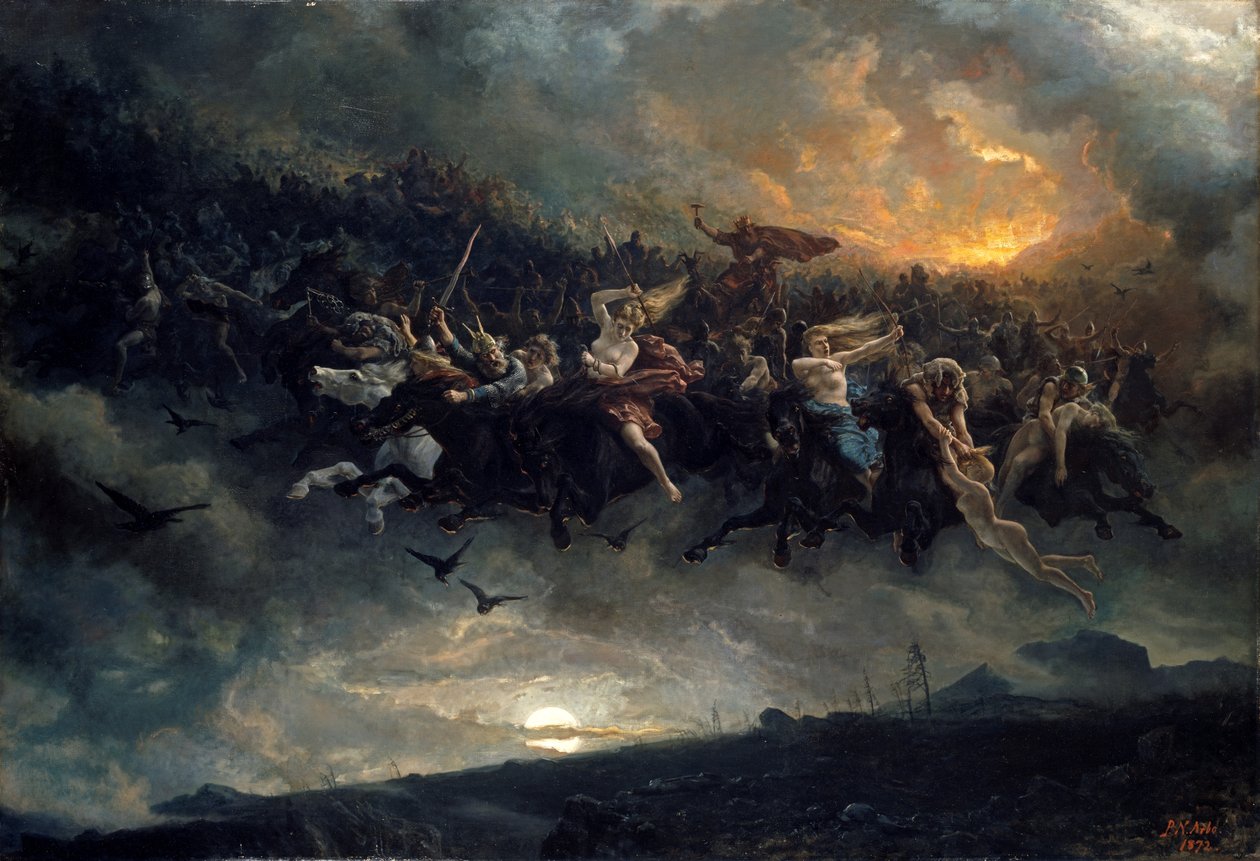
In this dialogue, they tell of the time when the mighty Norse All-Father rode his eight-legged steed, Sleipnir, into Jötunheim, the realm of the jötnar and one of the nine magical realms of the Norse cosmos.
It was here that Odin found Hrungnir, who also rode a steed (translated as Gold-Mane in English), but one that did not ride through air and water like Sleipnir.
Odin fancies himself a little and then places an unusual bet where he:
"...would wager his head there was no horse in Jötunheim that would prove equally good. Hrungnir answered that it was a good horse, but declared that he had a much better-paced horse which was called Gold-Mane." [Skáldskaparmál, Chapter XVII]
Now, all this boastful exuberance by Odin caused Hrungnir to get a little miffed, and off the two of them raced. However, it was soon clear that Sleipnir was the superior horse, yet Hrungnir did not give up.
He kept on riding until he reached the gates of Asgard, the mythical home of many of the Norse deities. Despite his loss, he is welcomed by the Norse gods into the halls of Asgard for beverages and general merriment. However, he soon outstays his welcome.
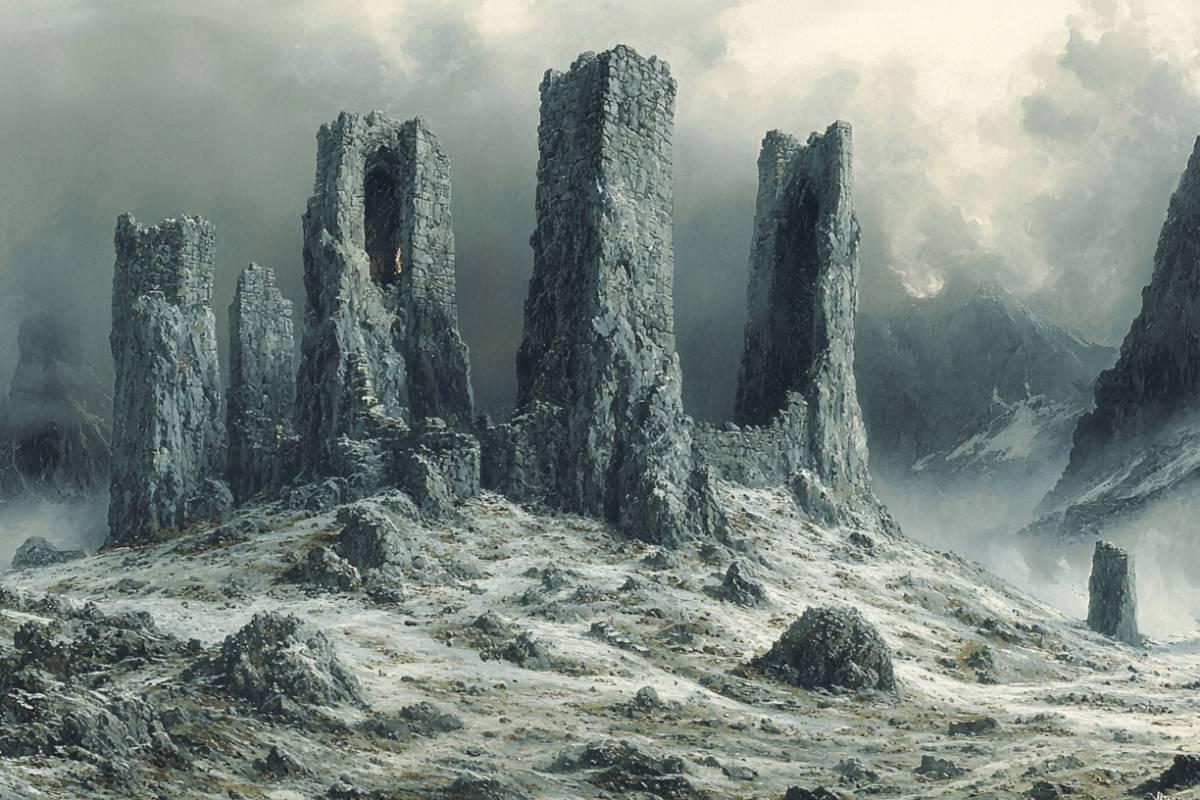
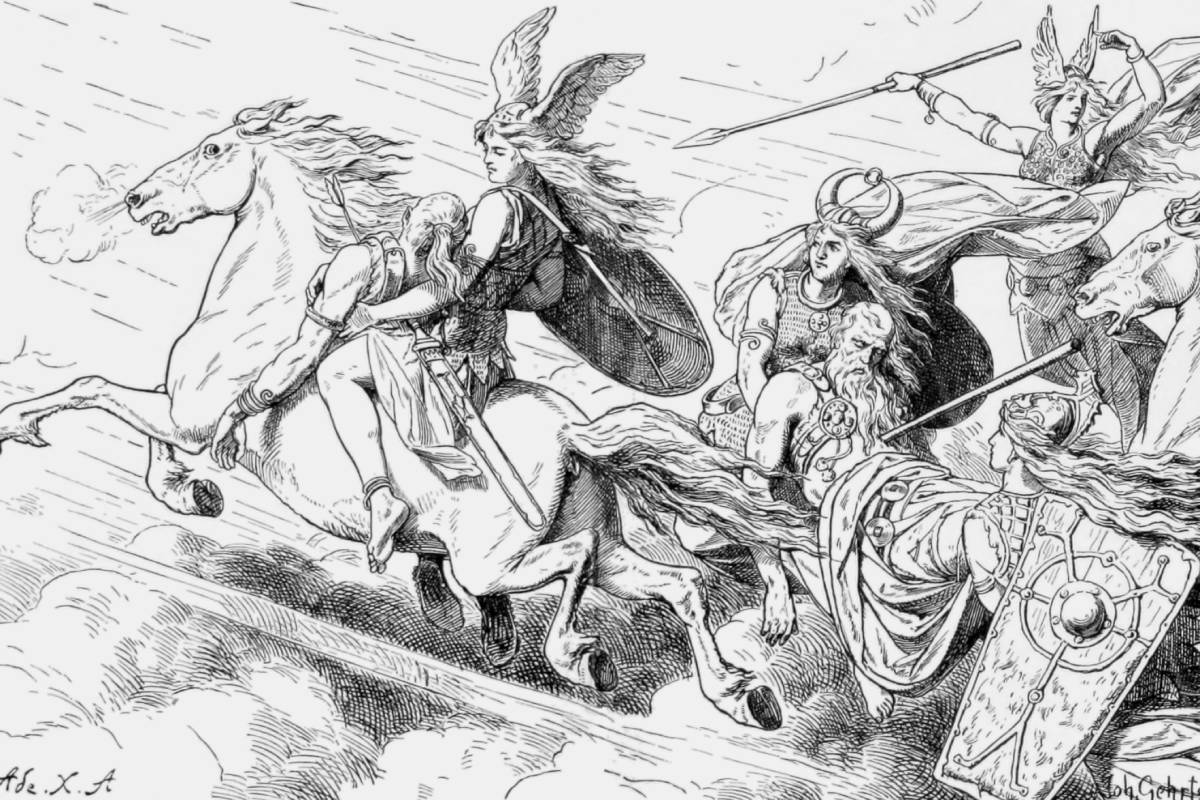
In Norse myth, Grjótúnagard is the site in Jötunheim where the gods and jötnar agreed to a formal duel between Thor and Hrungnir. Illustration: The Viking Herald
Not a hospitable guest
Now, despite being invited into the realm of the Norse gods, we find that Hrungnir had a very ungodly manner.
He barked orders that drink be brought to him and even dared to drink from one of Thor's flagons! Soon, he became very drunk and—as sometimes is the case when you've had one too many flagons of booze—extremely obnoxious.
He claimed that,
"...he would lift up Valhall and carry it to Jötunheim, and sink Ásgard and kill all the gods, save that he would take Freyja and Sif home with him. Freyja alone dared pour for him; and he vowed that he would drink all the ale of the Æsir. But when his overbearing insolence became tiresome to the Æsir, they called on the name of Thor." [Skáldskaparmál, Chapter XVII]
Is there anything worse, dear reader, than throwing a party, inviting a stranger to drink with you, and then listening to their drunken boasts about how they're going to kill all your other guests?
Needless to say, Thor arrives and is less than happy. He bursts into the hall,
"...brandishing his hammer, and he was very wroth, and asked who had advised that these dogs of giants be permitted to drink there..." [Skáldskaparmál, Chapter XVII]
The two get into a verbal stoush, and despite Thor wanting to wallop him then and there, the two enemies agree to a one-on-one fight.
When Hrungnir gets back to Jötunheim, the other giants realize that this may be a one-sided contest, and they really would rather not risk their most feared friend falling.
The giants group together and,
"...made a man of clay at Grjótúnagard: he was nine miles high and three broad under the armpits; but they could get no heart big enough to fit him, until they took one from a mare." [Skáldskaparmál, Chapter XVII]
Now, a clay giant with a horse's heart sounds... weird. However, they also decided that they would fashion clay weapons for this boulder brawler as
"His head also was of stone; his shield too was stone, wide and thick, and he had the shield before him when he stood at Grjótúnagard and waited for Thor. Moreover, he had a hone for a weapon, and brandished it over his shoulders, and he was not a pretty sight. At one side of him stood the clay giant, which was called Mökkurkálfi..." [Skáldskaparmál, Chapter XVII]
So here we have a clay warrior fashioned by giants said to face the Norse God of Thunder along with Hrungnir.
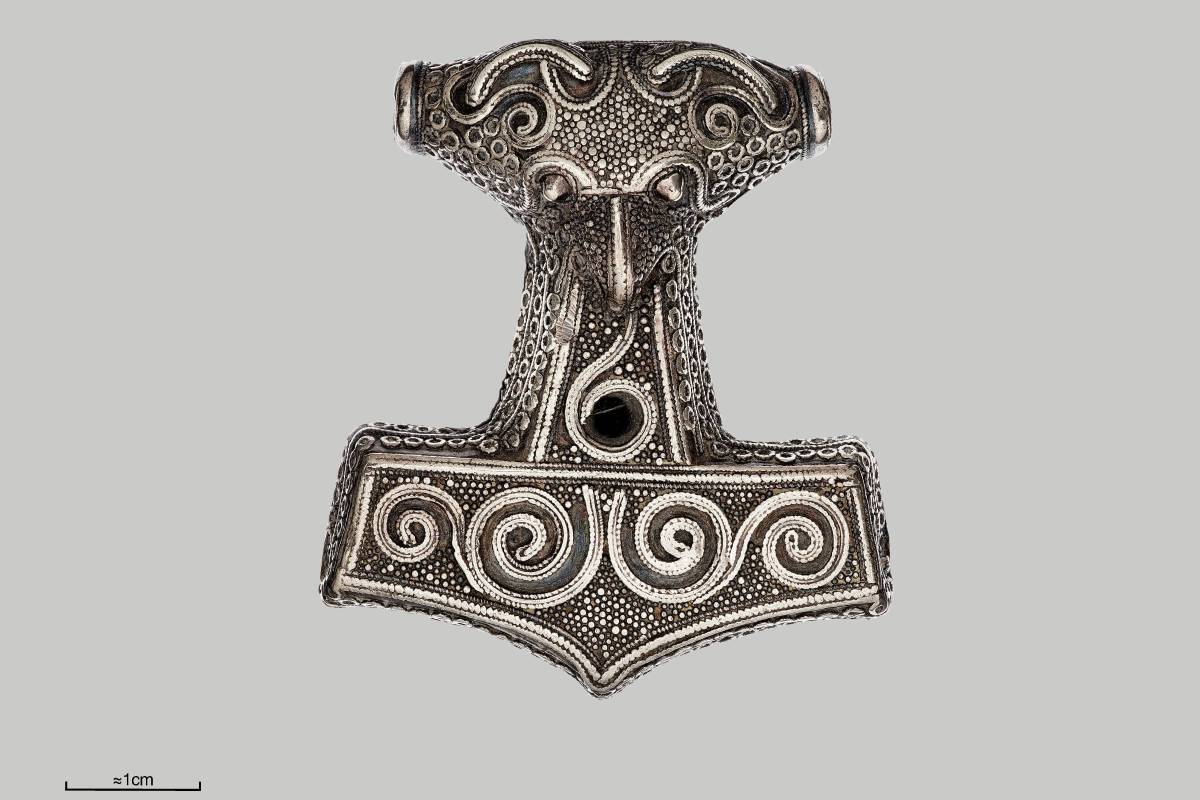
A Viking Age silver pendant representing Thor's hammer, commonly known as the Skåne hammer. Photo: Ola Myrin / Statens historiska museum (CC BY-SA 4.0)
The fight and a giant headache
Whilst Hrungnir has a clay friend to help him, assisting Thor in this brawl is Thjálfi.
The two teams face off against each other, and after a bit of trash-talking by Thjálfi, the fight begins. As expected, Mökkurkálfi is finished off rather easily, or as the story describes, "he fell with little glory."
Yet Hrungnir appears to be a trickier foe, as he is armed with a giant whetstone. He throws it at Thor, but it is blocked by that mighty and magical hammer, Mjöllnir:
"...it struck the hammer in flight, and the hone burst in sunder: one part fell to the earth and thence are come all the flint-rocks." [Skáldskaparmál, Chapter XVII]
In case you were wondering, a whetstone being hurled at a magical hammer wielded by the Norse God of Thunder is the exact origin of flint. This explanation is slightly more poetic than scientific.
The fight continues, and here we find the fatal coup de grâce where,
"...the hammer Mjöllnir struck Hrungnir in the middle of the head, and smashed his skull into small crumbs." [Skáldskaparmál, Chapter XVII]
However, the great giant's whetstone was lodged in Thor's head—a final attack from beyond the grave. Eventually, the giant whetstone is only dislodged thanks to the help of a bit of seiðr, the magic that people in Viking societies held in such high regard.
To fix this giant headache (pun intended), Thor goes to visit
"...the wise woman who was called Gróa, wife of Aurvandill the Valiant: she sang her spells over Thor until the hone was loosened." [Skáldskaparmál, Chapter XVII]
Here, as Dean Kirkland discusses in his 2024 book, Seiðr Magic: The Norse Tradition of Divination and Trance (available on Amazon here), is yet another example of a "vague" account of seiðr being practiced in the Norse sagas.
Regardless of exactly how she worked her magic, the magic does indeed work, and the whetstone is removed. Thor then casts the whetstone into the heavens, thus ending the tale of his fight with Hrungnir.
Bloody but entertaining
What, then, can we make of this tale of divine strength, wrath... and whetstones?
Well, it underscores the importance of Thor as the protector of Asgard, fending off dangers and threats—including boorish house party guests.
It also helps to highlight the weaving theme of order and chaos, and their fatalistic dance with one another, throughout the rich tapestry of the Norse sagas.
For people in Viking societies, renowned for their violent streak, the story of Thor's bloody grapple with Hrungnir was the best kind of entertainment.
For the most recent discovery of a Mjöllnir pendant, visit Live Science here.
We get to provide readers with original coverage thanks to our loyal supporters. Do you enjoy our work? You can become a PATRON here or via our Patreon page. You'll get access to exclusive content and early access.
Feel free to reach out to discuss potential stories that may be in the public interest. You can reach us via email at [email protected] with the understanding that the information you provide might be used in our reporting and stories.