

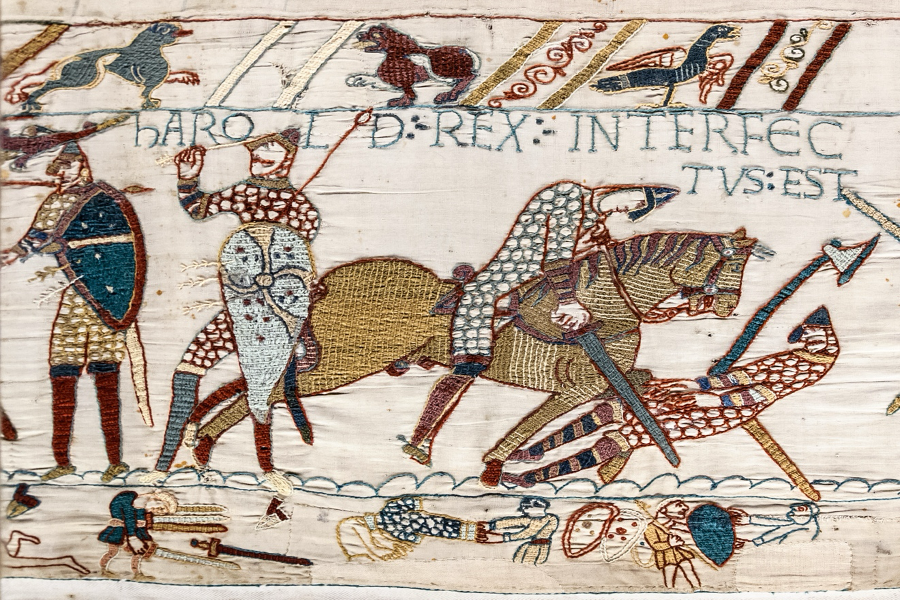
It appears the Battle of Hastings is having a bit of a moment this year. The Bayeux Tapestry, perhaps the most beautiful piece of medieval propaganda ever constructed, which details the events surrounding the Battle of Hastings, is set to cross the English Channel to go on display at the British Museum this September.
If this isn’t enough to sate your medieval appetite, we have fresh news concerning this legendary clash that took place almost a millennium ago in 1066 CE. Widely regarded as the most consequential battle in English history, the Battle of Hastings was the bloody finale of Anglo-Saxon England and the fiery birth of its Norman subjugation.
As Michael John Key writes about in his 2022 book, The House of Godwin: The Rise and Fall of an Anglo-Saxon Dynasty, the Battle of Hastings “looms large...in the closing years of Anglo-Saxon rule across England and remains one of the most defining moments in English history.”
It would be easy to assume that the battle and the events surrounding it, which are beautifully displayed on the famous tapestry (technically an embroidery), have been studied relentlessly and there is nothing left to be discovered. Yet Professor Tom Licence of the University of East Anglia recently announced that the traditional history of the Battle of Hastings that we all know and love may have been based upon a mistranslation and subsequent layers of interpretation down the centuries.
Before we delve into the Professor’s new research, let us remind ourselves about the events leading up to the battle.
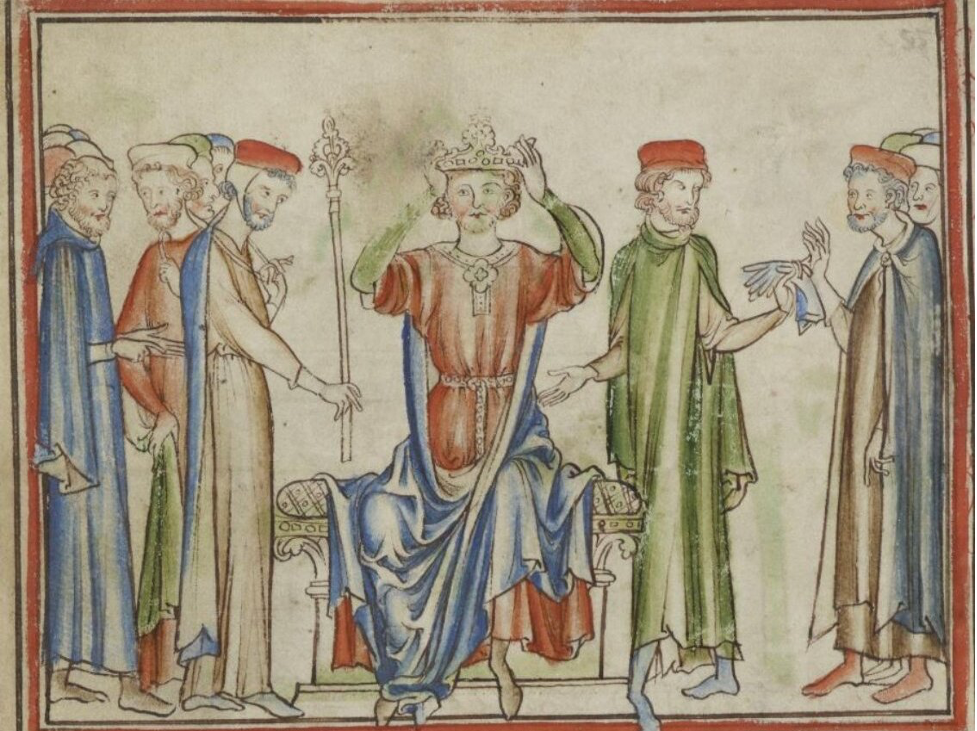
The coronation of Harold Godwinson. Source: Public domain
A march like no other in English history
King Edward the Confessor died in January of 1066, leaving no heir to the English throne. His wife, Edith, was the scion of a powerful Anglo-Saxon family, the Godwins, whose oldest son, Harold essentially strong-armed his way to the crown.
However, lying in wait across the English Channel, was another claimant to the throne: William, Duke of Normandy. Harold Godwinson, now crowned as King Harold II, had visited Normandy earlier in his life and had, at least according to Norman propaganda, supposedly sworn an oath to support William’s claim to the English throne.
Harold’s usurpation of the crown was seen by William as an ultimate act of betrayal – oaths were a big deal back then. William organized a force to seize what he saw as his rightful inheritance.
With Harold nervously watching the English Channel, it was from the north, not south, that an invasion arrived. Harald Hardrada, a king in his own right and perhaps the most brilliant warrior of his time (having seemingly fought everyone and everywhere from the Baltic to Black Sea), launched an invasion striking in Northumbria, the former heartland of Viking England. King Harold II hurried his force and surprised Hardrada at Stamford Bridge.
The traditional story tells us that having defeated the Viking warrior, King Harold II then hurriedly marched his battle-weary troops at the length of England as William had landed on the south coast. This rushed march, which has become part of English lore, is generally seen as a key factor in Harold’s defeat at Hastings. Harold's troops were lethargic and tired, whilst William’s force had simply strolled off their boats ready for battle.
This lethargy is also used to explain why Godwinson's troops, despite having the high and easily defensible ground at Hastings, had a momentary brain fade and charged down the hill, broke ranks, and were then picked off by William’s forces.
Coming home...in great haste
Enter Professor Licence into the historical fray. In a recent article, Licence points to the fact that this march “became part of Harold’s legend. It’s now taught in schools, universities, and recently depicted even on the small screen, in the 2025 series King and Conqueror.” Yet, according to the learned professor, this march may be based upon a mistranslation.
Turning to contemporary primary sources, whether they be in Latin or in Old English (like the Anglo-Saxon Chronicle), he found there was no specific mention of a forced march. It was a 17th-century historian who described Godwinson marching to London “in great haste”. Subsequent generations of scholars have interpreted this to mean an overland march.
Yet Professor Licence points out that England did possess a navy in the 11th century. Nothing like the pomp and circumstance of its later Victorian gunboat era, but King Harold II did have access to a fleet. However, it was a 19th-century historian who took the original Old English phrase “after the fleet came home” to mean that Godwinson’s fleet was disbanded after Stamford Bridge, and this was then seen as the reason for a forced march. Licence points out that the fleet was not disbanded, with ships sailing to their ports of origin, but “came home” to London.
Professor Licence also postulates that it is likely that King Harold II’s force did not necessarily march the length of England but could have sailed it instead. According to Licence, the fleet likely sailed to London in part to facilitate the redeployment of the troops closer to where William, Duke of Normandy, might strike.
Not only did Godwinson possess his own fleet, but he also points to accounts in the sagas that mention how only 24 out of 300 ships sailed back with the dregs of Hardrada’s invasion force following defeat at Stamford Bridge. Part of the spoils of war was material, and it is likely that many of these Viking ships would have been captured and possibly made available for immediate reuse by the Anglo-Saxon troops.
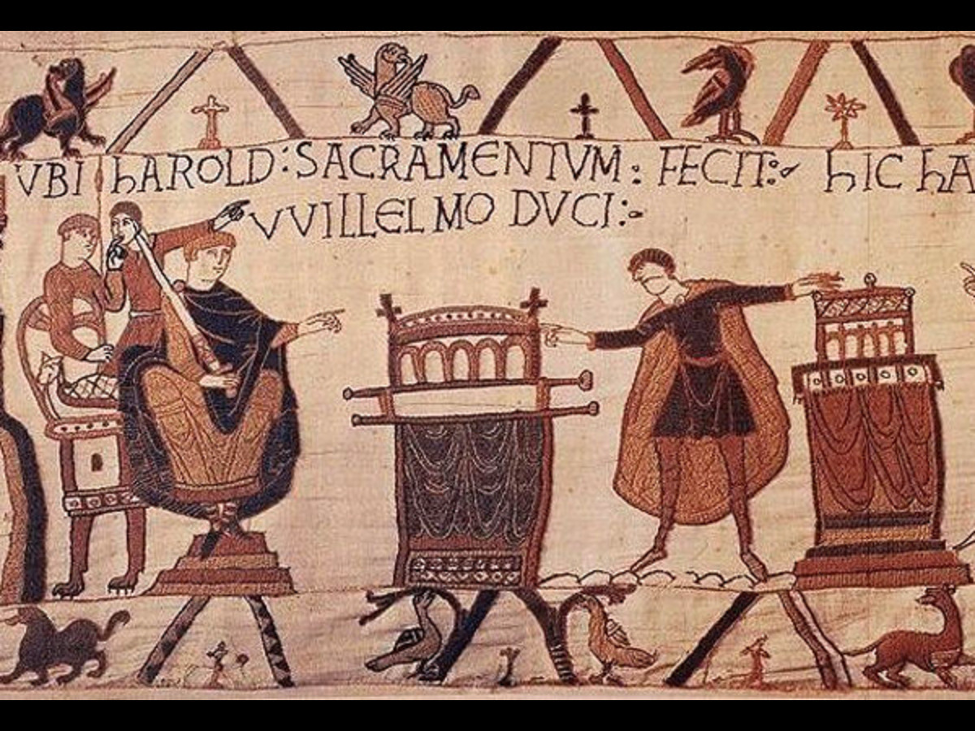
Harold Godwinson swears an oath of fealty to William of Normandy. Source: Public domain
Helps to paint a far more nuanced picture of King Harold II
The new research by Professor Licence is certainly iconoclastic. Generations of historians and scholars have written about, and generations of English school children have been taught (as my colleague Jonathan Bennett attests to), that King Harold II was an overwhelmed and reactionary commander.
He was trapped by the tyranny of distance with these two successive invasions, one in the north of his realm and another soon after in the south and was unable to use naval mobility as his fleet had disbanded. This led to the forced march, a rapid overland response, that saw tired troops tramp the length of England and almost inevitably lose the second battle.
Yet Licence argues that, just like other Anglo-Saxon kings of England, Godwinson skillfully utilized land and sea-based operations to attempt to fend off successive invasions in his realm. His troops were likely whisked down from Stamford Bridge to England’s south in ships.
Professor Licence’s research suggests that the outcome of Hastings may not be partly explained as the result of tired legs and exhausted minds, but rather the consequence of strategic choices, timing, and the unpredictability of fate when one throws the iron dice.
It was, in the words of the Duke of Wellington, centuries later describing another close-fought battle, “the nearest run thing” in English medieval history, and Professor Licence’s research helps to paint a far more nuanced picture of King Harold II as a strategic commander than has been traditionally believed.
We get to provide readers with original coverage thanks to our loyal supporters. Do you enjoy our work? You can become a PATRON here or via our Patreon page. You'll get access to exclusive content and early access.
Feel free to reach out to discuss potential stories that may be in the public interest. You can reach us via email at [email protected] with the understanding that the information you provide might be used in our reporting and stories.