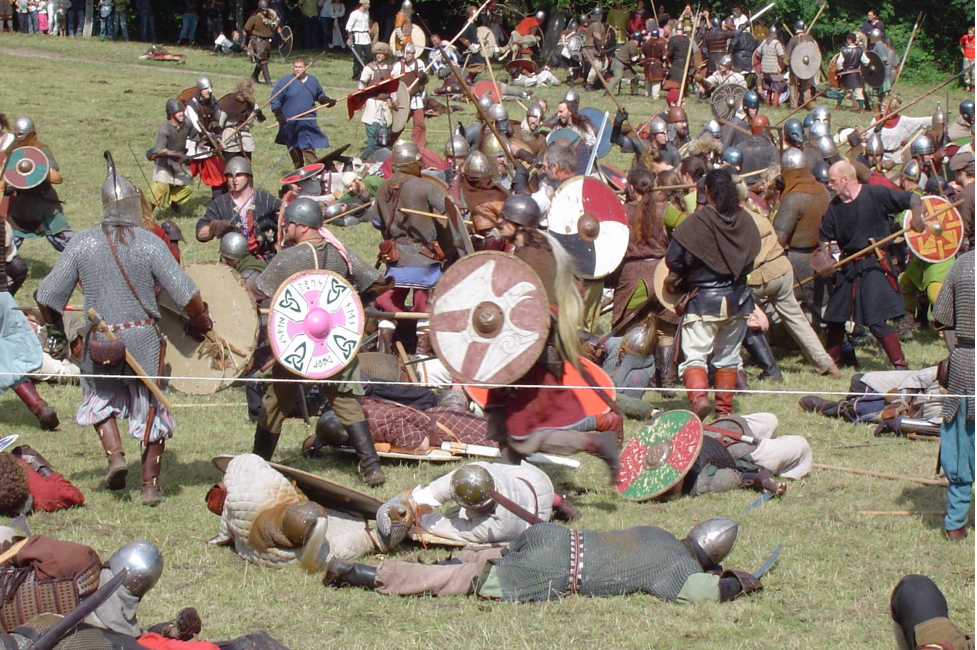


The Isle of Man, bobbing like a cork in the Irish Sea between modern-day Wales and Ireland, has a long and proud Viking history.
Currently part of the United Kingdom, the island was influenced initially by Celtic and subsequently by Norse cultures during the early medieval period.
Casting an eye on the Irish annals, which provide much of the color of the island's early history, we find that Vikings arrived in the early 9th century. They exerted control, either directly or indirectly, for the following four centuries.
From the 9th to the 13th centuries, the Isle of Man and the Hebrides were key components of the "Kingdom of the Isles," a realm characterized by a blend of Norse and Gaelic influences.
Unfortunately, the historical records of this kingdom are incomplete and fragmented, leaving significant gaps in our knowledge about the kingdom, its rulers, and how it was governed.
Nonetheless, it is believed that the kingdom's status fluctuated between complete independence and being a vassal state under distant overlords from Norway, England, and the Orkney Islands.
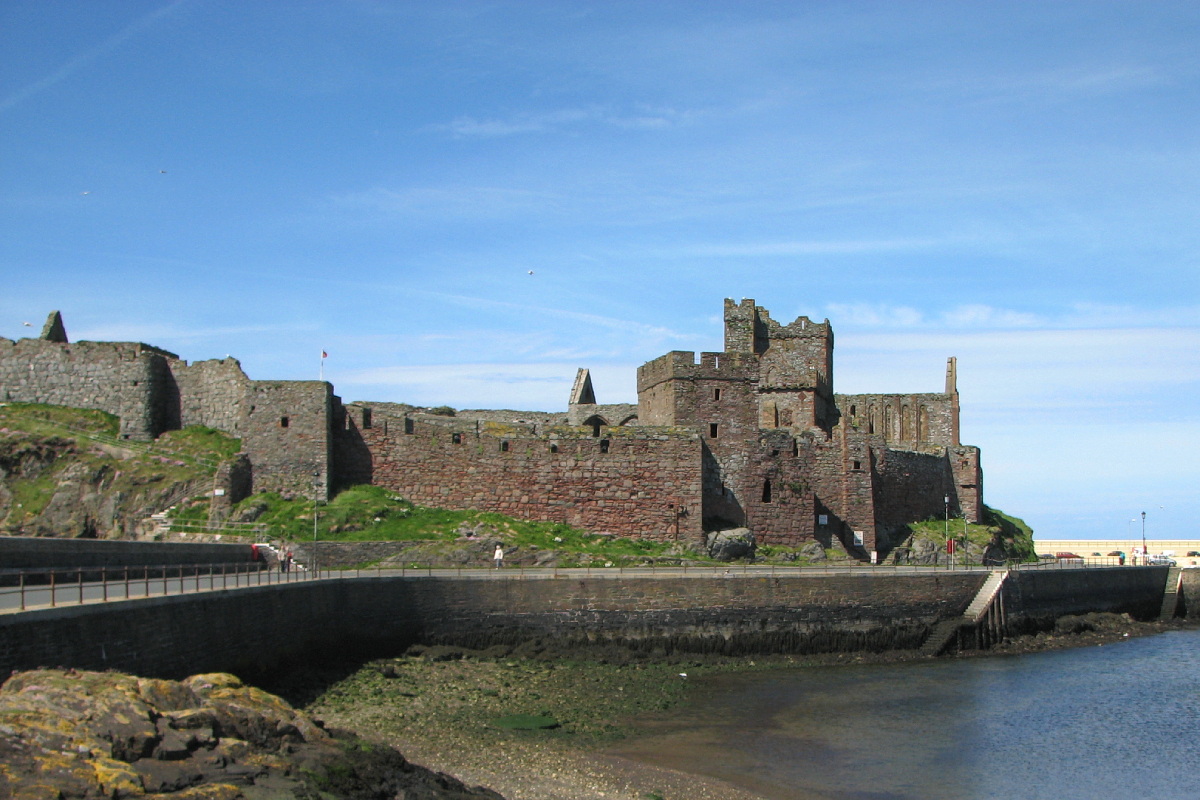
Peel Castle, situated near the House of Manannan, began as a wooden stronghold in the 11th century, built by Norwegians under King Magnus Barefoot's rule. Photo: Finn Bjorklid / Wikimedia Commons (Public domain)
Parliaments, anniversaries, and old railway stations
One of the most striking features of the Norse influence on Man was democracy.
People from Viking societies don't necessarily spring to mind when you think of parliamentary democracy, as they often preferred to settle scores with an axe rather than the ballot box.
Nevertheless, the Norse settlers, who were also conquerors and invaders, established a rudimentary parliament on the Isle of Man, known as the Tynwald.
According to the local Manx population, this parliament is the oldest continuous parliament in the world, celebrating its 1000th anniversary in 1979.
Yet, its first appearance in the historical record occurs at the end of the Norse control of the island in the late 13th century.
Regardless of its age, the fact that it was established by people from Viking societies and modeled after a Thing is agreed upon as historically accurate.
Despite the lack of historical accuracy, the 1000th anniversary of the Tynwald's establishment led to grand celebrations throughout the island.
Though very much a part of the United Kingdom, the celebrations allowed the local population to reexamine and explore its Norse legacy.
As part of these cultural celebrations, a local businessman funded the construction of a replica of the Gokstad Viking ship (at two-thirds its size) to be named Odin's Raven.
Local authorities announced that a disused railway station would be refurbished to house the Viking ship.
This refurbishment eventually transformed the station into the House of Manannan, one of the Isle of Man's premier cultural institutions.
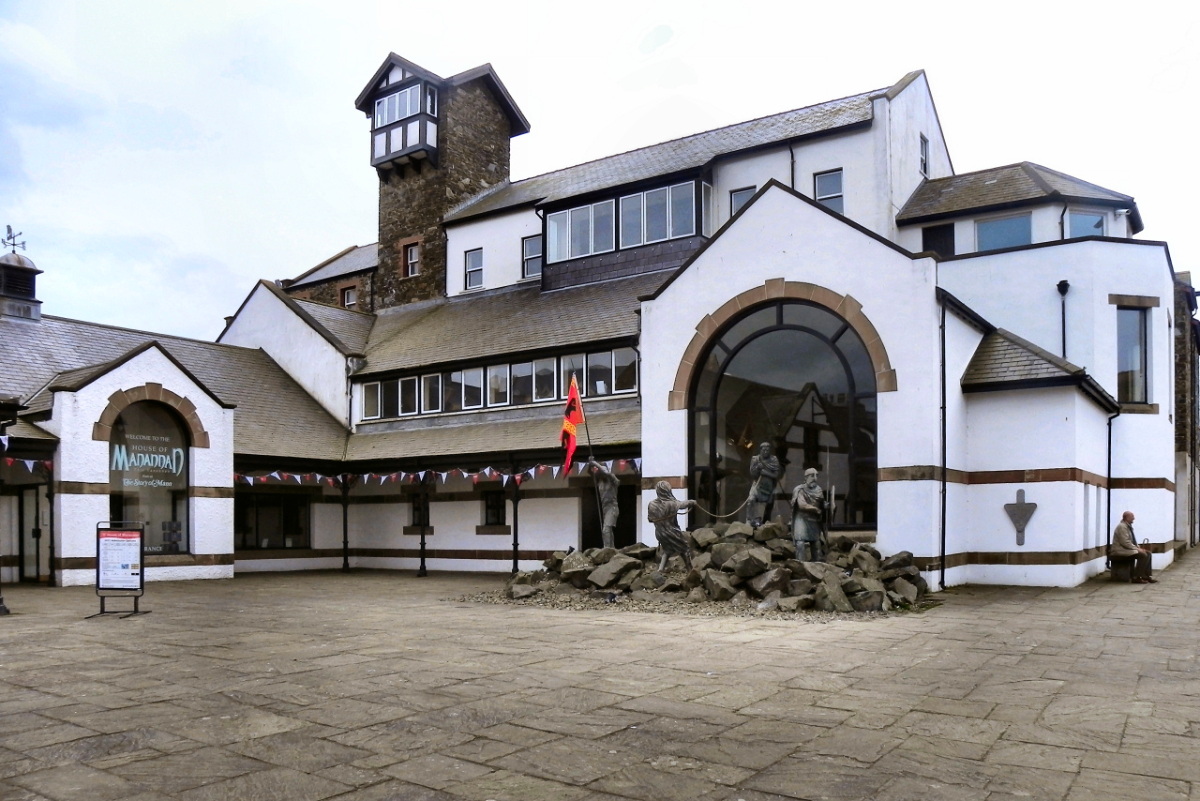
The House of Manannan, named for the island's mythological sea god and known locally as Thie Vanannan, serves as a cultural hub, showcasing the Isle of Man's rich Norse and Celtic heritage through various exhibits. Photo: David Dixon / Wikimedia Commons (CC BY-SA 2.0)
The House of Manannan
With its strategic position in the Irish Sea, the Isle of Man boasts a significant and proud Viking history.
Given that large areas of modern-day Ireland were settled, conquered, and controlled by people from Viking societies, the Isle of Man became an important trading point between the Danelaw in Anglo-Saxon England and other Norse-controlled areas.
The Norse left a rich archaeological and historical record on the Isle of Man, which the new House of Manannan was established to showcase.
The museum, known as Thie Vanannan in the local Manx language, is named after the island's mythological sea god from its early medieval origins.
Tapping into the island's Celtic and Viking maritime heritage, the museum houses several exhibitions that display its diverse and multicultural history.
Aside from the impressive Odin's Raven – over 15 meters (50 feet) long – the museum features exhibits dedicated to one of the earliest accounts of the Isle of Man, the so-called Chronicles of the Kings of Man and the Isles.
Much of this chronicle, compiled during the Norse control, may not be historically accurate but is nonetheless entertaining, resembling a sort of Norse-Gaelic saga about the island's political origins and early events.
For those seeking a more adrenaline-fueled experience, an exhibition has been meticulously crafted to recreate the atmosphere of a Viking era longhouse and the experience of being on a longship.
Drawing on the island's rich Viking archaeological record and written sources, the curators have endeavored to provide visitors with an authentic experience of life on the Isle of Man during its Viking heyday.
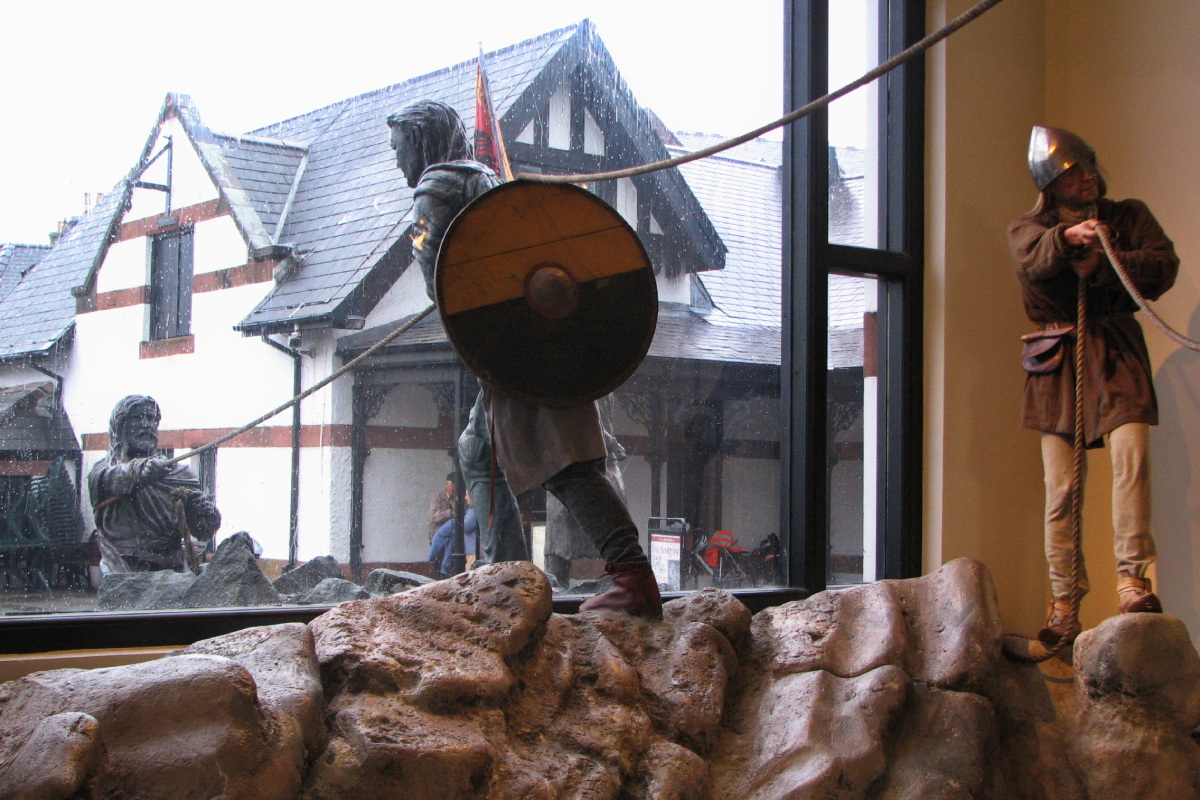
An exhibition at the House of Manannan carefully reconstructs a Viking era longhouse and the experience of being on a longship, drawing from the Isle of Man's rich Viking archaeological record. Photo: FinnWikiNo / Wikimedia Commons (CC BY-SA 3.0)
Helping chronicle the story of the island
At the heart of the House of Manannan lies the simple yet profound story of the island's history and how it has shaped its inhabitants since time immemorial.
The exhibits are carefully curated to unfold this narrative, tracing its journey from Celtic origins through Norse control to the present day.
Given the Isle of Man's strategic location, the museum delves into the island's seafaring traditions, with a significant focus on the period of Norse control from the 9th to the 13th centuries.
During this era, the Isle of Man was a part of the "Kingdom of the Isles," an important Norse kingdom that linked much of the western British Isles to the Viking homeland in Scandinavia and beyond.
The museum's commitment to creating interactive and educational experiences should be reason enough for any Viking enthusiast to visit.
Here, one can participate in hands-on activities that enhance their understanding of the island's proud Viking traditions.
From trying traditional crafts – many of which were brought to the island by people from Viking societies or perfected by them – to engaging with state-of-the-art multimedia presentations, visitors can fully immerse themselves in the story of this island.
As a beacon of cultural preservation and education, the museum celebrates the island's proud maritime history, including more than four centuries of Norse control.
Should you be fortunate enough to find yourself on the Isle of Man, a visit to the House of Manannan is a must!
For more information on the Viking history of the Isle of Man, visit Denmark's Viking Ship Museum here, while the House of Manannan's official website can be found here.
We get to provide readers with original coverage thanks to our loyal supporters. Do you enjoy our work? You can become a PATRON here or via our Patreon page. You'll get access to exclusive content and early access.
Feel free to reach out to discuss potential stories that may be in the public interest. You can reach us via email at [email protected] with the understanding that the information you provide might be used in our reporting and stories.