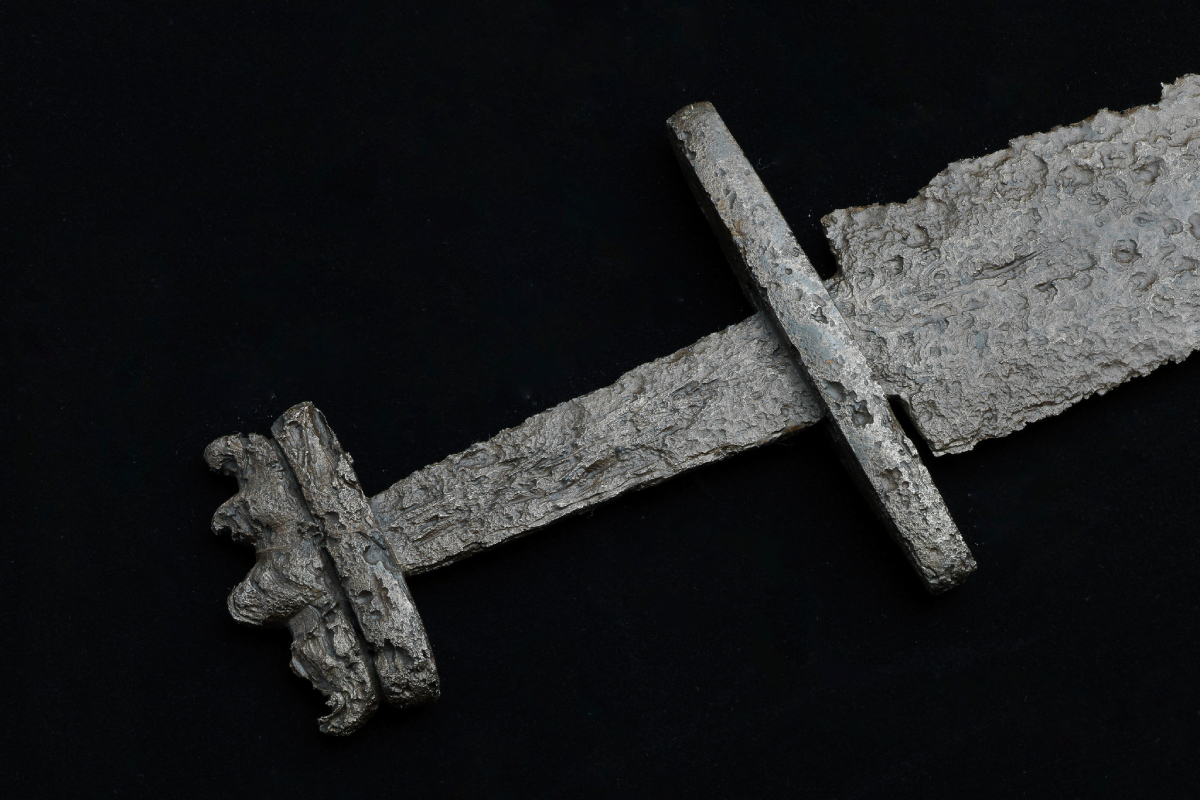


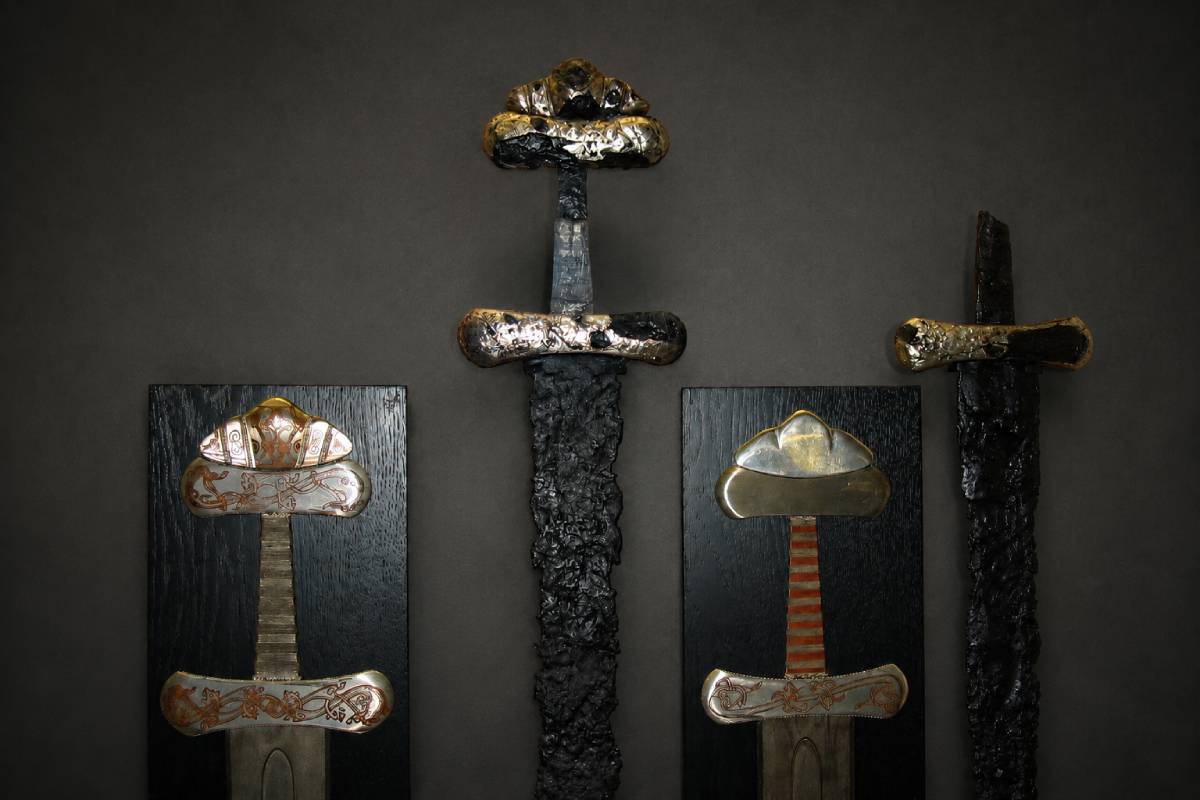
In recent years, we have been blessed to see the discovery of many Viking swords. From Norwegian farmers working on the land to a diver in a Polish river, these early medieval weapons of war seem to be unearthed by the most unsuspecting people in the most unexpected places.
Given some of the locations of these recent discoveries, you may assume that a Viking sword was a rather unloved object. However, when we investigate the life and afterlife of a Viking sword, we can see that it is one of the most sought-after and cherished objects used by people in Viking societies.
We must remember that despite the depictions we see of Vikings on the small and silver screens, swords were expensive and, thus, relatively rare objects. Axes and spears were far more commonly used due to their lower production costs and thus much wider availability.
It was the laborious effort put into these swords that saw them fetch a very high price. In turn, this high price saw swords, often imported from the Frankish realms, become symbols of prestige and power for those rich enough to afford them.
If a sword and its wielder were lucky enough to survive armed conflict, then the sword could become an object to be proudly displayed, passed down to family members, or even taken to the grave.
Inheritance: Keep it in the family
"Then spake Sigurd, 'Have I heard aright, that King Sigmund gave thee the good sword Gram in two pieces?' ... So Sigurd said, 'Deliver them into my hands, for I would have them.' ... So he made a sword ... Then Sigurd smote it into the anvil, and cleft it down to the stock thereof, and neither burst the sword nor brake it. Then he praised the sword much ..."
Taken from Chapter 15 of the legendary Völsunga saga (we use an online version of the 1888 English translation by William Morris and Eirikr Magnusson), we find how people in Viking societies crafted a nexus between swords and family.
In this chapter, we find that Sigurd, the soon-to-be dragonslayer, asks his mother for the remains of the sword, Gram. Here, despite the sword being shattered into pieces, it is still treated with great reverence as an object of great importance. By forging these broken shards together, Sigurd is reclaiming his family's legacy, as the sword belonged to his father.
We know that for people in Viking societies, swords could be passed down through generation after generation. Whether it was a chieftain passing it on as a symbol of succession or an injured father passing his weapon of war to a son before he passed away, the inheritance of a sword also meant the inheritance of responsibility.
Like Sigurd, those blessed to have a sword passed down to them also took on the expectations and obligations connected to it. Often, these familial obligations may be connected to the defense of honor and, at times, vengeance through blood feuds.
More peacefully, an inherited sword also served as a symbol of social standing, future promise, and potential. Like Sigurd, many a Viking sword was passed down with heavy expectations that, if met, secured not only an enhanced familial reputation but also a greater legacy.
This association with inheritance also made its way into the cultural life of people in Viking societies.
Having scoured the many sagas and skaldic poems, author Ian G. Peirce points out, in his 2002 book Swords of the Viking Age, that when people from Viking societies needed a kenning (a figurative compound phrase that is the highlight of Norse literature and poetry), he discovered that "the most frequently used ... is 'Ancient Heirloom'. We find it everywhere [in Norse literature] ... for these swords were handed on from generation to generation."
What happened when the sword was not passed down to the next generation but laid to rest with its owner?
PLEASE NOTE: The rest of this article is only available to our paid Patreon subscribers.
The topic was selected by our Patrons in a weekly poll. Support The Viking Herald on Patreon to read the full article and help choose future topics.
If you would like to learn more about Patreon and why we have decided to restrict access to some content, please take a look at this article.
Feel free to reach out to discuss potential stories that may be in the public interest. You can reach us via email at [email protected] with the understanding that the information you provide might be used in our reporting and stories.