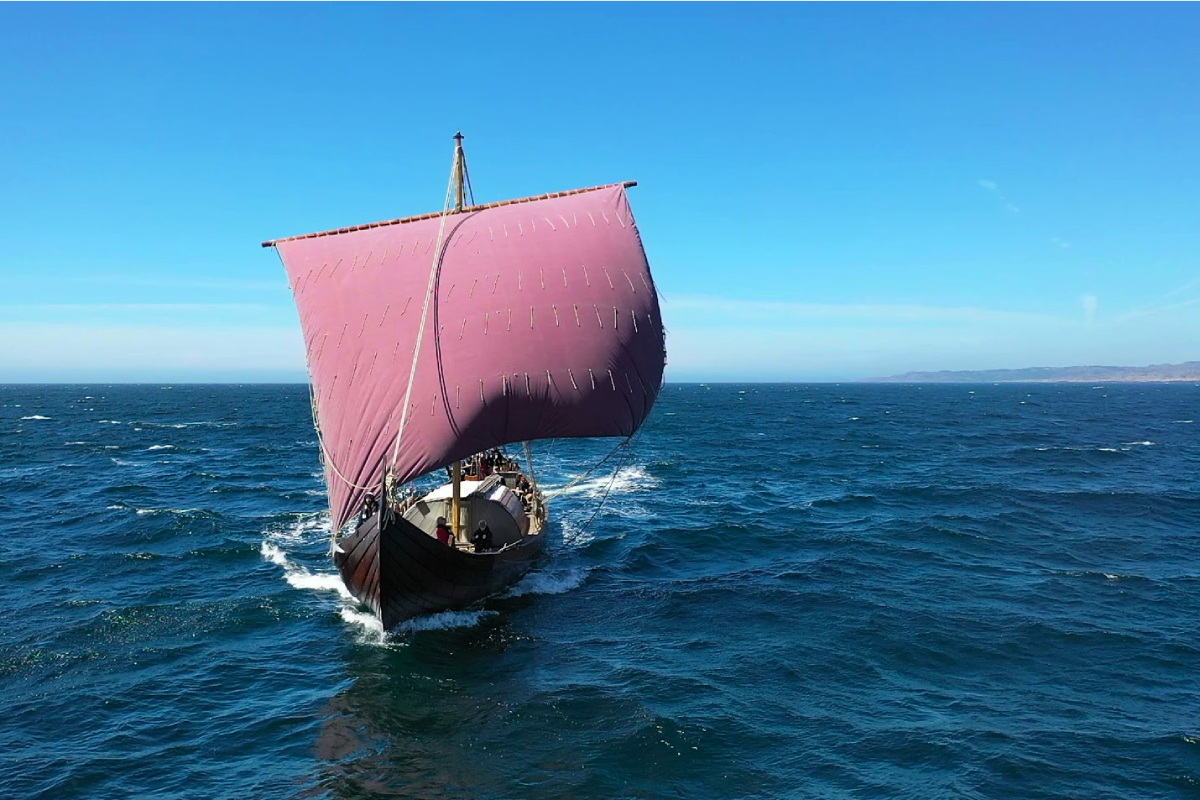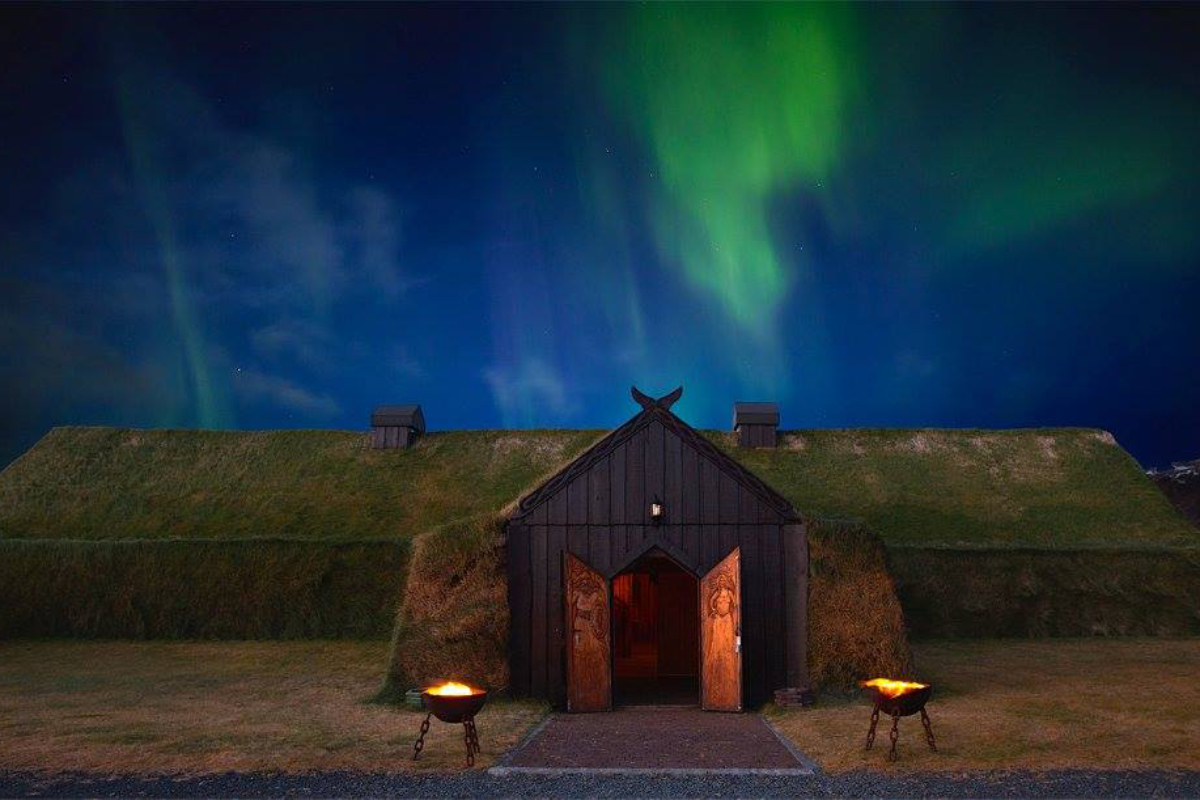


Having recently returned from a trip overseas (six weeks in Mexico and the United States is a tough job, but someone has to do it), I was greeted with a sight that was at once both familiar and yet deeply ancient: a Viking ship.
No, as I crossed the threshold through Sydney Airport, I hadn't somehow been transported back in time, but I saw the image of a Viking ship emblazoned on a piece of paper.
This piece of paper was held aloft by an employee of Viking Cruises, who was there to usher tourists from the terrors of a crowded airport to the pleasure of an ocean liner departing Sydney that day to take in the sights, sounds, and smells of Sydney Harbor and beyond.
The company, Viking Cruises, was founded in 1997 by Norwegian billionaire Torstein Hagen, has – according to their website – more than 10,000 employees who help deliver scenic ocean and river cruises throughout the Americas, Europe, Asia, and even as far away as Antarctica.
For those who have not had the privilege of being on one of their cruises, fear not.
Though their company logo is a simple rendition of a Viking longship (complete with a red sail aloft in what one expects is a fresh breeze), there is nothing primitive about their luxury cruises.
What is interesting to me (other than free tickets for one of their Danube cruises if you're reading this, Mr. Hagen?) is their choice of a company logo.
With a few simply drawn lines, their logo and name have become interchangeable, as the Viking longship has – even in our modern times, long after the last Viking ship sailed – defined Viking identity.
Let us cast back into the early medieval period to see how and why a true icon of Scandinavian design became a global cultural icon.

Viking longships were lightweight, fast, and built for both oceans and rivers. Source: Werner Karrasch / Viking Ship Museum in Roskilde
Sleek design
The Viking longships are perhaps one of the most iconic images of the entire medieval period.
Can you name another mode of transport, between the fall of Rome and the Renaissance, that has captured the imagination of countless generations? I doubt it.
Whilst we moderns are very much enthralled by Viking ships, as an example, look at the cost, labor, and time being dumped into the new Museum of the Viking Age in Norway, where the Oseberg and Gokstad ships will take pride of place amongst the 5,498 objects from the Viking Age (c. 750–1100).
Yet it is not just we moderns who are awed by these sleek ships. There is no doubt that the Viking ship was instrumental to the expansion – sometimes peaceful, sometimes profitable, but mostly violent – of people from Viking societies during the early medieval period.
The Viking longship can be seen as one of medieval Europe's most brilliant engineering feats.
Whilst the longship is generally classified into four categories – usually by the number of rowing positions on board and its size (with the Karvi being the smallest category, then the Snekkja, the Skeid, and finally the semi-mythical Dreki) – all were of a similar clinker-built design.
As Jan Bill writes in his chapter in the 2008 book The Viking World (available on Amazon here), these ships were "...fundamental tools for survival and societal development" of Viking societies.
Regardless of size, they were made of oak, which made them lightweight. When not sailing, they could often be pulled ashore and carried on the shoulders of the sailors.
Furthermore, they also had sleek, narrow, and symmetrical designs, which made them both hard to capsize on the rough seas and allowed them to cut through the water like a hot knife through butter.
In addition, the shallow draft made the longship as much at ease on the torrid waves of the Atlantic Ocean as it was gently sailing down the Dnieper River.
In an era when it could take weeks to travel more than a few miles overland, the longship was the most efficient and quickest means of transport available to people in Viking societies.
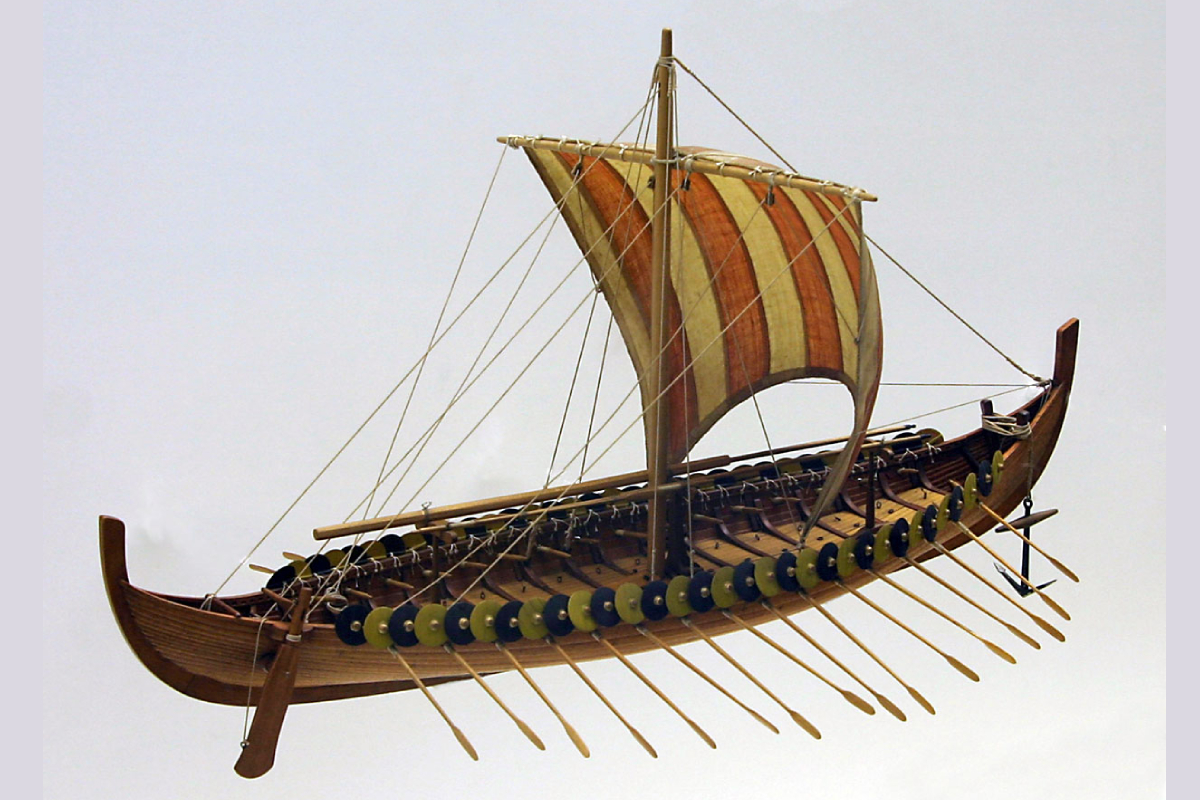
From ferrying goods to launching surprise attacks, Viking longships were unmatched in their multifunctionality. Source: Softeis (CC BY-SA 2.5)
Versatility was key
Aside from their unique construction, it was the versatility of the longship that made them medieval marvels.
They could, and were, employed both for peaceful and violent means, for trading just as much as raiding.
Utilizing the power of men and the wind (each longship had a certain number of rowing benches and a sail), they allowed Vikings to launch a surprise attack at a lightning pace, then sail quickly away with the warriors' ill-gotten gains.
Coastal and riverbound communities were shocked when they suffered these lightning raids and attacks seemingly out of nowhere.
Vikings could launch a medieval version of blitzkrieg attacks using the sleek speed of the longship, carrying out such raids throughout much of Europe during the early medieval period.
An entry for the year 820 in the Annals of Ulster, the historical record of medieval Ireland, reads that these Viking attacks, helped by the longships, had become so numerous that it seemed that:
"The sea spewed forth floods of foreigners over Erin, so that no haven, no landing-place, no stronghold, no fort, no castle might be found, but it was submerged by waves of Vikings and pirates..."
Less violently but just as successfully, they could also be used to ferry livestock, goods, or people across vast distances, allowing people from Viking societies a great amount of freedom for the often-cloistered medieval period.
This helped foster economic trade, and people from Viking societies were partly responsible for connecting Scandinavia to larger global trade networks, including the famous Silk Roads.
These longships became symbols of the immense freedom, mobility, and power that people from Viking societies had compared to their contemporary European neighbors.
Finally, the longship also allowed settlements to be founded by people from Viking societies as far away from Scandinavia as modern-day Canada, Greenland, and Iceland to the west and Eastern Europe and the shores of the Black Sea to the east.
The versatility of the longship was instrumental to the expansion of people from Viking societies throughout the early period, and it was this versatility that made them familiar and sometimes a fear-inducing sight throughout early medieval Europe and its surrounds.
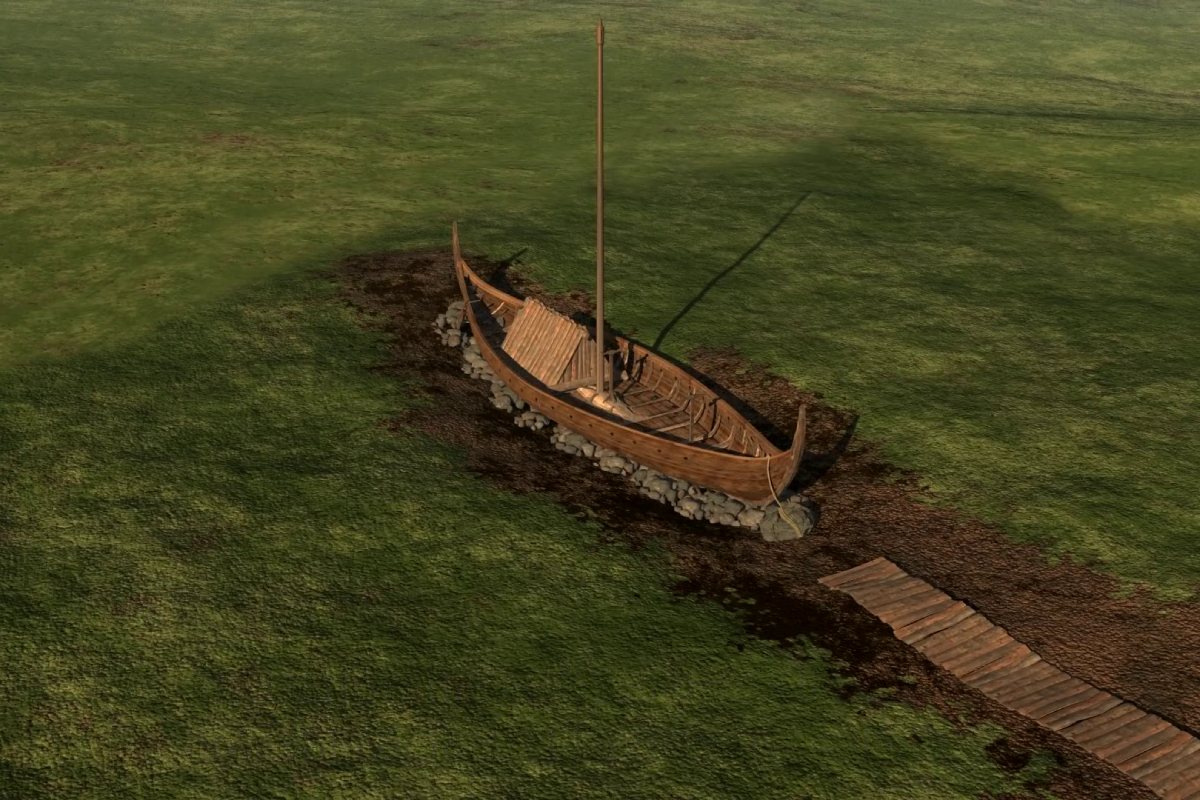
This 3D reconstruction represents the Gjellestad ship on-site near Halden, Norway, as it was just before a burial mound was constructed over it. Source: NIKU / YouTube
A deeply spiritual and national symbol
With a mix of sleek Scandinavian design and versatility, it is little wonder that these longships have captured the imagination of countless generations.
Yet these ships did not just have a practical nature but also a deeply symbolic one. They were often treated as vessels for the present life and the next.
Elaborate Viking ship burials were an integral part of what we moderns call the Old Norse religion and the broader cultural, religious, and spiritual fabric of people in Viking societies.
The rich and powerful of Viking societies were buried alongside Viking ships with a wealth of treasure, goods, and supplies for the next life.
The Viking ship thus symbolized the vessel that ferries one from this life to the next.
This ship burial tradition is best exemplified by the brilliant Gokstad and Oseberg ships uncovered over the past two centuries.
Notably, these Viking ship burials also played a part in Norwegian nationalism.
The Gokstad and Oseberg ships, discovered around the turn of the 20th century, helped foster a sense of immense cultural and historical pride in a society trying to throw off the shackles of subservience and foreign domination.
Following Norwegian independence in 1905, the Viking ships also became a symbol of the common cultural and historical heritage that the three Scandinavian kingdoms once shared.
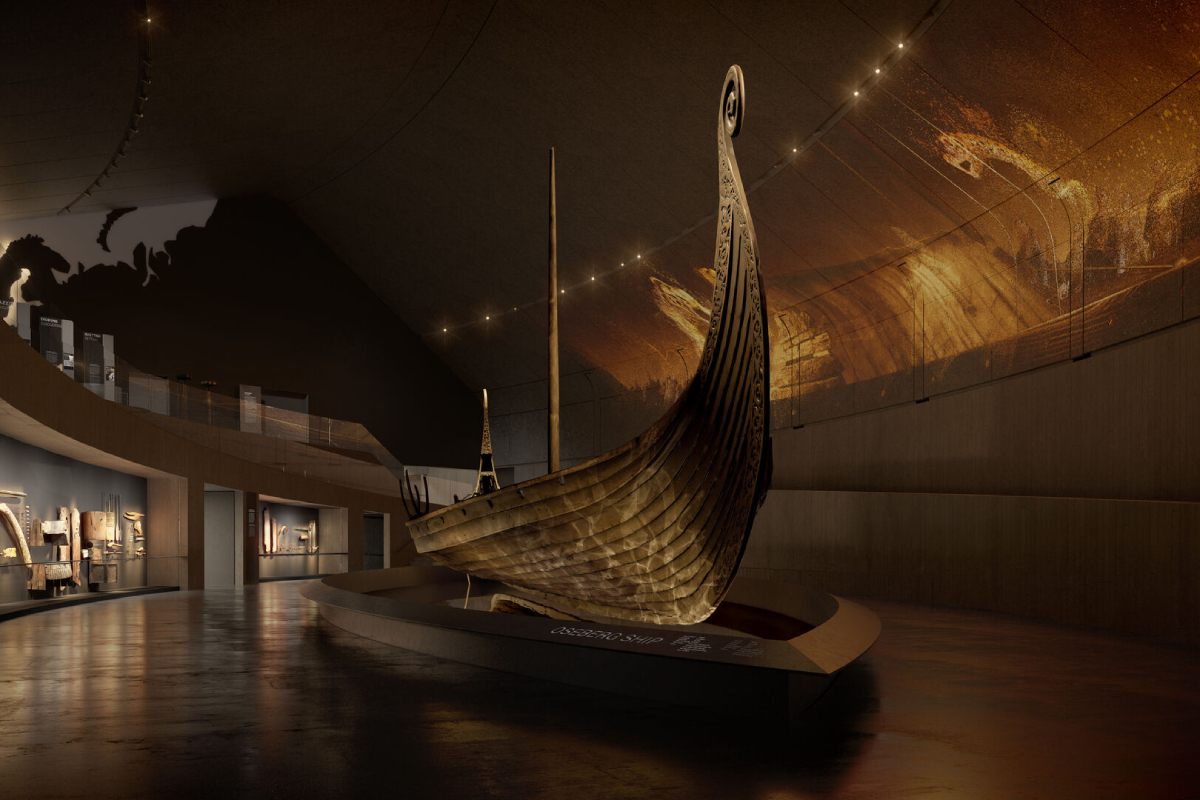
Scandinavian museums showcase Viking longships as key pieces of history and sources of national pride. Source: Museum of the Viking Age
Modern legacy
Fast forwarding to the present time, the Viking longship has become a cultural symbol of Scandinavia as much as the people who once sailed it.
Museums across the region, including popular ones in Denmark and Sweden, as well as the aforementioned museum currently being constructed in Norway, proudly display the remains of Viking ships and have become serious tourist attractions in recent years.
Many of these museums have worked with skilled artisans to create modern recreations and reconstructions, allowing people to witness firsthand the might and majesty of these medieval marvels.
These museums and the ships that lie within have, as Chris Halewood and Kevin Hannam wrote in their 2001 article in the journal Annals of Tourism Research, led to a "heritage tourist phenomenon" throughout much of Scandinavia and beyond.
The recent Viking boom in popular entertainment – think Hollywood movies and Netflix series – has introduced new generations to the Viking longship.
Popular culture has drawn on these ships as symbols of adventure and freedom and has helped to add to what many perceive as the indomitable Viking spirit.
This spirit saw the expansion of people from a remote northern region of Europe to as far afield as the shores of Canada to the Black Sea and everywhere in between.
Little wonder then that when Mr. Hagen was settling upon a symbol to represent his cruise line company, he chose the Viking ship – an icon of the Viking spirit – and helped bring that spirit back to life in the 20th and 21st centuries.
For more information on the engineering design of Viking ships, visit Discover Magazine here.
We get to provide readers with original coverage thanks to our loyal supporters. Do you enjoy our work? You can become a PATRON here or via our Patreon page. You'll get access to exclusive content and early access.
Feel free to reach out to discuss potential stories that may be in the public interest. You can reach us via email at [email protected] with the understanding that the information you provide might be used in our reporting and stories.