


There is no doubt that we live in a visual age. Whilst each year more of the world becomes increasingly literate, it is images that continue to dominate our ever-decreasing attention span.
The success of Instagram attests to how visual symbols can communicate emotions, identity, and even values in a way that words cannot, making true the old expression that a picture is worth a hundred words. Or tweets.
We know that a single image can inspire authority, loyalty, or even provoke fear. Think President Trump and his red MAGA hat. Or, for the sake of political balance, President Obama and his "Hope" poster (I'll leave it to you, dear reader, to decide which image inspires devotion and which dread).
We are strictly neutral here at The Viking Herald when it comes to modern politics; historical politics, on the other hand...
Long before we became addicted to doomscrolling our social feeds, societies throughout the world relied on images to communicate and to gain information.
In the early medieval period, when only the smallest minority were literate, images could often function as a sort of lingua franca, a universal language.
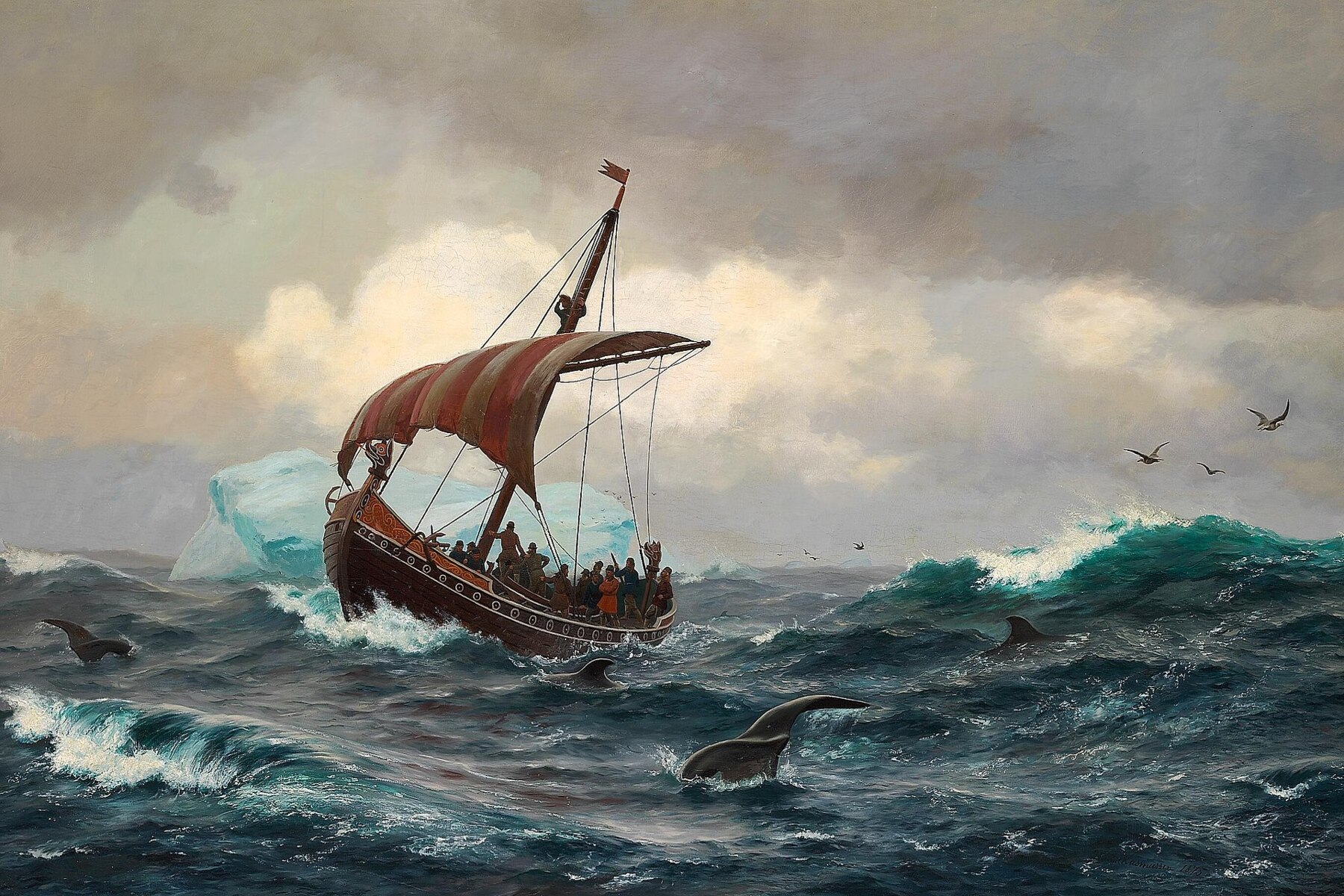
This was certainly the case for people in Viking societies. A society that created runes and then a runic alphabet saw banners, standards, and flags as symbols of allegiance.
They could also be used as a form of psychological warfare, said to inspire and intimidate in equal measures.
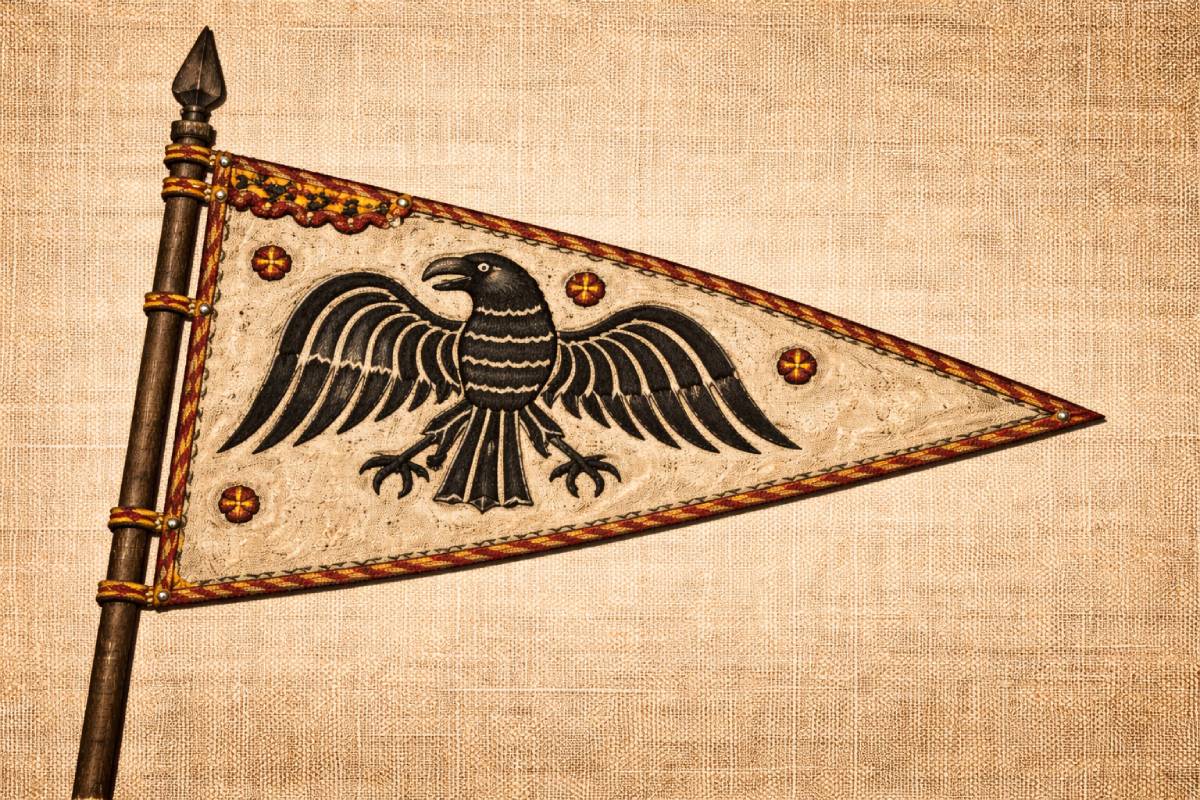
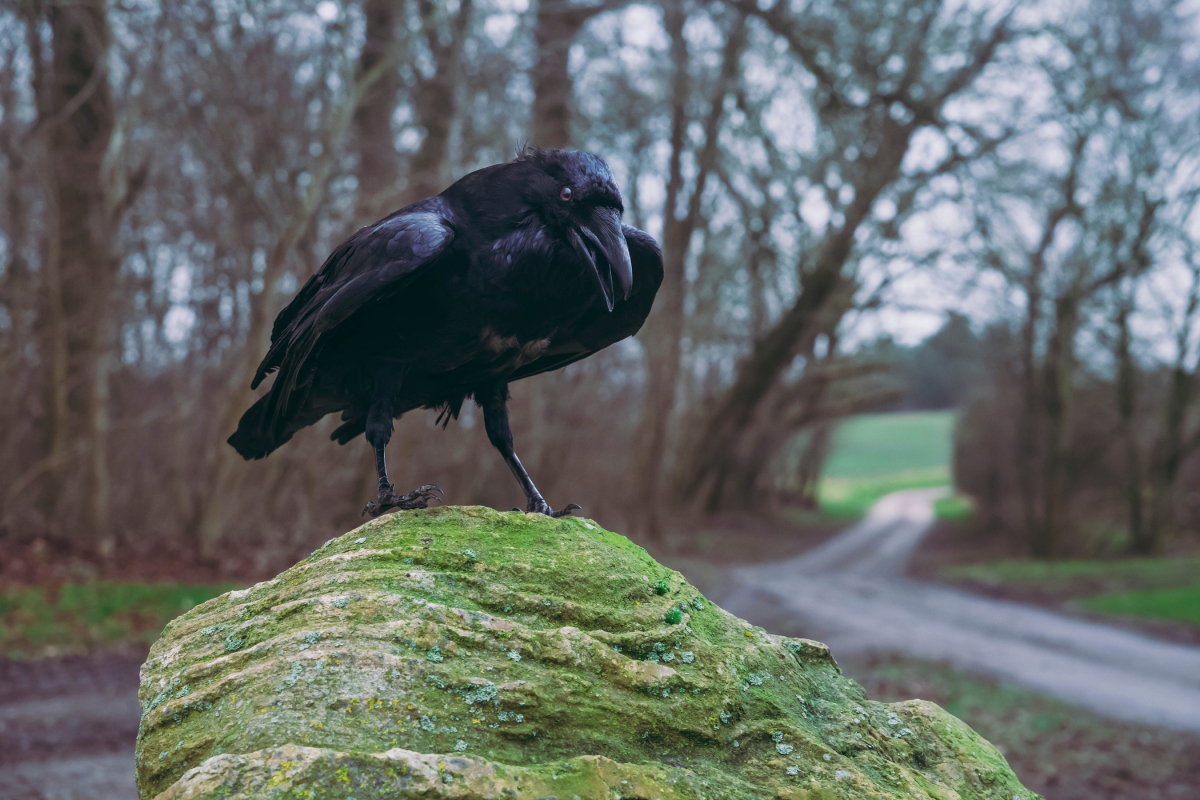
The raven banner, a flag depicting a raven, the sacred bird of the Norse All-Father Odin, was said to be unfurled and flown during Viking attacks throughout the early medieval period.
The raven itself was said, by some accounts, to even "come alive," and the very sight of it from across a battlefield surely struck fear into the heart of those trying to stop the oncoming Viking onslaught.
Yet there is no clear archeological evidence for the banner itself, and most descriptions of it come from sources of questionable historical accuracy and entrenched anti-Viking bias. What then do we make of the raven banner, wedged between history, legend, and propaganda?
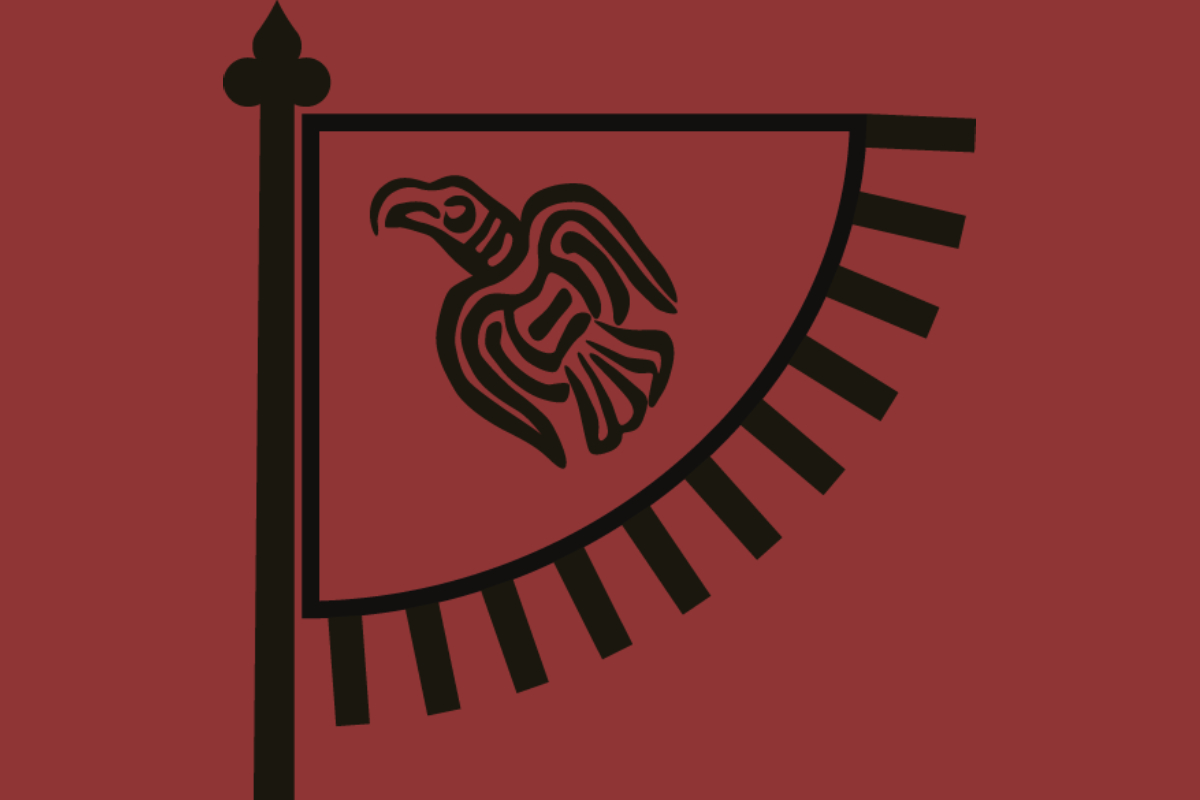
Modern reconstruction of the raven banner, drawing on 10th century raven pennies from Viking-ruled York. Source: MacRud (CC BY-SA 4.0)
Death, destruction, and God-fearing Wessex warriors
"This year about mid-winter, after Twelfth Night, the Danish army...rode over the land of the West-Saxons...also was taken a banner, which they called RAVEN." [Entry for A.D. 878 in the Anglo-Saxon Chronicle]
This brief mention of the raven banner comes from one of the most important tomes of early medieval Europe, the Anglo-Saxon Chronicle.
Generally associated with Alfred the Great's reign and compiled in late ninth-century Wessex, the Chronicle tradition covered the history of that sceptered isle (at least according to the people of Wessex) from the invasions of Julius Caesar up until contemporary times.
Following Alfred's death, it was continued, with the last entry being for 1154 CE, long after Anglo-Saxon England had been transformed by the Vikings and Normans.
Though this is the briefest of mentions, this entry (from an online version based on Rev. James Ingram's nineteenth-century translation, with additions from J. A. Giles) delivers two things.
Firstly, it confirms the idea that the raven banner was indeed present during the Viking Age of English history and not just an invention by later medieval chroniclers and scribes.
Secondly, for God-fearing Anglo-Saxons, the raven was closely associated in Christian thought with death and destruction.
By briefly invoking the raven banner, the anonymous author of this entry sought to mark it as a potent symbol of a pagan horde bent on destroying Wessex and unleashing untold levels of death and destruction.
This apocalyptic imagery stood in a deliberate contrast to the Christian kingdom of Wessex, embodied in this entry by King Alfred and his God-fearing warriors.
In this context, the raven banner functioned as part of the Chronicle's carefully constructed propaganda, depicting the Vikings as little more than a "pagan" rabble, albeit a deadly and violent one at that.
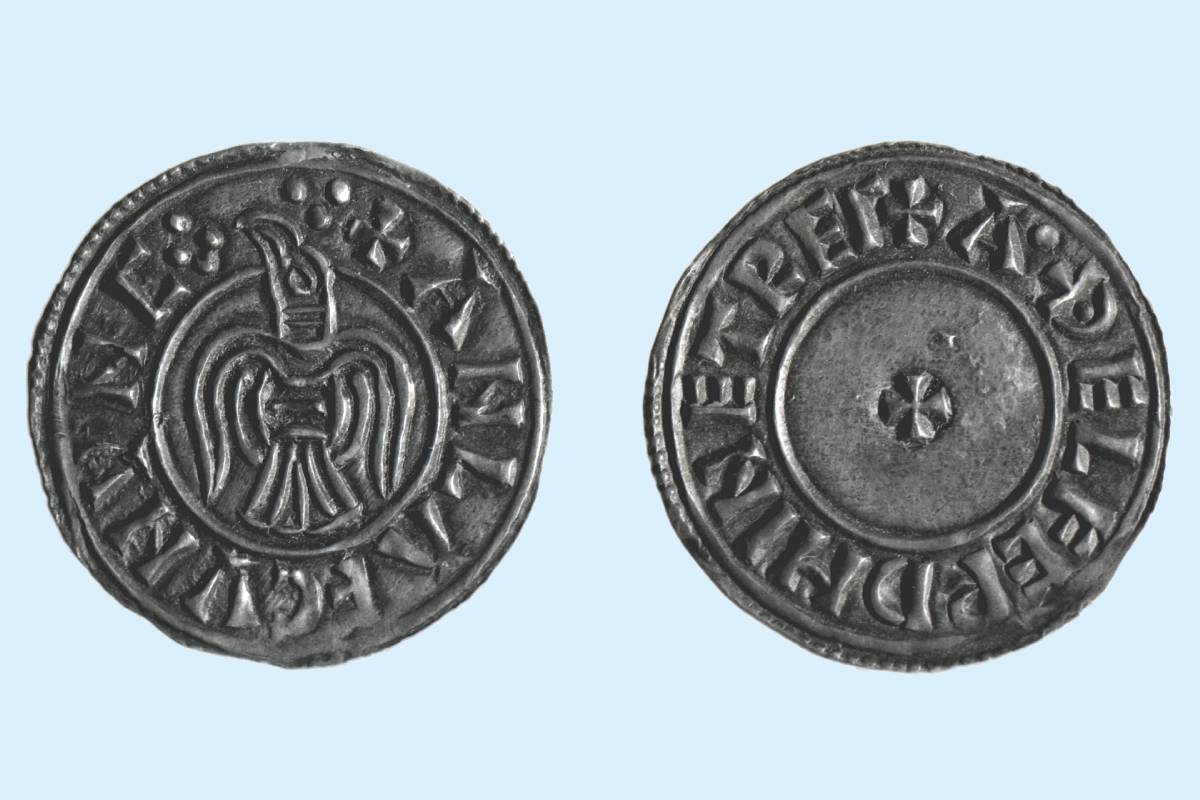
This "Raven Penny" was minted in Viking-ruled York under King Anlaf (Olaf Guthfrithson) around 939–941. Source: The British Museum (CC BY-SA 4.0)
The weaving of fate and magic
"Earl Sigurd bearing his own raven banner, 'woven with mighty spells'...his raven banner, which was borne before him...that it would always bring victory to those before whom it was borne, but death to him who bore it."
[Chapter IV, Orkneyinga saga]
Turning to the north, we find another mention of the raven banner in another medieval tome, Orkneyinga saga (The Orkney Saga; we use an online edition based on the English translation by Jon A. Hjaltalin and Gilbert Goudie).
Compiled in the 13th century, it traces much of the history of the Orkney and Shetland Islands during the early medieval period, and especially the powerful Jarls of Orkney, who ruled over a huge swathe of this region of the Viking world.
Here, the banner is explicitly described as having magical, albeit fatal, properties.
The raven banner is not just a symbol; it was said to be "woven with spells," marking it as being bound to fate itself. We know that people in Viking societies were deep thinkers when it came to their relationship with fate.
Their concept of fate (Urðr or Örlög in Old Norse) helped to shape their understandings of death, victory, and the daily events (or mishaps) of everyday life.
Earl Sigurd's "raven banner" bears promises of triumph to its host and a grisly death to its bearer, showing that success and sacrifice were often inseparable upon the battlefield, where one's fate could never be avoided.
Sigurd the Mighty appears in Orkneyinga saga as an early Jarl of Orkney. As the saga puts it, he ruled over "dominions in Scotland, Ross and Moray, Sutherland and the Dales (of Caithness)."
The saga also credits him with helping establish a Viking presence in this part of Scotland for centuries to come, no doubt aided by a banner said to hold magical properties.
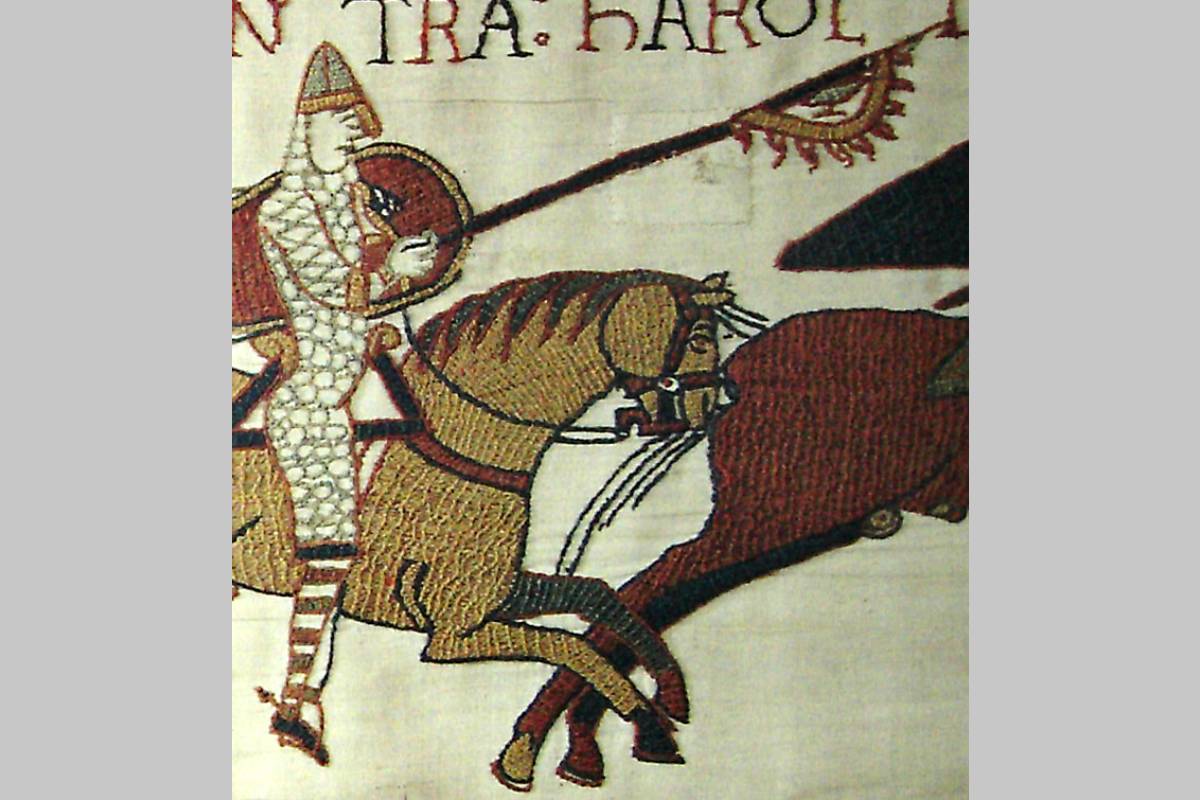
Detail from the Bayeux Tapestry showing a Norman knight with a bird banner, often interpreted as the raven banner. Source: Public domain
Beautiful Bayeux propaganda
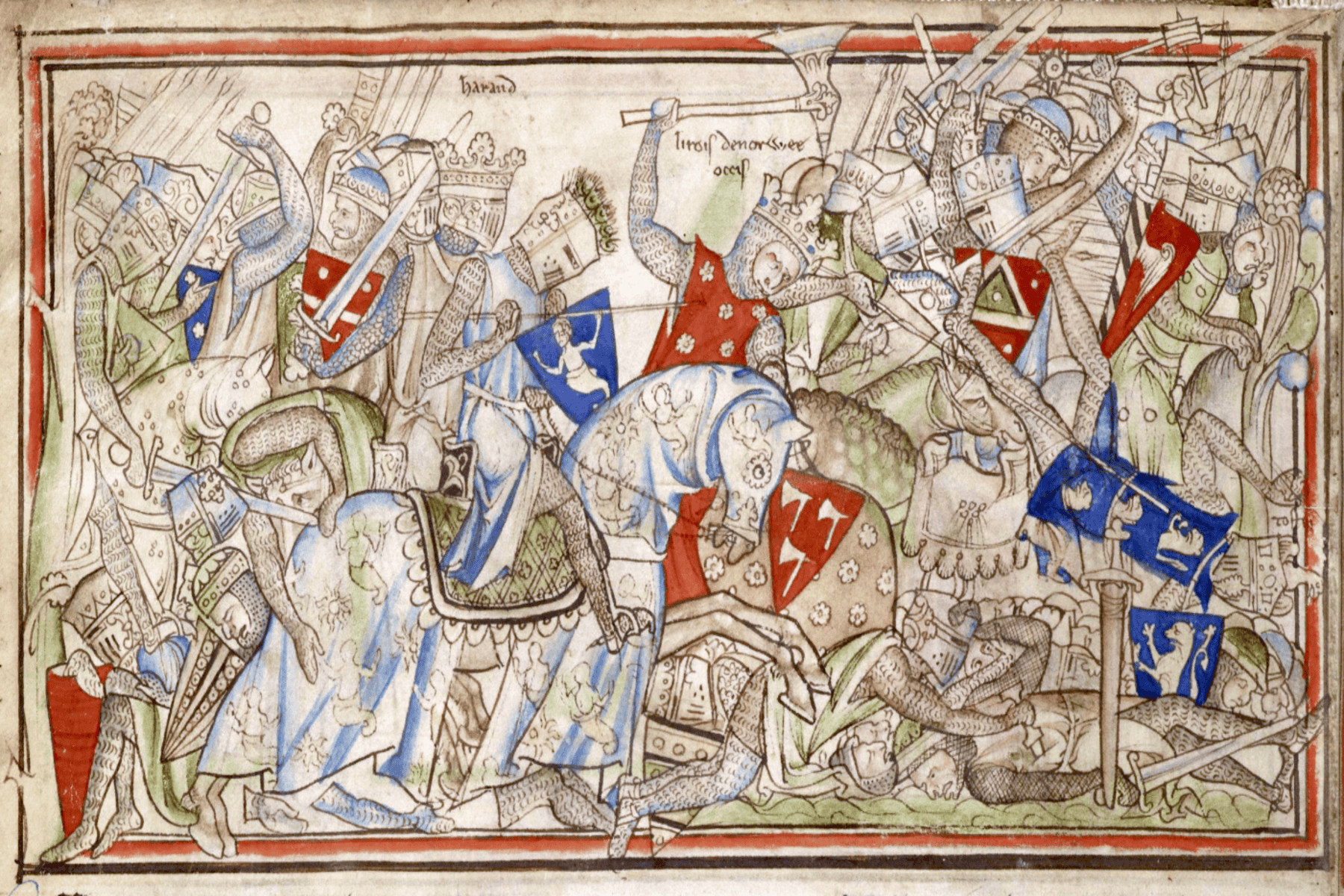
Fast-forwarding to the very end of the (English) Viking Age, we now find ourselves gazing at the Bayeux Tapestry.
Likely commissioned within William the Conqueror's Norman circle, it is one of the most beautiful pieces of biased propaganda in world history.
In two of the tapestry's panels, there appear to be the very faint images of a raven banner. One is shown being trampled by a Norman knight during a charge against an Anglo-Saxon shield wall.
Some believe that this was a deliberate allusion to Hastings, signifying the end of the "Viking Age" of English history. Others have pointed out that it could be interpreted as a sign of possible Viking presence amongst the ranks of Harold Godwinson's men.
Another panel shows a standard bearer of Duke William with what appears to be a raven banner.
Here, as Leon Wild talks about in his 1991 article in the journal Scandinavian Studies, the banner "would function...as a resource...which enhances the potential of combat success by the Norman descendants of the Vikings..." through psychological warfare.
It may also link William's ancestry to that of early medieval Europe's most feared warriors, the Vikings, who terrorized many in an Anglo-Saxon army.
Either way, the raven banner makes a brief cameo in one of the most consequential battles in European history and reminds us that history, legend, and propaganda are woven tightly, much like the raven banner was said to be itself.
For more information on the success of some of the Viking armies in Anglo-Saxon England, visit BBC History Extra here.
We get to provide readers with original coverage thanks to our loyal supporters. Do you enjoy our work? You can become a PATRON here or via our Patreon page. You'll get access to exclusive content and early access.
Feel free to reach out to discuss potential stories that may be in the public interest. You can reach us via email at [email protected] with the understanding that the information you provide might be used in our reporting and stories.




.jpg)