

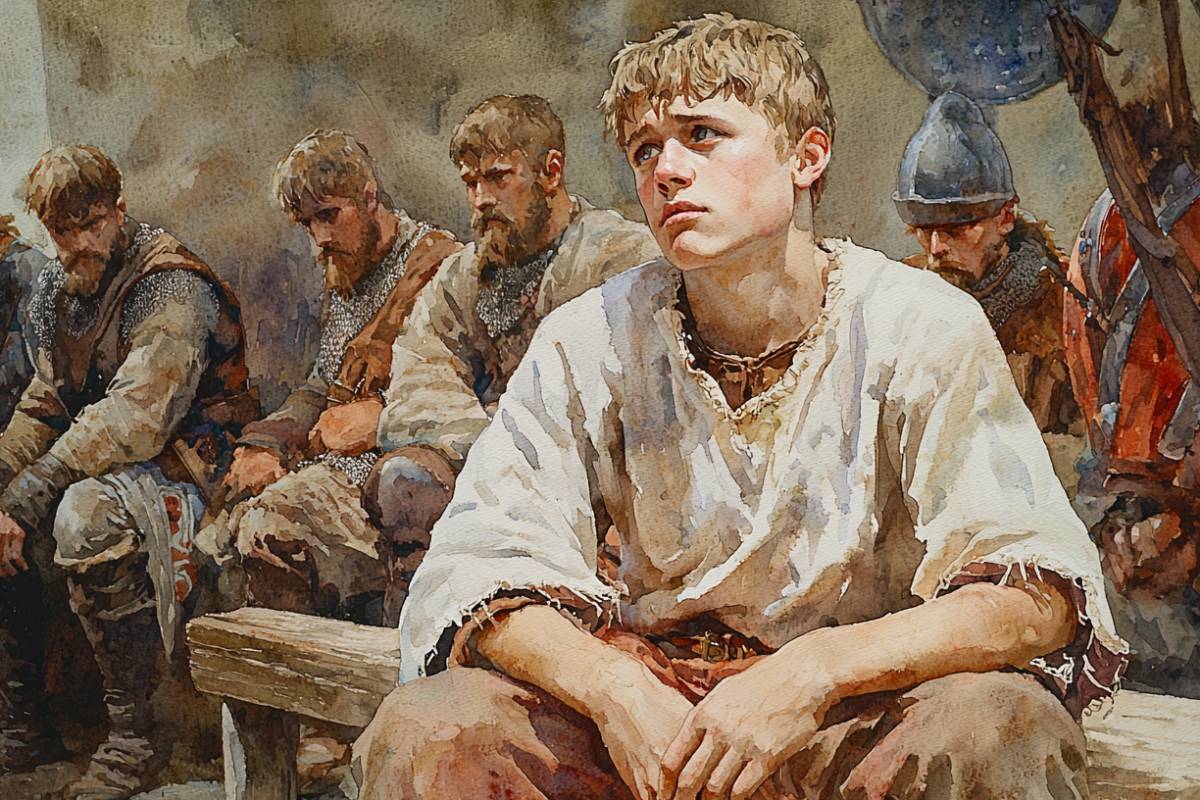
Popular depictions of people from Viking societies show them as ruthless warriors, leaping over the side of a longship, armed to the teeth and ready to rock, raid, and ravage.
Yet what we now call Vikings—warriors who took to the seas for a predatory raid or brawl—were only ever a small fraction of the people in the societies that produced them.
They were a small minority who, as often as the raid ended, melted back into ordinary society, perhaps as farmers or artisans.
Sometimes, however, the historical facts are not as thrilling or entertaining as what we watch on the small or silver screen.
Yet it is our brave mission here at The Viking Herald to help scrub away the centuries of popular stereotypes and tropes about people from Viking societies.
Let us turn to an often-overlooked aspect of Viking society: its nurturing nature.
Yes, the very same people who could develop early medieval Europe's most feared and ruthless warriors also had a softer side in the form of fosterage.
Throughout the Viking Age (c. 750–1100 CE), this became a well-established tradition that was fundamental in developing the next generation—from the high and mighty, like leaders and warriors, to the humbler, like farmers and homemakers.
Whilst for some, this was a system of child-rearing—perhaps their parents were unable or unwilling to raise them—for others, it was the path to glory and success.
Let us turn now to the general nature of this system before delving into the specifics.
Undertaken by the powerful and the humble, it created strong emotional bonds
What we moderns call "fosterage" in English was known in the Old Norse tongue as barnfóstur.
This was a practice whereby a child—or children—were entrusted to other families for child-rearing, education, or to strengthen alliances.
It occurred within all sections of Viking society, from the very poor to the super-elite, from the children of beggars to those of powerful nobles, chieftains, and even monarchs.
These political alliances even extended to the hoi polloi, meaning that humble men in the ranks possessed a degree of social cohesion and personal familiarity that the opposing side may not have.
According to Sigrid H. H. Kaland in her chapter "Children and Society in the Viking Age" in the 2008 book Children, Identity and the Past, any "child that had been raised by foster parents would be considered to have some sort of membership of that family besides his [or her] own..." (p. 62).
Given that foster care would take place in the formative years of a child's life, deep emotional bonds could—and often were—created with the foster family.
As many children matured, they likely felt stronger bonds with their foster family than with their biological family.
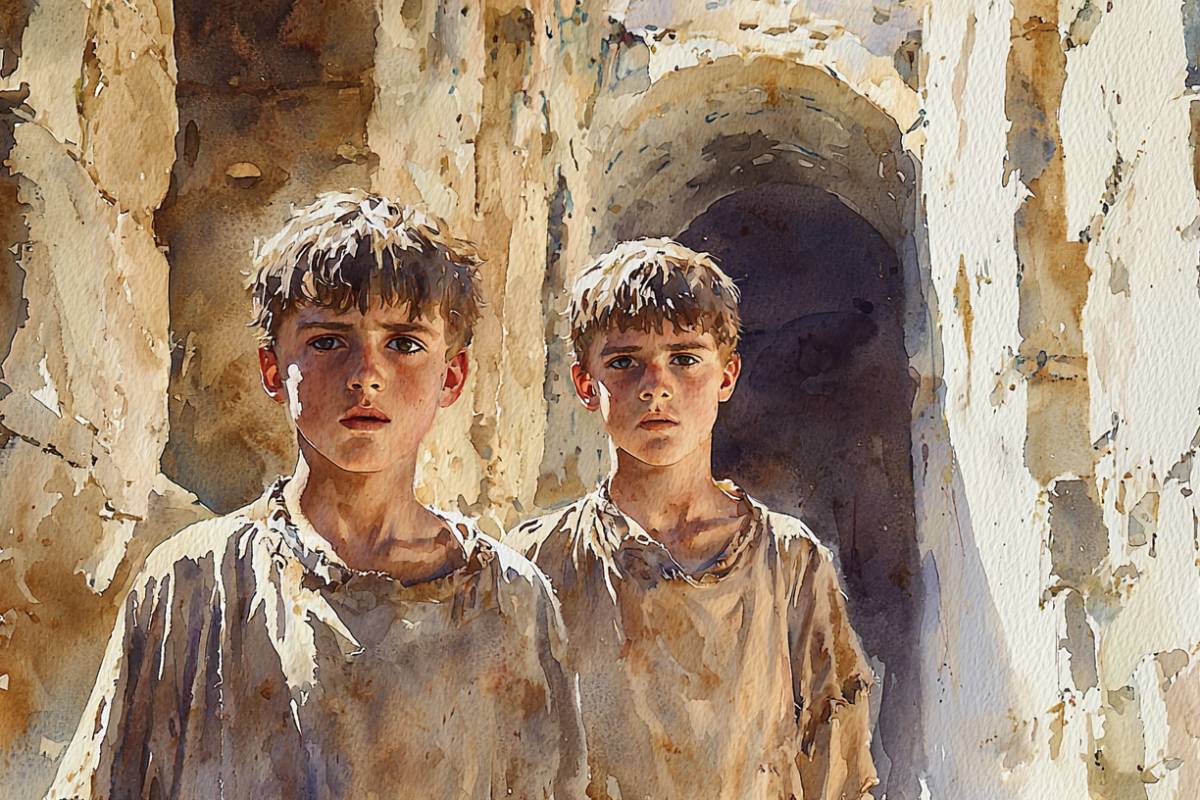
Fosterage in Viking societies strengthened political alliances, provided education, and offered opportunities for social advancement. Illustration: The Viking Herald
Fostering loyalty, new skills, and status
There were essentially three reasons for a child to take part in foster care.
Firstly, this was a popular form of strengthening bonds and securing political alliances.
The children of a noble—perhaps the oldest son or a second daughter—could be sent to be raised in another household. This not only reinforced loyalty between the two families but could also be called upon during times of strife.
Secondly, this was also done for education. Given that people in Viking societies lived in an era before the adoption of compulsory schooling, foster care served as a great way for children to learn and be trained.
For those in the elite, the boys would often be taught the finer arts of politics, warfare, or leadership, while the girls focused on education in household management, hospitality, or even rudimentary medicine.
Further down the social ladder, fosterage saw both boys and girls learn the skills needed to survive in their harsh environment—whether in food production and farming, household maintenance, or learning the trade of their foster parents.
Finally, improving or bettering one's social status was also a key reason for fosterage.
The system also allowed for the fostering family to receive status and honor should they raise a high-born child, particularly from a ruling or renowned warrior family.
Conversely, the child—if they were of more common stock—could receive prestige and honor by being fostered by a family who was considered socially superior.
In powerful families, girls would become something like the later medieval role of a "lady-in-waiting," whilst a boy may well become something akin to a squire or an apprentice.
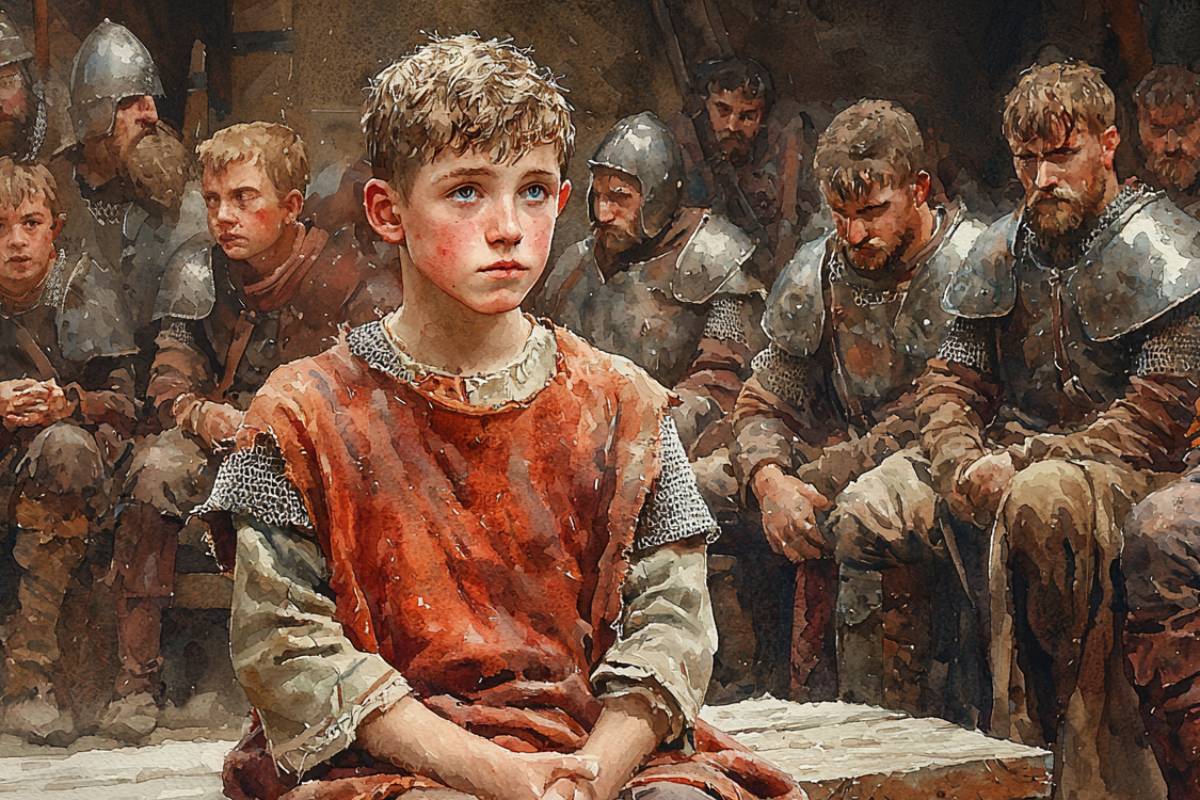
In the absence of formal military academies, Viking fosterage served as a key method for training future warriors. Illustration: The Viking Herald
Raising the next level of warriors
Given the warrior ethos that permeated every aspect of Viking society, this presence was also felt in fosterage.
Living in an era of high political insecurity, where matters of the soul could lead to a bloody death, there was a constant need for skilled warriors.
Despite the ongoing debate about whether shieldmaidens existed and if they were ever more than a minority, the general rule was that warfare was seen as a masculine affair.
Young boys, perhaps of high birth, could be sent to be raised by skilled and seasoned warriors.
They learned the fundamentals of warfare, from the brawnier aspects of physical combat and battleground etiquette to the more cerebral arts of strategic thinking and political analysis.
In an era before military academies or any sort of basic training, this was a way for Viking societies to train the next generation of leaders and warriors.
Fosterage ensured that the institutional knowledge and skills of seasoned warriors were passed down to the next generation.
This was part of the reason why Viking warriors were so feared, as many had, quite literally, lived and breathed warfare since they were knee-high.
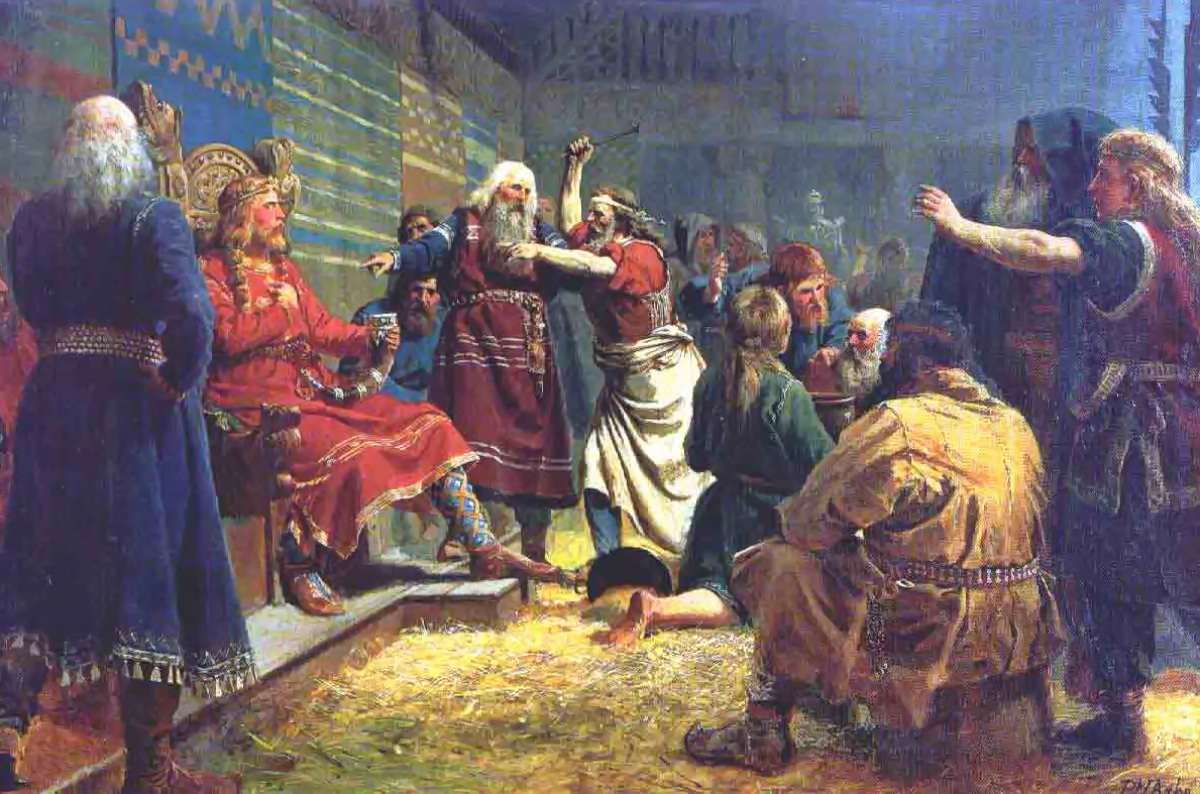
Håkon the Good was fostered at the court of King Æthelstan, where he was raised and educated before returning to rule Norway. Illustration: Peter Nicolai Arbo (1831–1892)
Fosterage: A tale of two kings
We now look at two different stories of royal fosterage.
The first sees Håkon the Good—the son of Harald Fairhair—sent to be raised at the great Anglo-Saxon court of Æthelstan.
Again, we turn to Kaland for her analysis of this relationship, in which she states that those "...who fostered children for others were often considered of a lower rank..." (p. 61).
This means that, at least in the eyes of those who compiled the Norse sagas—where this tale is taken from—the King of Anglo-Saxon England was seen as socially inferior to the King of Norway.
Håkon the Good would eventually return to Norway and rule over the nation, one of the first occasions—but not the last—of a young Norwegian heading across the Norwegian Sea to gain an education in the British Isles.
We also find another example of fostering in the story of the later Norwegian king, Olaf Tryggvason.
Following the death of his father, he was raised by his mother and her foster father in secret.
He winds up captured along with his mother, sold into slavery, and finds himself in what is now Estonia.
Here, he meets the man who was said to have murdered his foster father and kills him. He is, however, allowed to remain in what was then the Kievan Rus, as he was of noble birth.
This suggests that the bond Olaf formed with his foster father was strong enough to warrant bloody vengeance.
Fosterage is a little-studied aspect of Viking societies. Derided for their bloody and violent nature—which was only caused by a small warrior minority—this system of child-rearing shows a softer side to this society.
Whilst it was no doubt dominated by earthly motives—status, honor, power, and control—it did show that young human lives could be placed in the hands of strangers, ensuring their growth, education, and survival into adulthood.
For more information on a recent archeological discovery involving Viking Age children, visit the Smithsonian Magazine website here.
We get to provide readers with original coverage thanks to our loyal supporters. Do you enjoy our work? You can become a PATRON here or via our Patreon page. You'll get access to exclusive content and early access.
Feel free to reach out to discuss potential stories that may be in the public interest. You can reach us via email at [email protected] with the understanding that the information you provide might be used in our reporting and stories.