

Despite some toxic rhetoric from certain American politicians about immigration, it is worth remembering that the United States of America was built on and by widespread immigration.
Yet the "melting pot" – where people from all over the world, with different languages, cultures, religions, and identities, were allowed to start a new life and settle in the U.S. of A. – has a much longer history than many believe.
In fact, the story of European migration to North America starts centuries before Christopher Columbus thought he had (wrongly) discovered the Indies.
The European story of North America began almost half a millennium earlier, at the height of the Viking Age (c. 750–1100).
People from Viking societies expanded outward from Scandinavia in the early medieval period to raid, trade, and settle huge swathes of the Western Hemisphere.
Whilst the British Isles and the Frankish realms were the first destinations, the Vikings soon expanded outward again, settling eastward across much of what is now Eastern Europe – creating the original "melting pot," a multiethnic polity called the Kievan Rus – and westward across the North Sea to Iceland.
The settlement of Iceland was said to be the result of the first Scandinavians fleeing heavy taxation for a life abroad.
The people who settled Iceland were said to be disgruntled with the perceived economic heavy-handedness of the first king of unified Norway, Harald Fairhair.
Iceland hopping
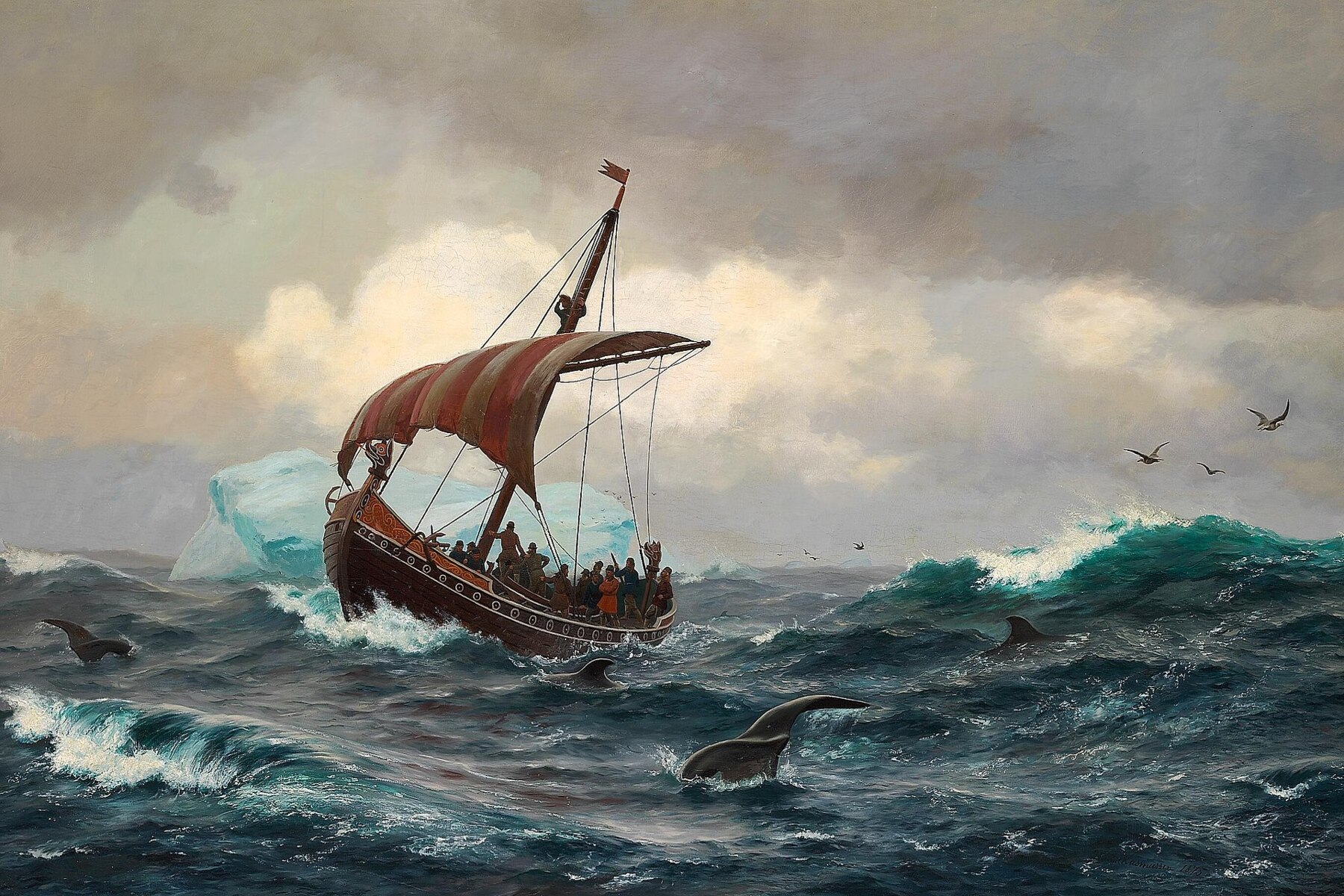
By the late 10th century, Vikings had been plying the rough seas of the North Atlantic Ocean for centuries.
Despite their lack of modern navigational technology or knowledge, they were able to navigate these perilous waters from their settlements in Iceland.
Soon, there was a steady stream of ships from Iceland to Viking settlements across the Norwegian Sea in Scandinavia and surrounding areas.
It is at this point that we must turn to the sagas. They should never be treated as accurately detailing historical truth, but they are historical documents.
Two sagas – the Saga of the Greenlanders and the Saga of Erik the Red – detail how Norse explorers expanded westward once again.
According to the sagas, around 982, a Viking chieftain from Iceland named Erik the Red was banished from Iceland after being charged with murder.
Sailing west from this rocky outcrop of Viking civilization, he eventually landed in what is now Greenland.
Tradition states he spent three years exploring this new world. When eventually allowed back to Iceland, he pulled off one of history's greatest marketing tricks by dubbing what he found "Greenland."
The marketing ploy worked, and soon two settlements were established in Greenland, on the southeastern and southwestern coasts.
Unbeknownst to people from Viking societies, there was another, larger landmass to their west: the western coast of North America.
Given the bustling settlements in Iceland and Greenland during the late 10th century, a steady stream of ships was plying westward from Northern Europe.
It was only a matter of time before they headed further west, whether by accident or design.
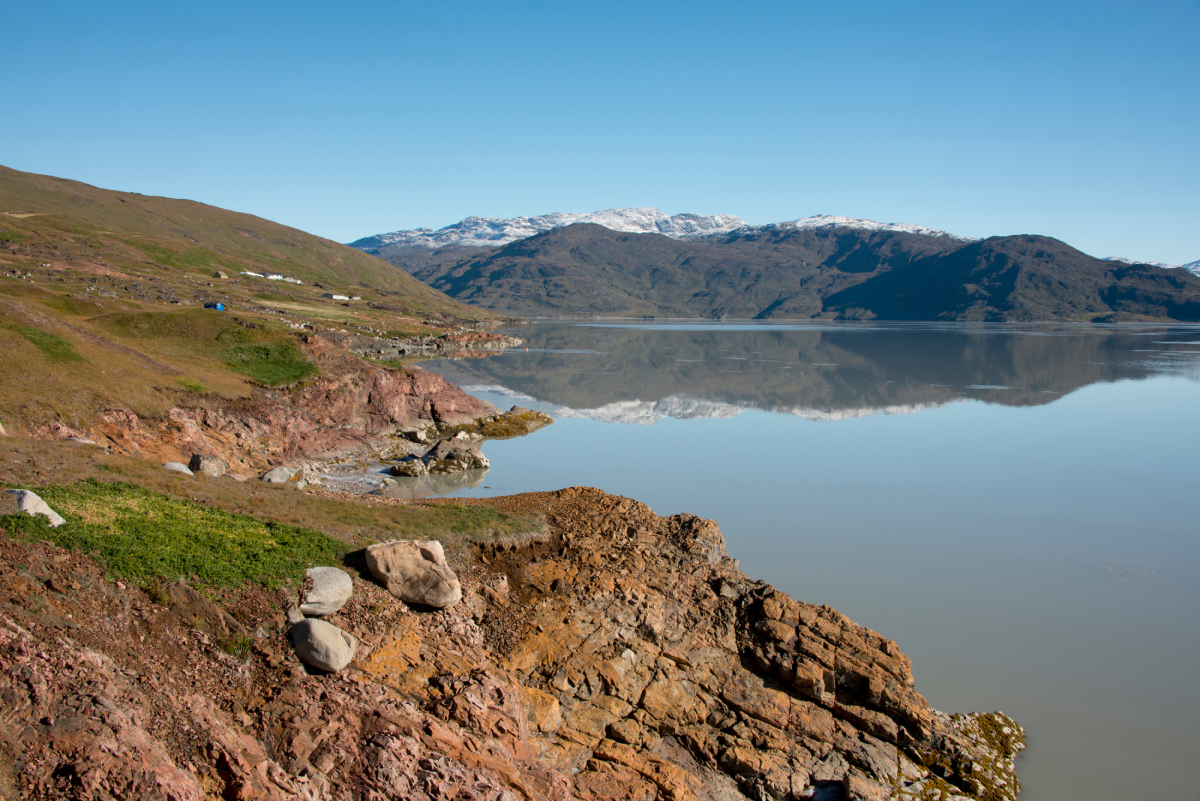
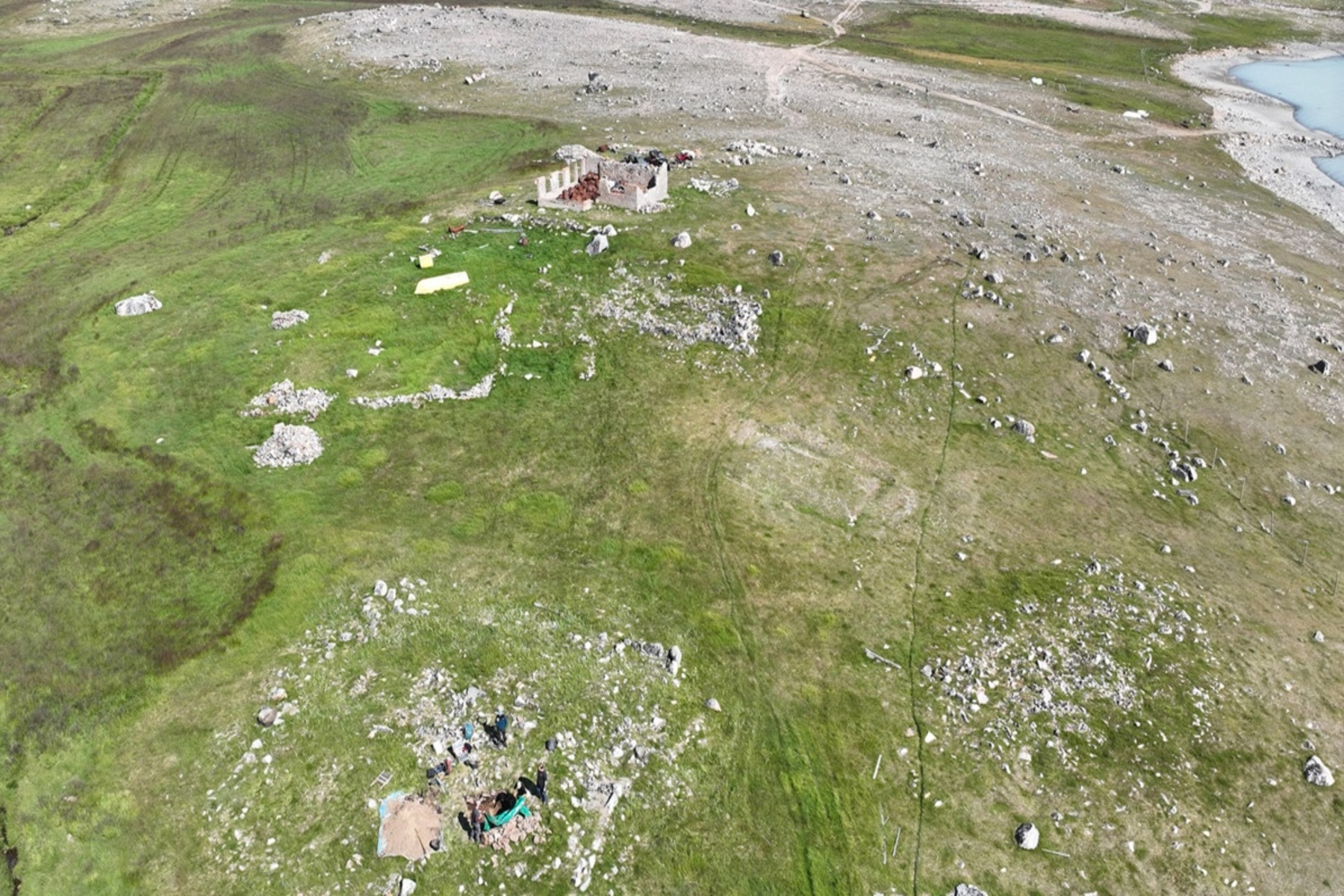
Erik’s Fjord, named after Erik the Red, was the site of his homestead and a key part of the Norse settlement in Greenland. Source: Danita Delimont / Shutterstock
America
Following the exploits of Erik the Red – the world's first real estate agent, developer, and medieval marketer extraordinaire – Vikings established two thriving settlements in Greenland.
Modern historians estimate that the population of these settlements ranged anywhere from 2,000 to 10,000 people, spread out over as many as 600 farms.
Around the turn of the 11th century, we encounter Erik's son, Leif the Lucky. Leif appears to have inherited his father's exploration skills.
Having served in the court of Olaf Tryggvason and converted to Christianity, he was intent on bringing this new religion to the settlements in Greenland.
It is here that both sagas relate how Leif's journey from Norway to Greenland took a slight detour.
Blown off course, his crew disembarked in a strange new world. There, they found a bountiful land full of salmon and wild grapes – which Leif christened Vinland (Land of Wine, i.e., wild grapes).
Spending a winter there, Leif and his crew returned with a shipload of timber and grapes to the Norse settlements in Greenland.
News soon spread of this land of (metaphorical) milk and honey, and another expedition was undertaken by more settlers, led by Thorfinn Karlsefni, around 1010.
Leading more than 160 settlers, Thorfinn retraced Leif's route and established, if we are to believe the sagas, a settlement on an island that modern historians believe to be the Canadian island of Newfoundland, just off the North American mainland.
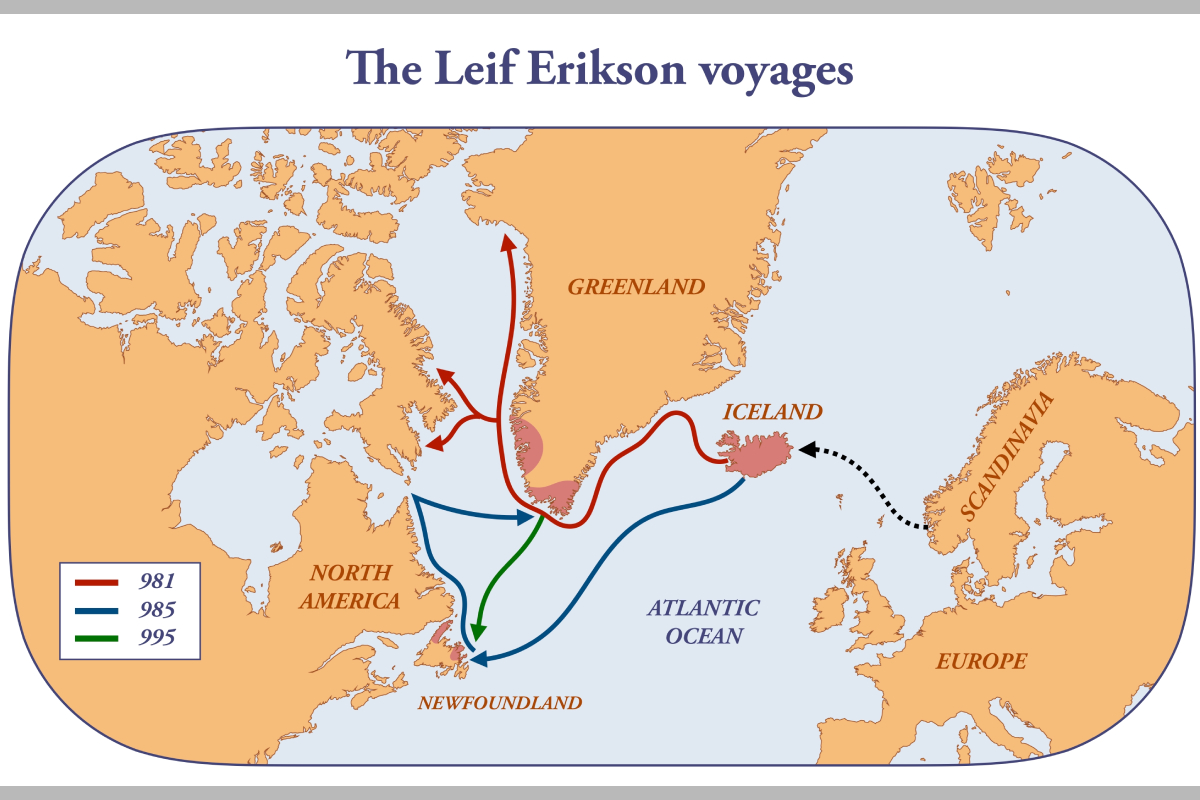
A map of Viking voyages traces the routes of both Erik the Red and Leif Erikson. Source: Dimitrios Karamitros / Shutterstock
A settlement in Vinland
By the early 11th century, there were tales of Viking exploration and settlement in Vinland. However, the Vikings were not the only ones there.
They encountered what they called Skrælings – whom modern historians believe to be the Indigenous inhabitants of North America.
As J. M. Mancini wrote in her 2002 article Discovering Viking America in the journal Critical Inquiry, this term was also used for a people encountered north of the Viking settlements in Greenland, the Thule people, who were the ancestors of the Inuit.
However, the new settlers of Vinland seemed to have clashed with the Skrælings. The sagas recount deadly battles between the settlers and the original inhabitants of Vinland.
After one such deadly clash, the rudimentary settlement in Vinland was abandoned, and the settlers were forced to flee back to Viking settlements further east across the Atlantic Ocean.
The sagas suggest a rough period of only decades between the initial "discovery" of Vinland and its eventual abandonment.
Could these tales have any historical truth? The world had to wait until the 1960s for conclusive proof...
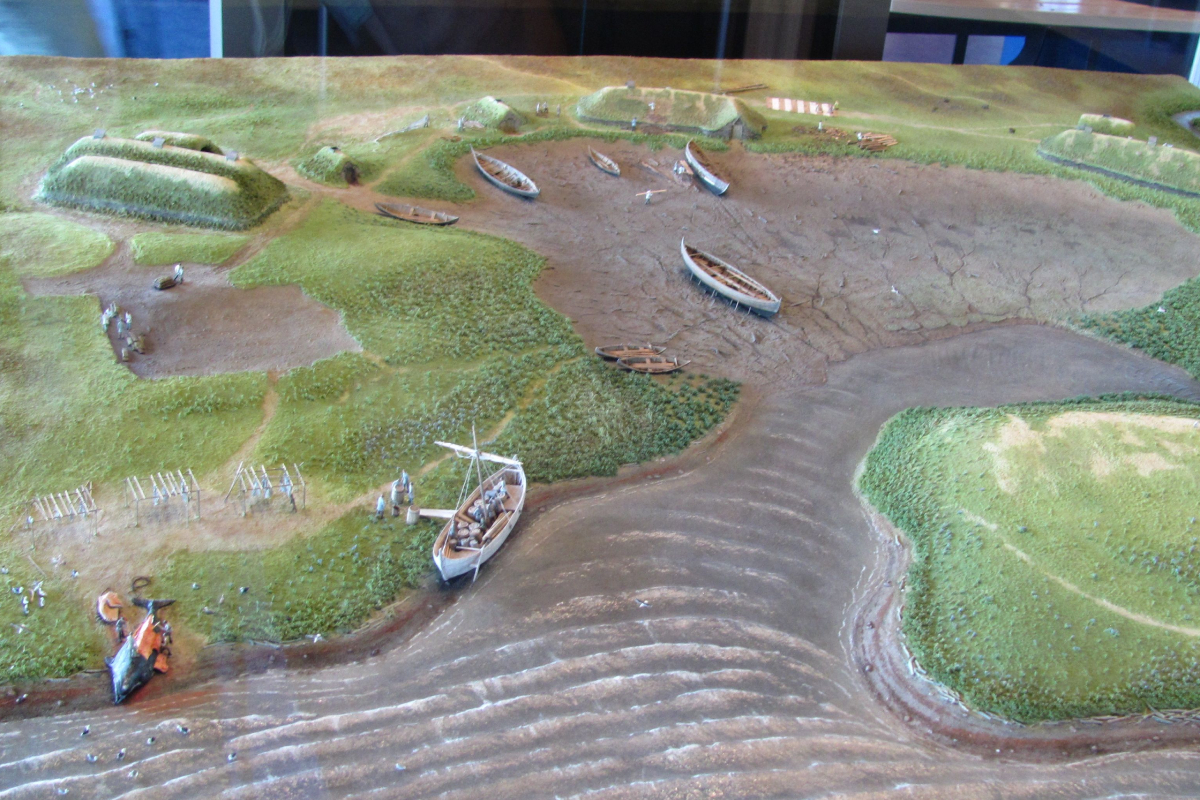
A model showing the layout of the Norse settlement at L'Anse aux Meadows. Source: Torbenbrinker (CC BY-SA 3.0)
L'Anse aux Meadows
The stories and tales of Viking settlement in "Vinland" were believed to be little more than ripping yarns for centuries.
With Christopher Columbus's "discovery" of America, and the later Spanish and Portuguese conquest and settlement of the Americas, earlier Viking tales of exploration into the western North Atlantic Ocean faded into the tides of history.
By the mid-20th century, however, not everyone had forgotten. A Norwegian husband and wife, Helge and Anne Stine Ingstad, led archeological excavations on the island of Newfoundland.
Using the sagas as a guide, they posited that Vinland was, in fact, the Canadian island of Newfoundland.
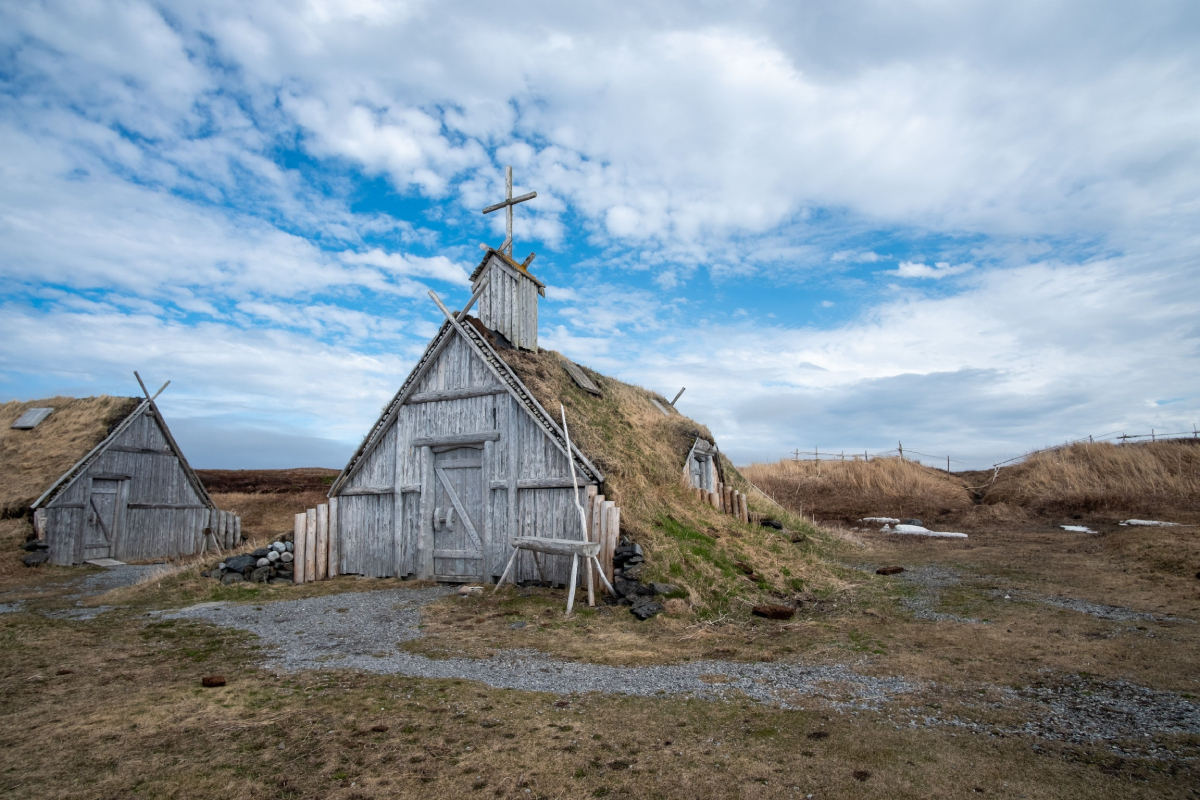
Soon, they uncovered the remains of a settlement on the northernmost tip of the island at a place called L'Anse aux Meadows.
What Helge and Anne found rocked the historical world as they uncovered the remains of eight buildings and more than 800 objects from Viking society.
Later carbon dating gave an estimated date of between 990 and 1050, which seems to fit with the dates of the exploration and settlement of Vinland in the sagas.
The site is now a UNESCO World Heritage Site and is conclusive proof that Vikings reached North America centuries before the early modern period's "Voyages of Exploration" that Columbus began.
We do not know exactly why the Norse settlement at L'Anse aux Meadows failed.
Whilst the settlement was accessible from Greenland, it is believed that a combination of factors, including conflict with the Indigenous inhabitants, resource depletion, and the vast distance from larger Viking settlements across the Atlantic Ocean, all contributed to its demise.

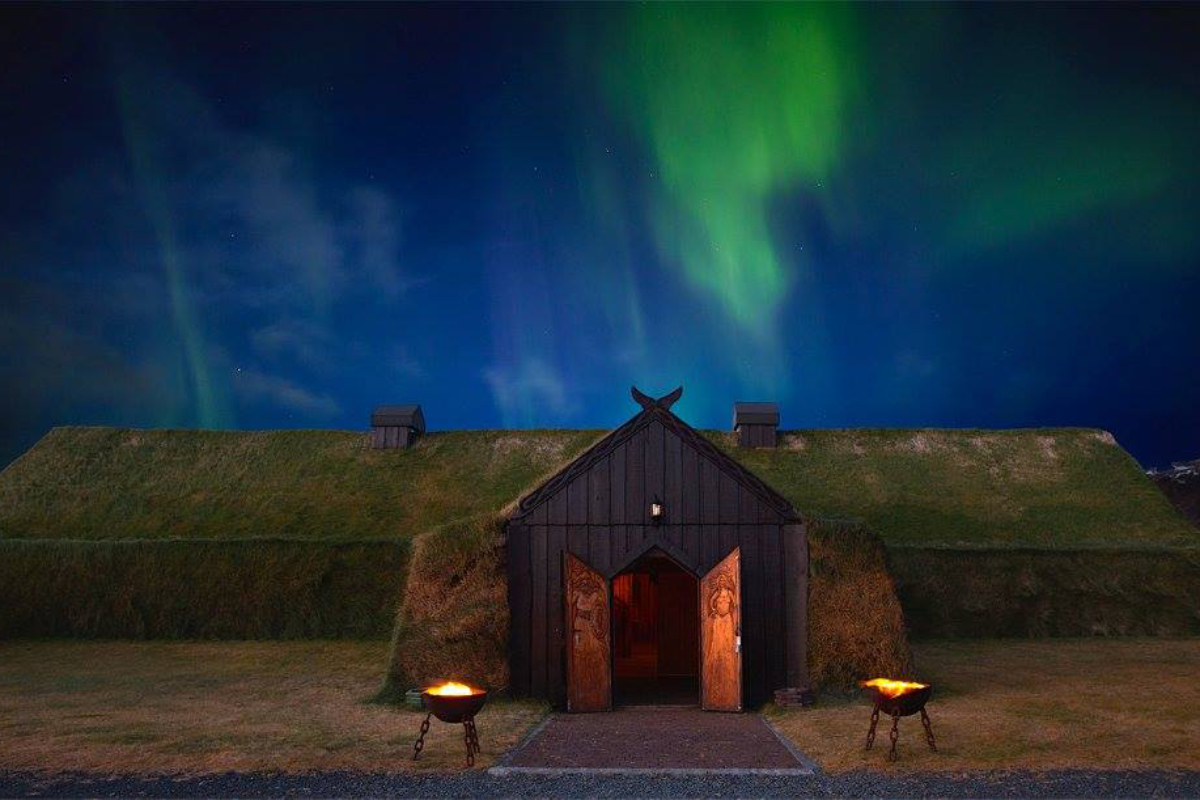
A recreated Norse longhouse at L'Anse aux Meadows, Canada, a UNESCO World Heritage Site since 1978. Photo: Danita Delimont / Shutterstock
Later Vikings in North America
Centuries after the decline of the Viking settlement at L'Anse aux Meadows, the latter half of the 19th century and the first half of the 20th century saw widespread immigration from Scandinavia, particularly from Norway.
These new-age Vikings crossed the Atlantic Ocean, just as their ancestors had done, to seek fortune, fame, and a new life in both the United States and Canada.
As Dag Blanck masterfully writes in his 2016 article in the Journal of Transnational American Studies, today a huge swathe of North America's Midwest, the Prairie provinces in Canada, and the Midwest in the U.S. bear the cultural and social legacy of these modern Vikings.
For more information on Vikings in America, visit The Washington Post here.
We get to provide readers with original coverage thanks to our loyal supporters. Do you enjoy our work? You can become a PATRON here or via our Patreon page. You'll get access to exclusive content and early access.
Feel free to reach out to discuss potential stories that may be in the public interest. You can reach us via email at [email protected] with the understanding that the information you provide might be used in our reporting and stories.