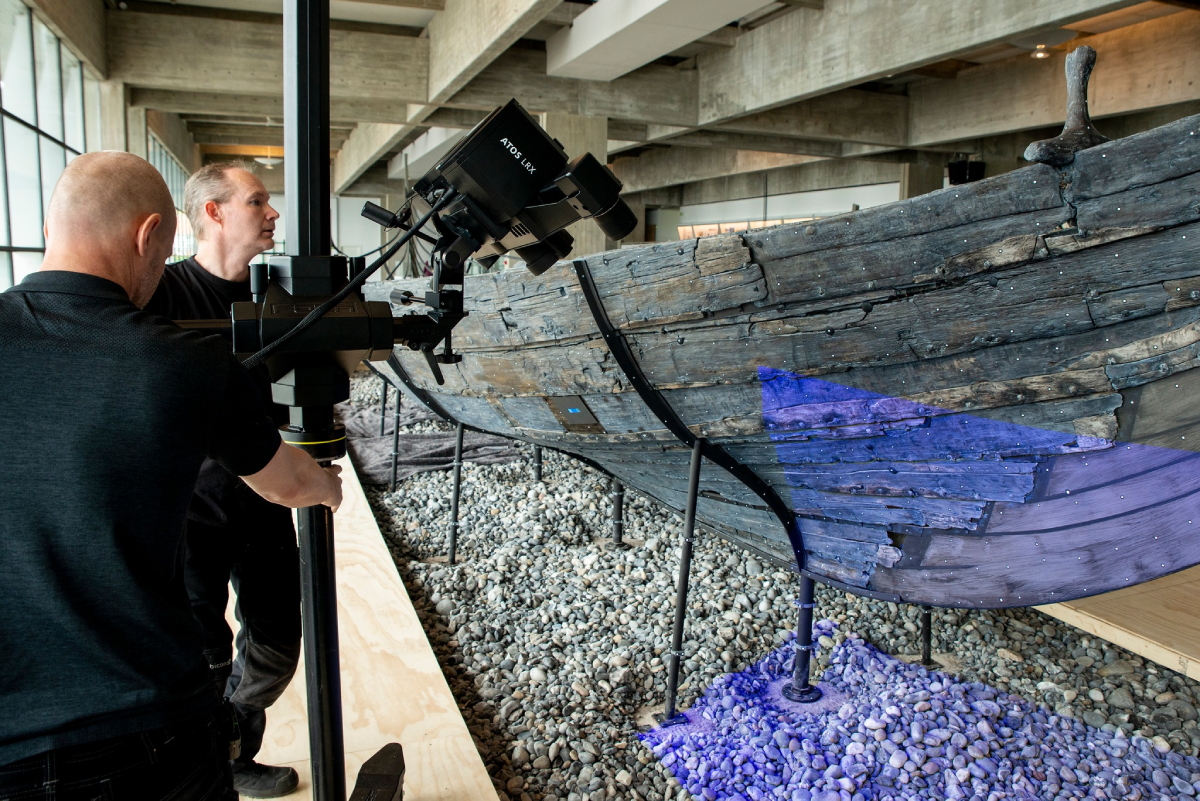


Gotland Museum in Sweden has announced the publication of a freely accessible database for the Gotland picture stones, which offer a unique glimpse into Norse culture during the Viking Age.
The database, which was created under the project Ancient Images 2.0, enables the general public to view the stones in digital format and access useful information about individual artifacts.
Iconic heritage
The Gotland picture stones are a veritable treasure trove of Norse art, culture, and religion.
Unlike runestones, where the focus is on the written word, picture stones are largely devoted to artistic depictions of Norse life and mythology, though they do sometimes contain runic inscriptions.
Picture stones have been found all over Gotland, a large Swedish island in the Baltic Sea. Many of the stones have been dated to before the Viking Age (400–700 CE), though perhaps the most prominent group belongs to the period 700–1100 CE.
Together, the stones offer a fascinating glimpse into the mind of the Norse and feature dramatic scenes of sacrifices, battles, legends, and myths.
Although similar picture stones have also been found in Scotland and on the Isle of Man, the Gotland stones are truly unique in terms of their number and scale.
Many prominent pieces from the collection can be visited at the Gotland Museum. Over the past five years, however, the museum has been working to ensure people around the world can view these magnificent artifacts at any time and from anywhere.
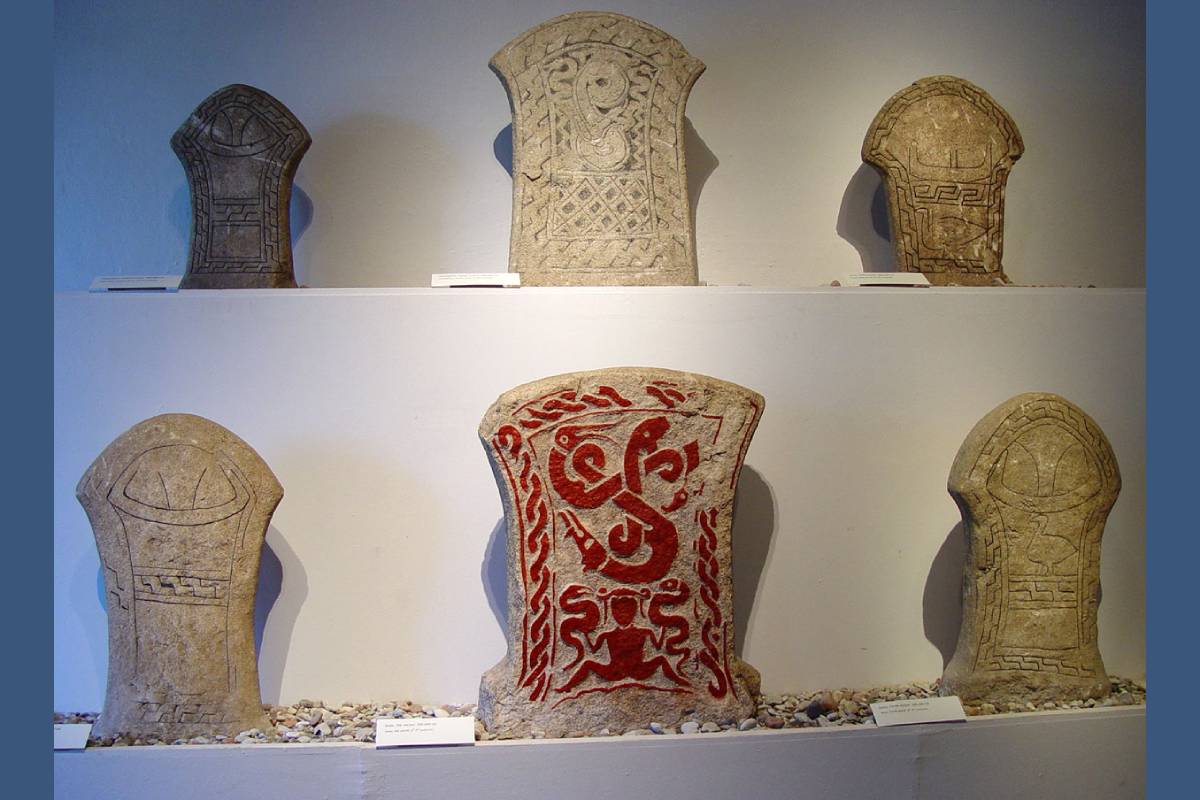
The Snake-witch Stone (bottom row, center) is one of several early picture stones cataloged in Gotland Museum's new digital resource. Photo: Jürgen Howaldt
Art, mythology, and history intertwined
Gotland Museum recently unveiled the publication of the new digital resource.
As the writer Octavia Randolph, who attended the event, informed The Viking Herald, the database was compiled by an international team of researchers who not only worked with the artifacts at the museum itself, but also spent five years tracking down and cataloging other picture stones from all over Gotland.
The collection is more than just a group of photos, however.
In most cases, visitors to the site can view a 3D image, a description of the pictures, any text found on the stone, and even a GPS location so that they can track down the individual stone themselves.
Here, for example, you can view the famous Snake-witch Stone, found at Smiss and dated to 400–600 CE, which depicts a figure clutching a snake in each hand and three interlaced creatures—a boar, eagle, and wolf.
Other notable examples include the Tjängvide stone, which comes from the Viking Age and depicts what appears to be Odin riding his eight-legged horse Sleipnir into Valhalla.
Another, found in the Gotland parish of Hablingbo and dated to 400–550 CE, presents a circling sun and two horses facing each other.
The iconic sun, depicted both here and in many other earlier stones, was also the inspiration for the logo of the new project.
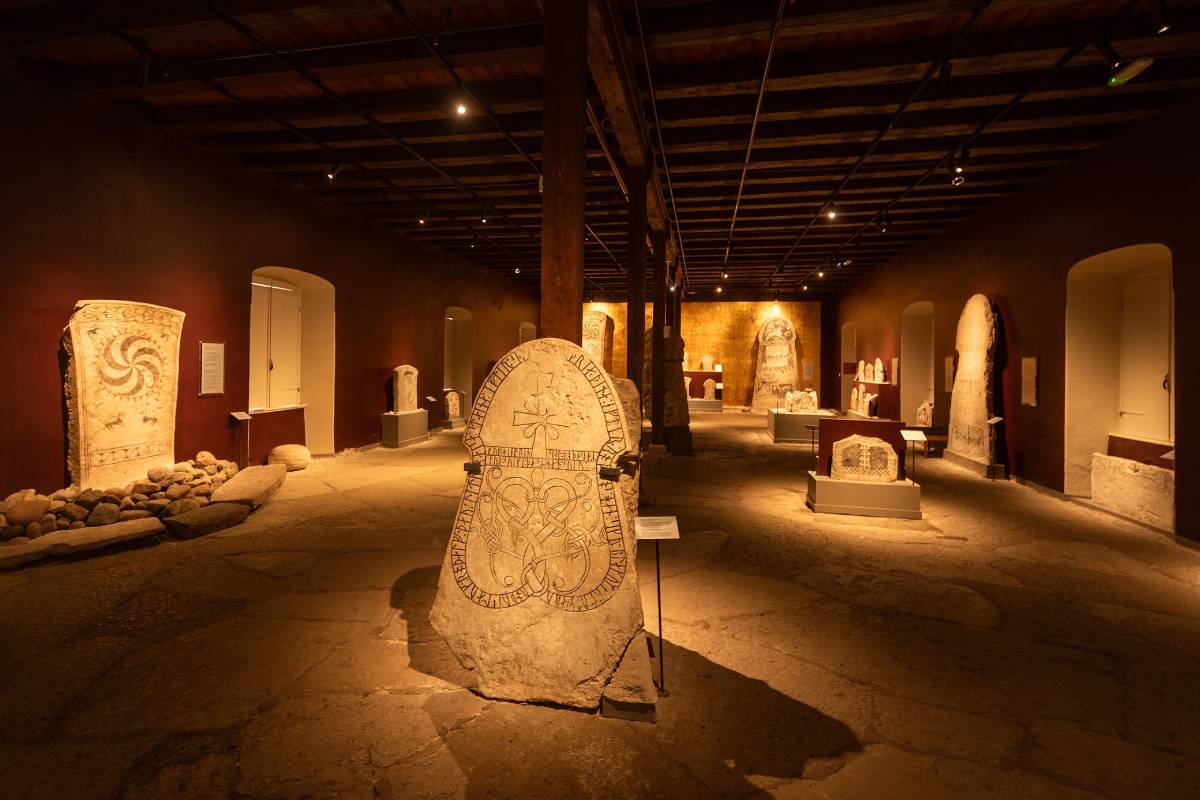
Bildstenssalen, the picture stone hall at Gotlands Museum, houses many of the stones featured in the new digital resource. Photo: ArildV (CC BY-SA 4.0)
"Utterly priceless"
It is hoped the website will prove to be a valuable resource for researchers into Viking Age mythology and history.
Naturally, it will also serve as a source of inspiration and pleasurable browsing for anyone with a passion for the art of the Viking Age or for Viking enthusiasts in general.
Octavia Randolph, who attended the event, had this to say:
"These magnificent picture stones were the reason I first visited Gotland in 1999. To stand again in the hall where I first stood and see this database revealed by its creators was a great thrill for me."
"They were created over a period of hundreds of years on Gotland to record the actions of the gods and great heroes, to celebrate belief in the afterlife, and to memorialize the actions of the sun and nature. They also captured vivid snapshots of what early life was like."
"The picture stones comprise the greatest pictorial record we have of such things as how ships were rigged, the weapons carried by warriors, dress and hairstyles for both men and women, and much more," Octavia added.
"Historical events and myths are depicted that we now have little or no knowledge of. In other words, the Gotland picture stones are utterly priceless."
We get to provide readers with original coverage thanks to our loyal supporters. Do you enjoy our work? You can become a PATRON here or via our Patreon page. You'll get access to exclusive content and early access.
Feel free to reach out to discuss potential stories that may be in the public interest. You can reach us via email at [email protected] with the understanding that the information you provide might be used in our reporting and stories.