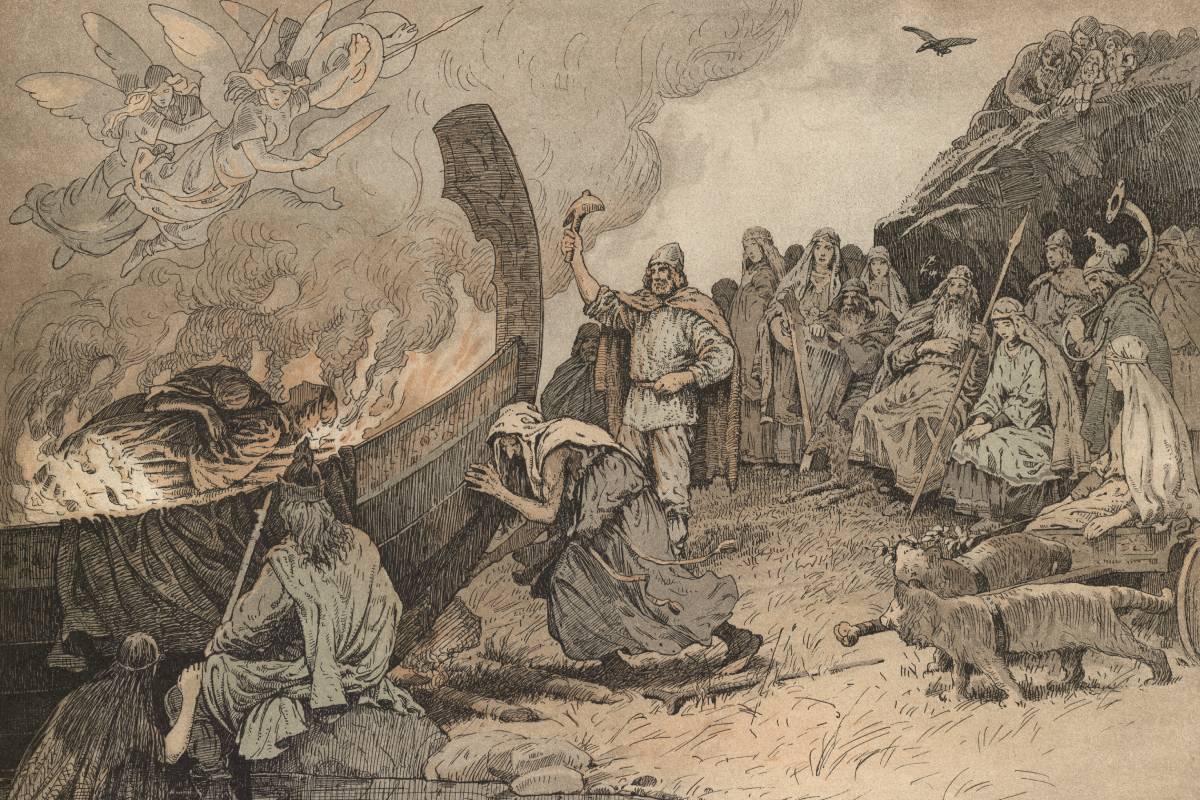


Freya was the goddess of love, harmony, and fertility, so it was considered a good and smart choice to have the wedding ceremony on a day dedicated to her.
Another factor related to a typical Viking wedding had to do with the climate - it was common to have a wedding ceremony in spring or summer.
Viking weddings were held in the open, so cold, windy, and rainy or snowy winters and autumns weren't a good choice. Having a wedding in the open, in nature, in the time of year when the weather was nice, sunny, and warm, on a day dedicated to the goddess of love – it all had certain symbolism.
However, other symbolic acts were also performed during the Viking wedding ceremony and the wedding feast.
Viking wedding swords
Viking weddings didn't just mean creating a new household, where the newlyweds would start their life as a married couple. They also meant forming a new unity between two families.
One of the most important things was the exchange of wedding swords.
Before the wedding, the groom would have a sort of a rite of passage with his male relatives, where he would dig out a sword from the grave of one of his ancestors.
The sword would then be gifted to his bride. The bride would also give the sword from her family to the groom. The wedding rings were put on the hilt of the swords, so in this way, they were exchanged too.
This Viking wedding ritual meant forming unity and constituted a promise of protection.

One of the most important rituals associated with Viking weddings was the exchange of wedding swords. Source: Gioele Fazzeri / Unsplash
Viking wedding handfasting
Wedding handfasting was another symbolic ritual of a Viking wedding.
The bride and groom would have their hands tied by ribbons or cords while they were saying their vows.
The modern-day term "tying the knot" comes from this Viking wedding ritual.
Preparations for the Viking wedding
Both the bride and groom had to undergo a certain kind of preparation for the wedding ceremony. The bride would spend time with her female family members, who helped wash her thoroughly, as an act of symbolic cleansing and doing away with the state of maidenhood.
The bride also took off her bracelet that was worn as a sign of virginity, and this bracelet was kept for her future daughters.
The groom, on the other hand, had to dig out a sword for the sword exchange during the ceremony. He also had to make a blood sacrifice as a sign of gratitude to the gods who helped the couple find each other.
A goat was usually sacrificed as a plea to the god Thor to bless the marriage, and its blood would be kept in the temple for the wedding ceremony.
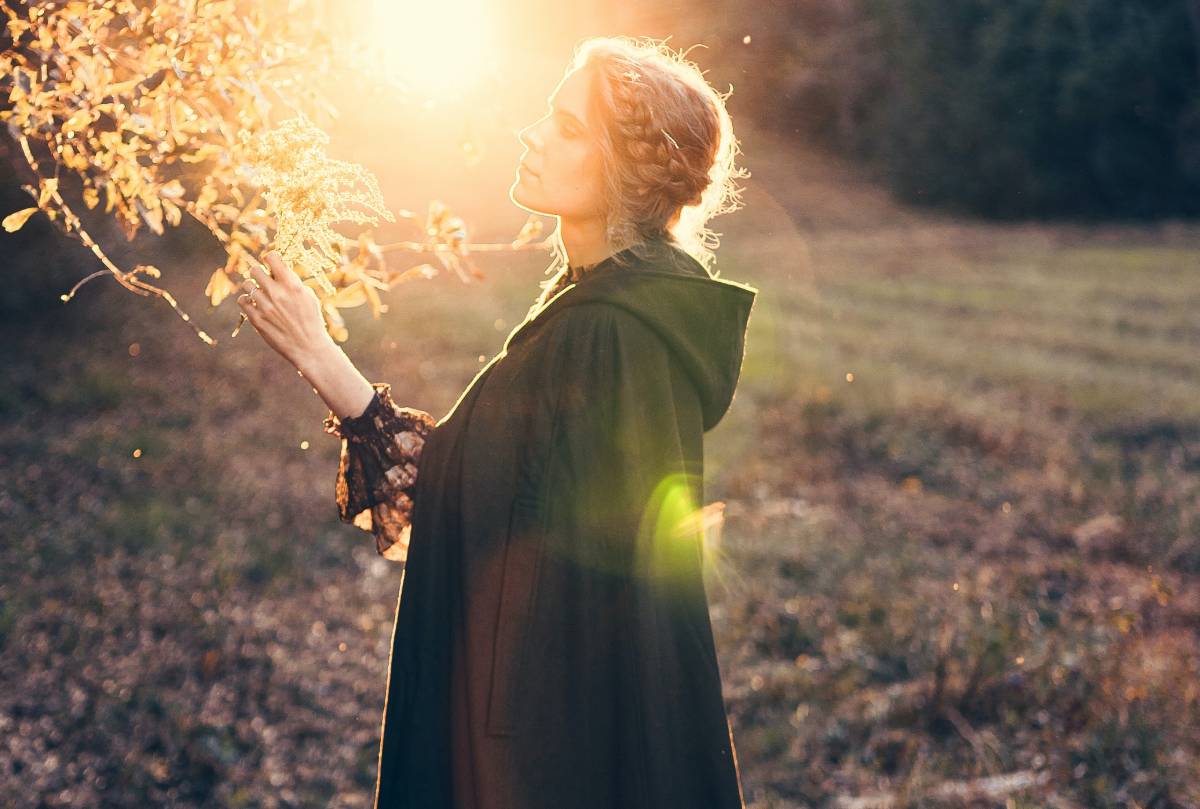
Brides wore long dresses in any color, and these dresses were usually decorated with details such as ruffles. Source: Timothy Dykes / Unsplash
What did Viking brides and grooms wear at their wedding ceremony?
The Viking wedding attire didn't differ much from the one they wore on a daily basis.
Brides wore long dresses in any color (the white wedding gowns weren't something Viking brides would choose), and these dresses were usually decorated with details such as ruffles. However, they weren't too decorated with many details.
Much more attention was paid to the hair – first of all, the longer, the better. Some brides wore elaborate braids, while others wore their hair loose.
Another important thing was a sort of a crown that some brides wore, made of silver and crystals or flowers.
Viking grooms wore simple tunics, which were sometimes decorated with a piece of fur. However, the most important part of their wedding attire was the sword.
Viking wedding feast
Viking wedding feasts were associated with another ritual that had to be carried out in order to make the union of the newlyweds binding.
The bride and groom had to drink ale together, which was usually a honey-based mead, and before the first drinking, both bride and groom had to make a toast to the gods.
The groom would be the first, making a toast to Thor and Odin, and then the bride made a toast to Freya.
Drinking ale and mead were a major part of the Viking wedding ceremony. There are no clear sources to show if there were some typical wedding dishes. But even if the food was scarce, wedding guests could count on abundant quantities of ale and mead.
After the feast, six witnesses would follow the newlyweds to the bedroom to make sure that the marriage was consummated so that potential future disputes could be avoided.
We get to provide readers with original coverage thanks to our loyal supporters. Do you enjoy our work? You can become a PATRON here or via our Patreon page. You'll get access to exclusive content and early access.
Feel free to reach out to discuss potential stories that may be in the public interest. You can reach us via email at [email protected] with the understanding that the information you provide might be used in our reporting and stories.