

In some cases, the confusion was even more considerable, as some warriors and raiders had the same name and family name! So, how was the issue resolved?
What helped, in this case, was giving them nicknames. Nicknames are not something unique to Vikings; people all over the world use them as a way of expressing someone's uniqueness or a special feature, often in a humorous way, or to honor someone.
Nicknames could be funny, derogatory, or rather "badass," like, for example, The Terror of Norwegians or The Splitter of Skulls.
Viking warrior nicknames
When giving each other nicknames, Vikings usually described their fellow warriors and raiders, so nicknames such as The Generous and The Stingy with Food were common. To give a concrete example, The Leather Neck nickname was used to make fun of a Viking who tried to make an armor that ended up looking rather silly.
Some of the nicknames were an indirect description of customs at those times, especially during wartime, and the facts hidden behind them may seem definitely "hardcore" to modern readers.
For example, the nickname Friend of Children meant that this particular warrior would not engage in "catching" children on the tip of their spear (an alleged custom that saw Vikings warriors throw infants up into the air in an attempt to "catch" them with the tips of their spears).
Viking nicknames often portrayed them as ruthless warriors. In sagas, they were important features, as the nicknames helped develop the character throughout the story.
Funny Viking nicknames
But the nicknames weren't always terrifying or bloody. Some Viking nicknames were used to tease people, as a part of friendly banter, such as Butter Penis or Shriveled Testicle – a tradition (young boys in particular) still active today, not just in Scandinavia, but in countries all over the world.
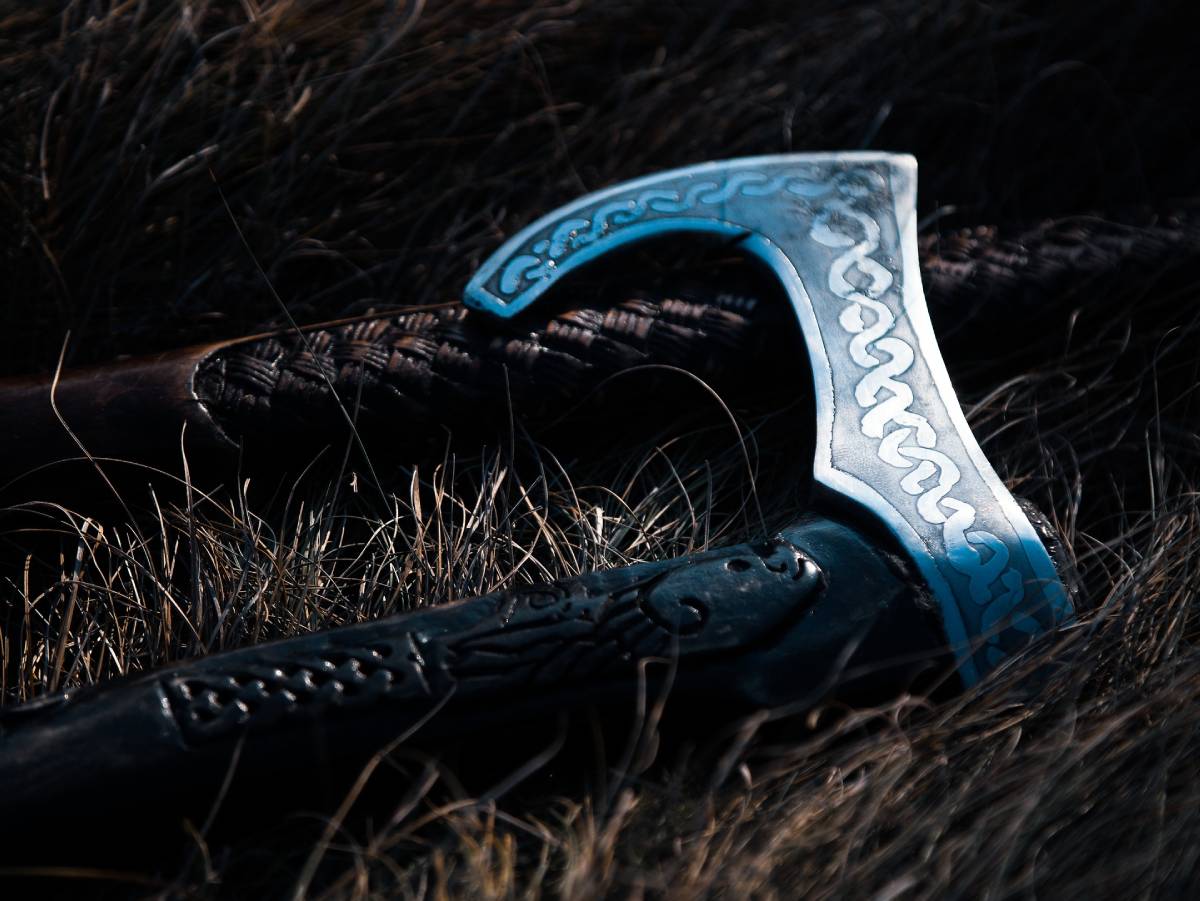
Viking nicknames could be quite "badass," like The Terror of Norwegians or The Splitter of Skulls. Source: ValeriiIavtushenko / Pixabay
Traditional Viking names for girls and boys
When it comes to names for boys, one of the most popular names in the Viking age was Toke or Thorsten, after the god Thor, who was considered one of the strongest gods.
Other popular names for boys were Orm, Ulf, and Bjørn, meaning "serpent," "wolf," and "bear" – all of the creatures the Norse gods had to defeat at Ragnarök. Some of these names are still popular today.
Some of the popular names for girls were Astrid, meaning "beautiful and loved," Frida, meaning "peace," and also Hilda, meaning "the fighter."
There was a general belief that the names would bring protection and special powers to children who got them. Later on, with the arrival of Christianity, biblical names became more and more popular; however, traditional Viking names were never forgotten.
Today, many children - especially in Scandinavia - still get names from the Viking period.
Runic inscriptions as the source of names
Viking names were found on runic inscriptions and sources outside Scandinavia.
Since men were usually taking part in different expeditions and voyages, they were the ones whose names were mentioned, so more male names have been found outside the Scandinavian countries.
Runic inscriptions are a rich source of information, as they also show the tradition of the Viking Age – it was namely quite common to give children names of the Norse gods.
Another common thing was to give specific names throughout generations, e.g., Harald, Svend, and Knud in the Danish royal family.
We get to provide readers with original coverage thanks to our loyal supporters. Do you enjoy our work? You can become a PATRON here or via our Patreon page. You'll get access to exclusive content and early access.
Feel free to reach out to discuss potential stories that may be in the public interest. You can reach us via email at [email protected] with the understanding that the information you provide might be used in our reporting and stories.