

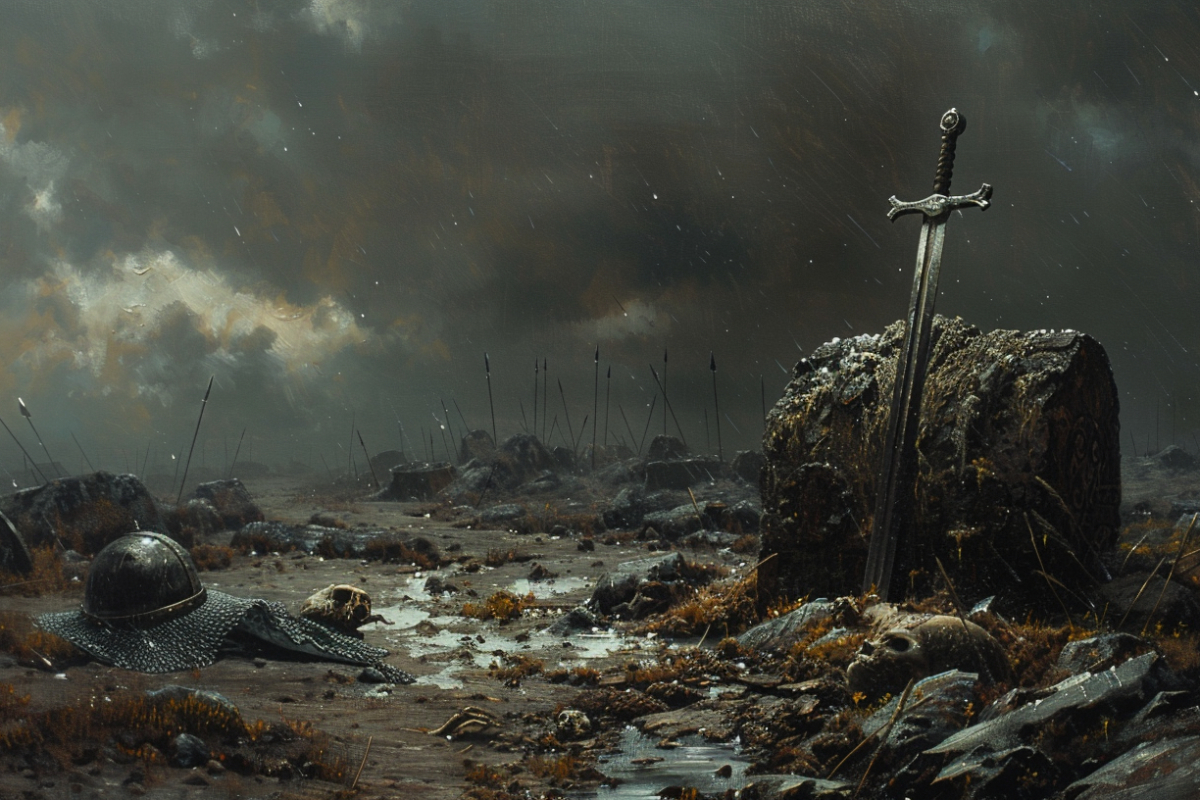
The traditional view of the Viking Age is that it is neatly bookended by two events.
It began with a 793 raid on a monastery on an island off the coast of northeast England that was so bloody and traumatizing it shook most of Europe.
Over the course of the next three centuries, people from Viking societies expanded outward from the Scandinavian Peninsula to trade with, raid, conquer, and settle huge swathes of Europe.
In fact, much of the early medieval period was dominated by Viking warriors – whether through the devastation and destruction they brought or by civilizations and societies' response to them.
As David Griffiths wrote in his 2019 article in the journal Antiquity, the history of northern Europe, especially from the British Isles to the Baltic, from Ireland to Eastern Europe, still bears the cultural, political, and even economic legacy of people from Viking societies from more than a millennium ago.
The end of the Viking Age is said to be neatly signaled by an event in 1066, almost three centuries after Lindisfarne.
This event was the failed invasion of England by Harald Hardrada, the most impressive and devastating warrior of his age, the "Thunderbolt of the North."
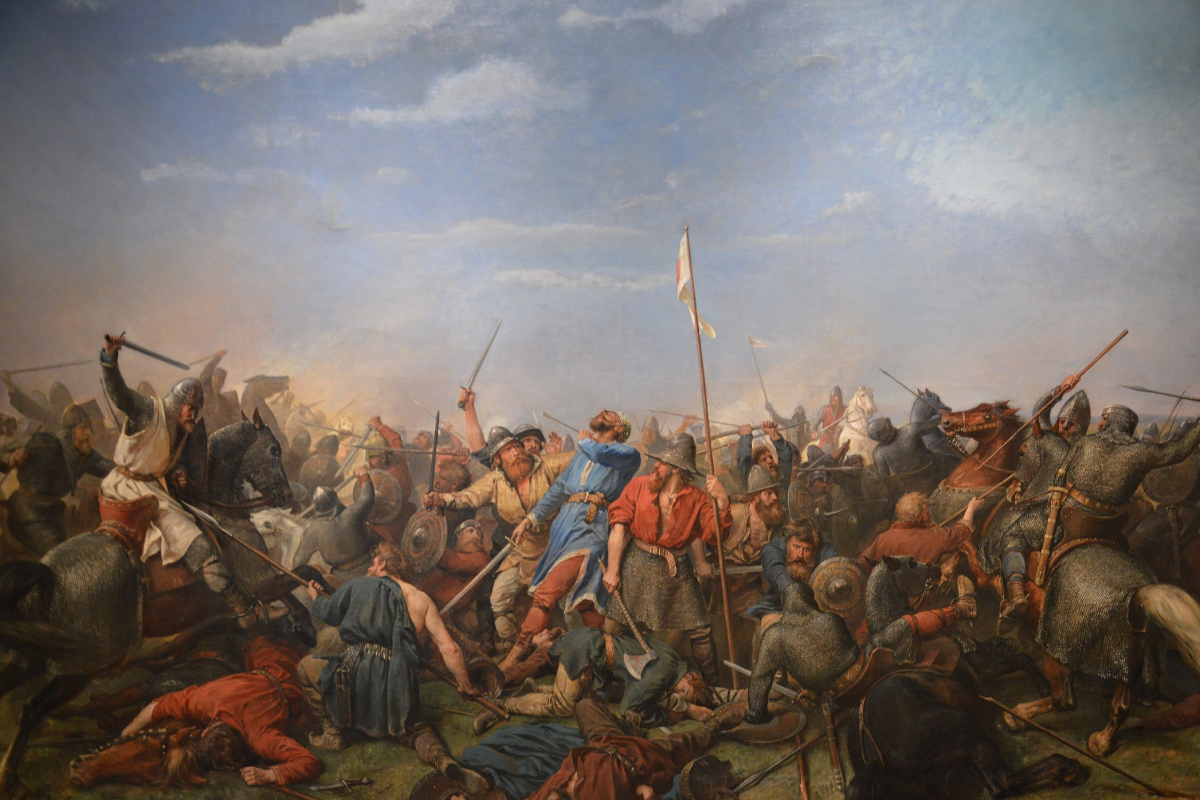
Hardrada met his end at Stamford Bridge in northern England.
Upon learning of Hardrada's invasion of England to press his claim to the English throne, the Anglo-Saxon King Harold Godwinson (himself of Viking stock) rushed the length of England to meet Hardrada's forces at Stamford Bridge and stop this Viking invasion.
Catching Hardrada's forces off-guard, Godwinson scored one of the most impressive victories of his short career and slew Hardrada. With Hardrada's death, so the traditional story goes, the Vikings ceased to exist.
Just a few weeks later, Godwinson had to fend off another invasion, this time from William, Duke of Normandy, who was pressing his claim – with the pointed end of a sword – to the English crown.
The forces met at Hastings, Godwinson got an arrow to the eye, and the rest, they say, is history.
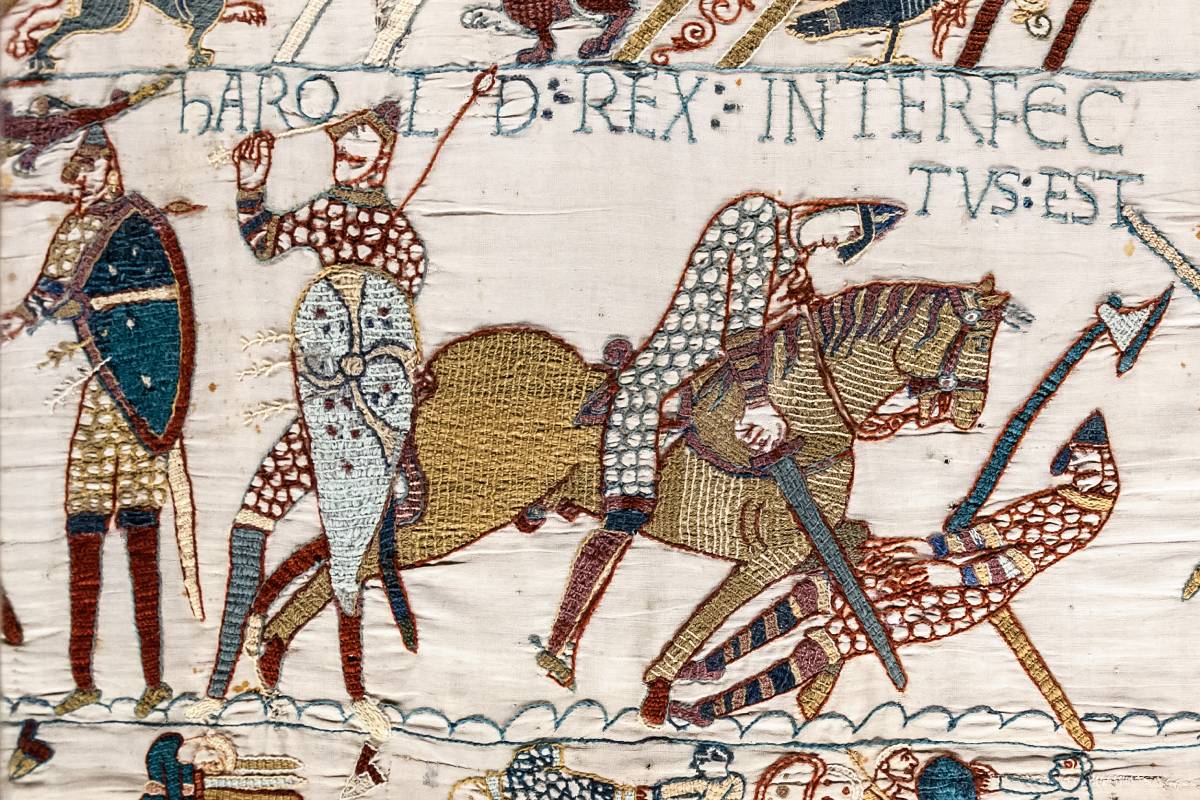
Scene 57 of the Bayeux Tapestry vividly depicts the death of Godwinson at the Battle of Hastings. Source: Myrabella (Public domain)
1066 – 1204: The Normans
Though truly historic, these two events used to bookend the Viking Age have an obvious Anglocentric bias.
The historical record shows that Viking raids began before Lindisfarne; indeed, the first recorded Viking raids took place more than half a century earlier, a world away on the shores of the Baltic Sea.
Likewise, the idea that the Viking Age simply ended with Hardrada's death is also historically inaccurate. However, 1066 is an important date in European history because it signals the rise of the Normans.
Whilst one Viking lay dead on a battlefield in northern England, a warrior of Viking stock bided his time waiting to strike.
William, Duke of Normandy, planned to invade England and press his claim to the English throne.
William was of Viking stock. The Duchy of Normandy can trace its origins back to a treaty between a Viking adventurer, Rollo, and the Frankish ruler, Charles the Simple, in 911.
Charles gave Rollo a prime piece of his real estate in return for a bend of his knee and securing his borders from other Vikings.
As Marjorie Chibnall wrote in her 2006 book, The Normans (available on Amazon here), over the next 150 years, the Normans blended the best of Viking and Frankish culture to produce a unique hybrid.
William would go on to conquer England and establish a dynasty. His fellow Normans would go on to conquer (briefly) much of southern Italy and help establish the Kingdom of Sicily.
Normans were to be found battling at both ends of the Mediterranean during the Crusades and throughout the Iberian Peninsula during the Reconquista up until the 13th century.
Normandy, the traditional heartland of the Normans, was seized by the French King Philip in 1204, and from then on, it was politically and culturally absorbed into the medieval kingdom of France.
So it can be argued that the end of the Viking Age ended with this seizure, which saw a polity founded by a Viking absorbed into a medieval kingdom.
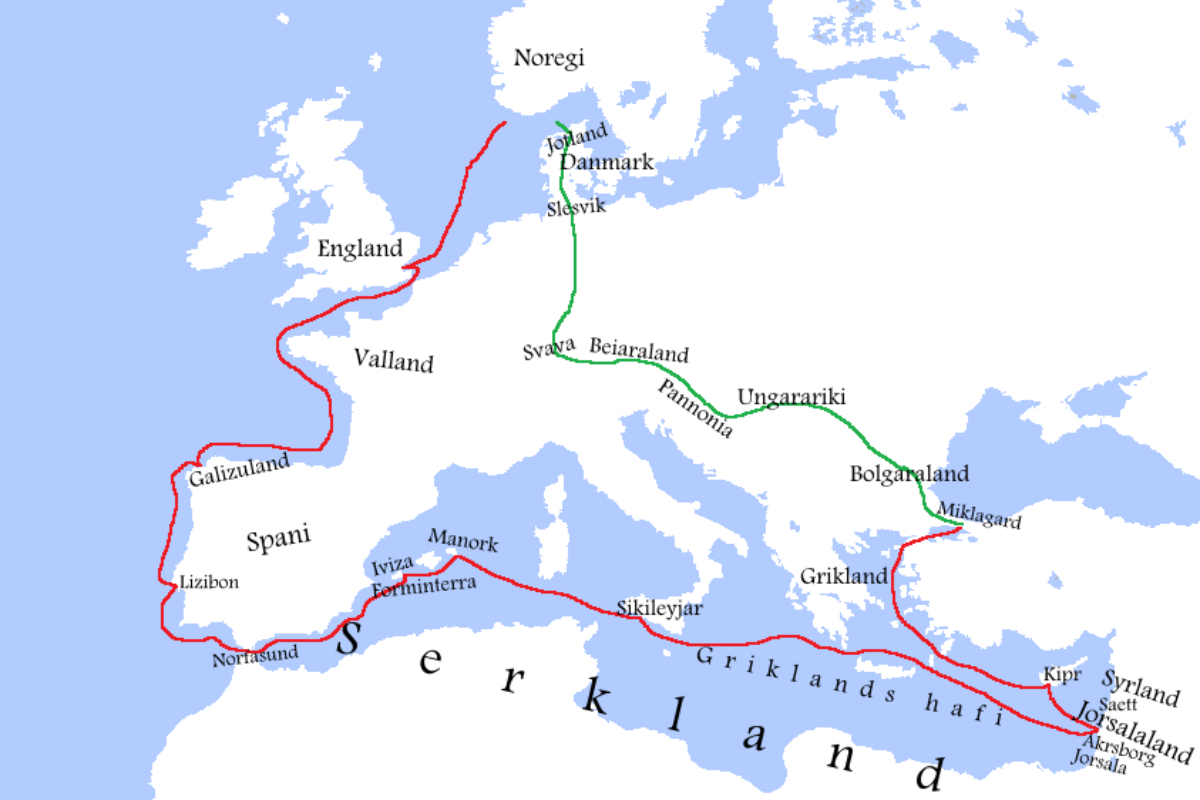
The route taken by Sigurd the Crusader's Norwegian Crusade marked the transition from Viking raids to organized military campaigns. Source: Gabagool (CC BY-SA 3.0)
1103 – 1130: Sigurd the Crusader
The Crusades, attempts by Western Christendom to capture the Muslim-held city of Jerusalem and win back much of West Asia, gives us the second viable option for the end of the Viking Age.
The First Crusade culminated in the successful capture of Jerusalem in 1099 by a motley crew of Frankish and German rulers, nobles, and knights.
Back in Scandinavia, the medieval Kingdom of Norway was about to enter a "golden period" under the rule of Sigurd I.
Reigning in Norway from 1103 to 1130, Sigurd was renowned for his participation in the fallout from the First Crusade.
Though the Crusaders had captured Jerusalem, Sigurd organized a huge force, traveled through Europe, and even played a crucial role in the Crusader capture of Sidon in 1110.
His travels – which saw him meet a German king, the Byzantine Emperor, and many Crusader leaders – took him away from Norway for three years.
However, he left the kingdom in good hands and ensured it was prosperous, safe, and stable.
His death in 1130 can be seen as another end date for the Viking Age, as Norway soon descended into almost three centuries of death and destruction, crippled by civil war and the Black Death.
Having been brought up in a society that had a living memory of Viking rulers and warriors like Hardrada, Sigurd the Crusader can be considered the last warrior from Scandinavia to have a significant impact on European affairs and events in the medieval period.
Despite the success of the Crusaders, thanks to Sigurd, Jerusalem and the Crusader states established in the subsequent decades would eventually fall back under Muslim control. The last Crusade (the ninth) took place in 1271.
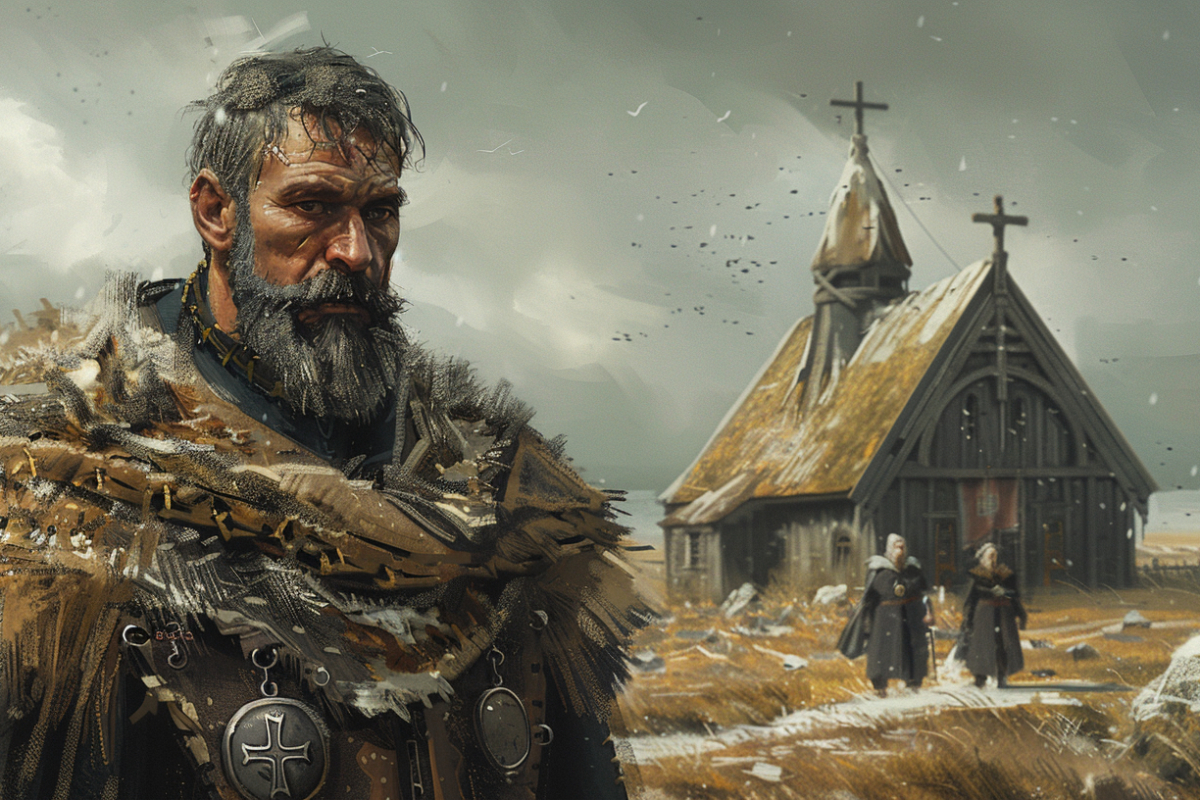
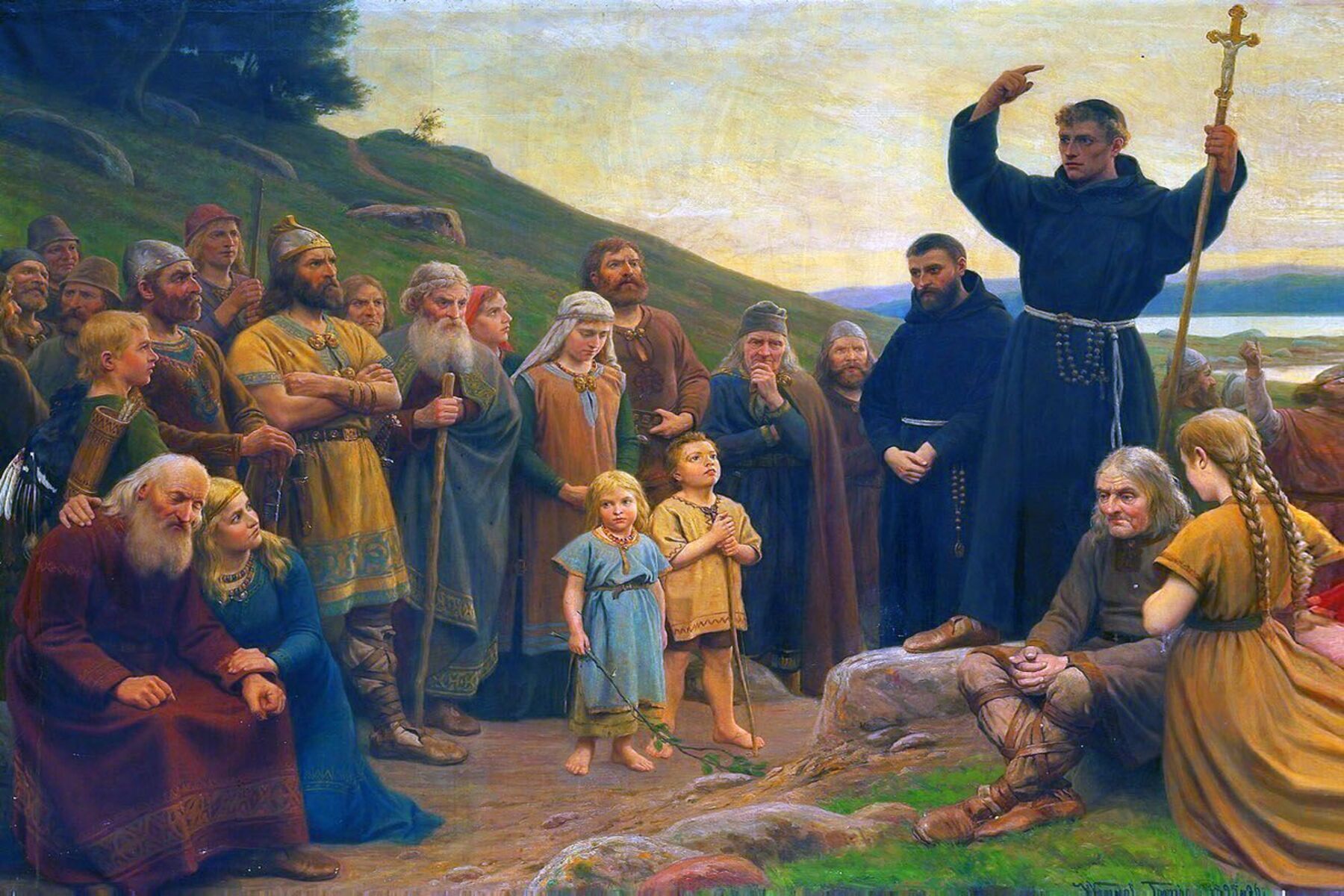
It has been argued that the Viking era ended as Scandinavia embraced Christianity, marked by the establishment of archbishoprics in the late 12th century. Illustration: The Viking Herald
From the medieval to the modern era
For other options for the end of the Viking Age, let us head back north to Scandinavia.
It has been argued that the centuries-long process of the Christianization of Scandinavia was the real event that conclusively ended the Viking era.
By the late 12th century, Christianity had finally secured its supremacy in Scandinavia with the establishment of archbishoprics in Denmark (Lund, then part of Denmark, in 1102), Norway (in Nidaros in 1152), and Sweden (Uppsala in 1164).
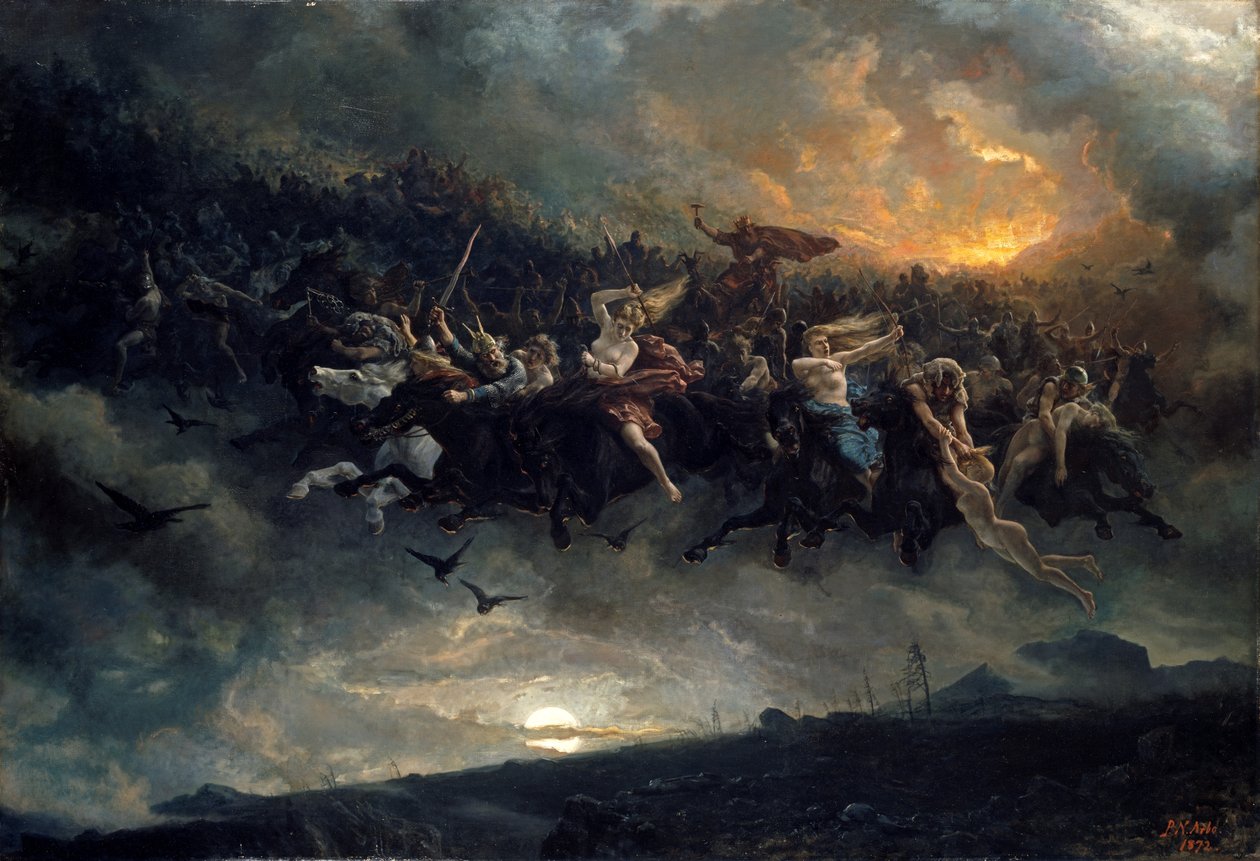
This put an end to the Old Norse religion, the spiritual belief system that people from Viking societies had believed in for centuries.
The establishment of these archbishoprics can then be argued to signal the end of the old ways, the old beliefs, indeed of the Viking Age in each Scandinavian country.
Finally, given the renewed interest in all things Vikings, thanks to Hollywood movies, streaming shows, or multimillion-dollar new museums, it can be argued that we are smack bang in the middle of a new "Viking Age," albeit one that is decidedly a lot safer and more peaceful!
History.com has also written about the "end" of the Viking Age on their website here.
We get to provide readers with original coverage thanks to our loyal supporters. Do you enjoy our work? You can become a PATRON here or via our Patreon page. You'll get access to exclusive content and early access.
Feel free to reach out to discuss potential stories that may be in the public interest. You can reach us via email at [email protected] with the understanding that the information you provide might be used in our reporting and stories.