

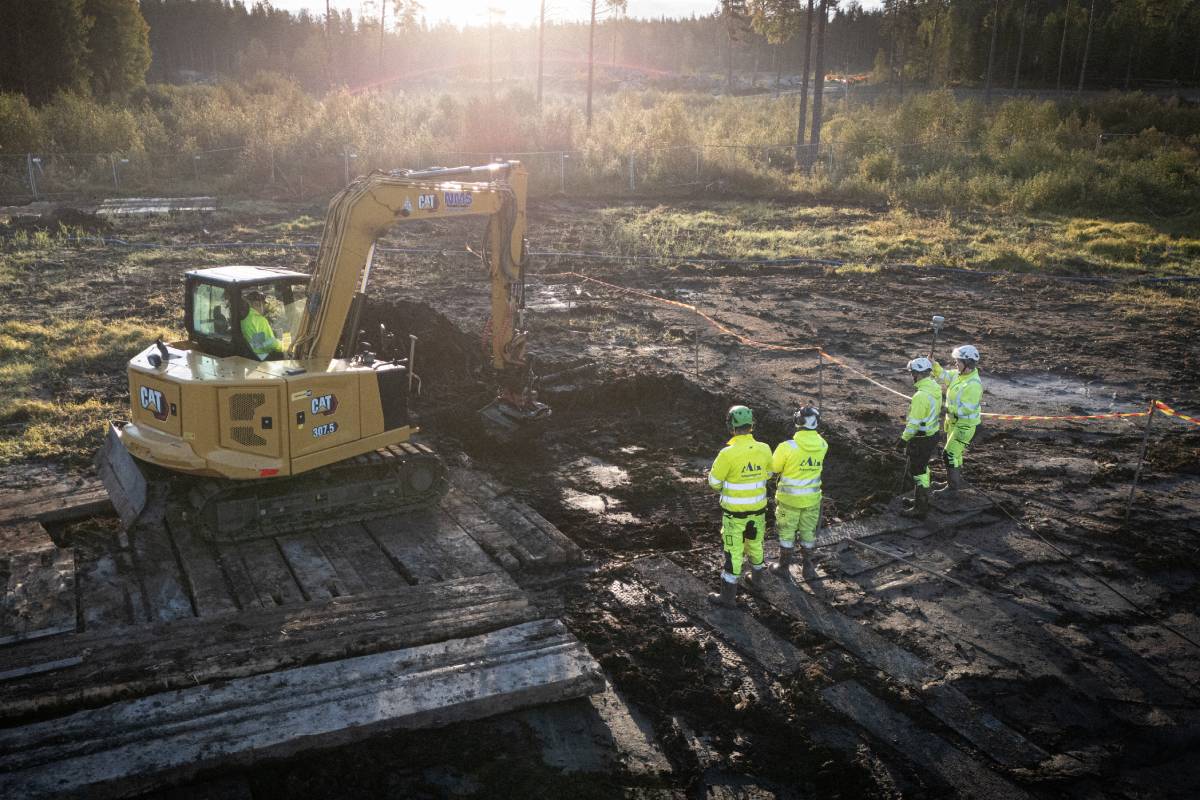
The Swedish archeological consulting firm Arkeologerna has reported the discovery of an unusual Stone Age dog burial near the small town of Järna, southwest of Stockholm.
The site, which is thought to be 5,000 years old, also contains a finely polished bone dagger and evidence of ancient fishing practices.
"Almost unique"
The finds were uncovered in a peat bog area during construction work for a railway line.
The Arkeologerna team reports that the dog was found with a crushed skull and was a large, powerful male. The animal had a shoulder height of 52 centimeters, was approximately 3–6 years old, and appears to have lived an active life.
It is thought the dog was placed in a leather bag or container, laden with stones, and then lowered into a lake for burial.
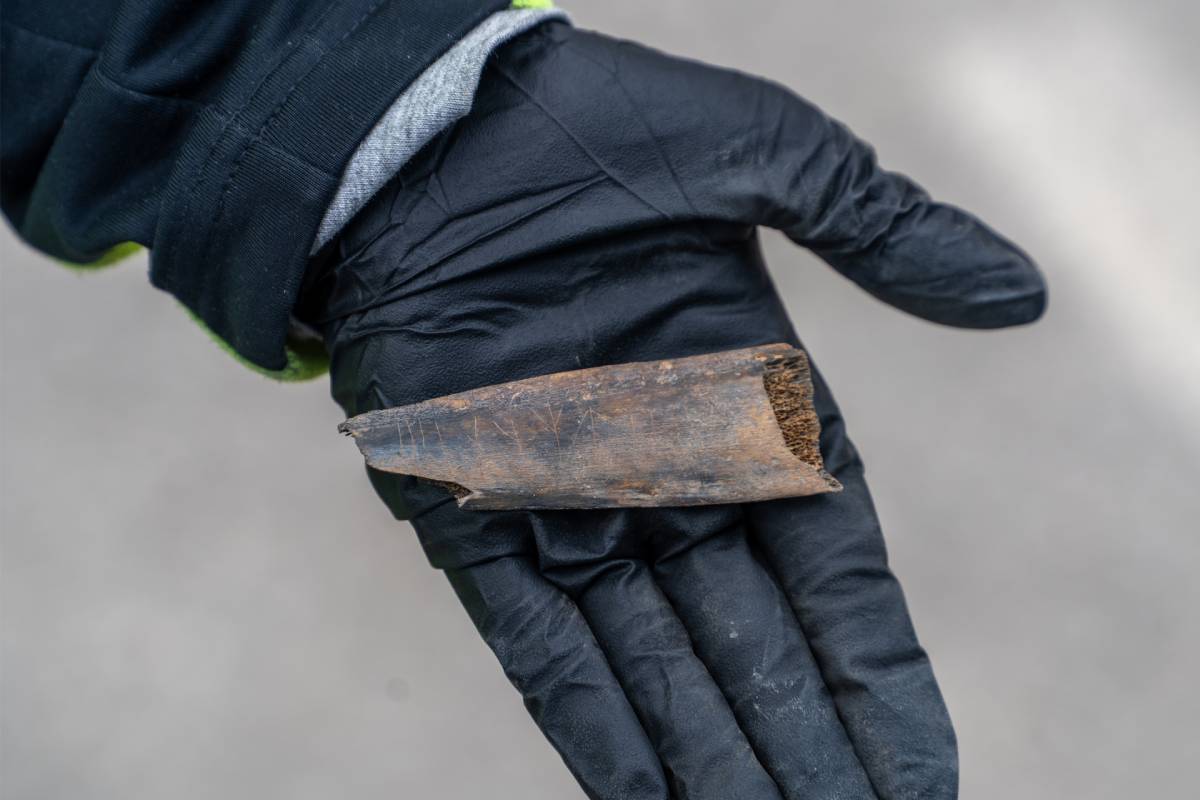
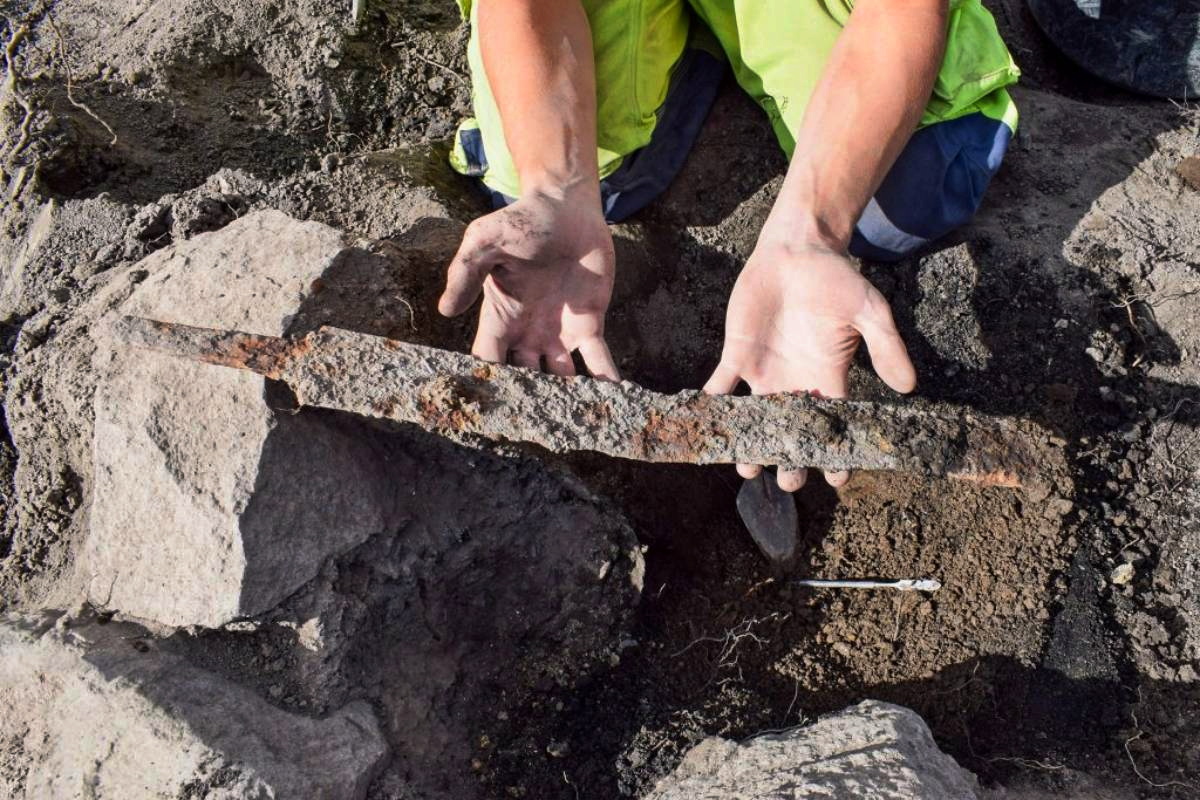
The burial also included a 25-centimeter-long dagger made from the bone of an elk or red deer. The combination of an animal and a weapon in a Stone Age grave in Sweden is particularly unusual.
"Finding an intact dog from this period is very rare, and the fact that it was deposited together with a bone dagger is almost unique," commented Linus Hagberg, archeologist and project manager at Arkeologerna, part of the Swedish National Historical Museums, in a recent press release.
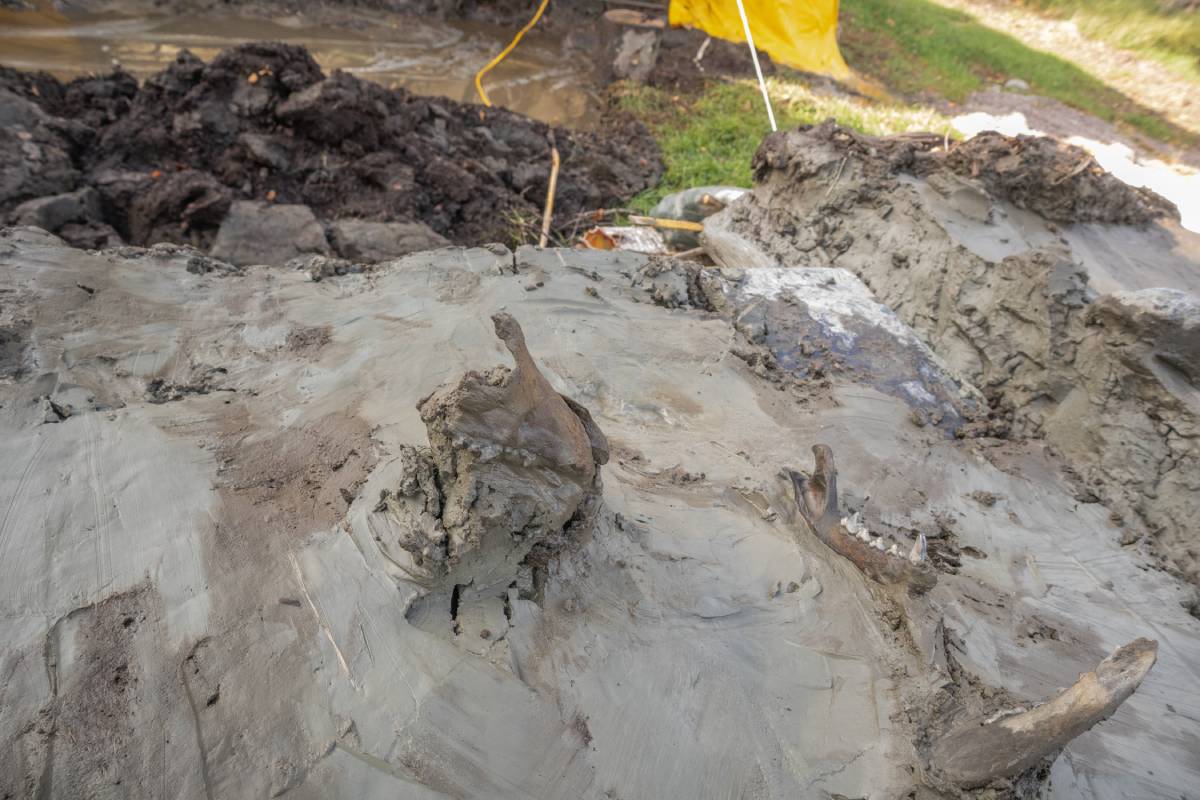
The dog’s skull fragments, one of the key finds from the unusual burial. Photo: Arkeologerna
A special ceremony
At the time of the dog's burial, the investigated site was at the bottom of a lake. The position of the finds appears to indicate the burial was carefully orchestrated.
"The dog had been deliberately lowered to a depth of 1.5 meters and about 30–40 meters out into the lake," Hagberg added. "The use of dogs in ritual practices during this period is a known phenomenon."
Indeed, domestic dogs have been present in Scandinavia for many thousands of years and were long a part of burial rituals. Often, dogs were placed at the feet of a deceased person as companions for the journey to the afterlife or guardians, signaling a close relationship between owner and animal.
In the Viking Age, dogs and other animals were often buried alongside their owners with grave goods such as weapons and jewelry.
In some cases, they functioned as clear status symbols. Most notably, the Oseberg and Gokstad ship burials both contained a number of dogs and other animals – Oseberg had four dogs alongside 15 horses and an ox, while Gokstad had eight dogs, 12 horses, two hawks, and two peacocks.
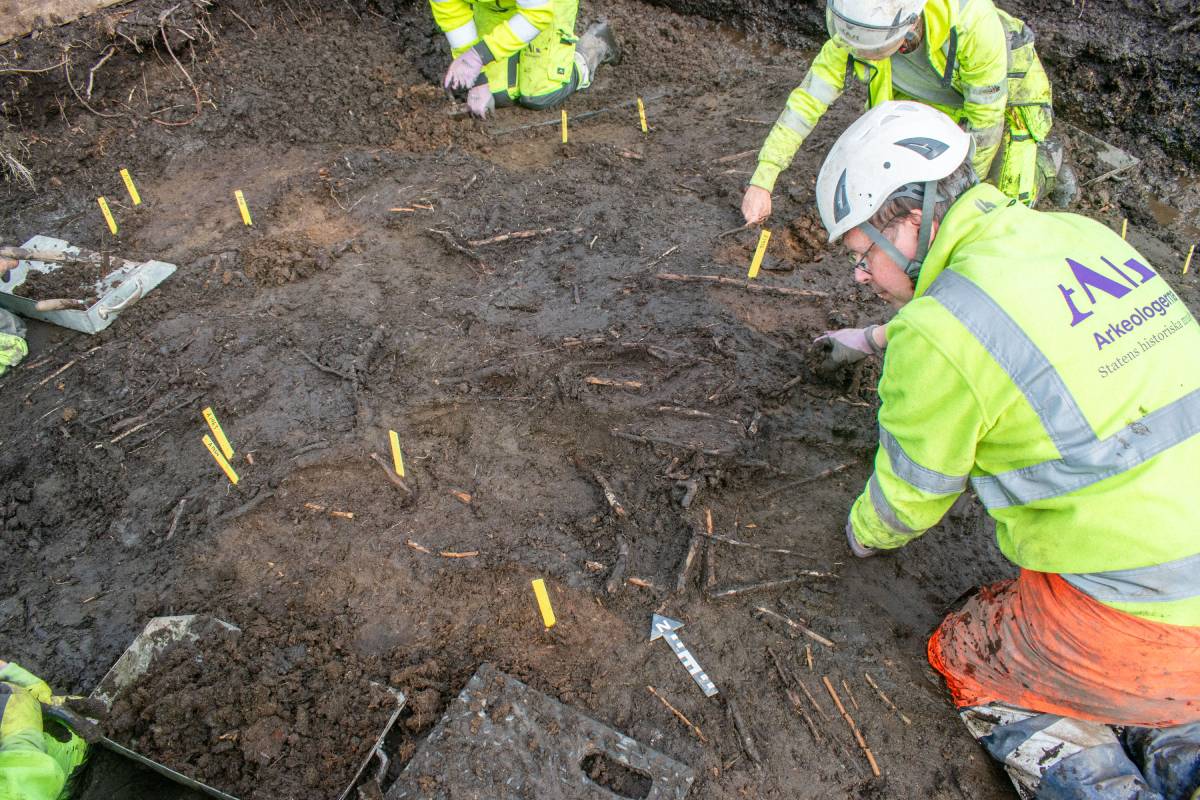
Remains of a Stone Age fishing weir, with stakes and brushwood still preserved in the wetland. Photo: Arkeologerna
Fishing traps and further research
The archeologists have also uncovered well-preserved wooden material at the Järna site. These have been dated to 3300–2900 BCE and 2900–2600 BCE, and likely belonged to jetty structures. They also identified the remains of an ancient fishing trap on an old lakebed, made from intertwined wicker.
With the excavations now drawing to a close, the peat bog area at Järna is set to become part of the embankment for the railway line. In the meantime, the archeological focus will turn to laboratory analysis.
The team is hoping to carry out radiocarbon dating, isotope analysis, and DNA analyses to reveal more details about the finds.
"We can determine when the dog lived, its age, and what it ate," Hagberg confirmed. "The dog's life history can, in turn, tell us more about how the people who owned the dog lived and sustained themselves."
We get to provide readers with original coverage thanks to our loyal supporters. Do you enjoy our work? You can become a PATRON here or via our Patreon page. You'll get access to exclusive content and early access.
Feel free to reach out to discuss potential stories that may be in the public interest. You can reach us via email at [email protected] with the understanding that the information you provide might be used in our reporting and stories.