

A casual glance at a map shows that the Scandinavian peninsula is surrounded, indeed girt, by water.
Running down the spine of this peninsula are the Scandinavian Alps, whilst regions further south, in what is now southern Sweden and Denmark, have mere smatterings of arable land.
It should be no surprise then that people in Viking societies took to the seas to survive and thrive.
One of the most impressive technological feats they accomplished was the Viking longship.
Utilizing the seas for sustenance, transport, trade, and warfare, they developed a series of ship designs that proved to be the perfect blend of form and function.
These Viking ships – whether navigating open waters or rivers for peaceful, profitable, or violent purposes – became not only a symbol of the Viking societies that built them but also, since the early medieval period, a symbol of Scandinavia itself.
Jan Bill writes in his 2008 book The Viking World that, apart from the horned Viking helmet (which is historically inaccurate but still fun to wear), the Viking ship has become a lasting symbol.
It represents not only the Vikings who sailed these ships but also the spirit of adventure and seaborne exploration that endures in the modern descendants of Viking societies: the Danes, Norwegians, and Swedes.
Yet, despite becoming a modern symbol of Scandinavia, spare a thought for those early medieval communities plagued by Vikings.
Gazing out to the ocean or down a river, these communities dreaded the sight of a Drakkar, the flagship of a Viking fleet.
Why was this ship so feared by communities and yet so admired by the chroniclers of sagas and stories?
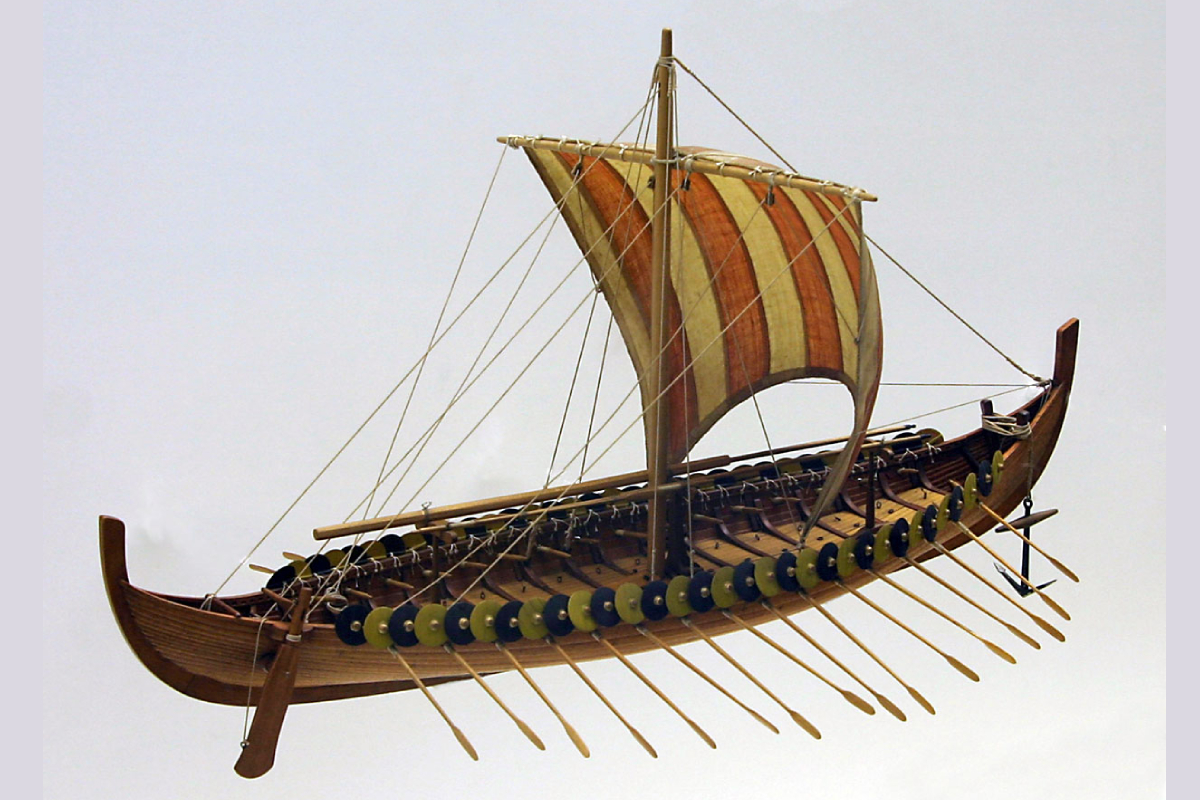
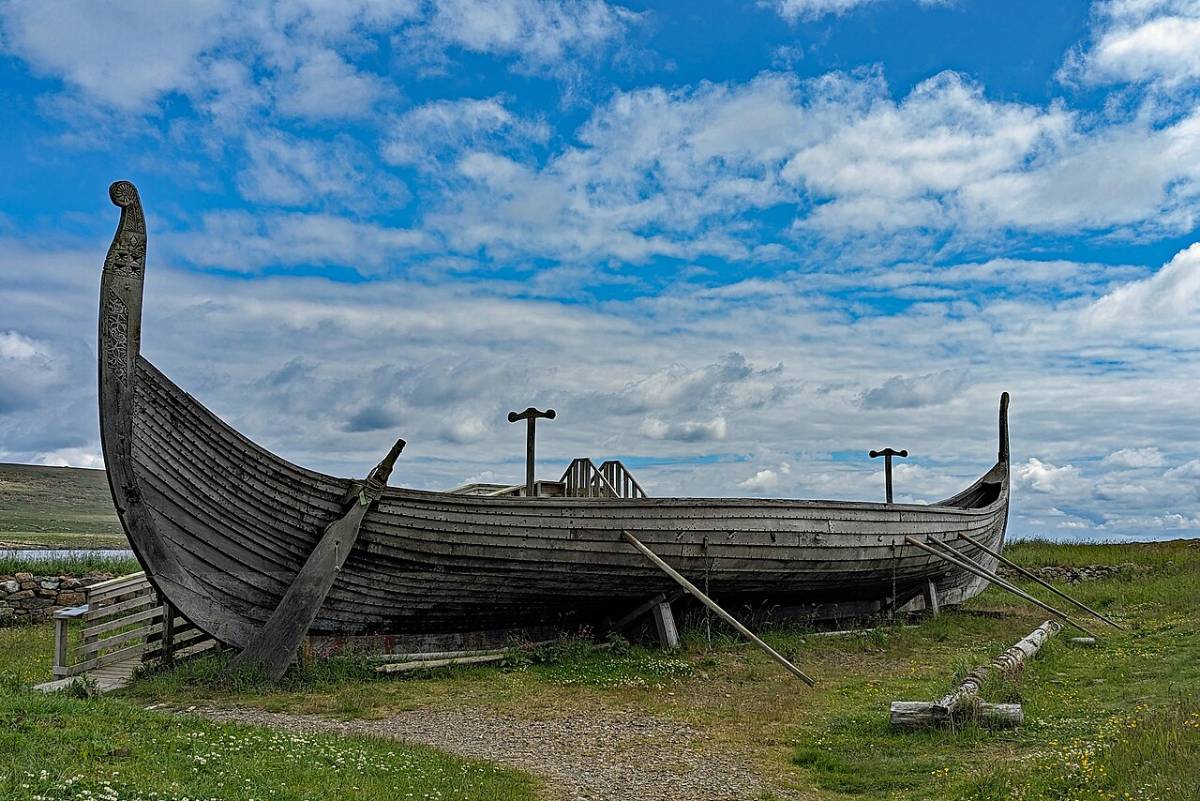
The Gokstad ship, discovered in 1880 in Norway, may have been a Drakkar belonging to a Viking ruler (the image depicts a model). Source: Softeis (CC BY-SA 2.5)
Viking ships and design
The Vikings constructed three types of ships during the early medieval period for merchant shipping, transport, and warfare purposes.
The Knarr was used to ferry goods, people, or animals due to its broad width. One of the earliest examples uncovered was found in Klastad, Norway, and is believed to have been built in the late 10th century.
The Karve, a smaller and more versatile design, was used for coastal and river-bound raiding, with the most famous example being the Oseberg Ship.
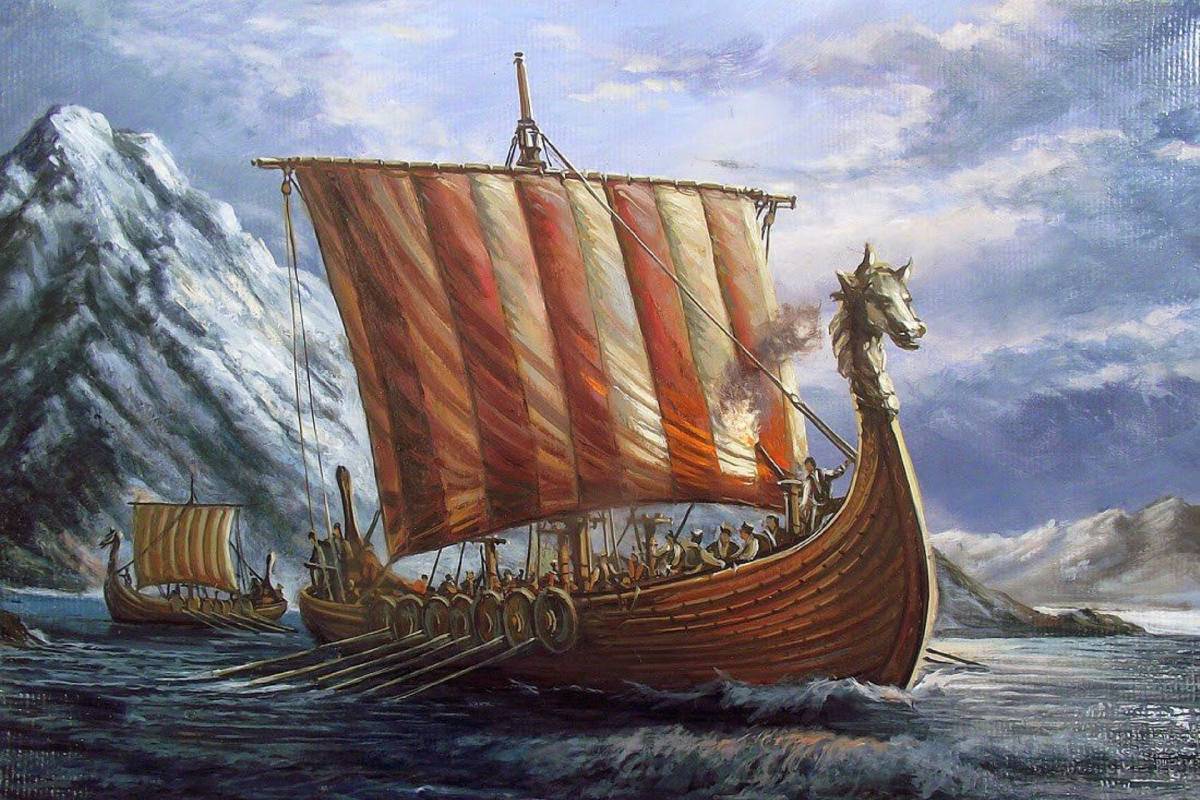
Yet it was the longship, named for its long, slender, and narrow structure, that struck fear into communities throughout Europe and beyond during the early medieval period.
At the head of any Viking fleet was a Drakkar. This ship – named after the Old Norse word for "dragon" – was not a separate type of Viking ship but merely a larger longship designated for a ruler, whether a Viking chieftain or (later in the Viking Age) a king.
Like all Viking ships, the Drakkar was a masterful blend of form and function.
Most were around 30 meters (98 feet) long and could carry between 30 and 100 men. Both ends of the ship were symmetrical, making it easily navigable in both open seas and shallow waters.
As Martina Sprague wrote in her 2007 book, Norse Warfare: The Unconventional Battle Strategies of the Ancient Viking (available on Amazon here), along with its long, slender design, any Drakkar was equipped with both oars and a square sail.
Regardless of the weather conditions, this combination was masterfully used to launch lightning attacks on unsuspecting communities and foes.
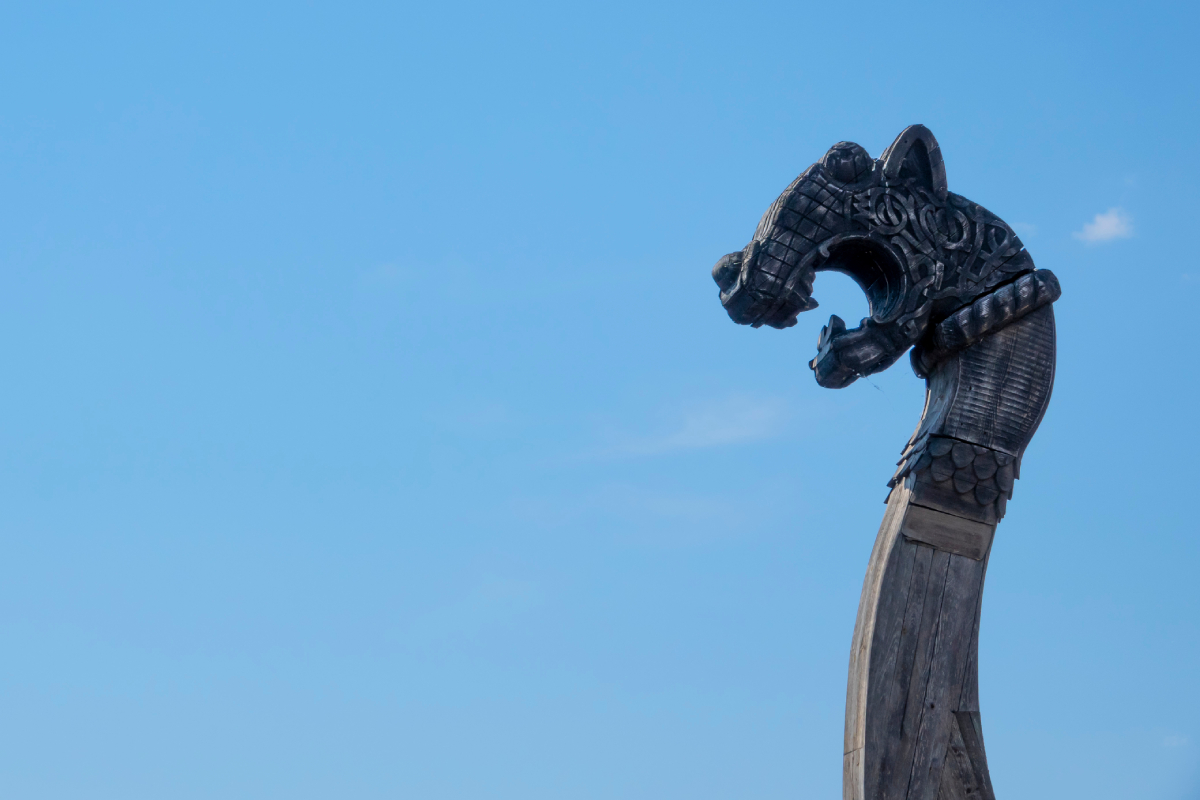
Aside from the utilitarian aspects of its design, it was the elaborate carvings on the prow that made these ships most memorable.
- READ MORE: The story of the Gokstad ship
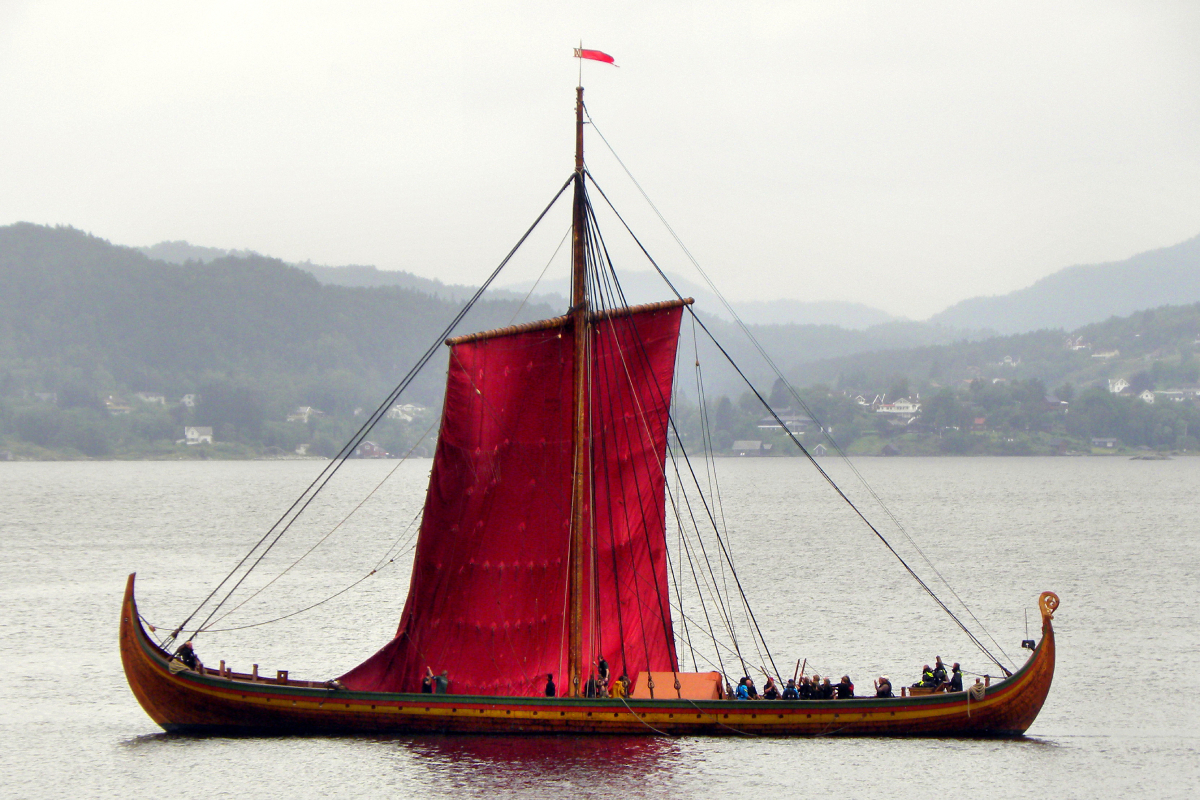
Draken Harald Hårfagre is the largest Viking longship built in modern times and features 50 oars, with each oar rowed by two men. Photo: Odd Roar Aalborg (CC BY-SA 4.0)
A dragon's head for a dragon ruler
Any Drakkar was, in essence, an extension of the powerful Viking ruler who had commissioned it.
As a flagship, it was constructed to strike fear into foes as a militant symbol of the power and prestige of that Viking ruler.
The name of the ship derives from the carved figures – mostly dragon heads but also serpents – that were meant to intimidate enemies as a form of psychological warfare and, in a case of celestial insurance, ward off evil spirits or bad luck.
Each Drakkar's figurehead was carved in a unique design, representing the specific ruler who commissioned it.
As the early medieval period in Scandinavia progressed, power and wealth became more centralized, contributing to the formation of the kingdoms of Denmark, Norway, and Sweden.
The more elaborate the ship – in size, crew, or carvings – the more it demonstrated the power and resources required for its construction and, consequently, the greater the prestige it bestowed upon its commissioner.
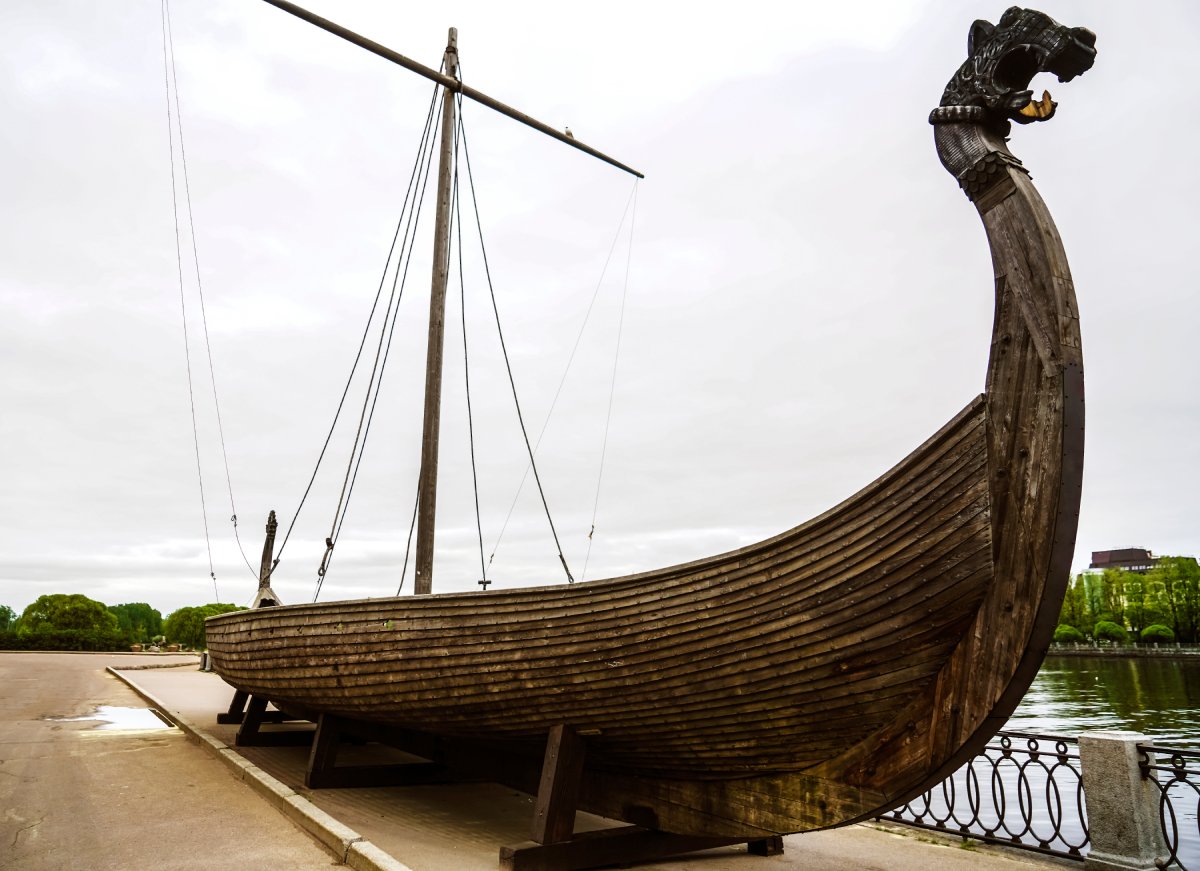
Olav Tryggvason’s ship, the Ormen Lange, was the largest drakkar according to sagas, but it remains undiscovered by archeologists. Photo: maradon 333 / Shutterstock
The legendary Ormen Lange
The most famous example of a Drakkar comes straight from the pages of Norse literature.
The first Christian king of Norway, Olav Tryggvason, was said to have commissioned a giant Drakkar, the Ormen Lange (Old Norse for "The Long Serpent" – with, yes, a serpent figurehead carved on its prow).
Though we have no archeological evidence of this ship, and only limited descriptions in the sagas, it was said to dominate all other Viking longships and had a crew of close to 100 people.
It was in this giant ship that Tryggvason was sailing home from an expedition in the Baltic when he was ambushed by a coalition including Sweyn Forkbeard, Olof Skötkonung, and Jarl Eirik of Lade.
The ensuing Battle of Svolder (c. 1000) saw Tryggvason's forces fight valiantly but ultimately be overwhelmed, leaving only the Ormen Lange afloat.
Rather than fall into the hands of his enemies, Tryggvason is said to have leaped into the sea, fully armored, securing one of the most badass (if true) exits from the stage, so to speak.
We have yet to find any archeological evidence of the Ormen Lange, but that doesn't mean it didn't exist.
The answer may lie somewhere in the deep waters of the Øresund, separating Denmark from Sweden.
In the meantime, we'll have to make do with the many other references to Drakkars found in the Norse sagas, including the mythical Skidbladnir that belonged to the Norse god Freyr.
For more information on a modern – and very golden – take on a Viking ship, visit Forbes here.
We get to provide readers with original coverage thanks to our loyal supporters. Do you enjoy our work? You can become a PATRON here or via our Patreon page. You'll get access to exclusive content and early access.
Feel free to reach out to discuss potential stories that may be in the public interest. You can reach us via email at [email protected] with the understanding that the information you provide might be used in our reporting and stories.