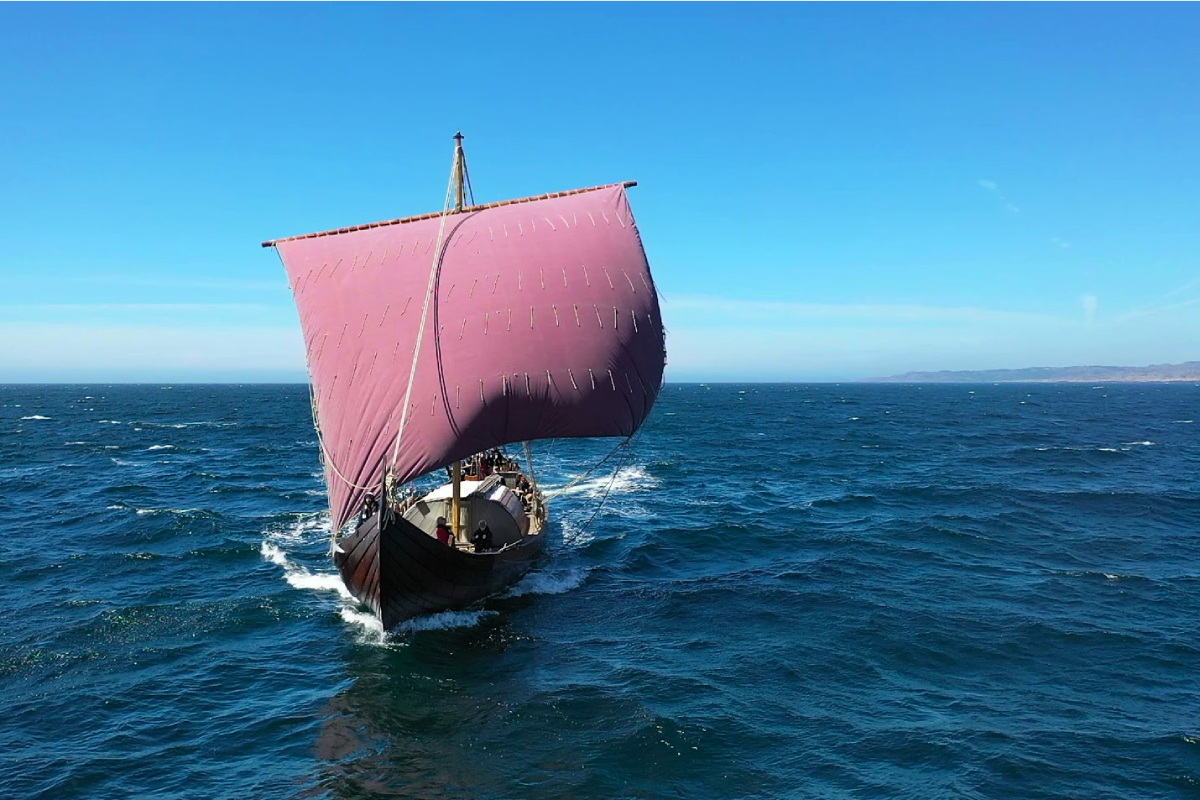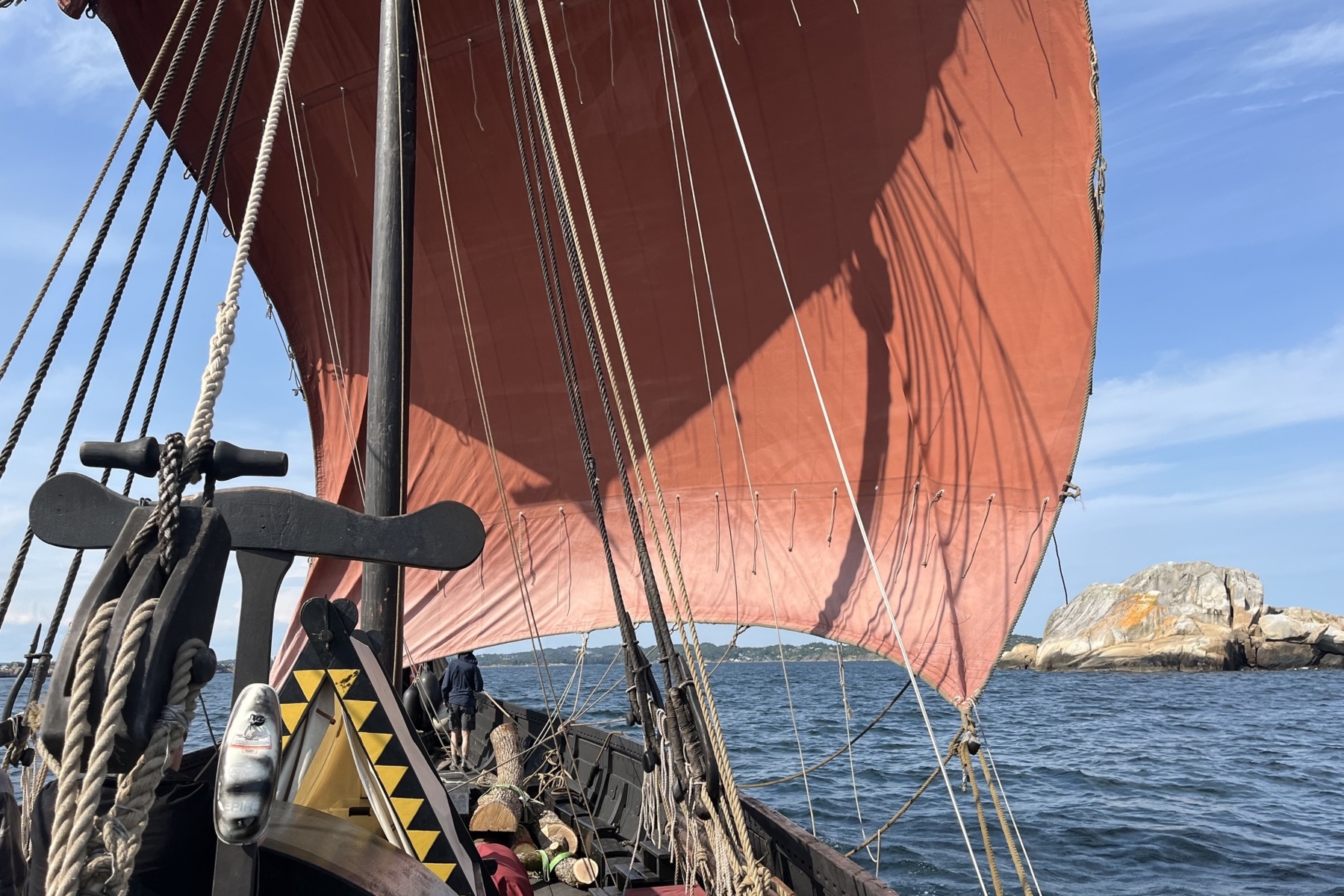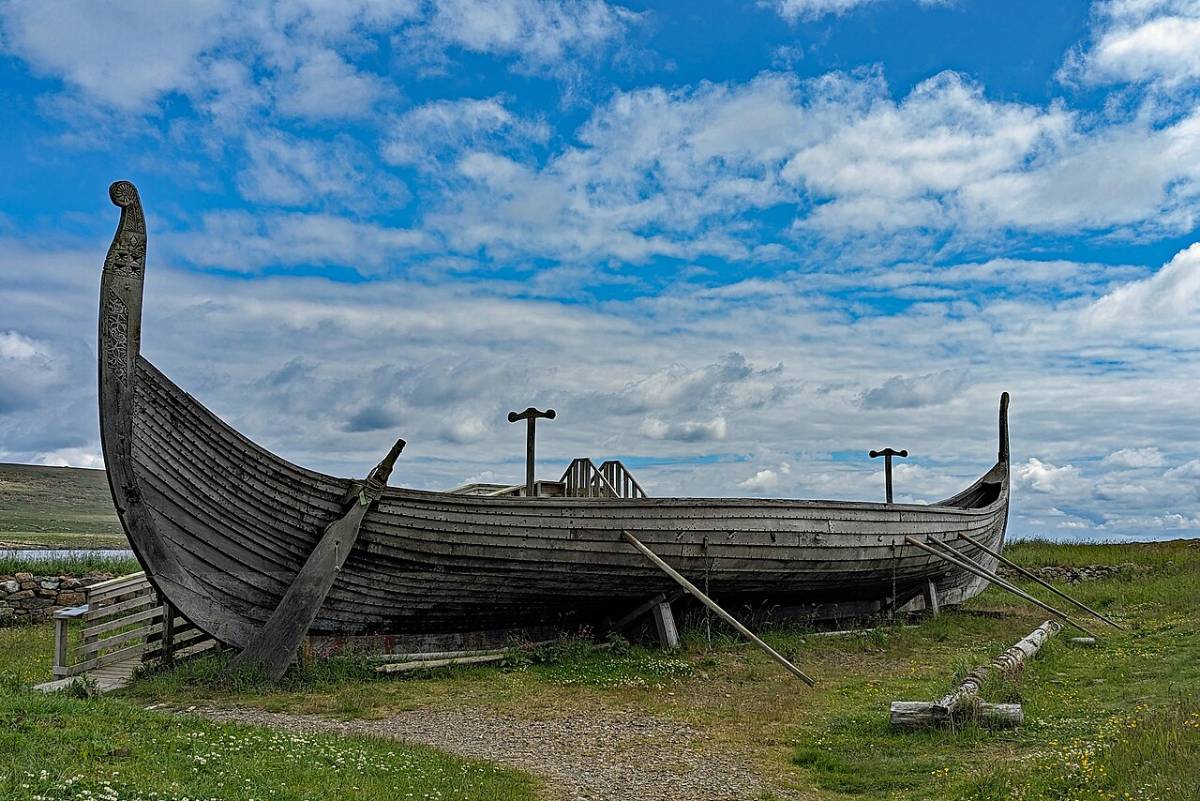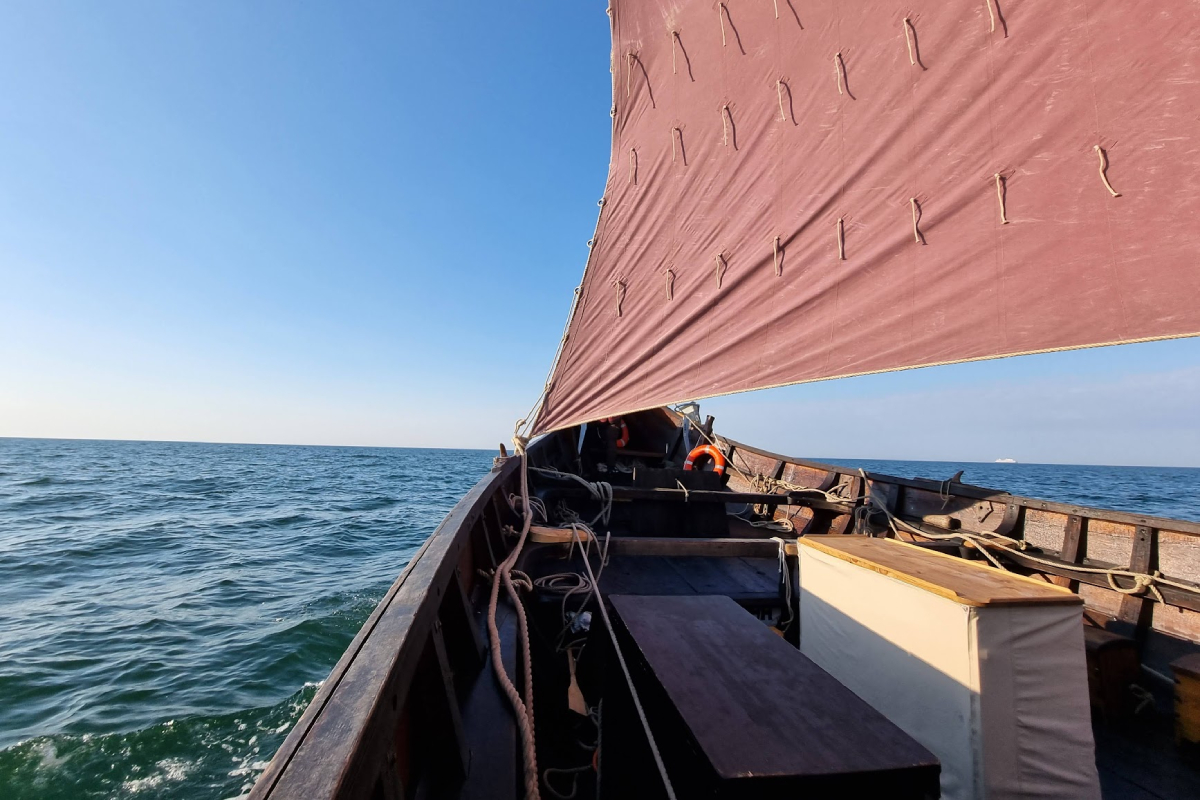


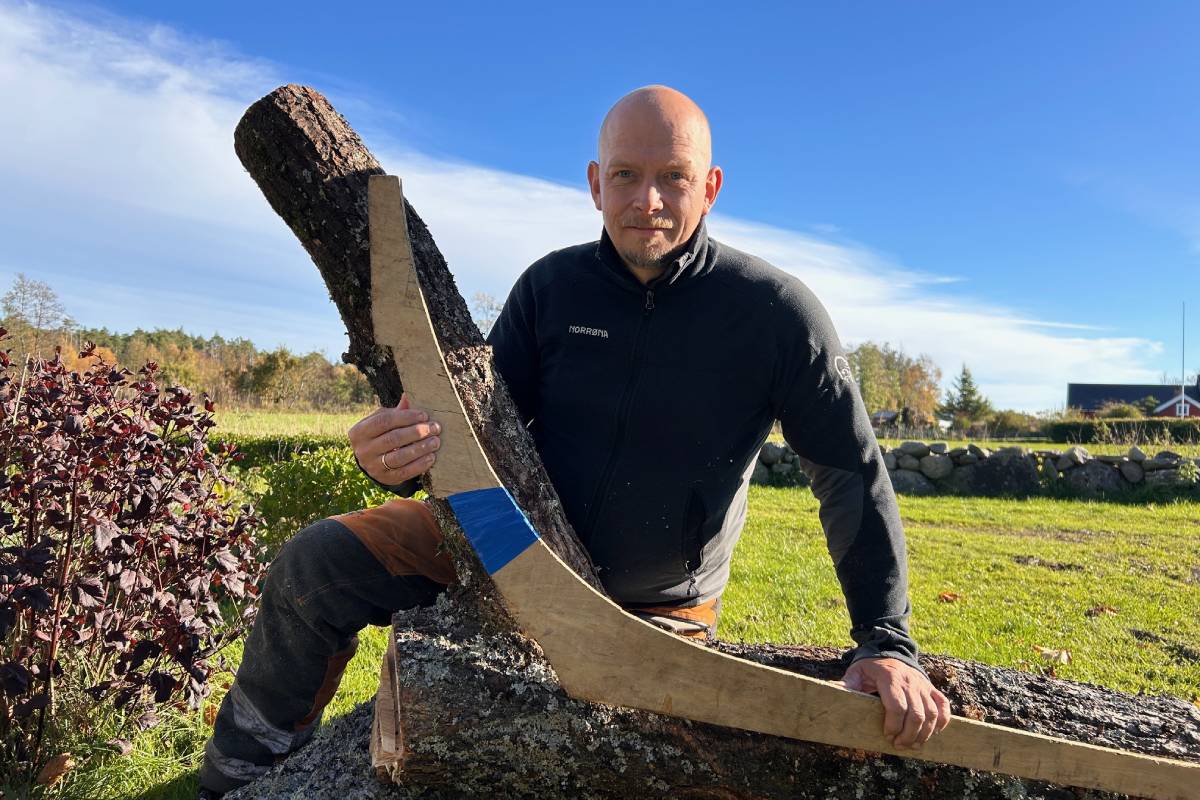
A recent storm in Norway has provided an unexpected windfall for the builders of a replica of the Gokstad Viking ship.
Storm Amy, which hit the Norwegian county of Vestfold in early October, pulled down a series of oak trees in the area close to where the ship is under construction.
As project leader Roger Pande Løvall explains, these trees have helped the shipbuilders source a special shape of timber that had been almost impossible to find.
Opportunity knocks
"We are building an archeological replica of the Gokstad ship, and we have been looking for so-called 'knee' pieces for the ship for a long time," Roger tells The Viking Herald.
"These are special trunk-and-branch pieces that hold four of the top six branches in place. To be used on the ship, this branch must grow out at 110 degrees from the trunk. Most branches, however, will instead grow upward toward the light."
The difficulty in locating the timber is increased by the fact that the team is trying to work without cutting down standing trees.
"We are often contacted when someone else wants to cut oak trees down," Roger reports. "There are several locals who want to contribute, yet even then, we have not found many. But Storm Amy was strong in our area and blew from an abnormal angle, which meant that a lot of trees in the forest were blown down."
Indeed, the storm presented the team with a golden opportunity. "People had heard rumors about our need for oak, and our phones have been ringing constantly," Roger tells us.
"It is very nice that there are so many people who want to help us. We have been driving around with a template of the shape that we need. This means we can quickly check whether there are matches or not on the fallen oak."
"Of the 34 planks needed, we have now found over 25, and there are still places we will inspect in the coming days."
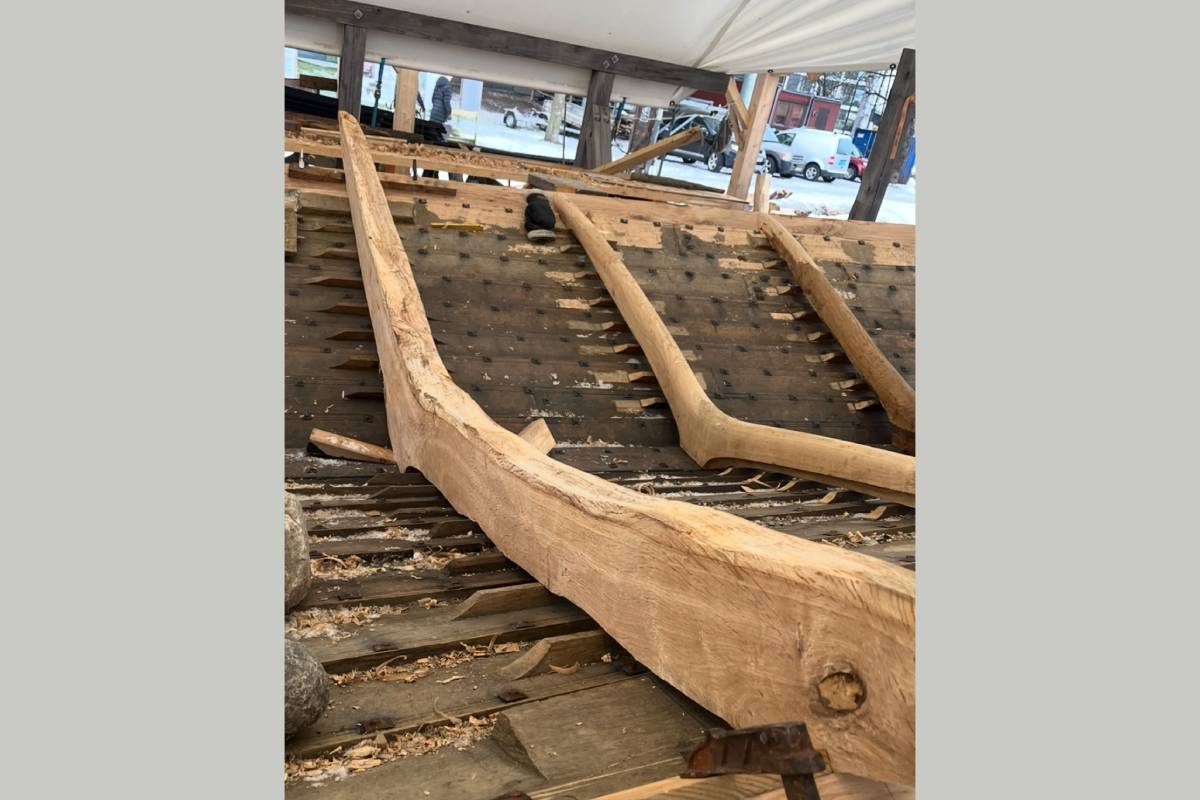
Oak knees with a natural crook now brace the upper hull as the team follows the Gokstad plan. Photo: Roger Pande Løvall / Oseberg Viking Heritage Foundation
The bigger picture
The Gokstad shipbuilding project is managed by the Oseberg Viking Heritage Foundation.
The foundation has already overseen the construction of the Saga Oseberg ship, which is today positioned in the city of Tønsberg, and the Saga Farmann, which is journeying around Europe.
The new construction project is based on a 9th-century Viking longship found in a burial mound at Gokstad in the municipality of Sandefjord. When it is completed, the replica will be delivered to Sandefjord.
Just like the first two vessels, the new ship is closely modeled on an authentic Viking Age vessel. "The old Gokstad ship has been 3D scanned, and we have had very accurate construction drawings made from the scans," Roger informs The Viking Herald.
"We make all the parts for the ship at our station in the town of Sandefjord. When they are finished, they are transported to our construction site in Tønsberg."
"There are seven of us who are employees of the foundation," Roger adds. "Four of us work with the construction of the ship, then there is one blacksmith, and two who manage activities and events."
"One big part of our job is to have activities for volunteers who want to participate in our work or get involved with our ships. I think we have over 500 volunteers overall."
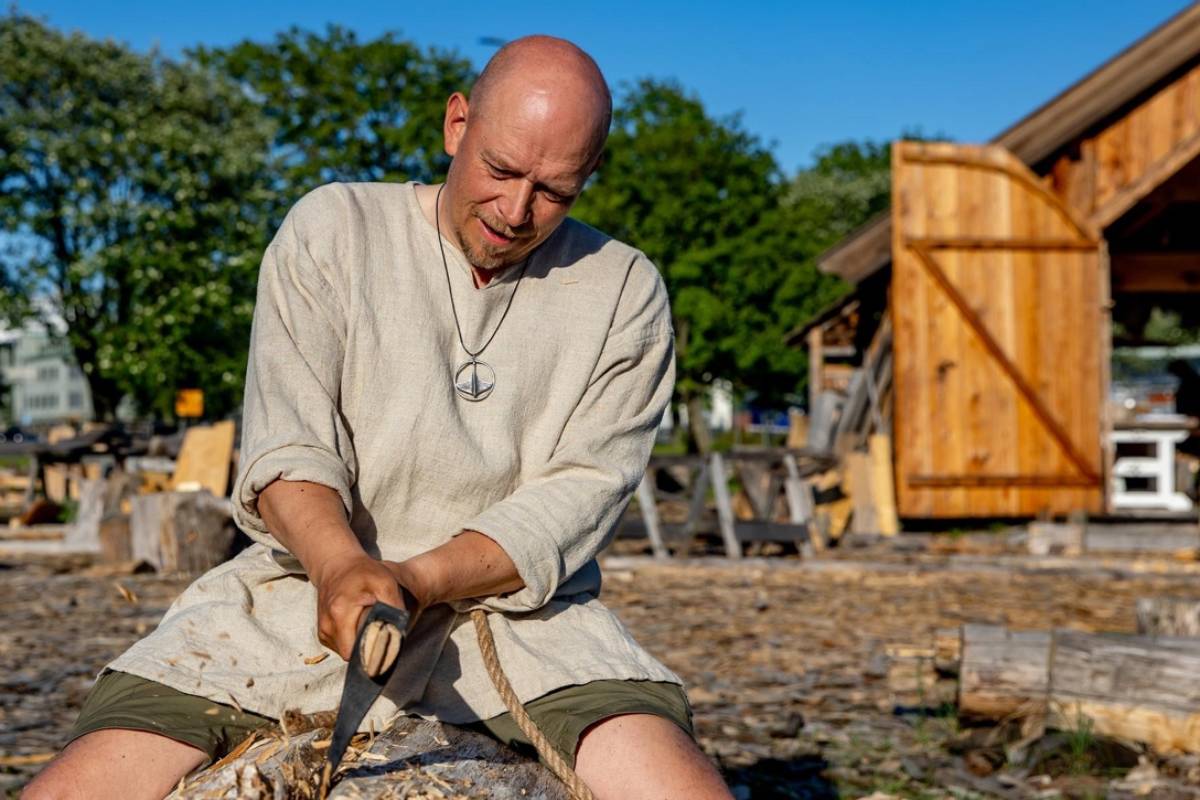
The crew prepares each piece at Sandefjord and assembles the ship at the Tønsberg site. Photo: Roger Pande Løvall / Oseberg Viking Heritage Foundation
Fresh insights into ancient practices
Each of the ship builds is an exercise in experiential archeology, as the builders seek to learn how the Vikings constructed their vessels.
With the Saga Gokstad, the difficulties with sourcing the kind of wood needed to build the ship have left the team pondering what people might have done in the Viking Age.
If a community or region needed to build a vessel or even a fleet in a short space of time, how could they find the right timber?
"We have spent so much time finding 34 knees for our ship, yet we know the Vikings built thousands of ships," Roger ponders. "We thought of an idea... We have seen that the trees from which we find the right pieces often stand on the edge of a field."
"Here, the light comes in from the side, and that makes the branches extend outward. Trees that stand inside the forest, on the other hand, will have branches that extend upward toward the light."
In other words, perhaps the Vikings focused on trees on the edge of fields, or even planted them deliberately in certain locations.
"You could also tie branches to the ground," Roger adds. "This would force the branches to grow further outward. These are just thoughts we have at this stage. But we hope that some professionals with expertise in this field will investigate this issue further."
- READ MORE: All you need to know about Viking ships
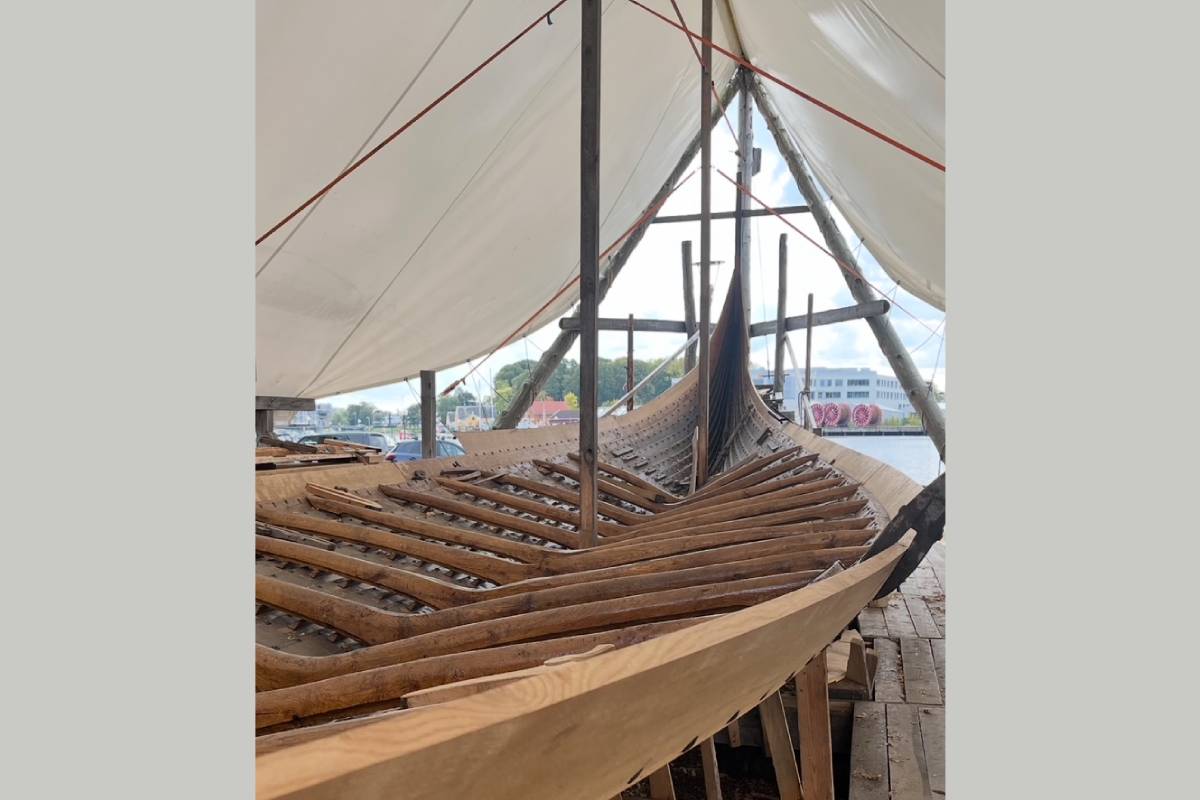
The project aims for a like-for-like Gokstad replica, built part by part in the original way. Photo: Roger Pande Løvall / Oseberg Viking Heritage Foundation
A community effort
As Roger tells The Viking Herald, the recent storm has led to a great leap forward in the construction efforts.
"The fact that we now find so many knee pieces means that we don't have to postpone the time frame for when we want to finish," he explains.
"We couldn't make these knees out of something else, or join them together from multiple materials. That's what happens when we copy the original—we have to follow the pattern."
The storm was not all good news for the local community, however. "Storm Amy was powerful," Roger points out. "It caused a lot of destruction—many people have had their houses damaged, and lots of people were without electricity for many days."
"So it is nothing we want to celebrate. But it has subsequently made our job both easier and faster. It is also nice to be able to contribute to the cleanup job."
"Many people think it is very nice that their spots will become parts of a ship that is an important part of our local Viking history," Roger adds.
"The Gokstad ship is one of the two best-preserved Viking ships in the world, and was excavated in 1880, just 2.8 kilometers from the site we are working on in Sandefjord. The aim is to build the first replica of the Gokstad ship that is exactly like the original, and it is built in the original way."
"All the materials that come to the site in Sandefjord are shaped with the same tools that the Vikings used. The logs are split with a sledgehammer and wedges, and the split materials are then chopped into the correct shape with an ax."
"But we are working at our own pace. The intention is not to put together a ship in a short time, but to copy all the parts exactly like the original. We are happy now, we are on track, though it has taken a lot of time to get to this point."
We get to provide readers with original coverage thanks to our loyal supporters. Do you enjoy our work? You can become a PATRON here or via our Patreon page. You'll get access to exclusive content and early access.
Feel free to reach out to discuss potential stories that may be in the public interest. You can reach us via email at [email protected] with the understanding that the information you provide might be used in our reporting and stories.