

It is not every day that the world recognizes the brilliance of people from Viking societies. Yet a little less than four years ago, this was not the case.
For on December 14, 2021, the Nordic clinker-built tradition was granted a place on the United Nations Educational, Scientific and Cultural Organization's worldwide list of "Intangible Cultural Heritage."
According to UNESCO's website, this list is reserved for a special "practice, representation, expression, knowledge, or skill" that is part of "a place's cultural heritage."
This admission not only made history as it was a joint application – submitted by all the Nordic nations – but was recognition of a construction method that was used so ruthlessly by people in Viking societies during the early medieval period.
The clinker-built method allowed people from Viking societies to construct a myriad of different boats and ships that so effortlessly and efficiently crossed the Atlantic Ocean to the North American continent, sneaked down the many river systems of Eastern Europe, and transported untold wealth to the Viking heartland in Scandinavia.
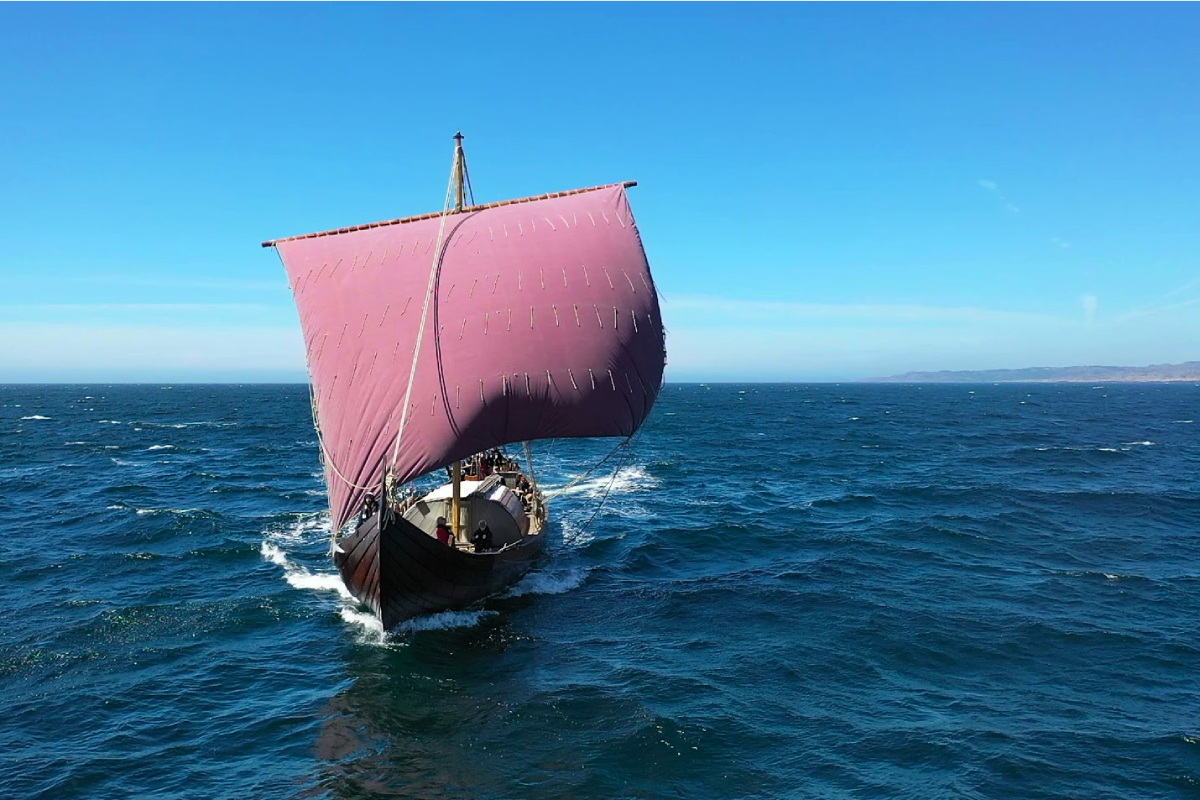
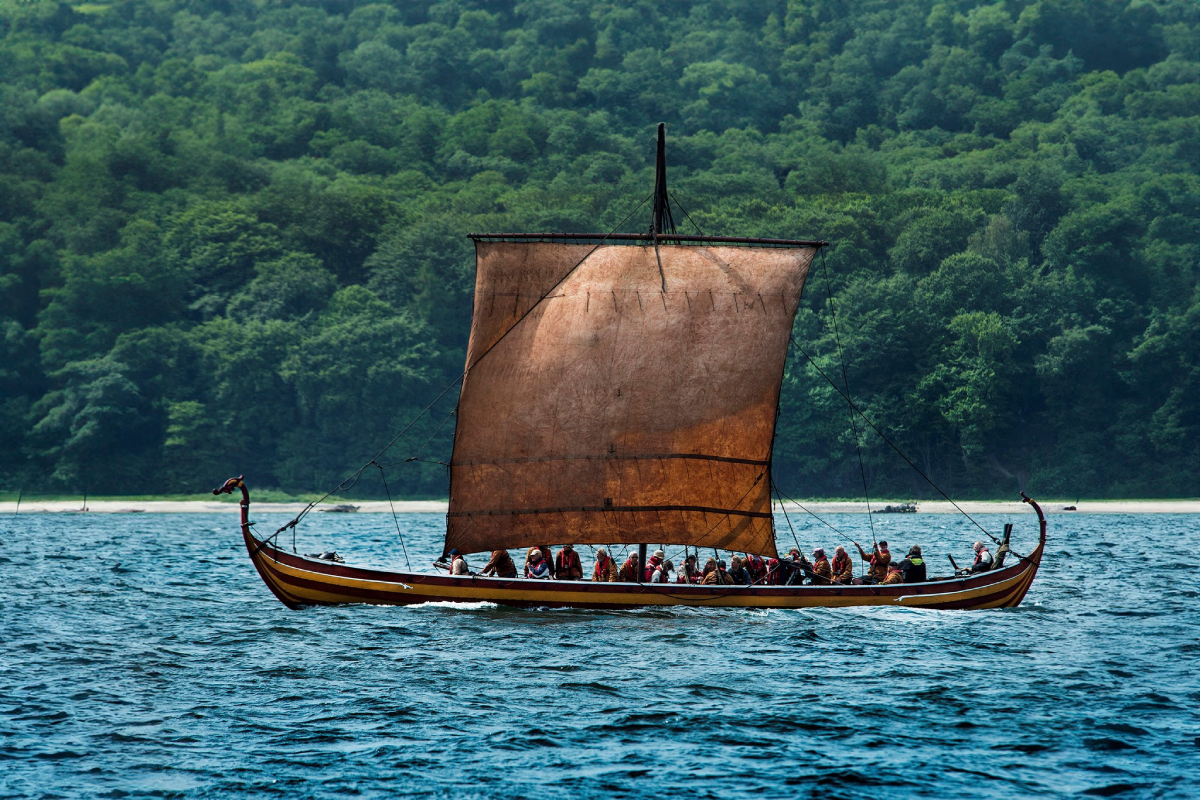
The most common of these clinker-built vessels, constructed during the Viking Age, were sleek, slender, streamlined, snakelike ships called snekkja.
Speedy, shallow, and slender
The snekkja was once a common sight throughout the Viking world. These were among the smallest purpose-built warships of the Viking Age that carried Viking warriors outward into the world.
Like all of the boats and ships constructed by people in Viking societies, the snekkja was made using the clinker-built method, which involved overlapping planks that were fastened to a frame.
The design not only gave the ship strength but also durability and flexibility in choppy waters.
As Jan Bill writes masterfully about these ships in the 2008 book The Viking World (available on Amazon here), these ships were built somewhere between 17 and 20 meters (56 to 66 feet) long with a small width, around 2.5 meters (8 feet).
Bill speaks of how these dimensions gave the ship an exceptionally slender appearance, hence its nickname snekkja – an Old Norse term for "snake." Add to this a very low draft – that is the depth that the ship was constructed to – of somewhere around 0.5 meters to 1.6 meters.
Such a shallow draft meant that this was a ship not for vast oceanic travels – heavy waves would have destroyed this shallow ship – but was meant to navigate shallow waters, perhaps a river, or to hug the coast and sail in coastal waters.
Whilst the ship had a shallow draft – meaning it could not transport huge numbers of people, goods, or livestock – it still had the capacity to hold around 20 to 30 oars, so a crew of several dozen could easily fit on it.
The ship's speed could also be increased, when conditions were right, by the inclusion of a single sail, which utilized the power of the wind along with the rowing power of the crew.
- READ MORE: All you need to know about Viking ships

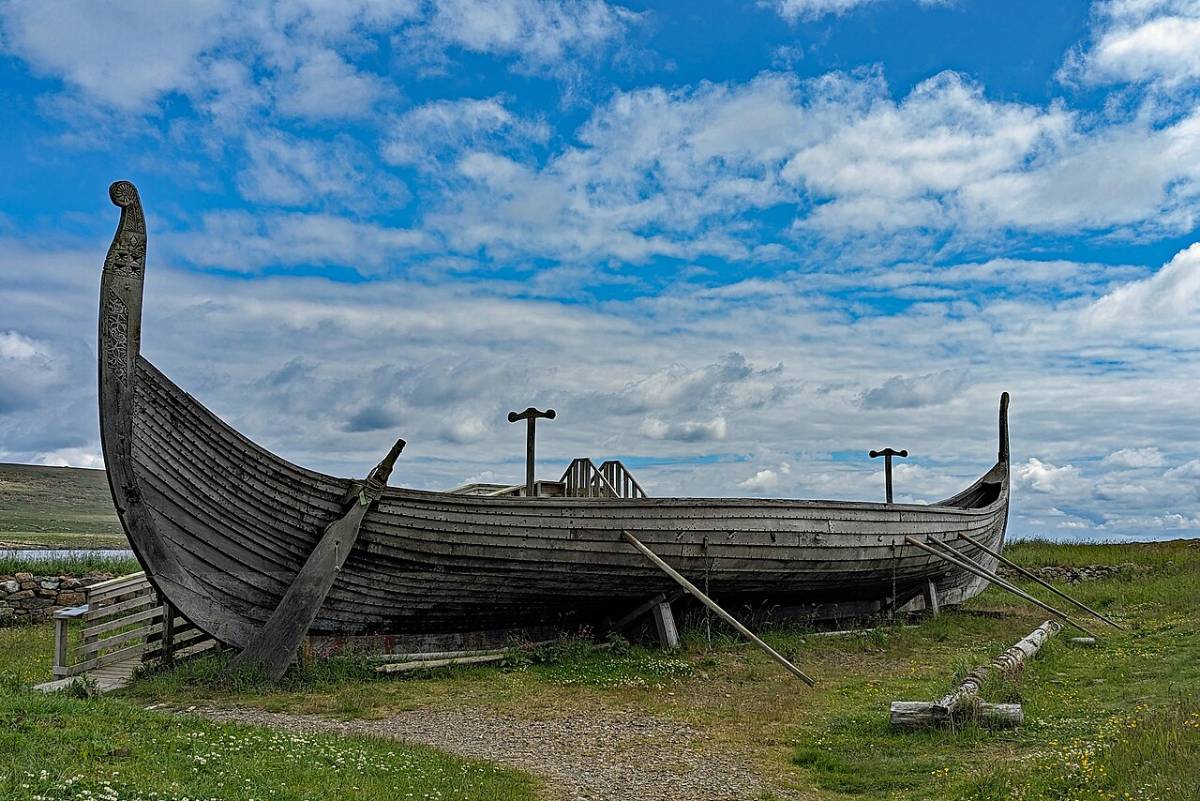
Skuldelev 5, the remains of a Viking snekkja preserved at the Viking Ship Museum in Roskilde. Photo: Viking Ship Museum in Roskilde
Strike like a snake in the grass
These shallow and sleek ships were meant for speed. Their lightweight construction, along with only a skeletal crew, allowed the snekkja to become a feared sight throughout coastal regions around early medieval Europe.
The use of both human labor and wind power enabled it to sail at lightning speeds and to serve as the perfect mode of transport for Viking raids. The shallow draft made it possible to drag these ships onto the shore and, following a quick raid, push off and sail away at a rapid pace.
Because of the shallow draft and light weight, these ships had no need to be kept in a port. They could literally be dragged onto dry land and carried by the crew to a safe place.
It is thought that this is how people from Viking societies navigated the many river systems that dot the region between the Baltic and the Black Seas in what would become the Kievan Rus.
Further east again, this was also how people from Viking societies raided, traded, and eventually settled the western edges of what is now Russia.
The snekkja was also favored by Viking chieftains in local communities. Its agility and speed meant it was the perfect weapon to conduct smaller-scale military expeditions against the next coastal village or town.
Coinciding with the expansion of Viking military expeditions outward in Europe was the bloody centralization of power to forge the medieval kingdoms of Denmark, Norway, and Sweden.
Much of this bloody centralization was done by Viking chieftains who utilized the snekkja to launch a surprise attack, like a snake in the grass, on an unsuspecting foe.
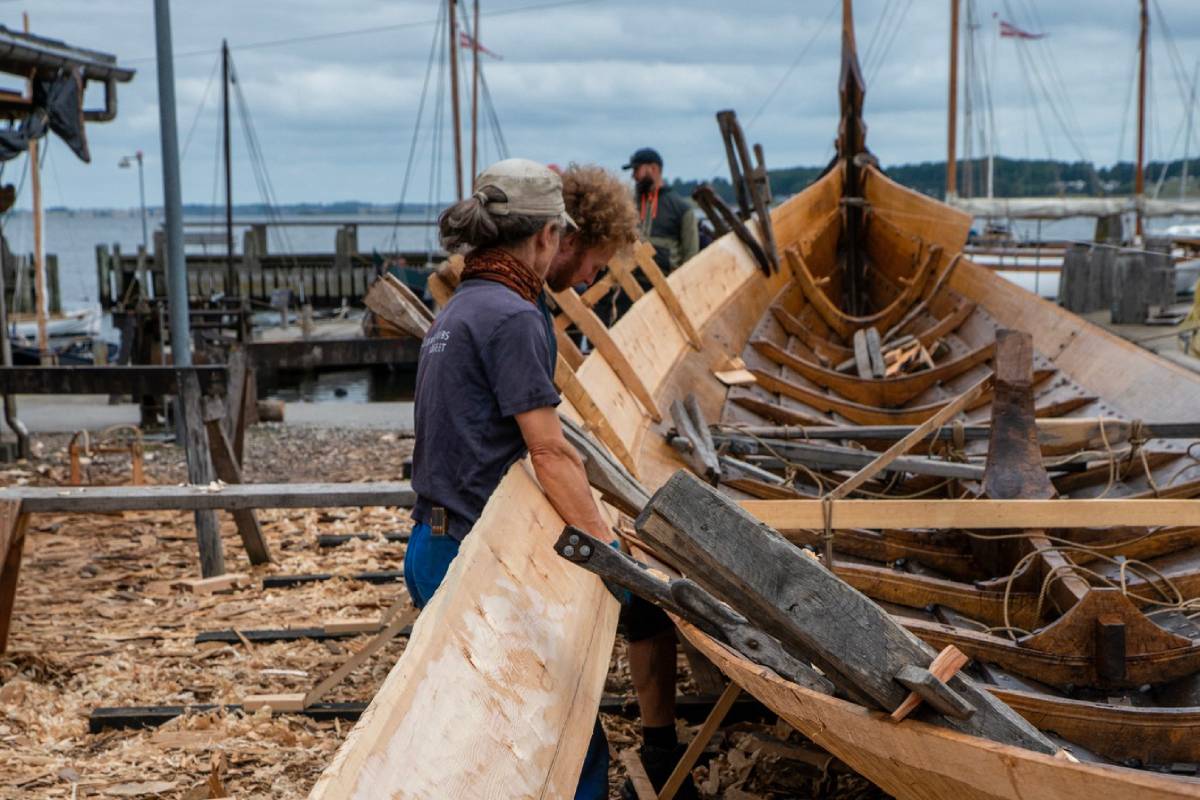
The new reconstruction of the Viking snekkja Skuldelev 5 is currently underway at the Viking Ship Museum in Roskilde. Photo: Viking Ship Museum in Roskilde
Written evidence
Now, given that these ships were said to be a common sight, what does the literary or archeological record tell us?
First to the written word. One of the most striking descriptions of a Viking raid comes from the Anglo-Saxon Chronicle recounting an infamous 793 CE attack on the monastery on the island of Lindisfarne.
That the Vikings could strike so quickly and ruthlessly was no doubt due to their mode of transport, which may very well have been a snekkja.
This attack was so traumatic that it sent shockwaves around Europe, but particularly in the Carolingian court, where they would soon experience similar attacks.
In some of the Norse sagas, particularly the Heimskringla, it was said that Cnut the Great had as many as 1,000 of these ships when he undertook his invasion of England to seize back what he saw as his birthright following his father's death.
As George Norman Garmonsway wrote in his 1964 book, Canute and his Empire, whilst Canute would win back the English throne, this North Sea Empire would only last his lifetime, splintering upon his death in 1035 CE.
Archeological evidence and evolution
Heading out of books and into the real world, we can find two examples of a snekkja.
When several Viking-era ships were uncovered in 1962 at the bottom of the Roskilde Fjord in Denmark, one brought to the surface (Skuldelev 5) was believed to have been a snekkja. Its size and construction seem to suggest it was built for speed and predatory coastal raiding.
Further south, the remains of a snekkja were uncovered in Hedeby harbor in 1979, in Germany. This ship from Hedeby, found at the site of a once-famous Viking trading town, fits not only the dimensions of a snekkja but also its construction date (c. 985 CE).
As the Viking Age progressed, there was a need for ships to have more storage – to have the ability to carry larger loads of goods, livestock, and/or warriors – thus the snekkja evolved into ships of much grander design and size.
For more information about a recent discovery of a Viking ship in Norway, visit Science Norway here.
We get to provide readers with original coverage thanks to our loyal supporters. Do you enjoy our work? You can become a PATRON here or via our Patreon page. You'll get access to exclusive content and early access.
Feel free to reach out to discuss potential stories that may be in the public interest. You can reach us via email at [email protected] with the understanding that the information you provide might be used in our reporting and stories.