

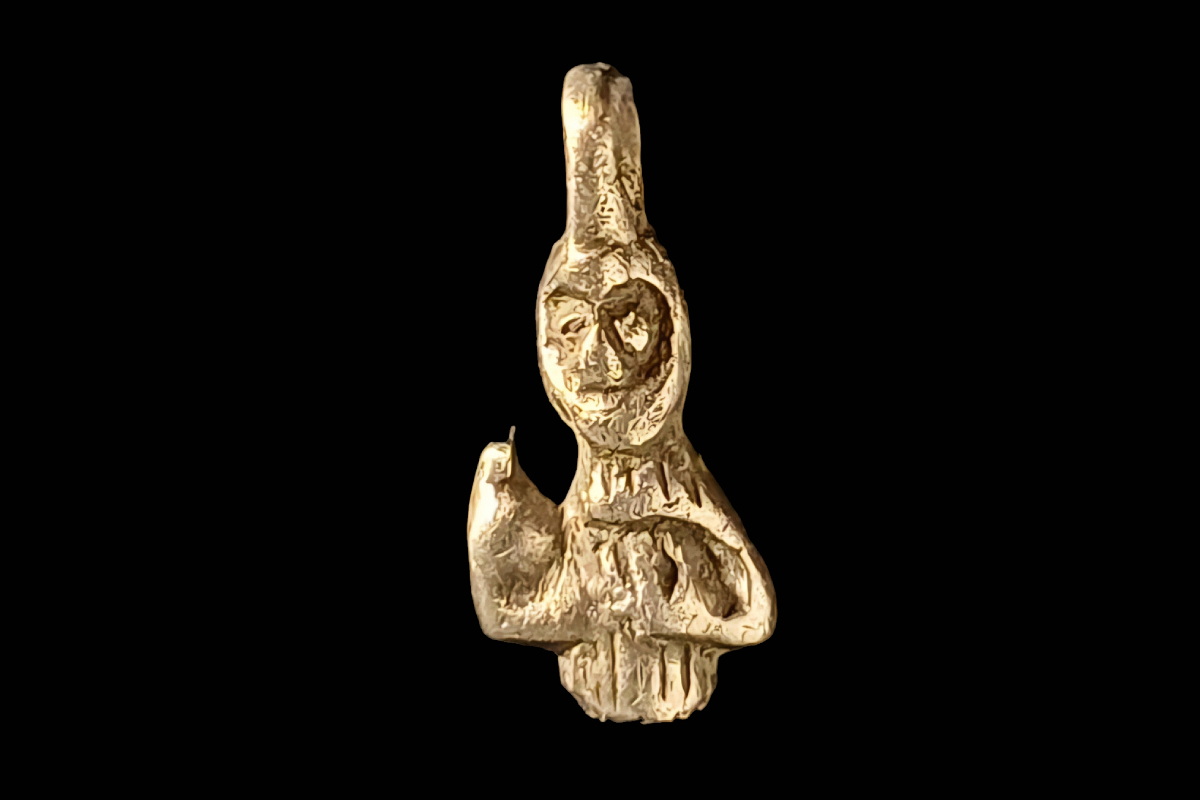
Flemming Willum Petersen, a detectorist and amateur archeologist, has uncovered a silver pendant in Denmark that may depict the Norse god Odin.
The find has since been donated to the Museum Lolland-Falster in the nearby city of Nykøbing Falster and is set to undergo further analysis in the coming months.
More than a thousand years in the soil
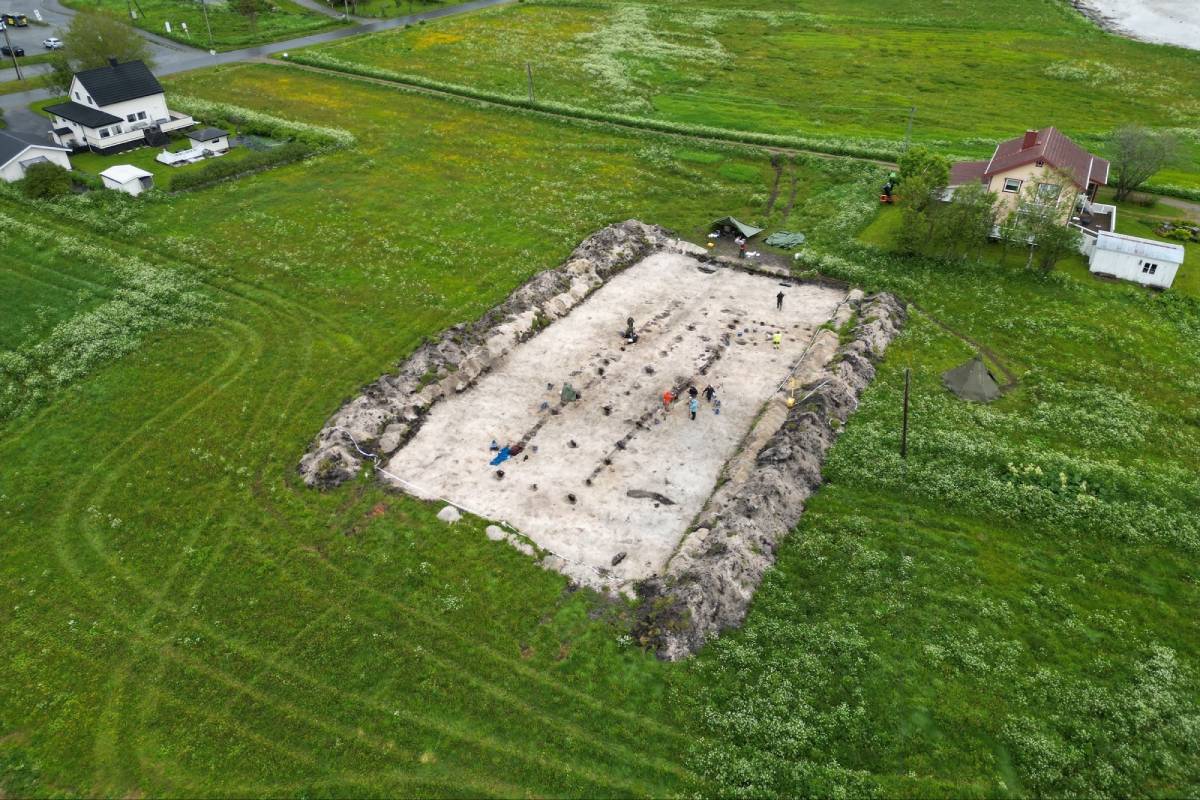
Petersen made the discovery this spring in a field next to Nakskov Fjord, an inlet on the island of Lolland, Denmark.
After retrieving the object from the soil and cleaning it, it became clear to Petersen that he had found a piece of ancient jewelry that apparently showed a man or figure of some description.
Petersen contacted the experts at Museum Lolland-Falster to receive further analysis of the artifact.
Marie Brinch, an archeologist and museum inspector at the museum, has since estimated that the figure dates from either the late Germanic Iron Age or the Viking Age, with a provisional date ranging from 700 to 1000 CE.
The piece is a solid silver pendant that was likely hung on a chain around the neck of its owner.
Although it is not yet possible to say for certain, the figure on the pendant may be a depiction of the Norse god Odin.
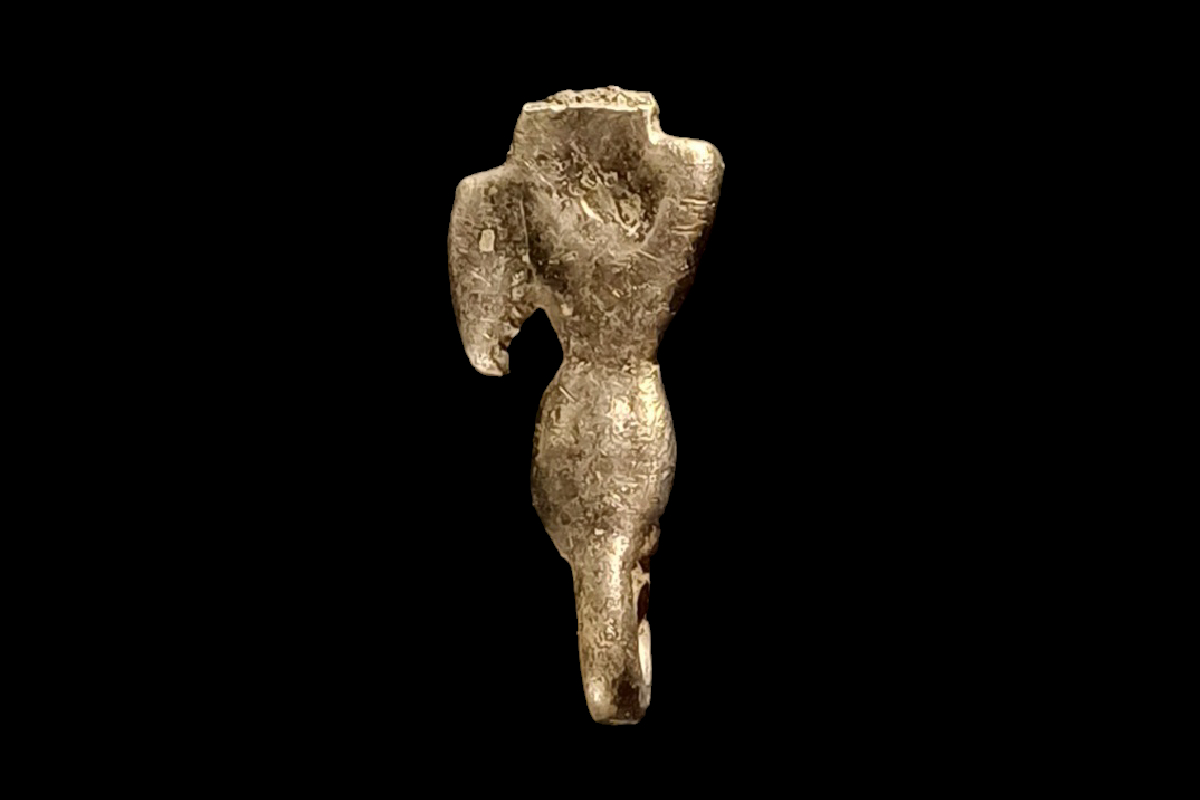
The silver pendant uncovered by Petersen suggests the site may have been a Viking trading post, frequented by wealthier individuals. Source: Flemming Willum Petersen
A possible trading post
Although items of jewelry such as pendants, brooches, arm rings, and necklaces were relatively common in Viking culture, they were often made from other, more affordable materials such as wood, glass, amber, and bronze.
Finds of solid silver, on the other hand, were less common and could signify that the owner was a wealthy individual.
Brinch, who is now safeguarding the artifact, commented on the rarity of the pendant. "It is a type of figure I have not seen in our area before – they are not very common," she said to TV2Ost.
"It is an important find, as it gives us an idea of what type of place the location where it was found may have been in the past.
"We think it was a trading post of some kind. Although this kind of silver figurine is rare and has not been found in the area before, the find is not unlikely when you take into account the nature and history of the area."
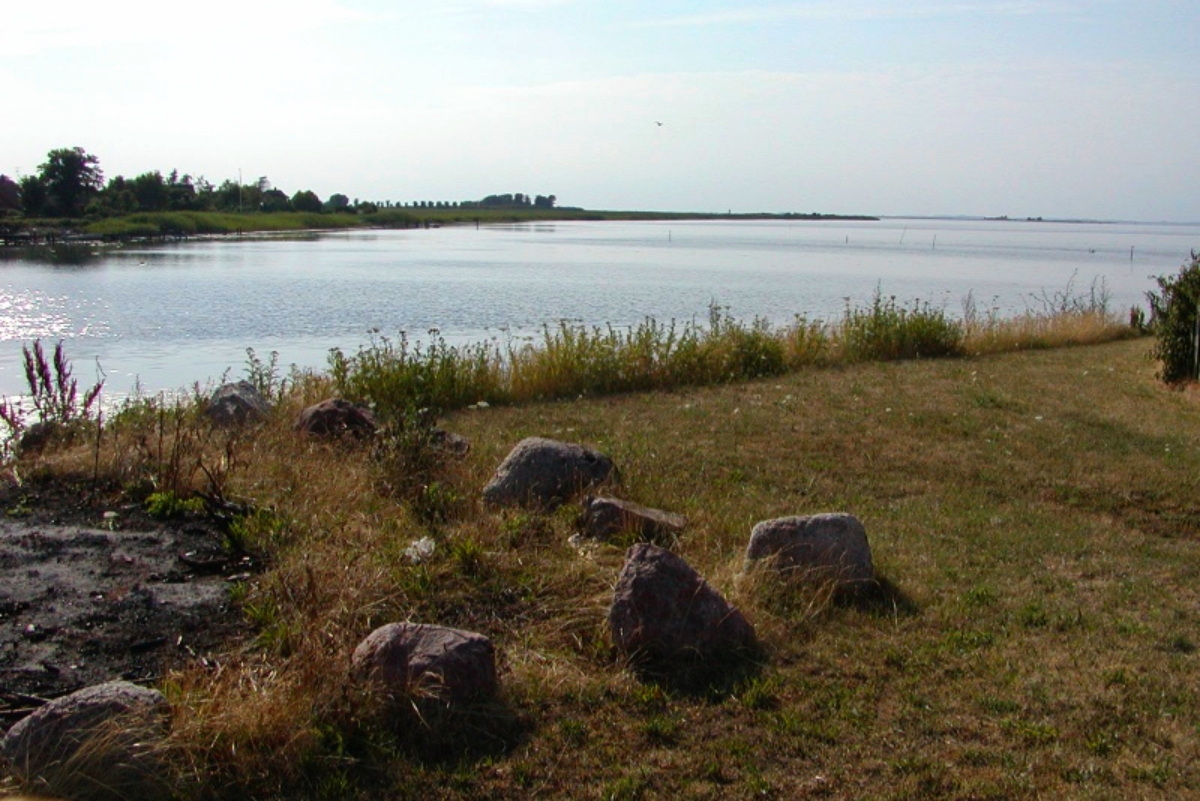
Petersen’s choice of location was deliberate, given its proximity to waterways that likely served sailors and traders in ancient times. Source: Michael Larsen (Public domain)
A targeted spot
Indeed, when speaking to TV2Ost, Petersen admitted he had deliberately targeted the location where he eventually found the artifact.
Petersen routinely studies written sources and old maps to try to identify possible areas where historical objects might be found and believed that its proximity to major waterways means that the area could have been useful for sailors and traders.
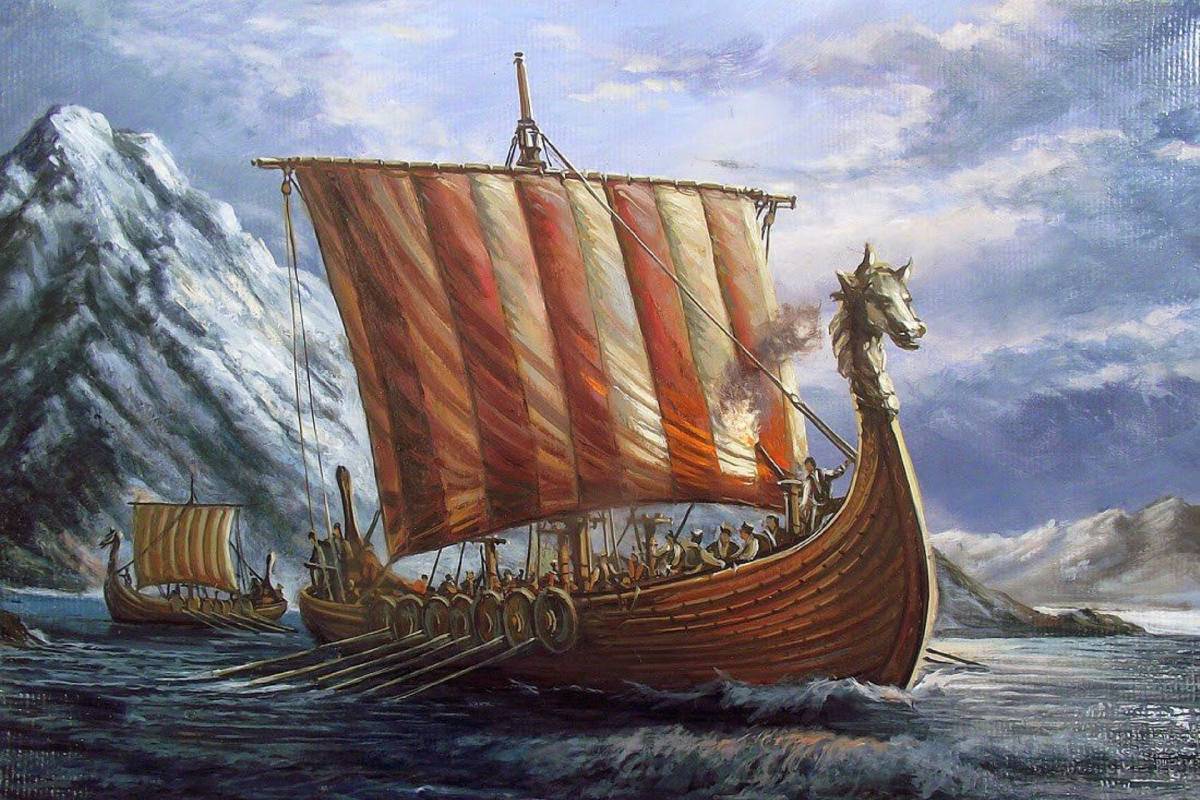
Situated close to the Kattegat and the Jutland peninsula, the island of Lolland could easily have been an important location during the Viking Age, yet archeological finds from the Viking Age have been rare.
Petersen's discovery, on the other hand, indicates that there could be more to come.
Although the pendant is currently being kept at Museum Lolland-Falster, it will soon be sent to the Danish National Museum for further evaluation and may be placed in an exhibition at a later date.
In the meantime, Petersen is sure to continue his investigations in the local area.
We get to provide readers with original coverage thanks to our loyal supporters. Do you enjoy our work? You can become a PATRON here or via our Patreon page. You'll get access to exclusive content and early access.
Feel free to reach out to discuss potential stories that may be in the public interest. You can reach us via email at [email protected] with the understanding that the information you provide might be used in our reporting and stories.