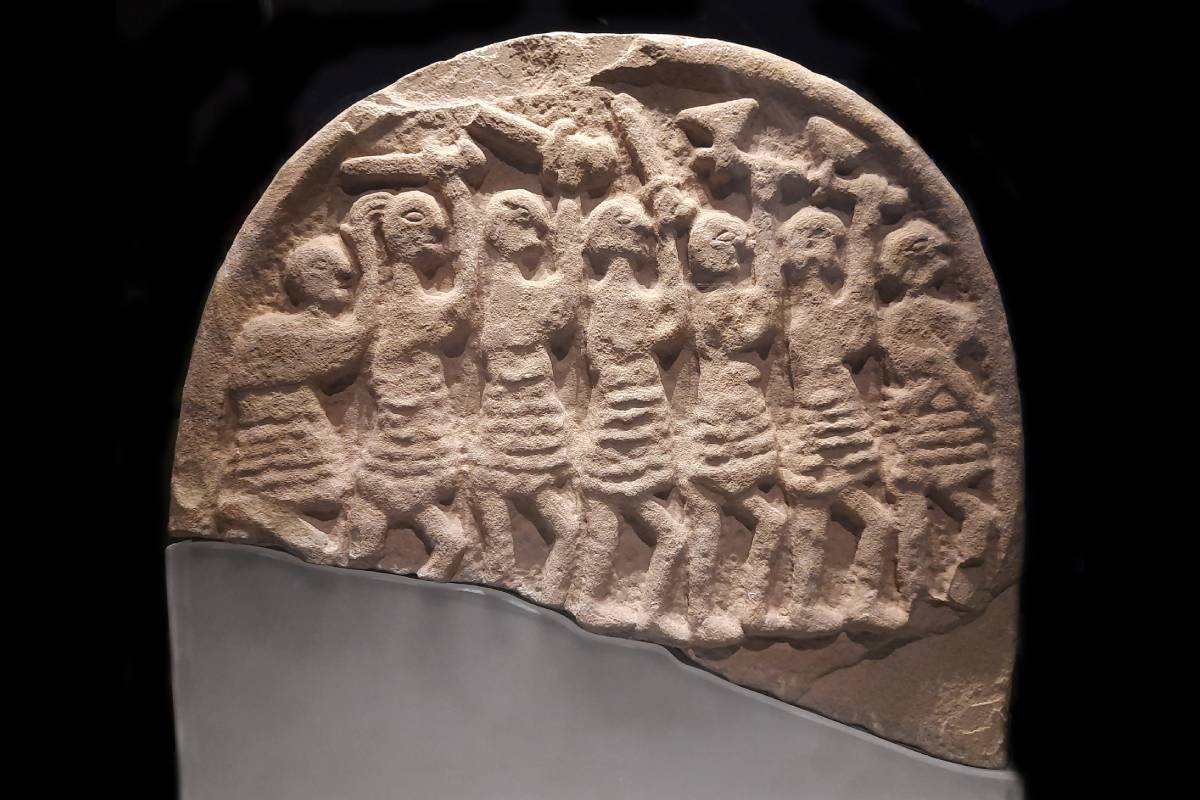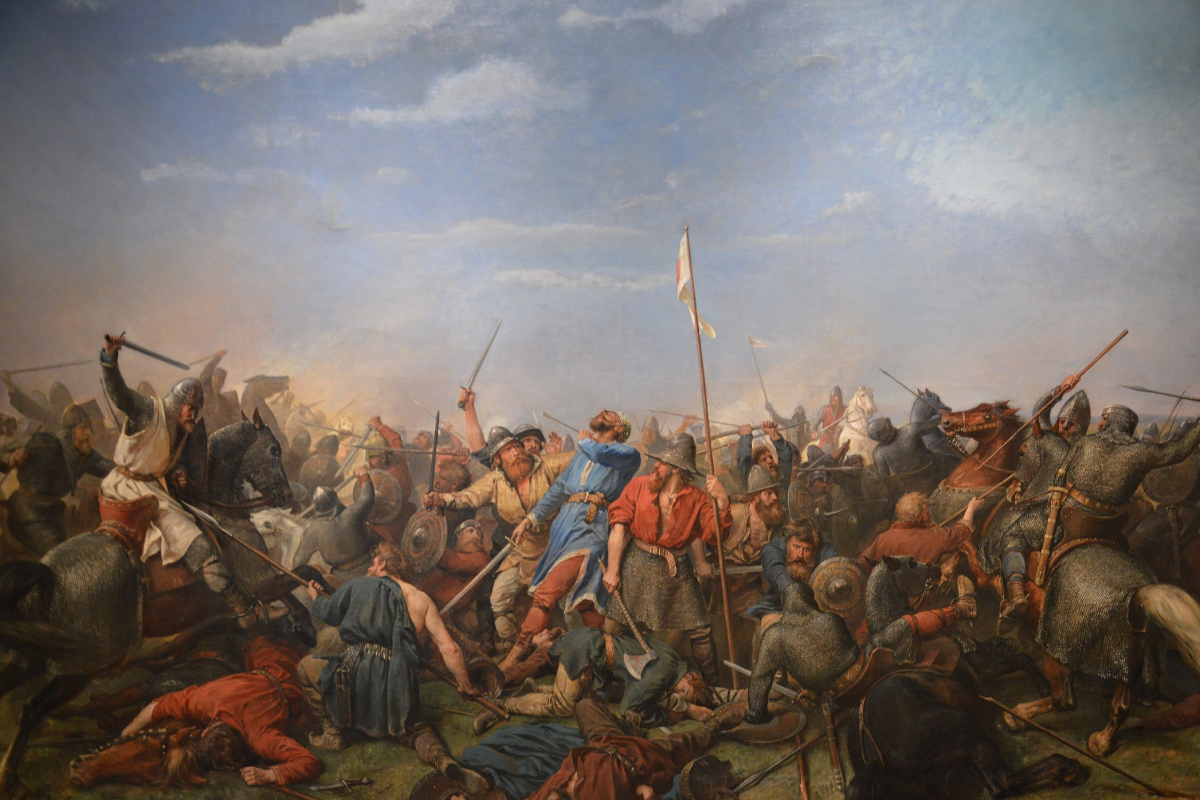


In the once economic and political heart of Viking England, archeologists have been analyzing the precious artifacts that lay buried beneath, and we now have a full picture of one of England's most famous early medieval streets.
An archeological bright spot in a turbulent decade
For the English, the 1970s were a decade that tested the very limits of their societal sanity.
This decade was chock-full of social turbulence, industrial action, and economic malaise that all added to the political instability following the collapse of the "postwar consensus."
However, despite the nation's decline and malaise, there was a bright spot as groundbreaking archeological excavations in York spurred a new interest in England's Viking history.
Construction for a new shopping center in 1976 sparked archeological excavations of the ground beneath Coppergate, a street in the heart of York.
Led by the York Archaeological Trust, these excavations uncovered a whole hoard (if you'll pardon the pun) of early medieval artifacts, including organic materials, carefully preserved over the centuries by wet clay and peat.
The excavations at 16 to 22 Coppergate exposed timber buildings that stood up to almost two meters high, laid out along the street with fences, animal pens, pits, wells, and latrines, which gives an unusually complete view of a single urban block.
The waterlogged, oxygen-poor clay sealed in a wide range of organic material that usually decays, including wood, leather, textiles, plant remains, and food waste, which is why Coppergate ranks among the best-preserved Viking Age urban sites in Europe.
Since then, more than 40,000 artifacts have been uncovered, which have given us an incredibly rare snapshot into the daily life of a bustling Viking market town in 10th and 11th-century York (or Jórvík as it was known in Old Norse).
Not only was York an important political site of Viking control in England, but, as the ground beneath Coppergate has offered up, it was also a busy site of craft and trade.
As A.J. Mainman and N.S.H. Rogers write about in their 2000 book, Craft, Industry and Everyday Life: Finds from Anglo-Scandinavian York, during the early medieval period, York quickly became a "vibrant urban centre" and thus "a fertile ground for the development of a diverse range of crafts."
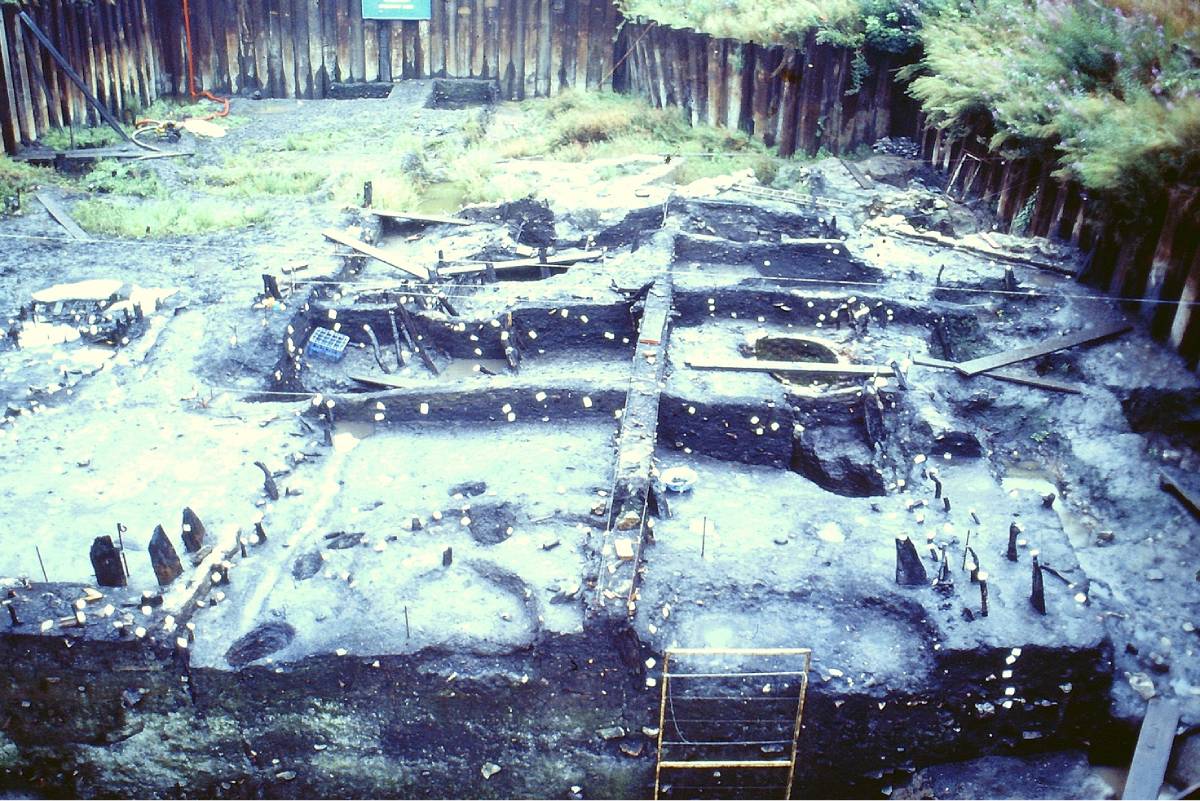
The Jorvik excavation in York in July 1978, with Viking Age timber buildings and features exposed in wet clay. Photo: Sandy Gerrard (CC BY-SA 2.0)
Metalworking
People from Viking societies had a two-century hold on York, from its initial capture by marauding Vikings from the Great Heathen Army in 865 CE until its annexation into the Kingdom of England following the Norman Conquest from 1066 CE.
During this time, the town's strategic location saw it become a center of great mercantile activity, especially evidenced by archeological finds of metalworking.
The excavations underneath 16 to 22 Coppergate have highlighted how instrumental metalworking was to the economic life of the town.
We know that people from Viking societies were skilled metalworkers – perhaps not the equal of their Frankish counterparts – but still highly proficient.
A.J. Mainman and N.S.H. Rogers discuss that discoveries made during various rounds of archeological excavation were "...large numbers of crucibles, ingot moulds, scrap metals and tools" underneath the streets of modern York.
Archeologists also recorded around two hundred hones, or sharpening stones, in the Viking Age deposits, which points to constant maintenance of blades and a dense concentration of metal tools in this part of the town.
These remains, all from the city's Viking period, show that a wide range of metalworking took place there, including silver working, tinning, and the production of jewelry.
Alongside work in iron and silver, the Coppergate material also shows activity in non-ferrous metals as well as glass, jet, and amber, so this small stretch of street formed part of a wider craft quarter rather than a single-specialism workshop.
Further excavations have uncovered additional evidence of this jewelry production, including buckles, brooches, pendants, and finger pins, all bearing the marks of Viking art and design.
These artifacts show that there was a consistent, if not large-scale, production of jewelry by and for the inhabitants of Jórvík.
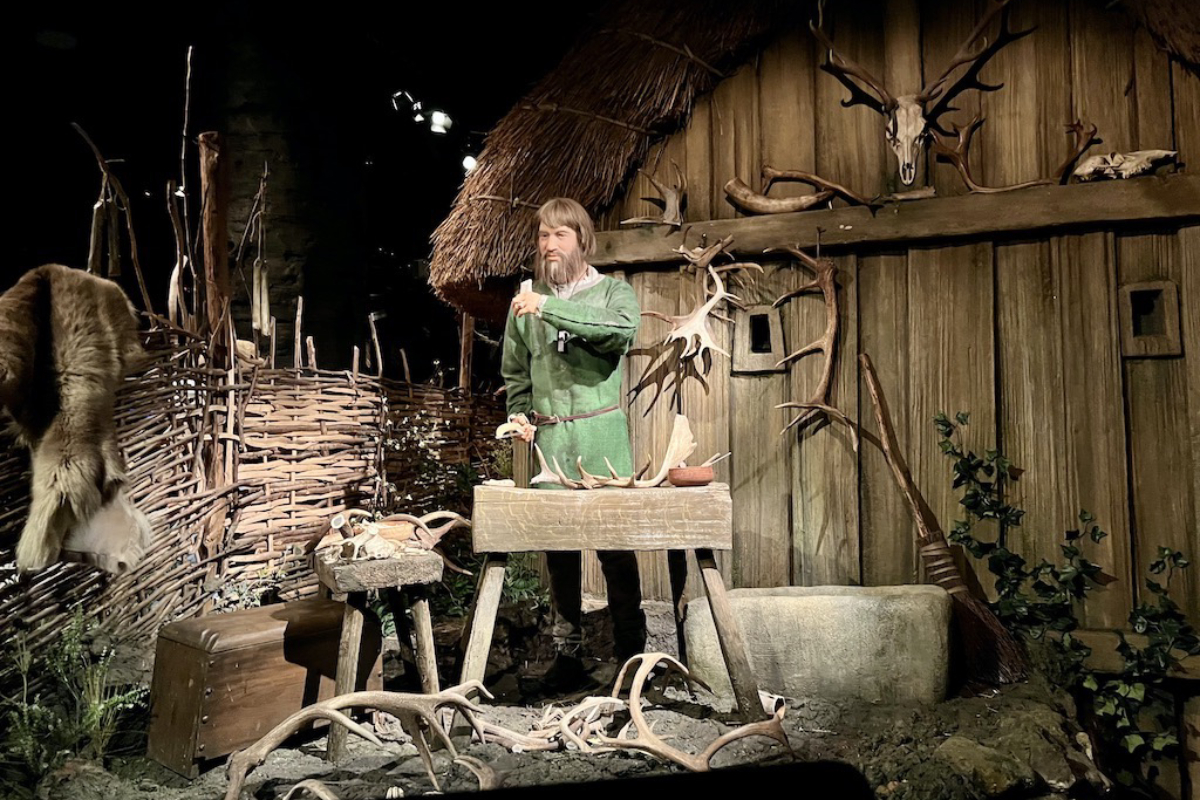
Reconstruction of a bone and antler worker's stall at the JORVIK Viking Centre. Photo: JORVIK Viking Centre
Leather, bone, and everyday objects
Shoemakers and leatherworkers left a particularly clear trace in the Coppergate deposits.
Archeologists recovered leather boots and shoes, belts, straps, pouches, and decorated sheaths and scabbards, together with piles of off-cuts from cattle and sheep hides, all of which point to a busy cluster of cobblers and repairers in this part of Jórvík.
Bone and antler workers also supplied the town with daily necessities and small luxuries.
Dozens of combs from deer antler, many with fine geometric decoration, show a craft that required specialized saws, rasps, and polishers and that produced objects far more robust than simple throwaway items.
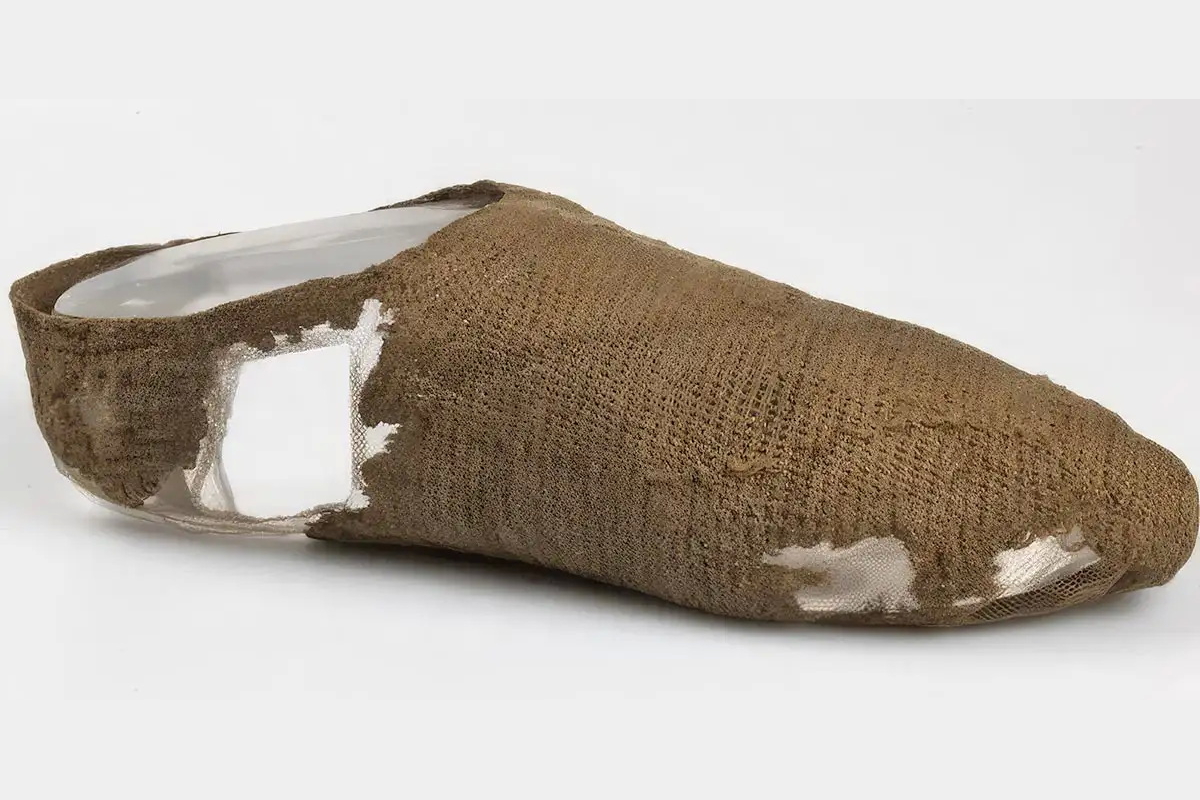
A fully intact Viking sock made of wool was discovered in York, preserved by the moist, peaty soil underneath the city. Photo: York Archaeology
Textile production
Aside from metalworking, the excavations have also uncovered evidence of sophisticated textile production by the inhabitants of Jórvík.
A.J. Mainman and N.S.H. Rogers note that over 200 "spindle whorls" have been uncovered from Coppergate and the surrounding area, which are essential tools for producing textiles.
Most of these whorls follow local forms, and specialists have identified only one typical Scandinavian-style clay whorl, so the textile tools at Coppergate fit an Anglo-Scandinavian rather than a purely Scandinavian tradition.
Alongside the whorls, other tools were uncovered, including needles, loom weights, and finishing tools.
We know that textile production was largely a female affair in Viking societies. Despite the obvious skill and patience needed to produce textiles, the archeological remains reveal a much smaller scale of textile production compared to metalworking.
Likely, much of this production was done in a domestic sphere by women as part of their domestic duties.
Waterlogged soil at Coppergate also preserved small scraps of cloth and even fragments of imported silk, at one point near an almost complete silk cap, which hints at access to high-status textiles despite the modest scale of local production.
A.J. Mainman and N.S.H. Rogers point out, however, that it is highly unlikely that cloth was made there, despite the wealth of textile tools and equipment, and thus any textile production was done on a small scale.
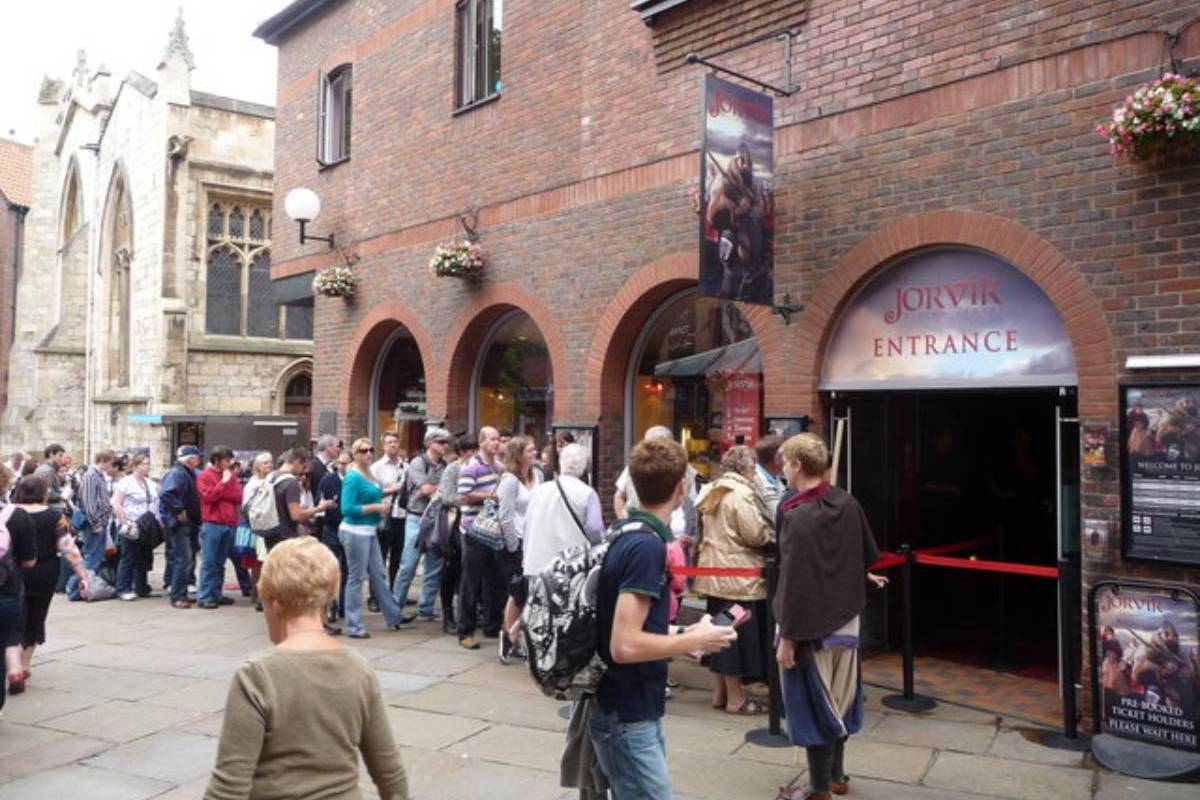
Visitors queuing outside the JORVIK Viking Centre on Coppergate in York. Photo: Jeremy Bolwell (CC BY-SA 2.0)
Other pursuits and trade
Aside from these two main crafts, the Coppergate excavations have also offered evidence of a diverse range of other pursuits.
Pottery, including sculptures, gaming pieces, and even a horse's harness, points to the artisanal skill and diverse craft production of the population of Jórvík.
We know that the inhabitants of Jórvík, whether their background was English or Scandinavian, took part in economic activities far beyond the walls of this ancient town. Artifacts associated with commerce and trade, including weights and balances, have been uncovered during the Coppergate digs.
Finds of Baltic amber, glass beads, and other imported goods, alongside these sets of weights and balances, show that Jórvík sat inside long-distance trade routes that reached across the North Sea and into the Baltic.
This seems to suggest that some of the wares produced by the town's inhabitants were likely sold to merchants who tapped into the burgeoning trade networks and routes that people from Viking societies had helped forge during the early medieval period.
In the Coppergate deposits, imported coins lay in the same layers as leather shoes, wooden objects, and scrap metal, so the site reveals a town where long-distance exchange and everyday manufacture met in the same muddy streets.
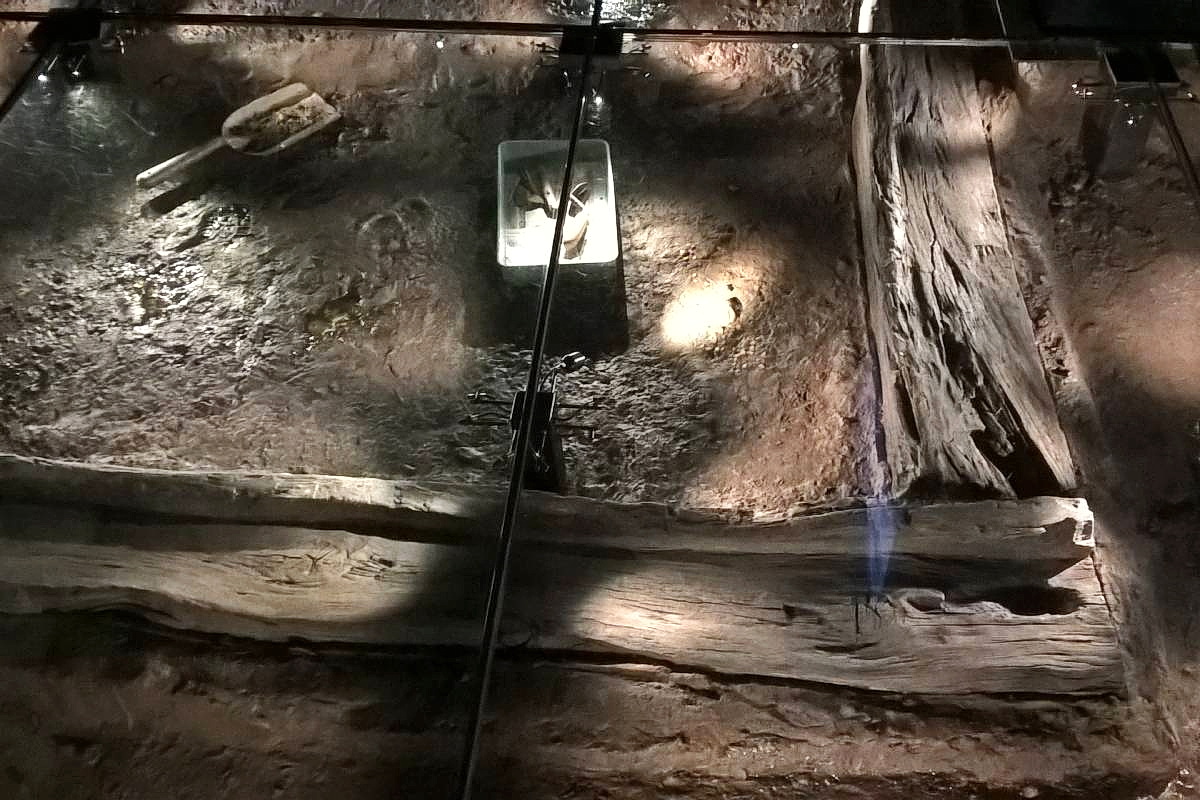
Timbers from the original Viking Age buildings at Coppergate, displayed under glass at the JORVIK Viking Centre. Photo: Chemical Engineer (CC BY-SA 4.0)
Important snapshot of Viking England
The archeological excavations of Coppergate have uncovered the rich and sophisticated artisanal and mercantile life of early medieval York.
Whilst there were craft and trade in the town long before the town fell to Viking rule, it appears that the political center of Viking England benefited from the expanded trade networks and population movement that were features of the early medieval period.
Coppergate has been instrumental in our understanding of the daily life and activities of the inhabitants of an English town under the control and influence of people from Viking societies.
The Coppergate discoveries later formed the basis for the JORVIK Viking Centre in York, where visitors travel through a reconstruction of the street on a September day in 975 CE.
Around eight hundred original finds from the excavations appear in the displays, so the artifacts that first emerged from the wet clay now shape how millions of people imagine life in Viking Age York.
Environmental evidence, such as the famous Lloyds Bank coprolite, a large fossilized human stool with a diet heavy in meat and bread and a heavy load of parasite eggs, adds detail on diet and health to the picture of crafts and trade that Coppergate provides.
For more information on the history of the Coppergate archeological excavations, visit Current Archaeology here.
We get to provide readers with original coverage thanks to our loyal supporters. Do you enjoy our work? You can become a PATRON here or via our Patreon page. You'll get access to exclusive content and early access.
Feel free to reach out to discuss potential stories that may be in the public interest. You can reach us via email at [email protected] with the understanding that the information you provide might be used in our reporting and stories.