

In an Old English adaptation from the ninth century of Paulus Oriosius's book Seven Books of Histories against the Pagans, you will find two chapters known collectively as Ohthere's Voyage.
They narrate the account of a meeting between King Alfred of Wessex and Ohthere of Hålogaland, a Norwegian traveler.
As one of the earliest detailed written texts of the Viking Age, the document provides us with both intriguing insight and some historical firsts.
The weary traveler and the eager listener
When he was ushered into the court of the King of the Anglo-Saxons, the Scandinavian traveler Ohthere must have felt like he was in some way at the very center of things.
He was, after all, in the presence of royalty. Yet he would surely have never imagined that the words he uttered would still be pored over by historians more than a thousand years down the line.
The authorship of Ohthere's Voyage is still unknown. Some historians have even attributed it to King Alfred himself. Most, however, believe it to be the work of a scribe (or scribes) working in King Alfred's court.
In addition to Ohthere's account and the adapted works of Orosius, it also features the tale of another traveler, Wulfstand, and his Voyage in the Baltic, from Haddeby in Denmark to Truso in Prussia.
With the amendments and updates made to Oriosius's original texts, the book formed a kind of rudimentary guide to ninth-century Europe.
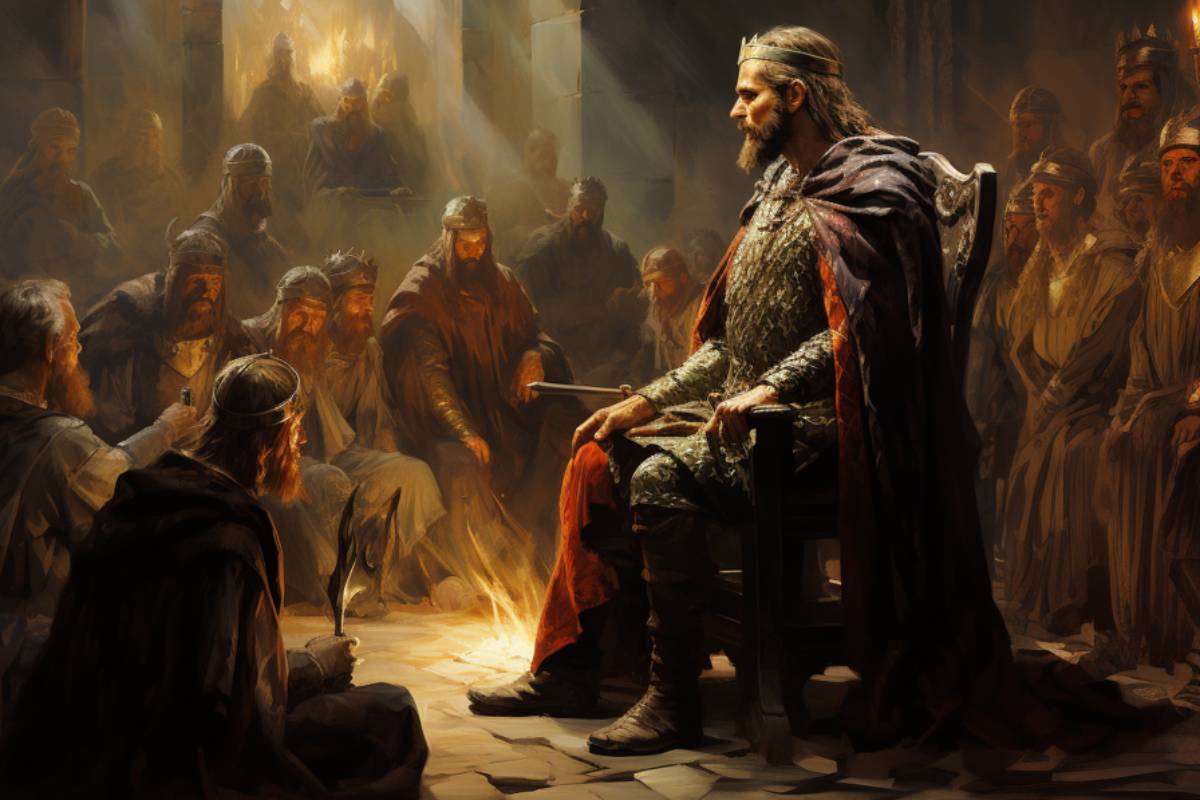
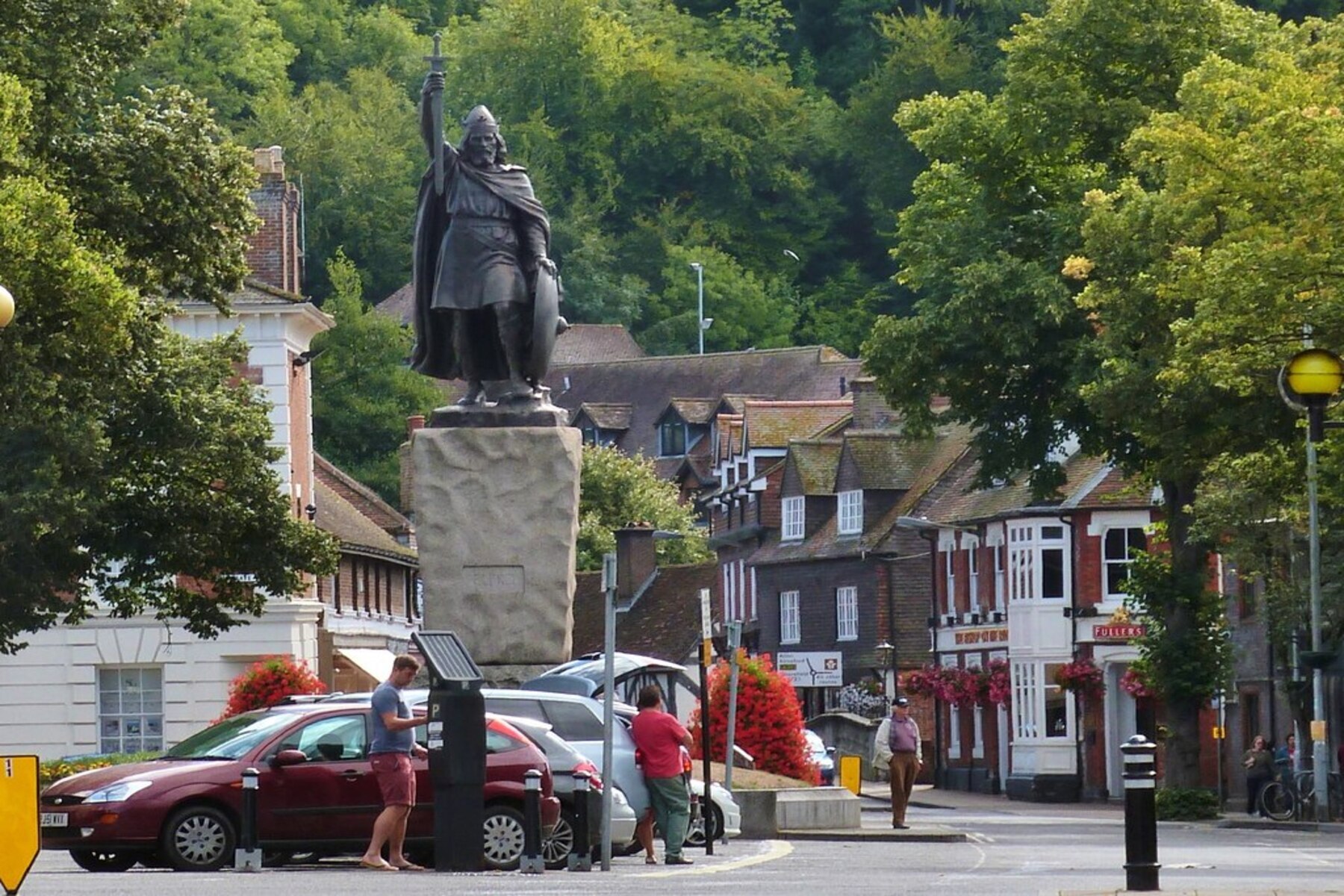
By 886 CE, Alfred had crowned himself King of the Anglo-Saxons. Illustration: The Viking Herald
A sober account
Ohthere (Óttarr in Old Norse) himself appeared to be a wealthy man and reportedly lived by whaling, hunting, and trading. Indeed, it may have been as a trader that he found himself in the presence of the king.
To the modern reader, the contents of his narration (available in Old English with a complete English translation here) may feel a little staid and unremarkable. Yet, precisely the soberness of the telling makes the text so valuable.
Indeed, Ohthere appears to be a practically-minded man. Whereas many travelers told long tales of fierce monsters, almighty battles, and the great deeds of the gods, his simple, matter-of-fact account – recorded in the third person – has the ring of authenticity (bar a slightly questionable claim to the ownership of 600 reindeer).
Historical first
Highlights include the first known written reference to Norway, or the "land of the Northmen," in the story of Ohthere’s first Voyage from Norway to the Kola Peninsula and the White Sea.
"The land of the Northmen is very long and very narrow. All of it that one can either graze or plow lies beside the sea, and even that is very rocky in some places, and wild mountains lie above and to the east, alongside the inhabited land. In these mountainous wastes live the Sami."
It is not fully clear if Ohthere is referring to the entire country of Norway or just one section of it. At the same time, this is an important detail, as it indicates an awareness among the population of some kind of collective identity – a crucial first step if a country is later to be united by one leader or group.
Ohthere's description also accurately portrays both the beauties and the limitations of Norway's geography. Who knows, perhaps this information provided Alfred with a clue as to why the Vikings were so attracted to the open, easily accessible, and highly farmable lands of the British Isles.
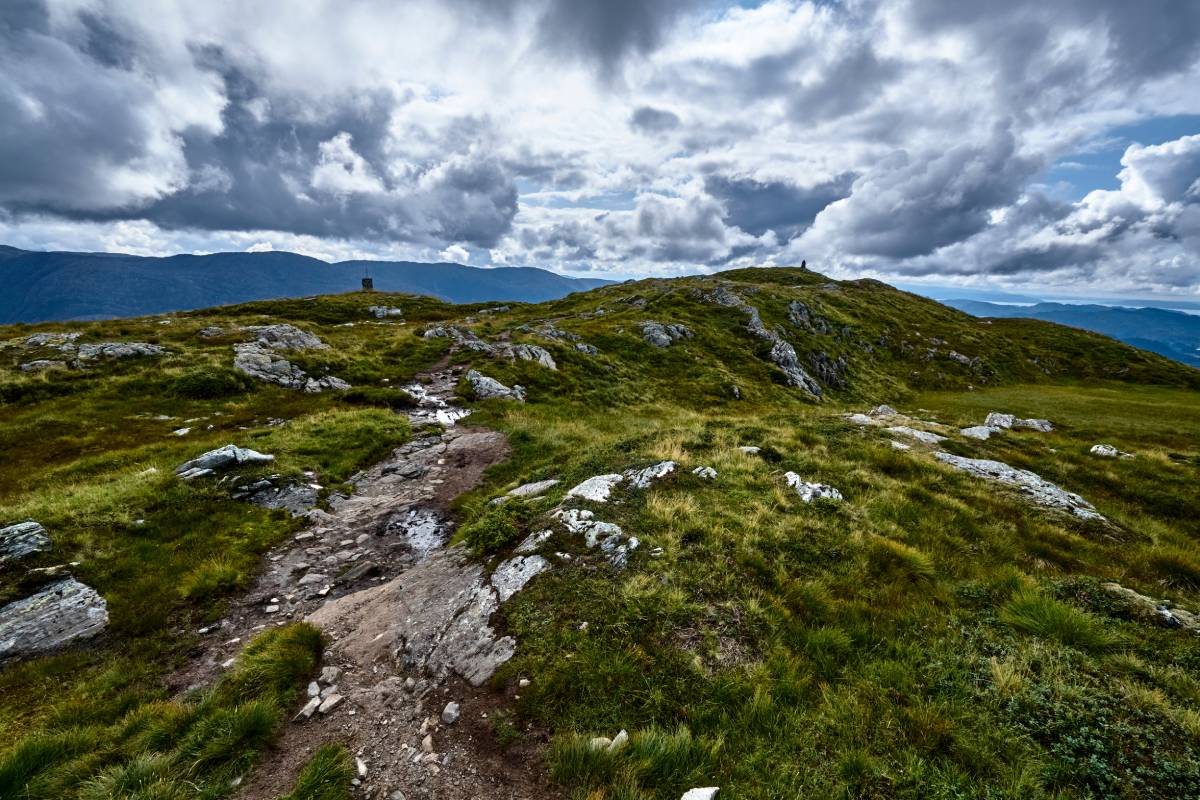
Norway's challenging landscapes were the starting point of Ohthere's first voyage. Photo: Dignity100 / Shutterstock
The peoples of the Viking Age
Ohthere's account also mentions various other peoples that populated the lands of Scandinavia in the Viking Age.
In addition to the Sami – the people who occupied many of the same lands as the Vikings but who had a significantly different language and culture – Ohthere also mentions the Beormas – thought to be the Permians, another indigenous people – and the Terfinnas, which may refer to the people who lived along the Tersky Coast in the Kola Peninsula, which borders modern-day Finland.
Even more significantly, in the description of Othere's second Voyage, this time from Hålogaland to Haddeby, we also find one of the first known references to Denemearce, or Denmark.
There is also talk of both Swedes and the troublesome "Cwenas" – thought to refer to the people of Kvenland.
Indeed, Cwenas are said to "harry the Northmen across the mountainous wastes. At other times the Northmen raid them. There are huge freshwater lakes throughout the wastelands, and the Cwenas carry their boats overland to the lakes and from there raid the Northmen."
Finally, the text concludes rather abruptly with a description of his arrival in Hedeby, the famous Viking trading settlement.
A glimpse of the past
Given its importance as one of the earliest written accounts of the Viking Age, there has naturally been some fierce debate about the accuracy of the account.
While most historians agree that Ohthere was a genuine Viking visitor, some believe that the text is essentially unreliable, as the Anglo-Saxons who recorded his words added many of their own interpretations and biases.
Perhaps, just like with all unverified, single textual sources, we are ultimately left somewhere between an educated guess and a leap of faith.
So much of what we know of history is down to chance, dependent not only on what is said and done but on who is listening, watching, or writing and on which precious documents or artifacts survive the test of time.
Yet by seizing on the scraps that remain, in many cases, are often able to build a sophisticated though limited understanding of the whole.
This is what makes Ohthere's account so compelling: we cannot be entirely sure of its veracity, but just like King Alfred, we can listen and wonder.
For an insight into the forms of Old English, we recommend this special lesson from the University of Texas based on Ohthere's Voyage.
We get to provide readers with original coverage thanks to our loyal supporters. Do you enjoy our work? You can become a PATRON here or via our Patreon page. You'll get access to exclusive content and early access.
Feel free to reach out to discuss potential stories that may be in the public interest. You can reach us via email at [email protected] with the understanding that the information you provide might be used in our reporting and stories.