

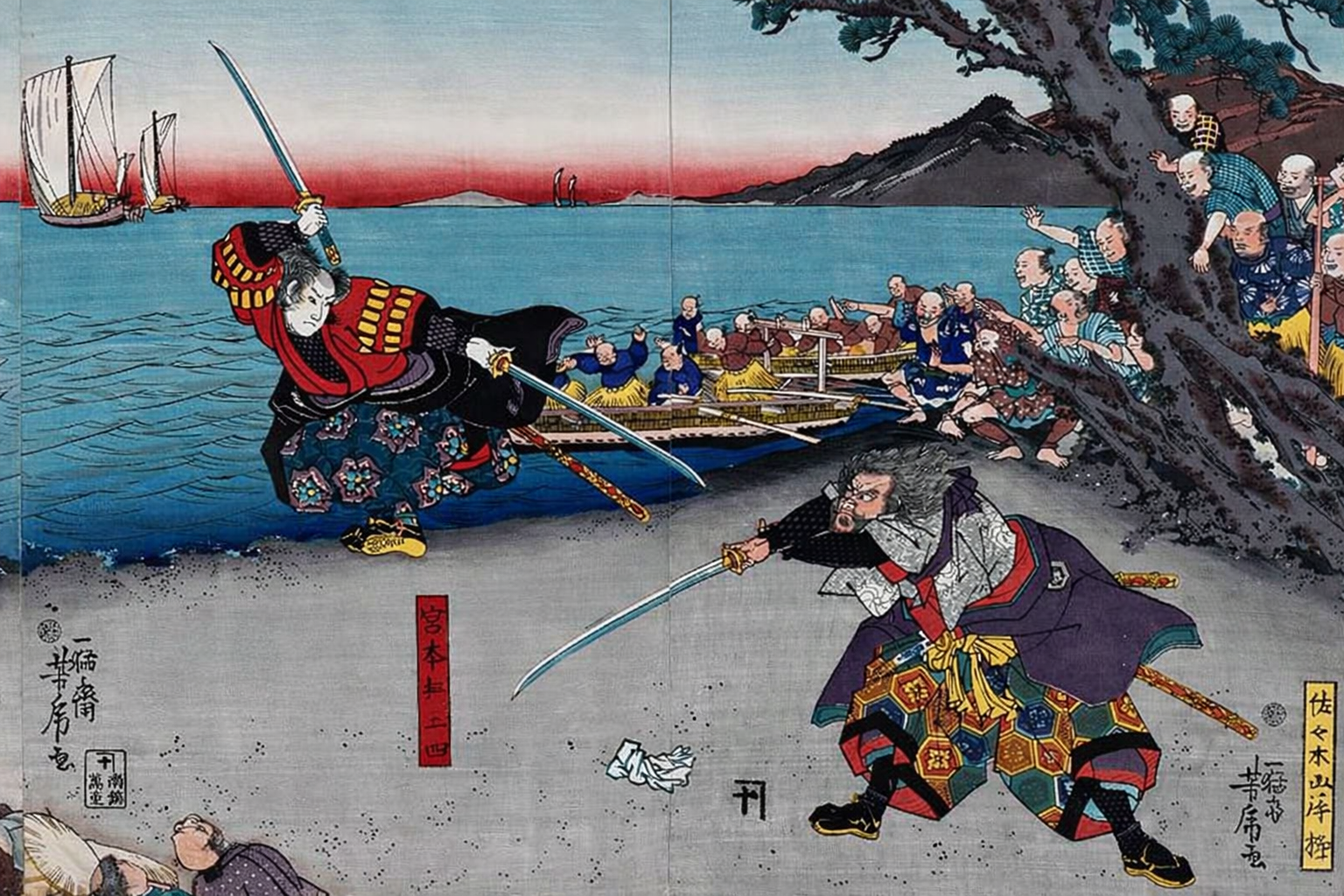
Whilst we are often busy trying to bring you, dear reader, the best Viking news and analysis, sometimes our minds can drift. One night, following an editor's meeting, a conversation began in The Viking Herald office: who would win in a fight between Vikings and Samurai?
We know that some historians may poo-poo this sort of alternative history (how can you really compare the warriors of two different civilizations across two different time periods?), but we, for one, are huge fans of anything that helps you, dear reader, become more educated and entertained.
A showdown between Samurai and Vikings is, for us history nerds, exceptionally enticing.
We know that Viking warriors fought and defeated a huge number of warriors from cultures and civilizations throughout early medieval Europe and surrounds, including Anglo-Saxons, Byzantines, Franks, Irish, and warriors from Al-Andalus.
The Samurai, who emerged as Japan's dominant warrior elite by the 12th century and lost their formal status in the 19th century, did not expand outwardly as far or wide as the Vikings did. However, their legacy remains highly visible in modern Japanese culture and global popular culture.
In order to see who would win between these two warriors, let us first turn to some general information on both.
Territorial reach and state development
Let us first look to the peak of each warrior.
Viking warriors emerged from early medieval Scandinavian societies in the mid-8th century CE. Their rise was meteoric, and by their demise in the early 12th century, they had fought, conquered, subjugated, and pillaged everywhere from the shores of modern-day Canada to the Caspian Sea.
They would be instrumental in the formation of important medieval polities like England, Normandy, Dublin, and the Kievan Rus.
Conversely, the Samurai were largely confined to the islands of Japan from the 12th until the mid-19th century CE, but their main period of dominance was between the 13th and 18th centuries CE.
There were, however, instances of Samurai plying their bloody trade overseas, notably in the invasions of the Korean Peninsula during the 16th century. There are also accounts of Japanese warriors serving the Dutch in Southeast Asia during the 17th century, including reports of Japanese samurai recruited to reinforce Batavia.
In terms of territorial conquest or influence, the Vikings win hands down. They exported their warriors, and the societies that produced them, across a huge swathe of Eurasia and the North Atlantic, from what is now Russia to Canada.
By contrast, the Samurai were never an outward colonizing force. The warrior class was central to Japan's political development. It reached a peak under the Tokugawa period, and its role was more centered on governance and internal order than on overseas expansion.
On territorial reach and political influence on later state development, the Vikings take this round, leading 1–0 overall, largely on the basis of geographic range and their role in shaping multiple medieval polities.

Viking fighters often favored fast, unpredictable raids that took advantage of weak defenses and slow local response. Photo: Gorodenkoff / Shutterstock
Weapons of war
Now we come to the nitty-gritty: the weapons of war, the tools of death. On the surface, this seems almost like a mismatch.
Whilst there was a small period of historical overlap between the two sets of warriors, it was brief. The Viking Age was in its last phase in the early 12th century CE, while the Samurai were only beginning to rise. The Vikings belonged largely to the early medieval world, whereas the Samurai extended from that same period through to the mid-19th century CE.
In essence, the Vikings were creatures of the early medieval world, whilst the Samurai reached their peak in the early modern period. Due to this centuries-long mismatch, it is important to remember that each set of warriors lived in a separate technological age.
The Samurai thus had access to later developments in metallurgy, which contributed to the creation of layered steel blades such as the famous katana.
Viking warriors had access to some of the best swords of their day, often forged by Frankish swordsmiths, but these belonged to an earlier technological context than Japanese swords. This metallurgical advantage also meant that Samurai had better-quality armor, some of which was designed to resist early bullets.
Speaking of guns, the big difference between the two warriors is that, for much of the Samurai's latter existence, they lived in an age of guns. Thanks in part to the Portuguese, firearms were introduced to Japan in 1543 and were soon adopted in Japanese warfare.
This resulted in the Japanese-produced tanegashima being used in war from the mid-16th century CE onward. Oda Nobunaga's use of firearms at Nagashino in 1575 showed how important they had become.
Finally, whilst Vikings could be known to use a bow and arrow, archery was secondary to their infantry-focused style of warfare. By contrast, Samurai developed within a military culture in which mounted archery held an important place. Mounted archery, or yabusame, became a recognized part of the Samurai tradition.
When it comes to military equipment, the Samurai have the edge. 1–1.
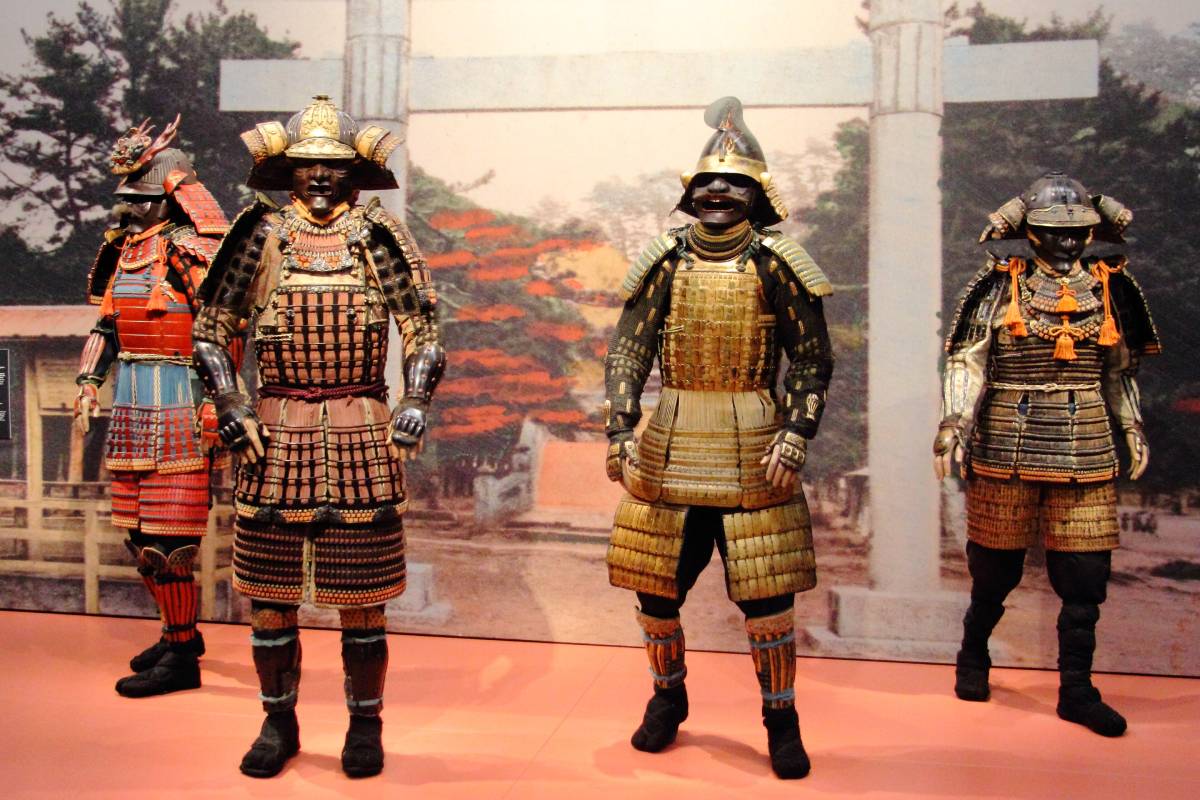
Samurai armor displayed at Kunsthalle Munich during the 2019 exhibition "Samurai. The splendour of Japanese chivalry." Photo: Rabe! (CC BY-SA 4.0)
Berserker versus bushido
We now turn to bushido and berserker, two very different aspects of warrior culture. Bushido, which is translated into English as "Way of the Warrior," was an ethical and martial ideal associated with the Samurai that developed over time and focused on discipline, education, and self-control.
Samurai saw intensive training not only on the battlefield but also in literacy, poetry, and philosophy. Under bushido, preparation and strategy were vital elements of warfare. On the battlefield, Samurai armies relied on planning, combined-arms tactics, mounted archery, and, following European contact with Japan, the use of firearms.
In contrast to the bushido way of thinking was the berserker. The berserker emerged as the elite shock troop of many a Viking band, force, or even army.
They were renowned for their ferocity, psychological intimidation, and fearless aggression and bravery. The image of the berserker emphasizes ferocity and shock value more than structured military training. Berserkers would utilize their power to try and strike a decisive blow by disrupting enemy lines, like a shield wall.
This echoed the broader Viking strategy, whereby mobility and surprise were highly valued. Small war bands would be ferried downstream, away from enemy fortifications, to forage, skirmish, raid, and utilize the element of surprise.
As Ben Raffield writes in his chapter in the book Landscapes of Movement and Predation: Perspectives from Archaeology, History and Anthropology, Vikings were seen by many in Europe and surrounds during the early medieval period as a "new form of threat presented by highly mobile bands of predatory raiders."
Their mobility was what made them so devastating and unpredictable for the forces of many cultures and civilizations, from the Iberian Peninsula to the Caspian Sea.
Whilst Vikings certainly did weapon training, studied warfare, and strategized campaigns, the Samurai had the superior military education and strategic development.
As a feudal class, this training was institutionalized and thus ingrained across generations, something that even the most brilliant Viking war leader, who emerged from a martial culture with far less formal training, could not hope to replicate.
On discipline and military culture, the Samurai go 2–1 ahead.
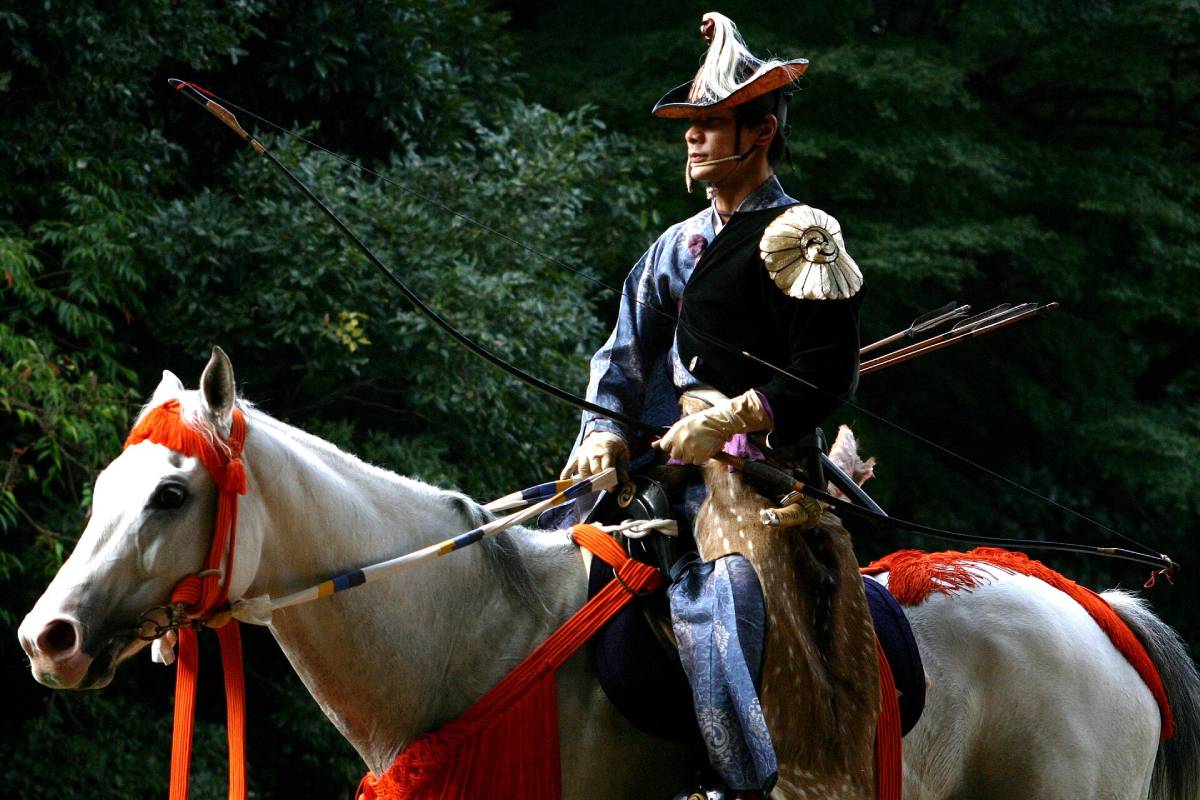
Yabusame, a traditional form of Japanese mounted archery, performed at Meiji Jingu in Tokyo. Photo: Adriano (CC BY-SA 3.0)
A battle to the death, one-on-one
Having reviewed their development, territorial reach and influence, their weapons of war, education, military strategy, training, and tactics, we come to the real juicy part: who do we think would win in a fight between a Samurai and a Viking?
Imagine that we drop two warriors from their respective peak military periods: a Viking warrior plucked from the Great Heathen Army versus a Samurai plucked from the Sengoku period, almost a century and a half of civil war in Japan from the late 15th to early 17th centuries.
The scenario in which this fight would take place matters to the outcome. If it were a confined area, then, despite the technological advantages of the Samurai, we feel that the Viking warrior may actually have a great chance to win.
Here, a reliance on brute strength and endurance matters.
Conversely, if this were a series of repeated duels or if the fight took place upon a battlefield, then the training and tactics of the Samurai, coupled with superior military equipment and technology, would see the Viking easily fall.
Let's face it, a Viking shield, however great, would likely struggle against a katana blade and/or the blast from a firearm.
In a battle, warrior versus warrior, it might be close, but the Samurai warrior would fend off the Viking. This gives us a scorecard of 3–1 to the Samurai.
Outward expansion versus inward perfection
Whilst Viking warriors had a far greater territorial reach and influence on regional political development, the Samurai were the superior warriors due to elite training, better military equipment, and greater strategic and tactical knowledge and nous.
Whilst Vikings sailed outward to pillage and plunder, the Samurai focused more on internal military culture and discipline.
For more information on Viking battlefield tactics, visit ScienceNordic here.
We get to provide readers with original coverage thanks to our loyal supporters. Do you enjoy our work? You can become a PATRON here or via our Patreon page. You'll get access to exclusive content and early access.
Feel free to reach out to discuss potential stories that may be in the public interest. You can reach us via email at [email protected] with the understanding that the information you provide might be used in our reporting and stories.