

For someone who grew up in the Anglosphere, the eastern adventures and exploits of people from Norse societies can feel like only a more recent discovery. However, thanks to new research and literature from the likes of Dr. Cat Jarman and Martyn Whittock, the eastern half of the Viking story is finally becoming more popular and well-known in the West. Whilst raids on Lindisfarne and battles at Stamford Bridge are all well and good, the history of this eastern push by people from Viking societies is just as thrilling and exciting, and as full of high drama and color as anything that occurred westward across the North Sea.
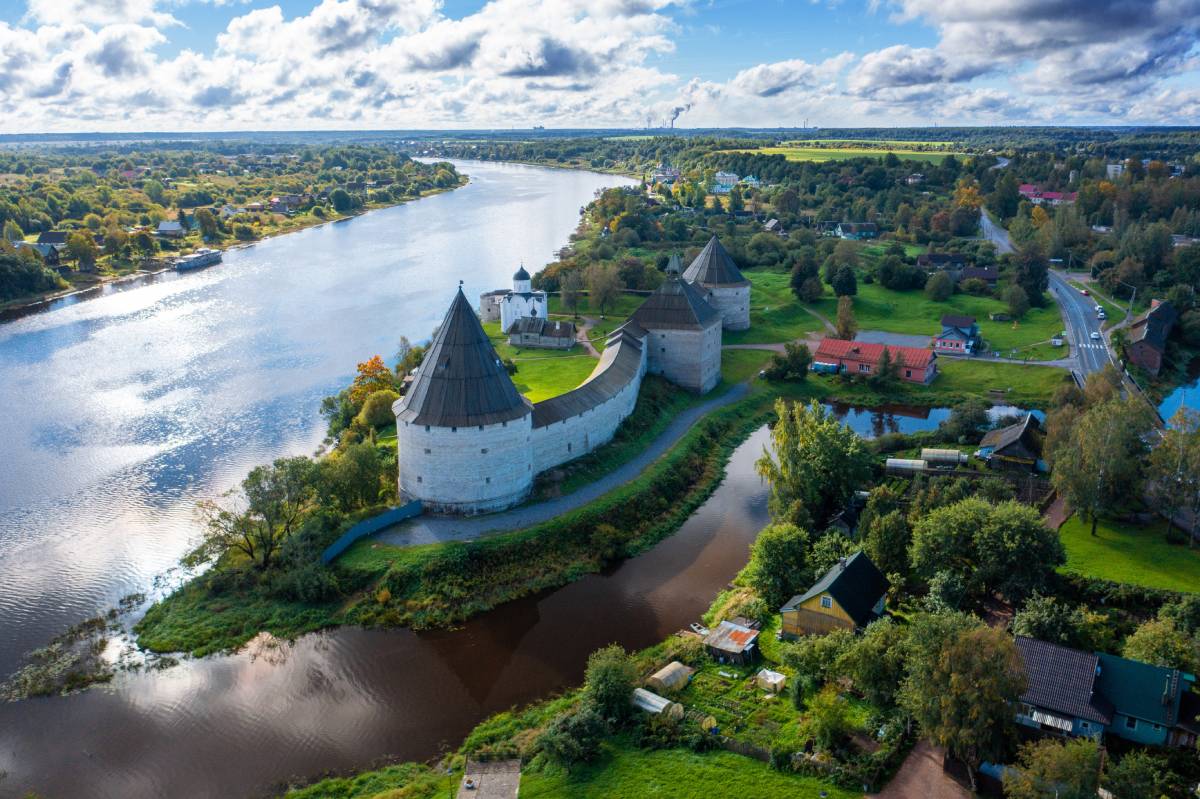
Recent archaeological excavations have shown the beginning of the so-called ‘Viking Age’ may actually have started on Saaremaa, an island in the Baltic Sea, a short eastward sail from what is now Sweden. We know that people from Scandinavia essentially turned the Baltic into a Viking pond by the turn of the 9th century CE. From here, the many river systems between the Baltic and Black Sea soon became full of people from Norse societies raiding, trading and eventually settling.
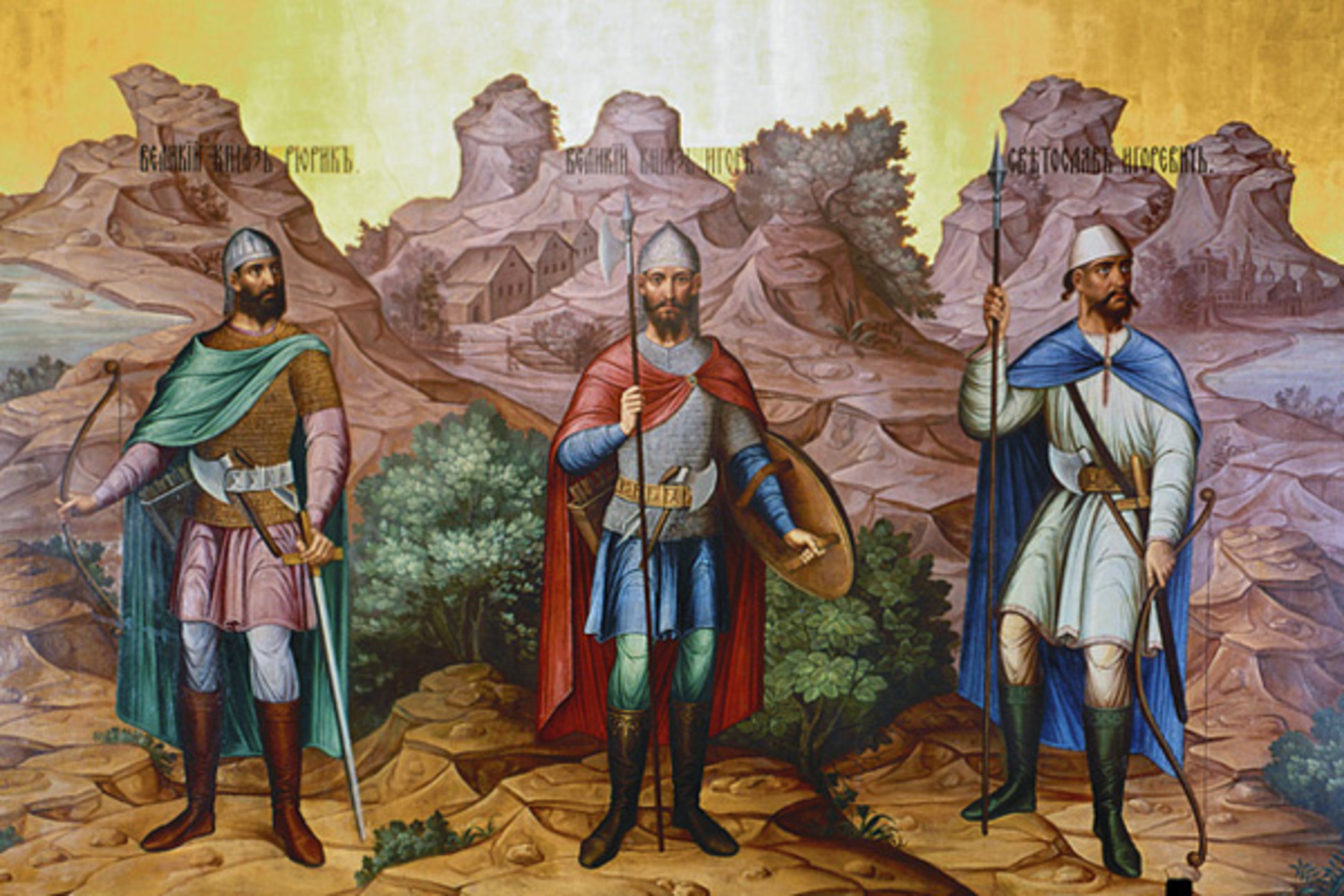
According to later medieval chronicles, Viking warriors were responsible for creating the multiethnic, multicultural and multireligious medieval polity, the Kyivan Rus. Today, the modern nations of Belarus, Russia and Ukraine all trace their ancestry in part back to what was one of early medieval Europe’s largest states.
While a Viking elite initially held power, generations of interaction and intermarriage between Norse newcomers and local Slavic communities shaped the society that later became known as the Rus, ruled by a Grand Prince. Now, we delve into the Russian Primary Chronicle as we turn to one of the more intriguing chapters involving these rulers.
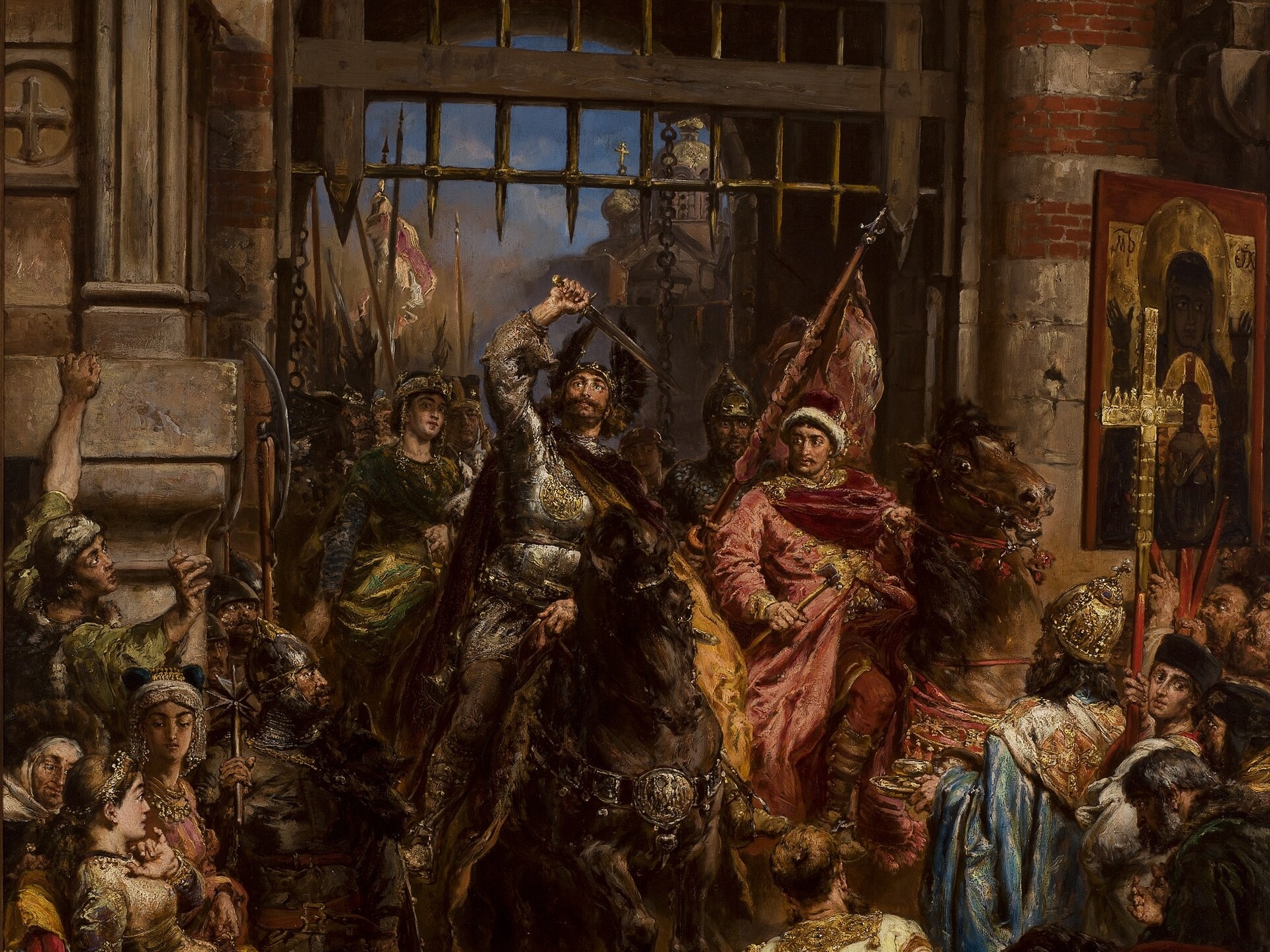
Sviatopolk (in red) with Bolesław the Brave at the Golden Gate in Kiev, by Jan Matejko. Source: Public domain
History through the chronicles
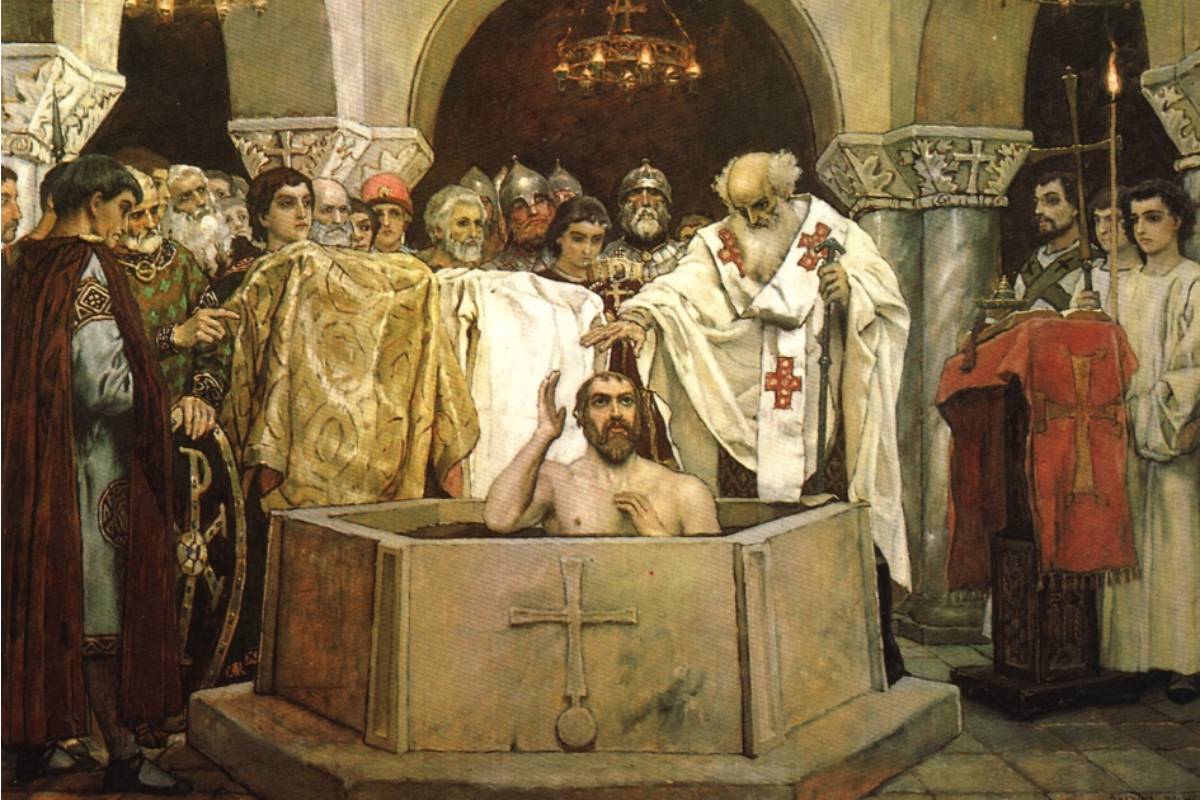
Like the people from Viking societies that they are said to be descended from, much of what we know about the rulers of the Kyivan Rus comes from later medieval chronicles and sources. Instrumental to our knowledge of this period is what we call the Russian Primary Chronicle, said to be compiled in the early 12th century by a monk residing in Kyiv, Nestor. A chronicle of the major characters and events from the polity, spanning c. 850-1100, it gives us moderns a glimpse into the Kyivan Rus. Using an online version of the chronicle, we find that the ruler of the Kyivan Rus, Vladimir,
“...was enlightened, and his sons and his country with him. For he had twelve sons: Vysheslav, Izyaslav, Yaroslav, Svyatopolk, Vsevolod, Svyatoslav, Mstislav, Boris, Gleb, Stanislav, Pozvizd, and Sudislav. He set Vysheslav in Novgorod, Izyaslav in Polotsk, Svyatopolk in Turov, and Yaroslav in Rostov. Vhen Vysheslav, the oldest, died in Novgorod, he set Yaroslav over Novgorod, Boris over Rostov, Gleb over Murom, Svyatoslav over Dereva, V sevolod over Vladimir, and Mstislav over Tmutorakan.”
Of course, as all history entthusiasts will know, having a large family may be good for a ruler’s dynasty (providing far more than an heir and a spare), but it generally does not bode well for later power dynamics. Sviatopolk (sometimes written as Syvatopolk) was born in approximately 988 when his father, Vladimir I, ruled Kyiv. As we can see from the Chronicle, Sviatopolk was sent away to rule in the north of the realm, in what is now Turv, Belarus – said to have been appointed by his father when he was but eight.
Over the best part of the next two decades, Sviatopolk was said to have ruled the Principality of Turov in his own right. However, upon the passing of his father, Vladimir the Great, in 1015 the Kyivan Rus was plunged into a dynastic crisis whereby the spilling of blood was to be the only solution.
The beginning of Sviatopolk’s fratricidal reign
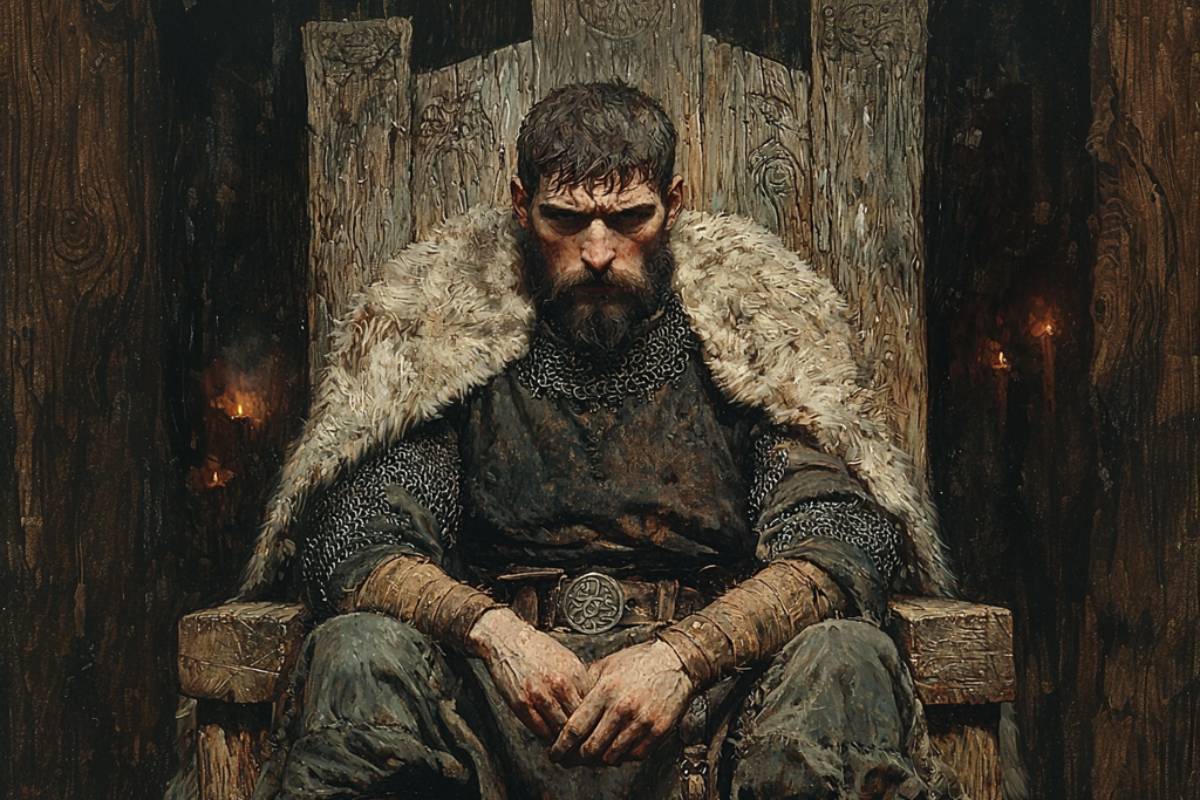
For many of you (including the current author), childhood memories include the absolute joy of receiving a nickname when ankle high. Of course, the golden rule about nicknames is that one doesn’t choose one’s own; it is often thrust upon one by friends or family, perhaps cool but sometimes cutting. One wonders exactly what young Sviatopolk, upon the death of his father, would think of his posthumous nickname, the Accursed.
This is how people down through the ages, since the early medieval period, have referred to him. And the name comes from a tale of terrible deeds perpetrated in hte quest for ultimate power. As George Vernadsky writes about in his 1973 book, Kievan Russia, it is the result of “a bloody feud” between the sons of Vladimir the Great, in which Sviatopolk was the chief instigator.
According to the chronicle,
“Upon his father's death, Svyatopolk settled in Kyiv... When Boris returned with the army, without meeting the Pechenegs, he received the news that his father was dead. He mourned deeply for him, for he was beloved of his father before all the rest.” [Stanza 132]
We have Boris, one of Sviatopolk‘s older brothers, returning to Kyiv armed with a large force. Now, in this case, it appears that Boris had the upper hand and would likely think that he would press for his father’s throne. Not so, according to Nestor, who has Boris exclaim,
“'Be it not for me to raise my hand against my elder brother. Now that my father has passed away, let him take the place of my father in my heart.’ When the soldiery heard these words, they departed from him, and Boris remained with his servants.” [Stanza 132]
Crisis averted? Did Sivatopolk take his brother’s lead and live peacefully ever after? Think again. Turning again to the Chronicle, we find that,
“Svyatopolk was filled with lawlessness. Adopting the device of Cain, he sent messages to Boris that he desired to live at peace with him and would increase the territory he had received from his father. But he plotted against him now how he might kill him.” [Stanza 132]
Like all good leaders, and evil ones too, Sviatopolk outsourced the killing to some in his trusted retinue. The men were dispatched to finish Boris off. Here Nestor portrays Boris as almost a Christ-like figure who can foresee his death and prays,
“...help me now to endure my passion. For I accept it not from those who are my enemies, but from the hand of my own brother. Hold it not against him as a sin….” [Stanza 133]
Whether Boris truly was as saintly as Nestor portrays him is historically questionable, but he suffers a gruesome end nevertheless. Here some Viking warriors – the Varangians, Norse mercenaries – landed the final blow,
“After offering this prayer, he lay down upon his couch. Then they fell upon him like wild beasts about the tent, and pierced him with lances. They stabbed Boris... after attacking Boris, wrapped him in a canvas, loaded him upon a wagon, and dragged him off, though he was still alive. When the impious Svyatopolk saw that he was still breathing, he sent two Varangians to finish him. When they came and saw that he was still alive, one of them drew his sword and plunged it into his heart. Thus died the blessed Boris.” [Stanza 134]
Having killed one brother, Sviatopolk then proceeds to cut a bloody swathe through two more. Yet this is not the end of this bloody tale.
Duels with Yaroslav and eventual demise
After the three brothers are dispatched (including killing one in the Hungarian mountains), Nestor states that Sviatopolk became obsessed with snuffing out all other possible contenders to his father’s throne. Nestor states that Sviatopolk,
“...began to reflect how he would kill all his brethren, and rule alone in Rus.” [Stanza 140]
However, news reached another brother, Yaroslav, of the deadly demise of his siblings. Rather than waiting to be the next victim, he,
“...collected one thousand Varangians and forty thousand other soldiers and marched against Svyatopolk.” [Stanza 143]
We cannot be sure if the force assembled by Yaroslav was actually this big – as we know, there is nothing that medieval chroniclers loved doing more than inflating numbers. However, what is interesting is that the force also included the presence of early medieval Europe’s most feared warriors, the Vikings (or as they were known in the east, Varangians).
Having assembled a force, Yaroslav then sought divine intervention as,
“He called on God as his witness and protested, ‘It was not I who began to kill our brethren, but Svyatopolk himself. May God be the avenger of the blood of my brothers inasmuch as Svyatopolk, despite their innocence, has shed the just blood of Boris and Gleb.’”
Whilst Sviatopolk's forces won this battle, ultimately, he would lose. Yaroslav bided his time and eventually forced his supposed evil brother into exile.
“As he fled, a devil came upon him, and his bones were softened, so that he could not ride... Upon reaching the wilderness between Poland and Bohemia, he died a miserable death.” [Stanza 145]
His brother, Yaroslav, would go on to rule the Kyivan Rus for the next 35 years, until his death in 1054, towards the latter stages of the so-called “Viking Age”. By then, however, the Kyivan Rus was turning its back on its Scandinavian past as it fell into the orbit of the lands further east, where Rus settled, particularly around Novgorod.
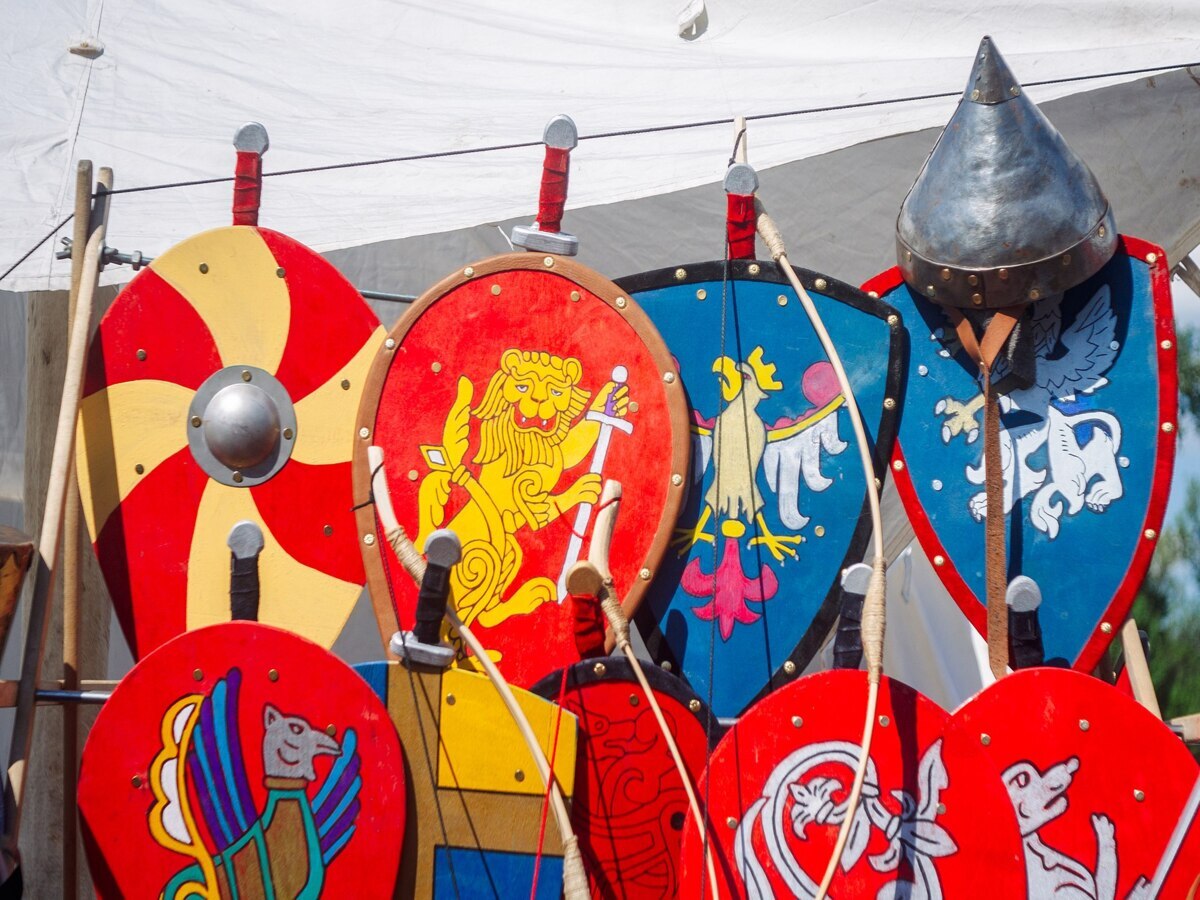
Norwegian Viking Legends Festival, 2015, Saint Petersburg, Russia. Source: Varvara Kless-Kaminskaia, Wiki Commons
Tall tales or historical truth?
What should we, from the safe distance of the 21st century, think of the events said to be detailed by Nestor in the late 12th century? We know that medieval chronicles, even saintly monks like Nestor, wrote with a degree of artistic license. Much like a Netflix series based upon a true story, certain characters, events, situations and dialogue were no doubt changed, invented and/or inserted.
We have a fairly common medieval trope, however, where Sviatopolk is potrayed as the evil usurper, cursed by Cain (perhaps the most famous biblical brother killer) who murders an innocent and saintly figure (Boris). This heavily religious overtone could likely have been inserted by chroniclers, during the reign of Yaroslav, wanting to curry favor with the new regime, a bit of Christian-inspired propaganda.
Despite all these flaws, the chronicle still remains, centuries later, our best source of the historical flavor of the Kievan Rus. Even if the events detailed therein are, at best, questionable. So is it possible that Sviatopolk really did hunt down his brothers to try and seize power? Any quick look at the history of other medieval polities around the world and you will see that familial power struggles, including the use of assassination and murder, were a common occurrence.
In all likelihood, however, we will never know for sure if Sviatopolk really did murder his brothers as detailed in the chronicle. But it is also possible to assume that this tale may very well contain a lot of historical truth mixed alongside the bloodshed and violence.
We get to provide readers with original coverage thanks to our loyal supporters. Do you enjoy our work? You can become a PATRON here or via our Patreon page. You'll get access to exclusive content and early access.
Feel free to reach out to discuss potential stories that may be in the public interest. You can reach us via email at [email protected] with the understanding that the information you provide might be used in our reporting and stories.