


Which European state first ruled over a huge swathe of land from the Baltic to the Black Sea? If you said the Polish-Lithuanian Commonwealth, Tsarist Russia, or the Soviet Union, you'd be wrong.
The answer is, of course, one of the most consequential and yet overlooked states in European history, the Kievan Rus. Its origins lie, like so many good things, in an era when Vikings roamed during the early medieval period.
The eastern exploits of people from Viking societies, in the opinion of this writer, are just as entertaining, thrilling, and historically consequential as anything that happened westward.
Look, for example, at the carnage in Ukraine, which has its roots in these exploits by people from Viking societies snaking their way down through the many river systems that line Eastern Europe.
By the late 9th century, these people, either through commerce or by the pointy end of a sword, began to dominate a huge swathe of these lands between the Baltic and Black Seas.
They established control over local Finno-Ugric, Turkic, and Slavic populations. They would later establish key trading hubs and points of economic and political control in Staraya Ladoga and Novgorod, now in Russia, as well as in Kiev (modern-day Kyiv) in Ukraine.
The formation of this state, as Martyn Whittock writes about in his 2025 book, Vikings in the East: From Vladimir the Great to Vladimir Putin (available on Amazon here):
"...lies at the heart of the deep stories of both Russia and of Ukraine. Its legacy is quite extraordinary, and it is at the centre of what, today, is considered to be the core identity of both countries' origins." [p.89]
Let us turn now to see how this state was traditionally said to be founded thanks to the Vikings.
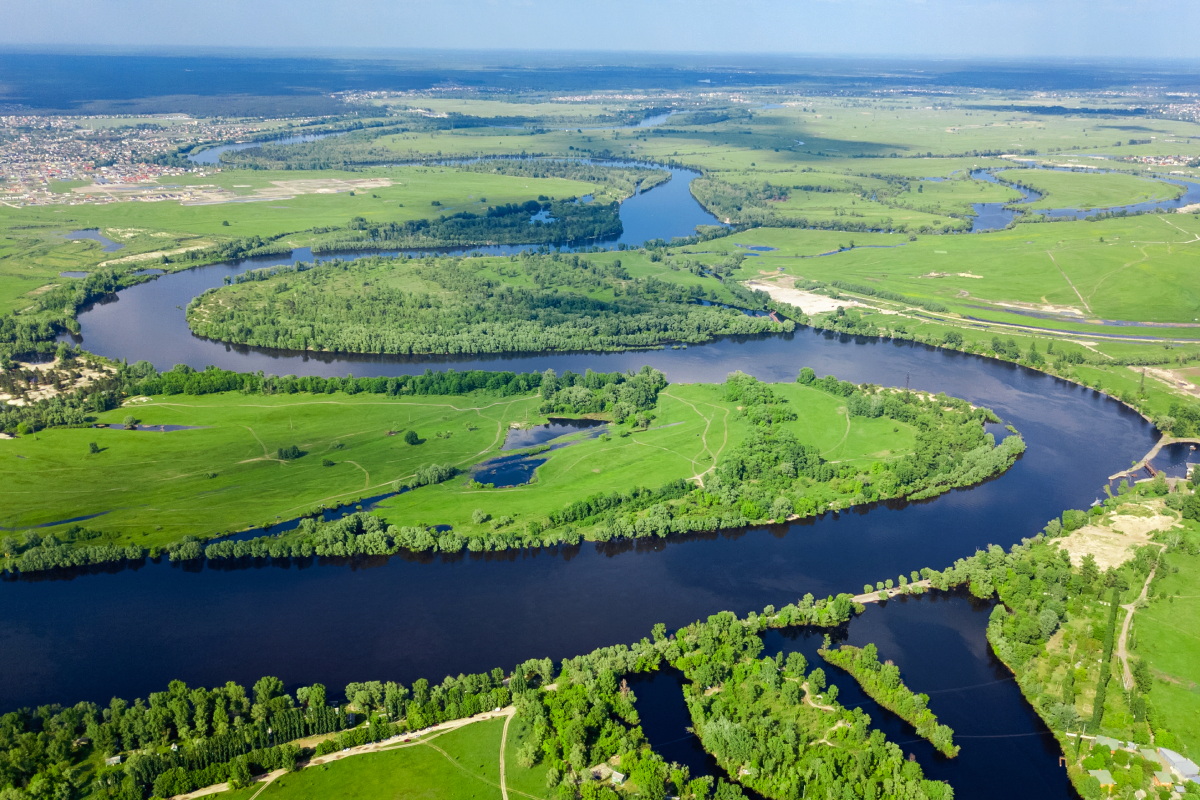
The Kievan Rus emerged as Vikings mixed with Slavic, Finno-Ugric, and Germanic peoples along the Dnieper River. Photo: JaySi / Shutterstock
The calling of the Varangians and Rurik
We now turn to the later medieval chronicles and histories, in which we can examine the story of Igor and the early beginnings of Kievan Rus.
One such source is what we now call the Russian Primary Chronicle, but was titled initially Tales of Bygone Years.
Traditionally attributed to being written in Kyiv by a monk named Nestor during the early 11th century, it provides a broad (if somewhat historically questionable) account of the history of Kievan Rus.
Starting with the biblical origins of the Slavs, one of the key early events is the "Calling of the Varangians."
Turning now to the Chronicle, we use an online version based upon the 1953 English translation by Samuel Hazzard Cross and Olgerd P. Sherbowitz-Wetzor. We find this event transcribed for the year 862, in which the local populations between the Baltic and Black Sea complained that:
"Our land is great and rich, but there is no order in it. Come to rule and reign over us. They thus selected three brothers, with their kinsfolk, who took with them all the Russes and migrated. The oldest, Rurik, located himself in Novgorod; the second, Sineus, at Beloozero; and the third, Truvor, in Izborsk." [p.59]
Rurik would go on to found a dynasty in his name that would rule huge swathes of Eastern Europe, including what is now Russia, until the early 17th century.
He was said to have died in 879, leaving a young son, Igor, waiting in the wings to eventually rule in his own right.
Whilst Rurik had ruled Novgorod, it was his kinsman Oleg who subdued rebellious tribes in the region and became the first Prince of Kiev (now Kyiv, the capital of Ukraine).
Oleg extended the state's control further south and secured Kyiv as a center of political power.
He is believed to have died around 912, though some sources give later dates. Power then passed to his ward, Rurik's son, Igor, who played a role in consolidating the emerging state's control and extending its reach.
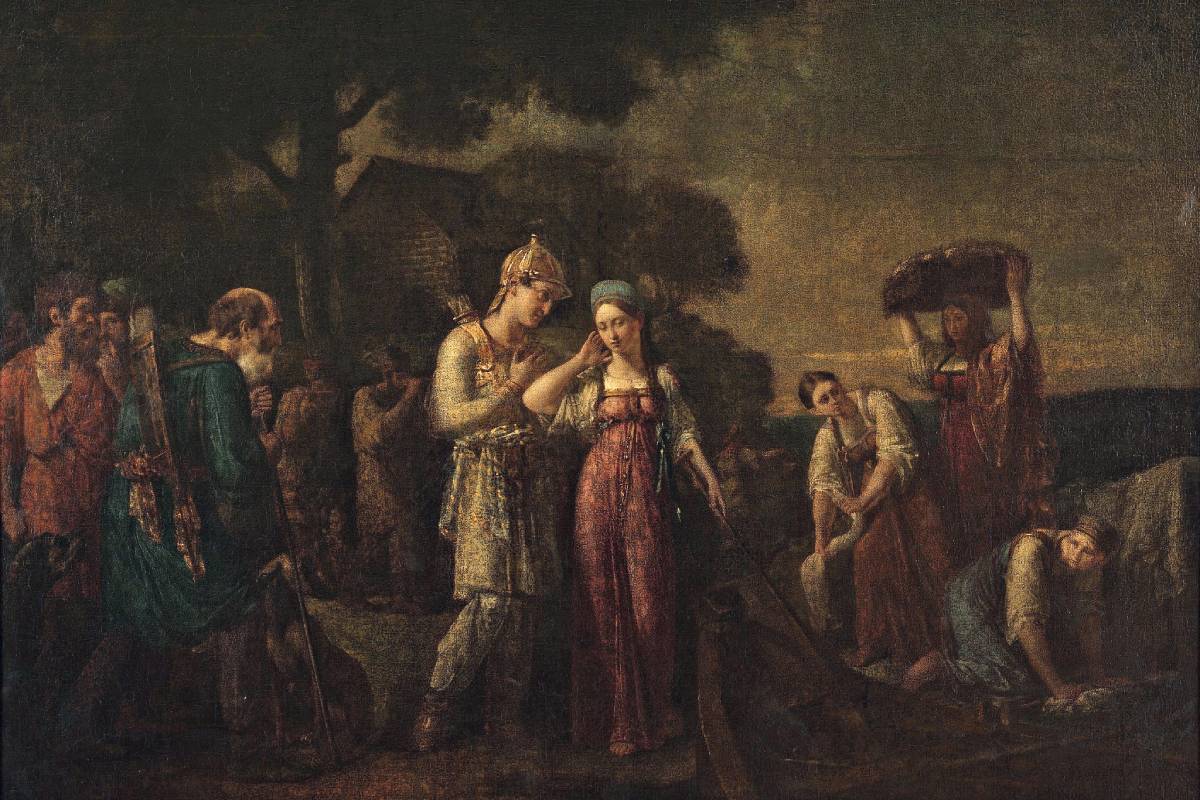
This painting imagines the early encounter between Prince Igor of Kiev and Olga, who would later become a saint. Illustration: Vasily Sazonov (1789–1870)
Igor's early reign
According to the Chronicle, the ascension of Igor to ultimate power was said to take place in 913, though some modern scholars suggest his reign may have begun slightly earlier.
We do not have an exact historically verifiable record of when he was born, but the consensus is that he was in his mid-30s (in the extremely biased opinion of the current author, the best age of life).
Turning to the Chronicle, we find the entry that states that:
"Igor succeeded Oleg and began his reign. At the same time began the reign of Constantine, son of Leo and son-in-law of Romanus. The Derevlians offered resistance to Igor after Oleg's death." [p.71]
With Igor now ruling, we find the offer of assistance by a local tribe, the Derevlians. Yet the next entry, for the year 914, recounts how Igor then attacked these same people who had come to supposedly bend their knees to the new ruler.
This inconsistency, first resistance followed by apparent submission, may reflect later interpolations or confused chronology in the Chronicle itself.
There is total silence over the next two decades of Igor's reign. Was this a deliberate omission by Nestor due to the bland boredom of the Kievan Rus during this time?
Could Igor have secured a stable and prosperous state where there were no threats but also no adventures or exploits?
Or perhaps were the entries for these two decades destroyed to help preserve his reputation? Sadly, we will never know.
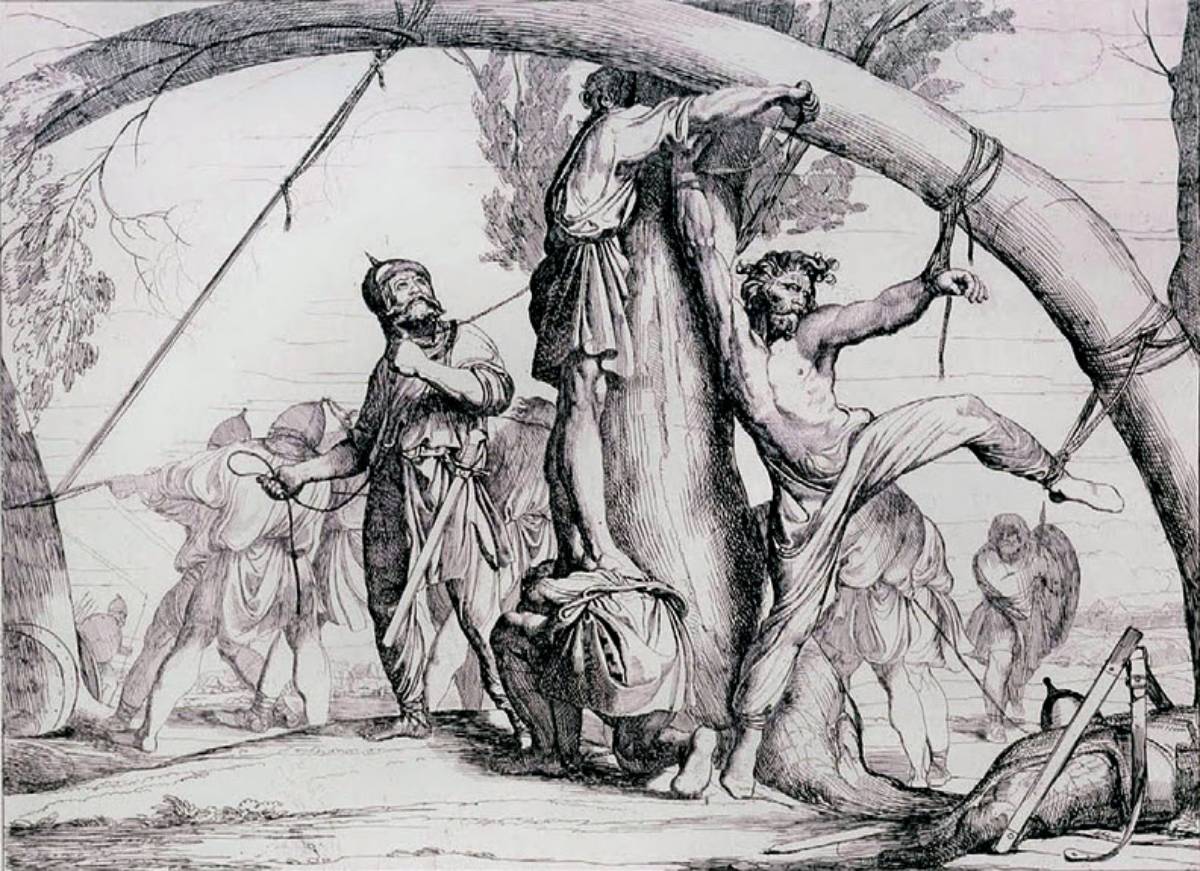
The engraving depicts the gruesome death of Prince Igor, said to have been executed by the Derevlians using two bent trees. Illustration: Fyodor Bruni (–1875)
Byzantine brawls, greed, and a gruesome end
So, despite the two-decade silence, the Chronicle picks up the exploits of Igor next in the years 935–941. It states how he launched a crushing attack on Constantinople, the shining capital of the Byzantine Empire.
They set the whole western shores of the Black Sea ablaze with fire, butchered many poor unfortunate souls, and destroyed several churches.
Yet the Rus would eventually meet their match when Byzantine reinforcements arrived on the outskirts of Constantinople and, being vastly outnumbered, the Rus scurried away in their boats.
However, the Byzantines got the last laugh as they unleashed their secretive "Greek Fire," a fiery end to this Byzantine brawl.
Igor was left to lick his wounds but would accumulate a large army and march on Constantinople again in 944, though he eventually succumbed to large amounts of Byzantine gold, silver, and precious jewels.
It appears that Byzantine treasure did not sate his appetite, as the next year, 945, Igor launched an attack on the Derevlians in a bid to squeeze them for more tribute.
Even though they had just coughed up an inordinate amount of treasure, they saw Igor return and, according to the Chronicle, hatch a plan:
"If a wolf comes among the sheep, he will take away the whole flock one by one, unless he is killed. If we do not thus kill him now, he will destroy us all." [p.78]
According to the Byzantine historian Leo the Deacon, Igor was killed horribly. Taking with him only a small number of men to receive the tribute, he was soon ambushed by a larger Derevlian force.
They captured him and tied him to two bent birch trees. When they released the trees, Igor's limbs were ripped apart—a gruesome end for a supposedly greedy ruler.
- READ MORE: The Viking history of Russia – A primer
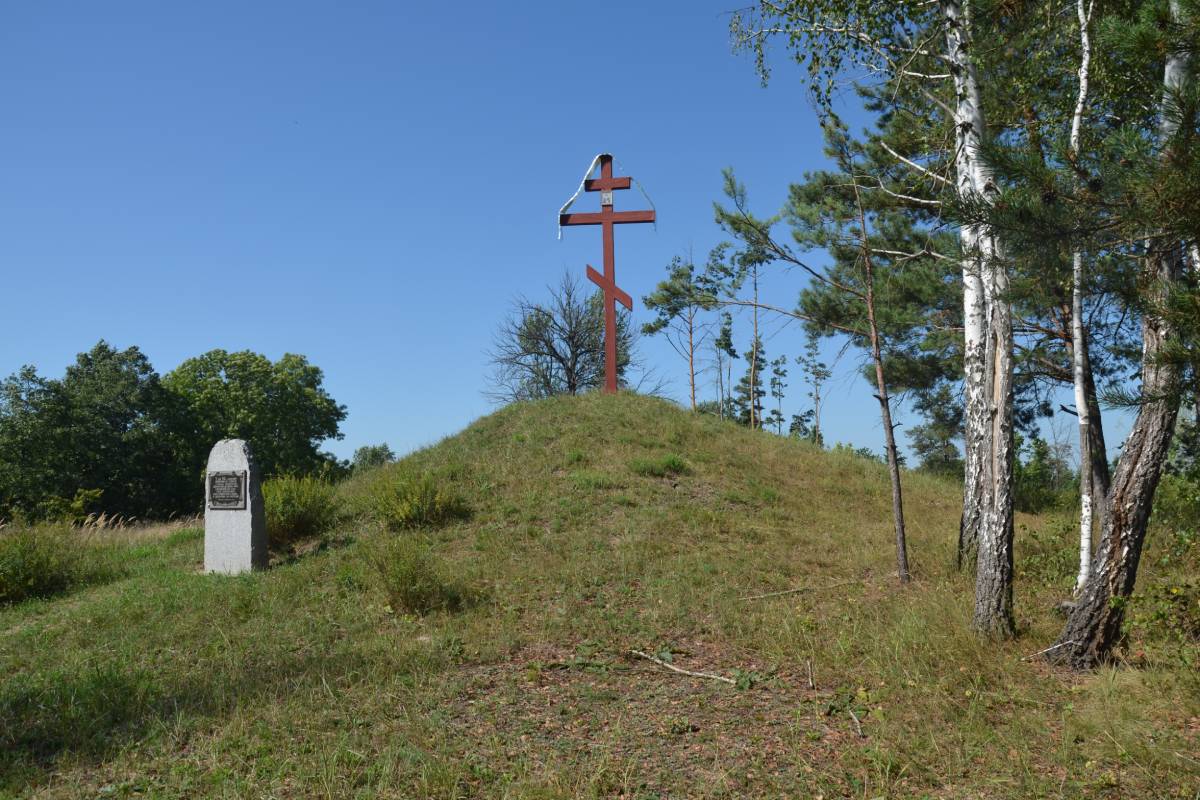
In Ukraine's Korosten district, this mound is traditionally believed to mark the site where Prince Igor of Kiev was killed by the Derevlians. Photo: Kiyanka (CC BY-SA 4.0)
Blended a Viking warrior ethos with emerging Slavic political structures
What do we make of the reign of Igor? Well, upon his death in c. 945, he left a formidable wife, Olga, and son, Svyatoslav, back home in the capital. Both would rule and help further the political expansion of the Kievan Rus.
Despite the more than two-decade gap in the Chronicle, it appears that Igor was a belligerent ruler as he sought to extend his state's influence and control further southward, leading to fights with the Byzantines and the Derevlians.
It was under his regime, as George Vernadsky discusses in his 1972 book, Kievan Russia, that "...commercial capitalism was superimposed over a primitive tribal and clan society." [p.8]
Igor thus helped to build the commercial and economic links (albeit largely through force, tributes, and "shakedowns") of the Kievan Rus that later rulers would exploit successfully.
It was his campaigns against the Byzantines that would foreshadow the next phase of the Kievan Rus, whereby the complex relationship between the states would go on to dominate the affairs of Eastern Europe for much of the remainder of the early medieval period.
Perhaps Igor's best legacy is that he is a link between the semi-historical founders of the Kievan Rus and his successors, who were both historically verifiable and consequential.
He blended a Viking martial ethos with the emerging Slavic political structures of the time to solidify the emerging power of the Kievan Rus.
For more information on how the history of the Kievan Rus has inspired Vladimir Putin's war in Ukraine, visit The Conversation here.
We get to provide readers with original coverage thanks to our loyal supporters. Do you enjoy our work? You can become a PATRON here or via our Patreon page. You'll get access to exclusive content and early access.
Feel free to reach out to discuss potential stories that may be in the public interest. You can reach us via email at [email protected] with the understanding that the information you provide might be used in our reporting and stories.




_02.jpg)