

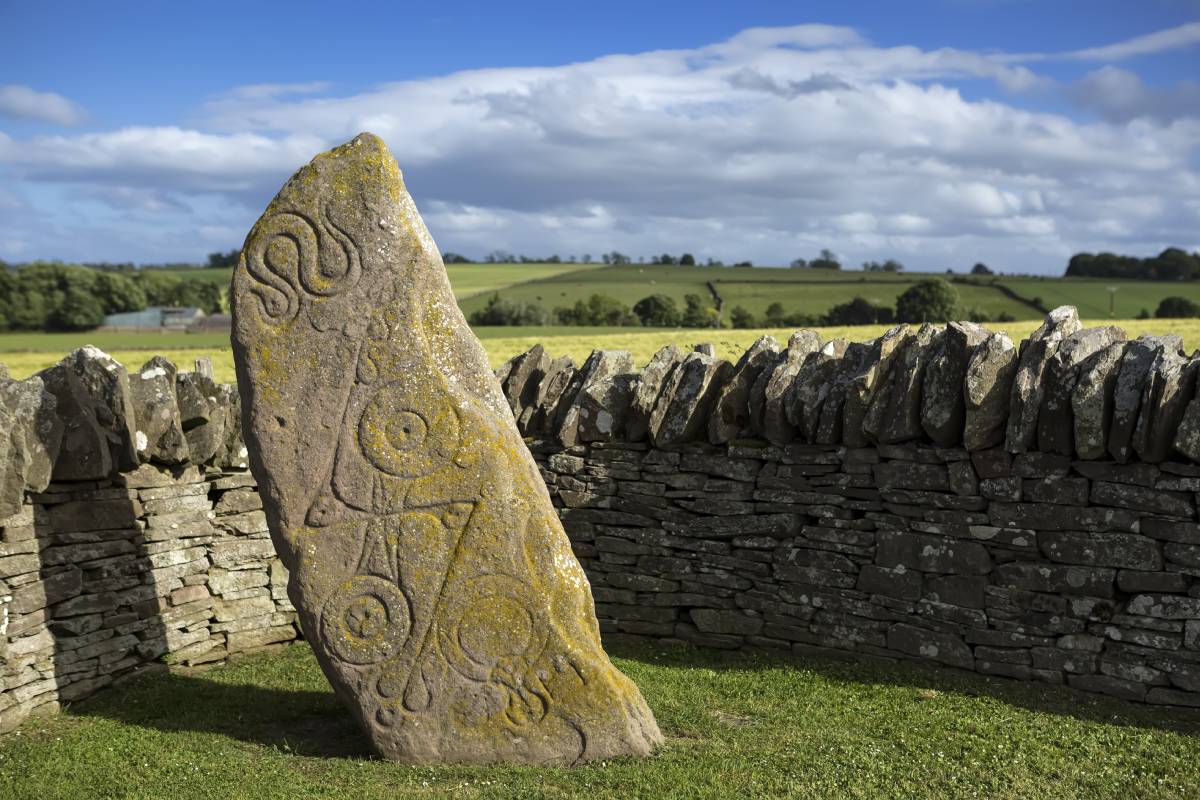
Despite the recent love affair, partly fueled by TikTok, that many young people have today with the Romans, they were, let's face it, a proud and arrogant people.
By our modern standards, the Romans, regardless of whether they lived in a republic or under a Caesar, held what we would think are deeply xenophobic and racist views of other people.
When Rome finally brought most of Great Britain under its control by 84 CE, they did not want to conquer its northern tip.
They came across a people there whom they called "the Picts" – a "barbarian" people who lived in the north of what is now Scotland.
For the Romans, these people were seen as wild, untamed warriors, difficult to conquer due to their terrain and tactics.
It was because of their inability to subdue these people that they built Hadrian's Wall (and later the Antonine Wall further north) to essentially keep those rowdy people out of the Roman Empire.
Fast forward to the early medieval period, from the late 8th and into the 9th centuries CE, long after the (Western) Roman Empire collapsed, and we see people from Viking societies expanding across the sea to trade, raid, conquer, and settle what is now northern Scotland.
Here, they encountered an indigenous population described as the "Picts." These people shared common linguistic and cultural traits with the Celtic Britons who lived further south.
Their society was similar to that of their British, Gaelic, and Anglo-Saxon neighbors. It was dominated by farming communities and, by the late 8th century CE, had established a kingdom (sometimes called Pictland) that controlled much of northern Scotland.
Despite commonalities with their neighbors, the Picts had offered fierce resistance to those who ventured this far north, just as they had done with the Romans centuries before.
So, when the first Viking longship pulled ashore on a Scottish beach, the Picts may have thought these warriors were just another group in a long line of invaders to repel – an annoyance to brush aside.
They could not have been more wrong.
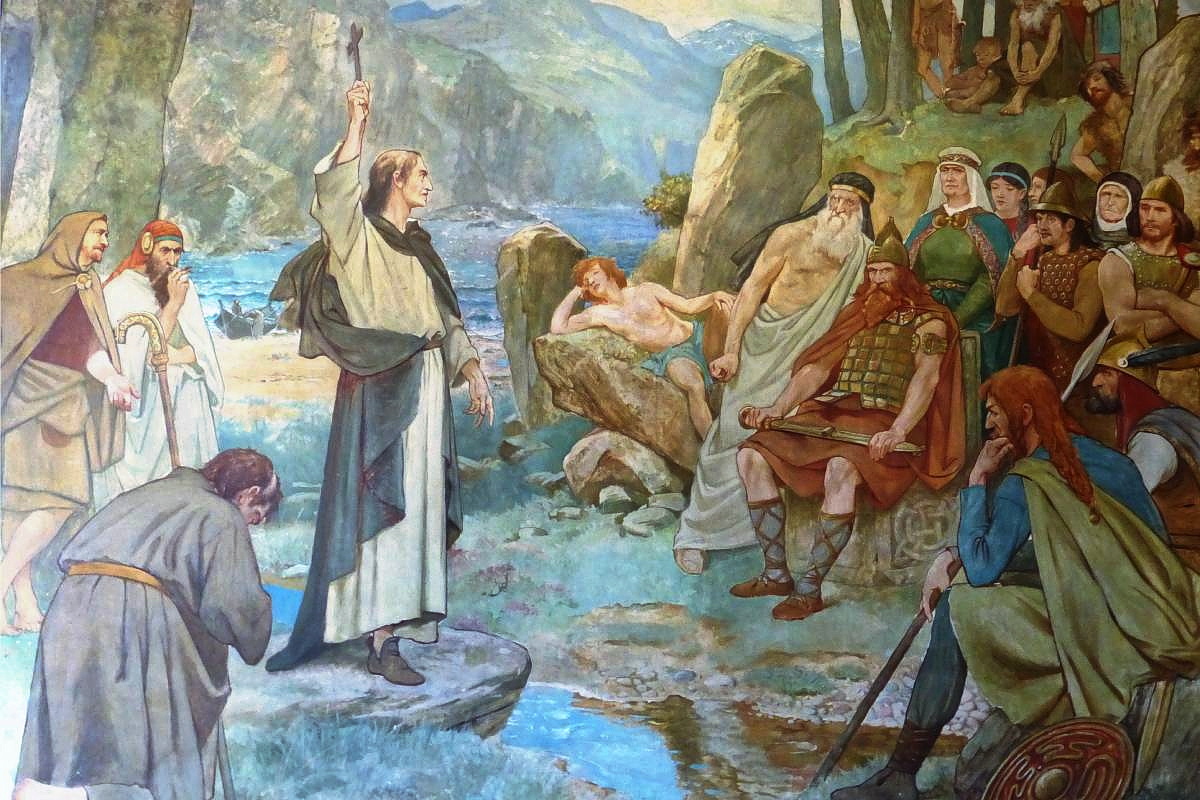
Before the Viking Age, Saint Columba brought Christianity to the Picts by converting King Brude. Illustration: William Hole (1846–1917)
Securing a northern foothold
By the time of the Viking raid on Lindisfarne in 793 CE, we find a Pictish king, Constantín mac Fergusa, ruling over much of what modern historians call Pictland.
At the western edge of the kingdom was a Gaelic kingdom, Dál Riata, that dominated the western edge of what is now Scotland and much of the northeastern tip of Ireland.
To his south, the Anglo-Saxon kingdom of Northumbria and the Brittonic kingdom of Strathclyde butted up against each other.
These four kingdoms made up all of what is now Scotland and the northern fringes of England.
It was into this mix that our Scandinavian friends, people from Viking societies, were thrown as they began a series of raids, conquests, and eventual settlement spanning the turn of the 9th century CE.
As was the case with other parts of Europe, a series of Viking raids soon evolved into a more permanent presence.
The Orkney, Shetland, and Hebrides Islands (the latter of which was under nominal Pictish control) soon fell under Viking control, first by the sword and later through settlement.
According to the Orkneyinga saga (we use the 1873 English edition, translated by Jon A. Hjaltalin and Gilbert Goudie, below), the first presence from Scandinavia in this region was not that of settlers but that of outlaws.
"By the victory of Hafursfiord in 872, Harald Harfagri made himself sole monarch of Norway. Large numbers of the wealthy and powerful odallers, whom he had dispossessed of their territorial possessions, fled to the islands of Orkney and Shetland, which, for a full century previous to this time, had been well known to the Norsemen as the Viking station of the western half – the rendezvous of the Northern rovers, who swept the coasts of the Hebrides and swarmed in the Irish Seas. Being fugitives from their country, and outlaws of the new kingdom which Harald had succeeded in establishing in Norway, they settled themselves permanently in the islands. Then they turned their haven of refuge into a base of operations for retaliatory warfare, harrying the coasts of Norway during the summer months, and living at leisure in the islands during winter on the plunder..." (p.12).
People from Viking societies thus secured a foothold, albeit a northern one, on the fringes of Pictland.
By the early 9th century, the islands were brought well and truly into the Viking cultural orbit, and settlers soon followed.
Modern academics disagree on the amount of violence that happened next, but there appears to have been a degree of Pictish assimilation into the newly imported culture and society.
Whether this was done through widespread violence – mass killings – or whether the local Pictish population saw which way the proverbial wind was blowing, started learning Old Norse, and intermarried with the new population is unclear.
Yet soon, the old Pictish culture was displaced throughout large parts of these islands. Further Viking raids to the Scottish mainland could be undertaken from these northern bases, yet the local Picts there would offer stiff resistance.
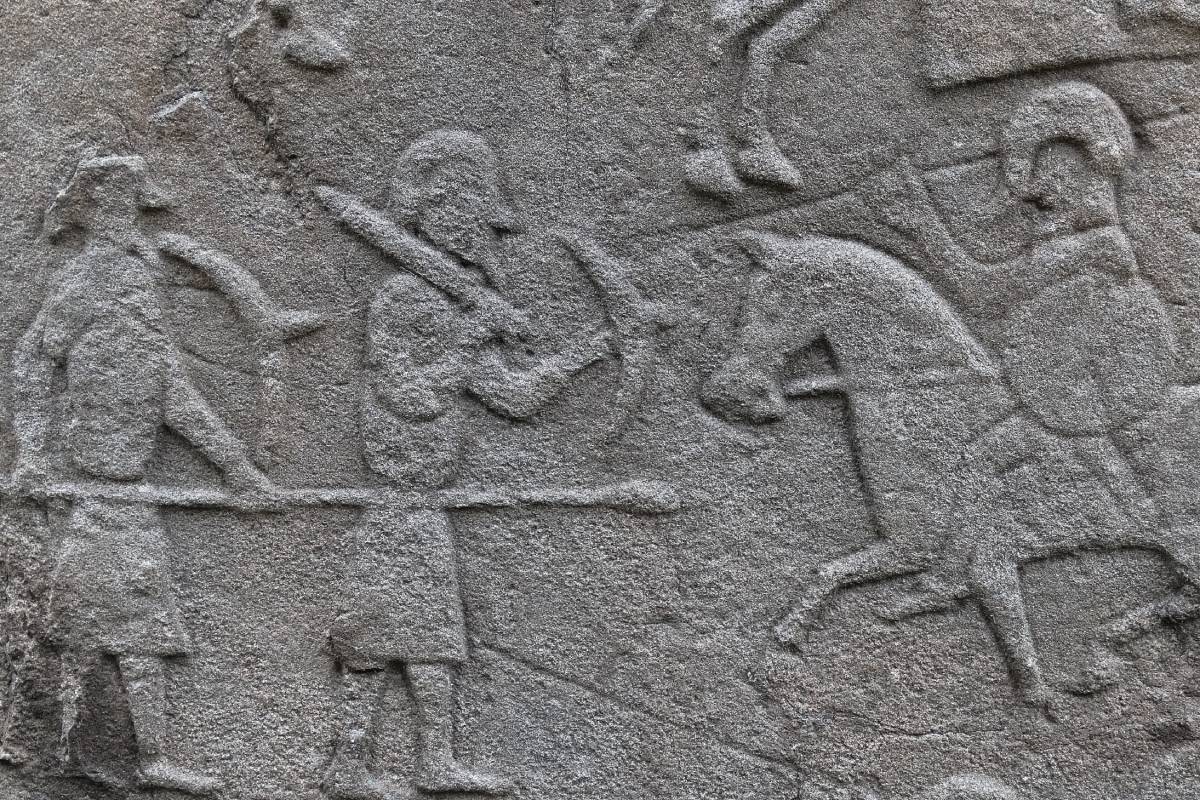
The Pictish carvings on Aberlemno 2 may represent a Viking battle or a tribute to a powerful Pictish ruler. Source: Donald Walker / Shutterstock
The last stand of the Picts
Following decades of Viking raids and encroaching settlement, we find an account of a great battle – described by modern historians as the "last stand of the Picts" – in 839 CE.
Recorded in the Annals of Ulster, our most important source for the history of medieval Ireland, the battle is laconically described thus:
"The heathens won a battle over the men of Fortriu and Uuen son of Onuist and Bran son of Onuist and Aed son of Boanta and others almost innumerable fell there..."
The "heathens" were, of course, the Vikings who believed in the Old Gods.
After more than four decades of Viking raids and settlement in the northern isles, it appears that the Pictish king Uuen knew that the local inhabitants of Scotland had to join forces to try to combat these new invaders.
Uuen was said to have reached out to his neighbor, the king of Dál Riata, Áed mac Boanta. As the rulers of the two main powers in northern Scotland, they must have believed a coalition force would be the best approach to fend off these pesky Vikings.
We know little of the battle itself other than the short account in the Annals of Ulster. What we do know, however, is that it was a disaster for the defenders, as Uuen fell in battle.
This left a power vacuum that not only the Vikings exploited – leading to more widespread settlement throughout northern Scotland – but also led to the rise of a local Pictish and Gaelic warlord, Kenneth I, who would go on a series of conquests, bringing Gaelic and Pictish regions under his control.
In the later medieval period, he would be seen as the traditional founder of the Scottish kingdom.
Without a strong ruler, it appears that the Pictish presence and culture throughout the region soon began to fade away.
People from Viking societies flocked to settle and colonize vast swathes of what is now the northern British Isles, including much of Scotland.
At best, a hybrid culture emerged, albeit one that was heavily slanted in favor of people from Viking societies.
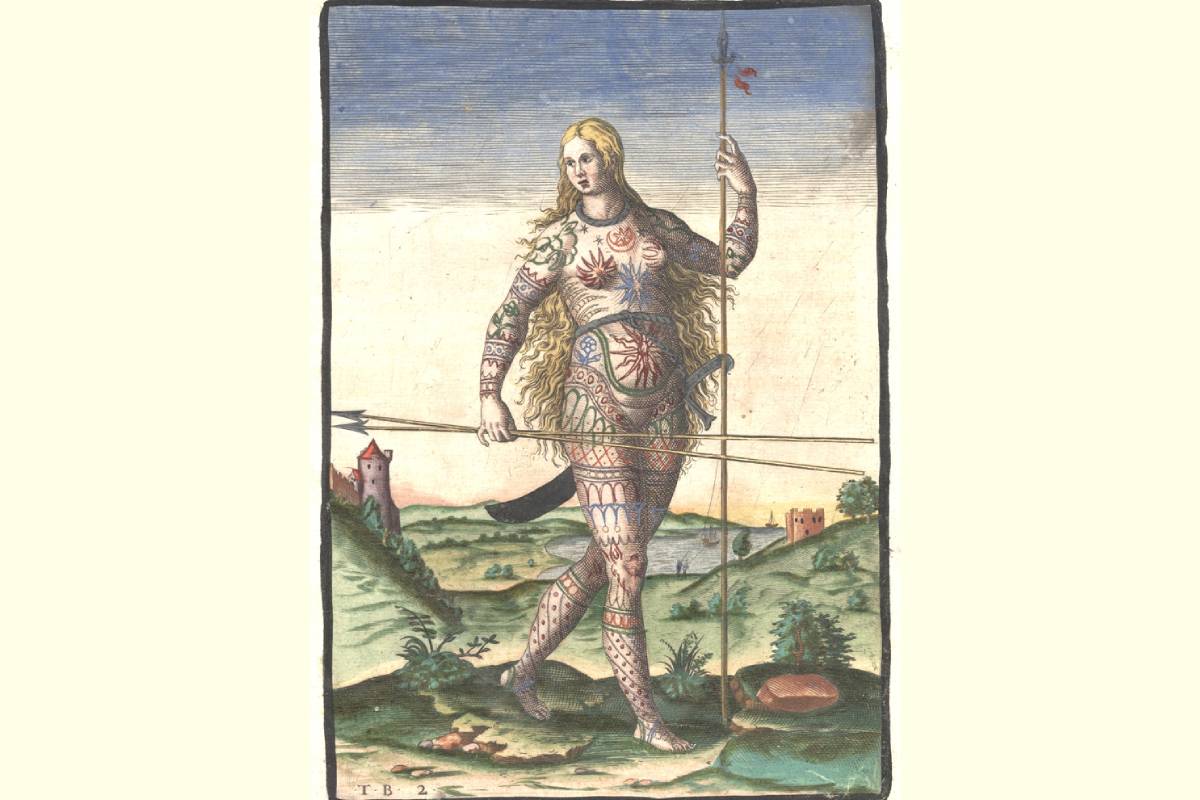
A Pictish woman with body markings, minimal clothing, and weapons illustrates how the Picts were represented in early illustrations. Source: Theodor de Bry (1528–1598)
Were there widespread massacres or even a "genocide"?
There is no doubt that the Viking expansion into northern Scotland, the Pictish heartland, was one that was dominated by violence.
Viking raids, skirmishes, and battles saw untold numbers of the local population put to the sword, their property put to the flame or stolen, and many sold into slavery.
Following the disastrous battle for the Picts in 839 CE, there was no doubt more blood spilled from the sharp end of a Viking sword.
There is no archeological evidence uncovered yet to suggest widespread massacres – or even a "genocide" – of the Picts by the Vikings. However, this does not necessarily mean it did not happen.
A clue lies in the Annals of Ulster in 794 CE, where, as Brian Smith discusses in his 2001 article in the journal Northern Studies, there was a "devastation of all the islands of Britain by the heathen."
Was this entry a sign of things to come? Was the absorption of Pictland into the Viking world done only through violence?
Sadly, until there is more archeological evidence of this, it can only be put forward as a worst-case scenario, albeit a very bloody one.
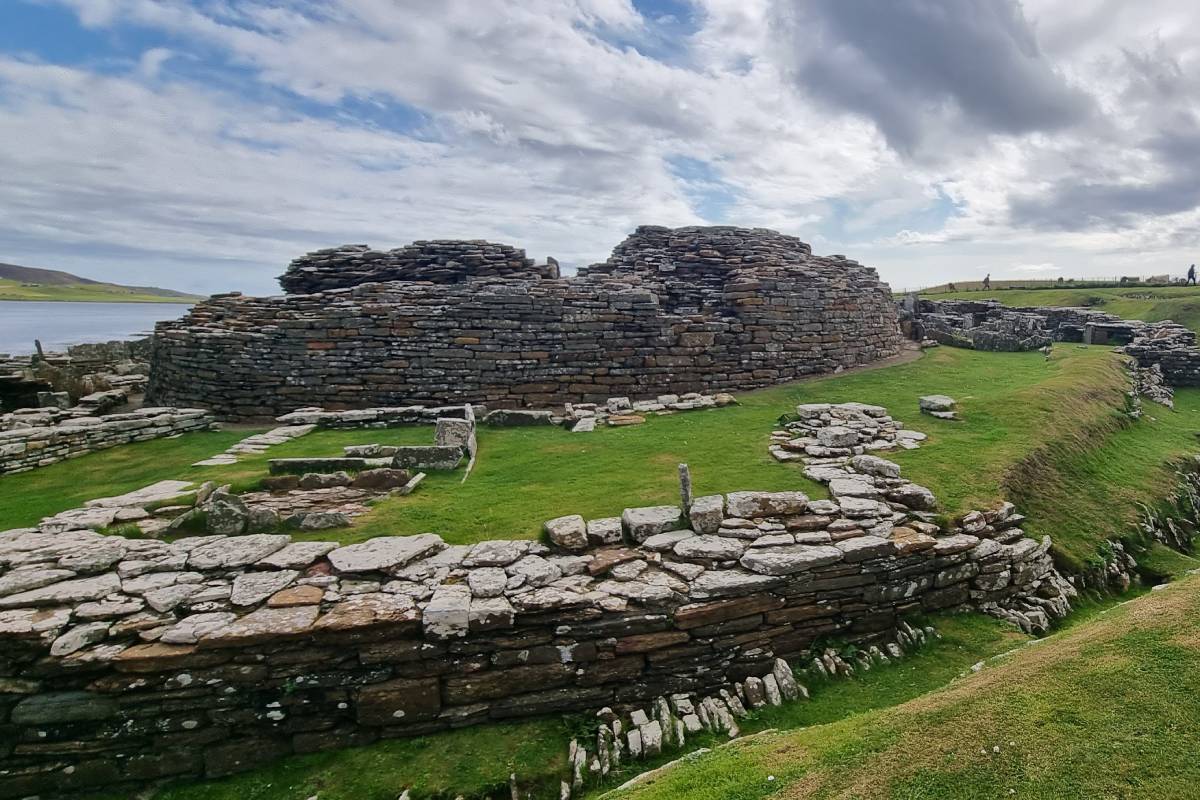
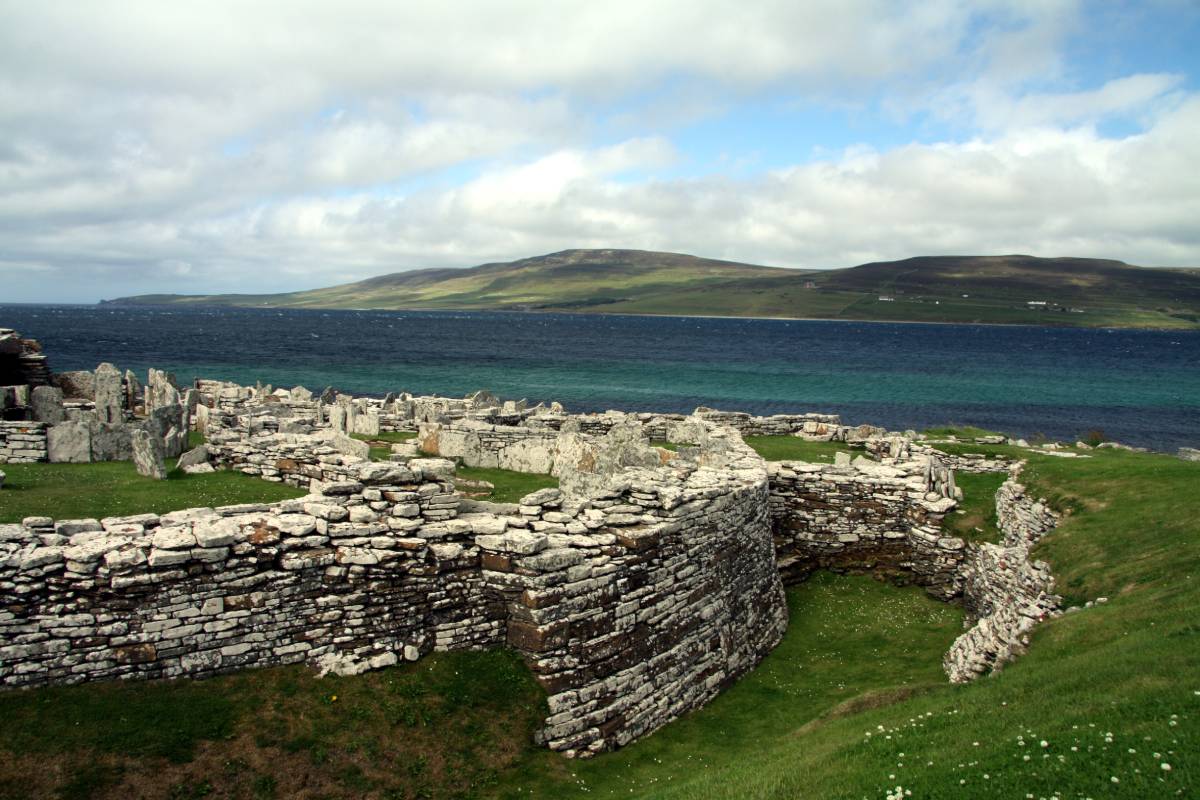
The Broch of Gurness, originally a Pictish stronghold, contains Norse burials, showing the shifting control of Orkney. Source: Sangwinc (CC BY-SA 4.0)
Later developments and the Picts' ultimate revenge
As all conquerors and overlords have learned over history, it also pays to get along with the population you have soundly smote on the battlefield.
Over the next few centuries, the rise of the Gaelic Kingdom of Alba – founded through a series of conquests by Kenneth I – as well as the presence of a large population of people from Viking societies saw the Pictish culture slowly disappear into the tides of history.
Wedged between these two dominant cultures, it was hard for a Pictish third culture to survive, let alone thrive.
The Picts as a people were not wiped out but simply assimilated into either of the two other dominant cultures in the region.
By about the 11th century CE, towards the end of the Viking Age, the Kingdom of Alba had transformed into the medieval Kingdom of Scotland, which, over the next few centuries, would slowly retake the regions that the Vikings had taken from the Picts in the early medieval period.
For a recent archeological discovery concerning the Picts and the Vikings, visit the Shetland News here.
We get to provide readers with original coverage thanks to our loyal supporters. Do you enjoy our work? You can become a PATRON here or via our Patreon page. You'll get access to exclusive content and early access.
Feel free to reach out to discuss potential stories that may be in the public interest. You can reach us via email at [email protected] with the understanding that the information you provide might be used in our reporting and stories.