

For more than half a century, the Buckquoy archeological site on the Orkney Islands has been cited as a clear demonstration of how the Pict people were all but wiped out by the Vikings.
Radiocarbon dating and a reexamination of the construction phases, however, suggest structures previously assumed to be Norse may actually have been of Pictish origin.
Challenging long-held assumptions
Orkney is an archipelago of 70 islands that lies off the northern coast of the Scottish mainland. For more than 2,000 years, it was inhabited by the Picts, a group of ancient peoples that lived in the north of Scotland.
In the late 8th century, however, the Norse began raiding the shores of Orkney. Within a century, the Vikings had taken firm control, installing an earl to rule the archipelago and direct trade.
For many decades, the assumption was that Pictish culture was swiftly eliminated in a brutal, lightning-fast transition. Here, the weight of Norse influence on the islands became so strong that Pictish culture disappeared almost overnight.
More recently, however, scholars have begun to suggest that the change was far more incremental in nature.
A new study of Buckquoy, a unique archeological site situated next to Birsay Bay on the northwest coast of the Orkney Mainland island, appears to support the second of these two theories.
The findings of the research have recently been set out in the article, "Buckquoy, Orkney: addressing the Pictish-Viking transition in northern Scotland," published by Cambridge University Press in the journal Antiquity.
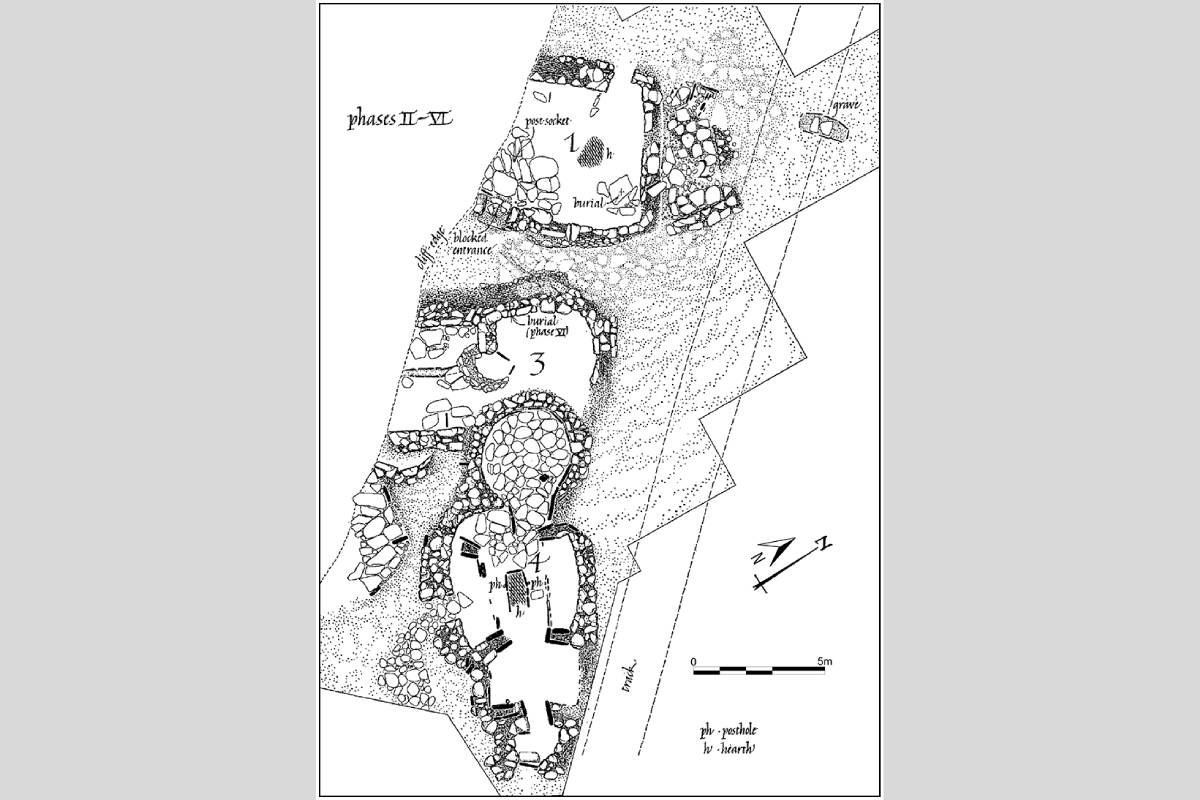
Map of the Buckquoy site from phases II–IV, showing both Pictish and Norse-style houses. Source: Society of Antiquaries of Scotland / Antiquity (CC BY 4.0)
The secrets of Buckquoy
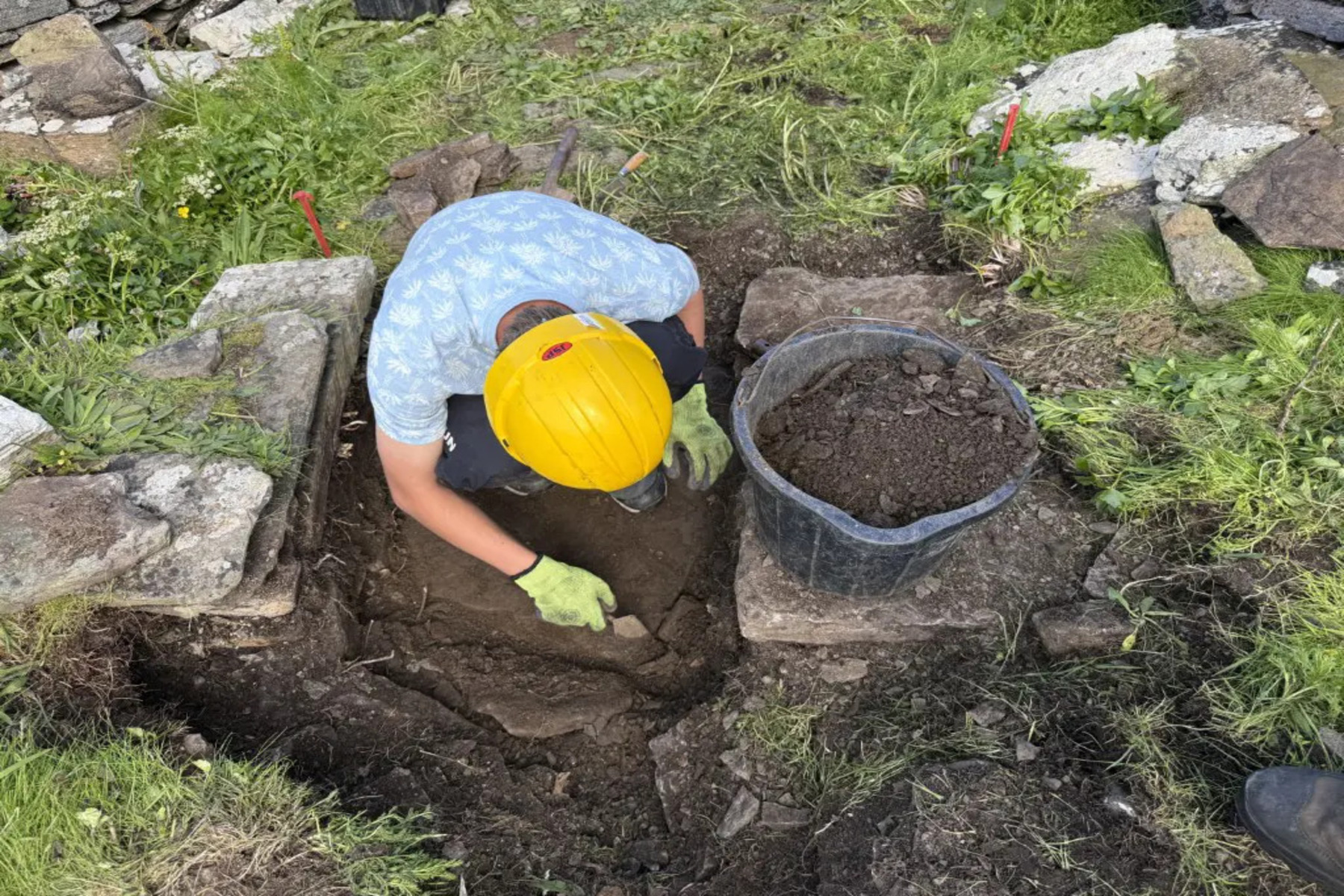
Although the Buckquoy site has now mostly been destroyed by sea erosion, excavation work led by Anna Ritchie in 1970–1971 has been crucial to forming an understanding of the Pictish-to-Viking transition in northern Scotland.
The site featured a total of eight buildings constructed in five different phases.
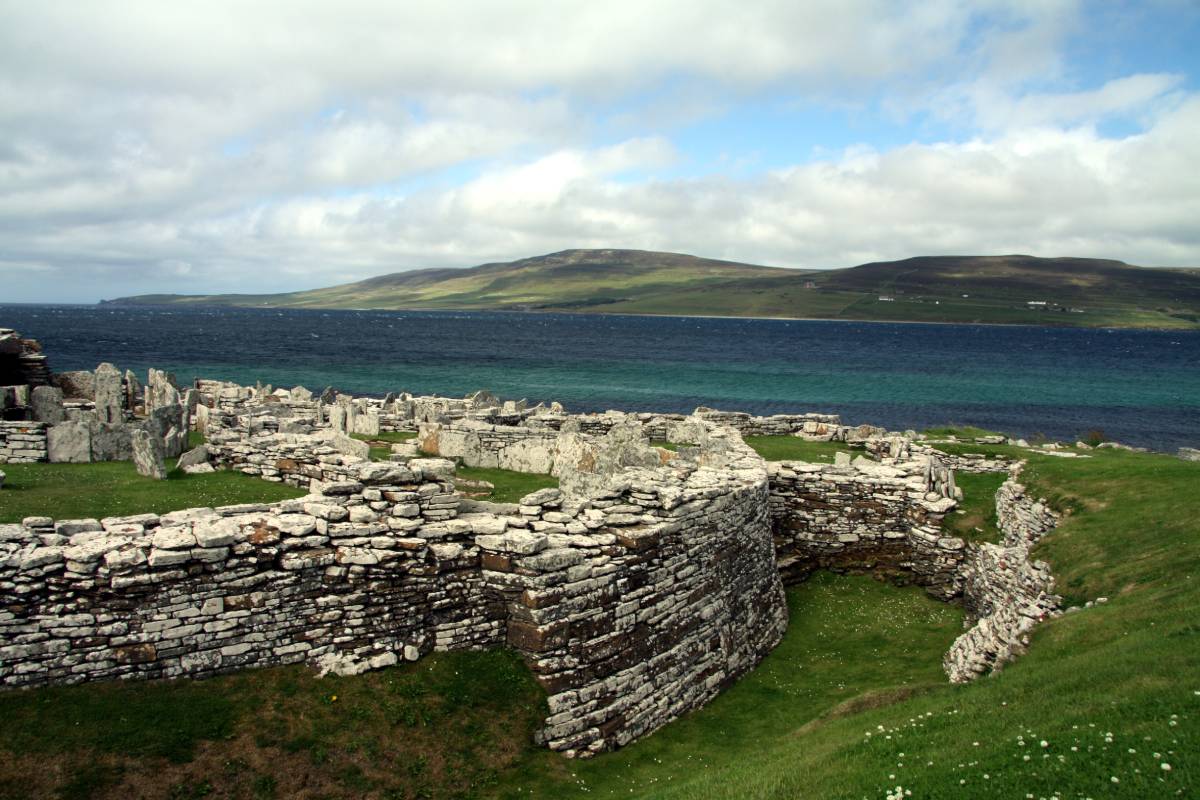
Initially, the first two phases were classified as Pictish due to their cellular structure. The third to fifth phases, on the other hand, are seen as Norse thanks to their rectilinear shape, characterized by straight lines.
Buckquoy also contained several Pictish artifacts, including domestic tools and a spindle whorl featuring an inscription in Ogham, an Early Medieval alphabet used primarily to write the early Irish language.
A later burial ground at the site that has some Norse artifacts, including an antler comb and knife, is thought to date from the 10th century.
As the researchers highlight in their article, however, radiocarbon dating carried out in 2019 to 2021 of several bone artifacts indicates that the later rectilinear buildings – presumed to be Norse – were likely constructed at some point between 660 and 780 CE, before the Vikings arrived in Orkney in any significant numbers.
This is a dramatic finding: one of the key sites on the Scottish islands used to demonstrate the Norse destruction of the Picts may not be Norse at all.
One possible interpretation of this fact could be that the Norse actually invaded Orkney much earlier than previously thought.
The authors of the study, however, believe that it is far more likely that the changing architectural style is not the result of a foreign invasion, but rather due to the evolving tastes of the Pictish people.
"The most convincing interpretation of the Buckquoy sequence is that the entire occupation falls within the Pictish period, with only relatively local forms of material culture identifiable throughout the sequence, and that occupation ended sometime in the eighth or early ninth century," the authors state.
- READ MORE: Top 5 Viking sites in the Orkney Islands
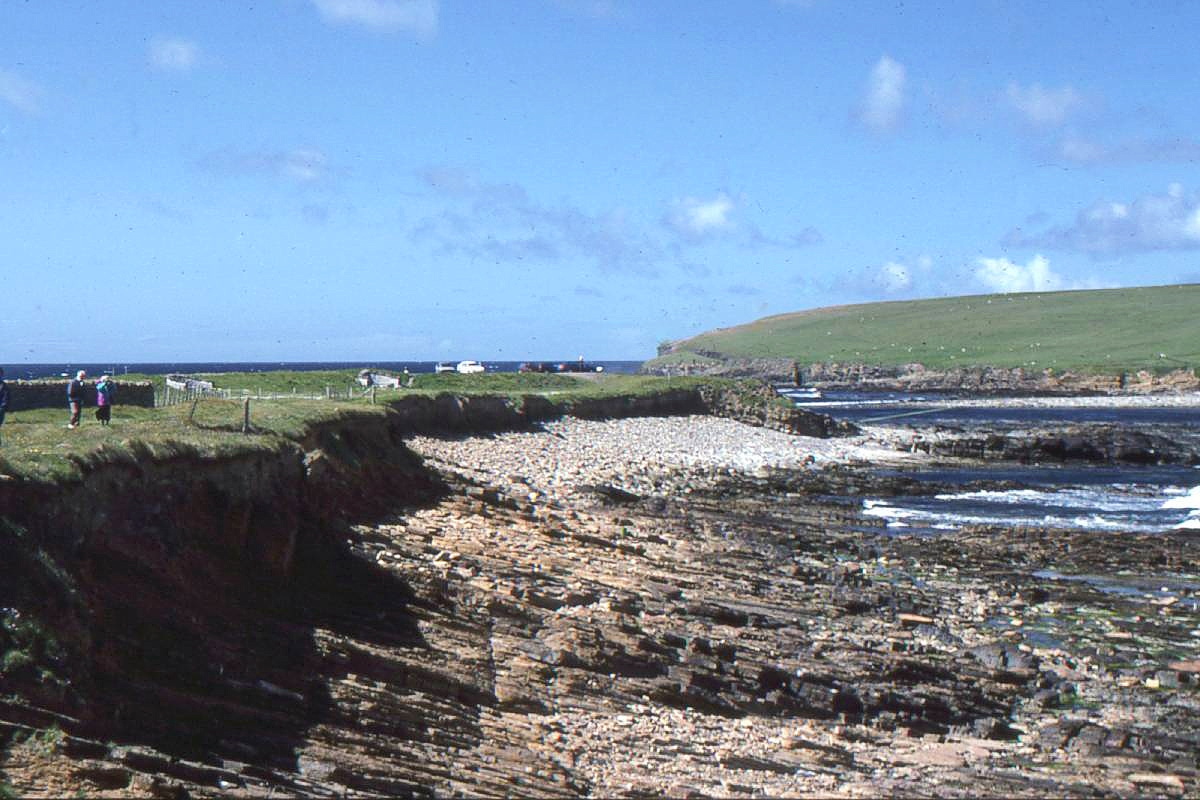
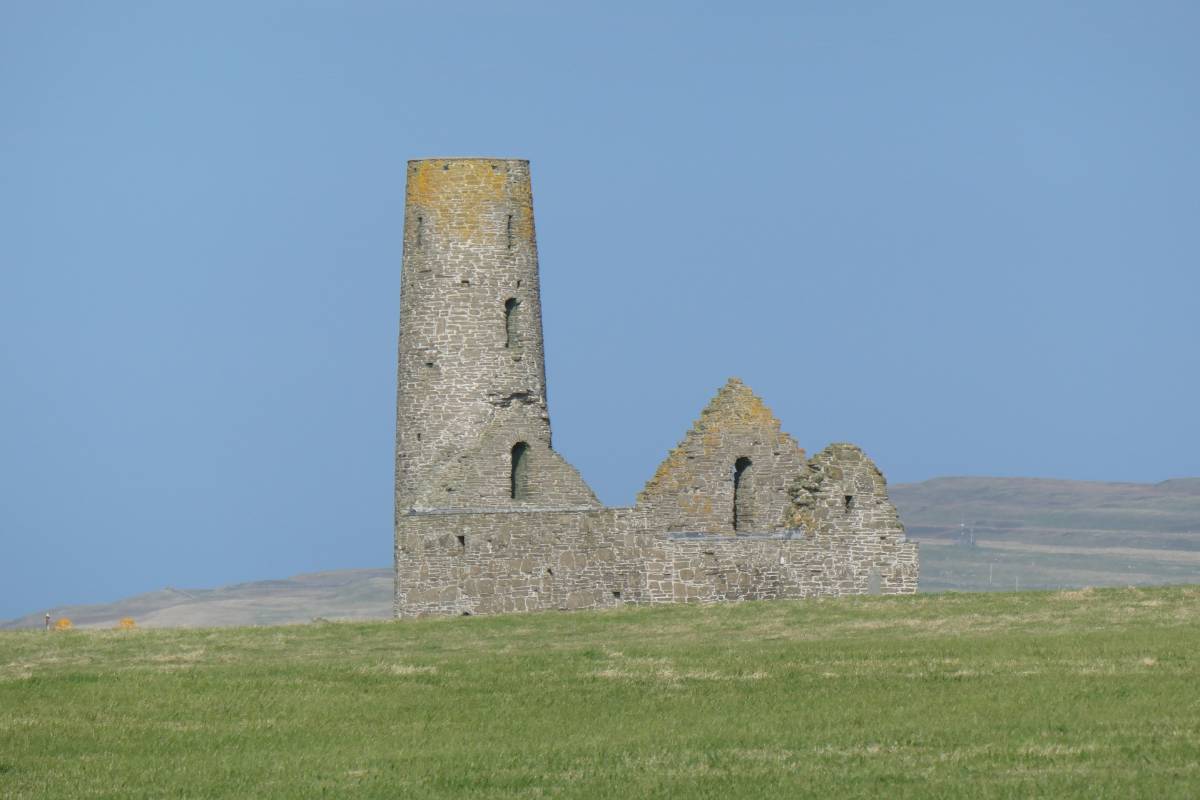
Point of Buckquoy, Orkney, where the Buckquoy settlement lay on the grassed headland above the now heavily eroded shore. Photo: Christopher Hilton (CC BY-SA 2.0)
Time for a rethink?
If the radiocarbon dating suggests that the construction of the Buckquoy site was carried out entirely by the Picts, then there is little in the evidence here to suggest a brutal takeover of the area by the Norse.
The burial, which does appear to be Scandinavian in style, has been dated to the 10th century, indicating that it was placed there after the settlement had been abandoned.
If correct, this analysis has wider implications for our understanding of the relationship between the Norse and the Picts.
As the authors suggest, much of the interpretation of structures from this period is based on binary definitions of "Pictish" and "Scandinavian" architecture.
Yet if the rectilinear form was already common among Pictish settlements in the period when the Norse began to dominate the island, it follows that other sites previously assumed to be Viking settlements could also have been Pictish.
"These findings help situate much-needed reappraisals of other first-millennium AD settlement sequences of the Northern Isles," the authors state.
"They highlight the need for new and more intensive chronological modeling with integrated interpretative approaches to architectural expression and material culture, and wider reconsideration of the historical context."
We get to provide readers with original coverage thanks to our loyal supporters. Do you enjoy our work? You can become a PATRON here or via our Patreon page. You'll get access to exclusive content and early access.
Feel free to reach out to discuss potential stories that may be in the public interest. You can reach us via email at [email protected] with the understanding that the information you provide might be used in our reporting and stories.