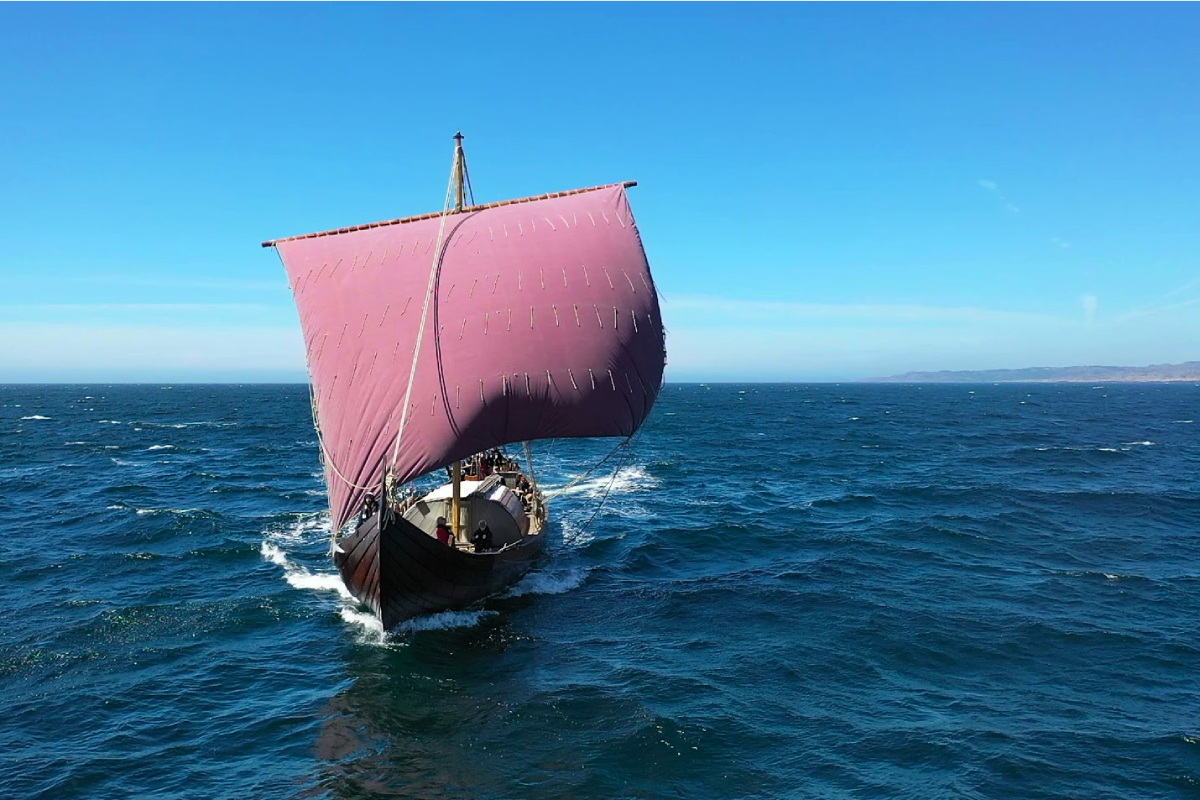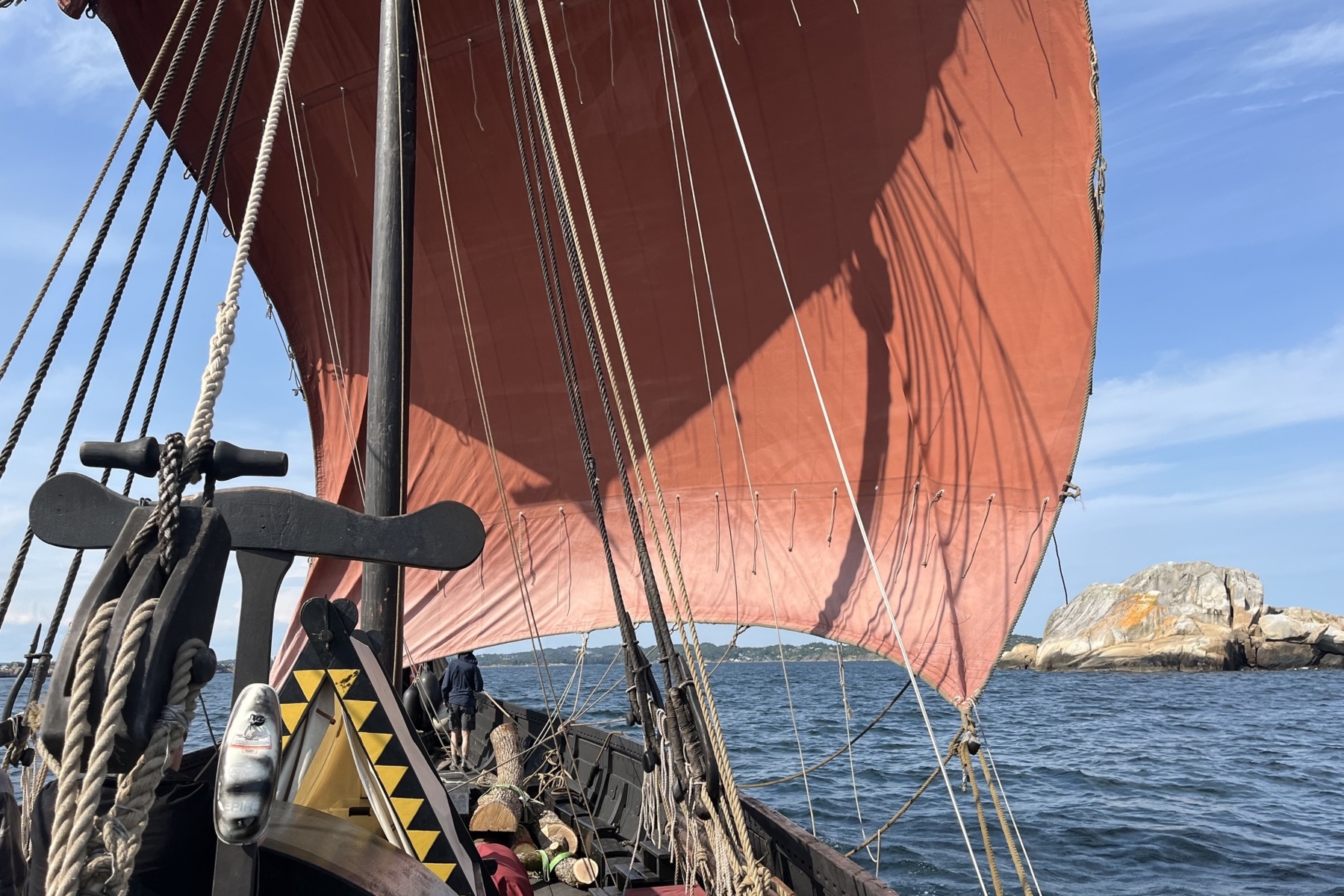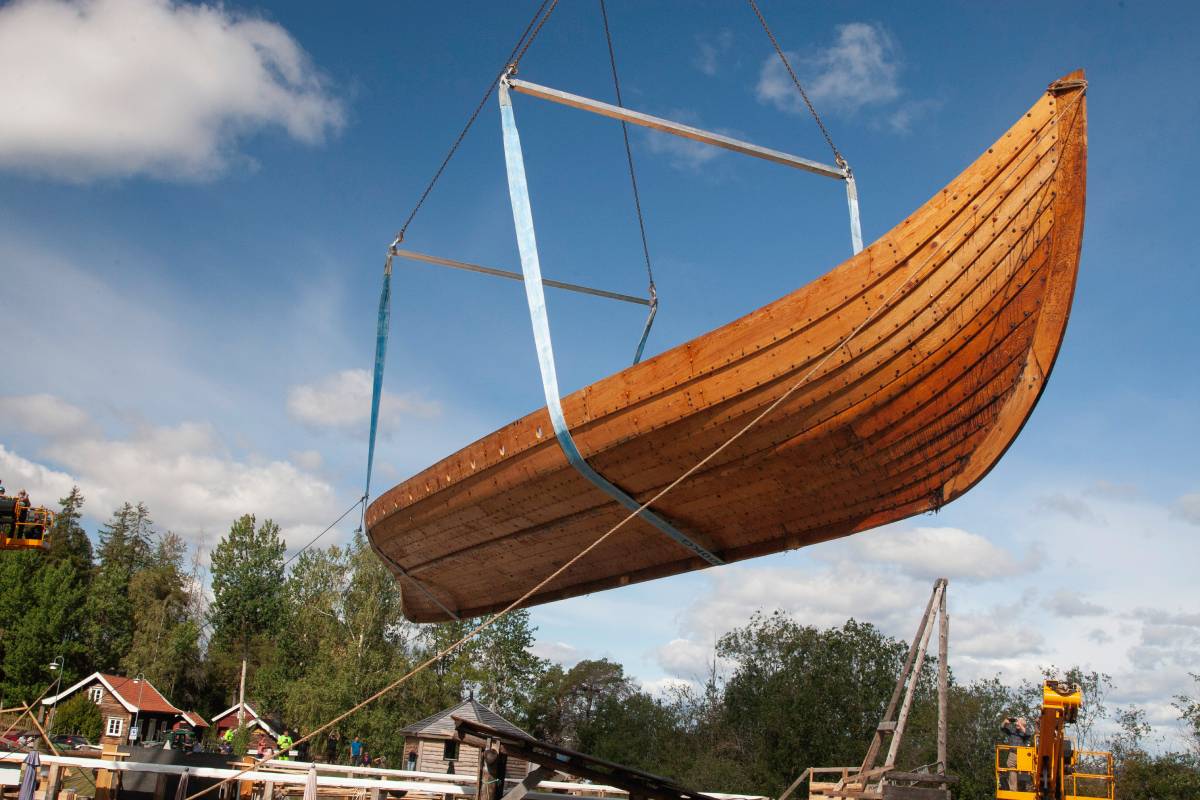


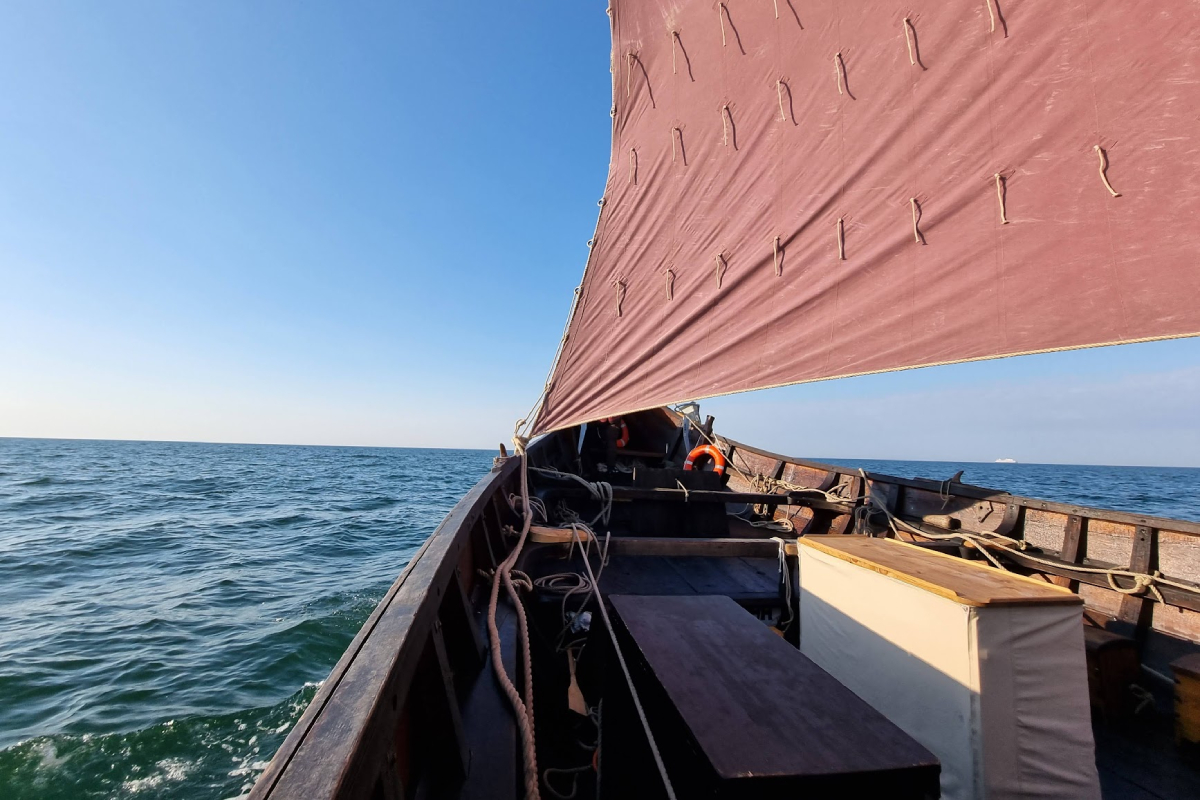
Built by the Oseberg Viking Heritage Foundation, the Saga Farmann is an authentic Viking Age replica ship currently in the middle of a years-long voyage around Europe.
In its 2025 expedition, the vessel has been journeying across Italy, France, and north to England and London. To find out how the ship and its crew have been getting on, The Viking Herald speaks to the founder of the project, Lars Bill.
Back on track
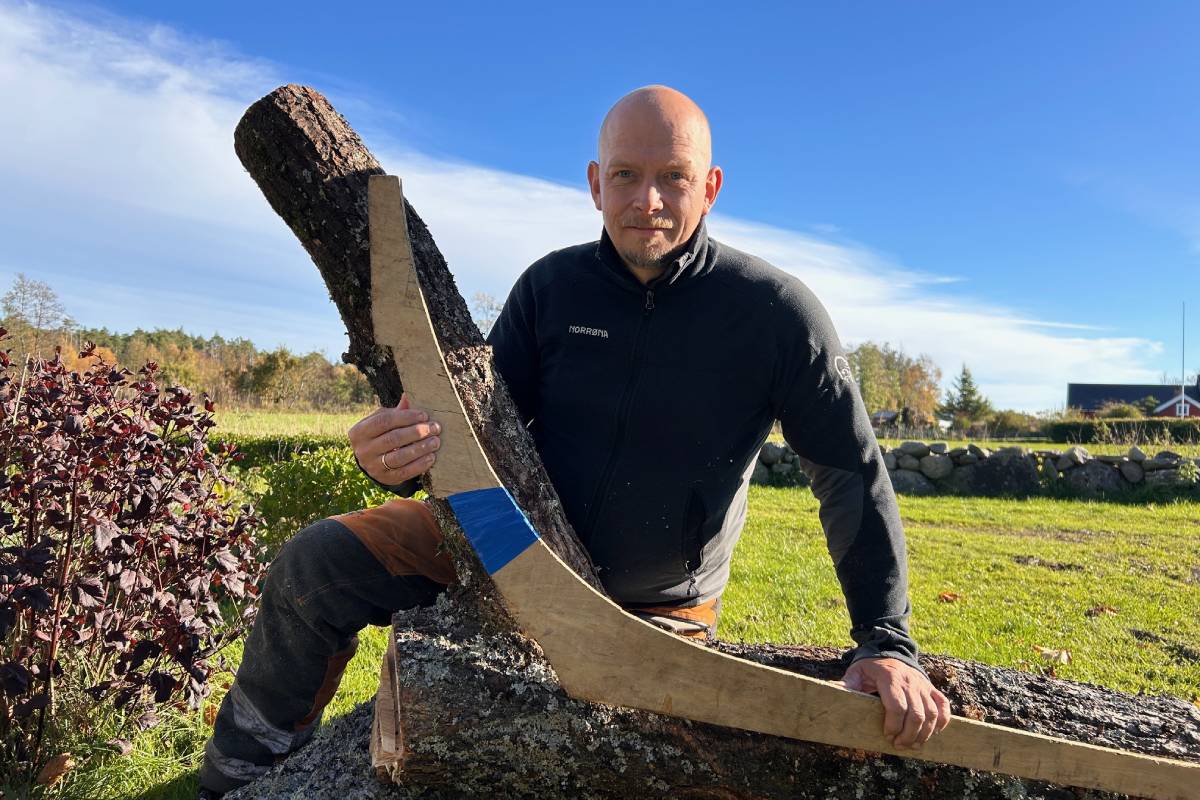
The Saga Farmann is a reconstruction of the Klåstad Viking ship, which was excavated in Norway in 1970. The ship departed from its starting point in Tønsberg, Norway, in 2023.
In its first year, the Saga Farmann traveled down through Sweden and Denmark to Central Europe, also stopping off in Istanbul. In 2024, the vessel made its way to Greece and then Italy.
When we last spoke to Lars this spring, the Saga Farmann was undergoing urgent repairs at a dock in Civitavecchia near Rome after its electric engines had sustained significant water damage.
Fortunately, the team was successfully able to replace the engines, which are needed to power the vessel whenever the winds are too low for authentic sailing, and also when navigating along rivers or canal systems.
"The electric generator manufacturer Fischer Panda has been this year's major saver on the voyage," Lars admits. "We got all the propulsion systems fixed, and new generators on board," Lars tells The Viking Herald.
"We are really, really glad to get them on board as new sponsors. To return the favor, I have just traveled to London to do some promotional films with the Fischer Panda people on board the ship."
- READ MORE: All you need to know about Viking ships
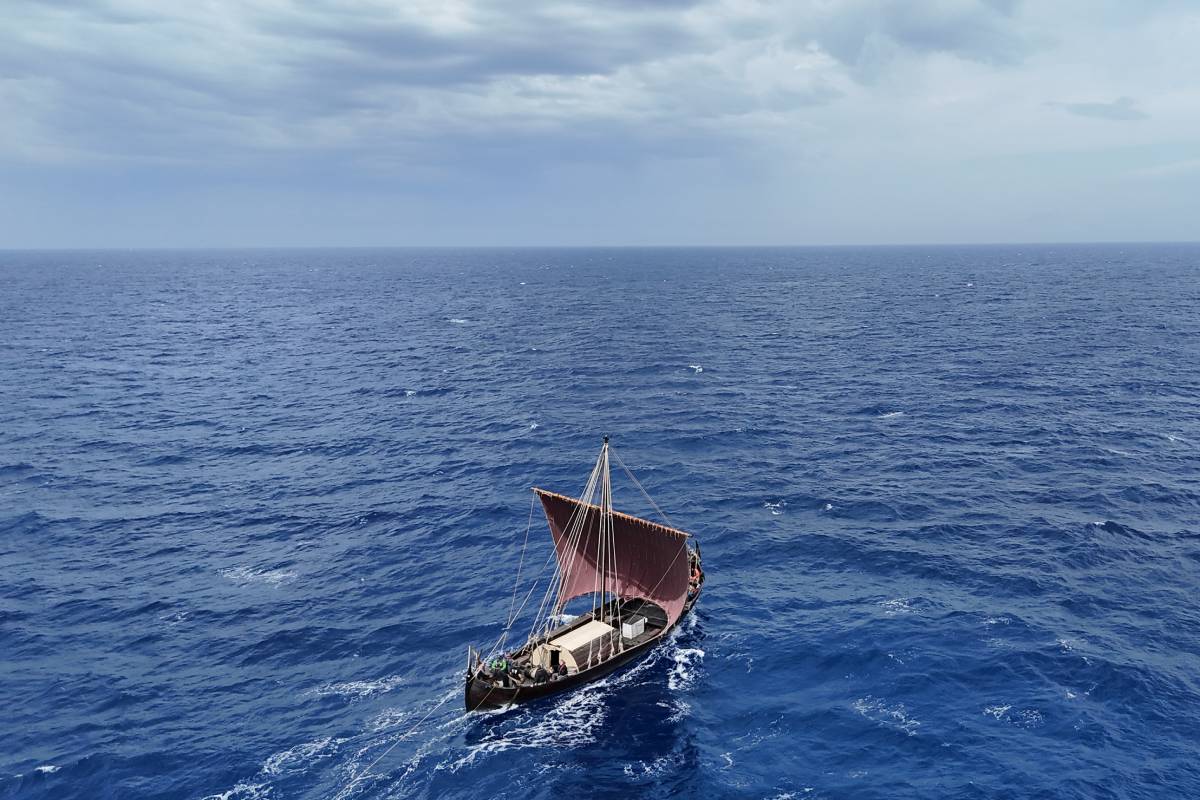
The 2025 leg of the journey takes the ship from Italy through France and on toward England and London. Photo: Oseberg Viking Heritage Foundation
From Italy to France
Fortunately, the swift repairs meant that there were no delays to the schedule.
"In the end, we were able to start the voyage in mid-May, so we have sailed for 16 weeks this year too," Lars confirms. "We came up the coast of Italy and the Riviera all the way to Marseille by sea."
"Then we took the ship up the riverways on the Rhône River in France up to Marcon. There, unfortunately, we had to change our method of transport."
Indeed, while the team always tries to travel on the water, there are a few exceptions to the rule.
"There are some connections between the Rhône River and the Seine, but it is a standard old French channel system, which is 5.0 meters wide. And we are 5.2 meters wide – so we couldn't get through. This meant we had to take the land route."
Naturally, the group was prepared for this eventuality. "We knew from the beginning that we would need to arrange land transport," Lars continues.
"We spent a few days preparing the ship to bring her on land and then we placed her on a bed truck. It was very complicated – and expensive! We had a huge special transport going through France with motorcycles and cars following us, and a police escort through the cities at night."
"I think it took five days to bring the ship from Marcon to Corvée des Sceaux, outside Paris. There, we finally put her back in the water so we could continue the voyage."
- READ MORE: How did Vikings make sails?
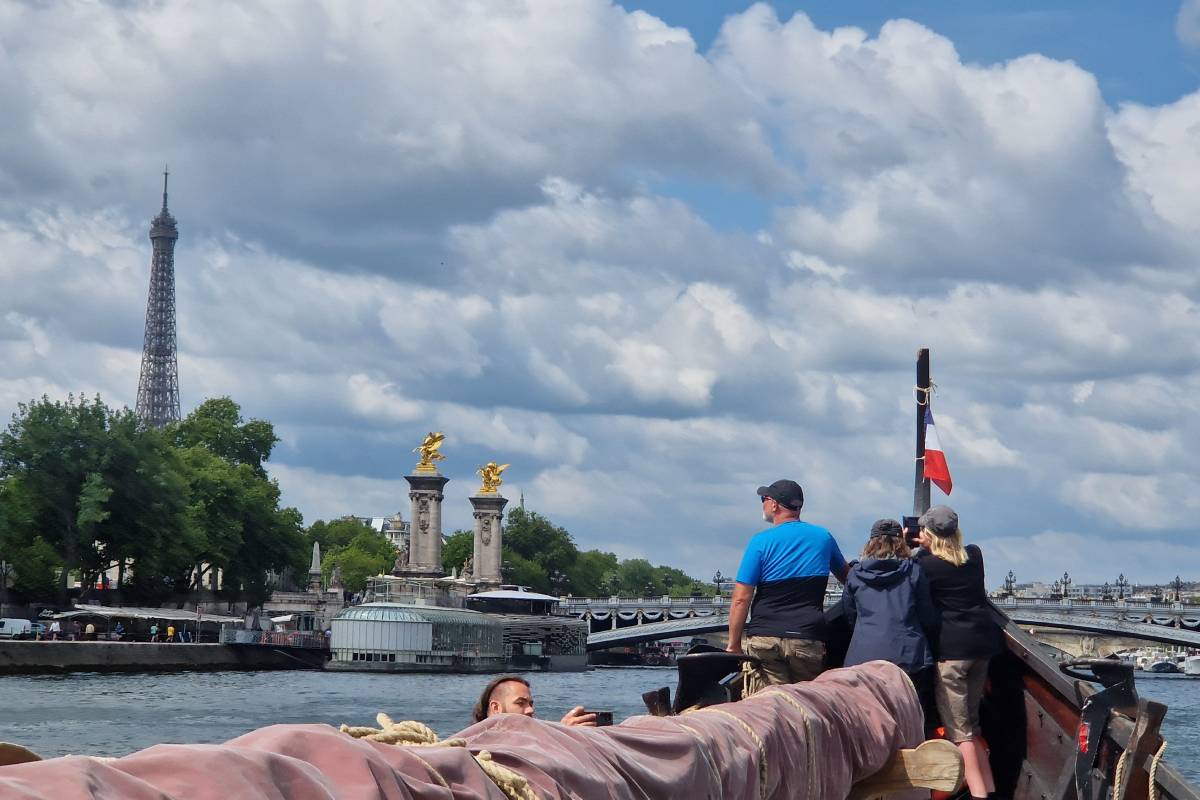
Once back on the water near Paris, the ship spent a week on the Seine under the Eiffel Tower. Photo: Oseberg Viking Heritage Foundation
Next stop: Paris
With the team back on the river, it was full speed ahead to Paris, the site of the Viking raids allegedly led by Ragnar Lothbrok.
"We put it in the water in the Seine outside Paris," Lars informs The Viking Herald. "We then made our way into central Paris and lay there for a week just under the Eiffel Tower on the most spectacular spot on the Seine in Paris."
Perhaps unsurprisingly, the stay in Paris was a pleasant one. "We stayed there for a week together. We had a collaboration with the Musée national de la Marine in Paris, just up the bank from where we were lying. They sent all their guests from the museum down to see a proper Viking ship."
The Saga Farmann travels according to a strict schedule, with new crew members waiting to board at every major stop. With time of the essence, the vessel was soon on its way again.
"We continued up to Honfleur," Lars adds. "We set the mast again and sailed down to Normandy, to Ouistreham. There we had to wait for the weather to improve."
"Finally, we were able to cross the English Channel and make our way up the Thames, all the way to London."
The Vikings return to London Bridge
The arrival in London provided some more spectacular sights. "We lay just behind the HMS Belfast, the warship in the Thames River, next to London Bridge," Lars continues.
"That's also a historical place for the Vikings, of course. The new London Bridge is in almost the exact same spot as the old London Bridge that the Vikings, according to the historical records, tore down more than a thousand years ago."
"We then did a sail-through stunt under Tower Bridge at night with all the lights and everything," Lars adds. "The BBC, Reuters, and the Associated Press all came down to film the event."
"And then we put the ship into St Katharine Docks and had a very nice welcome reception with the embassy and some nice people coming in from Norway and all sorts of other places."
The ship's winter plans, however, were soon thrown into confusion. "The idea was to put the ship on the lawn in front of the National Maritime Museum for the winter."
"But at the last minute, they told us it wasn't possible, that it would be too expensive. Finally, however, we were able to find a spot for the ship's winter hibernation in Gillingham Marina."
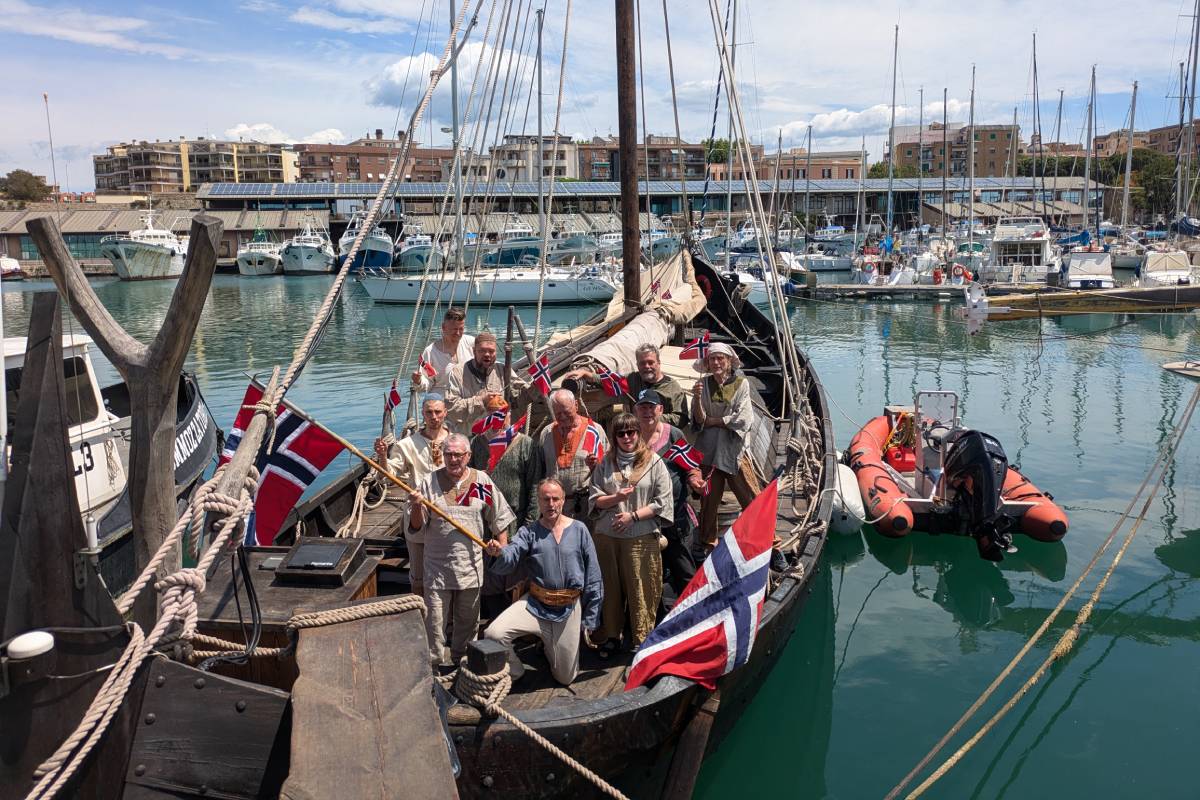
Plans for the next voyage include possible routes to Ireland, Scotland, the Isle of Man, and perhaps the Baltic Sea. Photo: Oseberg Viking Heritage Foundation
Plenty of highlights
Despite the storage problems, Lars looks back on the 2025 voyage with a huge amount of fondness. "This year has had quite a few exciting moments," he admits.
"We had some really, really good sailing outside the coast of Italy, with very nice winds from the south and then easing to the islands along the coast and coming up to Genoa. We had some great events there with the Norwegian Seafood Association."
"We also had a three-day stay in the Italian town of Andora," Lars continues. "The municipality had a very nice setup."
"All the schoolchildren came down to the ship over the course of two days to learn about the Vikings and to come on board to see real Vikings on a real Viking ship. We had more than 300 pupils on board the ship in two days. So it was crowded, but pretty nice!"
"We also took part in the UN Ocean Conference in Nice. That was heavily guarded – there were police and military around us all the time because of all the international leaders there."
"We were sailing around, visiting each other and discussing the conference, of course, and also all the differences – how we're using the ocean, how the different ships work. It was very cool."
Which way next? North or east?
Inevitably, Lars's thoughts have already turned to next year's voyage. "The working title for next year's voyage is Saga Manx," Lars informs The Viking Herald.
"I can't promise anything, but we would really like to go to Ireland and Scotland next year."
"We are right in the planning phase now, and are contacting all our friends around the British Isles to figure out if we can do London to Ireland and Dublin, then to the Isle of Man and through Scotland to Inverness. We would stay there on the east coast of England and Scotland for the winter."
Nothing is yet certain, however. "There are quite a lot of issues during that route," Lars admits.
"There's a lot of rough weather. We need quite a lot of funding to get around the corner of England and then get into the Irish Sea. There are a lot of things that might mean that it's impossible, but still, we are trying to make it happen."
"If we can't do it, we will probably aim for the Baltic Sea instead," Lars adds. "There, we would go out of England and head south down to the Netherlands."
"We would then follow the coast of the Netherlands on the inside of the small islands, through the Kiel Canal into the southern part of Denmark. We would perhaps go through Sweden with the Göta Canal from Gothenburg to the south of Stockholm and come into the Baltic Sea."
"But we don't know yet – that's plan B if we can't get around the British Isles. The main thing is to keep sailing – we are going to sail this ship for as long as we can."
We get to provide readers with original coverage thanks to our loyal supporters. Do you enjoy our work? You can become a PATRON here or via our Patreon page. You'll get access to exclusive content and early access.
Feel free to reach out to discuss potential stories that may be in the public interest. You can reach us via email at [email protected] with the understanding that the information you provide might be used in our reporting and stories.