


The Norwegian counties of Telemark and Vestfold are famed for their historic role as the birthplace of skiing.
Though local Telemarkers might be thrilled about this claim to fame, especially given the incredible number of Winter Olympic gold medals Norway has won over the years, the country has a proud history that extends far beyond being the birthplace of Norway's favorite pastime.
The bucolic village of Eidsborg lies in the municipality of Tokke, in Telemark.
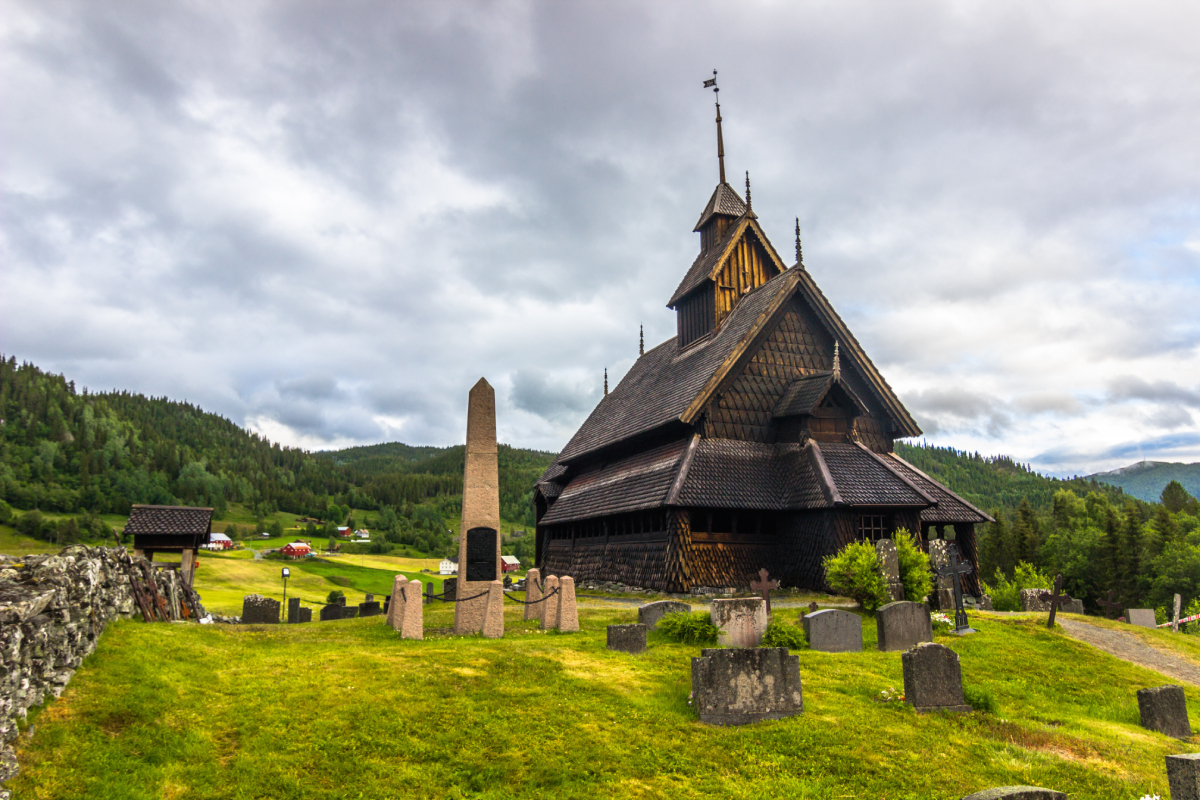
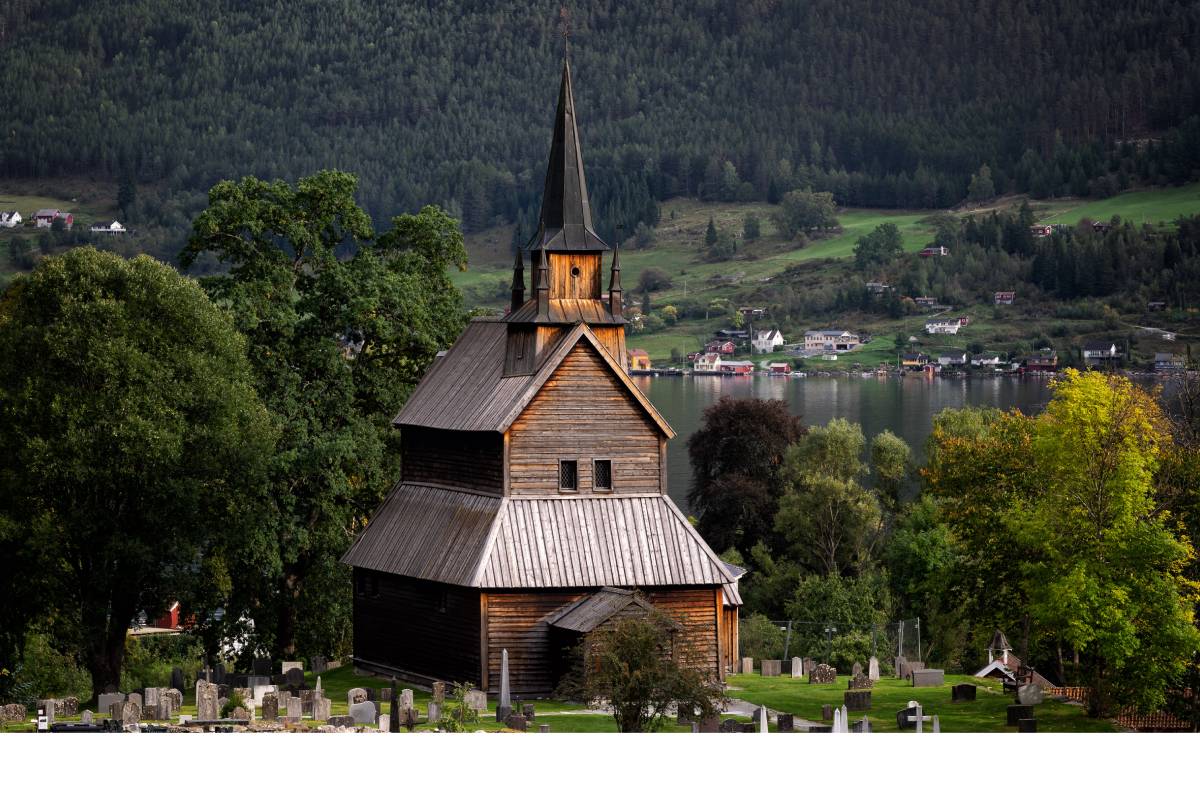
The Eidsborg Stave Church stands proudly here, as it has for over 700 years. Not only is it Norway's best-preserved stave church, but it is also one of the most aesthetically pleasing.
Like all of Norway's stave churches, Eidsborg is now one of the country's most popular tourist attractions, a far cry from when it was built in the mid-13th century.
At that time, it was a focal point for the village of Eidsborg, serving as a communal, religious, and spiritual center for the villagers.
Countless baptisms, weddings, and funerals must have taken place under its wooden beams, and its longevity stands as a testament to the architectural and design capabilities of medieval Norwegians.
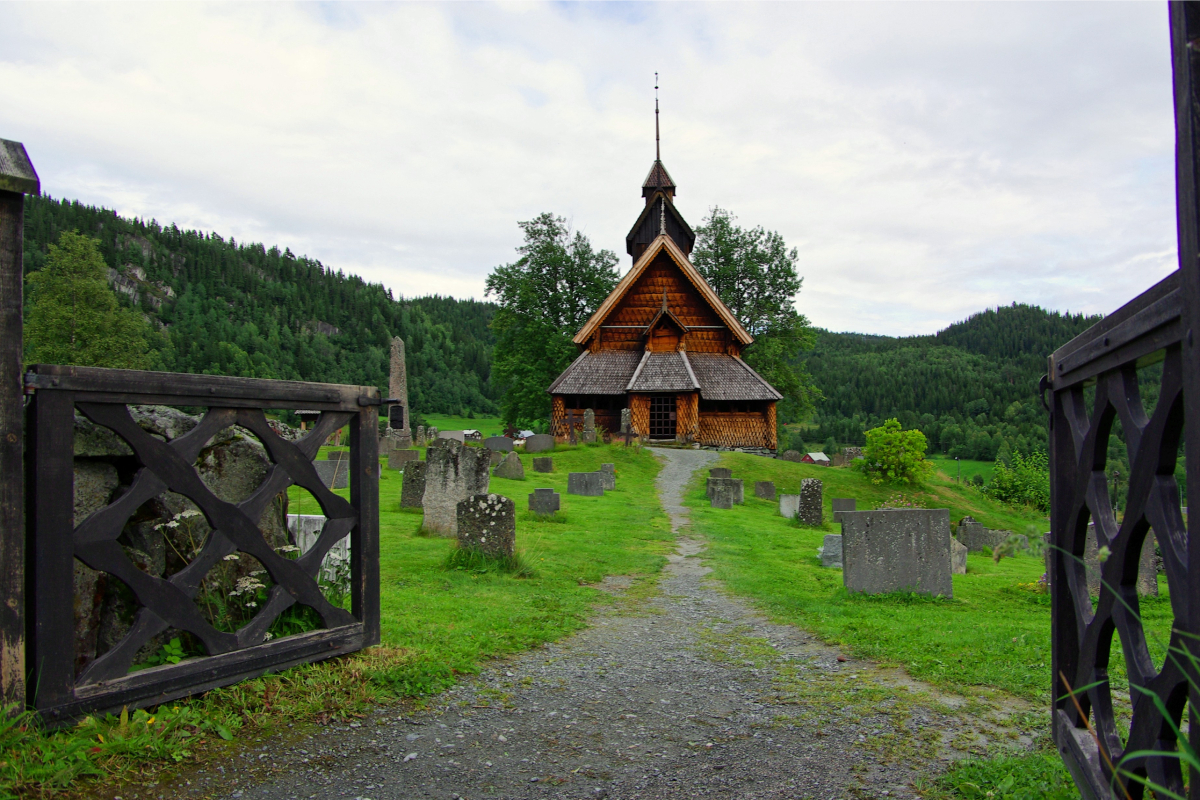
The brown wooden stave church, constructed circa 1250 and designed in a long church style by an unknown architect, accommodates around 70 people and is still in use as a parish church. Photo: Stephanie Klocke (CC BY-SA 2.0)
Bridging distinct historic and religious eras
The story of Christianity in Norway dates back to the early medieval period.
Although we may never know the exact moment the first Christian missionaries set foot in Norway or when the first adherent of the Old Norse religion converted, historical records suggest that Christianity arrived in Norway around the 7th century.
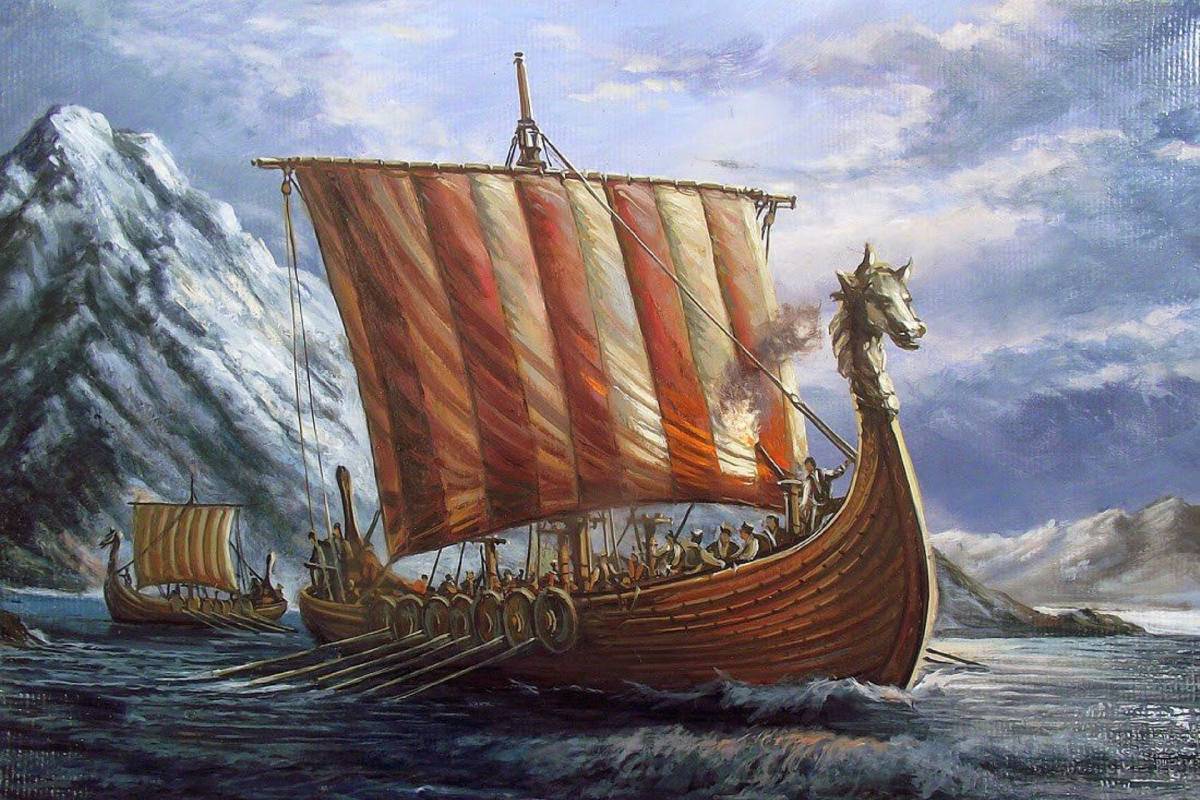
Within a century, expansion rather than invasion characterized the societies in what is now Norway. Viking warriors set sail from Norwegian shores to raid and ravage coastal and river-bound communities throughout Europe.
By the end of the Viking Age (c. 750 – 1100), Norway had not only unified several petty kingdoms into a single nation but also become part of the broader network of European Christian nations.
However, elements of its pagan past still linger.
One of the most striking features of this syncretism, where old traditions and customs merged with new Christian thinking, was the stave church.
These medieval wooden structures, dating back to the 12th and 13th centuries, featured post and lintel construction with motifs of Norse mythology integrated into their overtly Christian designs.
The Eidsborg Stave Church is a prime example of such a stave church, bridging two distinct historical periods: the Viking Age and the later medieval period.
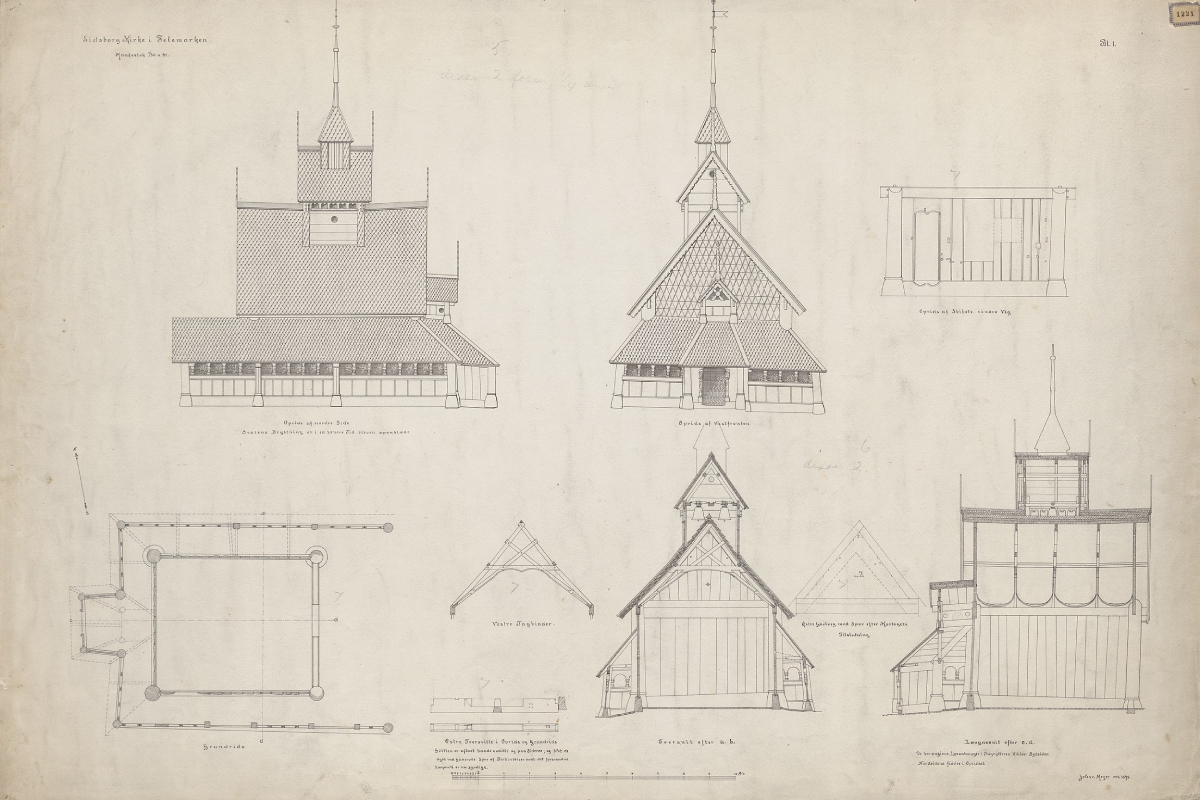
Detailed sketches of Eidsborg Stave Church by Johan Meyer feature the ground plan, longitudinal and cross sections, and elevations of the west, north, and south walls. Source: Johan Meyer (1860–1940), Public domain
An ancient and evolving church
Historians have estimated that the Eidsborg Stave Church was constructed sometime around the mid-13th century.
Though Christianity had secured a grip on the country, this occurred at a much later date than in other European regions further south.
The center of village life in Eidsborg then was the church, a physical symbol of this (relatively) new religion as well as a focal point for communal cultural and religious celebration and worship.
The latest archeological consensus is that the church has been restored and rebuilt many times over its almost eight-century existence.
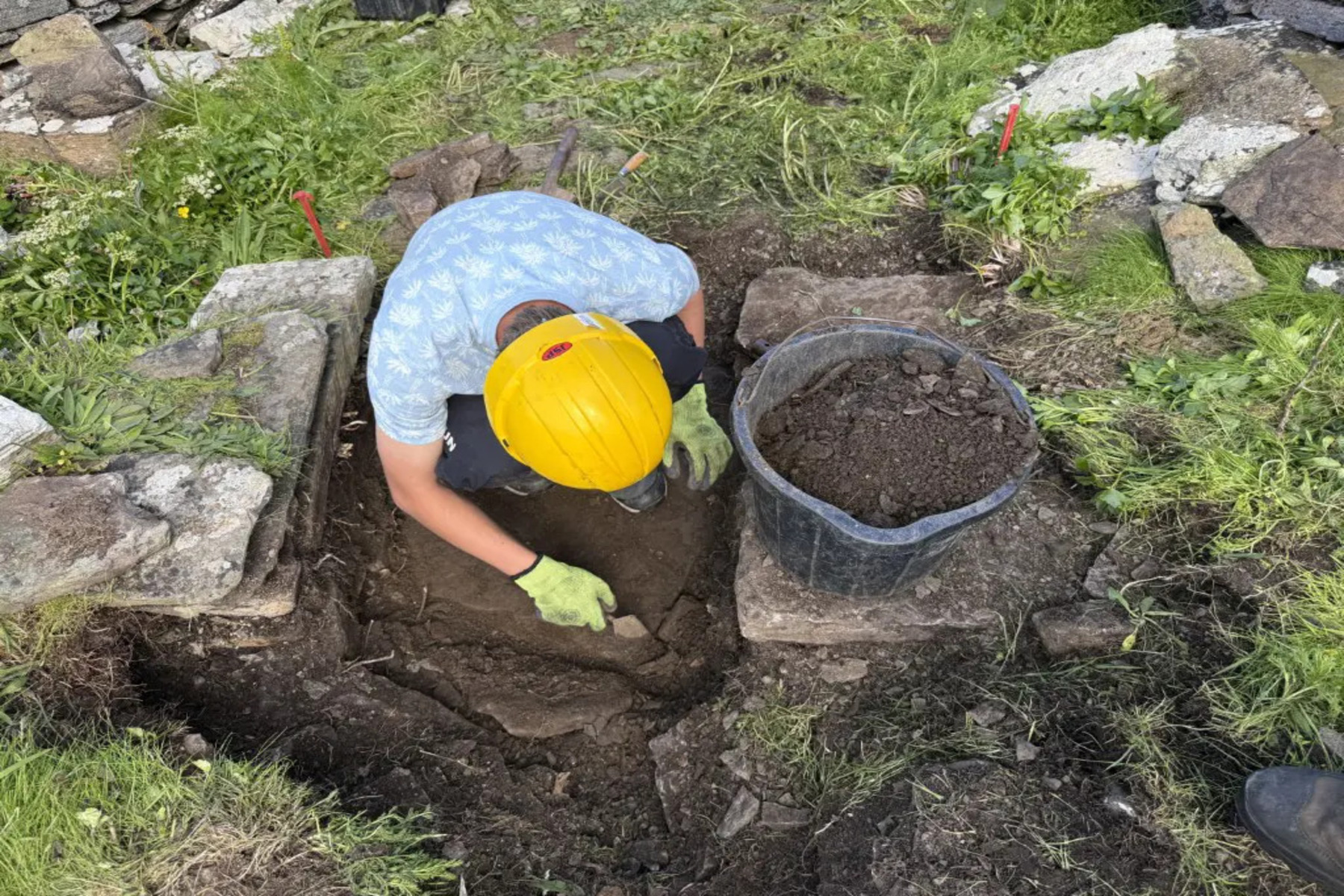
It was originally believed to be a simple wooden structure, with the charred remains of this humble place of worship discovered during recent archeological excavations.
Like all stave churches, Eidsborg was constructed using a stave design, with a narrow nave and chancel (the liturgical center of the church, where the priest conducts the service).
According to A.A. Freeman, writing in the Applied Sciences Journal in 2021, murals were painted after the Reformation sometime in the 17th century, with a tower constructed in the 18th century.
The constant construction and redesign of the church shows how, like the village it served, it has had an organic life of its own, changing with the desires and needs of the villagers it served.
However, despite all the aesthetic modifications, it has remained a permanent presence in the village, serving the local inhabitants since medieval times.
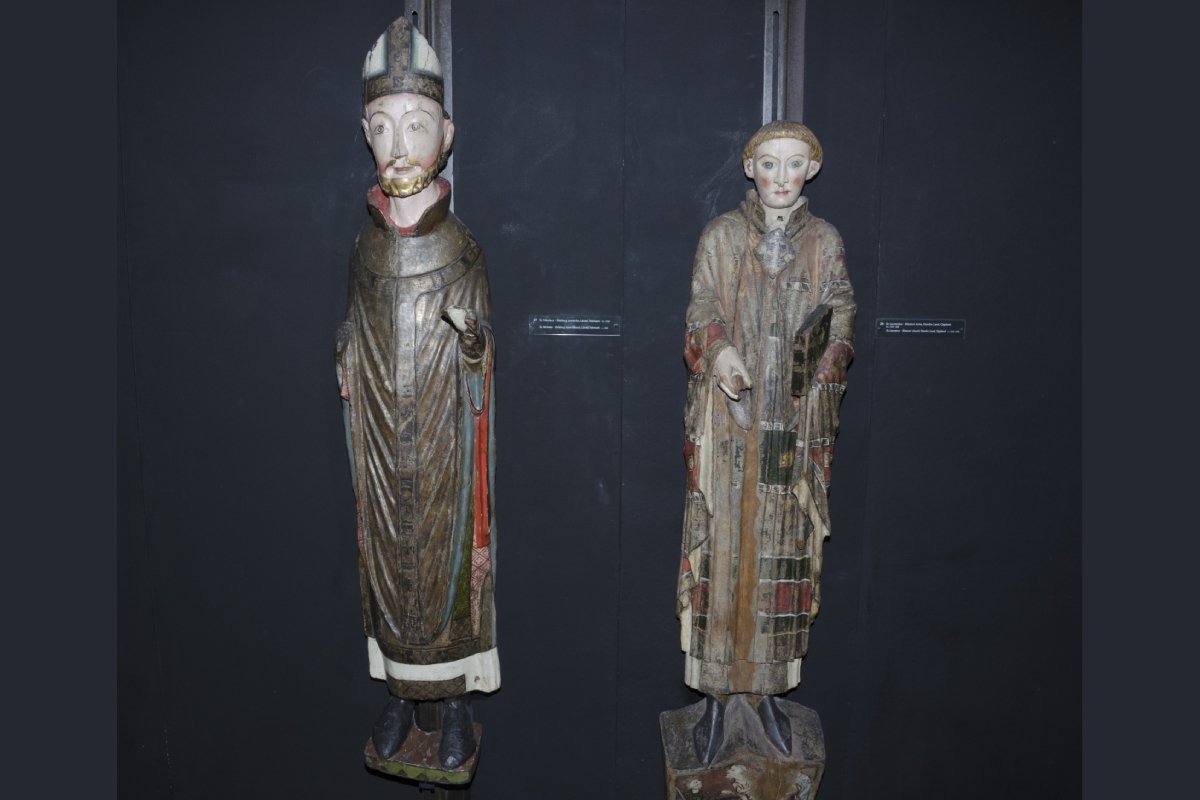
A statue of St. Nicholas (left), believed to have predated Eidsborg Stave Church, was displayed in the church for centuries before being moved to the Museum of Cultural History in Oslo for preservation. Photo: Peulle (CC BY-SA 4.0)
Patron saints and pilgrims
The church was dedicated to the patron saint of travelers, Saint Nicholas of Myra.
Despite its location in the pastoral Norwegian countryside, the choice of this patron saint showed how Norway, through the Catholic Church, was connected to the wider European network of nations.
The church would have been an important local, and perhaps regional, center of worship and pilgrimage.
A statue of the saint, believed to have predated the church, took pride of place in the church for centuries until being moved, for preservation, to the Museum of Cultural History in Oslo.
It should also be noted that Norway was the center of a northern pilgrimage route leading to Nidaros Cathedral in what was then Nidaros (modern Trondheim).
Medieval travelers flocked to Norway to walk this holy path, which started in Oslo – a regional town for much of the period and not the capital – and wound its way up through Norway to the largest medieval cathedral in far northern Europe.
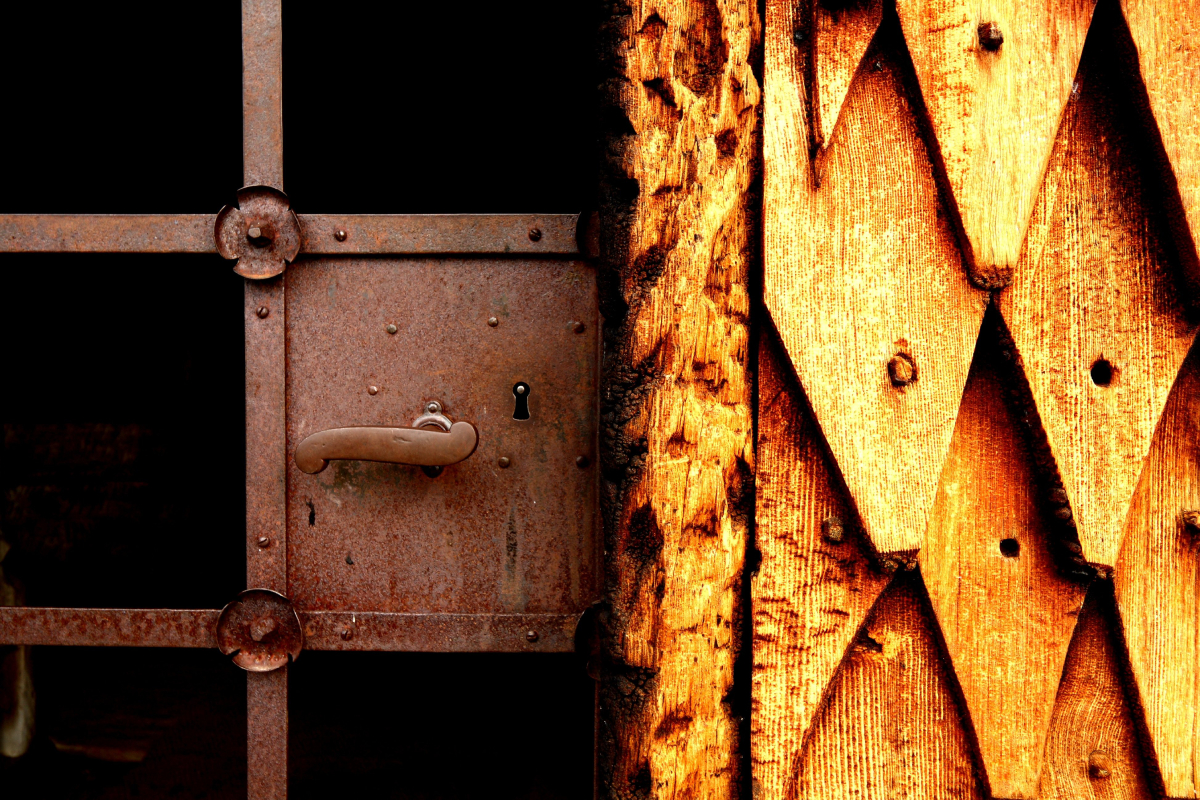
The church’s ongoing construction and redesign reflect its adaptive nature, evolving with the needs of the villagers it served while remaining a permanent presence since medieval times. Photo: Falk Lademann (CC BY-SA 2.0)
An ever-present symbol of Eidsborg
Having survived more than seven centuries of wear and tear, civil war, world war, and thousands of local folk being baptized, married, and remembered, the Eidsborg Stave Church proudly stands as a symbol of the longevity of medieval architecture and design.
Unlike other stave churches in Norway, which have been turned into museums, the Eidsborg Stave Church remains the local parish church, as it has since the mid-13th century.
Significant restoration efforts throughout the 19th, 20th, and into the 21st centuries (the latest batch of restoration work took place in 2006) will help ensure that the locals of Eidsborg, and tourists alike, can continue to revel in the majesty of this ancient edifice.
Having survived seven centuries of communal worship and celebration, the Eidsborg Stave Church remains a testament to enduring medieval architecture and design.
For more information on some of Norway's majestic stave churches, visit Forbes here.
We get to provide readers with original coverage thanks to our loyal supporters. Do you enjoy our work? You can become a PATRON here or via our Patreon page. You'll get access to exclusive content and early access.
Feel free to reach out to discuss potential stories that may be in the public interest. You can reach us via email at [email protected] with the understanding that the information you provide might be used in our reporting and stories.



.jpg)
