


There's a well-worn saying that history is written by the victors. At The Viking Herald, we know that while this may hold true in many cases, it doesn't quite apply to the Viking Age.
The people of Viking societies left behind a sparse literary record (but a rich archeological record), and thus so much of what we know about these Viking societies comes not from their own mouths but from the communities and cultures they so often clashed with.
No more is this the case than the very event that traditionally is seen as having kicked off the Viking Age.
Now, you have noticed that we, at The Viking Herald, usually date the beginning of this age to circa 750 CE. This is the date at which a possible Viking raid may have occurred on the island of Salme in the Baltic Sea, of which archeological remains were only recently unearthed.
Some historians, however, use a different date and point to a Viking raid in Portland, England, in 789 CE as the true beginning.
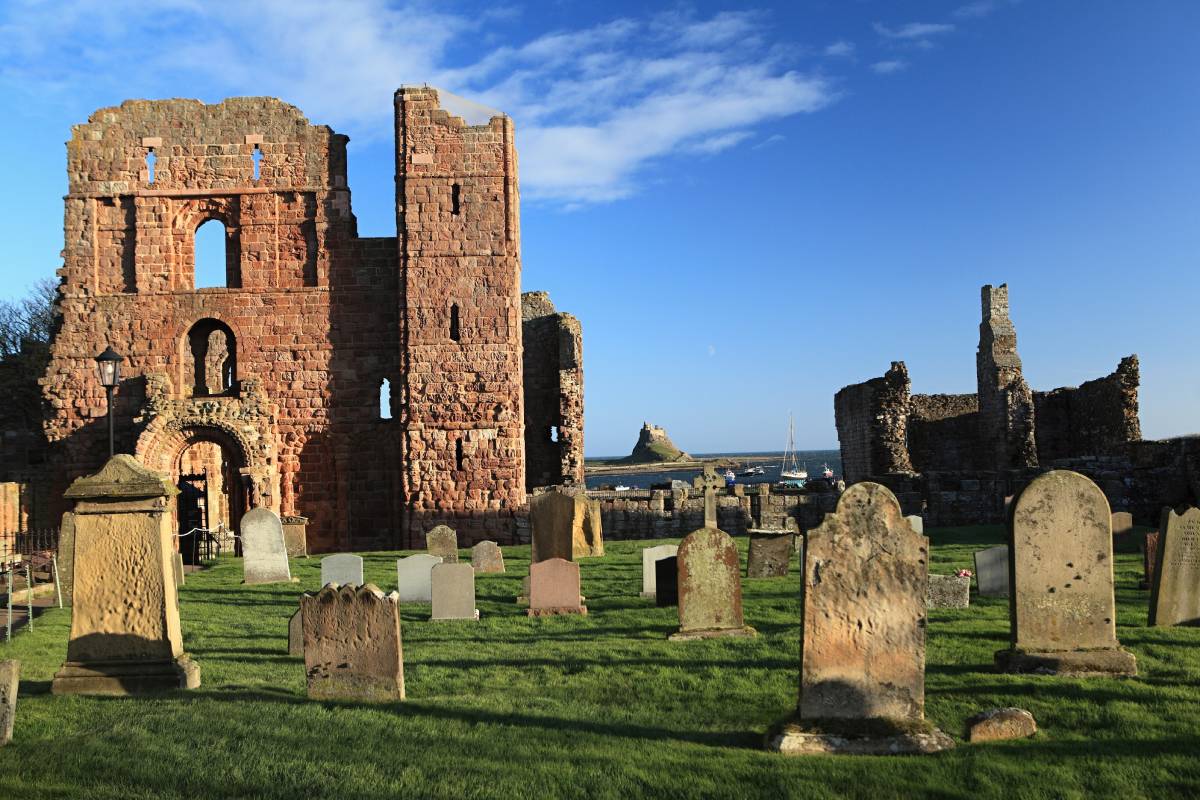
Yet the traditional start point for this age of maritime terror is a blitzkrieg attack on the monastery on the island of Lindisfarne, off the northeastern English coast, in 793 CE.
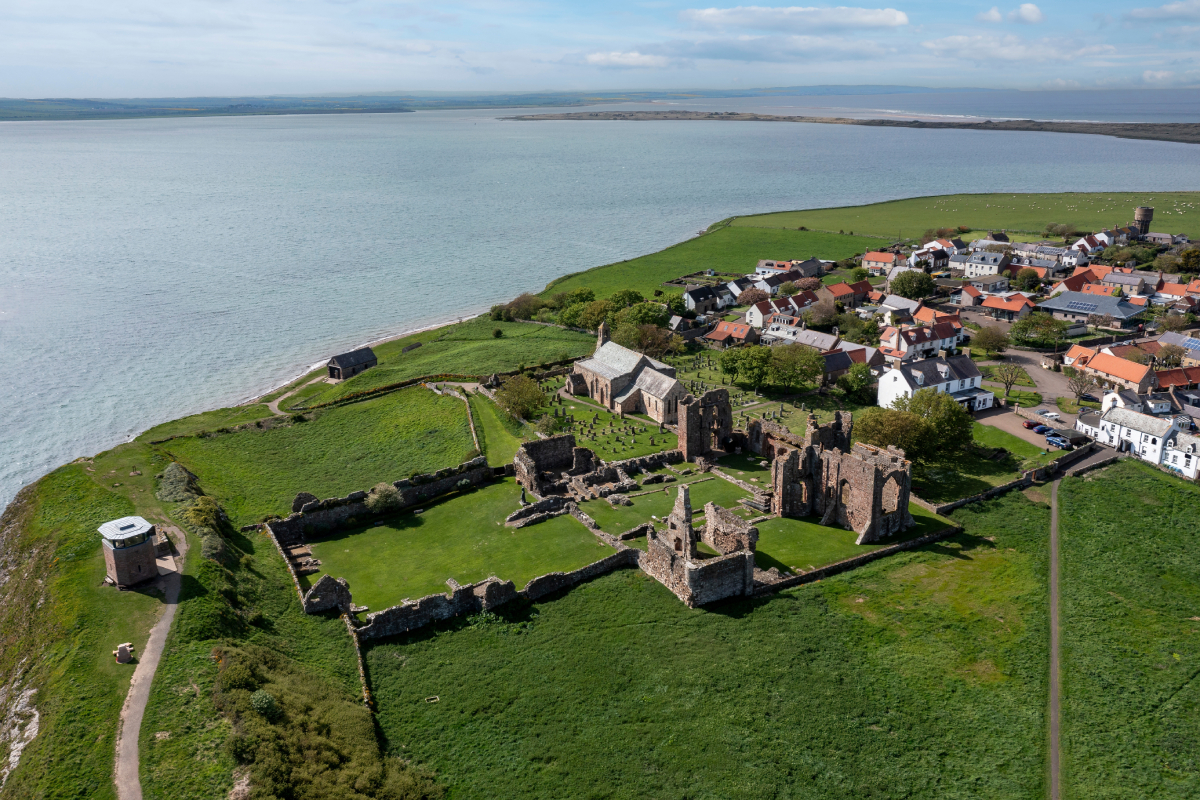
On a remote tidal island, Lindisfarne Priory became a focal point of English Christianity. Photo: GrahamMoore999 / Shutterstock
An isolated center of learning and religion
The windswept island of Lindisfarne lies off the modern-day coast of northeastern England.
It feels isolated, remote, and very distant from world affairs. However, back in the late 8th century, this was a bustling cultural and religious hub thanks to the Lindisfarne Priory, founded a century earlier by no less than an early English saint, Aidan.
This monastery was responsible for a cultural blossoming of learning and literature in Anglo-Saxon England, as it was here that the Lindisfarne Gospels were carefully produced.
These were elaborately decorated and illuminated religious manuscripts that are today championed as amongst the finest examples of art during England's Anglo-Saxon history.
Aside from being an intellectual and religious hub, it was also a site of great wealth. Early medieval monasteries, especially in Anglo-Saxon England, were rich with precious goods, especially elaborate jewels, silks, and other ornate ornaments.
Unlike other nearby towns or communities – including some of the famed burghs of Anglo-Saxon England – the Lindisfarne Monastery had no military presence.
It was thus an easy target: isolated, unprotected, and rich in material wealth. It is easy to see why a group of Vikings set sail to target this monastery on June 8, 793 CE.
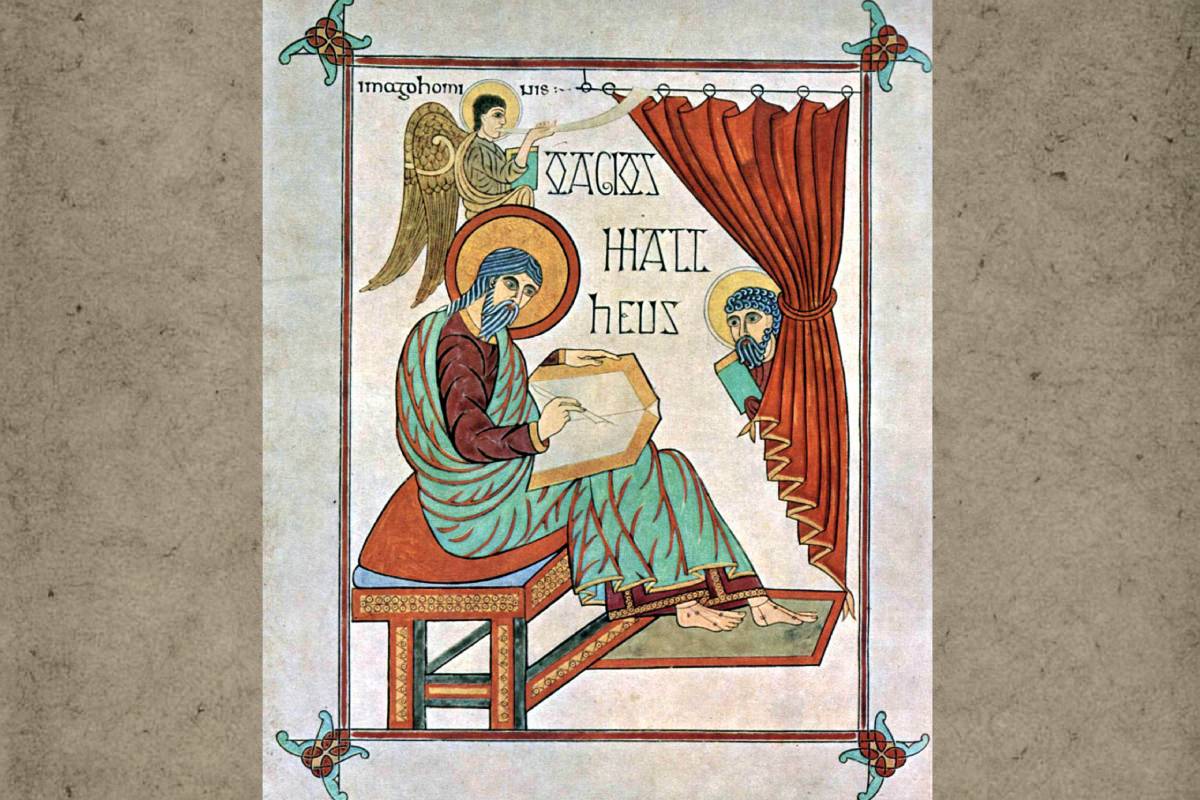
An artist at Lindisfarne Priory created this image of St. Matthew around 700 CE as part of the Lindisfarne Gospels. Source: Public domain
Dragons, rapine, and slaughter
We now turn to the words, not the Vikings that ransacked Lindisfarne, but to their targets. Whilst we have no personal eyewitness accounts from that fateful June day, we turn to contemporary records, like the Anglo-Saxon Chronicle.
This is one of the best general accounts that we have of the raid on Lindisfarne, and it is here we turn now. Using an online version of the 1996 English translation by J. Ingram and J.A. Giles, we find that the entry for the year 793 starts off grimly as:
"This year came dreadful fore-warnings over the land of the Northumbrians, terrifying the people most woefully: these were immense sheets of light rushing through the air, and whirlwinds, and fiery, dragons flying across the firmament. These tremendous tokens were soon followed by a great famine..."
This did not bode well for the people of Northumbria. Reading further, we find that:
"...on the sixth day before the ides of January in the same year, the harrowing inroads of heathen men made lamentable havoc in the church of God in Holy-island, by rapine and slaughter."
The raid on Lindisfarne was not the first Viking raid in history, yet it was symbolic of the first phase of the Viking expansion. It was a small, hit-and-run-style attack that targeted an isolated and wealthy community.
Whilst we do not know how many innocent people died, or the value of the treasures looted, we do know the crushing psychological impact it had on wider Europe.
We turn our heads across the English Channel to the Frankish realms. Here, an Anglo-Saxon scholar living and teaching in the court of Charlemagne, Alcuin, described how the raid on Lindisfarne was seen by the good God-fearing Christian people on the continent.
Using an online version of a modern English translation of a letter that Alcuin wrote to the Bishop of Lindisfarne in the wake of the raid, the raid is described in cataclysmic terms. Alcuin writes that:
"...never before has such terror appeared in Britain as we have now suffered from a pagan race, nor was it thought that such an inroad from the sea could be made. Behold, the church of St. Cuthbert spattered with the blood of the priests of God, despoiled of all its ornaments..."
But who exactly were the perpetrators of this terror, who were these people from "a pagan race" that had "spattered the blood of priests" via "an inroad from the sea"?
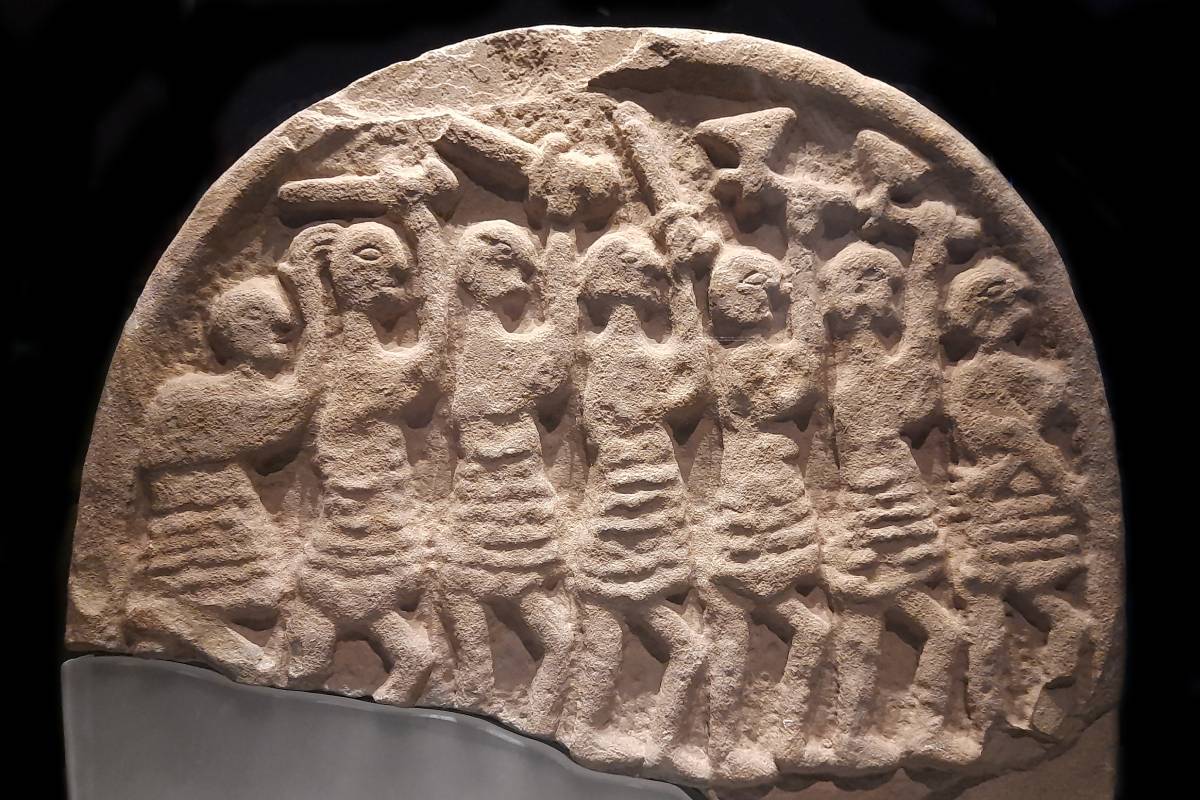
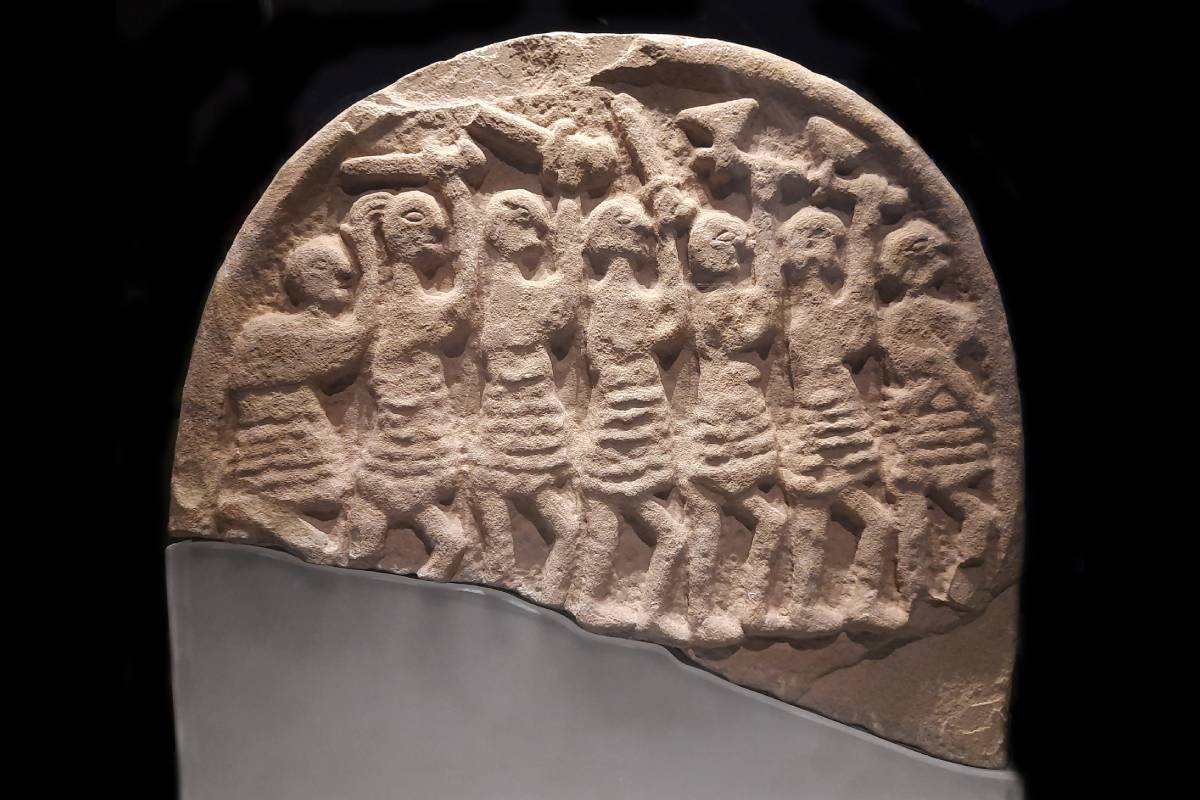
The Lindisfarne Stone is an early 9th-century gravestone from Lindisfarne that perhaps shows armed Viking raiders. Photo: Schillerwein
Historical obscurity
Here, we must pick up our magnifying glass and throw on a deerstalker hat for a bit of good old-fashioned historical detective work.
We know that the raiders on Lindisfarne were what we now call "Vikings" – seaborne warriors from early medieval Scandinavia.
The exact identity of those who raided Lindisfarne will never be known (unfortunately, the monastery did not have CCTV). Our best guess, however, is that these Vikings may have hailed originally from the western seaboard of Scandinavia, perhaps western Norway or northern Denmark.
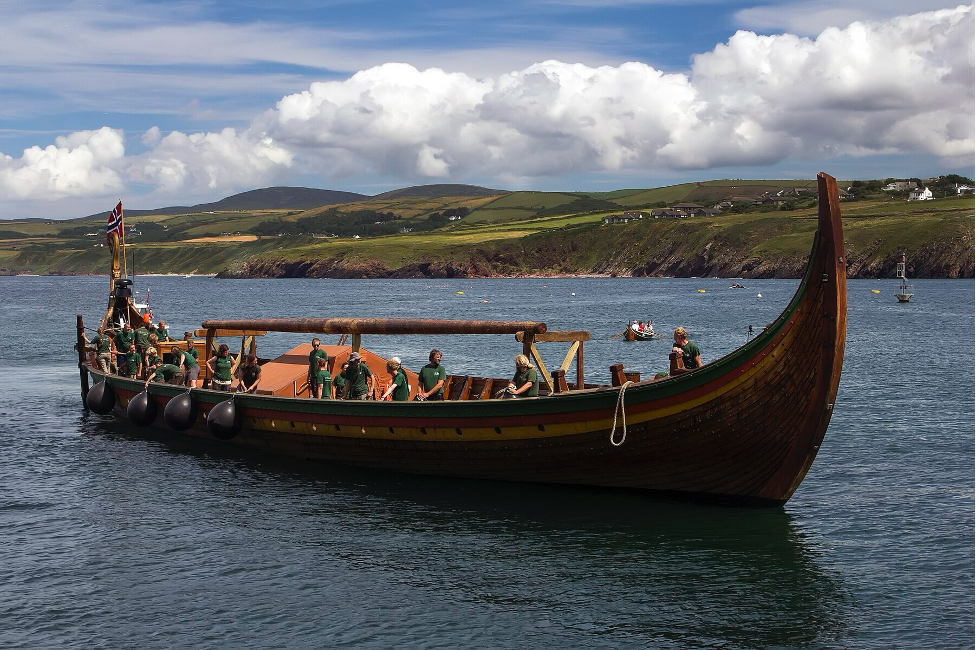
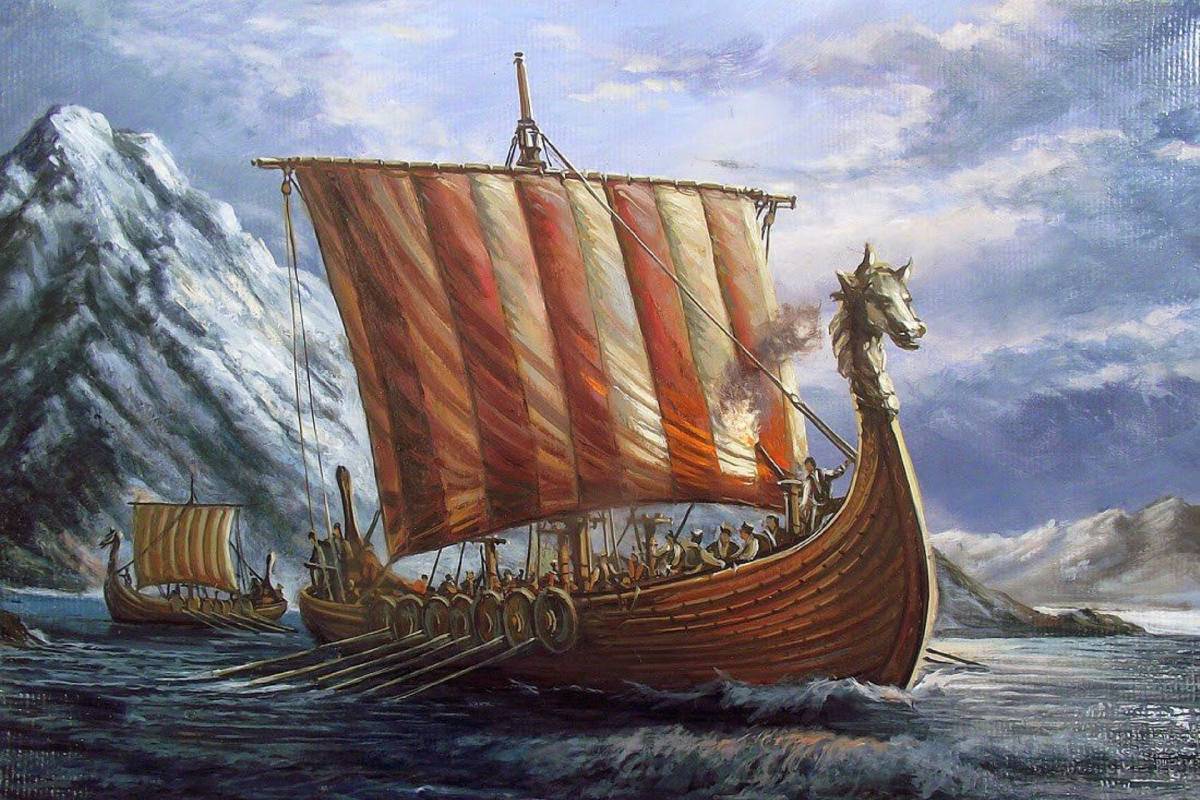
This journey across the North Sea, even during the early medieval period, was surprisingly efficient thanks to their marvelous piece of maritime equipment, the famed Viking longship.
Adding to this historical obscurity is the fact that we do not know the exact number of the Vikings who came ashore that June day to pillage and plunder.
Our best guess is that it was likely a small crew, perhaps manning a few ships at most, that speedily enabled a hit-and-run attack that was characteristic of the opening chapters of the Viking story in the British Isles, until the arrival of the Great Heathen Army over half a century later.
Finally, as Gareth Williams writes in his chapter of the 2008 book, The Viking World, there should be some caution in believing everything that was written down by the victims of Vikings.
Williams warns us that, as these historical accounts, like the Anglo-Saxon Chronicle or Alcuin's letter, "were written by the Vikings' Christian victims" and thus "they may give an exaggerated picture of both the impact and the barbarity of raids by the pagan Vikings."

This statue of St. Cuthbert at Lindisfarne Priory recalls the bishop whose relics monks carried away in response to Viking raids. Photo: Nilfanion (CC BY-SA 3.0)
Religious overtones
Adding to our historical assumption about the perpetrators as Vikings is the religious practice of Viking societies in this era.
We know that though Christianity was known, and indeed adhered to, by some in Scandinavia during this period, it would not get a hold on the hearts and minds (and souls) of the majority of people living here until, at least, the 11th century.
For the English Anglo-Saxons, including those living in the Kingdom of Northumbria, people from Viking societies were dismissed as barbaric "heathens."
They were seen as uncivilized and uncultured people who preferred their old ways, old habits, and Old Gods rather than adhering to the word of what they saw as the one true Christian God.
Adding fuel to this xenophobic fire was the raid on Lindisfarne, which dominated how Anglo-Saxon England viewed its Scandinavian contemporaries for generations to come.
As Alcuin posed in his letter, this sort of predatory violence must have a divine origin. He wrote that:
"...either this is the beginning of greater tribulation, or else the sins of the inhabitants have called it upon them."
The island had a history of supposed loose morals, including reckless fashion choices, assault, and even murder. The Viking raid, for Alcuin, then was surely a sign of punishment for the unholy actions of those living on this holy island.
From the other perspective, people in Viking societies, who were raised in a culture steeped in martial nature and adhered to the Old Norse religious beliefs, soon saw Anglo-Saxon Christians as little more than a weak people to shake down, enslave, or slaughter as the two crossed paths in England from this period onward.
A bloody opening chapter
The raid on Lindisfarne would foreshadow the later Viking invasions from the 9th through the 11th centuries, which would see huge swathes of Anglo-Saxon England fall under the control of, and be settled by, people from Viking societies.
Their relationship with the local Anglo-Saxon population would be interlinked, oscillating between violence and subjugation on the one hand and assimilation and pragmatism on the other.
The final word on this raid should be left to Alcuin. He posited that this Viking raid may be "the beginning of greater tribulation," and indeed it was.
For the next almost three centuries, the people of Anglo-Saxon England, including Northumbrians, would see their lives be fundamentally changed beyond recognition due to the arrival of more seaborne raiders.
The arrival of the Vikings was to be the death knell for Anglo-Saxon England as the nascent English nation turned its gaze eastward towards Scandinavia.
For more information on Lindisfarne, visit the website of English Heritage here.
We get to provide readers with original coverage thanks to our loyal supporters. Do you enjoy our work? You can become a PATRON here or via our Patreon page. You'll get access to exclusive content and early access.
Feel free to reach out to discuss potential stories that may be in the public interest. You can reach us via email at [email protected] with the understanding that the information you provide might be used in our reporting and stories.



.jpg)

