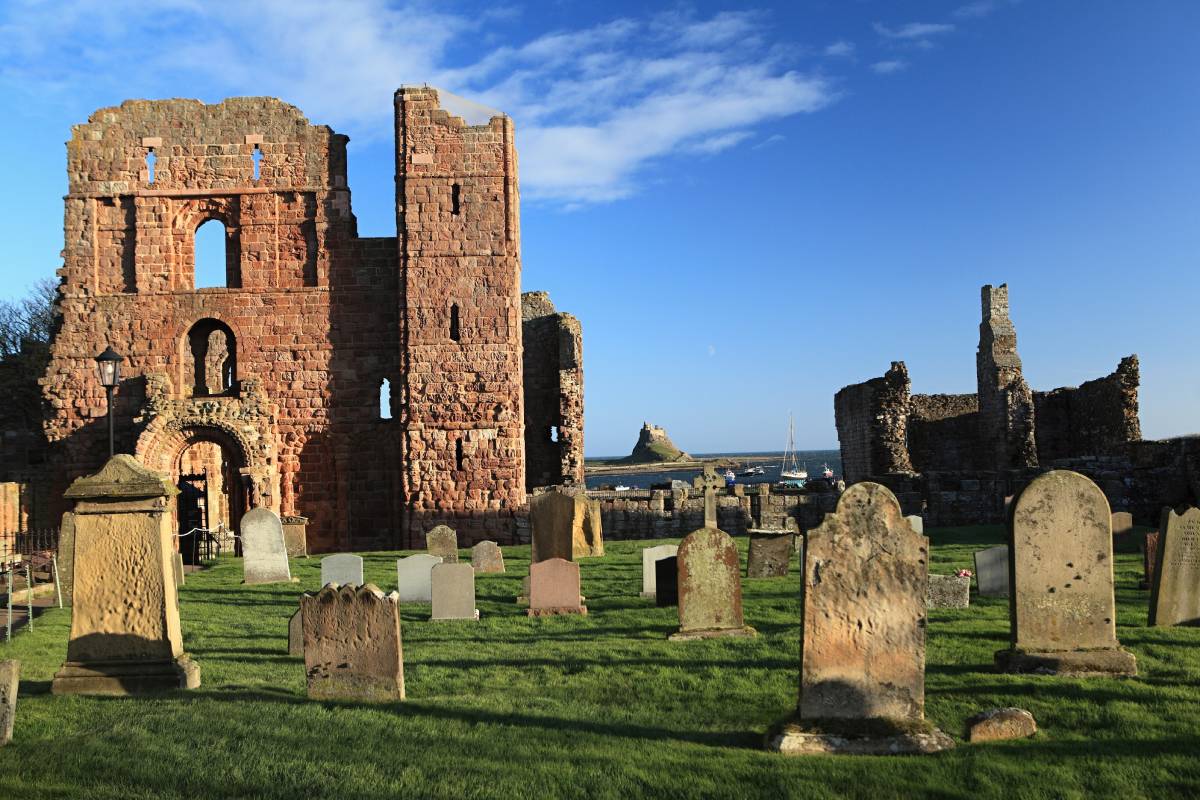


Surely one of the many joys of writing for The Viking Herald (other than being able to communicate with you, dear readers) has been to educate myself and gain a far more nuanced understanding of all things Viking. For me, growing up in the Anglosphere, the traditional history of the Viking Age I was brought up upon started with the raid on Lindisfarne in 793 CE, and ended with the death of Harald Hardrada at Stamford Bridge in 1066.
Whilst these two dates roughly bookended the English history of the Viking Age, the broader historical context is a little more complicated. As Marika Mägi discusses in her 2020 book, The Viking Eastern Baltic “Several Scandinavian researchers date the end of the Viking Age to the period around 1000 when these societies had formed a state and converted to Christianity. Other researchers propose the mid-11th century or even later, around 1100.”
However, we argue that the end date may be even later. Thanks to recent archaeological discoveries in the Baltic region, we know that Lindisfarne can never be claimed as the ‘first’ Viking raid. As for poor old Harald Hardrada’s death, whilst it did signal the last serious Viking invasion of England, it hardly marked an end to Viking raids.
We know that historical forces and trends take time to morph and change, and this is very much the case for Viking societies. The day after Stamford Bridge, people living in Norse societies throughout Northern Europe, and particularly Scandinavia, didn’t simply wake up, shake off their ‘Viking inhibitions’ and slip into ‘medieval mode’. Viking raids – loosely defined as fast, tactical attacks carried out by Norse people by sea – continued long after the Battle of Stamford Bridge. So what are some of the contenders to be considered the last Viking raid ever recorded?

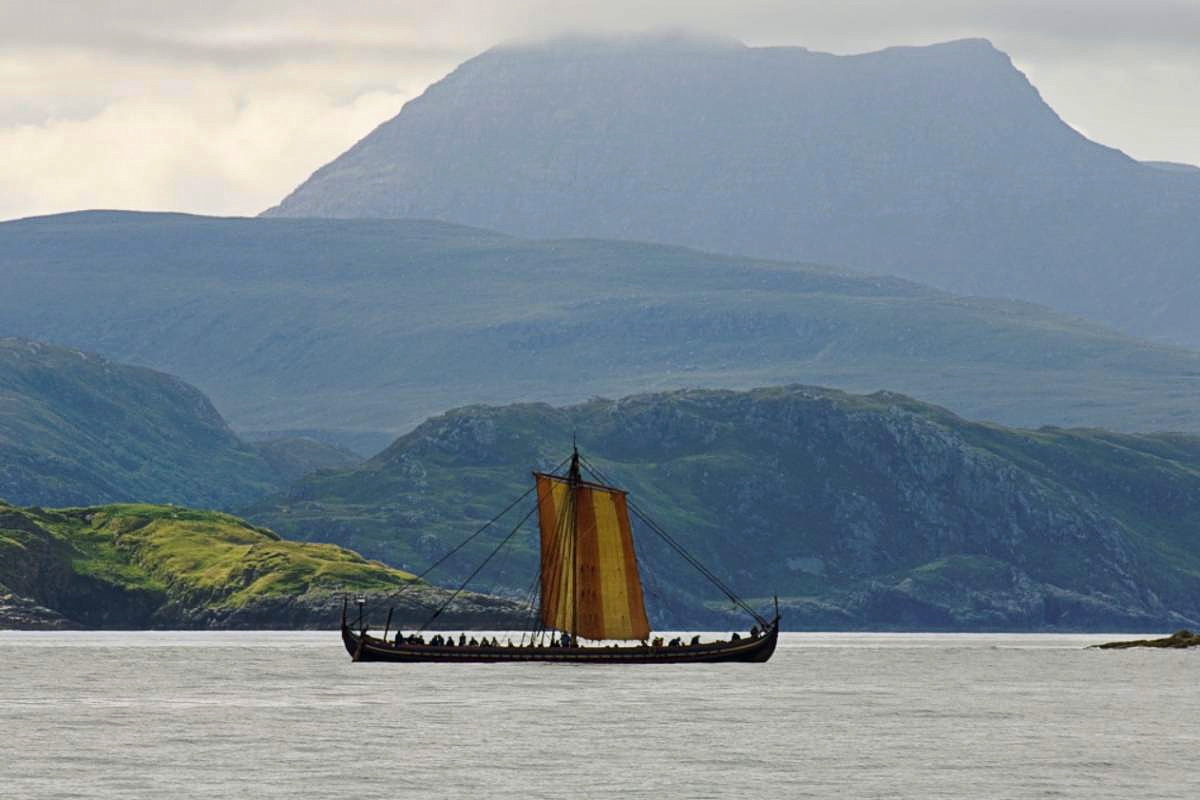
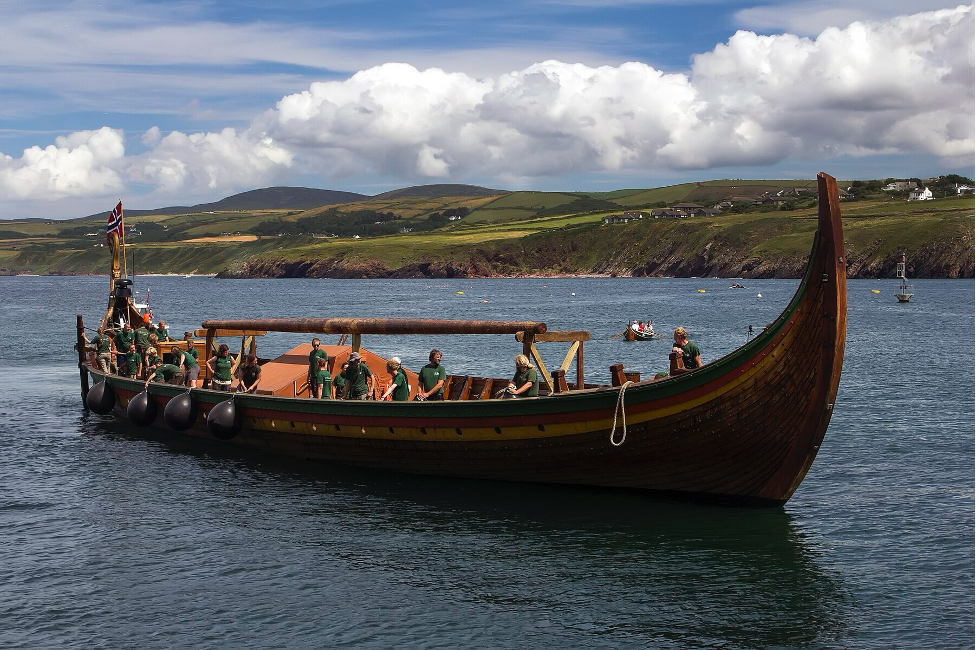
Modern day reenactment of Viking raid. Image: Shutterstock
Danish raiding during the Revolt of the Earls (1075)
In the near decade since William, Duke of Normandy, won at Hastings, England was starting to change beyond belief. Gone were the old elite, the Anglo-Saxons, pushed off their lofty perch by the brethren of William the Conqueror, the Normans. The culture, language and politics were rapidly evolving, something that angered many of the old guard. During the wedding feast of the daughter of King William I (as the Conqueror was now known), several earls conspired to lead a rebellion to oust the very face of the Norman yoke.
Whilst William was in Normandy celebrating his daughter’s big day, these earls sent messages across the North Sea to Denmark asking for assistance in their dastardly scheme. Sweyn II – the nephew of the great Cnut the Great – was ruling as King of Denmark, and did send some 200 ships. Yet these ships arrived too late to help, as William had rushed back to secure his kingdom. Rather than return to port, these ships turned north and were said to raid and lay waste to much of northern England, including the sack of the former Viking stronghold in the north, York.
Whilst this was not like the rapid, small-scale Viking raids of old, it was nonetheless a significant action. The revolt of the earls ultimately failed, but the raid certainly did not. Sadly, this was not the only tragedy to befall this part of England. Much of England’s north had already been bloodily put to the sword during the ‘Harrying of the North’, a total war waged in the winter of 1069-1070 to quash any resistance to William the Conqueror.
A Norwegian raid during ‘The Anarchy’ (early 1150s)
We now fast-forward some 8 decades to the very early 1150s. Following the bloody power struggles that dominated what is now Norway during the early medieval period, it was by this stage that the medieval Kingdom of Norway had been created and was ruled by Eystein Haraldsson, sometimes given the regal name Eystein II. The son of a king, Harald Gilla, he had been born and raised in the British Isles but, according to the sagas, journeyed back in the 1140s to press his claim for the throne.
However, he was not the only son of King Harald Gilla, and negotiations were entered into that the kingdom would be divided amongst Eystein and his two half-brothers. Yet it seems the lure of the home of Eystein's ancestors was too strong.
Turning to the Orkney Saga (we use an online version based upon an 1873 English translation by Joseph Anderson), we find that:
“King Eystein came from Norway with a large force, and seizing Earl Harald Maddadson as he lay at Thurso with a single ship, made him pay a ransom of three marks of gold and swear fealty to him for Orkney and Shetland.”
We have then King Eystein entering himself rather violently into the politics of the northern British Isles. We know that much of what is now the north of Scotland, including the Isles, had been dominated by people from Viking societies for centuries. Here, Eystein was said to have captured the ruling Jarl of Orkney and ransomed him for a pretty penny. Yet this was not the end of his adventures in the British Isles.
Before heading back to Norway, Eystein was said to have sailed down the northeast coast of Scotland and laid waste to several towns, including Aberdeen. Further south, in England, the Kingdom was in peril due to a civil war (which historians dub ‘The Anarchy’), making it the perfect finale for Eystein and his forces' raiding activities. Like Viking leaders before him, Eystein skillfully took advantage of political divisions to launch devastating raiding expeditions.
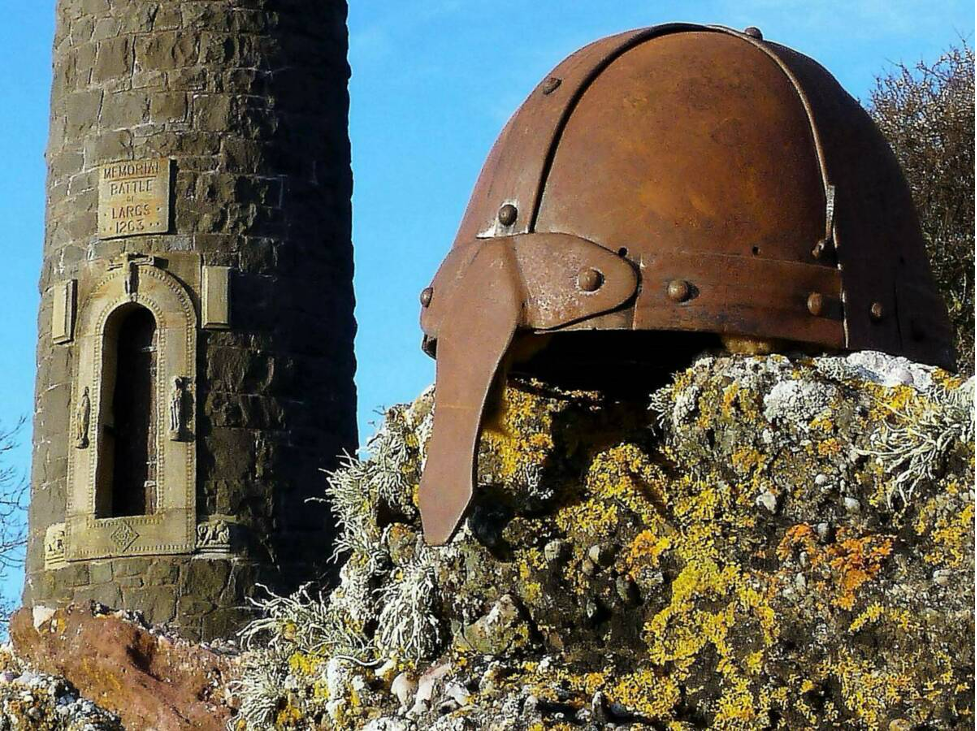
Battle of Largs Monument. Image: Wikimedia / Author: Raibert MacAoidh
Hakon IV of Norway and The Battle of Largs (1263)
By the middle of the 13th century, much of northern and western Scotland was firmly under the influence of the burgeoning Kingdom of Scotland. However, despite being politically linked to Scotland, culturally it was still very much influenced by the descendants of people from Viking societies. What could be seen as the last naval force launched from Scandinavia in the early medieval period occurred during the early 1260s.
As a result of a disagreement over ownership of the Hebrides, the Norwegian king Haakon IV sent a sizable expeditionary force to invade Scotland and try to intimidate the young King Alexander III. As such, Scotland was ruled by regents, including Alexander Stewart, who skillfully tried to use diplomacy and nous to delay any Norwegian invasion.
Whilst the Norwegian force had sailed to the Hebrides in the summer, with a force numbering thousands of vessels (if we are to believe contemporary chronicles), Alexander Stewart delayed any military engagement until the stormier season. By early October, Haakon’s patience was wearing thin, and he moved a sizable chunk of his force, in bad weather, to Largs. On October 2, whilst the Norwegians were salvaging some of their ships, a Scottish force led by Alexander Steward surprised them and savage fighting took place.
Whilst the Norse sagas portray the Battle of Largs as a Norwegian victory, it was, at best, a tactical draw. The Scots pushed the Norwegians back onto the beach, but a counterattack led the Scots to disperse. However, an invasion was thwarted, and the Norwegians escaped to overwinter in Orkney. Whilst not a raid in itself, it would be the last time a serious naval expedition was launched from the former Viking heartland of Scandinavia across the ocean, arguably until the Danish war with the Hanseatic League a century later.
Turning eastward
We have certainly focused on a very Western-centric view here when discussing the last ever Viking raid. However, what happened in the opposite direction? What about the end of the eastern section of the Viking raids? By the mid-11th century, the areas that people from Viking societies had journeyed to centuries earlier to raid, trade, and settle in had evolved into the Kievan Rus. Here, a small Viking minority had overseen the creation of one of early medieval Europe’s largest and most culturally, linguistically and religiously diverse polities.
Towards the end of the Viking Age in the West, a series of Rus raids down towards the Byzantine Empire occurred. Perhaps the last raid in the east was a 1043 raid on Constantinople, the Byzantine Empire’s shiny capital, which saw the Byzantines easily fend off a huge force sent by the Kevian ruler, Yaroslaw the Wise.
The last remnants
Whilst Viking raids did occur after the death of Harald Hardrada at Stamford Bridge, they took on a very different nature and scope from those that occurred in the earlier medieval period. Whilst arbitrary dates for ending historical periods can often be tricky, it is true that after this date the former Viking heartland of Scandinavia and its surrounds had left their Viking raider past behind and were rapidly entering their high medieval period. Yet though the "golden age" of Viking raids did fall between the 8th and 11th centuries, there are certainly some examples that fall outside that particular era.
We get to provide readers with original coverage thanks to our loyal supporters. Do you enjoy our work? You can become a PATRON here or via our Patreon page. You'll get access to exclusive content and early access.
Feel free to reach out to discuss potential stories that may be in the public interest. You can reach us via email at [email protected] with the understanding that the information you provide might be used in our reporting and stories.