

A slow-burning revenge plot, coupled with the breathtaking scenery of Iceland, this "Cod Western" has been dubbed one of the most realistic depictions of Vikings on the silver screen. Hrafninn flýgur, released internationally as When the Raven Flies, is a cult classic that the entire nation of Iceland adores.
A new era and a new wave
Sad to say, but the 1980s, an era that lives high in popular imagination thanks to a political shift to the right in much of the West, some very questionable fashion trends, and some very great music, are now almost half a century gone.
Regardless of its ever-increasing distance, so much of the modern world was made in the 1980s.
From American foreign policy taking a neoconservative turn rightward, to the collapse of Communism and its repercussions throughout Eastern Europe, from the rise of Islamic fundamentalism to the early successes of Steve Jobs and Apple, we are all here today, in 2025, mere children of the 1980s, in spirit if not in flesh.
This was also a seminal decade for the silver screen. There was a delicate dichotomy between many of the films released throughout this decade.
Following the "invention" by Hollywood of the summer blockbuster in the 1970s, films were seen as huge cash cows. Think Star Wars, Rambo, or any number of Arnold Schwarzenegger films.
Yet, going hand in hand with the immense commercialization of Hollywood were the lessons learned by American directors from their European counterparts throughout the 1960s and 1970s, which led to the so-called "Hollywood Renaissance" from the 1970s onwards.
This was a new wave that was driven by bold direction, creativity, and a shift from what had become a decrepit and cheesy studio system.
Part of this new wave ushered in a gritty, more realistic style of filmmaking, influenced as much by Akira Kurosawa and Sergio Leone from abroad as Martin Scorsese or Peter Bogdanovich in Tinseltown.
The ripples of this new wave of realism even reached as far afield as the shores of Iceland.
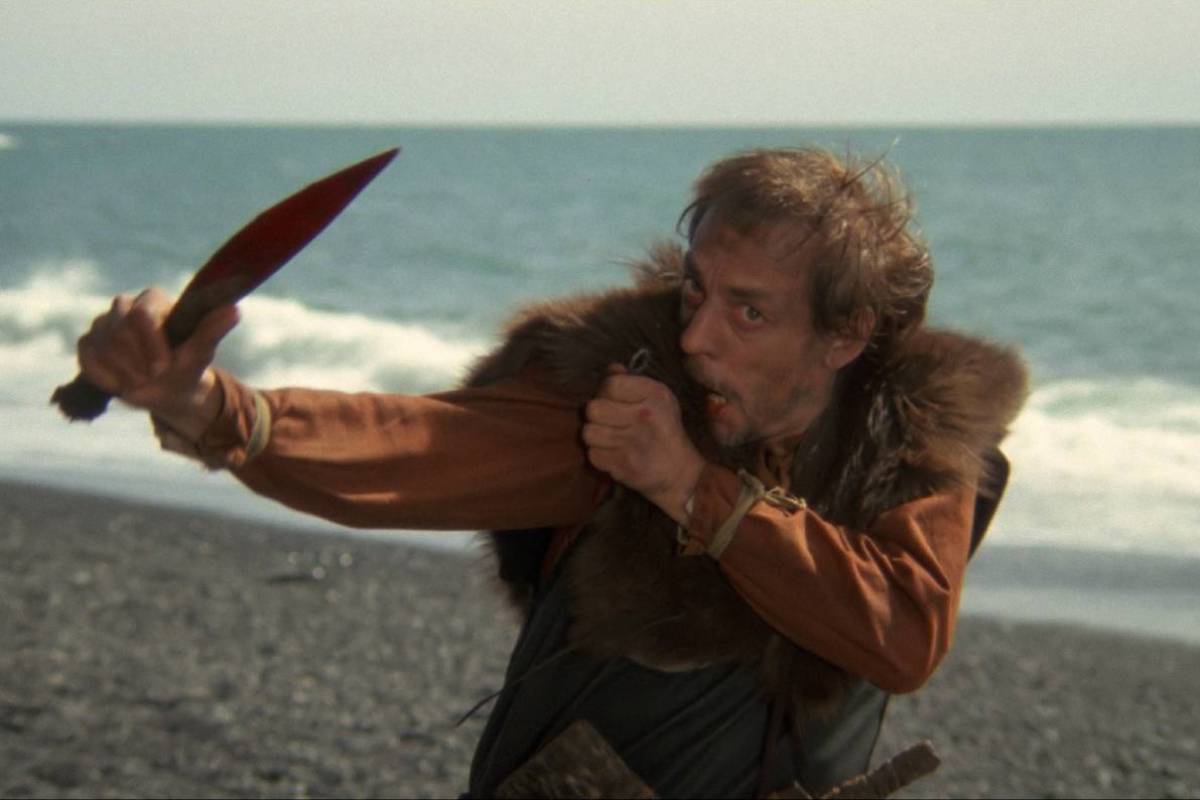
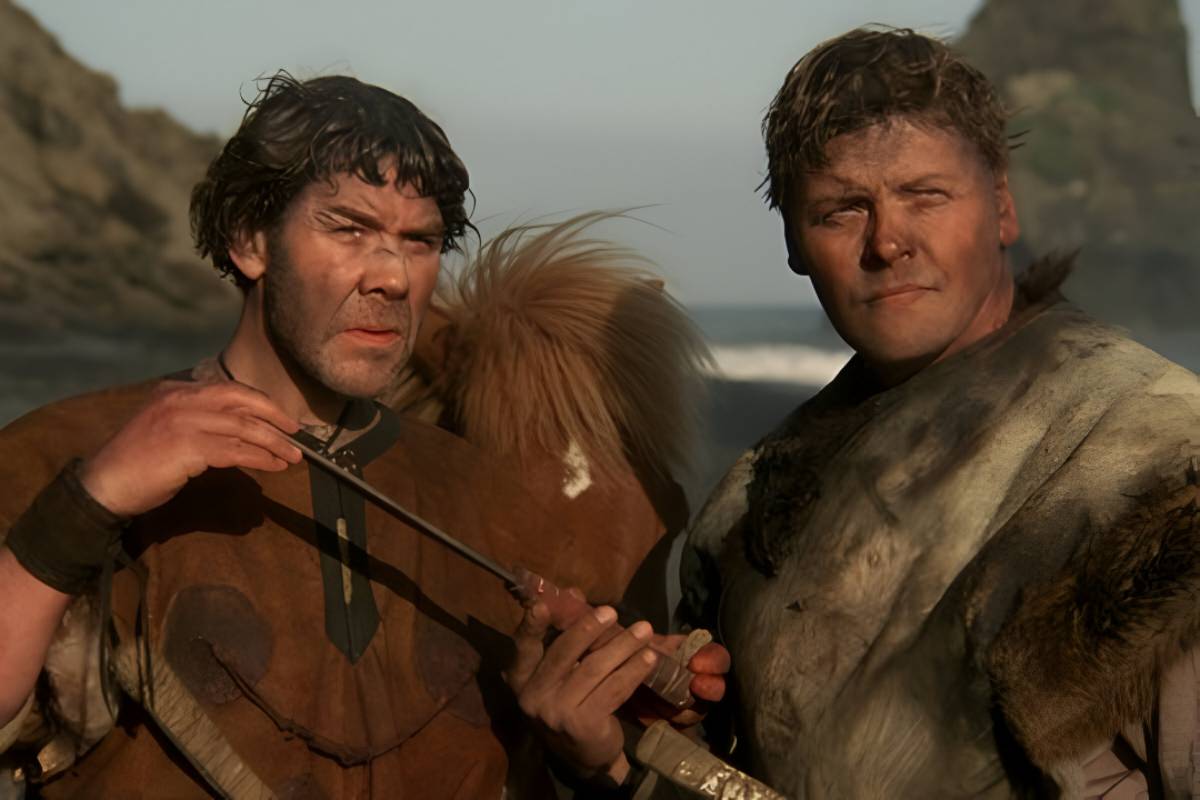
Screenshot from When the Raven Flies (1984). Source: Viking Film AB / Svenska Filminstitutet (© fair use for commentary)
Iceland's favorite film
Aside from being the eponymous title of a great George Orwell novel, 1984 saw the release of the joint Icelandic-Swedish production Hrafninn flýgur ("The Raven Flies"), directed by Hrafn Gunnlaugsson.
The film was released internationally under the English title When the Raven Flies, a more poetic rendering of the original Icelandic title.
Let us be clear, though it was submitted for selection for the Best Foreign Language Film at the 57th Academy Awards, this film made little impact outside of its native Iceland.
It made modest returns in the small island nation, won one award (for its director in Sweden), and received little international attention. Yet, the film was voted the Nordic nation's favorite of all time in 2016.
How can a Viking-themed film, shot on a shoestring budget, with no major star power, be so popular?
Part of the appeal of this film lies in its hyper-realism and grittiness, which is a world away from the more fantastical Viking-themed movies of the past (think The Sword and the Sorcerer, Erik the Viking, or even Conan the Barbarian).
A young boy, Gest (whose real name is unknown but whose name in English translates to "Guest"), witnesses the traumatic murder of his parents and the abduction of his sister sometime in the mid-9th century CE in Ireland.
Given this traumatic early experience, you'd understand why the rest of the movie involves Guest tracking down this Viking clan to Iceland and systematically dealing his own bloody dish of revenge, cold and long overdue.
To complicate matters, his sister still lives and plans to marry the remaining leader of the Viking crew.
Whilst revenge, mixed loyalties, and violence dominate this low-key and understated film, its popularity lies in its realism.
- READ MORE: The Viking history of Iceland – A primer
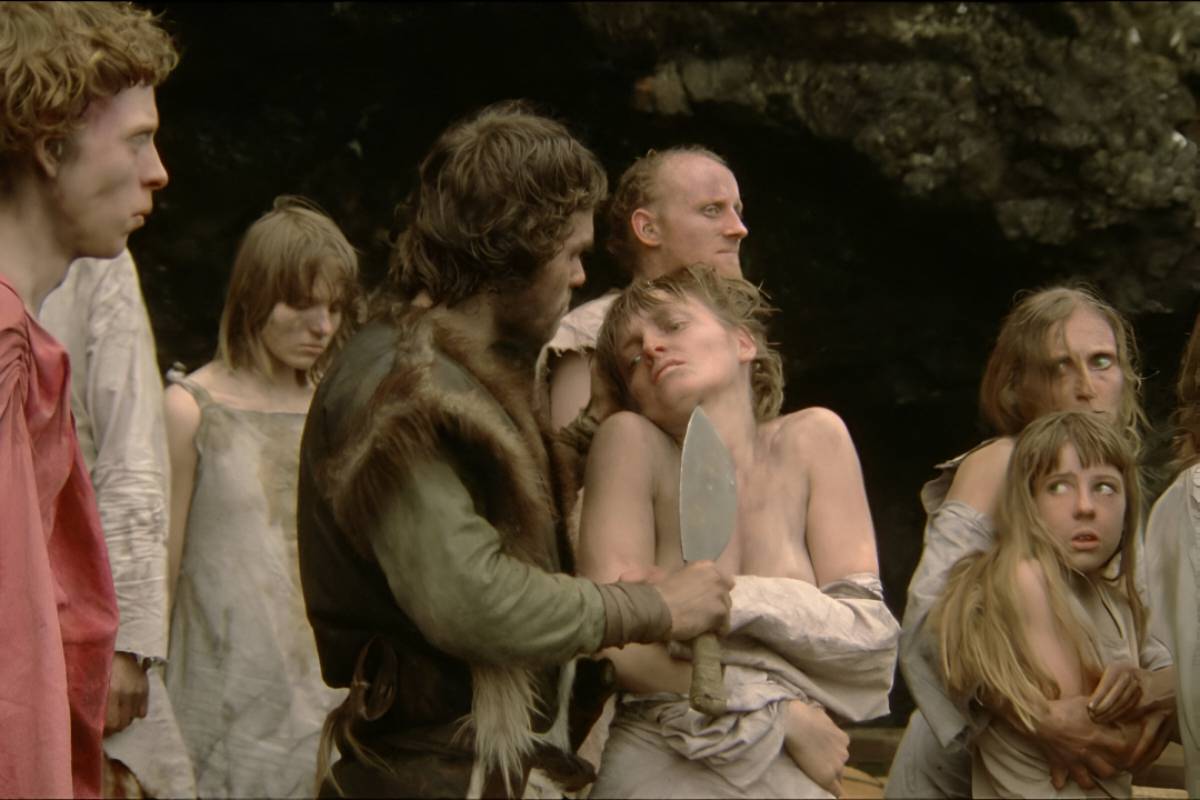
Screenshot from When the Raven Flies (1984). Source: Viking Film AB / Svenska Filminstitutet (© fair use for commentary)
Gritty and understated historical realism
Even in our modern age, with the entirety of human knowledge at our fingertips, just a swipe away, there is still much we don't know about the people in Viking societies and the era they dominated.
Hollywood, in particular, has been fascinated with early medieval Europe's most feared warriors, and countless films and series have been produced. However, Gunnlaugsson's film is an antithesis to anything that Tinseltown produces.
The historical realism and attention to detail are what make this Viking film a must-watch despite its low budget and lack of Hollywood "shine."
Feuding and violence were integral features of any Viking society, but particularly in early medieval Iceland. One wonders whether Gunnlaugsson read Jesse Byock's fabulous Feud in the Icelandic Saga (available on Amazon here), which details how feuding was "the dominant concern" of Viking-era Icelandic society.
Aside from the narrative, there is much historical realism in the set design and clothing. Not a horned helmet in sight, and this is a sharp contrast to more romanticized or fantasized depictions of Viking life.
Simple clothes—made from wool, leather, or linen—are worn by all the characters, and when violence does appear, it is not with great, gleaming swords but with simple and practical weapons.
Adding to this realism is the daily grind of Viking life, which is often overlooked or ignored in modern depictions.
Action takes place in a range of domestic settings, from farms to longhouses, and there are scenes of domestic life, including cooking—the antithesis of the big dramatic scenes in Hollywood blockbusters (think Robert Eggers's The Northman of late).
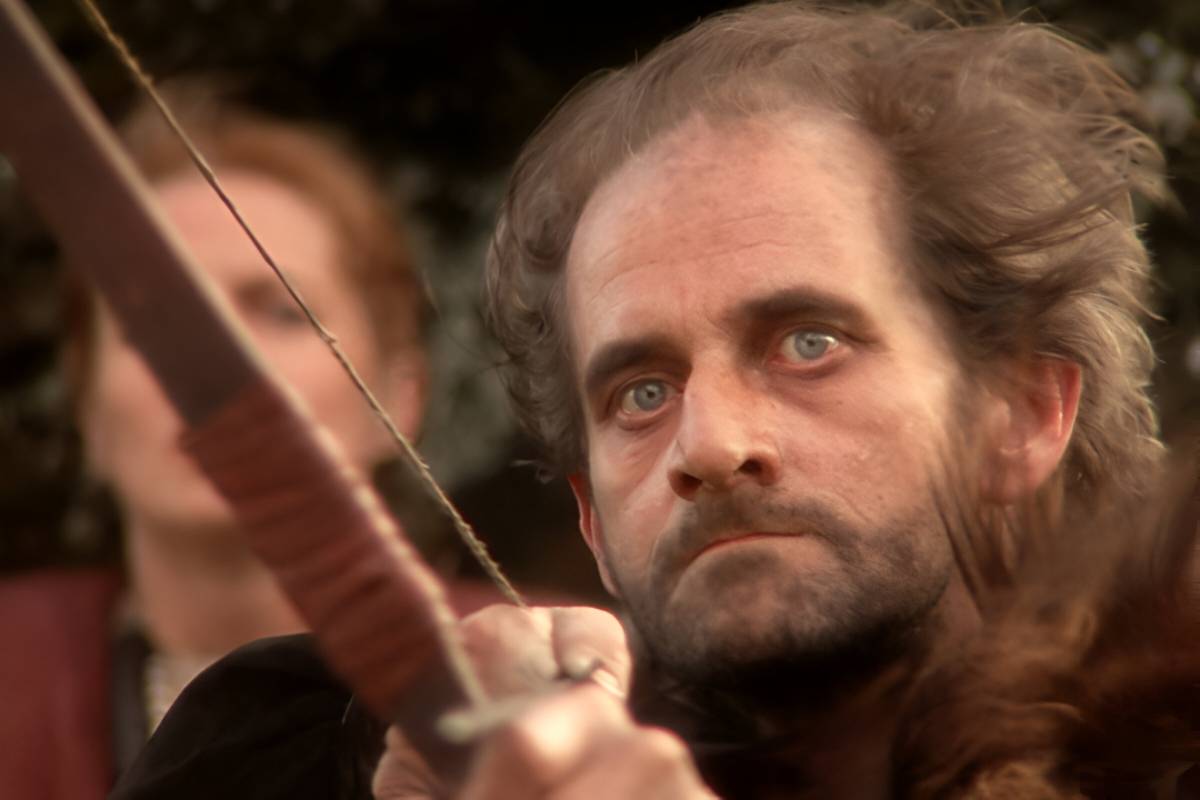
Screenshot from When the Raven Flies (1984). Source: Viking Film AB / Svenska Filminstitutet (© fair use for commentary)
Stunning backdrop adds to this "Cod Western"
Surely this film was an absolute dream for the tourism sector in Iceland, decades before it received its current uber-cool status.
The rugged and dramatic landscape is shot with superb cinematography and makes this land of fire and ice an omnipresent secondary character.
Think dramatic scenes on the volcanic and windswept beaches, with natural light and misty backdrops that add to the sense of drama and underscore the film's severe tone.
This is a low-key burner of a film that is as much a homage to the oeuvre of Kurosawa or Leone as it is to the unknown authors of the Norse sagas.
Gunnlaugsson has fused the two forms of storytelling to create what has been dubbed a "Cod Western," a Viking-themed homage to the gritty style of Spaghetti Westerns, with cod standing in for spaghetti as a nod to Iceland.
Hrafninn flýgur is the first installment in a trilogy. Sadly, though, the other two sequels apparently don't live up to this spellbinding opener.
Finally, for those wanting an extra touch of historical realism, the film is shot entirely in Icelandic, a language that has, as linguists will tell you, changed little since the time Vikings roamed.
From its superb cinematography to its historical realism and its slow-burning but thrilling narrative, it is no wonder that generations of Icelanders (and others) have adored this film, and no doubt you will too.
More information on Hrafninn flýgur (When the Raven Flies) is available on IMDb here.
We get to provide readers with original coverage thanks to our loyal supporters. Do you enjoy our work? You can become a PATRON here or via our Patreon page. You'll get access to exclusive content and early access.
Feel free to reach out to discuss potential stories that may be in the public interest. You can reach us via email at [email protected] with the understanding that the information you provide might be used in our reporting and stories.